
![[โค้งสุดท้าย] ทวนเนื้อหา+ลุยโจทย์ คณิต A-Level By พี่หมอแม็ค](https://i.ytimg.com/vi/-Weion0XDSI/maxresdefault.jpg)





















Physical chemistry requires proficiency in algebra (equation manipulation, solving quadratics, working with exponents and logarithms, complex numbers), trigonometry (sine, cosine, tangent functions, unit circle, identities, polar coordinates, Euler's formula), calculus (derivatives, integrals, product/chain/quotient rules, critical points, Taylor series, partial derivatives), and linear algebra (vectors, matrices, determinants, eigenvalues, eigenvectors, Dirac notation, operators, commutators, diagonalization). These mathematical tools are essential for success in thermodynamics, quantum mechanics, statistical mechanics, and spectroscopy.
Physical Chemistry Math Review: Foundational Topics and Skills
Added:Basic high school algebra and trigonometry, including logarithms, exponential functions, and trigonometric identities.
Introductory single-variable calculus, specifically the conceptual understanding of limits, derivatives, and basic integration.
Fundamentals of general chemistry, including gas laws, basic thermodynamics (heat, work, enthalpy), and chemical equilibrium.
Familiarity with coordinate systems, plotting mathematical functions, and dimensional analysis.
Classical Thermodynamics, applying partial derivatives and line integrals to state functions, entropy, and Gibbs free energy.
Quantum Chemistry, utilizing linear algebra, vector spaces, and differential equations to solve the Schrödinger equation for molecular systems.
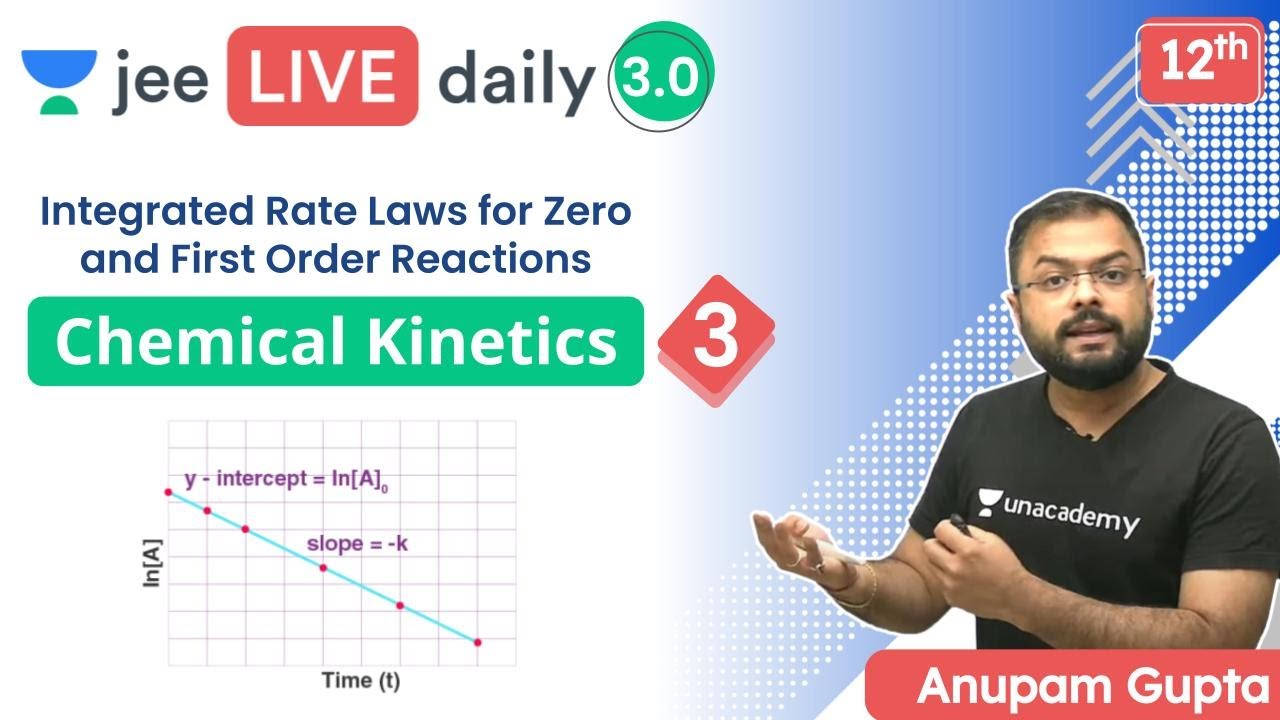
Chemical Kinetics, using differential equations to derive integrated rate laws and model complex reaction mechanisms.
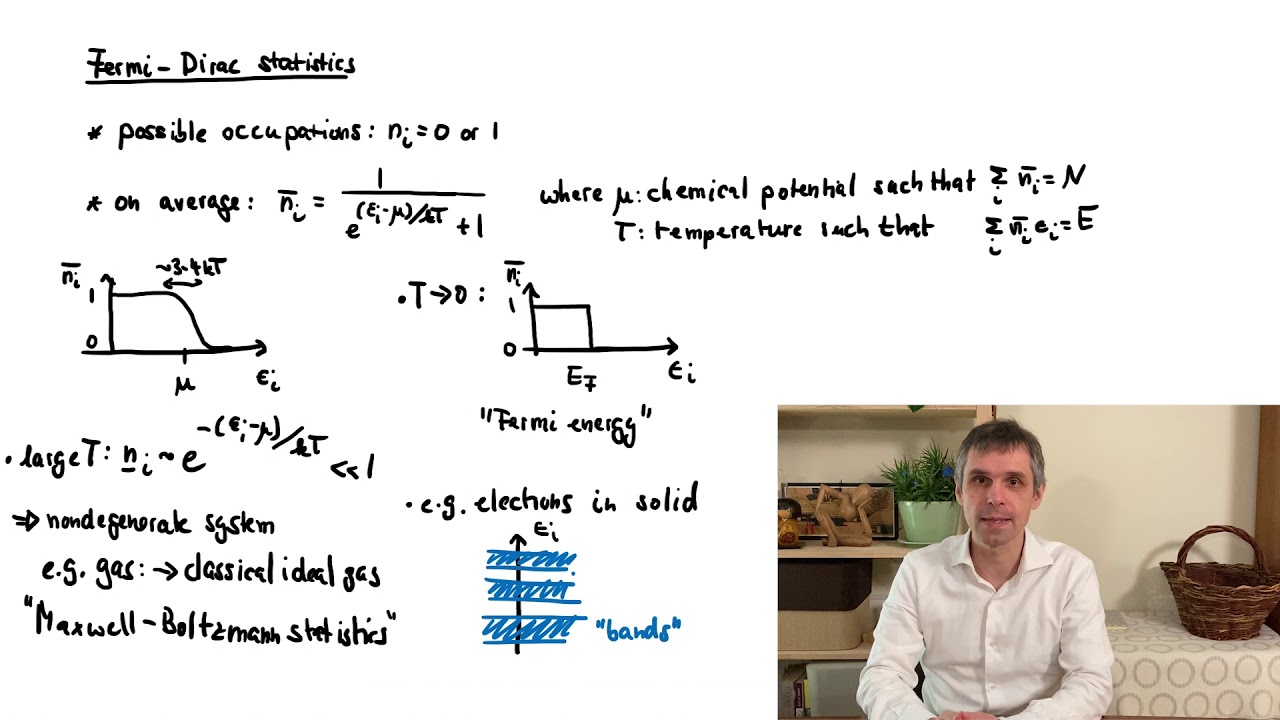
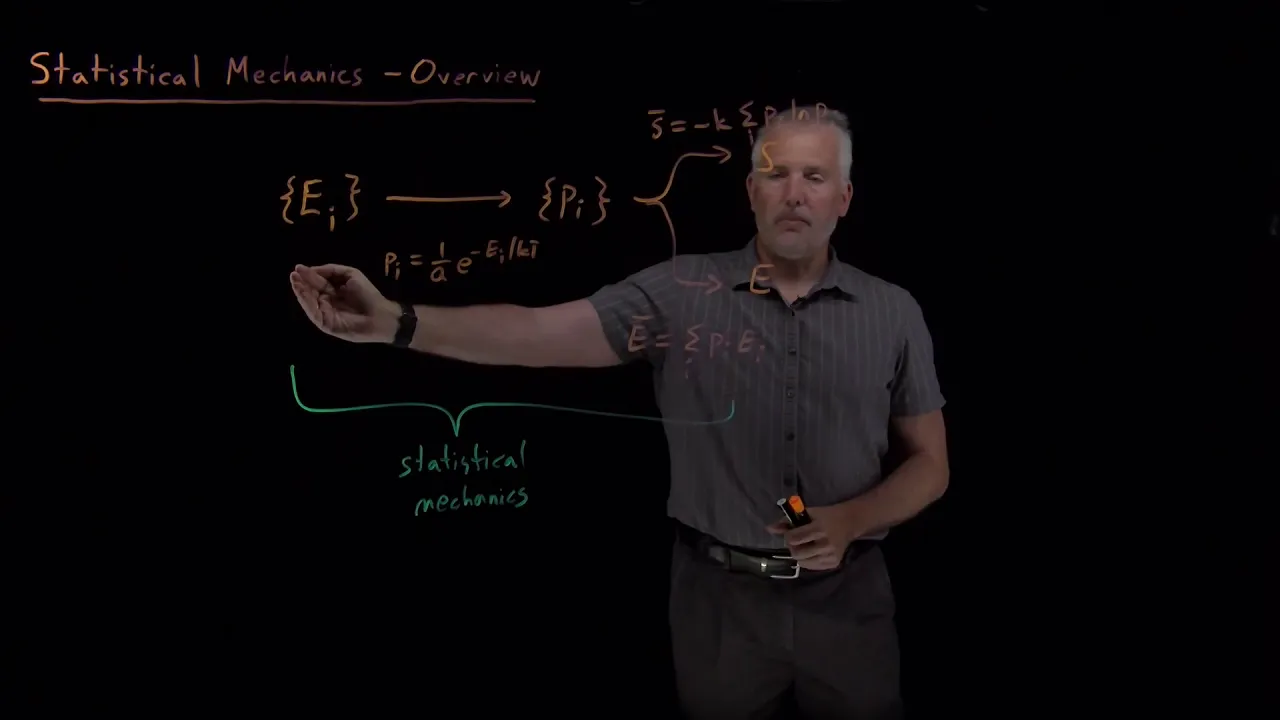
Statistical Mechanics, employing probability theory and calculus to connect microscopic quantum states to macroscopic thermodynamic properties.
26.8K views236likes5:54Original Release: 2017-03-16
welcome to the introduction to the math review for physical chemistry playlist so there are often many topics which are necessary for success in physical chemistry in math but students often haven't reviewed them for uh perhaps a few years since the last time they took a calculus or some other Math course so this is just a review to get us all on the same foot about what's important in terms of math for success in these courses and what really isn't necessary so for each of the videos are each of the topics that I've got listed here in this page there's pretty much a corresponding video or two about the basics of those things and some more ideas about where you can go for practice from there so the main four topics which are going to be important starting at things that you would have learned in high school would include algebra trigonometry calculus and in some cases linear algebra more often than not this is an advanced topic and most of the videos in this playlist are Advanced topics that are necessary for some of the more computational chemistry like applications but I've included linear algebra just because I have those videos here as well okay so starting off with algebra being able to perform algebra fluently is absolutely vital for success in pchem you need to be able to do things like manipulate equations solve for variables solve quadratic equations equations with exponentials logarithms be able to work with complex numbers so pretty much all of those things that I have listed here how to add multiply Factor solve polynomials how to get the roots of polynomials things like setting something to zero and solving it how to work with exponents like e to the a times e to the B versus e to the a to the B those sorts of things how to deal with logarithms and manipulate those and how complex numbers work things that involve the square root of negative one then trigonometry is pretty important for a lot of quantum chemistry type applications lots of Sines and cosines that show up everywhere so we have the trig functions not only sine and cosine but tangent cotangent arc sine inverses all those good things what are the graphs of those things look like so from 0 to 360 degrees and Beyond what do each of those types of trig functions look like the unit circle which is things like Pythagorean theorem and how all the different trig functions are related to one another all the various identities that connect them and how you can use those in different coordinate systems like polar coordinates or spherical polar coordinates versus your standard Cartesian coordinates and lastly something that comes in handy quite a few times is Euler's formula relating Sines and cosines to complex exponentials then moving on to calculus we have of course calculus is primarily composed of derivatives and integrals and in each of those cases just understanding conceptually what the definitions of those are what are the basic rules for the derivative and integrals of basic functions like sine cosine exponential polynomial those sorts of things and what are the special rules for things that are combinations like product rule chain rule quotient rule those sorts of things right also how to do repeated derivatives like second derivatives third derivatives how to find the critical points so maximum and minimum values of functions those questions come up quite a bit occasionally Taylor series not so much being able to construct Taylor series but just understanding where they come from and where we get the various terms from then partial derivatives um the analogs of derivatives for multiple Dimension functions and understanding how to do derivatives in multiple Dimensions as well typically the types of derivatives and integrals you asked you're asked to do aren't very computationally intensive but often they're set up to be able to be solved in in just a few steps if you if you really understand how these basic rules work then moving on to what might be Advanced topics unless your professor is fairly uh rigorous or mean you might say how to work with vectors matrices the determinants of matrices determinants come up quite a bit even in undergraduate applications other properties of matrices like for example eigenvalues and eigenvectors direct notation comes up in quantum mechanics quite a bit and you can use it in terms of matrices as well you can use matrices as operators a lot of the same kinds of things that we teach in quantum mechanics you can do with matrices if you know how to use those and make those connections again commutators diagonalizing and how to turn Matrix matrices into functions so a lot of those are more advanced topics for part more of the advanced sections of this channel but definitely everything in these first three playlists are going to be pretty vital for success in either thermodynamics quantum mechanics statistical mechanics spectroscopy any of the kind of topics that you'll study as an undergraduate pchem student these topics are going to be really really important to have a solid basis on
Up Next

16:18
Convergence and Divergence of Series: Calculus 2 Tutorial
@TheOrganicChemistryTutor
1.7M views•2021-01-20
4:43
Elliptic Curve Cryptography Explained: ECC, ECDSA, ECDH
@PracticalNetworking
28.5K views•2024-10-21
10:44
Fourier Series Introduction: The Big Idea Explained
@DrTrefor
387K views•2021-05-03

6:00
The Mathematical Impossibility of Accurate World Maps
@Vox
23.3M views•2016-12-02
Related Study Plans & Knowledge Roadmaps
Structured learning paths in Mathematics
mathematics
Tensor Calculus: Vectors to Riemann Curvature
01Mathematical Foundations: Linear Algebra & Calculus
02Covectors, Dual Spaces, and Tensor Basics
03The Metric Tensor and Index Gymnastics
+ 2 more learning modules
40h5 modules
Explore Roadmap
mathematics
Gödel's Incompleteness: Logic, Proofs & Limits
01Introduction to Formal Systems & Hilbert's Dream
02Set Theory, Cardinality, and Cantor's Diagonal Argument
03Arithmetization and Gödel Numbering
+ 2 more learning modules
14h5 modules
Explore Roadmap
mathematics
Galois Theory: Fields, Groups & Solvability
01Foundations of Abstract Algebra: Groups & Fields
02Polynomials & Field Extensions
03Splitting Fields & Symmetries
+ 2 more learning modules
24h5 modules
Explore Roadmap
mathematics
Non-Euclidean Geometry: Models & Geodesics
01Euclid's Fifth Postulate and the Birth of New Geometries
02Hyperbolic Space and the Poincaré Disk Model
03Geodesics: Defining Straight Lines in Curved Spaces
+ 2 more learning modules
15h5 modules
Explore Roadmap