







![AAVSO How [My Students and I do Science With AAVSO Data--and How You Can, Too]](https://i.ytimg.com/vi/hAu4MMD7g_g/maxresdefault.jpg)




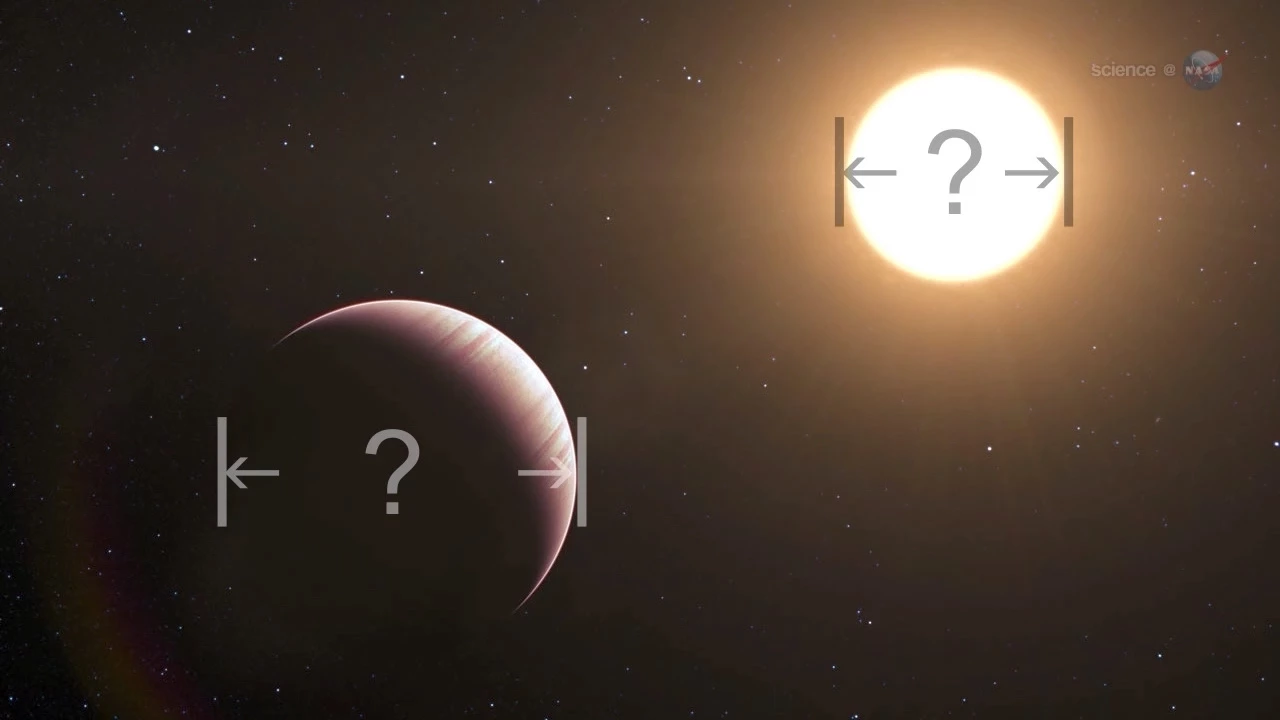






Asteroseismology is the study of stellar oscillations that allows astronomers to probe the interior structure of stars, similar to how seismology reveals Earth's interior. By analyzing the oscillation modes (p-modes restored by pressure and g-modes restored by buoyancy), scientists can derive fundamental stellar properties such as mass, radius, and core structure. The dispersion relation kr²cs² = ω² - N²ω² - λ² governs these oscillations, where kr is the radial wavenumber, cs is the sound speed, ω is the angular frequency, N is the Brunt-Väisälä frequency, and λ is the Lamb frequency. Observables like the maximum oscillation frequency (νmax) and large frequency spacing (Δν) encode information about stellar parameters, enabling precise characterization of stars even when they appear as point sources in the sky.
Introduction to Asteroseismology: Probing Stellar Interiors
Added:okay so hey everyone uh welcome back to the uh arc journal club again today we'll have nicholas reid which is me um and today we'll be doing an introduction to astroseismology which i hope is going to be good because you know basically just had a bunch of relativity talks all in a row and i assure you that this is not going to have any relativity in it i promise uh so what we're going to be doing today is i want to motivate basically why what astrocysmology is why is it cool um why do we think of it as a really useful tool um and i'm going to derive some of the major formulas uh like that that are in this field and this is basically just sort of the base knowledge for uh working in astro seismology and then time permitting i'm going to talk about like the effects of things like rotation and magnetism which i work on um and so to be honest i haven't timed this i don't know how long this is going to take and the point is that i've ordered the information in uh you know in order of most to least important with the most important information being in my opinion really important and the least important information being not so important so you should feel free to stop me at any time the priority is not to get through all of it the priorities to make sure that all the steps make sense so if you have any questions at all about anything or even like minor steps like i promise you have spent hours agonizing over every single one of those things so yeah uh basically what is ask for seismology so the word is spelled like this there's an e here for some reason no way yeah there's an e and and what it is is basically the seismology uh or you know the study of the oscillations of stars astero and you recognize that from astrophysics because um so astro seismology is the study of the oscillations of stars it's sort of analogous to like seismology which is the study of earthquakes um and it's really interesting because if you if you really step back and think about it this is maybe not the best thing to say in front of this audience but most of our information about space comes from electromagnetic radiation it comes from light you know things emit light somehow and then we look at it you know it's either photometry or spectroscopy it's in the x-rays and radio it may all seem really different but most of it's light you know you've got neutrinos and gravitational waves who cares about those nobody right so um but the problem with that is like let's say i got a star and i want to like learn things about the star so i look at the star you know i'm an eyeball i look at a star um the problem is that light from a star quite famously comes from the surface of the star what's up um and not the center of the star so if i want to get information about a star like for example i want to measure its temperature or something like that i'm only going to like it's very hard to think of a way that i can directly probe the inside of the star you know i'm only really thinking about i'm only really getting information about you know the surface temperature you know maybe the density of the surface maybe i use you know same on spectroscopy and i get the magnetic field at the surface which is going to be a lot different than what is what it is inside now the thing is um you can be a bit clever about this because you can sort of think okay like like maybe we can think about an earth example and i've got like a bell if i ring the spell okay well if i first of all if i look at this bell you know with a telescope or something i'm going to be able to get some amount of information i'm going to know um you know what color is the bell you know what's probably what the bell's made of on the outside what shape is the bell how big is the bell if i know the distance and so on but if i ring the bell and i listen to the bell you know that's a way of knowing about what's inside the belt getting some constraint because you know if the bell's uh you know hollow or if it's full um that's going to sound a lot different right and so this intuition is the same for a star you know if i watch a star's oscillations you know by you know looking at its light curve or something like that then even though i'm only getting light from the surface of the star those surface oscillations are inherently tied to the core's oscillations and therefore you'll be able to extract information from extra seismology about what's inside the star uh so you know that's basically uh you know a reason this that's basically the main thrust of astrotechnology you know why we care about it um and you can sort of think maybe you remember from middle school that people talk about like uh you know using p waves and s waves to figure out you know what parts of the earth are liquid and so on and it's analogous to that okay so um what i'd first like to do is derive the dispersion relation for uh you know the oscillations that a star can have and the two forces that we're really going to be incorporating here let me move this over are going to be um pressure which is you know just like the restorative force for normal sound waves that we're used to and buoyancy so you know if i like put a rubber duck in the bathtub and i push it down it's gonna come back up yeah so you know the way that these calculations typically go and the way that this one's going to go is we're going to write down the fluid equations we're going to linearize them and we're going to find the oscillation modes right and so um first let me make some definitions so in fluid dynamics it's common of course to derive to define this convective derivative which is basically just the the derivative that follows along with the fluid uh and so defining this we can write down the important equations that are necessary so we can write down the continuity equation which is just you know this statement that um if i if the density is changing inside a little box then it has to have gone somewhere essentially and yes the row is supposed to be on the outside because this is a convective derivative it turns out not to matter so this is continuity there is momentum which is just f equals ma and there's going to be a gravity term right because we we want to you know incorporate that and so we're going to have yeah this uh and then we're going to need another equation so the unknowns that we have here are we have rho we have p and then we have the the three components of u and we and uh you know u is like sort of like one variable so we have two equations we need a third one and that third one is intuitively uh going to tell you you know basically how are the pressure and the density related the equation of state i'm sure you've never heard of that before um and so we have so this is momentum and then we have this uh so this is uh intuitively what this is is like if i have like a little parcel that its pressure is like some constant times its uh density some power now this is really important and something which is confusing for a long time right but you might be tempted to think okay like this is like truly a constant and like throughout the entire star everything has like some kappa um you want to be kind of careful because if every parcel in the entire star has this same kappa it turns out there's no buoyancy like because you know if i like you know lift up a little blob of fluid it's going to like become the same uh density as its surroundings and then there's not going to be any restorative force at all so this kappa is different for different fluid parcels so you might hear some terminology like people will say like um uh you know the lowest entropy things sink to the bottom of the like the center of the star or like you should sort your star by entropy after cellular merger that kind of language is uh is encoded in this capital so this kappa uh depends on which fluid parts we're talking about but following a fluid parcel like uh under like this i guess adiabatic approximation uh this is a constant for yeah that one parcel um yeah so what we're going to do is we're going to linearize these equations so this is energy and this is the standard approach because the main difficulty in fluid dynamics is that the equations are not linear so maybe one way of tackling the problem is to make that go away because that's allowed i guess so what we can do is we can first take this uh first equation why don't we um we can linearize it and if we do this in spherical coordinates it will turn out that we'll have rho prime over row i'm just sort of skipping a few steps basically you um actually let me let me say this um so rho is going to be some slowly varying profile with r uh and only a function of r and then also like some perturbation which is a function of everything uh and then same with p prime sorry sorry not that uh you know so on and then u is is just going to be u because the equilibrium uh you know fluid uh fluid uh motion is zero and i'm actually going to be working with this c coordinate uh which is basically the fluid displacement uh defined this way okay this is just something that's kind of convenient um and one more thing that i want to say is when we do these sorts of problems we want to find the normal modes and so one convenient thing to do is to assume that everything has a time dependence which is harmonic so everything every perturbation goes like this okay this is just for simplicity sorry this is a lot of steps we're not writing down basically we take this we assume this dependence on the perturbations we plug everything in we only keep terms which are first order in the perturbations so that zeroth order terms will like make an equilibrium structure equation and we don't we're not going to worry about that and we're only going to keep all the first order terms so the continuity equation in spherical coordinates becomes this thing so this uh this is supposed to be like a dell but with an h subscript and that's just the horizontal part of the divergence i'll be using that letter a lot that's simple a lot we'll have the momentum equation so this is basically uh what it looks like since this is the radial parts um and so this is like you know the second time derivative here is equal to the forces and then we have the same thing but for the horizontal part and it's going to be the same thing but um there's not going to be any gravity because gravity points down i've been told authoritatively by my gravity friends and then finally we're going to have the energy equation this one's a little bit tricky we're going to do is um if you you sort of like plug in your perturbations and everything uh you will get something like this rho prime over uh plot over rows equal to p prime over gamma p naught is equal to the fluid fluid displacement one over gamma d l and p naught vr so this is like the equilibrium configuration and then this okay uh so this is energy um and one thing i should say is uh we have assumed that the column approximation so there's there's no um perturbation in the gravitational potential itself g is like legitimately a constant with radius you know in practice this is not actually true but um people make this approximation a lot and it's supposed to be fine maybe um so one thing is this this looks kind of ugly but maybe i should say that this bit uh this is also called um let's see one over g times the print by solid frequency squared okay so this uh you know basically what this is right is um let's see like so let's say you have like uh you know some blob of fluid within some other fluid and in equilibrium it's like right where it needs to be but if i like nudge it up and down a bit if i like nudge it up if that fluid uh you know adiabatically you know changes its density but remains denser becomes denser than the surroundings and it's going to fall back down it's going to come back down here it's going to be denser that's going to be less than its surroundings and it's going to basically wiggle around and that's the case where uh n is uh n squared is a you know positive number so n is a real number however if n squared is less than zero this is like convectively unstable you know you go up basically but you become less dense than you're surrounding so you keep going up forever and then you have a fluid instability and then you know you basically have a convective region so that's that's that's some details but basically the idea is that this is where the root by cell frequency enters in and i can rewrite this equation in a way that i like which is the pressure uh perturbation is equal to the density perturbation times the sound speed squared uh minus rho naught n squared cs squared over g cr and um cs is this is the standard definition uh for polytrope um and so so if you look at this you're like okay i think i can intuitively understand this right because if i don't look at this part this is pretty pretty like this is sort of like the definition of cs this is like you know dp d rho or something like that um and so this is basically like the the change in the pressure due to the fact that the density of your fluid is like changing but this part is because uh as you if you like displace your fluid upwards then at a given point the fluid the fluid parcel you're looking at is actually a different fluid parcel it has a different kappa and everything and so this sort of accounts for that right so this this term is quite important and uh i have lost it many times so yeah um so you know here are the equations that we want to solve these ones i'm going to do it over here does anyone want this probably not i don't want it okay so one thing you might find to be quite annoying oh let's see i'm missing f got to say something okay we're going to take an aside to do some math that you probably already know about but if you haven't gotten the memo we're going to do circle harmonics just in case so um let's forget about the radial part let's just write down the uh spherical laplacian and let's say that there's some function y and we want to find basically the eigenfunctions of this thing turns out that this is this would be quite nice to know r squared sine theta d d theta sine theta d y d theta r squared sine squared theta d y squared d phi squared okay so um this is quite nice because this is um like legitimately just you know um like this is very simple there's no dependence on phi like anywhere there's no explicit dependence on phi anywhere in our equations and that reflects the fact that uh you know our equations are actually symmetric you know if you rotate the star um then like there's no like special zero point for phi and basically that means we can take y to be e to the i and phi uh and what you'll get when you plug that in let's say that uh like it's this times some function phi then we'll have one over r squared sine theta sine theta df d theta and then minus and then this brings down i m twice and uh we're going to say that like um one one thing that you can sometimes do is you can say u is equal to cosine theta blah blah blah blah plug it in and you'll get this equation and uh you know uh let's see and i've like you know multiply the r over and like sort of absorbed into this constant and this is the legendre equation this is the generalized legendre equation and the important thing to know is that yes you have this quantum number m but this actually can only take values l l plus one l is you know one two so on um zero one two so on such that l has to be bigger than the absolute value of m bigger than or equal to the absolute value of m um all of that is to say okay like you know who cares this is solved by associated legendary polynomials and so you know you have your cervical harmonics that is to say like we're going to use this information just a little bit to basically get rid of all of the spherical you know stuff you know we only want to care about the radial direction and so that's just sort of a brief overview yeah i'm going to erase this part hopefully i don't need it again i probably do but it's fine okay so um so the first thing we can do is so i i literally just erased this but it's fine so this is the uh horizontal momentum equation and what i'm going to do is i'm going to apply i'm going to take the divergence of this in the angular direction so i'm going to basically act this guy i'm going to get minus rho omega squared uh this thing is equal to this now if i um yeah so so this is this is nice because this this appears in the continuity equation and i can just divide everything over and you get this okay which i'm going to plot i'm going to soon plug into the continuity equation and then i'm also going to do another thing which is i'm going to take my energy equation also erased and solve for rho prime so this is just something algebraic you know i divide uh the sound speed of squared over and uh move it to one side which is this guy and what i'm going to do is i'm going to plug them all into um the continuity equation so as you might recall the continuity equation has a row prime in it it has this divergence in it and we're going to basically get rid of everything make it into a single equation in terms of the variables c r and p these guys so we plug them in conveniently we have our equations uh we have an equation which relates you know the derivative of c r to c r p and there's this thing but if we assume that uh you know everything is uh you know basically this this this we've just figured out like uh is just l times l plus one over r squared and so what you you'll end up getting after sort of solving for this thing plugging in that uh what i just said is you'll get um this equation let me actually this is an important one so let me put it in a location that i hold dear emboss it oh let me actually sorry okay so this is equation number one that is a single derivative i'm sorry are there any questions so far at all any steps i mean it's a lot of algebra i guess i'm sort of skipping over a lot of it because it's boring um basically the motivation is you know we just want to find uh you know two equations which are relating the derivatives of two perturbations to those perturbations again and the way that we'll get the second one is we'll simply go to the radial momentum equation uh and so what that's just going to be is oh um i should say one thing this sl square is called the lamb frequency squared it's like the frequency of land waves or whatever and it's defined to be this thing l times l plus one over r squared cs square this is the square of the line frequency and what this is uh right is um okay so if you think of this thing as k h squared like we just call it this then this is basically sort of like an acoustic wave like but with respect to the horizontal weight number which is going to be like this thing is sort of like on the order of one over r basically okay so this is just one of one of the characteristic frequencies that matters besides the burn by style frequency uh and then what we can do is we can go to our energy equation which we can plug into our radial momentum equation so basically this was an equation that we had this is this is um this is the momentum equation in the radial direction what you can do basically is you can take this stick into here like the energy equation and you'll get dp dr as a function of this and pressure and we can write that down and what we'll get is this thing so this is our second equation which is kind of important so some of you are interested in high energy physics and care about precision a lot i've been told so avert your eyes because what we're going to do is we're going to look at this and say okay what suppose supposing that the radial wave number like is a lot bigger than whatever equilibrium quantities you know exist then what we're going to do is we're just going to say like well this is kind of hard to solve uh but suppose that this didn't exist and suppose that this also didn't exist because these are like basically this is a derivative like this is sort of like a one over the pressure scale height or something this is like one over r which is big or small sorry yeah r is big so one over are small this is you know something similar like that and then we're going to assume that this stuff doesn't depend on radius so i'm just going to plug one of these equations into the other i'm going to get something which is really foundationally important in astro seismology which is what i've been trying to derive this whole time if you'll believe me okay and another way of writing this is supposing like cr varies with like e to the minus ikr r or so then this is uh you can rewrite this as k r squared c s squared is equal to one over omega squared of x squared minus n squared omega squared minus sl squared okay so this is important this is sort of like the dispersion relation for uh oscillations which can be restored by pressure or points okay that was maybe a little fast does anyone have any questions about this at all any part of it like what do these symbols mean how do you why no yeah so hold on so cr doesn't depend on theta and phi right because we've already assumed that the angular independence yeah yeah good okay so i mean we can look at this and uh first of all like this is really shady right so we've done a lot of really stupid things which may or may not be okay and we basically assume most of the time that they are okay but you know one can be you know cautious anyway um this is a very valuable heuristic for deciding how it is that oscillations can look inside of a star so for example let's consider the this is not necessary anymore because it contains no content of any interest to us um suppose that we have the case that omega let's say omega squared is much bigger than the two characteristic frequencies that are in this equation okay so basically what i'm saying is suppose this term is basically omega squared suppose this term is also basically omega squared omega squared divided by times omega squared divided by omega squared is just going to be this and um remember we have assumed basically that the radial weight number is the big wave number and so this is basically like acoustic waves these are also called key modes okay and let's see did i point out anything that are interesting no well key modes are p modes um they're basically just like sound waves that are restored by pressure and then we've got something else we've got an opposite regime suppose that omega squared is much less than n squared s l squared and you know i'm even being generous so why don't we just say slightly bigger whatever who cares okay then what's going to happen is you're going to have n squared dominates this term uh sl squared dominates uh but what what else sl squared is just cs squared times kh squared and basically when the smoke clears you're going to have this which is the dispersion relation for gravity weights you know you can just do it in cartesian that's what it is now you might say okay nicholas well look actually uh i think some comments are in order because gravity waves first of all gravity waves are not gravitational waves unfortunately if you work in my field and you google the name of your own topic for some reason it will always be like do you mean gravitational waves and people well-meaning people like sterl will write papers that are like up called like grab gravity waves and then it will be about gravitational waves or whatever because you know artists are not appreciated for something so one thing which is kind of interesting to note is that if l is equal to zero right so s l squared is equal to l times l plus one over r squared and that's zero this is zero this is zero uh and therefore it is impossible to satisfy this condition okay and so you won't have there are no like g modes basically you can't have g modes for purely radial oscillations so that's one comment another comment is you might be thinking okay technically n squared can still be negative okay so then what happens then so if we're in a convective zone uh you know yeah basically um this also you also can't do this okay you can't satisfy this and so you will also not have g modes yeah um cool okay and there's one other regime which i haven't mentioned but which is quite important uh is that if omega squared is like in between the two uh then if you look at this like the actual factor is not so important because you know you're not necessarily much bigger much smaller than any of these but what you are is this is this right hand side becomes negative it doesn't matter which which one is higher which one's lower as long as you're between them one of these terms is negative and what you'll have is like you know kr you know is imaginary and and you'll have like an evanescent wave so one way one typically typical way to visualize so like so one thing i should say is like given an l these uh two frequencies basically encode like the oscillation structure of the star so i can just plot them for example like this i can plot like you know the frequency omega of a mode and the radius of the star and you know your um your by cell efficacy will sort of be like this shape like for a red giant for example uh like this will be the radiative zone and then you'll have like your land frequency which is sort of like generally decreasing like this and for a mode just by definition it only has one value of omega and so we just draw a straight line and we were like okay what is this so here we're going to have you know some oscillation which is like a p mode and then we're going to have is like it becomes evanescent for some for some you know region that's not that's terrible wow it's going to be like you know and then it's going to become a g mode so it's going to be propagating again um this is like this is like a like a picture called like a propagation diagram if you look in astro seismology they're everywhere and basically makes the point that like you know if you draw a straight line what do you expect the behavior of your mode to be okay um let's see do i want to say anything else about this yes i did okay so one thing which you know we've derived the entire structure of the star but perennially the problem is always going to be how do you learn what's inside the star because yes as a theorist i can figure out how i expect the inside of the star to behave but i'm always only going to be observing the oscillations at the surface of the star so uh so like if the what i'm saying basically is that if the evanescent region is really wide like if this if the wave spends a lot of time exponentially decaying then i'm basically not going to get all that much information about the inside of the star you know i can say like hypothetically the the waves coupled to the inside but you know in practice it might be very difficult we basically like situations where these two frequencies at some range like become pretty similar and so you'll have an evanescent region but it will be pretty small and it turns out that for situations like red giants this just happens to be true that's very nice because uh you'll get these things i think colloquially we say you'll have these things called mixed modes and people will say language like um you know you have a g mode and it couples to a p mode at the surface and therefore you know you get multiple g modes coupling to a p mode or like stuff like that and then you're like you're sort of thinking like okay these must be like separate oscillations on separate things but they're the same function it's just that you know what we're saying is that you have some radial function here and then an evanescent region and then a different function here so like it's like you know this is just like roughly morphologically the same as uh i guess i guess what i'm trying to say is basically it's all this it's all one function but when i say mixed mode i just mean there's an effinessen region that's quite small and so the frequency of the oscillation itself of a visible oscillation is very dependent on the uh you know the g-mode structure of the star yeah it kind of looks like i don't know if you want to go into this it's like the approximations you make to get to this stage break down exactly the evidence region yeah um yeah probably it's like actually a problem i don't know wait so let me let me think about this um yeah because you're saying like there are these these terms basically go to zero yeah the terms that we're supposed to be big are now going to zero yeah it's probably fine like the thing is like okay i write down this thing right and then it's like okay maybe these terms are small and then there are other terms that i ignored but those other terms are like on the order of like one over r or whatever and this is supposed to be something big and if big equals smaller than small zero right whatever like this is like we're doing the best of what we got in asp right any any other questions about anything this is a natural stopping point because in my notes i have demarcated this as uh section two so uh this was section one basically and so if any of these steps are unclear i mean this is i think pretty important understanding like i draw this picture i draw n and i draw sl and i think it's it's important to understand why it's these two frequencies that i draw and uh what is implied right that's clear can you look at this are the is the the amplitude of the mode the largest in the center of the star uh not necessarily in fact the ones you observe uh like you expect like the easiest modes to observe are always the ones that are like high amplitude of the surface right yeah uh yeah i don't know if this was clear right what you do is you watch the star you watch its brightness change or you watch the radio velocity change on its surface i think i'll say this in a second actually uh and then take a fourier transform or whatever and you can get that information um but obviously you can't do that if you have a g-mode that's sort of knocking around in the core and then it decays exponentially before it gets to the surface you can't see it okay all that clear okay i'm going to go on and i'm going to derive a few even shadier things unfortunately sorry which side should i erase this one i just screwed this okay so i want to make a few comments so uh this is going to be a very generic statement about what oscillation modes are right which is uh basically let's say i have like a well and then i have an oscillation in it well i'd impose a boundary condition on both sides of it and i expect there to be a quantization condition you know expected to be a quantum number and so uh one thing one thing is like okay we have three directions because we live in three dimensions not four or maybe four but um so we have l and m uh from before and we can define you know you know a radial direction n because there's also a radial quantization condition i just want to make this comment because we didn't deal with that at all there were no boundary conditions in the equation we wrote down before but in practice there would be and so in practice you do have uh you know quantization and so one thing that people sometimes do is they define an n and then they say like count the number of nodes in the um you know p mode region and then subtract the numbers in the g mode region and this is just this kind of stuff that people do now in practice you can actually like not just use this heuristic there's like codes like gyre which i'm sure lynn knows about uh and um they're basically like you take like some seller model from mesa or whatever and then it just actually i guess without all these shady approximations compute what's the what the oscillation modes should actually look like uh and then we'll actually like return some discrete omegas so omegas is discretized by this uh radial boundary condition okay one other thing that i want to say is um i mentioned this before but there are two different main ways to observe oscillations in a star so one of them is photometry this is basically looking at the star and just watching its brightness for a long period of time and fourier transforming that and then there's spectroscopy which is watching a star for some period of time but taking a spectrum something okay and and that's that's a little bit different because that's like you're watching for the fluid on the surface of the star moving and receding away from you and you know both of these are ways to you know measure oscillations but the problem is right um so it's very hard to measure essentially modes which are bigger than about this basically just can't do it it's like impossible except for the sun right um because if you think about it a star if i have a star and then it's got like a very uh high angular you know wave number then the brightness is barely going to change because you know this part's going to be slightly more bright because temperature perturbation is higher and this one's going to be slightly less bright but then they're like going to cancel out essentially and the only way that they wouldn't cancel out is if the this wave number is very low right if the if it's like a dipole oscillation then it could very conceivably uh be detected right um yeah there's this scaling relation that i don't really care about but apparently the amplitude goes as like 1 over square root of l there's some reference for this in the notes uh and some uh missions to know about are you know i think kepler is a really big one corrodes is a big one and now tess is also doing master seismology which is nice these are sort of big surveys that look at stars for an extended period of time and are able to get information okay any questions yes so when you talk about spectroscopy are we measuring like the different elemental composition of fluid packets at the surface or like doppler shifts to their movements oh yeah i care about the doppler shifts i guess you find a line and then you um you know i guess i'm just guessing because i i don't do this but i guess like it splits and then something like that yeah any other questions feel free to stop me at any time so um so far i've sort of motivated i've written on the equation here's what an oscillation could look like but how do we actually like get information right because at the end of the day you get some spectrum how are you going to translate that spectrum into information that you actually care about okay so um let me just first of all draw what a spectrum might look like spectra will look quite different depending on what you're looking at but for me i specifically care about red giants and because i'm giving the talk i get to decide that we all care about it um and so let's say that i took a light curve and i fury transform it uh then this is the fourier transform uh like like in the power spectrum and this is like let's say this is the you know oscillation frequency we're going to observe something like this you're going to get spikes and you're going to get like you know different spikes for a different l basically you know in principle they are degenerate without with m um you know lester's rotation or something basically what you'll have is this big envelope over here okay and and the the amplitude is sort of maximized at some new max i guess like two pi in your max in this picture whatever uh and then there's also going to be this spacing which is sort of the spacing between modes of equal out okay this is what you'd observe um so if you look in the notes there's like an actual data set and um so these are this is called delta nu this is called the um frequency of maximum power and this is called the large frequency spacing and these observables are kind of interesting because it turns out that they encode a lot of useful information about the star and this is going to sound very shady but we can try and estimate what these things are right so um one thing i should say so first let's do new maps so new maps as i said is sort of like the the frequency at which the modes are most driven so before we did a calculation uh where we solved for what modes can exist but just because the mode can exist doesn't mean it does exist in the sense of like it might not be driven by whatever is driving the oscillations so you might not see it and so this is clearly a reflection that there is a thing which drives the oscillation modes and that thing is um only is like most powerful here okay and what is that thing in a red giant what it is is um basically if you imagine the convective envelope of your star you get you get like these giant blobs of gas that move up and down and um like because of the convective instability at some characteristic frequency and that will basically cause um you know driving of your of your oscillation modes and um so we can estimate just very roughly how we expect that to scale with our quantities so one thing you can do is you can say okay what is the characteristic um speed at which those blobs move that's like the speed of sound right i can't think of another frequency that i like more than that so why not and then we can say like okay how over that over with that speed how how much do they move before they turn around well i can only think of the length scale the pressure scale height for some reason so why not and then what we can do is we can say uh you know cs you know is just basically square root of p over rho roughly speaking and and that's like kt over m uh actually is this is this the right way around let me think what have i oh yeah that's that should be okay actually let me do this so the pressure scale height is p over rho g and so what this is going to be is you know g over square root of p rho by using the ideal gas relation which is p is equal to rho kt over m this is basically proportional to g uh t effective so if we're looking at the surface of the star it's gt effective to the minus a half and g is like you know m r minus two t effective if you have so this is the scaling we roughly expect sky t affected just comes from the color of the star so you can just you know do for photometry and figure out what that is uh and then we have this guy delta nu and in order to see how we can estimate that we can think okay if i have like a well then i have you know the first harmonic here and the second harmonic here and the third harmonic here and that's they're basically separated by you know one over the crossing time uh no because this is like one frequency this is like two frequencies and they're the the amount that you know the difference is uh you know how long it takes the wave to go across so we can roughly do that we can say okay how long does it take for a sound wave to uh travel across the whole star okay why not uh and this is uh if you sort of put in p over square root of p over rho you put in r uh which is just r you'll get this thing g rho bar which is like um you know the mean density and uh this is going to be proportional to m to the uh one half r to the minus three halves this is your second guy and uh one thing is interesting is that both of these guys scale in very you know they scale you know this way with m and r but they scale in different ways so crucially what that means is uh if you have a good calibration like you base it off the sun even though it's not a red giant or whatever or you use another measure to figure out how to calibrate this relation you can basically measure these two things and then know what m and r are of course you have to know the color but this is usually not that big of a deal and so it's kind of cool that you can look at a red giant or not this is i guess um yeah at least you can look at a red giant you can uh take its oscillation spectrum measure these two things and you'll know what the mass and the radius are sometimes it's a pretty good degree of precision i think that's pretty cool uh any questions about that so this is like sort of bulk information about the star that's kind of interesting because you know obviously if you look at a star you look at a point source you think like it's quite difficult to know this information but it turns out to be um you know encoded in these two quantities okay um so one of the things i motivated this presentation with was trying to say like uh we should also be able to get information about what's inside the star and there is an observable for that too i'm not going to go into the details of where this formula comes from because i quite honestly don't really understand but it's fine basically what happens is when you have uh you know when you're very when you have mixed modes basically if i zoom in over here like draw a box like each of these spikes will like split but they'll they won't split evenly in frequency space they'll split evenly in like period it turns out so this is something called the period spacing the g-mode period spacing and um it's just this thing and this is over like you know basically basically it's the radiative region you know uh i think you can just say it's like this you know the region uh where you're like driving is like roughly less than like in the gravity mode regime this kind of thing so you measure this um and you can basically get information uh like this is sort of like intuitively an integral over like the the thing that causes the g modes to happen and so by measuring this you have you have a measure of like this integral essentially that's kind of interesting i i'd like to share a little bit about what we've done in our group because maybe you've heard about what we do and maybe this makes it a little bit more intuitive so jim and i actually wrote a proposal or wrote a paper which proposed measuring this thing and figuring out the mass of the core essentially because you know of the interior structure of your star is going to be different and it's going to reflect in a different period spacing and the thing is if you have a red giant and um like let's say i have a big star like big being 2.5 solar masses it collapses it sort of becomes a red giant so it develops a core it turns out of this regime you'll get like a non-degenerate core that's pretty massive but on the other hand if you have a smaller red giant so you have a star which is like this 1.5 and it becomes a red giant so what's going to happen is it has to collapse more because reasons it has a no it has a degenerate core turns out it reaches this regime before um you know something gas pressure stops it and uh it's less massive and then what happens is if i like later i get a you know main sequence star that like gets sub you know that like gets eaten like via common envelope evolution or something and it becomes bigger the core doesn't really change all that much turns out and so the basic uh thing that we proposed was um basically measuring this thing and like figuring out whether or not the core is the right mass that it has to be and it turns out you can look for candidates and there are some and so that's been of some interesting you know recent intrigue i think um so this sort of contextualizes you know one possible uh you know application of this stuff of course you know you can put all sorts of constraints on other stuff um okay so i'm at section three now so uh anyone have any questions you've now reached the point of like the rest of this is optional so yeah so in this you are assuming an equation of state for ideal gas and stuff yeah is there a way with astro seismology to probe the equation of state or is that not a thing to do with red giants probably i mean like let's see yeah i mean yes so let me think about this there should be something like neutron star seismology there is neutron star exercise molecules so yeah i think that's a way of determining state yeah i'm just sort of thinking about it because so okay so the ideal gas law so there's two things here so there's an ideal gas law and there's the equation of state which i said was like this right yeah i'm just sort of thinking about that because it might be weird because if you linearize this equation gamma is just like d ln p over dln rho you know whatever this is and it might i'm just thinking if you linearize it it may not tell you actually what the functional formula this is but i have to think about that okay i don't know people do do neutron star astral seismology yeah but neutral stars are so different from like main sequence stars that it's the methods would be so so different yeah that's that's that's true but if you look at what we've done right like neutron stars have pressure neutron stars have buoyancy they have shear too on the surface and so that's a bit complicated but let's just forget about that and then like say that maybe this analysis is not all that specific right once you compute you can compute gamma from the composition yeah by that token would knowing the equation of constraint uh constrain equation equation of state constrained a mass radius relationship or is there some other factor of it um i don't know let me let me think about this so where does first of all i'm just trying to think where gamma only enters in the sound speed and and not sure like how much of a constraint you actually get on it maybe you do get a constraint on gamma but i'm not sure i don't know in any case i think neutron star astral seismology is probably pretty hard to do people like write papers where they're like okay like um there's a paper called like ocean g modes like on like the surface of a neutron star or something and they'll just basically say like oh like we predict frequencies oscillation frequencies which are like in line with the variability of what's happening and then that might turn out to be like just gas falls onto it or something and then you know so uh i i honestly don't know i don't think like basically the most observation has taken place with red giants just because that's the easiest um but um you know neutron stars are cool too i guess i think i think in general like equation of state things like screw up uh like anything we try and do so people try and get universal relations that are independent of the equation of state and then do astro seismology with the universal relation oh yeah i'm sure it's hard also because everything's utonian on top of all of the other dumb approximations we've made but you know i'm going to pretend that that's not an issue because it's usually okay for main sequence stars and red giants yeah yeah from yeah for stars it's definitely okay right yeah um okay let's see i wanted to say a few more things but it's all optional so please stop me at any time what do i want to say okay so what if you care about other stuff what if you care about rotation things in space rotate actually everything rotates we were just saying that it didn't but you know we we should uh maybe consider what happens when things rotate possibly very quickly so if you have rotation you have the coriolis force which is proportional to omega and if you have you know the centrifugal force that's proportional to omega squared because you know it's like v squared over r or something and let's just say that omega is small so we can ignore this you know this is already going to be a hard problem without doing that uh and it turns out that if you apply a wkd approximation all your directions you'll get a dispersion relation which looks like this k h squared uh and here i'm specif i'm specifically specializing to gravity waves because those are the coolest um um yeah and so if you look at this thing you're like okay there's like basically a k done with an omega and if you're in the gravity wave regime it tends to be that kr is much bigger than kh and therefore maybe it's the case that we actually don't care like there's there's like this omega uh cosine theta r hat minus omega sine theta theta hat and maybe it's the case that we actually don't care about this component like because you know this dot product is dominated by kr this thing this approximation is called the traditional approximation i don't know why i don't know what's traditional about it i didn't think of it my parents didn't teach it to me um but it's not a traditional approximation it's the traditional approximation okay um and if you are a little bit more careful and you only you make this assumption you don't assume the w b approximation except in the radial direction it turns out you'll you won't have the legendre equation anymore because you break your asymmetrical symmetry instead you'll have this so you get this guy and then you know this is like an icon okay uh this is called the laplace title equation and if you want to believe all the approximations we've made you know then this is like this will tell you basically the horizontal dependence of your you know you know you know functions and these are called huff functions and for those who are interested in like what i've been doing basically just erase this term and that's what i've been doing for magnetism uh there are some things here that there are some you know properties of half functions that i'm not going to talk about because we don't have any time i do want to briefly mention magnetism because that's near and dear to my heart by which it means by which i mean it has been incredibly uh mean to me and i have to pretend to like it so rotation's cool i guess things rotate i guess neutral started to rotate have fun with that one when you have magnetism you make the same approximation here you make a wkb approximation you'll get this guy and this guy is sometimes called the alpha frequency okay um and so you can see that if there's no magnetism this is just a gravity wave um but one thing you can do is um you can say and this is some word that jim did actually you can say suppose kr is much bigger than kh what i'm saying is basically this is kr this is kr and you'll get omega squared is equal to kh squared over kr squared n squared minus kr squared va r squared and you can multiply this kr out and you can basically get a quadratic formula for kr squared and you will get this guy kr squared is equal to some stuff that doesn't honestly matter all that much and the important thing to note is that there's a square root here we should be very careful because this could be imaginary oh no it sometimes is and so if you you know it turns out that um when you're when you have omega is smaller than this thing so k h v a r n then you basically like under this approximation you can't have uh radially propagating waves anymore you only have evanescent waves this is kind of interesting because observationally we have this issue that if you look at some red giants you know most of them are like normal that's by the definition of the word normal but like um there's like a large minority of them which are have dipole oscillations which are suppressed and higher order oscillations which are suppressed and the um the canonical picture is that you have a magnetic field somewhere inside your star and something like this you know causes your oscillations to damp out somehow who knows how apparently it's my job but i can't tell you the answer to that because i'm not good at it so um yeah that's everything basically i wanted to talk about you know so i hope i've given you a little bit of a dive into what astrocysmology is you know the important formulae basically why we want to do it what you can learn from it and you can imagine there's more stuff to learn from it uh and you know just cool stuff that you know follows from it so any any questions about anything at all okay well thank you so much everybody next time the next time is two weeks from now and what's going to happen is tyrion is going to tell us about the beautiful language of julia and he's going to build an automatic differentiation engine and after that two weeks after that which is a month from now we'll have to manchu tell us about something i don't know what yeah and then after that we don't have anyone booked so if you want to give a topic about anything you know looking at some people you might know things sign up and like you know let me know or there's a form that i send out
Up Next

Asteroseismology of Fast Rotators: Stellar Evolution Insights
@realfagsbiblioteket
319 views•2024-04-25
First Billion Years of the Universe with the Square Kilometre Array
@iaaudc
121 views•2022-05-26

Kepler's Laws of Planetary Motion Explained (Educational Astronomy Video)
@Peekaboo_Kidz
404.9K views•2023-02-17

Gamma-Ray Bursts: Cosmic Snipers Explained | Astronomy
@kurzgesagt
15M views•2016-07-31
Related Study Plans & Knowledge Roadmaps
Structured learning paths in Astronomy