


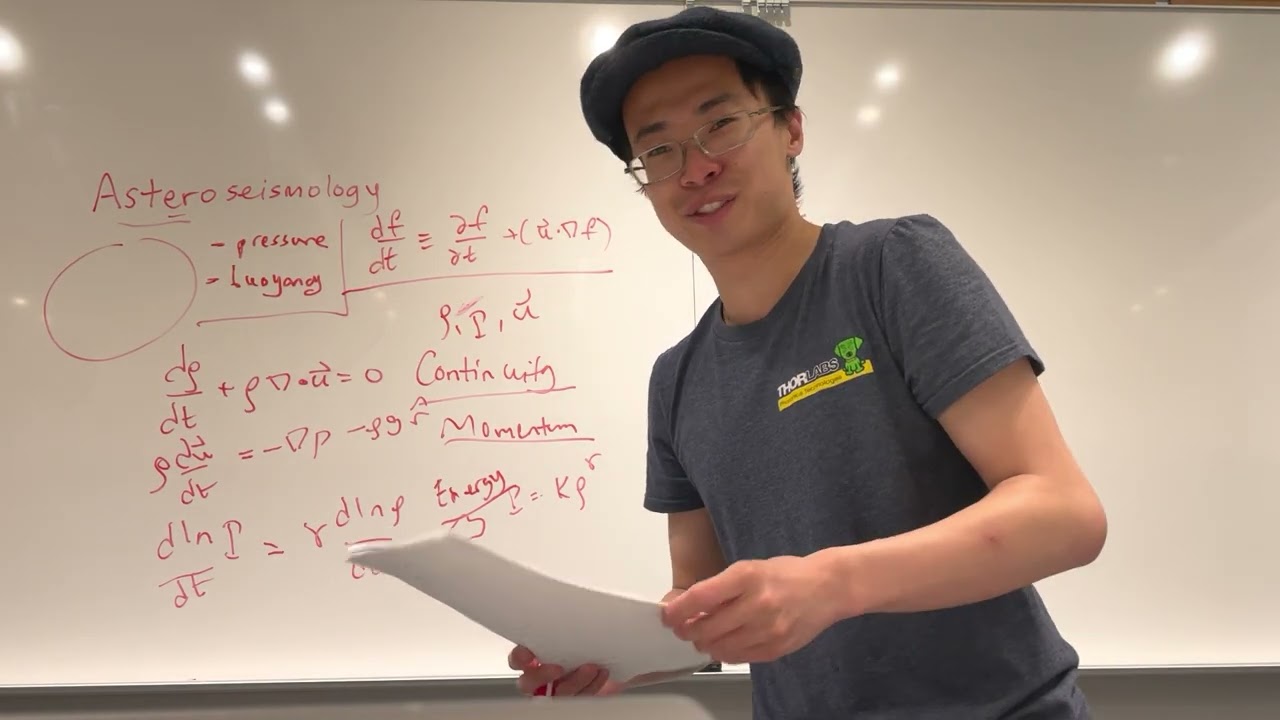












Asteroseismology is the study of waves inside stars that allows astronomers to probe the internal physics and chemistry of stellar interiors, similar to how seismologists use earthquake waves to study Earth's interior. By analyzing the frequencies of stellar oscillations detected through space missions like Kepler and TESS, researchers can determine key stellar properties such as mass, radius, age, and internal rotation rates. Different types of waves (acoustic, gravity, inertial, Alfvén, and tidal) are created by different restoring forces and probe different regions within stars, enabling scientists to reconstruct stellar structure layer by layer. This technique has revolutionized our understanding of stellar evolution, particularly for fast-rotating stars where gravito-inertial modes reveal internal rotation and chemical mixing processes that were previously inaccessible.
Asteroseismology of Fast Rotators: Stellar Evolution Insights
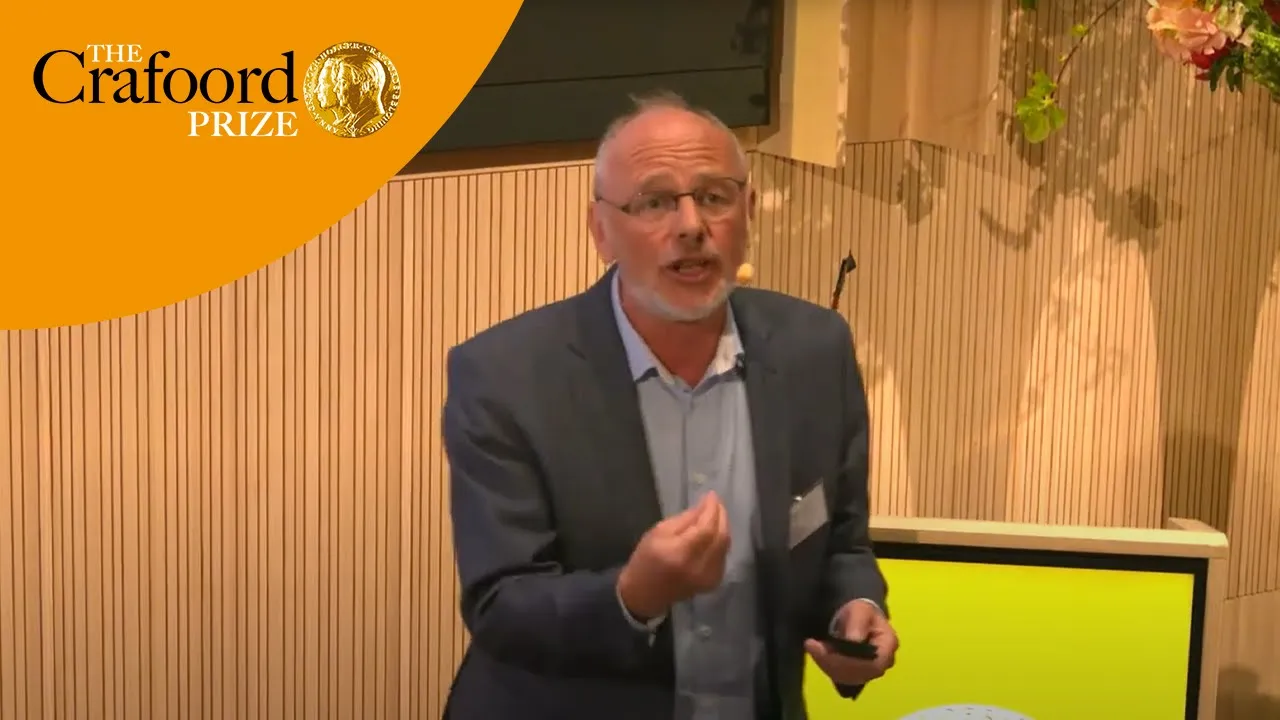
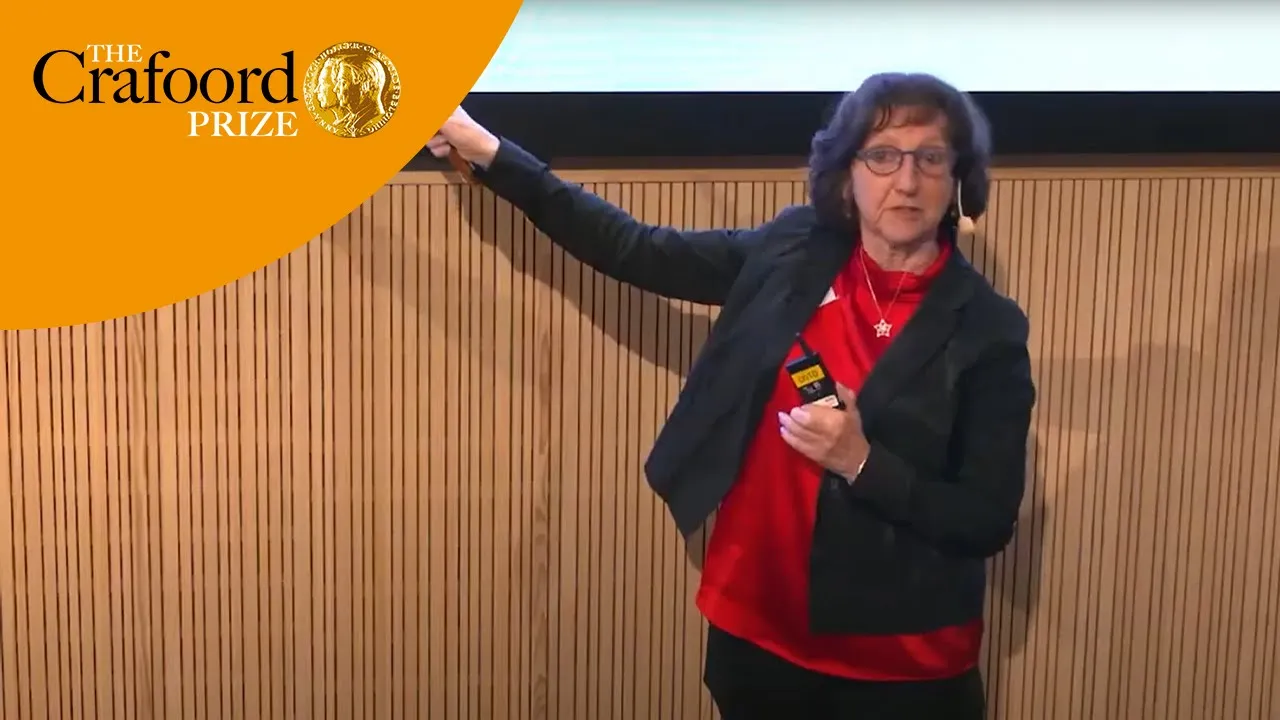
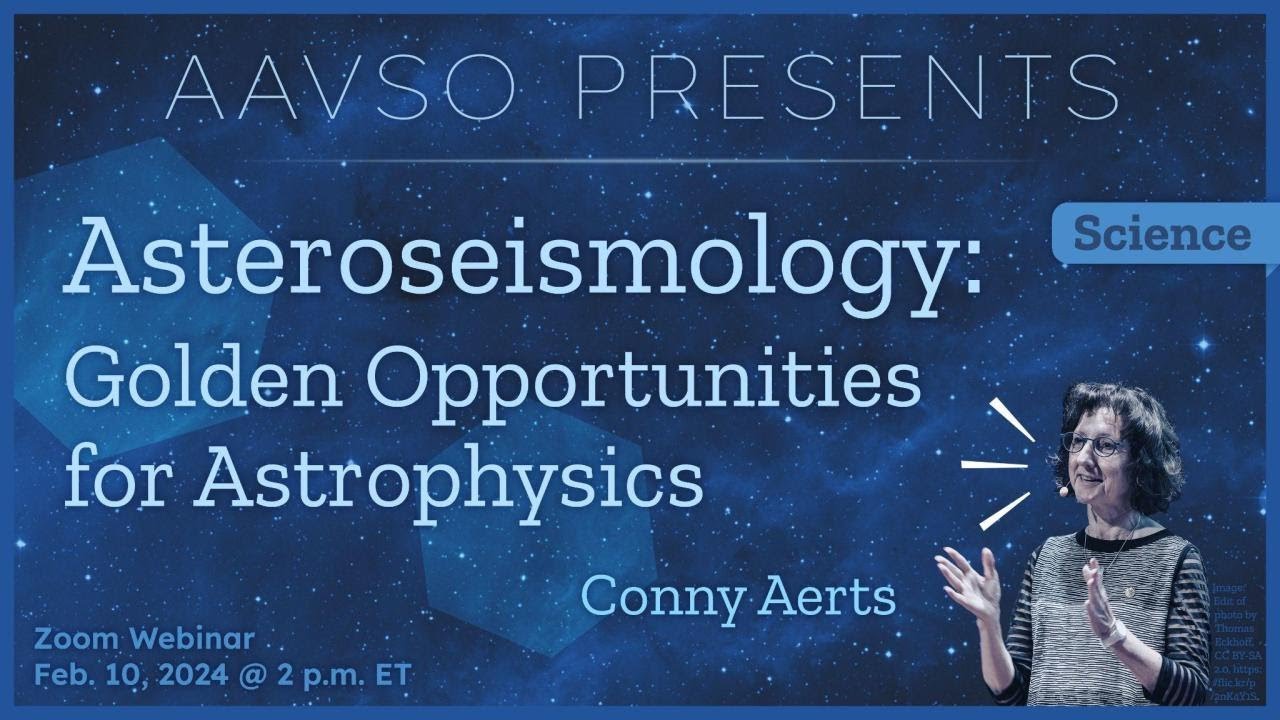
Added:e e e uh dear all welcome to today's SW roselan lecture s roselan was born on the 31st of March in 1894 and he passed away on the 19th of January 1985 after a humble start he in 1920 received a fellowship to study with Nils bore in Copenhagen during the next few years in Copenhagen and at Mount Wilson Observatory in California he made several theoretical breakthroughs applying the latest findings of modern physics to astronomical problems most famous is perhaps what is called the roselan mean opacity in 1928 at the age of 34 s roselan was appointed to the professorship of astronomy at the University of Oslo and the directorship of the of Oslo University observ atory with strong economic support from the Rockefeller Foundation the Oslo University Observatory was in 1934 closed and astronomy reopened in a new building at the new blindern campus as The Institute of theoretical astrophysics Swain roselan retired from his professorship and from being head of the institute in 1965 at the 100th anniversary of roseland's birth in 1994 we started a series of annual roselan lectur to honor his memory we have had many of the world's most famous astrophysicists giving uh the the roselon lecture this year we are especially lucky to be able to introduce to you Professor conards conards is professor at The Institute of astronomy KU Len in Belgium where she also received her PhD in 1993 besides her professorship at KU Len she leads the chair in asteros seismology at rwood University n in the Netherlands and she's external scientific member of the max plunk Society in Germany Professor Arts is one of the leading Pioneers in Asos seismology and she re received the C prize of astrophysics here in Oslo in 2022 when she received the prize the Cav prize the Cav astrophysics committee wrote her remarkable involvement in observational approaches to asteros seismology both from the ground and from space using data from Coro Kepler and Tess has had a very strong impact Arts is W widely known for her work on massive hot Stars extending the impact of Asos seismology across the Herz spring Russell diagram she's a leader in probing the interaction between pulsation rotation and Stellar winds through an integrated approach taking advantage of changing spectral line shapes as well as photo photometric variations in particular she developed clever methods to identify pulsation modes in massive stars opening the door to the modeling of their Interiors Arts also pioneered a rigorous methodology to identify and model gravito inertial modes in rapidly rotating Stars allowing estimates of rotation and mixing in stars with masses between 1.3 and 40 solar masses thus her work has enabled the first quantitative estimates of near core and envelope mixing leading to significant improvements in Stellar Evolution Theory so now we are really excited to hear Professor conard on Novelties in Stellar Evolution a steros seismology of fast [Applause] rotators thanks a lot per for this very kind introduction it's great to be back here um in Oslo where I was treated so well one and a half year ago this was the best week scientifically of my life for sure so it's a pleasure to be back and to even have a representative of the flamish government here which I'm uh very proud but I will mainly address the youngsters in the audience who uh come here to learn about asra seismology let's say okay let's keep going if there is one message uh that I want want to give you and to that I want you to take home from this lecture is that waves are fantastic waves allow us to see what is not visible and so I hope to convey that message to you throughout my talk and also about some methods where we can use this saying now you know about that uh medical doctors for instance know about that huh we uh take ultrasound well they do not me because I'm not an expert in that but they take ultrasounds to find out what's going on in the human body a bit more uh close analogy to what I do is earthquakes and you see here a seismographic measurement where earthquakes create waves and they allow geophysicists to find out what is happening deep here inside our planet in terms of chemistry and physics and I just do the same but then for stars now stars are gaseous spheres so they are not um uh crusty planets like the Earth is H and luckily for us earthquakes create waves but they are a very local phenomenon luckily for us human beings and not so nice phenomenon except for the G physicist who used the waves created during earthquakes in a star it's a little bit different a star is a hot cous sphere and it moves up and down globally as a whole in a complex way but the waves created can be analyzed in a very similar way so geophysics and astrophysics actually for that reason go hand inand it's just that the spherical body is a bit different and the oscillations are Global in the case of stars okay nevertheless we can use the same technique and here I brought a star that you see in the upper Di whose brightness effectively changes as a function of time so you see this blue seismographic measurement very much in analogy to what the seismographic measurement of an earthquake is but now for a very distant star in our galaxy and you see the variations indicated in the light of the star expressed in part per thousand prilla if you like that's the term we know also from from other human activities um so you see there is a lot of seismic activity in this particular star I've plotted it for 15 days but in reality this measurement takes, 1500 days this star is observed by the Kepler satellite uh uh funded and um developed by NASA and it has observed stars in one position in the northern hemisphere 200,000 Stars during four years uninterruptedly and so these type of measurements really allow us to study the waves that are created by this up and down motion of many many oscillations in this Stu now how does it actually work I often get the question why are you using the term asteros seismology it comes from Greek it's about sismic activity of stars as sesm sismos and then logos is uh what we are doing by the day huh we make some kind of reasoning or exploit the information that the waves give us in terms of physics and chemistry and so you can see that here in this graph huh um indicated as rath so waves inside the star where you can't look they propagate and four are drawn here in different colors so the Red Wave is sort of probing this outer layer huh and the blue wave goes completely through the star that's my favorite types of waves because the life of the star is very much directed in its very inner regions and so it's important that we can probe that and then you have this green and yellowish wave huh that bounces in certain regions as you see here yeah and so the trick of Asos seismology is to try and observe these type of waves from the uh measurements that I showed in the previous graph and then to make the following reasoning like this yellow wave here probes a certain region the green one too and the green waves go a little bit deeper inside the star than the yellow waves so by subtracting the frequencies of the green and the yellow wave we have actually a measurement that can be connected to the physics of the layer that is green here but not yellow huh and so if we we have many of these waves then we can reconstruct the physics of the star layer by layer and that's the trick that's the analogy to sort of the ultrasound you could say okay that's how we see the invisible H now where can we do this well nowadays we use space missions to do this signs huh and we are lucky enough that we can do that for many stars in our galaxy huh this is still a scientific case that is very close close to us it's our our backyard so to speak so it's not far away in the distant Universe no it's relatively close by why because we need to have a detection capacity for tiny little brightness variations and the star I showed in the beginning had parts per thousand so it means you see changes at that level but some only have parts per million like the sun has actually when it has its oscillations you can't see that by your own eyes your eyes are beautiful detectors but not strong enough uh to see the solar oscillations at the surface but of course we can resolve the Sun in the sky so it has an advantage so in brief we can do this type of science fairly close to us in terms of cosmological Standards okay now the galaxy has billions of stars and uh many of them have oscillations but not all right the the range in masses where we can do this type of signs is indicated here so for stars that have about uh only uh 0.7 times so a bit less mass than the sun all the way up to stars that are 25 times heavier than the Sun and so the sun is indicated here as a a star in sort of the lower Mass regime yeah and what you need to uh realize is that the more mass a star gets when it's born the faster it dies the shorter it lives but the more important it is for the chemistry of the universe so these Stars here these LMA Stars they live very slowly and in fact the ones in our galaxy were born shortly after the big bang so these stars are still in their Early Childhood as I call them the children of the universe right and they are metal poor because in the beginning of the Big Bang there was only mainly hydrogen helium and a tiny little bit of lithium and all the rest is created by stars huh including the material that uh we are made of right that is created mostly by these very big massive stars blue stars they are hot and they live very shortly in astronomical terms this means several million years which is very very short yeah here it's billions and billions of years okay so very many generations of these big blue stars have already passed in our galaxy and have given their material that they have created in their interior back to the Galaxy where new generations of stars are formed now we know more or less how this works huh but there are the devil is in the details I always say there are still quite some unknowns that we don't know yet and that's what the purpose is of astrology to improve Stellar structure and evolution Theory right now another difference that's indicated here is that stars on this side yeah are very slow rotators including our sun our sun takes about 26 days to revolve around its rotation axis right these stars are very fast rotators some even so fast that we have have them rotating at what we call almost critical rotation what does that mean huh um if you rotate well then there's a centrifugal force yeah and when that force is so big that it overcomes gravity that keeps the star together everything flies away and you can't have a star anymore and so these big blue stars they rotate fast they live a short lifetime they do a lot of uh production of chemical elements and then they explode as a supern right now the key difference in this story line is that uh the position inside these stars in terms of energy that they create in their nuclear uh Fusion yeah gets transported inside the star in a very different way in such a a light star compared to a massive star and that's indicated schematically here uh by these uh signs like these circles these are convective motions so that's turbulence that is happening in Stars boiling gas I call it right while in other parts like in the Sun for instance the uh transport of the energy is being done in a radiative way so by photons that find their way uh towards the outer layers and so this makes a big difference in the life of the star because if you have boiling bubbles then all the material is mixed all the time right while if you have a radiative energy transport then it's nicely slowly diffused and you don't mix your material so much so we know that there is a difference inside Stars blue ones compared to the very uh red ones huh high mass stars low mass stars but we don't know exactly where the transition of these convective turbulent layers versus these radiative layers where they are located and this is where waves come in because they tell us where they are located in a way that you can't deduce from simply looking only at the outer layers of the star so the waves are really important to determine these transition layers right now here are some oscillations of stars that are colorcoded in blue and red so you this is for a massive star so you have to imagine here is that turbulent core of the of a massive star and then the radiative zone and at its surface and in the interior the gas is moving up and down with different periodicities and with a different amplitude a different strength and so we Astros seismologists cannot see this directly these are animations these are not real stars yeah but it's to give you a flavor of how these non radiales uh oscillations of stars look like yeah so what you actually do is you if a star would not oscillate it would be a sphere would be boring it would be completely white uh in the animation but the oscillations make it move up and down and when it moves up it the matter comes to you as an observer so then it's blue shifted when it goes down inside the star the matter is going away from you and is red shifting that's why the color coding is used and so what we asmy have to try and do is unravel the light curves that I showed in the beginning and couple it to this type of mathematical functions that's not so easy and that's why it took us a long time to develop this field okay but nowadays we can do it um and you know since I'm uh I went a bit too fast since I'm in uh in uh here a tiny little bit of mathematics for the waves huh um the sun is a very much appreciated object here and the sun really paved the way of this uh of This research domain so here for the mathematicians among you uh and also the physicist of course here's the wave equation this is just a symbolic write down of an equation that mathematicians love to solve right and the solution of this equation is actually the displacement these red and blue patches that you saw at this Stellar surface right and so it goes like uh one of these spherical harmonic functions yeah and it has a Time dependence of frequency so our task is to unravel that and so let me simplify this for those who are not familiar with that type of mathematical formula don't worry I will not bring back uh other mathematical uh equations I'll just show you how it works the variability of the brightness let's say there is one Stellar oscillation one star Quake if you like with a certain periodicity and this is expressed in days so between zero and 0.2 days that's about five hours right yeah now what do we do seismologist we don't look at only at the brightness but we love to put this in our brain and in our computers in Fier space so if you f transform this sine wave that's periodic you get one peak in the frequency domain huh Engineers do that all the time because they need to know the vibrational frequencies of a bridge when they build it to make sure it can't collapse right when it gets perturbed well I perturb Stars well I don't do it they do it themselves and so I need to know the ion frequencies of these Stars right and here you see one Peak appearing because of this periodic variability of about five cycles per day okay now we don't have just one sign no we have a whole bunch of them this is the same star I showed in the beginning yeah so the measurement is a quite complex sum of sign functions that each have their own frequency and that is what we want because the way frequency is really determined by the internal physics so we for transform this and here you have the amplitude of the oscillations as a function of frequency and each and every black bar you could call it is a wave frequency and so as soon as we can measure these frequencies we can do seismology provided that for each of these we can find out what this spherical harmonic function is that is connected to this time depends and that's the tricky difficult part huh so mode identification as we call it has to be done for each of the observed signals for each of the observed frequencies we have to try and find out what the picture is what the spherical harmonic function is that belongs to it without being able to resolve the star stars are just tiny little dos okay and so in order to do seismology that is to say we have the obser oberved um uh changes in brightness that come from the surface but what we actually want to do as seismologist dive deep I'm doing it I'm making you dive deep into the star symbolically to find out the physical circumstances here right so we have to do a measurement of the frequencies of the waves and we have to label them with the correct spherical harmonic function okay now how do we do that well we use the Sun as an example before I go into that um what is dominant in the character of these waves that's the force that is bringing the displacements back into equilibrium right and so there are mainly five forces that I want to mention here huh and each of them creates its own type of waves huh so you have a star is a gaseous sphere a hot gaseous sphere that you perturb H you you move it up and down each uh oscillation does that and if you put a gas that is hot deeper together or if you expand it you create sound waves I'm doing it right now in this room for you and that's why you can hear me okay so you're quite familiar I think with sound waves even if you're not a uh in in the Sciences you know how to interpret them right on the other hand If gravity or bu uh is the dominant restoring Force that's when we speak of gravity waves yeah and these waves they prob really the interior of the star that's the purple wave that I had indicated in my uh beginning slides another thing that you know I think from experiments huh um if you walk on a merry go around for instance if rotation is occurring you have a coris for Force that's the same force that makes your water in your bathtu up rotate differently in the Northern and in the southern hemisphere the Coriolis Force when that's the dominant restoring Force you create what we call inertial waves huh they are happening right now in this planet whether you like it or not huh we are rotating H and we have a coriolis Force active in our planet and that creates inertial waves in the Deep core of the earth rotation inside Stars create inertial waves in Stars how can we unravel them or try to understand them well then we need to know how the Stellar gas is rotating around an axis this is very hard to do because we can see that for the Sun from its outer layers but that doesn't mean that the rotation that the sun has at its surface 26 days more or less doesn't mean that it does the same periodicity in its interior layers so this is something that we knew very little about until about uh 10 years ago and then some Stars not all have strong magnetic fields so there is also a Laurence force and that creates alane waves as we call them so another type and then some Stars happen to be with two we call that binary stars and as you know very well from the Earth Moon system that creates tidal forces if the tides are the dominant restoring forces of the Waves we create tidal waves so there is a whole bunch of waves that we must study and in fact there are whole communities for each and every restoring Force has their own experts in the field so it's quite complicated because these waves they don't interact separately all these phenomena they are acting together because there is gas pressure in the star there is buy for sure because the gravity force is active Stars rotate so they are uh you know also subject to a corio force whether we like it or not Etc so in practice these types of waves they get mixed as we call mixed character okay all right let's see so here's an axis with my equation don't worry about the equation but here I have drawn a very simple frequency axis so each wave is somewhere along this axis with a frequency for the Sun the acoustic waves are at high frequency they are you know typical for acoustic modes right a few minutes as I will show in a minute my stars well nobody owns stars but the ones that I favor sit in this part and then all these forces that I've just disc discussed they all interact with each other and there they create slow waves so here the waves are fast here the waves are slow okay these are easy you can ignore that there is rotation for instance these are not so easy yeah and so that's why our field very much got kickstarted here also thanks to the Sun and successors of the sun let's say okay now how do we do our daily work so to to speak well we have beautiful observations nowadays brought To Us by space missions huh you have seen this signal now already several times we measure the frequencies we try to label the way it goes up and down in in in terms of these red blue patches and so we have observed and identified oscillation modes right that's the observational part H instruments are being built are being calibrated and are being used by by observational astronomers then we have a left part that is a bit more complex huh let me take you through it we have a theory of how stars live their life right of how they are built how they are structured right this depends on their mass as I've explained in the beginning and the mass tightly couples to how long the star lives it's also connected to the chemical composition so the the the material it got at Birth and then it evolves yeah what we do is we have computer models mimicking the structure and the life of stars these Stellar models solve these nice complex differential equations um and then when we have a star it's being perturbed it's being displaced for each oscillation mode right so we compute what we expect theoretically to be the star quakes for each model right these are the theoretical predictions and of course we compare them and then we notice oh this is not a good match what do we do well we realize our models aren't great so we have to change the physics and the ingredients in our models we again compute the model we predict the oscillations we hope that we are closer to reality and we bike through this diagram a whole whole lot of times until we come close now the most precious unknowns here are actually this uh convective motion the rotation that is happening in the interior of the Star as I said and also the way the material mixes if you if you rotate faster then you mix your material way more efficiently you know that maybe from the coffee that you took just before the lecture right if you put milk in it certainly I don't know if there were spoons yes there were spoons of course you took a spoon why to mix the coffee and the milk a bit more effectively then if you were to have no spoon because it would take a long time before that milk and coffee would be merged and then the coffee is cold and it's not nice okay so gous sparce stars that rotate they are much better mixed it's the same phenomenon except that coffee is a fluid huh and the star is a gas so knowing the rotation of a star is critical to understand the chemical mixing okay now the first attempts that I tried in this field I'm still proud of that uh is for this star what you see here you see measurements about 1,500 measurements it was long before we had satellites doing this so each and every dot in this plot huh it took me going to the telescope putting the star in the diaphrag measuring the brightness and do that throughout the night right so this was not started by me in fact it was my supervisor who already started observing this star in 1983 then I was still in the uh studying mathematics and so it took us 20 years as you can see here to understand six oscillations of this star and you see them here indicated as black bars in the Fier transform now I was able to label these from the rotation that shift these frequencies uh that you would otherwise not see as three uh measurements so here you have three oscillations because there is an interaction between rotation and up and down motion of one oscillation mode yeah so if the star were not to rotate it would be one bar here not three we call that rotational splitting and it took us a long time because you have to resolve these frequencies you have to unravel that there are three and not one and from the ground that's very difficult because if you have to go every night to your telescope well you have to observe that and then there's the night and then there's rain and then there's technical problems and Etc and then the earth atmosphere is bothering the the measurements so it took really a long time now we do this type of science very differently so one star it took me in my uh early PhD and postto career took 20 years that's not a very good Prospect if you have a a career as an astronomer right you can maybe do one and a half or two stars I mean that's a nogo now we do that with machine learning and so I'm not going into details but we have space missions like Kepler and Tess Tess is working right now still they do millions of stars now literally true for Tess right and we have a whole battery of machine learning software uh people who unravel these oscillations and put all these stars in variability classes so rather than one star on 20 years we do now a few years and a you know millions of stars you see the big boom in this field right now let's go back to the sun the sun uh taught us how it works huh the Sun here has the solar solar oscillations plotted as a function of frequency the dominant one is about 3,000 microz that's five minutes the dominant solar Quakes go up and down in five minutes and there are many and so these are sound waves it's a slow Rotator if you go up and down in five minutes then you basically can say well I know there is rotation at the sun surface but it takes 26 days 5 minutes divided by 26 days that's the coris effect that's very very small you can ignore it okay the same is true for the magnetism the sun has a magnetic field with spectacular phenomena that people here in Oslo know much more about than me but it's a relatively low effect of the Lauren Force so you can also ignore it right and so from these patterns you can actually deduce the mean density of the Sun and mainly its size now of course we know how big the sun is because we can make measure it in the sky and we know how far it is but the dominant frequency here tells us since it's a density measurement we know the mass that means we can deduce the radius and we can do that with a very high Precision right only uh a very few percent uncertainty right so that's great we can do that for the Sun and here is a copy of the sun that's 16 signal it's a star that from the outside is a copy of the Sun a seismologist immediately knows that this is wrong as a statement right why because the dominant again beautiful oscillations it's similar to the Sun but the dominant frequency here sits between 2,1 2,200 microhertz the sun had 3,000 the sun was somewhere there if the frequency is higher than this star lower frequency it means that the sound waves need a the longer time to travel through the object it must be a bigger star it's as simple as that it's like musicians know this very well when they produce sound W okay so this star from this peak we know it's a bigger star and if the star is bigger then we can deduce from our knowledge of how stars live that it's an older star somewhat older but still fairly similar to the sun okay now why is this important because we can apply this to stellar uh uh oscillations of stars that also host planets so people who study exoplanets find it magnificent and here is a plot of that made by uh Ashley she's a PhD student and whenever I use a plot that's not in the literature I I put a picture to uh as a courtesy to the person who made it here you see uh many many exoplanet hosts the sun is an exoplanet host right and the colored symbols are stars where the host star of the exoplanetary system has oscillations that have been analyzed by Astros cism olist and the nice thing about that is yeah how do we come uh to find these Stars well from planetary Transit so here's your Star a planet comes in front and so there is a dip in the brightness variation that dip is very small and you need a high Precision to measure it exactly the same Precision than my starquakes right and so by measuring this dip you know how big the planet is conditional to the fact that you know how big the star is but you can't resolve the star H we don't see this in practice we only see this dip in the data right but if you notice the Stellar radius then you can deduce from this dip and from the duration of the transit how big the planet is and that's very important for exoplanetary studies right and of course we know how big the star is if we have seismology we can measure it up to a percent Precision so Astros seismology delivers input that's very important for exoplanetary studies including the ages of stars right now you see that here in practice these are reges this is what the sun will become when it's old when it's about to die yeah and you sees how many stars sevenish huh observed Again by the Kepler set light the black are the frequencies of oscillations and you see them going from about like 250 microhertz all the way up to like say 20 microhertz the sun had 3,000 so this is a way way bigger star because the frequency is way way lower 10 times as low okay this is what the sun will do when it's about to end its life it will become 10 times bigger we call that a red giant and this one is younger than that one and that one and that one why as the star grows old it gets bigger and bigger and bigger and bigger this takes millions of years but by stacking this for different Stars we can see that in practice okay now we can do that for all the stars in the galaxy and this was actually pioneered by the cor Mission but also by Kepler and from that we feed the information of the size of the star the mass and its age to archaeological studies of the Milky Way that's yet another topic yeah that I cannot go into but you know you can get the seismic radius and the Luminosity of the star we have that from the Gaia Mission that's another satellite that's operational right now so if you have the the Luminosity which is the energy output you know how far away it is so we can actually transform the oscillation signal that you see here into what we call an Astros sismic distance measurement and if we then compare that to a measured distance by another independent satellite we see that there is a fantastic agreement so that means we can actually provide ages and sizes of stars to Galactic archaeologist okay let me move on to my pet stars because I have to hurry up I see fast rotators now you know how it works for slow rotators we learned from the sun we know for successors of the sun they're all slow rotators now we go to this part slow waves in fast rotators and the waves are so slow that they are almost the same um period as the rotation and then you are here yeah now do stars do this yes they do here I brought one huh we have thousands but here you see the blue measurements again from Kepler overplotted is the Fier transform in black and all these Peaks are star Quakes to guide your eye because I suspect you're not familiar looking at this by the day as I am you can see a regularity by these red dashed Lins okay there's a strict regularity that is now in Period of the modes we're at very low frequency yeah so the the the each of these uh Quakes take typically half a day that's 12 hours if your star rotates at two days let's say then you better include the Coriolis Force because else you're making a mistake in the force balance right and so you see from the patterns that we recognize here that this star actually has all these modes plotted here in black as a regularity pattern and this slope this tells me how fast the star rotates how do I know that well you have your oscillation H let's take one and you have your rotation and so you as an observer if the star goes goes up and down and up and down the period that you measure is being dragged along like in my animations right and so the the the frequency of the wave or its period is coming faster at you when the wave is going along with the rotation so you get a shorter period and we subtract two numbers here because this is the difference in period between two of these red dashed line if you subtract two smaller numbers then the the outcome is a smaller number than if there were no rotation so each and every of these dots go lower values and to your left that's what we call a tilt in the period spacing pattern of the oscillations and by measuring this tilt by measuring the slope of this red line I know immediately how fast the star rotates this is fantastic I still find it fantastic by the day and this is something that the 11 team is really expert in this is what we put our efforts in in that high uh rewarding area where nobody else has gone before that's always nice right if you can do something like that and so here's my famous diagram that I already showed um one and a half year ago I've added one blue star now uh because this is how Stars rotate in their interior we have done these research for these 1,00 stars as you can see see by now we have about 2,000 which show that young stars are really fast rotators and then they spin down when they grow old right these are all more massive than the sun yeah and so from this we could deduce the way that stars rotate in their interior and the surprise is or was that the inner parts and the outer layers rotate almost in the same way so that's something that we have learned and as a conclusion for uh let's say up until up until the cavi price we knew we had the theory about a factor 100 wrong in terms of internal rotation okay that's good because we have now fixed that in seller models right so now I thought let's bring some new things that we didn't know yet and an exciting Discovery is about magnetism deep inside Stars you know I've shown that rotation splits up an oscill frequency into three components if it's a dipole mode right here you see that for a star that's a successor of the Sun a red giant and you see that this split up is not symmetrical you even see that by eye why because I have very much blown up the look this is below one microz this is a tiny shift but it's asymmetrical and what causes that the magnetic field that sits inside this Stu because because if you have a coroli force or a Lauren force and they act together then the split of the frequencies is asymmetrical so if we detect that then we have ha there is something going on in addition to the Coriolis force and this is a Laurence Force so this was discovered by gangan collaborators and Sebastian the hos who are people in Tulu only recently see last year so this is all exciting because now we can add a third Force right we have measurements what's also exciting is that like okay we have now Astros symy for individual stars but some Stars they live in in Star clusters and star clusters were born together and so we know they are equally old and they were born from the same chemistry so that allows us to put much more constraint on the uh computer models that we are creating and this is from my postt Dario fritsky who found that in a CL this is a color magnitude diagram of a cluster even for one of these Stars this one he discovered such modes that are affected by gravity and the Coriolis force and that means we can age date it even one star in the cluster reduces the age uncertainty with an immense Factor so that's what we are now focusing on uh even for a more younger cluster like this one this is one from Gangi who is now working in Len that's the same guy who discovered the internal magnetism he's now moving to Cluster seismology and he has found a beautiful cluster in test data that is even younger so we're gradually shifting to study Stars at the younger end of the um of the regime huh and the younger end that means we go gradually up to higher and higher masses so that's uh really an exciting field and here you see 11 pulsators in this cluster you know the diagrams by now where you see the oscillations in black and this red dotted line is in fact a measurement that we have of the internal rotation frequency and you see that they are intermingled the rotation frequency and the oscillation frequencies are about the same order and then you have these gravito inertial modes this is something else um two slides before the end uh again Dan hey is a postto in Hawaii and literally today just for you we submitted our paper where we we have combined Gaia Astro uh metry right distances and test uh photometry discovering 60,000 new pulsators we have work to do because the scheme that we have been doing so far is Star by star we we I mean I need I need more brains and I need more work power because as it happens we were able to show that of all candidate frequencies here in in an evolutionary diagram where we thought well Gaia just gives a hint these are candidates maybe they're not really true pulsators what we did is for 100,000 candidates we went to the test data we have 60,000 confirmed cases now we have to analyze all the test data of these stars and we'll see how it goes but this is fantastic news and then we also have binary Stars the title Force remember I can't go into detail but the higher you go in Mass the more chance you have a companion as a star to live with and then you have tidal forces and tidal waves a a whole new field by itself that I can't go into except to show you beautiful measurements stars do it right binary Stars close binary stars do show tidal waves and this is a whole uh field by itself that allows us to improve and study close binary Evolution um again I I have no time to go into detail but the basic thing is that if you have tidal waves they nicely occur at multiples of the orbital frequency just like the Earth Moon system we know when the tides come right at the sea we know perfectly when why it has to do with the orbits of the Earth around uh sorry the moon around the earth right here we see exact ly at multiples I mean 0 the orbital frequency when the tides are happening so this is again a whole new field and one of the leaders uh in this field is z guo who has just arrived in Len for his post talk so I'm very happy uh with his uh contribution also to this field La well one and a half year ago I was treated so well here uh uh with the cavi price you know at that stage was very uh stressful week in a certain way because I had to do an exam at the European research Council for a so-called Synergy Grant to study other effects of fast rotating stars that we nobody has studied yet I have carefully avoided one force for you the centrifugal force this is when stars rotate really fast why have I avoided that because if you have that Force active your stars get flattened they are no longer longer spheres and so far all Astros sismologo are no spheres they are flattened and so you see four smiling faces here because we did get that Grant so one week was both a cavely price and a big Grant to study this for the rest of my career it's a big long Grant and I'm very happy with that and real stars are flattened we can image that in in reality on the observational side we're building a new machine you see it here with me in the cleaning cleaning room at ISA this is the Plato Mission it's a fantastic Mission we're building it Belgium is heavily involved in this and uh I hope to see the data before I retire that's uh a promise and with that I think I will conclude and I hope you are convinced that Astros sommology really offers a fountain of opportunity is whatever your topic in astrophysics somehow I can connect to it and with that I thank you for your attention I think we have uh time for two questions if there are any in the audience yeah how do you determine the sperical harmonic modes sorry say that again how do you determine the SP oh yes oh yeah that's my pet topic because it was the subject of my PhD so it's about the identification how to couple the frequency to the identification of a spherical harmonic we do that by uh statisticians would say by pattern recognition right so we know how to label the modes for the Sun for instance we know the pattern and then for other stars we see if we can recognize the same pattern now we could do this for the Sun and for sunlike stars but there was nothing like that for fast rotators and so that's why we had to develop this whole new field to recognize that and so these patterns that I have shown like these uh these uh with these red uh Stripes let's say the computerist cannot follow me I tend to be too fast sometimes that's fine so if you this these patterns right they tell me that these are dipole prograde modes now that's because I train myself in the predictions and into looking at how the pattern should look like and I do that for different spherical harmonics and then I can recognize it but it's totally relevant question um you only can do it if you train your brain and we use neural networks nowadays to help us right time for one more qu final question if there are any yeah okay thank you again for the talk um my question is say I said in the end that uh the methods that have been used so far are for spherical Stars so in short how can you distinguish stars to be spherical or not when you can't resolve them ah yes very good question so if a star is flattened if it's a spheroid instead of a instead of a sphere like we have uh you can see that in this last uh uh graph that I showed here huh some stars are like that you know um the waves that travel through the star they feel that it's not a spherical uh body they they you know their travel time changes and so again this gives frequency shifts so we have to unravel the frequency shifts from the coris force from the Lauren Force if it's active and then on top of that of the centrifugal force and each of these forces gives a different shift so we compute mathematically how it's predicted to shift and that's how we do things so again it's about patterns and deviations from from spherical uh Stars would give certain patterns a flattened star will give another pattern and we compare these two but to be honest we have just started a grant as you can see here and I have yet to trade myself so your question is completely relevant okay it's it's very difficult also for a person like me yeah we don't have time for more questions but I just want to thank thank you again Connie with pleasure thank you so much uh for the those who have been invited to dinner and has accepted there will be a b
Up Next

Decade of Asteroseismology: Probing Stellar Interiors
@videosfromIAS
697 views•2016-08-01
First Billion Years of the Universe with the Square Kilometre Array
@iaaudc
121 views•2022-05-26

Kepler's Laws of Planetary Motion Explained (Educational Astronomy Video)
@Peekaboo_Kidz
404.9K views•2023-02-17
Gamma-Ray Bursts: Cosmic Snipers Explained | Astronomy
@kurzgesagt
15M views•2016-07-31
Related Study Plans & Knowledge Roadmaps
Structured learning paths in Astronomy