






The Free Will Theorem, proved by John Conway and Simon Kochen, demonstrates that if human beings have free will (meaning our actions are not determined by the past history of the universe), then elementary particles must also have free will in the sense that their actions are not determined by the past history of the universe. This theorem relies on the Kochen-Specker Paradox (which shows that quantum particles cannot have predetermined answers to all possible measurement questions) and the Einstein-Podolsky-Rosen Paradox (which demonstrates that entangled particles give correlated answers regardless of distance). The theorem implies that no correct physical theory can predict what a particle will do, because particles make free choices that are not functions of the past. This suggests that quantum indeterminacy is fundamental rather than merely epistemic, and potentially explains how human consciousness might arise from quantum processes in the brain.
John Conway on the Game of Life & Set Theory
Added:all right so uh it's a great great pleasure and honor to have Professor can with us today and uh he agreed to come to class I talk to him that one of the topics in the class is protein folding and he said I don't have anything to talk about so I said you know we're going to just have a discussion about themes that would be uh let's say mathematical foundations for or questions in mathematic that have relevance because if you don't understand those you cannot make progress to the next level or at least that's how we think okay so I don't understand those but how about something very very simple like sphere packing simple comp with yeah well very simp I got involved in sphere packing I uh don't suppose um much of what I did will be terribly interesting to you because it's usually with respect to very high Dimensions so you know I uh I worked on this packing of spheres in 24 dimensional space which has actually recently been proved within the last year or so to be within one part in 10 to the 33 of the best density you can get in 24 Dimensions funnily enough you can only hope to answer these questions in one 2 3 eight and 24 dimensions for reasons I don't understand at all um but I got very interested in the sphere packing problem and wrote a book with a friend of mine called Neil Sloan he likes to work and I don't really like to work so um you know he did most of the actual writing uh on the sphere packing problem yes um I don't know what to say about that let's well so uh you know then more recently by the way I worked with Salto you know I believe or don't you Salto quo no I thought we had a common acquaintance there um he's interested in packing other things and um we wondered uh just as a sort of sample problem about packing the regular polyhedra yes um now cubes are easy to pack you can get density one with cubes um we answered these questions for everything except the simplest Reg you a polyhedron the tetrahedron and there you can get a density of about 75% but it's not at all clear that you know the packings we know there was a young Chinese American lady Beth Chen who found what is currently the record for that um what was I going to say I had a brilliant idea a moment ago and it's just vanished it'll come back so it's a similar phenomenon only for some uh type of polyedra you can find the density well no well you can't you can't answer any questions here I mean uh you know the simplest question of all roughly speaking is you know how densely can you pack spheres in three-dimensional space subject to no other constraints and there Kepler who's a hero of Mine by the way kep peer guessed the answer in 1613 um and then um Newton and Gregory had a bit of a discussion about it um uh they had a discussion about uh the kissing number problem how many spheres can touch a given one kiss you know is a billions term but it's also rather nice some us like kissing um and um uh how many spheres can touch given one of the same size the answer there was only uh found in the 20th century by my friend John leech um although again it was guessed before and a hand waving sort of proof was given in the 19th century so it's often said that this was proved by so and so but it wasn't really um the answer is 12 uh the thing about packing 12 spheres around a given one is they're actually quite loose I proved a nice little theorem suppose you're 12 spheres are numbered 1 to 12 and you think of it like the 15 puzzle if you know that you can slide little blocks around and get different orderings I proved with a friend of mine that um taking 12 spheres touching a given one you can achieve any permutation of those 12 spheres while keeping them always touching the center you know so you sort of roll them around and you can get that's a good idea of how loose it is so I don't understand the result can you just randomly rename them in any teration well no what you can do you know you can here they are one is here two is here three is here and so on and now I can roll number two to where number one was and roll number seven to where number two was and so keeping them all um touching the the central sphere are never overlapping each other um there's a funny thing about that you can get half the permutations without let's call the 12 spheres the planets because they're sort of rolling around the Sun um you can get half the permutations even if the planets are slightly bigger than the Sun there there's extra space you know um I don't know whether you can get all permutations if if they're the same I mean if they're slightly bigger you certainly can if they're exact the same size but on the way they sort of graze each other if you understand what I mean um that's that um say something else all right so uh do you understand why the proof uh first of all hail was a student in a way the problem or what was this in a way yes I you know I don't know because I didn't know I'd I'd inspired him so to speak um yes so I I don't know whether any of you know the history of this kepo wrote a little book dedicated to his Patron the something of something um in which Uhl yeah the six-fingered snowflake it's called um and he talks about many things in there not just sow snowflakes but um in particular he um he wonders how well you can pack spheres in three dimensions and came up with the answer which is the standard way you used to see I haven't seen them for some time oranges uh stacked at the green grossers and so on um it's not sort of unusual and there there's some variations of it which are interesting um but um uh it that was only conjectured to be the best possible density roughly speaking there's a statement somewhere that uh what is it many mathematicians believe and all physicists know that the answer is such and such you know well we all believed it but we didn't know um and um this gave rise to some problems there was this man uh wui Shang uh who was a brother of uh one of my colleagues at Princeton actually Wu Chung Shang um who uh announced he had a proof and you know he didn't really I don't want to uh animadvert on that too much but um well maybe I'll tell a story as long as you promise not to repeat it in too much detail outside this room um uh so I wrote this book with Neil slow and we also um wrote some papers just on the sphar packing problem and um one time we got this preprint from Shang uh announcing a solution to the cap problem and um oh and by the way before that happened Shang came and gave a lecture on his solution at Princeton and um I sort of basically believed him then that he had a solution uh uh or sorry a appr proof that the solution was optimal the was however one funny little thing which later on I wondered about um which is uh he defined in this lecture a notion of close neighborhood okay a sphere was a close neighbor of some other sphere if some condition and some other condition some other condition and um and I didn't quite understand this and I sort of put my hand up hesd and said uh so it it seems that a can be a close neighbor of B without B being a close neighbor of a uh is that the case you know have I understood it correctly and he said yes that's true I mean it's an asymmetric relation um and then uh then he proved a theorum that a sphere could have at most 12 closed neighbors but then he went on to deduce some consequence of that but what he seemed to be using was that a sphere could be a close neighbor of at most 12 spheres in other words it would be the same if the relationship was symmetric and again I put my hand up and I said isn't this the you know the uh interchange of what you had or something I can't remember I I was very hesitant cuz I wasn't really listening terribly much um and I I wasn't quite sure that you know I had got something wrong you know and basically he said no I think you'll find you know if you think about it I've got it the right way around um so I shut up and then uh next morning I saw him and in fact I think I said we must discuss this tomorrow morning but I think I was right you know uh and next morning he came and he said oh I'm so sorry you were quite right um uh I originally had a symmetrical relationship but I found I could cut 10 pages off the proof by making it asymmetrical and I didn't quite get it right well I believed him you know um but it was a a sort of funny thing you know um in memory but then it turned out when we got his preprint I looked at LMA one and LMA one had something wrong with it basically it used the fact that um we had three spheres whose contact points formed a spherical triangle with a given sphere in the middle and um so the edges of this spherical triangle were at least such and such because otherwise the sphere would overlap and um he worked out the area on the assumption that there were exactly this much and uh then use that to get some inequality that at most 12 spheres or something I don't know what it was uh but he he made use of the principle that if you have a triangle and you increase all its Edge lengths then you increase its area that principle is false you know if if you have a triangle whose edges are one one and one you increase them all say to two two and four and now now the area is zero um but I wasn't quite sure maybe in context you know if you added some other condition which he would probably tell me you know um anyway there was something wrong with LMA one but may but it wasn't obvious it was really wrong and then there was something wrong with LMA 2 and then there was something wrong with LMA 3 and I said to Neil uh I don't want to read lopor nor anything else by this author said um and um it's a sign of how touchy the problem was actually um but um well maybe I should cease anim adverting on shang's proof uh it's not generally accepted now I mean he he worked through it he um he made these lemas correct you know they could be patched um but roughly speaking if you don't if you find things simple things wrong with Lemma 1 2 and three you don't believe anything is true about Lemma 47 you know I mean it it's so hard and fortunately this problem was attacked by this other mathematician Tom hailes who wrote in a totally different style and everything was as tight as you could possibly imagine but you know the problem lasted from 1613 to 1990 something yes uh and it it's just terribly hard you know it's a mixture of inequalities and combinatorics um and um any of these problems if you want a solution to satisfy a mathematician you probably don't but I mean if you want a math a solution to satisfy a mathematician you're not going to get one roughly speaking they're just too hard for us at the present state of development by saying uh combinator inequalities you mean uh continuous math and discrete math mixed yeah um it's very similar to protein folding yeah no you're not going to get any solutions you know well I mean no but I mean I don't think that's wrong you know bad or anything I mean it's the question ready for such results well yes if you actually if yeah if you actually want um you know provable uh results the the sphere packing problem is you know it stands as a sort of awful warning you's a problem posed in 1613 the answer is actually quite simple um but the proof was hell um and um you know so in this kind if you make it more complicated than that in some way uh you just add another few centuries onto the expected uh you know proof date uh and I'm not interested in things that are only going to be established in 2300 you know could could there be concept of approximation that um for which the proofs might be easier and still kind of do the job in the sense of well you do it no I I mean um I don't think there's anything wrong with this you recognize what kind of problem you're dealing with and what kind of answer you're prepared to accept um you know and if you demand an answer at the mathematical level you know of total proof um well it's just rather unwise I mean it's no good you can you can ask for the moon you know you won't get it so um you know what happens I mean it these problems in packing other kinds of polyed that I was speaking of you know we never bothered to sort of ask for proof except for the cube for the cube it's easy um but um I am absolutely sure for instance um that we have the the densest packing for the regular do decahedron and for the regular octahedron um what so that's three of them then there's the icosahedron I'm not quite so sure we have the best packing there but we probably do and then for the tetraedron no um but even in those cases where I say I'm absolutely sure oh have you can you prove it no no no idea um uh you know and I don't expect to see one before I die I'm not interested in the proofs that come out after I die and it's well isn't ramanan I'm interested in the answers yeah go ramanan you know he had some infinite series for which nobody could prove them yeah but that's no that's a different thing though because that was in a sort of well traversed area of mathematics and it was reasonable to expect proofs and we got proofs in the end um these uh sort of combinatorial and geometrical problems you know the sphere packing one should be the easiest in in some sense and and it took what is it 1630 to 1990 something 370 years roughly um and uh dream team of people working on it yeah um you know I always thought well I thought when Shang was talking about it that um uh why waste your time doing it cuz the payoff isn't large enough you know um you could well you could work for for a long time and proed this but well is Tom hailes famous well uh the latest uh I think the latest comment on his proof is that scientists believe that the proof is 99% correct yeah but that's nonsense I mean that's a terrible thing by the way which is shang's influence uh let me just tell you that um uh when hailes came up with his proof which he uh involved computer splitting of the thing into 2,000 cases roughly and in each case you had to verify certain inequalities and these he was oh and by the way I should say haes and Ferguson his student um he was tremendously careful uh so you know you had an inequality let's it was usually an inequality in several variables but let's suppose it's an inequality in one variable and so you've got to prove that for all numbers between n and one f ofx is less than G of X you know and what he did basically was did to divide the interval into 100 sub intervals and then get estimates for the derivative upper and lower bounds for the derivative so that now you you know you had these two points 100th of a unit apart and the derivative is Here is known and the derivative Here is known so you know the function lies between something and something and all the arithmetic was done with interval arithmetic you know which is so that you can get precise things it wasn't just up to so many places of decimals and so on astonishingly tight it stands as a monument to that kind of proof but unfortunately Shang um tried to raise doubts about it at all times um and um and uh the effect has been a bit pentious um I know I had a heart attack uh a few years ago and uh the annals of math at Princeton was about to publish ha's paper and um I had just got out of hospital and I I telephoned the editor and said I'd like to come in and make a presentation to you about this proof because I I had heard rumors about how they were dealing with it and it didn't seem satisfactory to me um I didn't have any right to say that but anyway um and I think they behaved uh very stupidly in a way namely um how can I say what I'm trying to remember what happened they got uh two teams of referees to attack it you know usually you send a paper to one referee this time they send it to two teams of referee uh one of whom was sort of satisfying the basic geometric method um and the other team was certifying the computations being used and so on and um these teams reported various things um but they said you know we have not checked every case well you don't expect referees to check every case I mean the job of a referee is to assert you know is can it be proven this way is it likely that these authors have proved it and so on it's very foolish to imagine that the referees when a a thing has been split into 2,000 cases the referees will check every case after a time you have to trust the honesty of the author um so in the end you know this paper was published with um with an editorial note describing this and that editorial note by the way I sort of wanted to come and make a presentation because I heard of that I wish I had um but the editorial note had the effect of casting doubt on it because it says you know the referees did not check every case you know which uh Sounds by definition a proof that is not humanly checkable it was a ridiculous statement to make there's no other proof like it in this respect you know there were the previous analog was the proof of the fourcc color theorem which was done you know by computer checking of lots and lots of cases that raised a lot of doubts because what actually happened was the case tree was generated by hand and lots of errors were found because but they were all in this hand part um but there was a lot of discussion at the time it came out that you know if a proof is not humanly surveyable is it a proof but in this case the part that was um was being discussed as if it were the new thing you know the computer generated path it was the reliable path the unreliable part was the part that the humans uh you know took in there's been a lot of nonsense talked about these sort of mechanical machine assisted proofs that let me say um but um it looks you know with prob s like this it looks as though we're going to be in this state for some time you know there will be other theorems proved only by Massive you know interaction between humans and machines and there hasn't yet evolved a satisfactory sort of protocol for them I think um so uh another concept that shows up in B folding that has tremendous mathematical difficulties self-avoiding walks the backbone of the prot this is also notorious we cannot count them we cannot uh find formulas even enumerating them and all chemistry uh formalism needs somehow to mod this you can simulate they say probably we enforce it through constraints and it's always yeah hard but you know every time you say the phrase protein folding I go well my you know knowing nothing about this subject well but we're talking about foundational questions related to it so what is have you worked at always self-avoiding works and a little bit counting them and why but don't ask me anything well I mean you have no right to to imagine that a problem's going to be easy you know why should a problem be easy some problems are um some problems aren't um and I don't you know I don't see that you know you need a reason why anything should be hard you need in fact a reason why anything should be easy uh you sorry okay oh I'm sorry yeah okay get closer together now listen I was telling you some anecdotes before we started let get some anot um yeah well there a few anecdotes about F Nan uh f noan um has been a sort of um well a source of inspiration to me uh and um and now I'm very proud to be the John Von noan professor at Cambridge the John Von noan distinguished Professor you see look at this it's distinguished but um uh but because I've never really done well I don't know it's hard to say um I haven't got any ideas for how to do mathematics from Von Norman roughly speaking that's a true statement um but um I have got a number of problems from vanon noyman and it's rather nice I get in invited to Van Norman type celebrations every now and then um and there was one in Hemstead Long Island and well let me tell you a nice anecdote about that that was very funny vanon Norman's daughter Marina came to tell us about life with Daddy and uh she was um a very self-assured woman very striking woman especially since she was dressed in a red dress and a very very expensive looking red dress I may say she was um some kind of executive at General Motors and um she came supremely confident it was one of those lecture rooms where the seats rose up to the sky if you understand me physics type leum she sat on the de at the front swinging her legs and told the stories about life with Daddy but the funny thing about this was next day we had Edward Teller who had worked with Von Norman and he did more or less the same thing except that he wasn't dressed in a red dress and um he spoke about life with Johnny um and then the funny thing was the The Peculiar thing was at the end of teller's talk some sort of lowly graduate student raised his hand and said what can you tell us about Von Nan's children and tell said there were no children and to everyone in this audience had seen a child of Van Norman's and you know they at least knew that this child existed you know I mean existed in a very strong sense in a red dress and which I remember to this day so quite striking um however nobody said a thing because it would have been so rude to say but you know we had R Norman's daughter here yesterday um so there's a nice little anecdote for she coming in may we have a big Symposium we have days for M days John is coming back and V Marina is going to well I met Marina again at another Van Norman celebration uh in Detroit no in an arbor near enough to Detroit um and I told her this story I don't think she believed me actually so she wasn't the second day of the conference she wasn't there when no she wasn't there she just came you know she was uh you know she had lots of things to do um and so she could only afford to spend one day tell her only spent one day too you know uh um but it was it was a rather funny thing I had lunch with them with Marina and her husband and um George Dyson who's Freeman Dyson's son who I know quite well um he is coming also as well as his father Freeman is going to actually give a lecture on p man oh yeah he wrote recently in notices did you see the bird and the frogs I didn't say it no oh it's a good thing and he talks a lot about yeah he he's a wonderful guer I love what he says um but you know um how does anybody know of My Life game here the existence of it a few of them okay well let me tell you how I got that uh because this is one of those things that in a sense was inspired by Van noyman um uh there was a thing called automat studies or something uh I think it appeared in the ' 50s yes and uh I read this and I think it was from there that I heard about this uh idea you know the cellular of automatan um and this came from uh some discussions that Von Norman and a few friends were having you know in an informal sort of circumstance circumstances about colonizing the planets basically and um so uh they mathematized this I think it was Von Norman himself who mathematized it uh so you call this planet you're colonizing Mars and we basically model it it's an infinite plane as far as we're concerned and then this is divided into squares and you mark in each Square what resources it has in that square you know lots of iron or probably because that's what makes Mars red and so on you know and um uh and then you send over a machine um and just one machine clever machine and this machine is supposed to be capable of building a copy of itself um or roughly a copy of itself let's say a copy of a machine rather like it and um so it starts off it's a fairly big machine it starts off smelting some of this iron ore that there is that Mars is largely made of and you know produces steel and things like this um and builds another machine okay and now we've got two machines and they both are working so next time we'll have four machines and so on and uh soon we've got a sort of whole Army of machines all over the surface of Mars busy humming away producing more machines or something except that they'll change into a new phase when well you know what do you want them to do I mean they they're programmed after you know you've built a reasonable density maybe you start um getting oxygen out of this iron oxide and building an atmosphere suitable for the humans that you're going to go there later or whatever you know the basic idea is to build a self- reproducing automatan and um and so vanman was faced with the problem of can you do that uh if you want to build a machine to build a copy of a let's call this machine B does B have to be more complicated than a you know in which case you'll never get there you know um uh but uh he proved with this notion of cellular automatan that no it didn't have to be more complicated and the basic idea is in fact you do what human genetics does um you have a tape which specifies the machine you're to build and what the machine does is you give it a tape you know and it builds the machine specified on that tape um and um if you can do that then in particular you can make the thing build itself because you sort of say um you work out you work out the Mach the tape for the machine to do this and then you feed that tape into the machine you know in other words you feed its own tape that's roughly speaking how we operate you know we have DNA and um It's Complicated by sex of course so many things are but you um you uh you take the tape from your father and mother but we only need to have a mother for this purpose in fact um and um you know she hands you some of her tape essentially um it's very clever and what happens with Biology is so clever because it's in every cell of your body you know it's not just one tape somewhere it's all over the place the whole thing contains a recipe um so anyway V Norman eventually found a cellular he designed a cellular autometer and I don't know whether you know what a cellular autometer is each Square can be in one of finitely many states um and uh it operates usually with discrete time so it can be in one of finitely many states at time T and at time t+ one its state is found from the state of it and its neighbors at time T um and vanorman buil a system in which uh each Square neighbored four other squares could be in one of 29 States so we have a function from 29 to the 5th to 29 if you understand me they're 29 to the 5ifth possible um States uh of uh of this sort of cross-shaped thing of five squares and he uh in his paper at the back this transition function is specified somehow by a lot of tables I only saw this paper once um and uh then there's some argument which I didn't read to the effect that uh you know this uh is a self-re producing automatan and so on um well the construction is in his unfinished book yeah I don't know I saw it in a typewritten version I don't yeah there is reliable components from my relable no that's that's in the that building un build building reliable out of unreliable is in the orange book uh this thing isn't and I I don't honestly know where it was but anyway um I sort of thought I had this uh idea in many ways it's not my idea only I mean all sorts of other people had this idea I'm not claiming originality for it that the thing to do was not to design your solido automatan uh but to find it um and um so you see if you design it then you want at some time the facility to do such and such a thing you build it on you desire you add some states to do that thing and then you know and they then maybe you want the ability to transmit information across the plane well you build a signaler you know and in this way the number of states that you have to have in your machine Rises you know and it came to be 29 Van Norman did it pretty efficiently he only needed 29 but I always thought that um you should be able to do it with two in other words on and off with the two states and um and then um you couldn't very well design something to be a universal by by the way I'll use the word Universal rather than self- reproducing in a m because the universality is in fact in the sort of intended application stronger than the self reproducing it'll build an arbitary thing in particular it'll build itself um but Universal is the usual phrase for sort of computer ability Universal computation um so let me tell you my sort of dream for that uh it is um you let me into a sort of uh electronics Warehouse where things have been lying around since the 1950s because I sort of understand the electronics of the 1950s roughly um there are various components you know resistors capacitors valves or tubes as you said said in this country and so on um out of which you can build clever electronic machines it's it's been mouldering there since the 1950s though um and then you know there was a Madman who lived in it for a few years and he just went soldering everything together in at random roughly speaking and you know you put a power supply in there you might have to get one that hasn't been mouldering since the 1950s so it still works and then you let me live in it you know here's this big machine with a whole lot of electronic components just saled together at random I believe in there you can you have the ability to do computation I sort of dream of myself pressing this button here oh and a little light flashes over there and I do it again you know and then I gradually I'm I'm playing a sort of symphony with this machine all sorts of lights are lighting I suddenly discover I I've found a way of adding you know um and so on and basically I I believe that if you you do connect connect a lot of electronic components together with virtual certainty enough of them with virtual certainty you get a universal computer um and I that's only one instance of the belief the belief is in general make things at random with some kind of capacity and then it'll be Universal and and the life game was an attempt to prove this um and you know in my life game I just had the uh thing that um I I let the cell the state of a cell depend on the state of it and its eight neighbors the ones differing kings move away um and the dependence is very simple if it was dead at time t or should I say empty at time T it will be full of time t plus one if and only if it had three full neighbors let me say live neighbors and if on the other hand it was alive at T it will survive in other words still be alive at time t plus one if and only if it had two or three neighbors those rules came as a result of lots of experimentation at coffee time in Cambridge on a goboard we used to play with these things and this set of rules eventually um crystallized out because well the time we knew it had worked was wonderful Richard guy was visiting Cambridge at that time Richard guy I had a telephone call from him two days ago he's now 93 um I should have reminded him of this thing and um uh he was given the job of looking after a small piece that didn't seem likely to be interfered with by the rest of the configuration for some time so he could just be on his own he's a careful precise man um we called this at blinker watching which was a slightly insulting term but anyway um and um one time he said come over here I think my bits walking so we came over there oh by the way I should say we we did this thing on coffee tables square coffee tables um with go boards and you could fit 16 Gob boards onto one coffee table and then you could call for more Gob boards to be placed on the floor if it sort of went off the edge of the coffee table um and um so his bit was on the floor he was fiddling around over here with it you know um and um he said come over here my bits walking so so we came over there and that turned out to be what we call the glider in in the Life game uh and uh we' wanted one of these things we we called them spaceships before we found them before we found this one spaceship is just something that moves across the plane uh reconfiguring itself you know so um and of course we wanted one of those because um it would carry out the signal possibility um and as soon as we found that we knew so to speak that we had it made or at least we strongly hoped we had it made um and I wrote off to Martin Gardner with whom I was in Fairly regular communication at the time and told him about this he got very excited and I sort of advertised for what later turned out to be the GL glider gun uh that's a thing that emits gliders every so often which we needed in our attempt to simulate a computer this was to be a a pulse generator a source of regular pulses um and um I offered a $50 or $100 prize I can't remember now I think it turned out to be 50 and then but I didn't have to pay it anyway because there was some sort of legal reason why the Scientific American wouldn't let me pay they paid so fine I didn't I didn't object to that at all um and anyway that started off a hair raising thing we actually proved that this life game was Universal um I shouldn't perhaps be talking about the Life game but it you know it was a very exciting time and it was essentially suggested by van noyman so his name came into the ACT well we protein folding is part of life life uh yeah the trouble is um how can I say it uh well I can't say I'm not interested because I'm interested you know but um I'm not interested as a mathematician I can't sort of see any way in which you know mathematical knowledge helps in you know I mean computational ability doubtless helps it helps in simulating stuff um yeah I don't know I'm here on false pretenses so you said that inspire you on several problems what else oh oh my yes um well van nman you know started off in mathematical logic his thesis in the 20s was on Ma mathematical logic and set theory he had a very extravagant kind of set theory but perhaps that would take us too far a field if I describe that but there's one particular thing his definition of what are now called vanman ordinals which uh you know the're things like zero 1 2 3 and so on uh however the and so on in that is rather longer than you might expect after you've got not one 2 3 dot dot dot you get Omega Omega + 1 Omega plus 2 Omega being the first infinite ordinal and Kor defined the ordinal numbers or found the ordinal numbers in the 1870s but vanman did a very beautiful thing to cantor's Theory the question is what is zero you know well uh van Norman's answer was we can take zero to be the empty set Okay now what's one well vman's answer is you can take well it's the number after zero um but Van's uh notion is that you can take for its definition the set consisting just of zero in other words the set let me draw some curly brackets here consisting just of the empty set um so what's two two is the set cons consisting of N and one three is the set consisting of not one and two that's van Norman's definition of the ordinals oh yeah I could so um yeah okay get one that works um I have to write left-handed I'm naturally right-handed but I have to write left-handed nowadays so zero oh sorry and as you see I'm not too uh good at it and you asked me to find something that works and I gave you the wrong one okay well this this worked reasonably well um so zero is the set consisting of nothing at all it's got no members uh one is the set consisting just of zero which if we write it out in full is the set of the set you know well anyway it's just that there's nothing at all in there and then two is the set consisting of not and one which is the set consisting of the empty set and the set whose only member is the empty set and then three well it gets worse um and um this is a beautiful definition it seems sort of slightly crazy but if you want to count things this is perfect uh you see two has two members namely zero and one um you know and five has five members namely 0 1 2 3 and four and this definition continues to work past the finite Omega is the set consisting of Zer 1 2 dot dot dot you know all the finite numbers and so on that's the definition of vman's ordinals they really canor ordinals but vman's way of attaching a particular set to each ordinal is is very very beautiful well I came up with a generalization of this notion um it's also a generalization of the standard definition du to dend of the real numbers uh in uh the problem is with irrational numbers let's take uh say Pi what is pi what what object you know shall we make that that's there if you only know set theory and that will serve as the number Pi you know 3.1415 and so on um well dein's answer is to let Pi be all the r it be the second between all the rational numbers less than pi and all the rational numbers greater than Pi so you cut the rationals into two places at the point Pi so for instance you know 3.14 is on the left set and 3141 is on the right set and so on and uh that's the definition of by um well I came up with the things called The Surreal numbers in which the basic idea is you give me some numbers a number will always mean surreal number I just don't want to have to say it all the time I didn't invent that term Donald K invented it um and um you put some numbers on the left and other numbers on the right and as long as every number on the left is less than every number on the right you have a new number okay well let's take this case where there are no numbers on the left and no numbers on the right well then every number on the left is less than every number on the right obviously you don't have to check very much there are no cases of this to be checked it's true you give me a counter example you'd have to produce a number here that wasn't less than a number here well you can't even produce a number there so it's it's true anyway so that's that's my definition of zero um and then the definition of one is the simplest number greater than zero which I get by putting zero on the right on the left and nothing at all on the right and then the number two and you see this parallels van Norman's construction you put zero and one on the left and nothing on the right dot dot dot and if you always March towards the right in other words you never place any numbers on the right hand side you never say I want it to be less than something you only say I want it to be more than something uh then you get the one Norman ordinals the parallelism being you know whereas when whenever uh Von Norman had a definition I have the same definition except that I don't put anything on the right you know I have a slash and then there's nothing to the right of the slash but now you can put things to the right of the slash so for instance what's the simplest number less than zer Z well that's minus one this is not a definition it's a theorem because you can Define what addition means for these numbers and one and added to minus one gives you zero so minus one deserves its name and so there's minus two as well zero and minus one go on the right and nothing goes on the left so you get the negatives of the ordinals but now you can um you can ask what's the simplest number to the right of zero and the left of one and you can probably guess what the answer is it's a half um but it's not a half by convention or definition or anything you can prove it's a half you can prove that if you add this number to itself you get one I haven't told you how to add yet and I I don't think I shall but um you know because life isn't long enough to tell you everything um uh and um and now in here we can get all the rational numbers for instance um okay I I'm going to invent this number it's bigger than zero okay I'll tell you that well one is a number bigger than zero oh but my number is less than one well not SL1 that's a half is a number in there okay but I'm going to tell you it's not equal to a half but saying it's greater than a half this number is is 3/4 but I'm going to tell you my number is not 3/4 because I'm going to stick 3/4 on the right and now I'm going to carry on doing this alternately sticking things to the left and right and it turns out that that's the definition of 2/3 um well you can do other things I can stick all the finite numbers on the left and Omega on the right the simplest number that's infinite but smaller than the simplest infinite number and that turns out to be Omega minus one and um and again these are theorems not conventions it it's hard to convey it all very quickly and then you know we could do this up here and then take omega and Omega minus one and so on over here and you get a half Omega um which nobody defined I think before me in this connection um and you can do other things you can have 0 one and so on the same old finite numbers here and Omega over 2 Omega over 4 Omega over 8 to easy to Define turns out that's the square root of Omega and these things uh are called surreal numbers because they have a Slightly bizarre aspect um I wrote a little book called on numbers and games in which uh I found all these things and um they are like the real numers in a sense they are a field they are that is to say you can add subtract multiply and divide in them except you can't divide by zero um and it's a totally ordered field there's an order relation oh my look at that money um and um and in a sense this was it was at least influenced by Van nyman's definition of the ordinals we're doing it two-sided we have a sort of two-sided kind of set theory um but otherwise uh so you know if you only have one-sided set theory you can only March in One Direction you march towards the right and uh you know then you get these ordinal numbers but now you fill in in all sorts of ways we get additional numbers like like 2/3 and pi and one over Omega and you know oh by the way the number of surreal numbers is absolutely amazing I mean I've only written down a simple few of them and those few have all been functions of Omega the first one well that's because you know I can't convey the others to you they're all over the place uh they uh it's extremely rich an astonishingly full set of numbers it's as if you know you were hearing about the real numbers for the first time today and you just knew about 0 1 2 and 3 the integers well you know I'd tell you well there's a thing called a half and 2/3 and so on and so on and then i' introduce some irrational numbers and you know it takes quite a long time you've already had that education essentially but you haven't had I presume any education about the serial numbers that the an extremely rich family I went around in a per permanent Daydream after I discovered these things um namely um uh I sort of well you know there's this business about Stout quz standing on the I don't know some famous poem he saw the Pacific stretched had of him all the world was his or something I don't remember I had this feeling I mean here was this enormous world of numbers and by the way things called games as well which were even richer um and uh you know I was lost in admiration of this thing and every now and then this other thought came and you discovered it John nobody knows about it you know that that was really the most exciting thing in my mathematical life and mind you you know I have pretty big ego anyway but this uh really you know was a case where nobody had seen it before and I went around in a permanent Daydream thinking how beautiful it was and I think that was the major thing I thought but certainly as well and you discovered it you know I mean uh and uh it's fantastic it still brings tears to my eyes every now that so and games Van Norman no the game theory my kind of game theory wasn't inspired by Van Norman but it's interesting that Van Norman you know invented a theory of games along with Morgan Stern um Mrs Morgan Stern has I think just died um uh a few years ago the Princeton University press uh celebrated its 100th birthday and um they reprinted they they selected uh a 100 best books over the period of its existence one of which was the famous theory of games and economic behavior by Von Norman and morgon and um anyway Mrs morston was still alive and I had the sort of job of interviewing her delicately for things to say I don't think in the end they used any of that um yeah um you know another thing happened there was this centinary celebration of Von Nan's birth a few years ago and um the Hungarian Academy of Sciences sort of organized a Von Norman year and there were various academic celebrations in Hungary and so on and um but then they came to Princeton and this was rather funny there was the H Hungarian Ambassador and the cultural attache and somebody else distinguished looking gentleman with Hats they all had hats on I remember and um they the uh building in which van noan constructed his first computer or at least his first computer was constructed presum by other people is now the Institute nursery school and um uh they were going to uh install a plaque I was there as the Von Norman Professor it gets me into a number of things which are quite intriguing I have no connection with Von Norman really but um anyway these gentlemen came around um and the mayor of Princeton a nice lady called Phyllis Marchand was there and um there was a stone plaque with a relief head of vanan on it and this was to be installed just outside the nursery school and there was a little sort of set of curtains so at a suitable time you could pull the string and you know one Norman would be revealed in all his glory um but then it started to rain this was timed for say 4:30 I think it was or maybe 4 uh but it started to rain and there was a little party of people you know so in the end we took shelter inside the nursery school and there were all sorts of little kiddies running around with toys and and tricycles and everything else and then we stepped out briefly and um Phyllis Maran made a little speech the Hungarian Ambassador made a speech and you know somebody else made a speech and then they pulled the string and then we all got very quickly into a car and went away because the rain was getting quite heavy by then but then we went away to uh the cemetery at Princeton and um where Van Norman's grave is and nobody knew quite what to do there uh so in the end uh these three hungarians uh all took off their hats and held them to their chests and looked down and unless it's something in Hungarian or something um which may have been a prayer I don't know um and then we went away from vman's grave um anyway I learned where Von Norman's grave was on that occasion I'm sorry I I tend to produce an infinite stream the best thing to do is to stop me probably um so was uh your uh free uh will F inspired by anything to do with statistical mechanics it is to do with statistical mechanics um can you tell us what is the what it is um it's but I don't think it's directly inspired by Van Norman I mean uh we it's hard to say that uh but um so let me say roughly what the Free Will theorem is um uh so I don't think it was determined at the beginning of the universe that I was going to throw that pen on the floor okay I believe I have free will to a certain extent I can take a decision or let's say not even take a deis I can do something um and that uh I can make a free act or um a do something that was not controlled was not determined by the history of the universe up to that point it's very difficult to say that that statement is true very difficult even to give an objective meaning to it but most of us believe that we have free will um now our theorem is this is a theorem of uh that I proved with Simon koshan and I think he's the lead author in this um uh is that uh if we do indeed have free will in the sense that our actions are not functions of the past history of the universe at the time they're made what past means has to be gone into too by the way um then so do elementary particles have free will in the sense that their actions are not functions of the past history of the universe now in some sense the content of or the main implications of this results have been known for a long time but it's usually stated in a slightly different way to say that quantum mechanics does not predict what a particle does it's a nonpredictive theory um that's a much weaker statement um and um our theorem used uses a few results from quantum mechanics but only some very very simple results there's no doubt about what they mean and um and and of course it implies the quantum oh by the way the theor then got strengthened neither quantum mechanics nor any extension of quantum mechanics can predict what a particle can do and so on um well our theorem says more strongly that no correct Theory can predict what a particle can do basically because it hasn't decided yet it takes a free action which is not a function of the past there's no way of taking past information and using it to decide what the particle will do because it's not a function of the past it's a rather subtle theorem to State and prove but it's quite easy and um and I can tell you very quickly what it's based on the So-Cal ccka Paradox which is uh dates from 1965 essentially um well sorry let me yeah uh I I'm drawing on the surface of a cube a certain configuration of points which basically consist of nine points in a square array on each face and then then the midpoint of each Edge uh I'm not doing it very accurately um but this Al together defines 33 lines through the center of the cube you join the point I'm marking here to the center of the cube and you get 33 lines that way and uh there are things called spin one particles and one property of spin one particles uh you can interrogate them and you ask them a particular question which is what's the squared comp what's your squared component of spin in this direction you say and the particle answers zero or one well let's say it doesn't answer of course doesn't use those words but it it does something which we call zero and it does something else which we call one and it doesn't very much matter what those things are um but it has this peculiar property that if you ask it questions in three orthogonal directions it always tells you two ones and a zero now that's called measuring the squared component of spin in a given direction that language is incorrect because it sort of assumes that there is something called the squared component of spin in a given Direction but the can't be because according to this Kosh specker Paradox there isn't a function of direct which takes the values zero and one only and for every three orthogonal directions takes uh two ones and a zero that you can't Define such a function even on this set of 33 directions that would mean you had to assign you know you you sort of think of asking the particle what it answers and it says I'm going to answer zero if you ask me this question and I'm going to answer one if you ask me this question and so on but you'll find if you try and solve this little puzzle that there's no solution to it it's not possible to assign zeros and ones to these 33 directions consistently with this 101 property so the particle is in a sense doing what I did when I played 20 questions with my two older sisters when I was a boy n you probably know it under some name or other you think of an object and you've got to say whether it's animal vegetable mineral or if you're sophisticated if it's abstract and then your sisters ask you questions about it and the each question has has only two possible answers you know uh and you've got to answer them well when I um used to play this game with my sisters perhaps I should say my sisters used to play the game with me [Music] um I uh would change the object if I sort of sense that they were getting near to my object I would change the object now you have to be quite a clever little boy to change the object because you've got to think over the seven questions they've asked so far and find another object that would uh give exactly the same answers well let me tell you if you want to play this with your big sisters here's what you do while they are trying to solve the puzzle you are trying to solve the puzzle given their answers you know and then uh this homes in on some object you also try and Home in on an object that's distinct from yours so to speak um and then so uh you know when suddenly you think oh they're getting too near you can switch to your new object however it's hard to do that twice that that would mean carrying on three sort of things all at once but anyway I succeeded every now and then the penalty for not succeeding was to have my ears bitten which was rather painful so tried to succeed uh but anyway what I'm trying to say is particles do this they don't have an idea for every possible question what they're going to answer no they just answer it in accordance with this 101 rule they answer it so to speak on the Fly they can't have an idea what what they do for every possible one of these 33 directions because there isn't a consistent set of answers for these 33 directions um uh that's the Kosen specker Paradox of roughly 1965 and um what koshen and I did in proving the Free Will theorem was produce a twined version of that uh you you know it you can take two particles that are remotely separated and such that they will give the same answers if asked the same questions this is a version of the EP Paradox the famous Einstein Podolski Rosen Paradox if any of you know it um uh and um you you know they give the same answers even if they're remotely separated so that they can't transmit information to each other in accordance with the principle of Relativity um and um it's as if I had a twin brother which unfortunately I never did I sort of dreamt of having a twin brother rather a lot and uh we could be interrogated in separate rooms and had to agree on what our object was you know had to answer for the same object um it's much harder to change the object in that case you know if if you if you got a little toy radio or something you know that radi transmitter you can speak to your twin brother and say look change to so and so um but if you're held in communicado and I'm sure my sisters would Hold Us in communicado in those circumstance you can't do that but the particles actually do it that's the most amazing thing um well numerous people have tried to explain that away in some sense uh the there are hidden variable theories you know in which you suppose that to to suppose a hidden variable theory in this case is essentially to suppose that there is something which uh you know the spin in a given Direction the absolute spin in a given Direction but um uh all of these hidden variable theories have sort of come AC coper against the the sort of fundamental facts of physics um and um and often people have tried other explanations of how the world does it well you don't need an explanation of how the world does it it does uh you know this parallels what happened in Newtonian gravitation how does the sun pull the Earth across 93 million miles of empty space what kind of string is is holding us to the sun you know well you don't need it Newton was very clever he said uh hypotheses known fingo except I'm pronouncing the word hypothesis as if it were English rather than Latin I I frame no hypothesis uh and you know that was a very sensible thing to do the analogous thing here is framing a hypothesis as to how the twined particles do it does one of them transmit information to the other no there's no need for that the answers are related in a certain way if you do ask them the same questions you will get the same answers not because they're transmitting information from one to the other that's not compatible with relativity Theory but because they do they just give the same answer we don't have to explain how they give the same answer um and many people are sort of caught up on this they feel they have to provide an understanding of how nature does its tricks well it's sufficient that it does its tricks um and um you know there is no uh explanation there uh this comes one consequence of our theorem is that there isn't a relativ a relativistic invariant mechanism for what what's called collapse of the wave function or reduction uh you you can't do it in terms of functions of the past you can't explain it in terms of its previous state uh there's no such mechanism uh the world doesn't work like that it just works how does it work well that's not a question to ask I I'd like to say that's an impious question question you know uh it's not for us to understand how the world Works yes so Norman inspiring yes you know I was never sort of conscious of Von Norman uh really but I um well until I became the John Von nman distinguished Professor um because um how can I say it uh and I don't think you know he exerted either a benign or a malign influence on me somehow you know oo think of this um uh but I was struck very much at this vanen meeting in Long Island that I mentioned with the fact that there was a sort of superficial uh thing namely you know vanon nman worked in set theory and uh ordinal numbers uh I wrote a thesis inet Theory and which was I suppose to some extent influenced by vanon Norman I knew about his definition of the ordinals but I found the surreal numbers but when I found the surreal numbers I wasn't thinking of V nman uh The Life Game yes it definitely came out of unknown but I don't regard that as really work you know I thought of it as as a play thing a hobby um games no my kind of game theory is not remotely like vman but it is Game Theory com yeah it's combinatorial instead of you know uh well number Theory algorithms physics yeah but you know I mean van no let's put it like this uh van nman worked in a tremendous number of different subjects okay um and uh so it's hard to avoid him you know uh uh and um and I've played around with a number of different subjects too you know but um I don't think there's a real influence of play here uh after I got this job at Princeton let's say it gave me a soft spot for Von noan it's rather nice being called of John Von noan distinguished professor of mathematics at Princeton University let me say that again the John but um uh but uh that's a soft spot so to speak um you know I sort of feel in some vague way I have a personal relationship with him but honestly I don't I mean um but it it makes me go along to these V Norman meetings and so on um and um and it's rather nice by the way a rather funny thing happened you know uh Americans have this idea that the English are all sort of reserved you know and there's a picture of going along in a railway carriage and we don't speak until you know we've traveled 400 miles together or something and then it's just you know could you open the window a little bit I've been boiling something um but I find it totally the other way around when I um uh when I was in well let me say when I was England in England um eventually I got made a professor now Professor means something in England in in the states every tin pot little so and so is called Professor something or other um but in in the Cambridge math department there were three professors out of uh you know 60 or 70 teachers of mathematics I'm talking about um and uh I eventually became one of these things in 1981 I think it was and then I Had a Little Dream it was that I'd be cross crossing the road and uh somebody would say it was always a girl in the dream would say um excuse me professor Conway and people would look around to see what Godlike figure was being addressed you know that was my dream it never happened once you know I was really disappointed and um and the only circumstance in um well never mind I won't say the only circumstance well I will the only was at sort of formal meetings where somebody agrees or disagrees with what Professor so and so said you know um but then I came to Princeton and I got called Professor kway all the time I'm used to it now student sort of says excuse me I get this dream you know some of them are girls too um and um uh and I did not like it it took me a long time to get used to because it sort of distanced me from the students you know um I'm sort of used to it now actually there was a a a secretary in the department receptionist I suppose she was really who had to just right Elaine I would come into the mail room in the morning and if I came in alone she'd say hi John okay fine but if I came in with somebody else she didn't know she'd say good morning Professor Conway cuz you know it might be somebody who needs impressing you know that's really wonderful she's left unfort fortunately I'm sorry we should stop that's absolutely you know I I used to say it's hard to shut me up as you might have deduced but um I used to say uh if it sits down I'll teach it if it stands up I'll carry on teaching it but if it runs away I might not be able to catch up um that's become very true now that I have to walk with a walking stick and I reminded sain today of uh of grouo Marx's statement which I think is terribly relevant to teaching um he said oh you know I usually do this well never mind never mind how I usually say it uh he said something like honesty and sincerity are two of the most important things in the world so if you can fake them you've got it made um and I modify this slightly for teaching purposes um you know when when you're teaching stuff uh if you've taught it for years and years and years it's hard not to get bored with it you know I was teaching linear algebra yesterday morning well God I've been doing the same thing for donkey years um so the the thing is that enthusiasm is the most important thing it's hard to be enthusiastic all the time yourself but you must fake it you know if you're teaching don't let them know you're not enthusiastic fake it if you have to and you probably will have to lots of times but Faking It is better than you know letting it show that your enthusiasm is flagging so what do you do to keep it fresh uh do you try to prove new versions of the or I don't know what I do I fake it I mean I think no well there's a there's a a way in which it's not things on the fly to show how strong you are oh yes I do not uh I do not use notes uh but you know Napoleon had a good idea in that respect when he set up um the E Co po Technic uh oh no wait he revitalized I can't remember exactly which institution I'm telling you this about but anyway um there had been a tradition of lecturing often using assistance and using last year's lecture notes you know which were themselves last year the year before lecture notes and so on and Napoleon instituted a rule you weren't allowed to lecture from notes and you had to stand up and that apparently revitalized the institution and that was a you know really wonderful thing um I don't know I I never used notes because I always lost them um and uh every now and then I've used notes um and then uh it is there some the I can't damn well remember it or maybe I tried to remember it last time when I go into such a mess you know I then try and write out the proof on a square piece of paper about 2 in by 2 in um and stick it in my pocket with any look the act of actually writing it out means it never comes out of the pocket but you know maybe it does if I can't quite remember I'm I'm not ashamed to so to speak to let it all hang out if uh you know to let the students know I uh you know I forgot this or something but um yeah I don't know that reminds me of the division by four rule often I have grad students who are keen on getting jobs somewhere um and um there some things that they uh they think that are just utterly wrong the first thing is they think often that they mustn't let anybody see how easy my my new theorem is was to prove you know um and so if you know if if they see through that I'll never get the job they never think I'm doing deep mathematics or something um which I think is totally wrong I mean you should always make it as easy as you can for the students your job is not really to impress people and the people who are hiring you or POS possibly hiring you uh are there to judge you as a teacher not you know not on uh they they don't give you marks for not understanding what you do I think that's the basic idea nobody ever does um but then the other rule I say is the divide by four rule carefully write out what you're going to say if you feel you must and then divide it by four you know after you've written it all out make sure it's divided by four and it doesn't matter if you repeat this a few times it's it gets all the better if you divide it by four again and divide it by four again because if you actually say it what You' divided by four you know people will understand it and that's you know that's the most important thing I think uh I'm sorry I I didn't intend to go on giving deep philosophy enjoying it question for you yeah what do you think about um all these papers and books in which the proofs are to Perfection is and presented with no hint of how they are obtained with the difficulty of struggling through how do you get ideas and so yeah like teaching that well you know the there's something about this you know Gus's motto was paa said matura few but mature and or few but ripe is probably the way it's better translated um and you know his philosophy was to write it to Perfection you know um uh oer is totally different um and uh he just sort of grabbed his pen and out what the idea he'd had that morning mistakes yeah um with mistakes in and everything else um I think they're both good ways I mean um you know why should we all let a 100 flowers bloom was the maist doctrine um why should we all teach the same way um I think it's it really is beautiful when you can produce the absolutely you know perfect proof book yeah I wrote one paper which I decided to make as perfect as I possibly could C it's called the characterization of leech's latice and uh I planned it uh it it does it's symmetrically written It quotes a theorem to open the proof It quotes a theorem to close the proof at the end you know the style of it I sort of worked on everything not just the thing that was being said uh and um and I thought I had the perfect paper and then Sarah wrote to me that I had a little numerical calculation that went wrong oh you know I mean it doesn't matter a damn uh but uh uh you know I S sort of um thought you know this is my ideal I I was never going to write another perfect paper by the way you know one would have been enough but I didn't quite get one because it had this uh mistake in it that um yeah that uh yes well you know um I am the closest thing that's been achieved to Perfection but um I I'm not quite there yet um modesty is my only Vice and I'm working on the modesty aspect so all of these jokes have been told thousand of times so don't worry they get to be better that way actually that is a way in which you know I used to be much in demand as a speaker more serious usually than this sort of uh atmosphere uh much in demand as a speaker on mathematics and um and so I gave various talks lots of times for instance I spoke about the Life game I had a standard talk um and um and I must have given that talk perhaps 20 times I don't know but anyway certainly at least 10 and um I'm quite cynical about it I mean every now and then a joke comes up totally extemporary you know a joke comes up somebody laughs oh that's in from then on you know this joke is there uh and it always sounds as though it's just been invented at least I hope it does um you know but uh it's not I mean yeah I fake it I mean uh well you know I mean but there were way there was an awful time let me tell you one time I was giving a talk in Montreal I've forgotten what it was about it doesn't matter what it was about um but anyway it was to be videotaped and this was in the days when that was quite uncommon um and the videotape you know was due to arrive and so anyway I gave this lecture quite a big lecture an audience of a few hundred or something I don't know and then um at the end of it they approached me the man with the videotaping thing you know had only just arrived would I mind giving the talk again well you know this is terrible because here were these jokes that were presented as if they just came up naturally you know and there were going to be some people in the audience who just heard them an hour before you know I said okay as long as only you talking to my friend who you know knew some of my bad habits uh as long as only you are in the repeat audience you know and you get you drag up a new audience of at least five people or something so then I I gave the same jokes but even that knowing that I had just told exactly the same joke SP an hour before uh it's rather inhibiting so don't let them do that to you uh yeah I'm sorry any question advice for Young Generation a question when you talk about your free will ter in that context you said you know don't ask why world do it oh yeah yeah it sounds cont you know generally it seems like the fer of Sciences that you ask how and why the world does it can you open the little bit that well so um why do I say don't ask it's fine to ask uh but don't expect an answer I mean uh well uh why not well I don't know nobody's ever found an answer in this case it's it that's something born of experience so to speak if the reason I'm advising you not to ask is because I know damn well you won't get an answer uh it's hard to understand you know listen the situation is here's a particle over here on Earth say and here's a particle on Mars they were put they have been experimented on and then separated so they have a history you know a joint history in some sense um and now um they promis to give the same answers I mean sorry the laws of physics promise that for them that they will give the same answers if you ask them same questions if you don't ask them the same questions the bets are off you know sorry I'm trying to set the stage and now you can prove by the koshen Becka Paradox that the answers are not determined ahead of time okay that's a rigorous theorem and so it's natural to suppose that suppose I experiment on this one I ask it a question uh how can this particle know what it answered if you understand me uh there's not enough time for the information to travel and indeed it's not a question of limitation on the speed of information I mean if I ask this a question I ask this say the same question with it you know in a suitable intervals of time it's meaningless to say which Christian came first because in different frames of reference either this could be first or this could be first so it cannot be that one of the particles gives the answer on the Fly and then tells the other particle what to answer it just cannot be um so what happens well it's perfectly consistent with relativity Theory and quantum mechanics and everything else for the to be a law of physics that says they will give the same answer it's not consistent with those for for that answer to be determined ahead of time so how can you you know I don't know people have tried to invent mechanisms for it but you can't have a mechanism because it's not determined it's free these answers are freely given but related so it's like an uncertainty you can prove that you cannot uh well imagine if the world before the electromagnetic field around the earth discovered you think that's what is missing something that we discover later no there's nothing to be discovered I mean you know this is what happens let's go back to this Newtonian business do you think that uh let let me ask this in say 17750 uh do you think we have you know that the elastic the nature of the elastic that pulls the Earth towards the sun will be learned in future years uh well W you see why is there some elastic there isn't some elastic the fact is that you know the Earth and Sun attract each other and there's no elastic there's no mechanism uh you know Newton was accused of occultism by his scientific uh colleagues at the time uh you for not proposing a mechanism but he was very much more sensible than they were he he framed no hypothesis what we say and it's not us I mean this is really what physics says is that these answers in certain conditions were will be the same but not for any reason that's just the law of physics that they will be the same uh and it's like the it's analogous in this respect to Newtonian gravitation only a few hundred years later um that assertion that they will give the same answers if asked the same questions that assertion is consistent with relativity and quantum mechanics no mechanism for arranging that that will be the case is consistent with relativity and quantum mechanics there doesn't have to be an explanation so I mean it this is one of those things we're accustomed to explanations being discovered at some later date but in this case it's unwise to believe that there's an explanation at all unless we replace Quantum by something else next yeah but but you see no that that won't work uh and let me explain why it works we don't need uh much of quantum mechanics and what to prove this theorem and uh what we use is robust the quantum mechanics does not have to be exactly true uh it only has to be sufficiently closely true for for the axioms we Ed to be true and that sufficient closeness is already verified perhaps that's a little bit more than the truth but never mind I I think that's the best way to say it um so um it's not a question of the present Theory not being good enough to say how it it will happen no Theory will be good enough to say how it will happen if it's correct you see I mean uh what do you predict I'm going to do with this book am I going to drop it or carefully put it down not give it to me because you're the only copy you have yeah okay but I asked you a specific question am I going to drop it or am I going to put it carefully down if you tell me what I'm going to do I'll do the other one canot you cannot predict it I'm a free agent the particles are free agents that's the reason why you can't predict what they're going to do not that um you know they what they do is not a function of the past what I do with this book is not a function of the past um you know we we all have this feeling I suppose that we are not autometer I don't know maybe some of you feel you are autometer um but uh you know we we tend to act at any rate as though we thought we had free will there's nothing inconsistent with supposing we do have free will but if we do have free will then the particles already have a certain small measure of it now that's by the way it's very interesting philosophical discussions of Free Will are usually concerned with things like moral responsibility that complicates it all enormously um and um but suppose I just take two actions A or B where nobody will die if I do one rather than the other and so on you know they're inconsequential so to speak then I believe I'm usually free to do a rather than be um or or be rather than a whatever it is um and if I have that kind of Freedom so do particles so um I think that most people think of free will they think of macroscopic actions with macroscopic consequences yeah and a lot of the things that we observe macroscopically to a large extent behave deterministically yeah I think this result that applies to fundamental particles really has implications to our concept our concept of this macroscop well well yes let let's point out that uh you know we ask a particle a question in a microscopic way essentially but then we observe it in the end there's a pointer on the screen which goes this way or this way or something after it's been much magnified so this microscopic decision that the part microscopic decision that the particle makes can be sort of elevated into a microscopic one or Amplified into a microscopic topic one now I believe it's very natural belief but it's got nothing to do with the Free Will theorem which is is a theorem not just a belief um I believe that where we obtain our Free Will is a sort of um amplification of certain decisions not quite an amplification I'll tell you what what I mean later uh of certain free decisions as it were or free actions of the particles in my brain uh let's discuss it but you see there is a a general theorem that uh you pass to the classical limit roughly speaking if you have enough particles and they're behaving in a statistically random manner then uh that basically means you know you get classical mechanics out of it so um you know in this book this particle I'm absolutely sure that some particle here is taking a free decision you know right now and it it may say take a decision to jump up a little bit now if they all took a decision to jump up the whole book would jump you know but no that doesn't happen because there's some particle next door to it that uh takes the decision in the end and if these are taking decisions to which statistics applies which does not mean that they're random by the way but to which statistics applies then if they nend part particles here they'll cancel out within rot n now you know I don't know what n is here but this means that uh in practice the cancellation is almost perfect you know so this this behaves like a dead book you know uh I usually think of a stone when I think of it it it's full of life inside in the sense that the particles are all doing their own thing but we don't observe anything that's actually a provable theorem two the passage from the microscopic uh behavior of the particles to the macroscopic behavior of the macroscopic object um uh so you know and the way the Sun and the Earth and so on they behave is governed by quantum mechanics but in this case that quantum mechanics is averages out to classical mechanics you know but now let me repeat what I was saying about the brain but with extra Precision I talked about amplification I don't think there's any amplification what I think happen well maybe there is but um what I'm saying is in the brain Evolution has presumably designed for us some way in which this wash out doesn't happen you know that uh that instead of all averaging out to essentially zero it's a rang that there isn't complete cancellation and then um you know somehow that uh is analogist to amplification it is not de Amplified and um and I'm sure we get our own free will from the Free Will of the particles inside us uh however that's just a belief I mean you know there's no sense in which I can hope to I don't know what goes on in Brains Brains are complicated things uh you know I can prove things about single particles and you know that's uh rather different so there's no hope I think at the moment of getting you know any substance behind that feeling but at least it's plausible thing you know it uh it's a reasonable thing particles have free will humans have free will probably one comes from the other um but of course I don't know how it'll be very subtle to do that so for n and his book the computer in the brain as he said he's everywhere so you cannot avoid him yeah he has a conjecture that the brain doesn't work with big numbers because somehow from all the automata theory interpretation of the brain uh there is no mechanism for correcting for rounding AR so therefore it's very parallel is very many many things in par but with no no big numbers which is a very interesting thing yeah no I think uh V was a clever guy there's no doubt about it I mean he thought all sorts of things I was thinking of something else that just came to me from what you said then but I've lost it um you know uh I um I had a sort of LoveHate relationship with quantum mechanics at uh at Cambridge where I studied uh I did quantum mechanics did in some sense and it put me off that kind of physics uh because I felt I couldn't understand this and I never would you know um and um incidentally uh I took uh courses in qm from dra among others um but you know I never felt I understood a damn thing and uh then I used to read articles every now and then in the Scientific American still never in had a vague hope of understanding something finally um but my friend Simon koshan uh who is the co-author in the Free Will theorem and also co-author with shcker of the koshan shcker Paradox which is what preceded this um he starts talking to me about certain geometrical problems coming from qm and I got a glimmering of an understanding of qm and um and by the way I used to believe that there had to be a mechanism for collapse and all this sort of stuff and I was a hidden variable theorist if I if I ever I would have been if I had any competence in the subject at all which I didn't now I sort of feel I understand one thing about quantum mechanics you know you know the story I know two who is it I think it's Dorothy Parker I know two things about the horse and one of them is rather coarse well I I only understand one thing about quantum mechanics I don't know whether it's rather coarse or not it's rather subtle actually yeah yes well you know this kind of talk ought to happen in a bar late at night um it's a bar white Bo well uh thank you so much not just a piece of so you you did pretty well thank [Applause] you
Up Next

Surreal Numbers: The Genesis of Conway's Number System
@numberphile
556.5K views•2016-06-27

JEE Maths | Circles: Pole & Polar Explained with Equations
@TargetPublications
14.4K views•2019-02-23
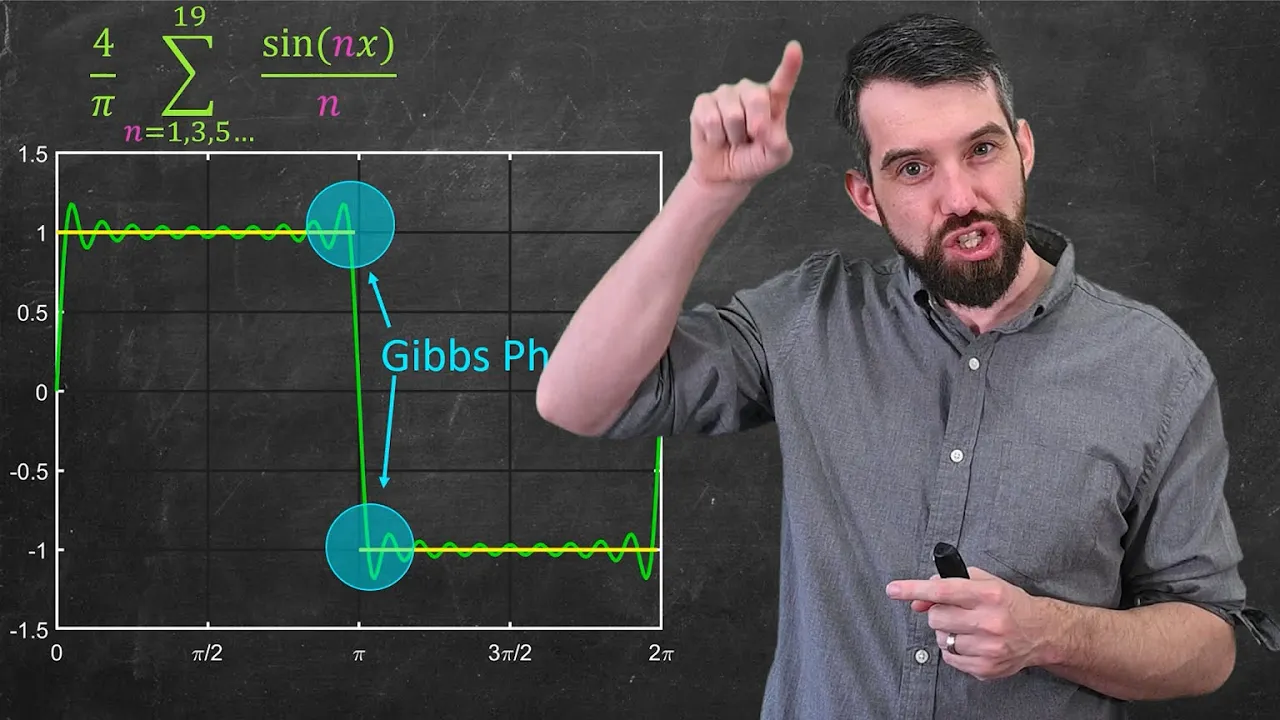
Fourier Series Introduction: The Big Idea Explained
@DrTrefor
387K views•2021-05-03
The Mathematical Impossibility of Accurate World Maps
@Vox
23.3M views•2016-12-02
Related Study Plans & Knowledge Roadmaps
Structured learning paths in Mathematics