














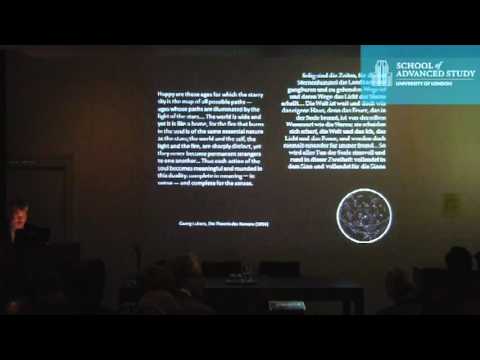




Erwin Panofsky (1892-1968), a German-Jewish art historian who fled Nazi persecution to become a professor at Princeton University, revolutionized art historical scholarship by developing the iconological method, which analyzes works of art through three levels: pre-iconographic description (objective visual analysis), iconography proper (conventional subject matter and cultural symbolism), and iconology (the intrinsic meaning tied to historical, cultural, and philosophical contexts). This approach broke from formalism by asserting that form cannot be divorced from content, and emphasized that understanding art requires examining its relationship to the totality of historical processes and humanistic traditions.
Erwin Panofsky: Art Historian & Iconology Pioneer
Added:Basic understanding of formal analysis in art history, focusing on visual elements like composition, color, and medium.
An introduction to classical iconography, specifically how symbols, motifs, and narratives have historically been identified in European art.
Familiarity with the historical context of the Renaissance, as Panofsky's theories heavily reference Renaissance humanism and art.
The fundamental concept of art as a reflection of cultural, philosophical, and social values of its time.
Applying Panofsky's three-step methodological framework (pre-iconographical description, iconographical analysis, and iconological interpretation) to diverse artworks.
Exploring critiques of iconology by later art historians and theorists, such as those from the fields of semiotics, feminism, and social art history.
Studying the intellectual lineage of the Warburg Institute, including the work of Aby Warburg and Ernst Cassirer.
Investigating how iconology can be adapted to analyze modern and contemporary art, abstract movements, and non-Western art traditions.
408 views6likes13:29Original Release: 2024-12-13
my name is David O'Brien and this presentation is going to be our Landowski art historian and educator herman Panofsky was a german jewish member of academia that became a vital figure in modern art historical scholarship due to his revolutionary theories which introduced a contextual Asst appraisal of formless art history traditions his approach to deciphering theme meaning and the works of art played a singularly influential role in securing a respected position for the discipline of art history canal skis energetic curiosity new cue balance within the world of our history delving into sculpture and painting as well as a historical and cultural contextual settings in which the works were situated the Nazis greatest influences felt as defining iconic graphical studies which search for hitting meaning and content and primarily Medieval and Renaissance art works during the 1930s Piznarski is part of a group of Jewish scholars and scientists that were referred to collectively as backhanded gifts of Hitler to America and their influx into the States deeply enriched scholarship in the sciences in the discipline of our history Knox Key was born in Hannover Germany on March 30th in 1892 most of the young Panofsky slave was spent in Berlin we attended the famous Joakim Stella gymnasium in his twenties wanting to please his father Panofsky initially studied law but soon abandoned it in order to enter the fledgling field of art history scholarship Panofsky studied under Wilhelm vogue at the University of Freiburg Rory would receive his doctorate in 1914 his first paper does problem this Dylan Center window then clinched in 1915 explored an all-encompassing approach to the history and culture of art Panofsky was invited to develop an art history department at the University of Hamburg where he became its unofficial director the only possessing the title of private Osen for outside lecturer it was at the University of Hamburg that Panofsky came in contact with Abbey Warburg's teachings which focused on viewing works of our in regards to their social and cultural function Hamas skis colleagues pioneering approach interpreted art from a historical and anthropological viewpoint would later gained worldwide recognition as iconology and obviously influenced panov skis future direction and even earlier influence on the young historian was Heinrich Wolf's 'ln world's most preeminent art historian at the time will cleanse our history interpretive style is based on two roots of style wherein the first was distinguished by an artist's individual style and the second was what Wolfman referred to as forms of beholding these forms were specific to each period in the history and development of art wolf wounds influence on Panofsky was one based on pronounced keys dissenting view which insisted that the content inherent in works of art are just as important as their formalistic qualities the scholar had the greatest influence on Panofsky with how was hamburg University's Ernst Cassie air because here's terms of the alicorn was heavily influenced by Kahn and asserted that in general earth and other symbolic creative pursuits did not seek to imitate reality but was actually how humans discovered it cassia identified the increasing importance of the visual over the rhythmic spoken or more concisely how we've begun to think in images Panov skis own personal philosophy strengthened from proximity and interaction with great minds was steeped in the philosophy of humanism an accord Panofsky was fluent in Greek and Latin and felt strongly that the function of the historian was to restore the heritage of the great civilizations by downing ancient records within chemic life humanism to vanevski meant respecting history and tradition while rejecting authority that did not operate under reason and moral laws Panofsky said quoting Ficino that history is necessary not only to make life agreeable but also to endow it with moral significance it seems an obvious assumption that Panofsky humanistic perspective was strengthened by his experiences but which stood in opposition to Hall he held here works of art in penalties mind for primarily created as objects that serve practical functions either as tools or methods of communication while also having with the purpose of providing an aesthetic experience in a quote that serves as an introduction to his iconology Panofsky said in a work of art form cannot be divorced from content the distribution of color and lines lighten shaded volumes and planes however delightful this visual spectacle must also be understood as carrying a more than visual medium Panofsky z-- greatest contribution to the discipline of our history and scholarship is his iconology cold method which focuses on enriching understanding of works of art in relation to the historical and cultural framework in which they were made this methodology sought to break from the preoccupation with formalism which he felt removed the object from its cultural and historical surroundings formalism had been dominated the discipline of art history up until the time he started to develop his ideas he readily admitted the pitfalls that were present in all attempts at interpreting works of art especially how the act is influenced by the scholars own historical position Panofsky in regards to address a meaning to artistic representation said if every ordinary plant architectural detail implement for piece of furniture could be conceived of as a metaphor how are we dis aside for the general metaphorical Transfiguration of nature ends and actual specific symbolism begins in response to this dilemma he asserted that the answer could be found in common sense in the diligent use of historically reliable knowledge and methods the Nazis personal interpretive system was based on the assumption that an ideal set of steps could lead to accurately attributing meaning to works of art this eventual tiered system consisted of three separate levels the first primary or external level consisted of pre iconographic description which involves practical experience of knowing representative objects and their objective and subjective significance often referred to as artistic motifs the secondary her iconography proper level encompasses conventional subject matter which derives conventional meaning from cultural traditions these include the knowledge of text and the relation of artistic compositions to concepts or themes for example a white-haired bearded man wearing a top hat decorated with red white and blue stars and stripes is generally interpreted as Uncle Sam's whereas a similar person without the style dress is not the mouse keys third and deepest level is called iconology their intrinsic meaning this level deals with a work of arts basic relationship to the totality of historical processes it is found by unearthing those tendencies that are unique to a particular attitude of a nation period class religion or philosophical persuasion that persuading artists to approach work in this particular way during a certain time in history his deep roots in the humanistic tradition made him inherently predisposed towards certain artworks while disdainful of others he was known to refer to works depicting everyday life landscapes still lifes and portraiture not approved of but the scholarly elite as non subjects in a quote that reveals a somewhat narrow vision of what works deserved his scholarly attentions Panofsky referred to Vincent van Gogh as a genius without talent this view of the majority of twentieth-century art was equally disdainful remarking that it lacked any sort of iconography at all and did nothing to challenge the educated viewers intellect as it lacked intricacy edex the 20th century did produce a scant few artists that intrigue Panofsky he reportedly liked Mondrian whose self-imposed restrictions fascinated the classical scholar he was also known to have an appreciation for medical yani his unique figures he compared to Michelangelo's surprisingly enough the 20th century's bution moving pictures garnered the most enthusiasm from Piznarski if you need the medium of film as one of having very econo graphic properties being the heir of tradition of symbolism and of vehicle meaning is connected with images Panofsky asserted that the cinema was a single greatest contributor to modern culture and that its loss would have greater effect and a fall painting sculpture and poetry were to disappear it seems that Panofsky was nearly universally loved by his students and fellow scholars with whom he was enthusiastically engaged in lively conversations always welcoming dissenting opinions and broad range of topics due to the necessity of long tedious hours spent alone researching for his writing Panofsky saw teaching as a breath of fresh air and he approached it with a heavy intensity - Panofsky the perfect interaction that occurs between teacher and people was described as the joyful instructive experience which comes from a common adventure into the unexplored as an early testament to its devotion towards his students Panofsky after being relieved of his position a Hamburg University by Nazi Laws continued to help his doctoral students finish their studies from his own small apartment it was his horse removal from the university in 1933 that resulted in his eventual emigration to the states which he referred to as an expulsion and paradise he took up a full-time position at Princeton University and also taught hard time at NYU until 1935 Panofsky was invited to join the Institute for Advanced Studies in 1935 where he joined other famous mind such as Oppenheimer 9 stop he continued to put on graduate seminars and lectures at Princeton University NYU and remaining at the Institute until 1962 when he retired from his post there by emigrating to the United States Panov Skees writing was freed from the historical weight of the German academic language tradition of the 1920s the lectures he gave in American universities resulted in his producing books that most likely would ever been published had he remained in Germany Berlin Panofsky achievements in the discipline of art historical research are unmatched in the breath as Albrecht Durer published in 1943 is widely accepted as the most complete artists monograph of our time this works include 18 books and 80 articles which often approach the sides of books themselves all of which consistently demonstrate an enjoyable combination of the American essay style strengthened by typical German attention to detail some of these published works include studies in iconology 1939 the life and art of Albrecht Durer 1943 early Netherlandish painting 1953 and tomb sculpture in 1964 in addition to scholarly texts there are about 27,000 letters to and from Piznarski that exist in public and private collections Panofsky was given membership to many academic societies was bestowed with countless honorary degrees including an honorary Doctorate from Utrecht University in 1935 as well as Germany's highest national honor the poorly Merak bestowed in a last year of his life Panofsky while at NYU was elected the first Samuel FB Moore's professor the literature of the arts of design widely regarded as the world's most influential art historian scholar Panofsky died on March 14th in 1968 his incredibly deep enriched body of work immensely popular lectures a singular contribution of ikana graphical methodology has had an immeasurable influence on the discipline and direction of modern art historical scholarship of research and education well there can be no denying the gargantuan presence Piznarski held in modern art historical scholarship and research it also cannot be ignored that he was a man who by the fact of his life experiences viewed his studies through a colored lens his crowning achievement of ecological study methodology is still a powerful wolf or deciphering the meaning within works of art if we only be phenoxy zone words to make sure that a research is tempered by diligent use of historical reliable knowledge and methods and of course concepts
Up Next

9:09
The Arnolfini Portrait: Decoding Jan van Eyck’s Masterpiece
@inspiraggio
1.7M views•2025-08-28

114:18
Christian Iconography: History, Theology, and Meaning | Fr. Panayiotis Papageorgiou
@Trisagionfilms
58.8K views•2020-02-21
7:48
Ukiyo-e Art: History, Woodblock Printing & Influence
@japanathand
6.3K views•2023-06-08

16:34
Earliest Depictions of Jesus in Art: 10 Ancient Images Explained
@UsefulCharts
5.9M views•2022-06-03
Related Study Plans & Knowledge Roadmaps
Structured learning paths in Art History
art-history
Gothic Cathedrals: Engineering, Light & Society
01The Birth of the Gothic: Romanesque to Suger's Vision
02The Structural Triad: Pointed Arches, Ribbed Vaults, and Flying Buttresses
03Theology of Light: Lux Nova and Sacred Geometry
+ 2 more learning modules
14h5 modules
Explore Roadmap
art-history
Pre-Raphaelites: Realism, Symbolism & Critique
01The Victorian Art Establishment and Academic Formula
02The Founding of the PRB and Radical Realism
03Medieval Revivalism and Literary Symbolism
+ 1 more learning modules
8h4 modules
Explore Roadmap
art-history
Street Art: From Subways to Art Market
01Subcultural Origins in Philadelphia and New York (1970s)
02The Subway Era and Style Wars (Late 1970s - 1980s)
03The East Village Scene and Early Gallery Crossover
+ 2 more learning modules
10h5 modules
Explore Roadmap
art-history
Classic Maya Art: Iconography, Glyphs & Ritual
01Foundations of Classic Maya Visual Culture
02Deciphering Maya Hieroglyphs & Text-Image Integration
03Sacred Geography and Cosmological Architecture
+ 2 more learning modules
14h5 modules
Explore Roadmap