



![[코너별 다시보기] 3부 - 금수저인데 돈 욕심 없던 '20세기 최고의 철학자'!](https://i.ytimg.com/vi_webp/0LcUIQfeOjY/maxresdefault.webp)










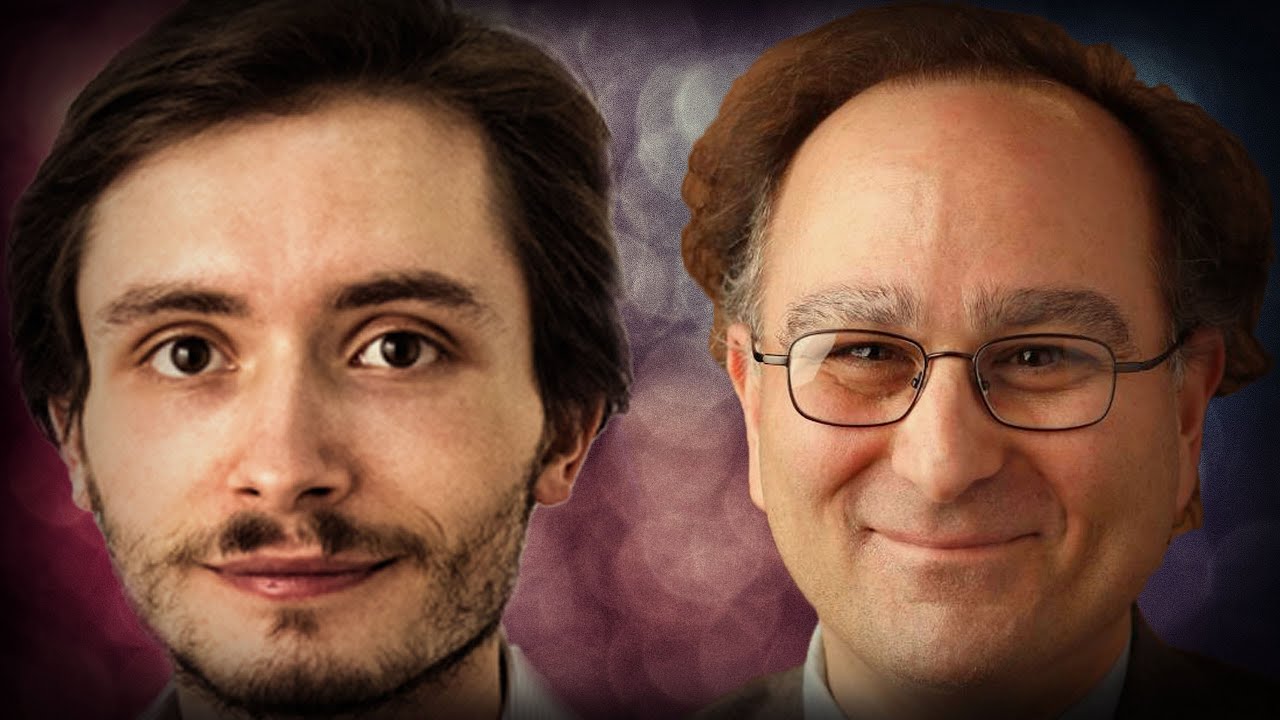
Cambridge pragmatism, originating from the Metaphysical Club in 1870s Massachusetts with Charles Sanders Peirce, William James, and Chauncey Wright, emphasizes that philosophical concepts must be grounded in human practice and action. Peirce's pragmatic maxim holds that to understand a concept, one must explore its connections with human practice; he defines belief as a habit of mind responsive to evidence and truth as what would be agreed upon at the end of inquiry. Frank Ramsey, influenced by Peirce's neglected work, developed a pragmatist account of truth that combines Peirce's normative requirements with James's consequentialism, arguing that beliefs about the world must be sensitive to how things are, while beliefs about the meaning of life should be evaluated by whether they make life go better. Ramsey's view, shot through with norms and commitments, provides what Misak considers the best version of pragmatism.
Cambridge Pragmatism: Cheryl Misak on Peirce and Ramsey
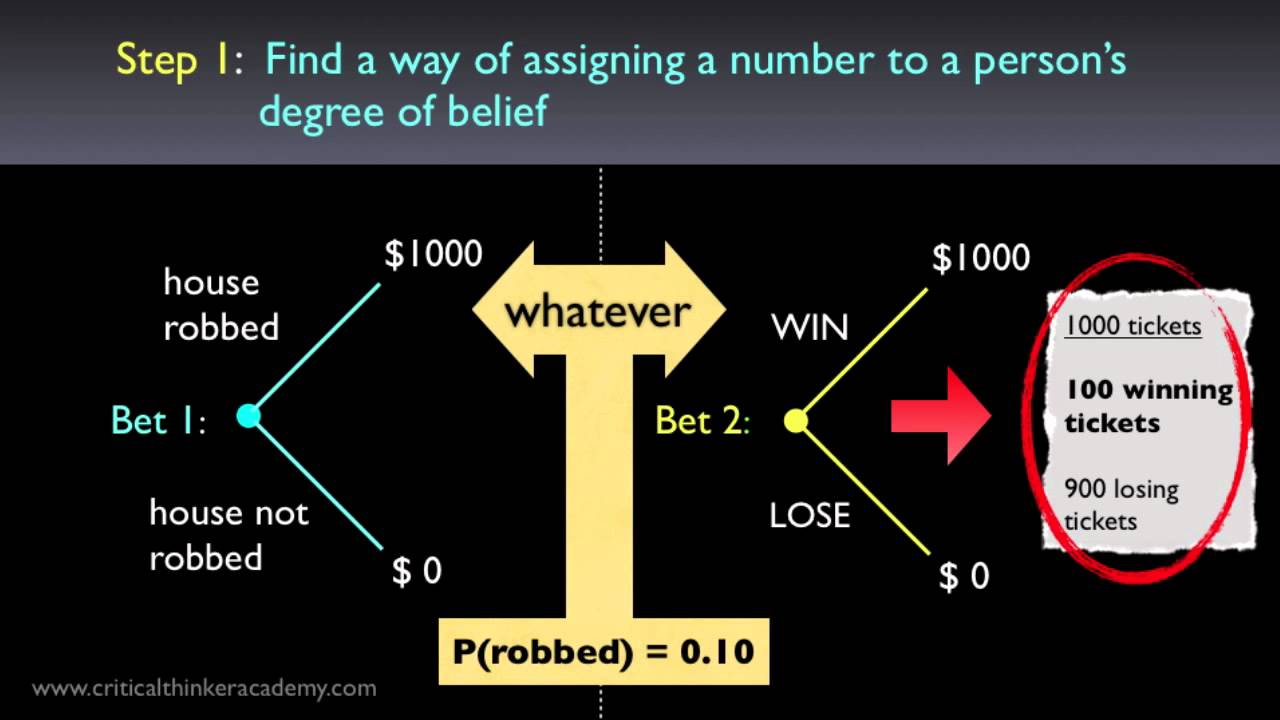
Added:indeed uh we I am going to talk about uh both cambridges Cambridge Massachusetts uh and uh Cambridge uh England and this is uh a small part of uh a longer project uh a book titled Cambridge pragmatism that will aim to show how the Cambridge pragmatism in Massachusetts influenced uh what I heretically uh called the Cambridge pragmatism in England that is uh Frank Ramsey and Vicken Stein so uh let's begin with Cambridge Massachusetts in the 1870s uh Charles Sanders purse William James chony Wright who no one uh has heard of these days but who is very very good uh and some others started a short-lived reading group in which American pragmatism was born purse says it was half ironically half defiantly called the metaphysical club for their intention was to bring metaphysics off from its uh Airy perches down to earth uh Concepts such as belief and Truth must not be in P's words and I'm the PowerPoint really is for the uh for the quot the quote so that you can follow along nicely so uh Concepts such as belief Bel and Truth must not be in P's words Vagabond thoughts that the public roads without any human habitation he argued that our philosophical Concepts must be brought down to earth and linked uh to Human Experience and practice William James uh part of that metaphysical Club a member of it became America's most well-known academic both in in philosophy and in Psychology he was famous or perhaps Infamous for seeming to argue in a paper called the will to believe that if the hypothesis about God's existence is necessary for my success for my having a better life then I can take it to be true Russell and Moore in Cambridge England were appalled by this idea and by James's more General statements in his 1907 book pragmatism along the following lines so this is James his General view of Truth any idea upon which we can ride any idea that will carry us prosperously from any one part of our experience to any other part linking things satisfact working securely simplifying saving labor is true in instrumentally and then the kicker is that James says that satisfactory means more satisfactory to ourselves and individuals will emphasize their points of satisfaction differently to a certain degree therefore everything here is plastic I.E truth is a plastic elastic concept Russell wrote something on pragmatism every single year from 1908 to 1912 and his objections seemed to be the death Nell for the pragmatist account of Truth in a review of James's book pragmatism he says that the book is like a bath with hot water running in so slowly that you don't know when to scream Russell set the tone for how modern philosophy understands pragmatism he said this is pragmatism a belief is to be judged true in so far as the Practical consequences of its adoption are good James seems to Define truth that is as what is useful and this is what makes Russell want to scream Charles Sanders Pur and chony Wright on the other hand were not famous American academics they were personally problematic characters and having never managed to secure academic jobs they were to die almost unknown in America and abroad except to a few fellow Geniuses who saw what there was to be seen in them in Wright's case that was Darwin so uh Wright and purse were both scientists as their day job and uh sat and wrote philosophy uh into the we hours of the morning and uh Darwin uh uh saw that some of uh Wright's work on uh evolution in its early stages was very very good and actually had some pamphlets uh published uh in England uh in P's case it was the young Frank Ramsey who saw uh that purse was very very good and Ramsey died before his 27th birth day after laying the ground for subjective probability theory for Game Theory after inventing in two branches of Economics uh two branches of mathematics and making real advances in truth Theory and logic and as I say he died uh in 1930 before just before his 27th birthday uh should make us all feel a little uh like Underachievers the story of how the young Frank Ramsey uh in the n in the early 1920s got his hands on and his mind around P's work is fascinating uh but here I'm just going to give it in a sentence it's that uh CK Ogden Ramsey's Mentor from the time he was a school boy and an English Dawn uh in Cambridge had a wealth of material of purses given to him by one lady Victoria wellby an independent scholar who was one of the few people in the world who had access to P's uh Works who corresponded with him that material uh of wellb that Ogden uh got now sits in Ramsay's manuscript remains and we can see how carefully he read and made notes on it had Ramsey lived uh longer than 27 years pragmatism's fortunes I suggest would have been very different for at the time of his death in 1930 he was working on a book titled on truth that would have delivered what I think is the very best version of pragmatism Ramsey is usually taken to be a straightforward uh redundancy theorist who uh shared his methodology and his aims with Russell and the tractarian Vicken Stein but Ramsey did not think that truth can be eliminated by asserting the sentences of which it's predicated nor did he think that we need to analyze genuine propositions into their logically simple Elements which would then Cor respond or mirror reality uh as Ian rumit who I see is in the audience uh puts it everyone knows that FP Ramsey had a theory of Truth rather few people rather fewer people know that the theory came in two significantly different versions and that the later and less famous version is more fertile than its predecessor that later version I submit is perian pragmatism so let's uh take a look at uh at perian pragmatism at P's uh views of meaning belief and Truth purse also thought that his friend James's view of Truth was no good it amounts to the following he said oh I could not believe so and so because I should be wretched if I did James was very nice to purse uh uh P died lonely and hungry in a freezing cold house uh and without a job and James passed the hat around for him uh and James dedicated uh the will to believe to his dear friend Charles Pur to whom he owes much and that was P's response P's uh version of pragmatism started from the idea that if we want to understand a concept that is all already in use in our language it's pointless to try to Define it a definition he thought is only good for those who haven't encountered the concept before but while a definition and also the ability to pick out objects that the term refers to retains some importance the vital task per thought is to get leverage on the concept or a fix on it by exploring its connections with practice that's his pragmatic uh Maxim if you want to understand a concept you need to get leverage on it or a fix on it by exploring its connections with human practice with how we uh use and employ the concept he applies this pragmatic Maxim to the concept of belief first and he arrives at the view that a belief is in part and in part only that upon which a man is prepared to act beliefs are habits of mind which are good or otherwise or safe or otherwise this is an absolutely critical passage or set of uh of tidbits uh from P's uh work a belief is in part that upon which a man is prepared to act habits of mind which are good or otherwise or safe or otherwise Pur argues that a second constitutive part of element of belief in addition to that is that a belief must be responsive to experience or evidence for or against it a belief that isn't sensitive to the facts isn't a belief at all but some other kind of mental state he says it is one of the essentials of belief without which it would not be belief that a man could hardly be considered sane who should wish that although the facts should remain lamentable he should believe them to be such as he would wish them to be that's a poke at William James and it's an insistence by purse that a belief be sensitive to the way things are he thought that James uh failed to see this purse has a very broad account of experience or a very broad idea of how it is that things are when a hypothesis is about the world when a belief is about the world then it needs to be responsive to the usual kinds of observation and experience he thought the hypothesis about God existence is about the world or at least some bit of it up there uh and so it needs to cash out in empirical experience not in whether or not it makes my life go better so person says if if you believe that God exists that's an existence claim and and that belief if it's not to be empty or one of those Vagabond thoughts that tramps the public road without any human uh habitation it needs to cash out uh in empirical experience but Pur also had a view about mathematics and logic cashing out in empir in experience and he thought that that experience could be had in diagrammatic or proof context where we manipulate proofs or diagrams and come to surprising observations and purse uh had at the same time as Fraga developed a Quantified uh first order predicate logic and second order uh uh as a set of uh very complicated diagrams that you could then literally make experiments on purse also applies the pragmatic Maxim to the concept of Truth and arrives at a view that is distinct from James's view which is that truth is what's useful Pur first argues that the correspondence theory of Truth is missing the dimension that connects the concept of Truth truth to human practice and action it fails he says to make the concept of Truth readily comprehensible uh how could we aim at getting a truth like uh correspondence truth which goes beyond experience or beyond the best that inquiry could do How could an an Inquirer or a Believer adopt a methodology that might achieve that Aim so he thinks that the correspondence theory is perfectly good as a nominal definition of Truth one of those definitions is perfectly okay if you've never encountered the concept before but we need to provide a pragmatic elucidation as well an account of the role the concept plays in Practical Endeavors and Pur thinks that that role is as follows those who inquire believe or assert some something commit themselves to being having that belief be responsive to reasons and the force of experience they commit themselves to aiming at getting things right at avoiding mistakes and and uh in at improving their beliefs and theories he does not think that whatever works nicely Here and Now for you or me is true he thinks that when you look at the practices of inquiry you find that the theory of Truth needs to do justice to the objective dimension of human inquiry to the normative dimension of human inquiry that is when Pur suggests that true beliefs and this is his famous suggestion are those uh which there would be agreement on at the end of inquiry he requires that agreement to be warranted by how things are whatever that amounts to in this that or the other domain of inquiry so when we ask how truth is linked to our practices per says we find that a true belief is one that would be indefeasible or wouldn't be improved on or would never lead to disappointment or would forever meet the challenges of Reason argument and evidence in that sense a true belief is the belief we would come to were we to inquire and as far as we could on a matter so that's a whirlwind tour of the pragmatism of Charles Sanders purse a belief is a disposition or Habit to behave and those beliefs have to be sensitive to how things are and if a belief really would stand up to all the evidence and argument then it's true so let's look at Ramsay's pragmatist account of belief and Truth Now so now we move from Cambridge Massachusetts to Cambridge England in 1926 Ramsay wrote two important papers truth and probability and facts and propositions both heavily and explicitly threaded with p's thoughts Ramsay adopts the peran view that belief is a disposition to behave he says it his belief that the C brid Union is in Bridge Street doesn't flicker across his Consciousness very often but it's frequently manifested by his turning that way when he wants a book from the union Library he says he goes there habitually without having to think it is this pragmatist account of belief that leads Ramsey to the result for which he's most famous the idea that degrees of belief can be measured by how we act especially in beding context and these habits or beliefs Ramsey argues are judged in terms of whether or not they lead to success hence he sees himself putting forward he says this is from truth and probability a kind of pragmatism we judge mental habits or beliefs by whether they work and he's right that is a kind of pragmatism the following are Ramsay's words in truth in probability but as ramsy sees they could just as well have come from a page of perses we have therefore to consider the human mind and what is the most we can ask of it the human mind works essentially according to rules or habits we can therefore State the problem of the ideal I.E of the true as what habits in a general sense would it be best for the human mind to have yep that's a kind of Persian pragmatism all right so I keep hammering in that home because it's just so such heresy to suggest that uh that in Cambridge England pragmatism uh reigned uh Supreme so Ramsey says we're looking for habits or beliefs that are the best for us to have and how do we determine that well we evaluate habits in terms of whether they work in some robust sense of work so it's important to see that ramsy is just as wary of James's pragmatism as are Russell Moore and purse he worries that James seems to hold that someone could think that Shakespeare's plays were written by bacon and that someone else's opinion that Shakespeare wrote them might be perfectly true for him and this is an actual example out of pragmatism Russell hammers away at James wanting him to deny that and James goes all mey mouthed and doesn't deny it but ramsy thinks that such absurdities oops absurdities like the Shakespeare and bacon absurdity form no part to the essential pragmatist idea even if they constitute its Chief attraction to some Minds I.E James's in that book manuscript on Truth he gets the issue just right he begins this is a long example that I'm breaking into uh three parts to say a man believes in hell and again he's addressing James really to say a man believes in Hell means according to the pragmatist that he avoids doing those things which would would result in his being thrown into hell so far so good for the pragmatist this is just the dispositional account of belief that Ramsey shares with them right what is a belief a belief is acting in a certain way Ramsey continues such conduct will be useful to the man if it really saves him from hell but if there is no such place it will be a mere waste of opportunity for enjoyment right now I'm I'm sitting in the King's College uh archives uh in the Ramsey papers and let me tell you Ramsey uh took every opportunity for enjoyment that he could uh he could find this is a point that Ramy also makes in the paper facts and propositions where he says the belief that P will be useful only if p in that paper facts and proposition he argues that if a chicken believes that a certain caterpillar is poisonous it abstains from eating that kind of caterpillar on account of the unpleasant experiences associated with eating them that's the dispositional account of belief but the Persian pragmatist says uh he says is correct I.E that the actions were such to be useful if and only if the caterpillars were actually poisonous so it's the same point there okay so back to the hell example in on truth but besides this primary utility there are other ways in which such conduct abstaining from actions that might get you thrown into hell may or may not be useful to the man or others the actions from which a belief in hell would cause him to abstain might bring disasters in their train either for him or for others even in this present life but these other consequences of the belief whether useful or not are clearly not relevant to truth William James included explicitly these further kinds of utility and disutility which must obviously be excluded if pragmatism is to have any plausibility and thought that the truth of the belief in Hell depended not on whether hell in fact existed but on whether it was on the whole useful for men to think that it existed what is ludicrous ramsy says is not the general idea of pragmatism but the way in which William James confused it especially in its application to religious belief we'll come back to uh this jamesian uh View later at the end of the paper Ramsay is aware that although he has not used the word correspondence in setting out his position he says it will probably be called a correspondence theory of truth but he says that we cannot describe the nature of this correspondence correspondence theories cannot cope for instance with the belief that Jones is a liar or a fool how do we construe the either or fact that he is a liar or a fool what kind of world on the correspondence theory has disjunctive facts in it or for that matter Universal facts or negative facts or modal facts in another draft Ramsey of that book Ramsey says that his view is superior to the correspondent's view because it is able to avoid mentioning either correspondence or facts to philosophically problematic Notions that he saw his friends Russell and the tractarian Vicken Stein trying to Grapple with he asks what the correspondence relation between a belief and the world might be does a belief resemble the world such ontological accounts of Truth Which single out a particular kind of entity as the one required to ground the truth of any belief or statement do not make good on their promise to set out in a clear way how a proposition might get the world right Ramsay is anyway even not withstanding all those problems but the correspondence definition of Truth he's anyway set against the project of defining truth he wants to link truth with action and use without reducing it to action and use so again in perfect step with purse Ramsay thinks that the correspondence idea sorry that like the correspondence idea pragmatism gives us one element He says of the analysis of what it is to truthfully assert a proposition he says neither pragmatism nor correspondence are simply to be mocked at they are in Perfect Harmony he says with his account of Truth Ramsey died before working out his account of Truth leaving us with a tantalizing remark at a crucial Point wanted note on purse but we can see that he was already very much on the same page as purse when we assert or believe P we commit ourselves to acting on it it's the first thing we commit ourselves to we commit ourselves Ramsey says to meeting the future with that belief and of course the future can interfere with what per called the smooth working of a belief habit and cause me to revise my belief habit but nonetheless when we believe P we commit ourselves to acting on it we also commit ourselves to peas being put in place by a method that as Pur says is not extraneous to the facts or as Ramsey says is caused by the way things are a belief can't be adopted merely because it makes me feel more comfortable or makes my life go better so the pragmatist account of Truth that person ramsy adopt notice is shot through already with Norms we commit ourselves to a number of things when we believe that something is true Oliver Wendel Holmes Jr uh the eminent Supreme Court Justice who had also been a member of that metaphysical club with purce and James and Wright reminisces in 1929 Chanty Wright even in holm's times he was a nearly forgotten philosopher chony Wright a nearly forgotten philosopher of real Merit taught me when young that I must not say necessary about the universe that we don't know whether anything is necessary or not I believe that we can bet on the behavior of the universe in its contact with us so I describe myself as a betab bilari Ramsay I suggest returns pragmatism to its origins in the metaphysical Club to the founding days when person wri spoke about how having a belief is taking a bet on the future what kind of bets might we take on the future well we've heard that Ramsay bets every time he turns on Bridge Street uh in a certain way that the Cambridge Union is on Bridge Street without thinking about it all the time the critical care physician uh I suggest bets that a certain treatment will save the patient the politician bets that by stimulating the economy more jobs will be created and so on these bets or beliefs will come with different probabilities attached and it might be that for instance the critical care physician faced with very low probabilities places a warranted bet despite the fact that the patient dies and that uh that whole realm of partial belief was where Ramsey really excelled Pur and touched that area the resulting position on truth is that if a belief were to be the best it could be then it would be true Ramsey says in another late paper called theories that if our best theory has it that there's a truth of the matter about whether the back of some far-flung planet is made of green cheese or not and the theory says that it's not made of green cheese then it's not made of green cheese sentences about far away objects sentences about very small objects like theoretical entities and science play a role in our system of belief and so that system imparts meaning and truth values to them okay that's the perian and ramsan view of Truth as they say it's shot through with Norms or commitments and now I'm going to talk about a different kind of Norm the the beautiful and the just and the good in the American pragmatists uh book that was mentioned in the introduction I showed how the classical pragmatists were naturalists committed to not begging the question against ethics and politics as being a part of the inquiry aimed at truth in fact I think this is just an essential part of what it is to be a pragmatist you don't set things up so that only science passes the tests only science aims at truth and that's why in that book I suggested that despite the fact that Quin took his pragmatist epistemology wholesale from his teacher CI Lewis you probably can't call him a pragmatist because he notoriously thought that any belief about ethics was just yeah it's just a mess you can't tell right so I've uh hinted already that Ramsey shares this position that value generality chance Etc might be part of the natural world with the classical pragmatist here I want to ask whether Ramsay's naturalism in particular leaves room for for ethical and aesthetic judgments perhaps one also bets that it's right to treat strangers with respect perhaps one also bets that it's right to refrain from cheating on one's taxes perhaps one also bets that it's right to support local and international Charities can we make sense of this idea on the pragmatist Ramsey and account of Truth on April 9th 1921 Ramsey and his friend Richard braithway were elected brand new undergraduate members of the moral Sciences Club in Cambridge one of the very first papers the following year asked whether truth and Beauty are human inventions this was a topic that would interest Ramsay for the rest of his short life although it's a topic that hardly ever surfaces in Ramsey scholarship here too it turns out that he is in perfect step with the Persian pragmatist careful to not from the start rule out moral and aesthetic beliefs as being named at truth and evaluable in terms of how they cash out in action but also like purse he didn't think it was obvious that beliefs about ethics and Aesthetics did aim at truth so Pur called l a logic a normative science along with ethics and Aesthetics it's not it's not based on what our cognitive goals happen to be but on what they ought to be again it's shot through with Norms logic is all about evaluating belief or habits of reasoning this idea that logic is a normative science resonated with Ramsey and Ramsey walked into a Cambridge that was full of the idea that logic isn't a normative science it's a topological science so this was a um a a very non-standard view that uh he had picked up from purse so Ramsey's very first words in the introduction to that book manuscript are are as follows it is a common place that logic Aesthetics and ethics have a peculiar position among The Sciences whereas all other Sciences are concerned with the description and explanation of what happens these three normative studies aim not at description but criticism to account for our actual conduct is the duty of the psychologist the logician the critic and the moralist tell us not how we do but how we ought to think feel and act the the logician though he says doesn't have exclusive purchase on the question of how we should think for each science logic science science uh um morality ethics must answer for its own domain Ramsey says the question what is true Ramsey thinks that the whole purpose the whole purpose of argument is to arrive at truth and his project is to give us a holist account of how the truth predicate ranges over all of our beliefs at least all of those beliefs with a claim to be truth AP again like purse Ramsey wants it both ways he thinks that the normative Sciences are also definable in ordinary factual natural terms this project of seeing how genuine Norms might come out of natural human practices is at the very heart of the pragmatist project of course the big question to slightly modify hume's point is whether we really can get an ought from an is can the naturalist who issues transcendental Concepts such as God what is rational with a capital R platonic forms Etc can that naturalist really make sense of the genuinely normative Ramsey tells us that since psychologists grossly neglect the aspects of their subject which are most important to the logician philosophers have to take up some of that work but whoever undertakes it must see that the three normative Sciences again ethics Aesthetics and logic begin with psychological investigations which lead up in each case to a valuation it's very interesting as well that's exactly the word that CI Lewis at around the same time was using in Cambridge Massachusetts and there's very little no evidence that uh Ramsey knew any of Lewis's ethical work although he certainly knew Lewis's uh logical work an attribution of one of the three values good beautiful irrational predicates which appear not to be definable in terms of any of the concepts used in Psychology or positive science I say appear because it is one of the principal problems of philosophy to discover whether this is really the case whether that is to say good beautiful rational or for that matter true represent undefinable qualities and sometimes ramsy scratches out beautiful he notes that we might get different answers for the different Sciences of value for instance he says that whereas goodness and Beauty could be defined in terms of our desires and admirations rationality introduced some new element peculiar to logic such as indefinable probability relations but this really doesn't appeal to Ramsay he's dead set against taking any key philosophical concept like goodness more G Moore propositions Russell or probability relations can's as unanalyzable or mysterious or undefinable so he he doesn't find this at all attractive and he thinks that the arguments are so similar in all fields that they should hold or not hold for all kinds of for every kind of value and at one point as I say he crosses out Beauty wavering about whether it indeed is part of our natural yet evaluable body of knowledge and that seems perfectly right if any judgment is not evaluable or aimed at truth it might be judgments of aesthetic value so just as if I say you know chocolate ice cream is better than vanilla ice cream and you say no vanilla ice cream's better well maybe there we have uh a dispute that isn't aimed at the truth it's just about matters of taste Maybe Beauty and Aesthetics is just like that it's not aimed at truth so Ramsay died in the middle of writing this book manuscript and the Contemporary ramsan has to fill in some gaps we get some complicated help from a short and snappy paper that Ramsey read in 1925 to the apostles titled on there being no discussable subject now while the moral Sciences club uh was and remains a serious business the apostles or medians of the apostles were and perhaps still are it's a secret society we don't know for sure uh they were marked by irreverence and this poses some interpretive challenges in Russell's words the group held to the principle there were to be no taboos no no limitations no barriers to Absolute speculation the group would choose a topic and in a subsequent meeting a member would present a short paper on that topic often provocatively and cheekily titled and after a debate a vote would be taken and that vote might or might not be on the question addressed in the paper it could be on let you read the minutes of the Apostles book and it could be green or blue that's the vote uh completely unconnected with the topic of the paper so there are some interpretive challenges but in this Apostles paper Ramsey explores the idea that there is no longer any subject suitable for discussion he runs through the arguments that we're in the air in favor of that idea that there is no subject suitable for discussion one is that the conclusion of the greatest modern philosopher is that there is no such subject as philosophy that's kin right that it is an activity not a Doctrine and that instead of answering questions it aims merely at curing headaches there goes philosophy it's a subject matter for discussion critic of Vicken Stein he then notes that in a recent paper read to the Apostles of Russell's uh Russell put forward a philosophy of nature based entirely on logic and the physical sciences discussible only by those with consider technical expertise outgo The Sciences as discussable matters Russell also put forward a philosophy of value based on what men desire Ramsay then delivers the following striking thought which I suggest has misled uh everyone most of us would agree that the objectivity of good was a thing we had settled and dismissed with the existence of God Theology and absolute ethics are two famous subjects which we have realized to have no real objects out it seems go Religion and Ethics although note here so Ramsey was very happy to see religion go out the door he was uh an arch atheist but not notice that it's absolute ethics that goes out the door and for Ramsey absolute everything goes out the door because remember he's a pragmatist about truth philosophers have taken this passage though to constitute a straightforward endorsement of emotivism the view that ethical sentences or beliefs do not express genuine propositions but rather emotional attitudes like saying boo hiss at something you don't like emotivism was common enough in Cambridge in the 1920s but Ramsay I submit was not enrolled in the program and I know know that I'm running short of time so I'm going to skip over a little bit um and that bit is that uh one bit of evidence is that Ramsey himself was engaged in a considerable number of discussions about ethics and politics uh for example in 1928 he launched a major debate about intergenerational Justice and argued that views on which we discount future Generations well-being are ethically indefensible another bit of evidence is that Ramsay worried about beauty uh and if any discourse is reducible to what people happen to find desirable and is not discussable then it's going to be those uh Aesthetics uh aesthetic judgments there's one kind of belief though that Ramsay thought was in one respect unlike the rest of all of our beliefs those are beliefs about the meaning of life and here he takes something important from from jamesian pragmatism so Russell was famous in his 1903 the free man's worship uh for suggesting that science tells us that the world is purposeless and void of mean meaning he says man is the product of causes which had no prevision of the end they were achieving his origin his growth his hopes and fears his loves and his beliefs are but the outcome of accidental that's um that's a misprint I think it's um bumping together of atoms no fire no harism no intensity of thought and feeling can preserve an individual life beyond the grave all the labors of the ages all the devotion all the inspiration all the Noonday brightness of human genius are destined to Extinction in the vast death of the solar system and the whole Temple of man's achievement must inevit be buried beneath the debris of a universe in runs only within the scaffolding of these truths only on the Firm Foundation of unyielding despair can the Soul's habitation henceforth be safely built bit depressing uh but Russell actually was trying to forge an ethical position for atheists he thought uh that you should if you were going to avoid this despair you should worship goodness not science and not a false god Ramsay as I've said was just as much a non-believer as Russell also in search of a way of understanding morality and the meaning of life in a Godless scientific World In His Apostles paper Ramsey's not just objecting to Vicken Stein he's the most famous philosopher in the world um he's also objecting to uh Russell here just before he delivers the passage that has struck so many as being a commitment to emotivism he says of Russell of course his main statement about value might be disputed I've suggested in this paper very briefly that Ramsay does indeed dispute the statement that the good is just what men desire he's clearly got it in uh as a normative science he doesn't cross out good ever he crosses out Beauty sometimes but the good is something uh that we can inquire into and we can aim at truth in these inquiries but he has a different view about the meaning of life he ends this paper by telling us where he seems to differ from some of my friends Vicken Stein Russell and it's worth quoting him in fold it's bit hard to see my picture of the world is drawn in perspective and not like a model to scale the foreground is occupied by human beings and the stars are all as small as three Penny bits I don't really believe in astronomy except as a complicated description of part of the course of human and possibly animal sensation I apply my perspective not merely to space but also to time in time the world will cool and everything will die but that is a long time off still and its present value at compound discount is almost nothing nor is the present less valuable because the future will be blank Humanity which fills the foreground of my exper of my picture I find interesting and on the whole admirable I find just now at least the world a pleasant and exciting place you may find it depressing and that you is both Russell in the free man's worship but also Vicken Stein who is a bit of a depressive Sour Puss remember he's distinguishing himself from his friends he says I am sorry for you and you despise me but I have reason and you have none you would only have a reason for despising me if your feeling corresponded to the fact in a way mine didn't but neither can correspond to the fact the fact is not in itself good or bad it's just that it Thrills me but depresses you on the other hand I pity you with reason because it's pleasanter to be thrilled than to be depressed and not merely pleasanter but better for all one activities it's such a wonderful passage of course ramsy believed in astronomy right I don't really believe in astronomy he says his suggestion is that it's pointless dwelling on the fact that our planet will cool and die and concluding that there's no meaning in life at the end of The Last Sentence Ramsey wrote out sorry wrote and then struck out which go more smoothly so it is better to be optimistic than depressed as our activities will go more smoothly so one dimension he's saying here of the evaluation of some of our beliefs those about the meaning of life might involve a jamesian kind of consequence does it make my life go smoothly do the benefits of taking a positive attitude towards life in light of the meaning we create outweigh the benefits of being miserable about life in light of finding no higher Transcendent purpose Ramsay says yes what this means is that for some classes of our beliefs jamesian consequences for one's life are relevant after all here is how Richard braithway ends his obituary of his dear friend and they were contemporaries came up Cambridge together unlike many intellects his had not been garnered into print and the best of his mind is utterly destroyed such an event would lead us to question the purpose or the meaning of life had not Frank Ramsey taught us that these are nonsense questions this is a lovely way to end an obituary right I mean what a what a great ju the position I but a more accurate representation of what Ramsey really thought would seem to be this beliefs about the purpose and the meaning of life aren't nonsense questions they must be sensitive to what makes life go best for me and for Humanity as a whole so Ramsay I think uh provides us with a pragmatism that takes the best of purse your belief had better be connected to the way things are if it's a belief about the world and the best of James but beliefs that are about the meaning of life had better be connected in the right kind of way to what makes life go better uh what makes life go more smoothly thank you
Up Next
American Pragmatism | History of Philosophy 64
@wheatoncollege
37.9K views•2015-06-16

John of Damascus on Holy Images: A Theological Defense
@BannedBooks
139 views•2026-04-25
Philosophy of Gamification: How Social Media Shapes Values
@TheRoyalInstituteofPhilosophy
32K views•2019-12-05
The Myth of Sisyphus: A Greek Legend of Eternal Punishment
@TEDEd
8.6M views•2018-11-13
Related Study Plans & Knowledge Roadmaps
Structured learning paths in Philosophy