






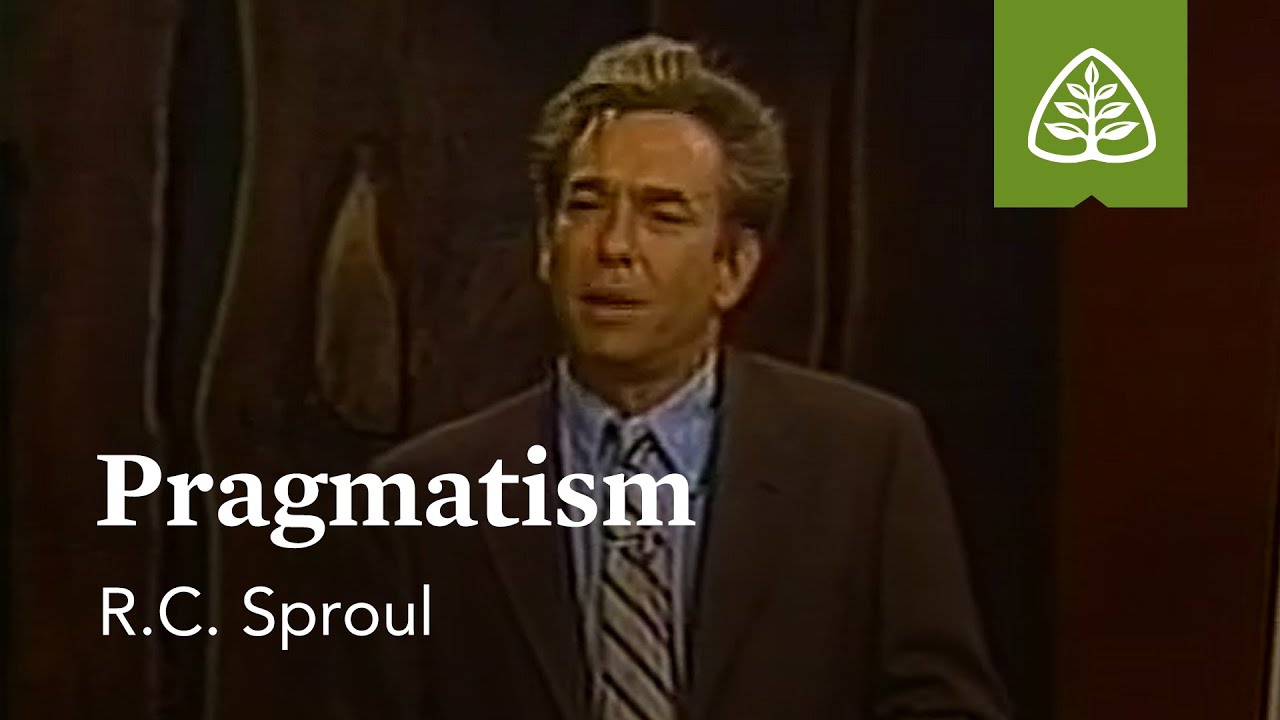
















In his seminal essay 'The Fixation of Belief,' Charles Sanders Peirce argues that inquiry is fundamentally the struggle to remove the irritation of doubt and replace it with a fixed belief, and he identifies four methods for achieving this: the method of tenacity (holding beliefs stubbornly), the method of authority (relying on external forces or institutions), the a priori method (using pure reason and intellectual preference), and the scientific method (relying on publicly accessible external reality). Peirce concludes that the scientific method is superior because it alone can fix belief for the entire community through objective investigation of an external permanency that exists independently of human thought.
Fixation of Belief by Charles Peirce: Pragmatism Explained
Added:Basic Epistemology: Understanding the philosophical definitions of 'belief', 'doubt', and 'justification'.
Cartesian Doubt: Familiarity with René Descartes' method of systematic doubt and how it contrasts with Peirce's view of inquiry.
Introduction to Pragmatism: A general overview of the core tenets of American pragmatism as a philosophical movement.
The Scientific Revolution: Basic awareness of how empirical observation emerged to challenge traditional dogmatic authorities.
Peirce's 'How to Make Our Ideas Clear' (1878): Reading the direct sequel essay that introduces the famous 'Pragmatic Maxim'.
William James's Pragmatism: Exploring how William James adapted and popularized Peirce's ideas, particularly in 'The Will to Believe'.
Fallibilism: Delving into Peirce's concept that absolute certainty about knowledge is impossible, and how this shapes scientific inquiry.
Modern Applications of the Four Methods: Applying Peirce's methods of fixing belief (tenacity, authority, a priori, and science) to modern phenomena like echo chambers, disinformation, and scientific skepticism.
John Dewey's Instrumentalism: Investigating how the next generation of pragmatists applied Peirce's theory of inquiry to education and democratic theory.
15.1K views455likes42:22Original Release: 2020-03-19
this is Charles Sanders purse and this is his essay the fixation of belief and this video is an overview of that essay but first you might ask why care about purse or this essay well have you heard about the first original contribution made by an American to philosophy nah great well that contribution was pragmatism and the first person to put it forward was American scientist and philosopher Charles Sanders purse what's pragmatism well to find out we need to discuss two essays the first was published in 1877 and that essay is the fixation of belief the second essay which will be covered in a different video was published in 1878 and is titled how to make our ideas clear are you ready are you ready Shh not really sounds pretty boring great let's get started first begins the fixation of belief by making a statement about our capacity to reason and our view on whether people need to study logic one amusing observation that purse makes right at the start is that he thinks that most people don't bother to study logic or how to reason because they take themselves already to be great reasoner's however he also asserts that he thinks that most people will take other people to need a healthy dose and logic so there's a kind of conceit or narcissism here as I've got a third point he says it's kind of unfortunate that people develop their powers to Reese and later in life after they've kind of gained experience because after they have developed it later in life it's not much used to them so it'd be a lot more beneficial if you developed your power to reason and draw good inferences when you're young when you can utilize them to its fullest so one question that purse raises concerning the logical ability of human beings is how good are we as a species in terms of our capacity to reason versus answer to this is that we're actually pretty good at reasoning on matters that are related to our survival so these would be practical matters or matters that were relatively familiar with the reason he thinks this is because natural selection and a long time of experience is kind of played a role in rooting out individuals who might not be good at reasoning concerning issues related to their very survival unfortunately Perce thinks that were pretty bad in two particular areas one is areas that were completely unfamiliar with that we don't have any prior experience reasoning about and the other has to do with non practical matters and for the most part these two things kind of overlap a little bit and so insofar as we haven't had experience or natural selection hasn't played a role we tend to be pretty poor reasoner's concerning that subject matter so first writes that when we're faced with these impractical and unfamiliar topics or matters we are like a ship in the open sea with no one on board who understands the rules of navigation so the idea is that no one has a clue as to what to do when we're dealing with matters that we don't have prior experience concerning first makes an interesting point that when it comes to reasoning on matters that are unfamiliar to us are impractical we tend to be hyper optimistic that is we tend to think that the best possible or a better possible solution than that's warranted by the evidence will come about first rights where hope is unchecked by any experience it is likely that our optimism is extravagant so there is this case of a kind of optimism bias when we are dealing with matters were unfamiliar with we tend to think that the conclusion that will follow will be favorable to us the interesting part of this conclusion is that he thinks that we would draw these optimistic conclusions because it would make us happier and that happier tendency or feeling maybe it would make us less stressed out and it would increases our chances for a survival so provided the subject matter itself isn't tied to our survival or not then draw the while this happiest most hopeful conclusion you can because it would be better ah you'd be better off doing so the next kind of topic I want to address in purses essay is focuses on the difference between doubt and belief since this is purse purse we'll think that there's no way to introspect the difference there's no way to internally look inside and directly know whether you're believing or doubting and so you have to rely upon drawing an inference from observable differences that you see in yourself or in the world and so let's look at those observable differences between doubt and belief the first difference between doubt and belief is that when we doubt we are inclined to ask questions and when we believe we're inclined to make a judgement or make a statement that something is true the second difference is that when we doubt we don't act in a habitual or dispositional or even conventional way instead our behavior is actually different we hesitate we vacillate maybe we try one option and then switch to another but when we believe our behavior is pretty automatic where it's guided by that belief in a relatively consistent way the third and last difference is that when we doubt we tend to be dissatisfied or uncomfortable and we work towards moving ourselves from that state of doubt into a state of belief we're trying to ignore that doubt altogether but when we believe we tend to be calm confident and relaxed about the way things are so we're satisfied with how we are and we don't try to move out of this belief from this belief to a totally new belief altogether let me give you an example of a case of an individual in doubt this is me using a circular saw on a log that I pulled from my backyard now this one didn't have a lot of experience using a circular saw and I definitely have never cut into a log using a circular saw before I didn't know if it was the right blade I don't know if this was a safe thing to do so in preparation to doing this I asked a lot of questions I wasn't making judgments in addition I didn't have a habit of behavior with respect to this I wasn't sure to how to approach the cut and so I was very hesitant and lastly I was uneasy about doing this and I wanted to move that uneasiness with a belief I couldn't get that from an answer from another individual so the way I did this was just to go ahead and try it out and see whether or not I could in fact do this let me give you an example of a belief now the belief I have is that kale fruit smoothies are healthy for you it is a judgment I'm willing to make so I don't have any questions concerning it I also have a habit of believing this that is my behavior is indicative that I think this is true and that I make one every day and then I also feel relatively confident about this I'm in an easy satisfied state concerning this particular proposition one more point I want to make concerning beliefs is that they have the structure of habits or dispositions we don't always act on every single one of our beliefs instead we only act upon them when the circumstances arise so if I believe sleeping will get rid of my tiredness I'm only going to act on this belief when I feel tired with respect to doubt purse indicates that doubt is not a disposition but a stimulus to action when we doubt what we are doing or what we are feeling is a kind of irritation and we seek to eradicate that irritation by replacing our doubt the irritation with some type of belief so let's put these two ideas together on the one hand we have a belief which is a habit or disposition to act when certain circumstances arise on the other hand we have the notion of doubt which is a stimulus to action it's an irritation that we seek to replace with some new belief purse then defines inquiry as the struggle to remove that irritation of doubt and replace it with a belief so the general picture is that we have beliefs and then we encounter some doubts about those beliefs which are kinds of irritations that we seek to remove in seeking to remove those doubts what we're doing is inquiring and ultimately if our inquiry is successful we replace those doubts we remove that irritation with some type of belief which puts us in a confident easy comfortable state so here's the interesting conclusion that purse draws from this he says that if the goal of an inquiry is the settlement of opinion or the fixation of belief then the ultimate goal of all of our inquiries is the ultimate settlement of opinion so what we're seeking to do what the purpose of an inquiry is is not truth or having the right opinion but is actually just having a permanently fixed belief the consequence of making the fixation of belief the ultimate goal of inquiry is for purse it sweeps away various forms of reasoning that he takes to be erroneous or vague let's look at one example of this so the example I want to look at is to Cartesian skepticism or methodological skepticism now just in brief the method of the skeptic is to start by trying to doubt everything you possibly can then to try to find some foundational proposition or belief that you cannot doubt and then build up a positive philosophy from that small set of indubitable proposition I live in doubt yeah all the time so purses criticism of the methodological skeptic is that the methodological skeptic does raise questions but these questions don't rise to the level of doubt so if I say well maybe the real world doesn't exist or maybe I don't exist certainly I'm questioning the truth of those propositions but I don't genuinely doubt the truth of my own existence or the real world so in that case the methodological of skeptics doubts are fake doubts or what purse will call paper doubts and if those doubts are not real then I don't have any real irritation over those propositions and if I don't have any real irritation then there's no struggle for me to move from a state of doubt to belief and if there's no struggle then there's no inquiry given how purse is defined notion of inquiry and transitioning to the final part of purses essay there's three propositions that are important first that the nature of belief is habit that as individuals have this disposition to act that if a set of circumstances occur then a behavior will result second is that inquiry is the struggle to remove doubt and the third is that the fixation of belief is our sole goal in enquiring ultimately our aim is to remove any kind of doubt and have a fixed belief so now we can raise a question if the nature of belief is habit and if the fixation of belief is the sole goal or object of inquiry then we want to know what method should we do use to fix all of our beliefs how do we go about moving from a state of doubt to an ultimate fixation of belief such that new doubts never arise first considers four different methods one is the method of tenacity the method of authority the a priori method and the method of science we'll go through each one of these one by one are you ready all right the first method is the method of tenacity and this one is very easy to explain you have a belief and then you just hold on to that belief you shut out anything that might cause doubt and you can reinforce it certainly by finding any evidence that further supports that particular belief if someone gives you evidence that might cause you to doubt you simply double down on your belief if they give you an argument to show why you are mistaken here's what you say yeah that arguments stupid because you're stupid in other words you resort to any fallacy you need to in order to hold on to the belief that you have first has a lot of kind things to say about this particular method of fixing belief it's really simple there's not it's not a complicated method to use it's understandable why people would take on this particular method doubt is uncomfortable you don't want to be in a state of doubt so the method tenacity is a quick direct way of shutting out that doubt and given how wonderful belief is you can understand why people might resort to this rough direct simple method in order to do what the ultimate goal of inquiry is which is to fix belief now one problem associated with the method of NASA is it gives rise to what purse calls inconveniences that is by avoiding doubt and just holding on to a particular belief you can run into certain hardships that make your life pretty miserable so to use one example let's say you had the crazy belief that fire wouldn't burn you you could of course hold on to this belief tenaciously clinging to this as the flames got nearer and nearer to you but this certainly is a harder way of going about things than saying well perhaps I'm wrong perhaps I'll entertain doubt and inquire into a new belief perhaps the most sensible belief that yes fire will burn me this is the belief that I'm going to now adopt so the method of tenacity has certain limitations the world is not always is going to be a safe place it's a cruel world out there and so if you want to believe things that might put your life in jeopardy you're free to do so but your stubbornness can only go so far eventually the world will sort of push back upon you and say you either change your mind or that's it for you but not every belief that we have is a matter of life or death there may be some cases where we have a false belief and this false beliefs causes us inconveniences or hardship but the hardships that we bear for having those false beliefs is less than the hardships that we would endure or the inconveniences that we would take on and in doubting so here's an example suppose I'm a social and my belief is I'm a social because there's something wrong with other people so I'm putting the fault in other individuals for some reason now this belief might give rise to certain inconveniences one I might not get in a promotion because I'm not friendly with people at work or I might not have as many friends as I would like just because I'm not a very friendly person so this is a belief that I have that gives rise to certain inconveniences but let's suppose I have a doubt about this particular belief I might say maybe it's not other individuals that are to blame for my a social behavior maybe it's me maybe there's something wrong with me maybe I need to cultivate myself in a certain way well this doubt that I might have maybe it's me maybe it's others creates a sense of uneasiness or really frustration or lack of self-esteem so it gives rise to as another set of inconveniences and so I might make the calculation it's just better to hold on to the belief that other people are to blame than to doubt about whether or not the fault is found in me or them the inconveniences of having the false belief are just much more preferable than to having a doubt about which one of the beliefs is the right one another objection that Purse raises towards the method of tenacity is that he thinks that while you might be able to maintain it in for a single belief you won't be able to do it for all of your beliefs and one of the reasons he thinks this is because he thinks that were social animals and inevitably when we converse with people they'll have a different opinion from us and so we'll think to ourselves well maybe I'm wrong about this particular proposition given the fact that other individuals seem just as sensible as us or perhaps they're right about this particular topic and we're wrong and so while we might be able to tenaciously hold on to some particular propositions we won't be able to do it for all of our propositions just because we want to interact with other individuals and they see things different than we do so we want a method that is capable of fixing belief but we know that we can't exclusively rely upon the method of tenacity because the social impulse is against it the opinions of others influence our and so what we would like is a method that's capable of fixing not only of our opinion but the opinion of the entire community that has the possibility that if everyone followed it or if it was used in a particular way it could fix the opinion of every single individual and if that were the case then other individuals opinions would not upset our particular belief it would not cause us to doubt so I find the method of tenacity kind of romantic in a way or at least its application can be used in a romantic setting because let's say you love an individual well if you love an individual what you do is you have a special belief about that person which is that they have value and they have value to such a degree that they're worthy of your love they're worthy of your admiration and concern and time but don't might creep in from time to time concerning that particular belief and one way of kind of shutting it out is through the method of tenacity you just say no I'm not willing to entertain this possibility you have value no matter what and so I find that method of tenacity or at least its application in the area kind of cute or romantic I also think it in this is something purse says is it is useful in cases that require courage or fortitude so let's say you're lost in the woods or captured by the enemy or struggling with a particular task let's say school or something in your job well you could let doubt creep in you could say I'll never find my way out of the woods or I'll never escape the enemy or I'm not going to succeed in this job but on the other hand you might just say no I'm gonna push aside that doubt I can escape I can find my way out of the woods and I will succeed at this particular task and I think in having that sort of fortitude or strength and belief you can actually maybe better achieve what you're trying to accomplish because if you're letting doubt creep in then you're going to be more hesitant about whatever decision that you make and so the method of tenacity I think has a positive application there the next method of fixation is the method of Authority this method aims to fix belief through indoctrination and/or force a number of institutions make use of the method of authority these include religious institutions the state media corporations as well as parents teachers maybe if you have a sports coach and peer groups or your friends there are a number of direct methods by which the method of authority is used you like I told you to do the use of force or imprisonment execution law and Punishment is the most direct form I think but other forms might include censorship if the state wants you to think of a certain way or not think a certain way they might censor information that is prohibited in addition they might engage in propaganda to coerce you into thinking one way rather than the other there are also some indirect ways of getting people to believe certain things and one I think a less obvious way is just to keep people ignorant if you keep people ignorant you deny them access to quality information or you don't fund an educational system then they really can't think for themselves and so the reliance upon let's say a state or media organization which tells them what to think this is a kind of indirect way of getting groups of people to believe what you want them to believe through indoctrination this is a point put forward by Noam Chomsky he says that various forms of media like astrology sports tabloids maybe media gossip it helps to keep people ignorant or dull their brains it diverts them to focusing on things that don't really matter and in doing this you can kind of fix their belief just get them away you know get them away from things that matter and for that it's important to reduce their capacity to think purse themself points out a number of ways that the method of authority works he points to if people disagree with the dominant view you can tar and feather them you can engage in a kind of Inquisition of them and then if you find them guilty of believing the things that you don't want them to believe then you subject them to either some type of social or legal punishment and if that doesn't work if you find groups of people believing contrary doctrines then what per says is that you might engage in a wholesale massacre of those groups one interesting thing that purse says concerning the method of Authority is that the individuals that carry out the cruelty that is eradicating groups of people that think contrary to what the states or dominant body wants them to think they actually believe themselves to be doing good the justification for this is that we shouldn't sacrifice the interests of the majority or dominant power for the sake of minority group or deviant group the idea is that it's dangerous to allow people to believe whatever they want and so we're justified in stamping out these dangerous beliefs and again we do this in a variety of ways that are all seen to be justified there's much more that can be said about the method of authority but in terms of its strengths purse says that one it's extremely efficacious and it's far superior to the method of tenacity especially with respect to getting a large group of people to believe certain way he points to the construction of the pyramids and the longevity of various religions as an example of the method of tenacity and its strength at work secondly he points out that the method of Authority has been effective for the masses purse writes that for the mass of mankind there is perhaps no better method than this if it is their highest impulse to be intellectual slaves then slaves they ought to remain idea here is that if you don't really care how your belief is fixed but you don't want to live in a world doubt then the method of authority has a wide appeal to you it takes you out of that state of doubt and puts you into the happy state of belief the problem with the method of authority though is that no state or institution can regulate opinion on every single subject so the method has limited scope well the state might be able to you know help me think that my state is the greatest state or Security is more important than Liberty or capitalism as the best option or a particular war is a just war you can't regulate opinion upon every single topic and so as a method it isn't general enough another problem with the method of Authority is that the social impulse seems to be against it when we encounter people in different cultures or we read about the views of people in the past or in fiction we come to see that they have different beliefs than we do and thinking that their beliefs are as equally good as ours this creates a doubt in our mind this sort of doubt helps us recognize that the propaganda put forward by the ruling party is arbitrary it's rooted in a subjective method but is what we think is what they think we should think but what they think is simply rooted in their subjective wills so we see their opinion as arbitrary and we wish for a method that is not rooted in the arbitrary and capricious power of another person with respect to the method of Authority person definitely focuses on the brutality of this method his examples involved let's say the state forcing you to think a certain way or do certain things and so there's this underlying insistence that whenever this method is used involve some force or indoctrination but I actually find that I use the method of authority all the time I let my beliefs be fixed by it and so here a couple of examples let's see my car doesn't work well I don't really know anything about cars so I look on YouTube and look for videos that explain like might be wrong with my car and I just believe their advice and try it out here's another example let's say there's a virus going around well I have doubts about what I should do if there's a virus infecting people and getting people sick well I'm not going to figure that out on my own and I'm also not just going to believe anything I want so what I do instead well I listen to experts and then my belief is fixed by those experts so if someone from the CDC or World Health Organization says you should practice social distancing well I'm going to believe them and so this looks like a application of the method of authority now they didn't enforce this nobody is going to harm me if I don't follow this at least for now but nevertheless it looks like an application of the method of authority without the use of force so I think the method of Authority has a lot of positive and useful application in matters where you don't have a lot of experience and we don't actually have the time to investigate that matter yourself you simply find an expert listen to what they say believe what they tell you to believe and then if it works continue on with that belief but if it doesn't work then maybe it's time to explore other methods the third method is the AA priori method of fixing belief this method works by letting our unimpeded natural intellectual preferences determine what we should believe the method is not determined by the empirical world or experimentation or observation or even hard facts found out in the world instead our belief is fixed by whatever seems right to a purely intellectual examination an alternative way of characterizing this method is it works by just employing the dialogical method so we enter into a conversation and if the back-and-forth the questioning answer of that conversation leads to a belief then the AA priori method has worked we've moved from a state of doubt to a state of belief the uh priori method is similar to the method of Authority and that they both have the potential to fix belief for the whole community with the state this is by indoctrination in the use of force on the masses with the a priori method it is by reasoning and appealing to people's intellectual powers the two methods differ in their implementation and that the a priori method appeals to an internal force namely my reason whereas the method of Authority relies upon something external to me namely the use of force to get me to believe a certain thing first things that might in any of our conceptions in art and metaphysics is largely due to the AA priori method one example he gives us the proportionality of the planets this is the view that the distance between the planets and the distance between harmonious chords are proportional that is they differ by the same ratio what other examples might include that you know people in general are all self-interested when nature is made with human beings in mind these are all ideas that are kind of pleasing to the intellect first takes the AA priori method to be more intellectual more respectable to reason than the other two methods the method of tenacity just fixes belief by sheer will alone whereas thority fixes it through coercion indoctrination and force but in the operated belief becomes fixed through an intellectual process that is we reason to or think to the fixation of our belief so what is the problem with the AA priori method per says that the problem with this method is the same problem we saw with the method of Authority both methods are fixed by something subjective or arbitrary in the case of the method of Authority it was the will of some ruling party in the case of the AA priori method it is our individual intellectual taste that is the propositions or views that we as individuals take to be agreeable or likely at a given time purse takes the opry or a method to be a little bit like fashion just as our taste and clothing varies so too will our taste in let's say metaphysics at one point we might only accept philosophical conclusions that are consistent with religion but at other times only those that are hostile to religion at one point we might say that we ought to only accept theories that work from the ground up that is starting from simple ideas and reasoning to complex ones but at other times we might say now now we ought to only to start with complex ideas as these are undividable unities incapable of being broken down into smaller points the point is that if we let our intellectual taste aside then the belief of the community won't stay fixed will constantly be sliding into doubt the last method is the AA priori method and purse characterizes particular method as letting your belief be fixed by your intellectual or some kind of application of the dialogical method I find that I think that I apply this particular method the least or at least I'm oblivious to which of my beliefs are fixed by the method versus that most of our metaphysical beliefs are determined by the opry re method I would say that some of mine seemed to be for example I believe in eternal ISM this is a view that the past objects and future objects are just as real as president objects so I'm just as real as George Washington now one of the reasons I believe this to be the case is because it allows me to solve a lot of interesting metaphysical and logical puzzles now that might be an issue of taste if my preference were for a metaphysical theory that you know better describe my experience I might not actually accept eternalism so this looks like a case where purses right maybe are some of our metaphysical views are determined simply by our intellectual taste rather than the hard facts of reality I think potentially another example of the the UH priori method at work is how people think about risk you have these examples where an individual is given a beach scene and in that beach scene there's a shark and a coconut tree and people are asked which one of these two are more dangerous and people inevitably will say oh it's definitely the shark when in reality apparently the statistics are supposed to show more people died from a coconut falling on their head than from being eaten by a shark and so I'm not quite sure if this is an example of the prairie method at work that were sort of intellectually inclined to think that sharks are more dangerous than coconut trees and therefore more people must die from a shark than a coconut tree so I'm interested to know what you think can you think of some example of beliefs that are fixed by the AH priori method the les method is the scientific method for discussing this method it's worthwhile to note that purse does not say that the scientific method is the only method worth following remember that the goal of a method is to move you from a state of doubt which is a state of irritation to a state of belief which is a state of comfort and with this in mind purse contends that the other methods actually have some advantages to them for example take the AA priori method this method gives us conclusions that are comfortable to our intellects per says that the conclusions given by the operatory method are like a pleasing dream until we are awoken by rough facts so the scientific method might give us conclusions that are just hard to accept or counterintuitive or take the method of authority this method has the power to fix belief not only in a single individual but in the masses so if you don't have time to investigate or you don't care how a particular belief is fixed then you may be willing to let your belief be fixed by an external Authority finally take the method of tenacity the method of tenacity per says is simple direct and strong and so this has the advantage of being a lot more straightforward rather than complicated like the method of science might be so what characterizes the scientific method first does not elaborate too much about the scientific method in this essay rather the goal of the series of essays of which the fixation of belief is a part is to define and illustrate the scientific method however purse does make two claims about the scientific method first in contrast to the methods of tenacity Authority and the AA priori method which mostly rely upon factors that are internal to subjects the scientific method posits what purse calls an external permanency or some type of reality this is something upon which our thought has no effect at all that is something that doesn't care what we think and is also at the same time capable of influencing our thought the second feature is in positing this external permanency it's important to remember since the goal of a method is to fix belief in the community not just single individuals this external permanency is a publicly accessible thing what this means is that it is capable of influencing every individual not just a selected few individuals so in other words God might speak to a select few people and tell them the truth but this is not what is being posited here because this kind of truth would only be privately accessible rather than publicly accessible one caveat though purse does not say that the external permanency needs to affect everyone in exactly the same way you can affect our senses in different ways what is important about it however is that the permanency functions to lead us to the same conclusions that is to say to Alta Malik um to the same fixed belief the idea is that while things might impact our senses differently you might see a particular dress and that might be a particular shade of blue and I might see that same dress and say oh it's a different shade of blue what we can do is take advantage of the laws of perception for example our knowledge of the structure of the eye and how objects produce colors or shades of blue in the eye and we can come to the same conclusion that a particular dress produces blue in your eye a particular shade and a different shade in my eyes could you simplify it a little bit to simplify then a fundamental feature of the method of science then is this there is a publicly accessible external permanency or a reality and this is something upon which our thought has no effect that's capable of influencing us according to regular laws and we can interact with this permanency in such a way that it can take us from a state of doubt into a collective state of belief ha to put this even more simply first asserts that the scientific method posits a reality whose existence can be investigated and this process of investigation can take us collectively to a shared fixed belief one objection to the scientific method is that if we accept the scientific method then we must posit a reality or some external permanency but the question becomes how can we know there is a reality unless we use the scientific method to put it in a different way there's a kind of circularity going on here we can only know the scientific method is true if there are real things but we can only know there are real things if we use the scientific method but again we can only know the scientific method if there are real things and so forth the truth of the scientific method requires the truth of real things and the truth of real things requires a scientific method first has at least four responses to this particular objection and here I'm gonna mention like two the first is even if the scientific method cannot prove there are real things it isn't inconsistent with the hypothesis that is it doesn't disprove that there are real things so his kind of claim here is that at least the two are consistent the second argument that he puts forward or consideration is from the success of science he says look at how successful science is see its work in medicine physics technology and so forth and so what would best explain this success well one thing that would explain it is there are some real things out there that we're investigating and we do so through the use of the scientific method and so since it's so successful since science is so successful were justified in accepting there are real things three concluding points the first is that there is so much more to say about the scientific method and for the most part Purse delays this discussion to later articles in the illustrations of the logic of science this is this series that contained the fixation of belief the second is that purse makes an important point in this essay that I did not discuss which is he states that one reason why the scientific method is preferable to the other methods is that it is the only method that you can apply to itself to determine if you are using it correctly I didn't mention that here and so I would encourage you to read the fixation of belief this is a part towards the end and let me know what you think about that particular point as well as anything else in the article you find interesting I'd really love to hear your thoughts the last point I want to make is to briefly state two strengths of the method of science given the other methods outlined in the fixation of belief the first is that the scientific method is not determined by human Caprice because it depends upon something independent of our thought it's namely some external permanency that is publicly accessible the second is is the only method that has the power to ultimately fix the belief of the entire community the method of tenacity only fixes it for single individuals all the methods of authority and the a priori method can at best only fix it until hard fact upsets it or until the social impulse kicks in [Music] you [Music] you
Up Next

17:44
Pragmatism: America's Distinct Philosophical Tradition
@WisecrackEDU
170.7K views•2023-05-26

164:01
John of Damascus on Holy Images: A Theological Defense
@BannedBooks
139 views•2026-04-25

68:32
Should We Destroy the Machines? Big Tech Surveillance Critique
@TheStoriesWeTell303
167.9K views•2025-11-30

4:57
The Myth of Sisyphus: A Greek Legend of Eternal Punishment
@TEDEd
8.6M views•2018-11-13
Related Study Plans & Knowledge Roadmaps
Structured learning paths in Philosophy
philosophy
Frankfurt School: Critical Theory & Culture
01Foundations of the Frankfurt School and Critical Theory
02Horkheimer & Adorno: The Critique of Instrumental Reason
03The Culture Industry and Mass Deception
+ 2 more learning modules
12h5 modules
Explore Roadmap
philosophy
Philosophy of Language: From Frege to Austin
01The Linguistic Turn: An Introduction to Language in Philosophy
02Gottlob Frege: Sense and Reference
03Early Wittgenstein: The Picture Theory of Meaning
+ 3 more learning modules
15h6 modules
Explore Roadmap
philosophy
Feminist Epistemology: Standpoint & Injustice
01Introduction to Epistemology and Feminist Critiques
02Sandra Harding and Standpoint Theory
03Donna Haraway and Situated Knowledges
+ 2 more learning modules
12h5 modules
Explore Roadmap
philosophy
Environmental Philosophy: Ethics & Deep Ecology
01Foundations of Environmental Ethics & Anthropocentrism
02Biocentric Individualism and Animal Liberation
03Ecocentric Holism and Deep Ecology
+ 1 more learning modules
10h4 modules
Explore Roadmap