


















Pragmatism is a distinctly American philosophical tradition that prioritizes practical consequences over abstract speculation, viewing truth and meaning as emerging from how ideas function in real-world applications rather than from correspondence to eternal or ideal forms; this approach, developed by philosophers like Charles Sanders Peirce and William James, evaluates beliefs based on their practical effects and social utility, distinguishing it from European philosophical traditions that focus more on metaphysical questions about existence and absolute truth.
Pragmatism: America's Distinct Philosophical Tradition
Added:Traditional theories of truth, specifically the correspondence and coherence theories, to understand what pragmatism is reacting against.
The distinction between Rationalism and Empiricism in classical epistemology.
The intellectual impact of Darwin's theory of evolution on 19th-century concepts of change, adaptation, and progress.
A basic understanding of Cartesian foundationalism and the philosophical quest for absolute certainty.
The individual contributions of core pragmatist thinkers: Charles Sanders Peirce (meaning), William James (truth and belief), and John Dewey (democracy and education).
The school of Neo-Pragmatism, examining how 20th-century philosophers like Richard Rorty and Hilary Putnam revived the tradition.
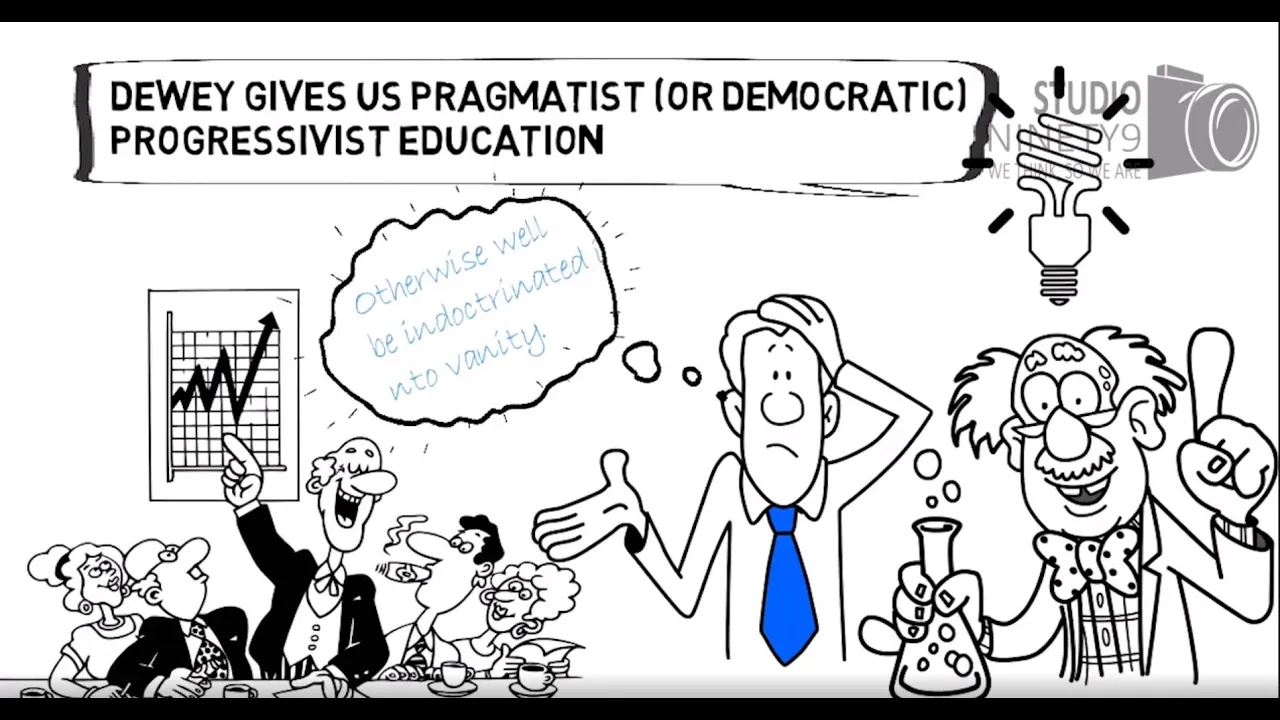
Practical applications of pragmatism in education, specifically John Dewey's progressive education model and experiential learning.
Critiques of pragmatism from analytic and continental traditions, particularly regarding allegations of relativism and subjectivism.
170.7K views7.5Klikes17:44Original Release: 2023-05-26
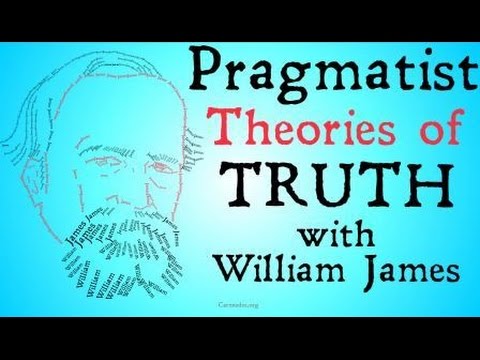
foreign so what does pragmatism mean well it might make us think of a pragmatic person with a serious disposition who thinks about every decision in methodical and practical terms now they might not be the most fun at parties but they always know when it's time to pack it up not quite a full-on Optimist or pessimist but a realist who looks at life in honest terms their name is probably something like Marshall or Madison and while this is the conventional understanding of pragmatism it's actually so much more a whole philosophical tradition with a focus on practical consequences it's also maybe the most American brand of philosophy the apple pie to existentialism's apricot cocktail if you will now for all the time that we've spent talking about philosophers most of them have been European or if not schooled and European schools of thought stuff like existentialism phenomenology post-modernism Marxism or critical theory also we're very aware we've been a little eurocentric in the philosophers we've talked about over the years we're going to Branch out and try to do better thanks for those of you who've kind of poke dust and said hey do better we appreciate it poke away baby poke away but not in person if you see me in person and you poke me physically like I'm a child I'll equalize you and it'll change your life forever it might seem like European philosophers are the ones asking all of the big questions you know stuff like what's the meaning of existence is there a point to life is there such a thing as truth and confession for much of my education I kind of thought this was the case and we might assume that American philosophers like the pragmatist spend their time talking about boring and practical questions and not the sort of deep and edgy stuff that makes Bros get Nietzsche tattoos if you're a bro with Anita tattoo or to be fair or bro with any type of philosophy tattoo please let us know about it in the comments what does it say where is it on your body if you want to send pics to us that's cool too but that's a decision you're gonna have to make for yourself but what if the American pragmatists have way more in common with their edgy European cousins than we realized and if so how have Americans been missing out on some interesting philosophical action right here on our home turf let's find out in this wisecrack Edition on pragmatism the most American philosophy let's start by getting some terms nailed down now pragmatism is often seen as an alternative to optimism and pessimism a sort of serious or realist attitude towards life it's a more down-to-earth type of thinking rather than some head in the clouds philosophy while classical philosophers might Ponder the ontological conditions of existence the pragmatist is thinking about the real conditions of modern human existence in the here and now and this is a good thing for those who might think that philosophy can often run the risk of getting a bit impractical we see this thinking in those who might say that detna degree in philosophy is about as useful as a degree in underwater basket weaving so people can decide whether it's worth borrowing tens of thousands of dollars to major in basket weaving in contrast the pragmatist tradition is less concerned with thinking their way from concrete example to abstract truths and more interested in the Practical implications of our thoughts and beliefs now the philosopher most associated with pragmatism is William James who explains that pragmatic thinking can resolve or even dissolve many classical philosophical problems he explained the importance of pragmatism in a story from 1904 about an experience he had while camping some years ago being with a camping party in the mountains I returned from a solitary ramble to find everyone engaged in a ferocious metaphysical dispute the Corpus of the dispute was a squirrel a live squirrel supposed to be clinging to one side of a tree trunk while over against the tree's opposite side a human being was imagined to stand this human witness tries to get sight of the squirrel by moving rapidly around the tree but no matter how fast he goes the squirrel moves as fast in the opposite direction always keeps the tree between himself and the man so that never a glimpse of him is caught the resultant metaphysical problem now is this does the man go round the squirrel or not he goes around the tree sure enough and the squirrel is on the tree but does he go round the squirrel I'll give you a second guys because I know the ramifications of such a question are probably shaking you to the core so take a deep breath it's all gonna be okay we're gonna figure this one out together and we'll make it work okay so while James notes that his fellow campers really dug into this sort of chicken or egg style debate he took a different approach mindful of the Scholastic adage that whenever you meet a contradiction you must make a distinction I immediately saw it and found one as follows which party is right I said depends on what you practically mean by going around the squirrel if you mean passing from the north of him to the East and into the south then to the west and then to the north of him again obviously the man does go around him but if on the contrary I mean being first in front of him then on the right of him then behind him then on his left and finally in front again it is quite as obvious that the man fails to go round make the distinction and here is no occasion for any farther dispute you are both right and both wrong according as you conceive the verb to go around in one practical fashion or the other wow guys thanks for hanging out for that one you know people just they wrote differently in the olden times um and I guess good for them but it's a lot but this is basically all a long way of saying you can intellectually jerk off to this question all you want but at the end of the day it doesn't really matter because you can just justify whichever position you like now unless masturbatory verbiage when it comes to a practical solution to this conundrum there is no clear Truth at play also we gotta say this if I saw a group of guys in the woods standing around a tree chasing squirrels and having like metaphysical debates I would assume they were all tripping very hard so do pragmatists think there are such things as real concepts of meaning truth and belief or are we all just shouting about squirrels when we debate these classic philosophical questions well in his book from 1878 how to make our ideas clear philosopher Charles Sanders purse who introduced the term pragmatism to philosophy lays out a pragmatic theory of the meaning of words he does this by taking on the view of an experimental scientist and argues that when thinking about Concepts we need to think about what practical effects they might have and then base our Concepts primarily around these effects in other words meaning is inherently tied to function purse is disconnecting meaning from what we get in someone like Plato where something's true meaning is the ideal form of that thing this would mean that the reality of the chair you're sitting in exists only relative to the ideal form of chairness I.E the perfect and true concept of chair in a more pragmatic sense the reality of the chair you're sitting in is the Practical effect of being a chair that supports your body as you watch YouTube videos at work which is cool because it's cool to steal time from your company let me know in the comments how much time you think you've stolen from your company at your current job by why watching YouTube videos and things of that nature we're not here to judge but maybe don't do it if you use your government name and You Know Your Boss watches this channel yeah so meaning is practical not conceptual while this theory of pragmatism might feel relatively grounded and even low stakes it actually calls the traditional philosophical view of Truth into question namely that truth is an agreement between thought and reality or concept and object usually referred to as the correspondence theory of Truth according to John Capps unlike correspondence theories which tend to see truth as a static relation between a truth Bearer and a truth maker pragmatic theories of Truth tend to view truth as a function of the practices people engage in and the commitments people make when they solve problems make assertions or conduct scientific inquiry in doing so truth has a practical and social function rather than a formally logical one making it distinct from those who want to do philosophy in a mathematically precise manner this is also what brings pragmatism surprisingly close to existentialism but more on that later purse suggests that truth is what a community of inquirers would converge upon in the long run I'll so start calling your friends communities of inquirers like oh me and my fellow community of inquirers are going to go to the movies tonight or uh hey fellow community of inquirers do you want to do an act of non-violent domestic Terror against the fossil fuel industry or you know stuff like that for him truth is tied to the idea that all who investigate a thing come to agreement on what an idea or concept actually is and their Collective opinion then becomes the reality of that thing and he sees something hopeful in the idea that this truth-binding process is done collectively this makes truth more of a social project rather than something magical and perfect existing outside of Human Experience now James was inspired by purse and shared his desire to challenge the more traditional correspondence theories of Truth in his 1907 lecture what pragmatism means James argued Mr purse after pointing out that our beliefs are really rules for Action said that to develop a thoughts meaning we need only determine what conduct it is fitted to produce that conduct is for us it's sole significance by Framing beliefs as rules for Action our ideas of what's true and false real and unreal become less speculative and more about our lived experience now this makes truth more of a description of how an idea affects our actions then it is an idea we simply agree or disagree with and while this might sound sort of anti-scientific at least compared to a more platonic model James is taking his cues from science writing that theories thus become instruments not answers to enigmas in which we can rest now some argue that James ventured too far from purse's science-minded method and towards that dirty word often associated with post-modernism relativism which is the idea that there's no fixed conception of Truth now we see this when he writes a theological ideas proved to have value for concrete life they will be true for pragmatism while pers might think that the faith-based nature of theological ideas puts them outside the bounds of being true in any philosophical sense James is arguing that if they have value for one's life well then they have value and this made James more bold and even more radical than purse writing things like true is the name of whatever proves itself to be good in the way of belief and because all good mentors eventually turn into enemies purse ended up criticizing James's view calling his own work pragmaticism as opposed to pragmatism so his big move was adding a couple of letters into it to really make it distinct I don't know if that's the best also if you've ever had a mentor that turned into your enemy shout it out in the comments I'd love to hear that story but this didn't stop James who argued that under special circumstances believing in something without sufficient evidence actually brings about access to relevant evidence saying there are cases where a fact cannot come at all unless a preliminary Faith exists in its coming James gives an example of this a whole train of passengers individually brave enough will be looted by a few Highwaymen simply because the latter can count on one another while each passenger fears that if he makes a move movement of resistance you will be shot before anyone else backs him up if we believe that the whole car full would rise at once with us which is each severally rise and train robbing would never even be attempted this was an early version of Mark Wahlberg's theory that if he were on the plane during the 9 11 attacks he would have handled things differently how differently you ask Mark Wahlberg said that if he was on the plane it wouldn't have happened and there would have been Blood In First Class and he would have landed the plane he thinks he would have landed the plane Mark Wahlberg another way to think of this is that sometimes the first step of Truth is simply just making a decision James writes do not decide but leave the question open is itself a passional decision just like deciding yes or no and is attended with the same risk of losing the truth meaning that we can't disconnect human passion and decision making from the discovery of truth but let's quickly jump on a flight to Paris and get back to the cool kids of philosophy so if existentialism and post-modernism are like the alt kids vaping in the parking lot while laughing at the football players are the pragmatist the kids walking by telling them smoking is unhealthy if they show up late to class again Mr Boggs is gonna make him retake geometry Mr Boggs was the name of a teacher I had in high school and it was one of those guys that said stuff that I think was funny at the time that now I look back I think was maybe a misogynist I think he was just kind of openly massaged I'm not totally sure maybe you know maybe I'll talk with you about this sometime we could really work through it together well like the third Act of a teen comedy these groups might actually end up learning that they have more in common than they realized let's start with Nietzsche a common touch point for lots of folks associated with existential and post-modern thought whose analysis of religious beliefs shares a lot with that of James now Nietzsche used a kind of pragmatic method for evaluating religious beliefs for example his critique of Christianity had less to do with theological inconsistencies and more to do with the way it encouraged a type of practical nihilism turning people away from the world and their own Humanity one commentator who noticed the sympathies between Nietzsche and James John warbicky writes that that we see affinities between niches and the American philosophers challenge to Absolute morality and their pragmatic approach to testing beliefs they sought to dispense with questions of first principles and philosophical absolutes and to examine instead the benefits that a particular religious belief brought the believer Nietzsche had summoned men to ask for their beliefs not whether they were good or evil but rather whether they Inspire much like how Nisha was skeptical of both religion and idealist Philosophy for the way they take us away from our own humanity and towards abstract Concepts the pragmatist tradition wants to evaluate beliefs on what they do more so than what they are in themselves American philosopher Josiah Royce viewed James's will to believe as he viewed Nature's Will To Power as an example of this contingent absolute idealism there is no absolute truth Royce says there's only the truth that you need in American Nietzsche Jennifer Ratner rosenhagen writes that for both Nietzsche and the pragmatist truth was not a finished fact that lay outside human agency but an instrument developed by people as they interacted with their physical and cultural environments Nietzsche and the pragmatists stressed that man is the maker of his universe but it would be going way too far to say that the pragmatist existentialist and postmodernists share more or less the same philosophical project as well there are many practical similarities in what they're doing they have radically different aims Walter Kaufman who translated Nietzsche and brought existentialism to American readers thought that Nietzsche would have rejected James's account of Truth according to Ratner rosenhagen writing about Kaufman's reading for Nietzsche truth can be indifferent to our needs he argued repeatedly that we should not presume the world was made for us for this reason Kaufman argued Nietzsche would have stridently rejected the presumption that what is useful must be true fernisha even a belief that is necessary for life may be false just because one cannot bear the idea that God does not exist does not give God the right to exist and while American philosopher Richard rorty saw Nietzsche and the pragmatist as allies in his campaign to demonstrate that knowledge is nothing more and nothing less than a social practice he also argued that Nietzsche's philosophy was all together devoid of the spirit of social hope that is so essential for the American pragmatists so while elements of the pragmatist tradition can be read as an American answer to European existentialism the American part is doing a lot of work there because while American thinkers do often take a critical stance towards the status quo this stance is usually motivated by an underlying belief that while often difficult and far from guaranteed social change is fundamentally possible within the current Paradigm which I also call the political philosophy of Barack Obama and Joe Biden so while Nietzsche could only hope for a new man to come on the scene and redeem things and the existential is basically threw out dominant religious and political values to create new ones the American pragmatist still had hope in the American project making them staunch allies of lin-manuel Miranda so if you've always been attracted to the exciting focus on life and existence found in the European philosophers of the 19th and 20th centuries but don't want to give up your love of a good baseball game a cold domestic lager and a fundamental belief in the power of voting then pragmatism might just be the philosophy for you but if you're convinced that at the heart of human experience and thought is a chaotic void unable to provide ultimate meaning to life or reality and a dinner should be served after 8 PM then maybe stick with the Europeans but what do you guys think is pragmatism an underrated American philosophy do we overrate Europeans because they're more stylish or should Americans stick to what we're good at whatever that is and leave the heavy duty speculation to the continent let us know what you think in the comments a huge thanks to all our patrons who made the very pragmatic decision to support our Channel and in return they get stuff like access to our Discord server videos early with no ads extra audio and video content and yes I said videos early with no ads some of you don't like ads well for five dollars a month no ads ever it's a pretty good deal do the math but if you don't want to do the math you can just keep doing what you're doing and support our Channel by watching liking click making commenting all those things that feed that hungry mother algorithm it means a lot to us and we really really appreciate it in the meantime remember the truth can also be practical and we'll see you later foreign [Music]
Up Next

51:57
Cambridge Pragmatism: Cheryl Misak on Peirce and Ramsey
@TheRoyalInstituteofPhilosophy
15.5K views•2014-12-05

164:01
John of Damascus on Holy Images: A Theological Defense
@BannedBooks
139 views•2026-04-25

12:32
Kang the Conqueror: Narrative Identity Theory in the MCU's Future
@WisecrackEDU
155.9K views•2020-10-23
4:57
The Myth of Sisyphus: A Greek Legend of Eternal Punishment
@TEDEd
8.6M views•2018-11-13
Related Study Plans & Knowledge Roadmaps
Structured learning paths in Philosophy
philosophy
Frankfurt School: Critical Theory & Culture
01Foundations of the Frankfurt School and Critical Theory
02Horkheimer & Adorno: The Critique of Instrumental Reason
03The Culture Industry and Mass Deception
+ 2 more learning modules
12h5 modules
Explore Roadmap
philosophy
Philosophy of Language: From Frege to Austin
01The Linguistic Turn: An Introduction to Language in Philosophy
02Gottlob Frege: Sense and Reference
03Early Wittgenstein: The Picture Theory of Meaning
+ 3 more learning modules
15h6 modules
Explore Roadmap
philosophy
Feminist Epistemology: Standpoint & Injustice
01Introduction to Epistemology and Feminist Critiques
02Sandra Harding and Standpoint Theory
03Donna Haraway and Situated Knowledges
+ 2 more learning modules
12h5 modules
Explore Roadmap
philosophy
Environmental Philosophy: Ethics & Deep Ecology
01Foundations of Environmental Ethics & Anthropocentrism
02Biocentric Individualism and Animal Liberation
03Ecocentric Holism and Deep Ecology
+ 1 more learning modules
10h4 modules
Explore Roadmap