




















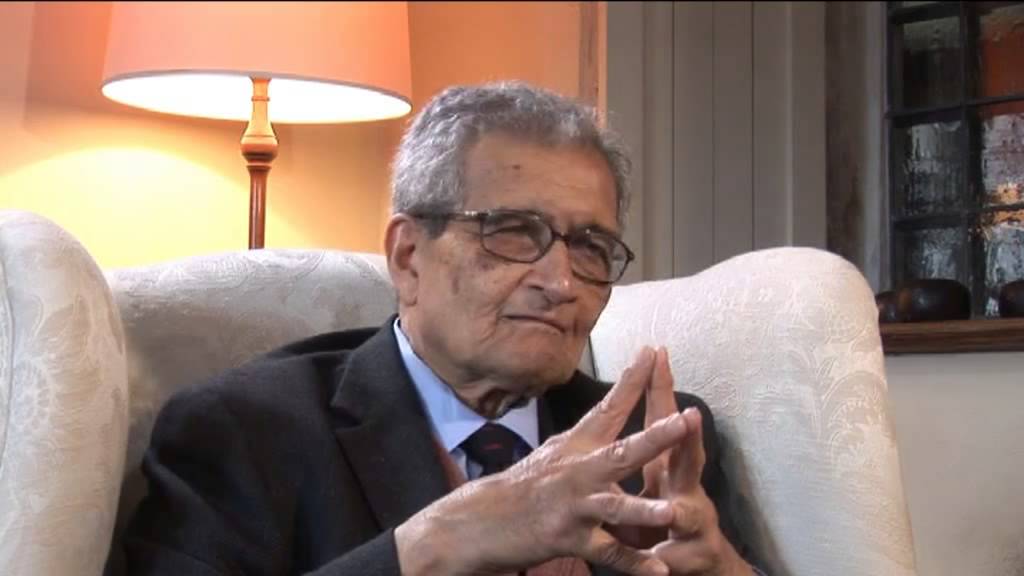



Martha Nussbaum argues that a just society must provide all individuals with the necessary life circumstances to develop their inherent human capabilities, including bodily health, sensory development, practical reasoning, affiliations, play, and emotional well-being, rather than focusing solely on economic production and mutual advantage as traditional social contract theories do.
The Capabilities Approach | Martha Nussbaum | Examined Life
Added:Familiarity with Aristotle's concept of 'eudaimonia' (human flourishing) as a foundational theory of well-being.
An understanding of John Rawls's 'Theory of Justice' and the concept of primary social goods, which the capabilities approach critiques and builds upon.
Basic knowledge of utilitarianism and the limitations of using Gross Domestic Product (GDP) or average utility to measure societal progress.
A foundational grasp of the difference between formal rights (de jure) and actual opportunities/substantial freedoms (de facto).
A comparative study of Amartya Sen's economic formulation of the capability approach versus Nussbaum's philosophy-driven, list-based approach.
Analysis of how the capabilities approach is operationalized in global policy, specifically through the United Nations Development Programme's Human Development Index (HDI).
Exploration of Nussbaum's application of the capabilities approach to marginalized groups, including disability rights, feminist theory, and animal ethics.
Examination of key critiques of the capabilities approach, such as concerns regarding paternalism, liberalism, and the challenges of universalism across different cultures.
250.4K views1.8Klikes7:54Original Release: 2010-02-01
[Music] n [Music] Aristotle had the ingredients of a theory of justice that I think is very powerful and that is that it's the job of a good political arrangement to provide each and every person with what they need to become capable of living rich and flourishing human lives now of course he didn't include all the people but he at least had that idea of supporting human capability that's the foundation of my own approach now then in the 17th and 18th centuries a very powerful new approach came on the scene and that was the social contract approach Hobs lock Russo Kant the social contract approach was is inspired by the background culture of feudalism where all opportunities were distributed unequally to people according to their class their inherited wealth and their status and so what these theorist said is try to imagine human beings stripped of all those inherited advantages placed in what they called the state of nature where they had only their natural body and their physical advantages and try to imagine what kind of arrangements they would actually make the social contract tradition is of course a an academic philosophical tradition but it also has tremendous influence on popular culture and our general public life because we every day we hear things like oh those people people don't pay their own way or supporting some new group of people well there'll be a drag on our economy so the idea that the good member of society is a producer who contributes advantage to everyone that is very a very live idea and it lies behind the decline of welfare programs in this country I think it lies behind many Americans skepticism about Europe about European social democracy they you hear terms like oh the nanny State as though there was something wrong with the idea of maternal care as a as a conception of what Society actually does um we also see it in another way in images of who the real man is the real man is sort of like these people in the state of nature he doesn't deeply need anyone he isn't bound to anyone by ties of love and compassion he's the owner who can go his own way and then out of Advantage he'll choose to have C certain kinds of social [Music] Arrangements the theorists of the social contract made certain assumptions that aren't always true they assumed that the parties to this contract really are roughly equal in physical and mental power now that was fine when you're thinking about adult men with no disabilities but as some of them already began to notice it doesn't do so well when you think about women because women's oppression has always been partly occasioned by their physical weakness compared to men and so if you leave out that physical asymmetry you may be leaving out a problem that a theory of Justice will need to fix but it's certainly does not do well when we think about Justice for people with serious physical and mental disabilities and in fact some of the theorists who noticed that said well this is a problem but we'll just have to solve it later we'll get the theory first then we'll work on this problem at some other point well my thought is that this is not a small problem there are a lot of people with serious physical and mental disabilities but not only that but it's all of us when we're little children and as we age how do you think about Justice when you're dealing with bodies that are very very unequal in their ability and their power and perhaps even harder how do you think about it when you're dealing with mental powers that are very very unequal in their potential and I think that this is a really serious political problem we have only just begun to understand how to educate children with disabilities how to think about their political representation how to design cities that are open to them I mean this bridge we walked across a person in a wheelchair can go over that bridge but you know 50 years ago that would not have been the case there would have been steps and that person could not get to see this beautiful Lake sure [Music] the capabilities approach as I've developed it as a theory of Justice begins with the idea that all human beings have an inherent dignity and require life circumstances that are worthy of that dignity the areas of life that seem to me particularly important when we think about the capabilities are of course life is the very most basic one bodily Health bodily Integrity the development of the senses imagination and thought the development of practical reasoning the development of affiliations both more informal in the family and friendship but also in the political Community the development of the ability to play and have recreational opportunities the ability to have relationships with other creatures and the world of nature developing emotional capabilities because I think a lot of theories leave out the fact that we don't want to have lives that are filled with fear for example in my view people get together together to form a society not because they're afraid and they want to strike a deal for Mutual Advantage but it's much more out of love that they want to join with others in creating a world that's as good as it can be [Music]
Up Next

20:31
Rawls vs. Nozick: Social Justice Theories | Dworkin & Magee 1977
@Philosophy_Overdose
114.9K views•2021-06-15

164:01
John of Damascus on Holy Images: A Theological Defense
@BannedBooks
139 views•2026-04-25

68:32
Should We Destroy the Machines? Big Tech Surveillance Critique
@TheStoriesWeTell303
167.9K views•2025-11-30
4:57
The Myth of Sisyphus: A Greek Legend of Eternal Punishment
@TEDEd
8.6M views•2018-11-13
Related Study Plans & Knowledge Roadmaps
Structured learning paths in Philosophy
philosophy
Frankfurt School: Critical Theory & Culture
01Foundations of the Frankfurt School and Critical Theory
02Horkheimer & Adorno: The Critique of Instrumental Reason
03The Culture Industry and Mass Deception
+ 2 more learning modules
12h5 modules
Explore Roadmap
philosophy
Philosophy of Language: From Frege to Austin
01The Linguistic Turn: An Introduction to Language in Philosophy
02Gottlob Frege: Sense and Reference
03Early Wittgenstein: The Picture Theory of Meaning
+ 3 more learning modules
15h6 modules
Explore Roadmap
philosophy
Feminist Epistemology: Standpoint & Injustice
01Introduction to Epistemology and Feminist Critiques
02Sandra Harding and Standpoint Theory
03Donna Haraway and Situated Knowledges
+ 2 more learning modules
12h5 modules
Explore Roadmap
philosophy
Environmental Philosophy: Ethics & Deep Ecology
01Foundations of Environmental Ethics & Anthropocentrism
02Biocentric Individualism and Animal Liberation
03Ecocentric Holism and Deep Ecology
+ 1 more learning modules
10h4 modules
Explore Roadmap