![Comprendre les externalités positives et négatives [Philippe Gattet]](https://i.ytimg.com/vi/Sxy9VUOdONA/maxresdefault.jpg)




![[민법 및 민사 특별법 13강] 물권과 채권|2025 공인중개사 민법 및 민사 특별법 기초이론 유료강의 무료공개|36회 공인중개사 시험 대비|에듀윌 심정욱 합격강의](https://i.ytimg.com/vi_webp/vHVCi_pOAJM/maxresdefault.webp)



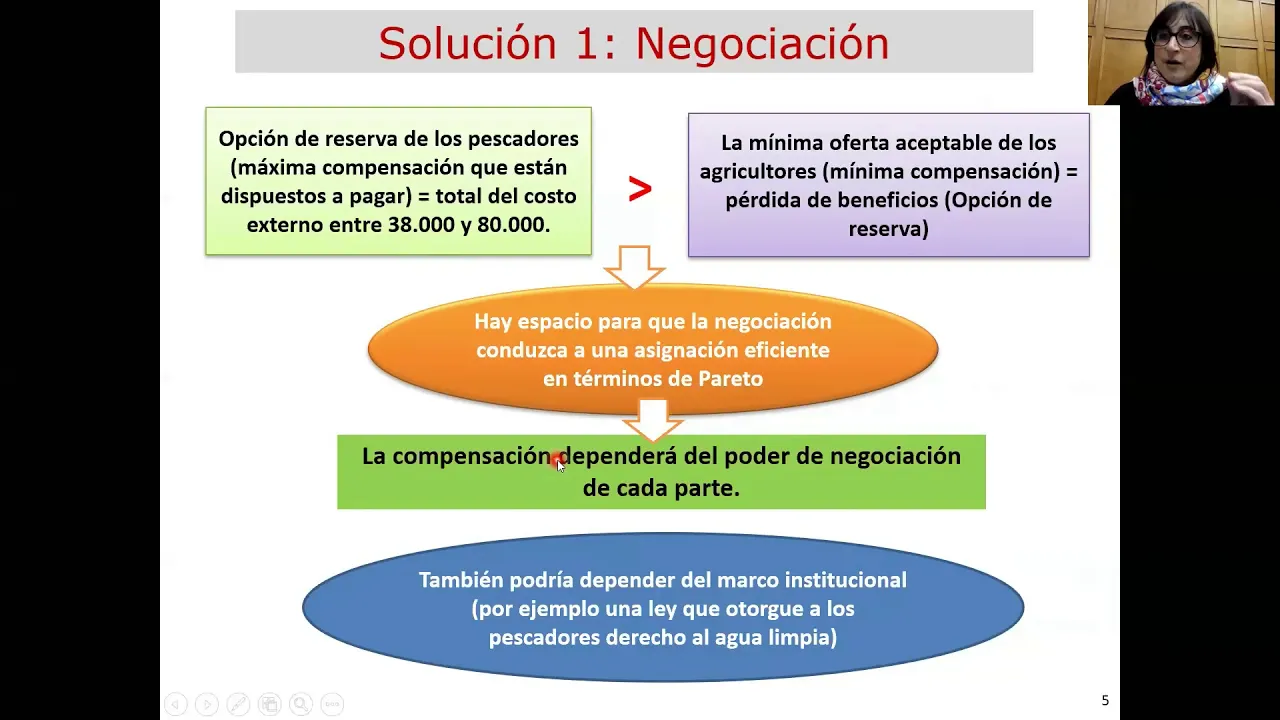













The Coase Theorem states that when property rights are clearly defined and transaction costs are sufficiently low, bargaining between parties will lead to a Pareto efficient outcome regardless of how initial property rights are distributed, providing a private solution to externalities; however, the theorem faces significant real-world limitations including indivisibility of resources, high transaction costs, asymmetric information, imperfect competition, unequal bargaining power, and multi-stage bargaining dynamics that prevent its universal applicability.
Coase Theorem Explained: Externalities, Diagrams, and Real-Life Examples
Added:Understanding of externalities (negative and positive) and how they represent market failures.
Familiarity with marginal analysis diagrams, specifically Marginal Social Cost (MSC) vs. Marginal Private Cost (MPC).
The basic concept of property rights and how they are legally defined and allocated.
An introductory awareness of transaction costs and how they influence trade and negotiations.
Comparison of Coasean bargaining with Pigouvian taxes and subsidies as policy instruments.
Deep dive into Transaction Cost Economics and the theory of the firm pioneered by Ronald Coase and Oliver Williamson.
Analysis of cap-and-trade systems (market-based environmental policies) as real-world applications of Coasean principles.
Exploration of the 'Tragedy of the Commons' and Elinor Ostrom's institutional designs for governing shared resources.
21.2K views190likes9:37Original Release: 2016-11-06
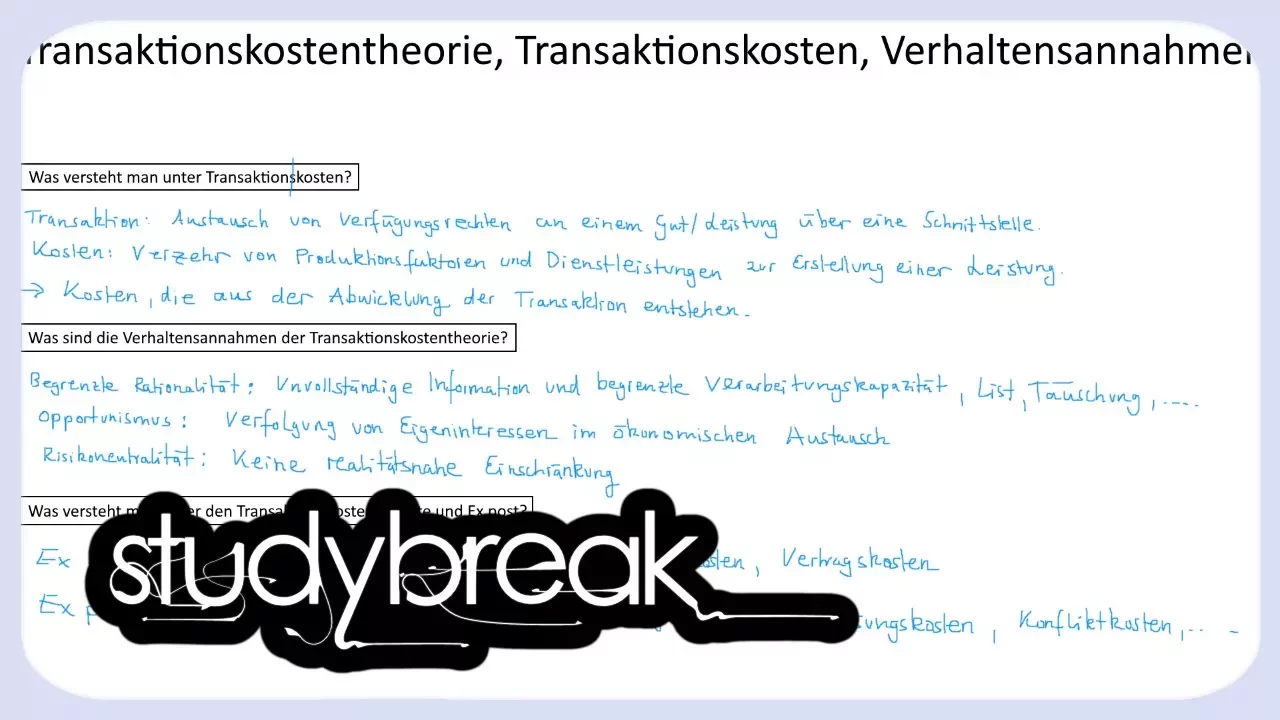
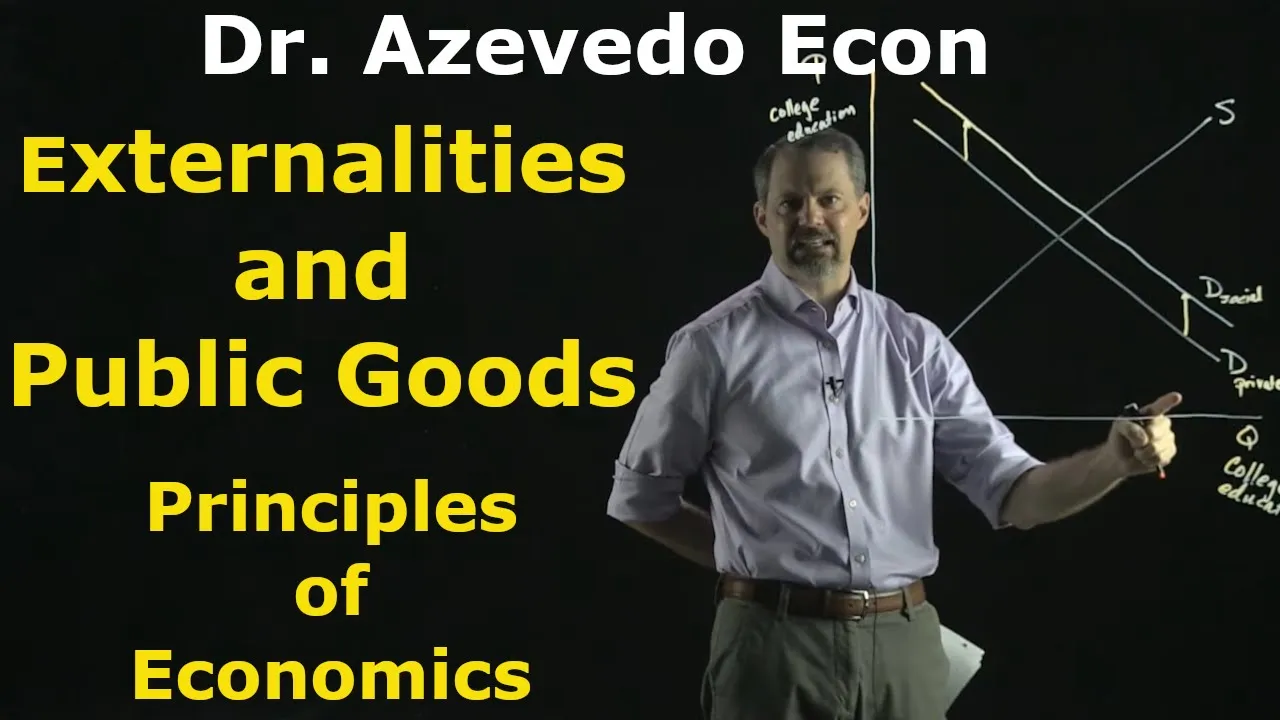
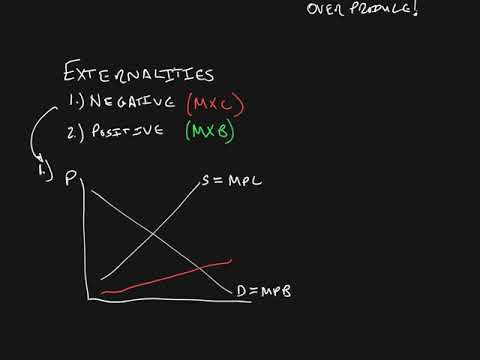
so today we will be talking about the co theorem but before we start off talking about the co theorem two other economic Concepts need to be talked about which are market failures and externalities now a market failure refers to a situation in which the market forces lead to an outcome which is not poo efficient which means there exists another conceivable outcome where an individual may be made better off without making someone else worse off now coming to externalities an externality is a consequence of an economic activity experienced by an unrelated third party so an externality can be both positive or negative so for example a negative externality would be if a person is smoking a cigarette he not only affects himself but also affects people sitting around him so now coming to the uh Co theorem so the co theorem is is a private solution to an externality it aims at internalizing these externalities so in law and economics the co theorems describes the economic efficiency of an outcome in the presence of externalities the theorem states that if property rights are clearly defined and trade is possible at sufficiently low transaction cost bargaining will lead to an par efficient outcome regardless of how the initial property rights have been distributed So Co developed this theorem uh when uh when thinking about distribution of radio frequencies so basically in 1956 what happened was that uh various radio channels had the same frequencies and they used to enter into each other's broadcasts so now what course uh now the authorities were deciding on how to solve this problem so what Co proposed was that if property rights were uh well defined no matter uh irrespective of who got the property rights um they all the parties would negotiate amongst themsel and come to an outcome which would be par efficient and which would be beneficial for all parties because the parties that would benefit the maximum from their broadcast would be willing to pay other parties not to interfere with their broadcast we are now going to explain the coast theorem with the help of a diagram consider the example of of a steel manufacturer and a fisherman the steel manufacturer becomes a negative production externality for the fisherman as sludge from the factories pollute the river we assume the Damage Done per unit production of Steel is $100 The Firm produces quantity q1 as per its private marginal cost however the social marginal cost is much higher because of the marginal Damage Done to the uh fisherman the social optim socially optimal quantity is quantity Q2 however the quantity produced is quantity q1 hence there is a over production of q1 minus Q2 there is a dead weight loss of triangle BCA and since the social marginal cost is not equal to the social marginal benefit at production q1 it leads to a market failure according to co if the fishermen have property rights over the river they can demand the ending of the sludge dumping since the sludge dumping can be reduced only by reduction in production the fisherman May demand the shutting down of the plant itself the plant owner may decide to compensate the fisherman with their marginal damage of $100 if he can still make a profit over it this is better than shutting down of the plant itself in this case the outcome produced would be quantity Q2 as the firm's private marginal cost increases to the social marginal cost by the amount which is equal to the marginal damage and uh the quantity hence produced is socially optimal coming to a real life application of the course theory Patria par of K energy a big company from New York is helping make a path of Eastern Oregon one of the fastest growing wind power regions in the country is it she is making a tempting offer sign waer saying you will not complain about excessive noise from the Turning turbines the whoo whoo whoo of the future Advocate say and she will cut you a check for $5,000 shall we call it harush money said one longtime farmer George Griffin it was about as easy as money can get Mr Griffith happily accepted the check but not everyone is taking the money even when the recession has steepened the steady decline of the rural economy where people have long supported the massive dams that harness the Columbia River for hydroelectric power where Oregon has invested hundreds of millions of dollars in tax incentives to cultivate Alternative Energy pockets of resistance are rising with the windmills on the river banks residents in the small towns are fighting proposed projects raising concerns about threats to birds and big games as well as about the way the giant towers and their blinking lights spoil some of the West's most luring views many times Neighbors to wind power projects such as these have five nuisance complaints and often these complaints get nowhere in part due to lack of clear property rights in the case of Oregon a state industrial noise ordinance gives some clarity regarding property rights enabling Co bargaining to proceed since the rights to a noise pollution free environment were with the citizens of origon and the benefits to the company exceeded the costs of the project the company founded to pay the citizens in return for their approval and the project to proceeds smoothly the course theorem has been widely debated ever since its Inception economists have come up with a wide range of examples where the cause theorem isn't applicable in real life scenarios and we will be discussing some of them indivisibility of resources resources such as air cannot be divided amongst individuals or parties easily so the basic premise of the course theorem doesn't hold when resources are difficult to be divided transaction cost cost in his theorem uh ignored the ignore the applicability of transaction cost this again is a problem because in the real world there are very few scenarios where transaction costs are really low or can be ignored completely for example when there are multiple parties on both sides then transaction costs become extremely high in which case a aent solution becomes inefficient yet another criticism says that the ction solution between a single polluter and a wide range of other parties is more like a negotiation and not a bargain so it will be up so it will be subject to all the problems that we come across in Game Theory it becomes like a bargaining so similar to this case when there is multi-stage bargaining for example in cases where there are multiple stages in which the parties have to bargain with each other the Dynamics of Game Theory come into place so parties earlier reputations affect the affect the decisions which will be taken on later by the parties the fourth problem of the cause theorem is asymmetric information so the ca theorem Works under the assumption of perfect or complete information however it is very difficult for both parties to exactly know each other's costs and each other's benefits in real life you often have the problem of asymmetric information in which case the course theorem will not work yet another problem with the course theorem is that it works under the assumption of perfect competition now obviously in real life there exists poopies monopolies duopolies and any and yet a lot of other cases where perfect competition is not exactly valid so the course theorem again becomes not applicable yet another issue with the c theorem is the pro is the problem of bargaining most often COA theorem is applicable in cases where a large party such as an MNC has to compensate a lot of other parties such as small farmers or small or individuals in this case often parties do not have equal bargaining power these corporations can hire lawyers have better technology to uh to cope with the pro to cope with the bargain or the problem and they can often exploit the other parties involved also individuals may not have the incentive to actually use their entire capability to bring out the bargaining power which is the usual problem of public goods in such again the cost theorem becomes a problem a last and major problem with the cost theorem is that of property rights so coost in his theorem says that in the course theorem it does not matter who the property rights are assigned to initially the outcome will always be the same however a study has been found that in baseball leagues when pre 1976 bargaining power players were basically owned by teams however post 1976 players became their own individual owners instead of teams owning them so according to to course this shouldn't have had any effect and both should have led to similar results however What was seen that once players became their own owners they got higher salaries they got higher wages and the overall efficiency of baseball league betting was baseball league team allocation and betting was improved so we see that because of all these problems listed the co theorem though it is widely studied as a solution to the problem of allocation of public goods and externalities it is not for applicable in a lot of real life scenarios however course did uh did provide a simplified solution to the problem of externalities and it's uh the viability of the course theorem is still questioned in
Up Next

10:36
Economic Solutions to the Tragedy of the Commons Explained
@MarginalRevolutionUniversity
368.3K views•2015-06-26

5:07
Impact of Yuan in Indo-Russian Trade Amid Sanctions
@WION
261.9K views•2022-07-01
10:33
Behavioral Economics Explained: Rationality, Nudges, and Risk
@crashcourse
1.1M views•2016-03-12

113:18
The Age of Easy Money: Fed & Inflation | Full Documentary
@frontline
21.2M views•2023-03-15
Related Study Plans & Knowledge Roadmaps
Structured learning paths in Economics
economics
Sovereign Debt: Defaults, IMF & Restructuring
01Introduction to Sovereign Debt & Government Bonds
02Debt Sustainability & Credit Ratings
03Anatomy and History of Debt Crises
+ 2 more learning modules
12h5 modules
Explore Roadmap
economics
Market Design: Matching Theory & Gale-Shapley
01Introduction to Market Design and Price-Free Markets
02Two-Sided Matching & The Gale-Shapley Algorithm
03School Choice Systems and Mechanism Design
+ 2 more learning modules
10h5 modules
Explore Roadmap
economics
Impossible Trinity: Forex, Capital & Policy
01Introduction to Monetary Policy and Central Banking
02Exchange Rates and International Capital Flows
03The Mundell-Fleming Model
+ 2 more learning modules
8h5 modules
Explore Roadmap
economics
Healthcare Economics: Market Failures & Systems
01Introduction to Healthcare Markets and Market Failure
02Asymmetric Information and Adverse Selection
03Moral Hazard and Insurance Design
+ 2 more learning modules
12h5 modules
Explore Roadmap