





![[이승우 국어] 1-3-2-2강. 음운의 변동 (1) 교체-자음동화(비음화, 유음화), 모음동화(전설모음화), 모음조화](https://i.ytimg.com/vi/eW2vfqHtrgI/maxresdefault.jpg)







![Тюркские языки [Интересности о языках #18]](https://i.ytimg.com/vi_webp/K1B8yPwFjFw/maxresdefault.webp)



Turkish is a head-final agglutinative language with vowel harmony, featuring 8 vowels and extensive suffixation for grammatical marking; it belongs to the Turkic language family's Oghuz branch, spoken by approximately 90 million people, with a Latin alphabet orthography and a complex system of noun cases, verb conjugations, and derivational morphology.
The Turkish Language: Phonology, Grammar, and Vocabulary Explained
Added:Basic concepts of articulatory phonetics, including the International Phonetic Alphabet (IPA) and the classification of vowels by height, backness, and roundedness.
Fundamental morphological typology, specifically the distinction between isolating, fusional, and agglutinative language structures.
An introductory understanding of morphophonology, particularly the concept of phonological assimilation and how vowel harmony systems function in general linguistics.
Familiarity with syntactic typologies, such as Subject-Object-Verb (SOV) word order, and the function of grammatical cases.
Advanced Turkish syntax and sentence structure, focusing on complex nominalizations, converbs (gerunds), and relative clauses.
Comparative Turkic linguistics, examining the phonetic and morphological variations across other Turkic languages such as Azerbaijani, Uzbek, and Kazakh.
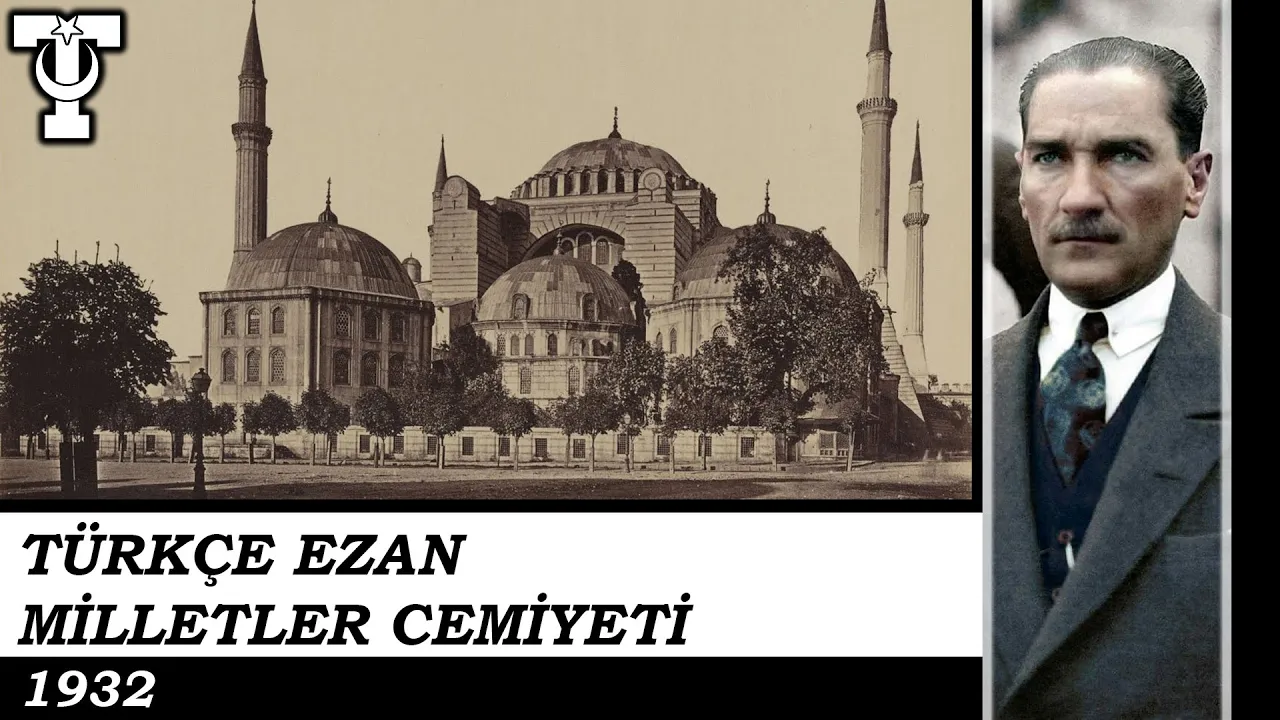
The sociolinguistics and historical development of Modern Turkish, including the 1932 Language Reform (Dil Devrimi) and the transition from the Arabic script to the Latin alphabet.
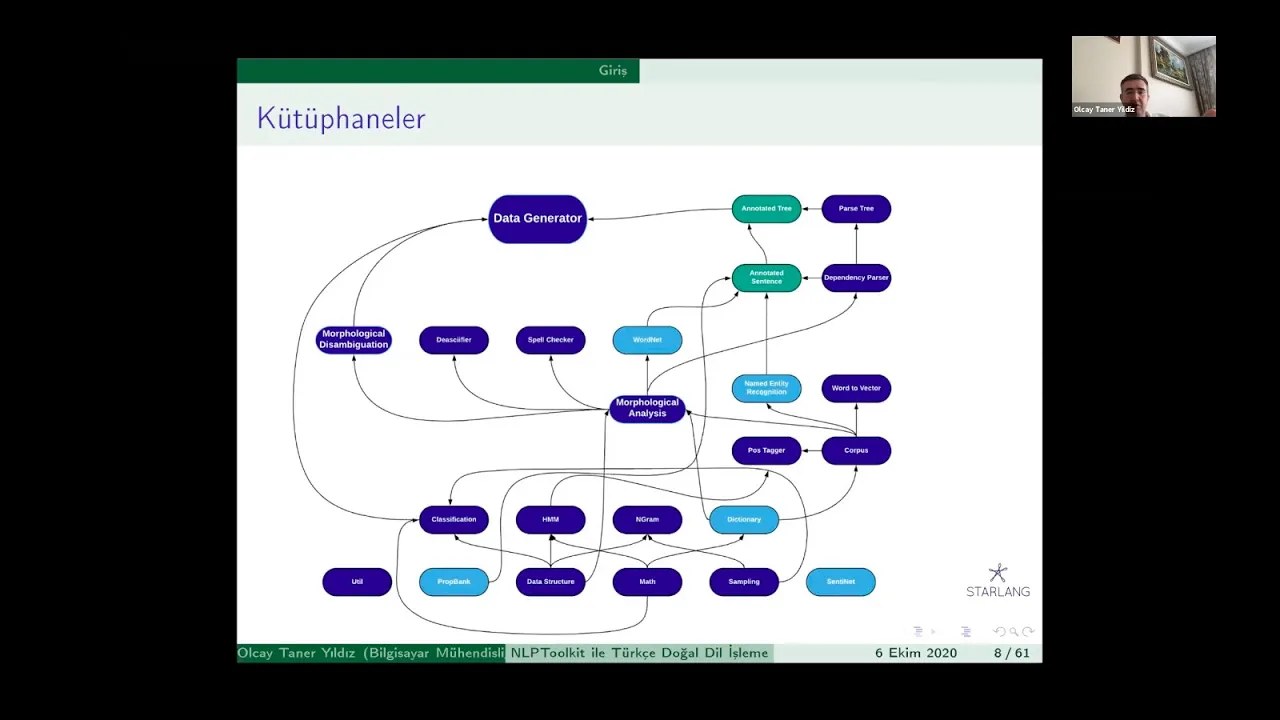
Practical application of Turkish morphotactics in computational linguistics, such as developing natural language processing (NLP) tools for morphological parsing.
41.2K views2.6Klikes13:09Original Release: 2025-08-30
Turkish is a really cool language so let’s talk about itǃ It’s spoken by around 90 million people, primarily in Turkey, as well by the Turkish diaspora in places such as Bulgaria, Iraq, Cyprus, and many others. It’s a part of the Turkic language family, alongside languages such as Kazakh, Uzbek, Kyrgyz, Uyghur, Tatar, among others. Within Turkic, Turkish is a part of the Oghuz branch, making it particularly close to Turkmen and especially to Azerbaijani, to the point of partial mutual intelligibility.
As for sounds, Turkish has 8 vowels, those being /a/ /e/ /ɯ/ /i/ /o/ /œ/ /u/ and /y/. It notably has vowel harmony, where within native Turkish words, front vowels /e/ /i/ /œ/ and /y/ primarily occur in words with only other front vowels, and back vowels /a/ /ɯ/ /o/ and /u/ mostly occur with other back vowels, and the vowels in suffixes change based on the previous vowel. For example, there are plural forms taşlar, yıldızlar, yollar, kuşlar for words with back vowels, but evler, işler, göller, and günler for words with front vowels. This plural suffix follows twofold harmony, which is simply between /e/ for front vowels and /a/ for back vowels. Many suffixes follow this, but many others follow fourfold harmony, which agrees for rounding in addition to frontness, where front unrounded vowels /i/ and /e/ take /i/, front rounded /y/ and /œ/ take /y/, back unrounded /ɯ/ and /a/ are followed by /ɯ/ and finally back rounded /u/ and /o/ take /u/. Compare the words verdim, gördüm, aldım, and sordum. The mid front rounded vowel /œ/ doesn’t appear in any suffixes, and of all the grammatical suffixes /o/ only occurs in -iyor, where only the first vowel changes for vowel harmony. Far from all Turkish words follow vowel harmony internally, especially compounds and loanwords from other languages. These words still usually take suffixes based on the last vowel, so the plural of insan is insanlar and not insanler. There are plenty of loanwords where because of underlying palatalization, words ending with back vowels take front harmony instead, such as with harf taking the plural form harfler.
The consonants of Turkish are /m/ /n/ /p/ /b/ /t/ /d/ /tʃ/ /dʒ/ /k/ /g/ /f/ /v/ /s/ /z/ /ʃ/ /ʒ/ /h/ /l/ /j/ and /ɾ/. The velar stops /k/ and /g/ become palatal stops [c] and [ɟ] next to front vowels /e/ /i/ /œ/ and /y/. The /l/ phoneme is pronounced as a typical l sound around front vowels, but next to back vowels /a/ /ɯ/ /o/ and /u/, it’s pronounced as a dark l [ɫ]. In loanwords, the front versions of these sounds can also occur before back /a/ and /u/, making them technically different phonemes. Compare kar /kar/ with kâr /caɾ/. There’s also the marginal phoneme called yumuşak g, meaning soft g, which is silent and lengthens preceding vowels at the ends of words and before another consonant, pronounced [j] between front vowels, and between back vowels it’s either silent or pronounced [ɰ] or as something close to it.
Turkish also has voicing assimilation with its stops, fricatives, and affricates. If a suffix starts with an obstruent, it becomes voiceless after roots ending with /p/ /t/ /tʃ/ /k/ /f/ /s/ /ʃ/ or /h/ and is voiced elsewhere. Compare the -ça in açıkça with the -ca in kurnazca and cesurca, or the -tan in taştan with the -dan in tuzdan. For the most part, voiced /b/ /d/ and /dʒ/ became /p/ /t/ and /tʃ/ at the ends of words, though they maintain their voicing when followed by a suffix starting with a vowel, compare kitap with its accusative form kitabı. /k/ usually contrasts with the soft g phoneme, with yaprak becoming yaprağı, and only voices to regular /g/ after other consonants, with renk turning into rengi. This type of alternation primarily only occurs with multisyllable words while one syllable ones usually have the consonant stay voiceless. Voiced /b/ /d/ /dʒ/ and /g/ also still occur at the ends of loans and a handful of native words that used to have long vowels though.
Worth noting is that the voiced postalveolar fricative /ʒ/ is rare in Turkish and limited to loans. Voiceless stops /p/ /t/ /k/ and /c/ are all aspirated at the beginnings of syllables, similar to in English and other Germanic languages. A very notable thing is that the rhotic is pronounced as a voiceless tap [ɾ̥] at the ends of words and before voiceless consonants, as in yer [jæɾ̥] and arka [ɑɾ̥kʰɑ]. Interestingly, the velar stop phoneme /k/ is pronounced as a uvular [q] around back vowels in some Turkish dialects. The fricative /h/ is pronounced as palatal [ç] after front vowels, and glottal elsewhere.
The phonetic long vowels [aː] [eː] [iː] and [uː] occur in various loanwords from Persian and Arabic. /i/ /y/ and /u/ are pronounced as near-close [ɪ] [ʏ] and [ʊ] at the ends of words. /e/ is pronounced as near-open [æ] before coda /m/ /n/ /l/ and /ɾ/, open-mid [ɛ] at the ends of words, and close-mid elsewhere.
The syllable structure of Turkish allows for consonant clusters both at the beginnings and ends of syllables, though word-initial clusters only occur in loanwords, and even then, some Turkish speakers often insert vowels [i] or [ɯ] to break them up, such as pronouncing tren as [tʰiɾæn] or kral as [kʰɯrɑɫ]. Certain nouns from Arabic also have clusters appearing in inflections despite not being present in base forms, such as isim becoming isme and hak becoming hakka.
The stress of most native Turkish words lands on the last syllable, though with plenty of exceptions, including the ones on screen if you’re interested in pausing and reading.
I’m sorry that the phonology section was so long, but fortunately Turkish spelling is fairly simple so the orthography section won’t be nearly as lengthy! Turkish is written with the Latin alphabet, using the base 26 letters, though <q>, <w>, and <x> are rare and limited to recent loanwords, and there are 6 extra letters with diacritics. The letters c-cedilla <ç> and s-cedilla <ş> are used for /tʃ/ and /ʃ/, and o-umlaut <ö> and u-umlaut <ü> represent /œ/ and /y/. A dotless i <ı> is used for /ɯ/, and finally soft g is represented with a breve on the letter g <ğ>. The rest of the letters mostly have the same values they do in the IPA, except for <y> which represents /j/, <j> which represents /ʒ/, and most outstandingly plain <c> is used for the voiced postalveolar affricate /dʒ/. The capital version of <i> is written with a dot above <İ>, as not to be confused with capital <ı> /ɯ/, notably appearing in the native spelling of İstanbul. With proper nouns, Turkish uses an apostrophe <’> to separate the base word from its inflections, such as in country and city names, in addition to the names of people. <k> <g> and <l> represent both their front versions /c/ /ɟ/ /l/ and back versions /k/ /g/ and /ɫ/, using circumflexes on a and u (â û) to indicate when they have their front allophones before /a/ and /u/. On rare occasions, circumflexes are additionally used in Perso-Arabic loanwords to indicate long vowels, other times doubled letters are used, and most of the time these long vowels are completely unwritten. Turkish also used to be written with the Arabic abjad, all throughout the span of the Ottoman Empire, ceasing to be used only a century ago with the empire’s fall.
And now we’re back to comically long sections with grammar! Turkish word order is purely head-final, with adjectives before nouns, postpositions after nouns, and Subject-Object-Verb word order, though the other 5 word orders are valid for marking emphasis. A large portion of native Turkish root words are only one syllable, but Turkish is also highly agglutinative to where words can become monstrously long. Turkish conveys grammatical information with a boatload of suffixes, but no prefixes. Prefixes appear primarily in loanwords and are exclusively used to derive vocabulary, not grammar.
As alluded to earlier, the plural suffix of nouns is -lar when following back vowels and -ler when following front vowels. Nouns in Turkish also have cases, of which there are 6 primary ones. The nominative is the base form of nouns and is used to refer to subjects of the sentence. The definite accusative has the suffix -i -ü -ı or -u depending on the final vowel, and refers to definite direct objects, while indefinite direct objects, ones which would not translate as English “the” simply take the nominative. The dative case which has the suffix -e or -a can refer to indirect objects, and means “to” or “into” when used with places. The locative case has the suffixes -de -da -te or -ta and refers to location, translating to the prepositions “in”, “on”, or “at”. Suffixes for the ablative case are the same as the locative but with an -n at the end, and generally means “from”, but can also mean “made of”, “through”, “out of”, or be used in comparisons with adjectives to mean “than”. Finally, the genitive has the same suffixes as the accusative but with an -n added to the end, and refers to possession or ownership. There’s also the marginal instrumental case, a contracted form of the postposition ile meaning “by” or “with”, becoming -le or -la after consonants and adding a -y after vowels before the -le or -la. Whenever a case suffix beginning with a vowel comes after a noun ending with a phonemic vowel sound, -y- is inserted between the two vowels in the accusative and dative and -n- is inserted for the genitive.
There are also possessive suffixes attached to nouns, with -im for “my”, -in for “your”, -i for the 3rd person singular, -imiz for “our”, -iniz for the 2nd person plural, and -leri for “their”, and of course all of these change for vowel harmony. When the aforementioned suffixes follow a noun that ends with a vowel, the initial -i is removed, except for the 3rd person singular suffix which becomes -si.
There are also various predicative forms that can be added to nouns and adjectives to mean “I am”, “you are”, or “we are”, so kişiyim means “I’m a person”, kişisin means “you’re a person”, kişiyiz means “we’re people”, and kişisiniz means “y’all are people”. Speaking of pronouns, the 3rd person singular pronoun is o, which also means “that”, and the 3rd person plural is onlar with the plural suffix.
I won’t be going into nearly as much detail with Turkish verbs because they are very complicated and I don’t wanna give anyone a stroke.
As a very broad overview, verbs change for the 6 subject pronouns and have several main conjugations: the aorist, used for habitual actions and general truths, the continuous, progressive, and future, whose names I hope are self-explanatory. There’s the simple definite past for previous actions which the speaker can directly attest happened, and the inferential past or perfect, when a speaker cannot verify that a previous action occurred but has some relevance to the present. There’s also the conditional for hypothetical actions, the necessative used for when an action must happen, and the largely merged imperative and optative moods which are used for commands in the second person and translate roughly as “let” in the 1st and 3rd persons. Many though not all of these conjugations can be combined to form compounds.
Verbs are made negative with the suffix -me, and there are separate potential forms, translating as “can” in the positive or “can’t” in the negative. There’s also the question particle mi, which is written as a separate word.
Turkish additionally has several causative suffixes, which can be stacked such as in öldürtmek which means “cause to kill”, with kill itself meaning “cause to die”. Sometimes they’re also stacked further but with no change in meaning. There are also passives, which interestingly when used with intransitive verbs serve as an impersonal form, translating as “you” or “one”.
Verbal nouns are present in Turkish, formed with the suffix -me, and these are often used in compound words and when other languages would use an auxiliary verb. There are also converbs, which are suffixes attached to verbs to link two verbs or clauses, variously meaning “while”, “as”, “when”, or “and”.
Finally, let’s talk about Turkish vocabulary! There are many suffixes for deriving nouns, verbs, and adjectives from each other, as in most languages. These can even be added to pronouns, such as in sensizlik which means “the state of being without you”.
Turkish also has reduplication in its vocabulary. Many adjectives have dedicated emphatic forms, roughly translated as “very”. They’re formed by repeating the first vowel of the root and any consonant before that, and adding -p -r -s or -m to the end of that reduplicated syllable. So güpgüzel means “very pretty”, tertemiz means “very clean”, kaskatı means “hard as a rock”, and simsiyah means “pitch black”. Full reduplication of the word was used to derive adverbs, and nouns can be repeated as well to mean “many” or “all of”. There’s also m-reduplication, where m can be inserted in the middle of two reduplicated words to mean something along the lines of “etc”, “or anything”, “or anyone”, and “or the like”.
The majority of words used are of native Turkic origin. Persian and Arabic were large sources of foreign vocabulary during the Ottoman Empire, but during Atatürk’s rule many of these words were removed and replaced by native Turkish ones. There’s been an onslaught of loanwords from European languages starting in the 1900s, particularly from French.
Examples of Perso-Arabic loans include kitap, mevsim, ufuk, diğer, her, and examples of French ones include bank, stil, dinozor, kalite, and tünel.
Whatever I could write as a summary would not be as cool as Turkish is as a language. Until next time, güle güle!
Up Next

36:15
Linguistics Lecture 12: Morphology Productivity & Variation
@languagescience9183
23.1K views•2021-07-13
36:52
Constraint Interaction in Optimality Theory: Epenthesis & Deletion
@Vidyamitra
180 views•2018-08-20

8:59
Forensic Linguistics: How Language Solves Crimes | PBS
@pbsstoried
1M views•2024-01-25

21:32
Accent Expert Explains U.S. Regional Dialects | Part 1
@WIRED
9.3M views•2021-01-21
Related Study Plans & Knowledge Roadmaps
Structured learning paths in Linguistics
linguistics
Optimality Theory: Tableaux & Constraints
01Phonological Basics: Sounds, Syllables & Rules
02Foundations of Optimality Theory: GEN, CON, and EVAL
03The Constraint Inventory: Markedness vs. Faithfulness
+ 2 more learning modules
15h5 modules
Explore Roadmap
linguistics
Morphosyntactic Alignment: S, A & P Systems
01Foundations of Syntax: Transitivity and Arguments
02The Linguistic Variables: Mapping S, A, and P
03Nominative-Accusative Alignment
+ 3 more learning modules
12h6 modules
Explore Roadmap
linguistics
Analyzing Sign Language: Phonology & Syntax
01Foundations of Sign Language Linguistics
02Phonology: The Five Parameters of a Sign
03Morphology: Word Formation and Classifiers
+ 2 more learning modules
14h5 modules
Explore Roadmap
linguistics
Pragmatics: Speech Acts, Grice & Politeness
01Introduction to Pragmatics: Meaning in Context
02Grice’s Cooperative Principle & Implicature
03Speech Act Theory
+ 2 more learning modules
14h5 modules
Explore Roadmap