



















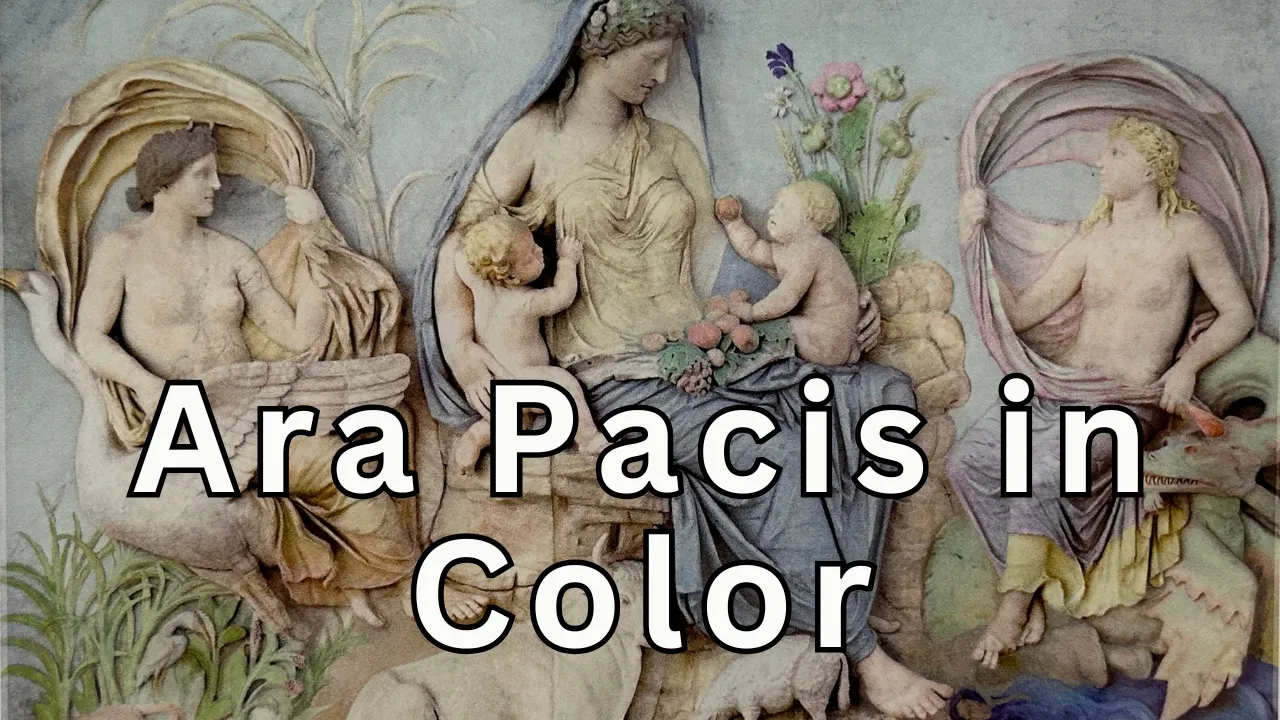

The Ara Pacis Augustae (Altar of Augustan Peace), commissioned by the Roman Senate in 13 BC and consecrated in 9 BC, is a monumental marble enclosure designed to celebrate Augustus's military victories and the new era of peace (Pax Romana) they established. The altar's intricate reliefs employ sophisticated symbolism drawing parallels between Augustus's reign and Rome's legendary Golden Age, using imagery of Romulus and Remus, Aeneas, and the goddess Roma to convey that Augustus had restored an idealized era of peace and prosperity. The monument's west-east orientation, balanced panels of war and peace, and references to both Saturnian utopia and Jupiterian order demonstrate how Augustus strategically positioned himself as a bridge between Rome's mythic past and imperial present, using visual propaganda to legitimize his rule and present his reign as a return to the golden age of Saturn.
Ara Pacis Augustae: Imperial Rome's Altar of Peace Explained
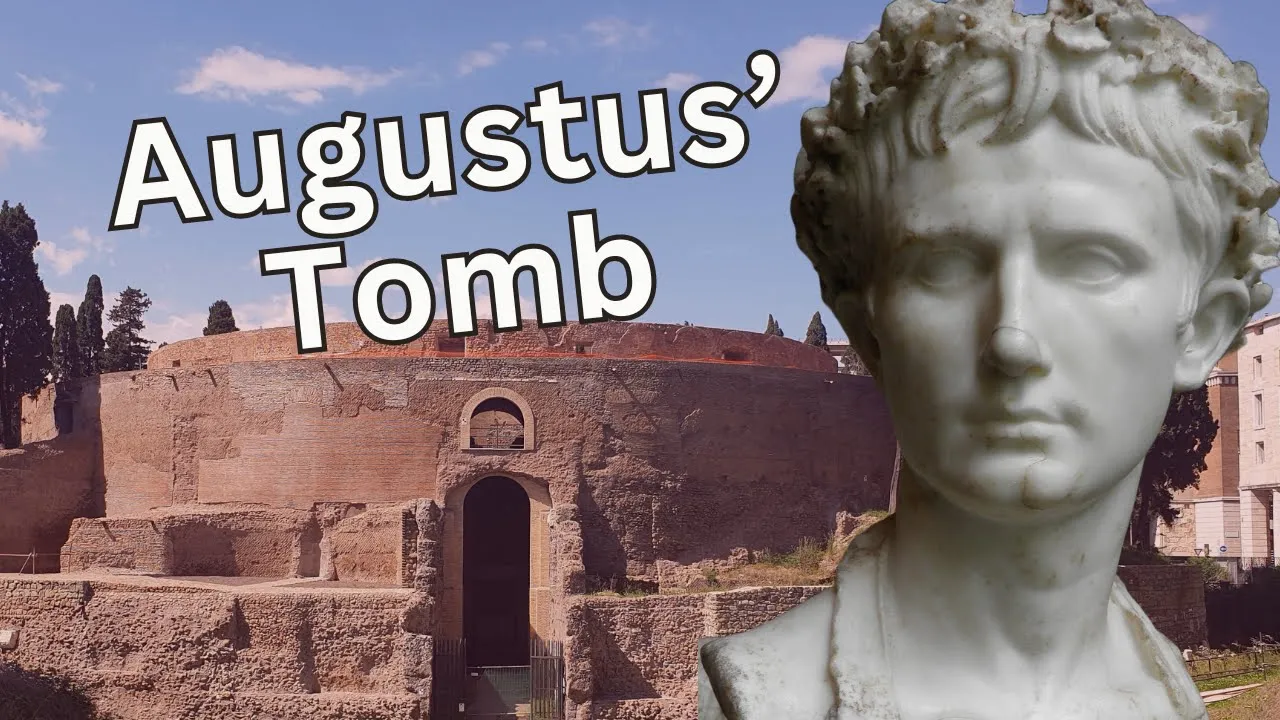
Added:hey welcome back to the ancient art podcast I'm your host Lucas Livingston from the year eighty fourteen the words of the deceased Roman Emperor Augustus Caesar the Rays guest:i DV El Castillo or the acts of the divine Augustus come to life on my return from Spain and Gaul in the consulship of Tiberius Nero and Publius quintilius after successfully arranging Affairs in those provinces the Senate resolved that an altar of the Augustine piece should be consecrated next to the Campus Martius in honor of my return in order that the magistrates and priests and Vestal Virgins should perform an annual sacrifice there the original bronze pillars no longer survived but numerous copies of the texts proliferated throughout the Roman Empire thanks to good luck in a monumental restoration effort during Italy's Mussolini era you can visit the altar of Augustan peace mentioned in that passage in Rome today standing next to the remains of Augustus mausoleum the altar of Augustan peace or our Pakistan Costa was commissioned by the Roman Senate in 13 BC to honor Augustus triumphal return from Spain and Gaul it was consecrated four years later on January 30th 9 BC as a sacred monument celebrating the new era of peace and prosperity that Augustus is military victories would bring to the Roman Empire the Senate's hopes and dreams were at least in part realized in that Rome enjoyed a good 200 year period of relative civil and military stability the so called Pax Romana but we know things weren't quite as good and cheery in Roman politics itself the original location of the ARA Pacus was the northeastern corner of the Campus Martius the field of Mars once an open area for military training on the outskirts of Rome but by this time it was already highly developed that happened to be a flood plain of the Tiber River and it was eventually covered by layers of silt the altar was reconstructed at its new location in ninth in 38 celebrating mm anniversary of Augustus birth the current pavilion that houses the ARA Pacus designed by American architect Richard Meyer opened in 2006 the altar is now orientated more or less south to north but going forward here and in most descriptions the orientation refers to the altars original alignment which was west to east so when you come across a reference to the West facade most likely it's referring to what's now the south side but don't get bogged down in that it should be pointed out that the actual altar of peace itself properly refers to the altar within the beautifully sculpted marble enclosure but conventionally the entire structure outside and inside is referred to as the ARA Pacus or even just the altar the enclosure is nearly square with the west and east sides being approximately 11 and a half meters or 37 feet wide and the north and south sides approximately ten and a half meters or 34 feet wide the marble structure is heavily reconstructed and large sections are entirely blank but that doesn't prevent us from taking in the grandeur of the monument we're greeted at the western facade via stairway ascending up into the monument to the altar wherein Augustus is words the magistrates priests and Vestal Virgins would perform an annual sacrifice the divine tribute perhaps in thanks to and insurance for the continued era of peace flanking the stairs the enclosure wall carved in richly detailed relief is divided into upper and lower registers by a meandering Greek key or simply called a meander as an aside the term meander comes from the Greek name for the twisty carrion River may under around the entire enclosure while the lower register displays a modestly low carved but richly decorative relief of twisting ivy grapevines acanthus scrolls and many other identified species of flora and even fauna prominently towards the top we find repeating motif of swans spreading their wings wide their necks craning down facing opposite directions left to right one swan after the other the lush vegetation may represent the fruitful fertility and abundant bounty that the new age of Augustan peace has brought yet the twisting vines are not in the chaotic disarray of overgrowth but are carefully balanced with a symmetry perhaps implying that the Augustan age is still firmly bound by law order and justice justice shines through as both the nurturing provider and the lawful patron the lush yet orderly vines may reflect a popular interpretation that the symbolism throughout the ARA Pacis reflects the new augustine age as a return to the mythic golden age in his metamorphosis Ovid the Roman poet contemporary to Augustus describes the Golden Age as a time of justice and right with no need for work or worry people cared for and nourished by bountiful nature lived in peace without the pains of labour in the fields spring was eternal in the world in which mankind lived was nothing short of paradise the Golden Age came to a close with the violent overthrow and death of Saturn at the hands of his son Jupiter the new reign of Jupiter brought about the seasons and with that introduced suffering and labor to mankind for survival from utopian peace and bounty mankind fell towards bitter militant strife and harsh agrarian work the use of Golden Age imagery in Augustine propaganda draws a parallel between his Pax Romana and the Saturnian Golden Age thereby making a statement that Augustus has brought about a new age of idealistic peace and prosperity to endure for all time Augustus hoped to bridge the distinctions between the ages of Saturn and Jupiter by incorporating both ideologies into his reign in the reestablished order laws morals and justice he respected the current age of Jupiter in the renewed peace prosperity abundance and endurance he sought to emulate the utopian age of Saturn Augustus seemed to desire that the Roman people metaphorically associate him with both Jupiter and Saturn the upper register on the west side shows two foundational events in Rome's legendary history on the left is the badly mented relief of romulus and remus the mythical founders of the city said to have been raised by a she-wolf the two adults and the only original parts to this relief are thought to be Faust Ulis the Shepherd who discovered the boys and their father Roman god of war mars entirely reconstructed however are the images of Romulus and Remus nursing from their lupine foster mother the reconstruction strongly resembles surviving Roman images at the scene but that shouldn't let you totally take down your critical guard the scene to the right is a little more debated for over a century the popular interpretation was that it represents Aeneas hero of Virgil's Aeneid performing a sacrifice upon his arrival in Italy Julius Caesar Wren Augustus claimed Nia's as an ancestor and his mother was the goddess Venus which would explain all the Swan imagery in the lower register no more recent interpretation that's gotten a lot of traction though is that it's Numa Pompilius Rome's second king after Romulus fine but that's kind of boring Numa Pompilius the art bulletin from June of 2001 for the article the Romulus Numa interpretation does tie in nicely with the Augustine Golden Age symbolism the warrior king Romulus balanced by the peacemaker Numa the blissful golden age of peace sustained by the diligent rule of law and military might so if the westside to the enclosure of the ARA Pacus displays a balance of peace and war between Rome's early mortal founders how about the east side how about a divine parallel the east side on the right displays a reconstructed image of the goddess Roma the bellicose goddess is seen seated at leisure helm slid back on her head with a trophy of weapons at her feet like Romulus and Augustus it's through the might of combat that peace is achieved the relief on the left of the doorway shows a buxom maternal figure embracing two chubby babies echoing the Romulus and Remus panel on the diagonal opposite side she's been variously identified as mother earth or tellus Venus and Peace abundant vegetation and livestock surround the figures who are further flanked by two other ladies with billowing drapery one rides a swan and the other a wicked cool wing at Dragon a spilled urn in the lower left corner pours forth a river that runs along the base of the entire panel this panel could further reinforce the Augustin Golden Age themes of peace fertility prosperity and abundance perhaps the central goddess peace could balance the warlike romo which would parallel the West Side's Warren peace theme remember that the our caucus was an altar of peace achieved through the defeat of Rome's rivals and the north and south sides and they have a lot of people good night folks see you next time what you're still here okay really quickly then the north and south sides both show processions of religiously garb Romans which understandably some of you may have mistaken for a frat party lot's of inks been spilled on identifying many of these individuals and quite convincingly at times including Augustus Livy Agrippa and Tiberius until someone comes along and overturned scholarly consensus one interesting idea is that this may represent the celebration on July 4th 13 BC the date when Augustus returned to Rome from Spain and Gaul and the occasion for the commission of the ARA Pacus or it may represent the ritual procession that honored the dedication of the ARA Pacus four years later interestingly it's been pointed out that Augustus is on the south wall which falls between the images of the peaceful King Numa Pompilius on the west and the goddess pax on the east versus the north side between warlike Romulus and militant Roma which perhaps bolsters Augustus his aspirations for peace overshadowing the military victories used to establish the new Pax Romana lastly as with so many works of art we explore on the ancient art podcast the ARA Pacus was once originally painted with vivid colors you can actually get a taste for how it once looked through the miracle of technology according to the our Pacus museum website at ARA Pacis I T every Saturday night for January 7th 2012 their illuminating the altar with colored light to bring these mute stones to life if you can't get there in person by the 7th don't worry thankfully this is something they seem to do once or twice a year there are some great photos of the colored light installation floating around on the web if you don't want to get Google foo on just head on over to ancient art podcast org and click on episode 46 for the photo gallery and credits to the original sources and while you're there those of you doing reports on the ARA pockets be sure to check out the footnotes for this episode where you'll find some great additional resources to study the monument in much more detail than what we covered here you also might want to check out the bibliography on the resources page for more general references thanks for tuning in if you have any questions or comments email me at info at ancient art podcast org or fill out the feedback form on the website at feedbag ancient art podcast org connect with podcast at facebook.com slash ancient art podcast and tweet me on twitter at Lucas Livingston if you want to support the podcast help spread the word and leave your comments and ratings on YouTube and iTunes thanks and see you next time on the ancient art podcast you
Up Next

Ancient Rome Art History Lecture: Republic to Empire
@elena.l.rubinova
1.1K views•2020-11-01

Christian Iconography: History, Theology, and Meaning | Fr. Panayiotis Papageorgiou
@Trisagionfilms
58.8K views•2020-02-21
Ukiyo-e Art: History, Woodblock Printing & Influence
@japanathand
6.3K views•2023-06-08

Earliest Depictions of Jesus in Art: 10 Ancient Images Explained
@UsefulCharts
5.9M views•2022-06-03
Related Study Plans & Knowledge Roadmaps
Structured learning paths in Art History