

























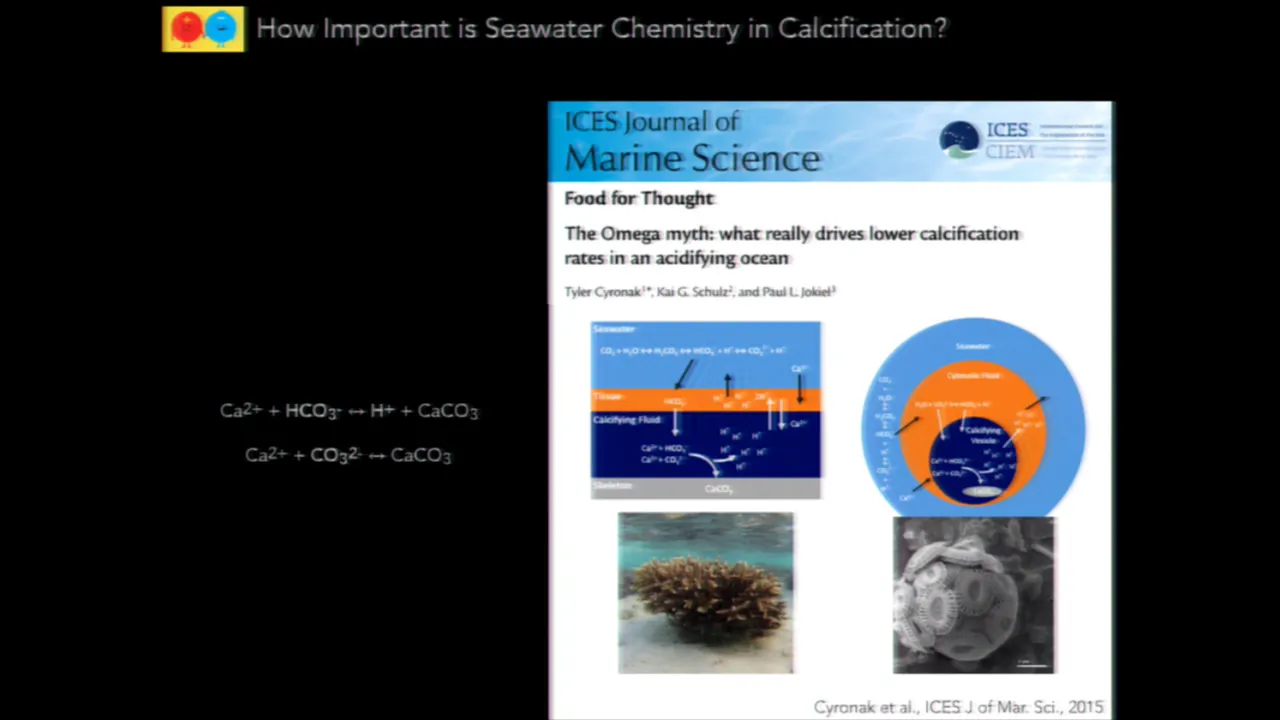


In seawater CO2 chemistry, there are only two independent degrees of freedom, meaning researchers can only control two parameters (such as pH and alkalinity, or total carbon and alkalinity) simultaneously; changing one parameter automatically determines the others through equilibrium relationships, which has significant implications for experimental design in ocean acidification research.
Seawater CO2 Chemistry Fundamentals | Ocean Acidification | Scripps Oceanography
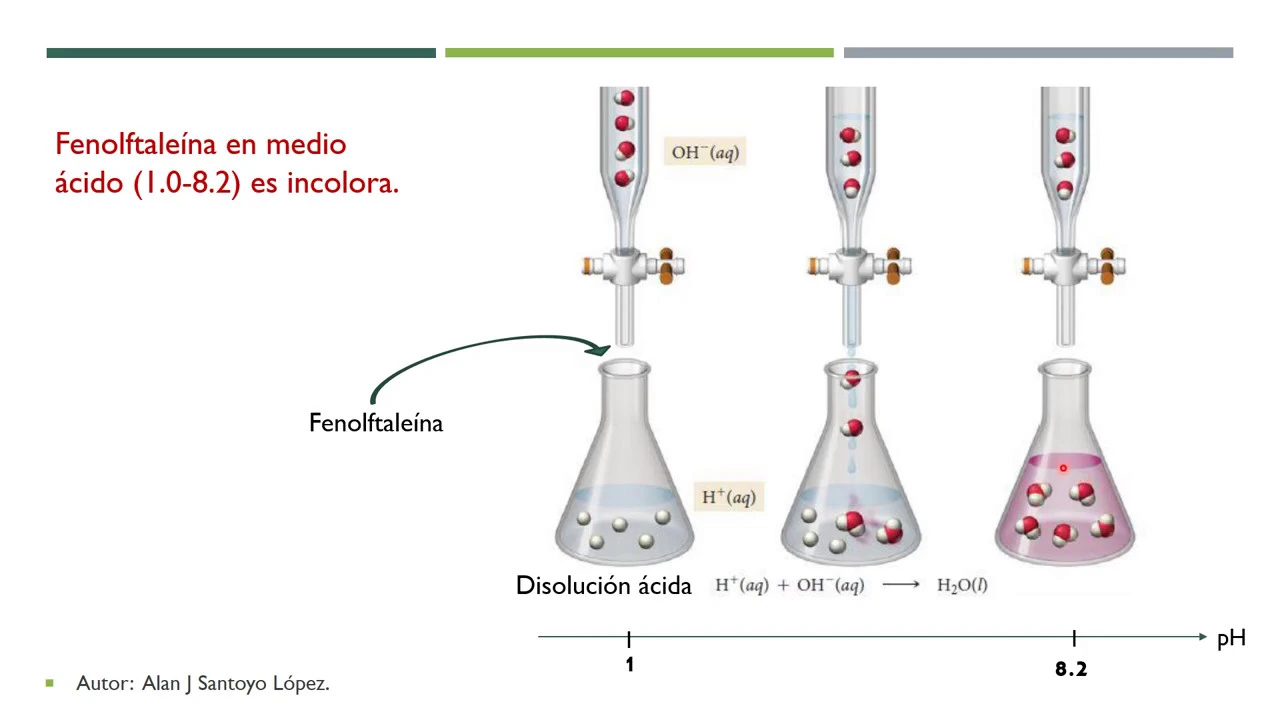
Added:Basic acid-base chemistry, including the definition of pH and how it represents the concentration of hydrogen ions.
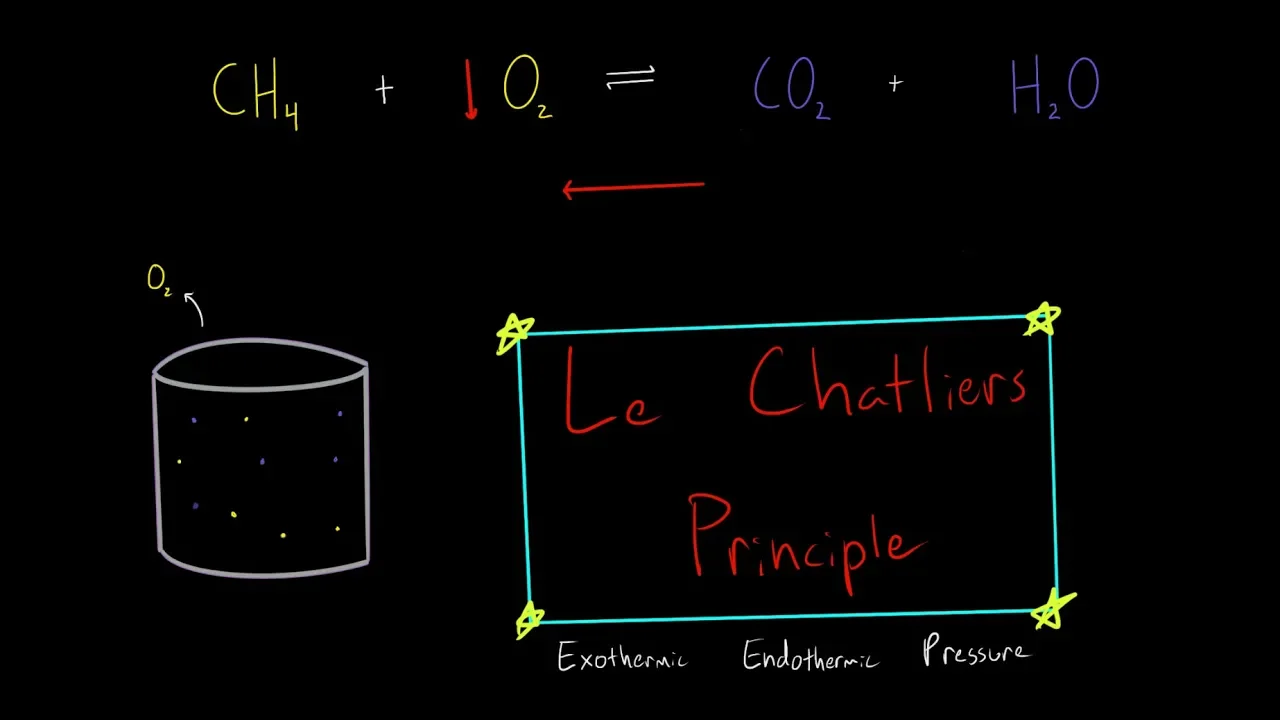
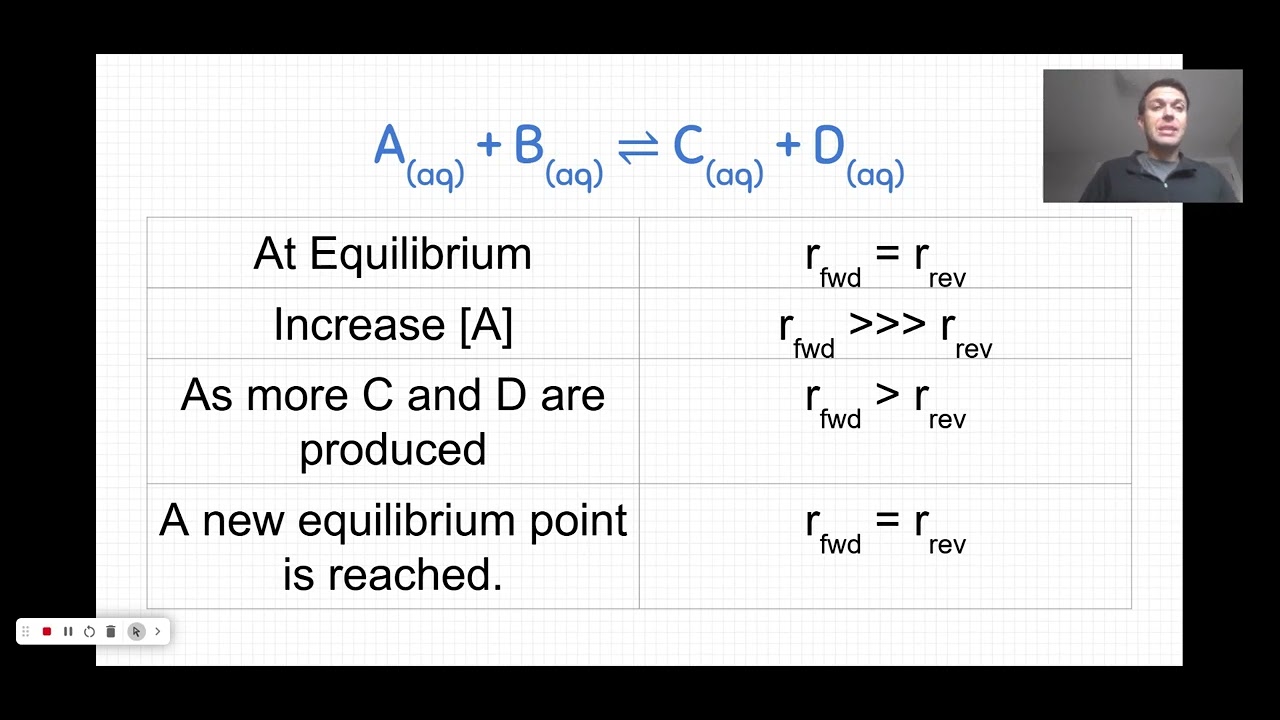
The concept of chemical equilibrium and Le Chatelier's principle, which explains how chemical systems respond to changes in concentration.
An overview of the global carbon cycle, specifically the exchange of gases between the atmosphere and the surface ocean.
Familiarity with key chemical species involved in carbon chemistry, such as carbon dioxide (CO2), carbonic acid (H2CO3), bicarbonate (HCO3-), and carbonate (CO3^2-).
The ecological consequences of ocean acidification on marine calcifying organisms, such as corals, shellfish, and pteropods.
The chemistry of calcium carbonate saturation states (specifically aragonite and calcite) and how it affects shell formation and dissolution.
Marine Carbon Dioxide Removal (mCDR) strategies, including ocean alkalinity enhancement and artificial upwelling.
How marine geochemical feedbacks are integrated into global climate models and international ocean conservation policies.
20.8K views239likes1:00:02Original Release: 2012-03-01
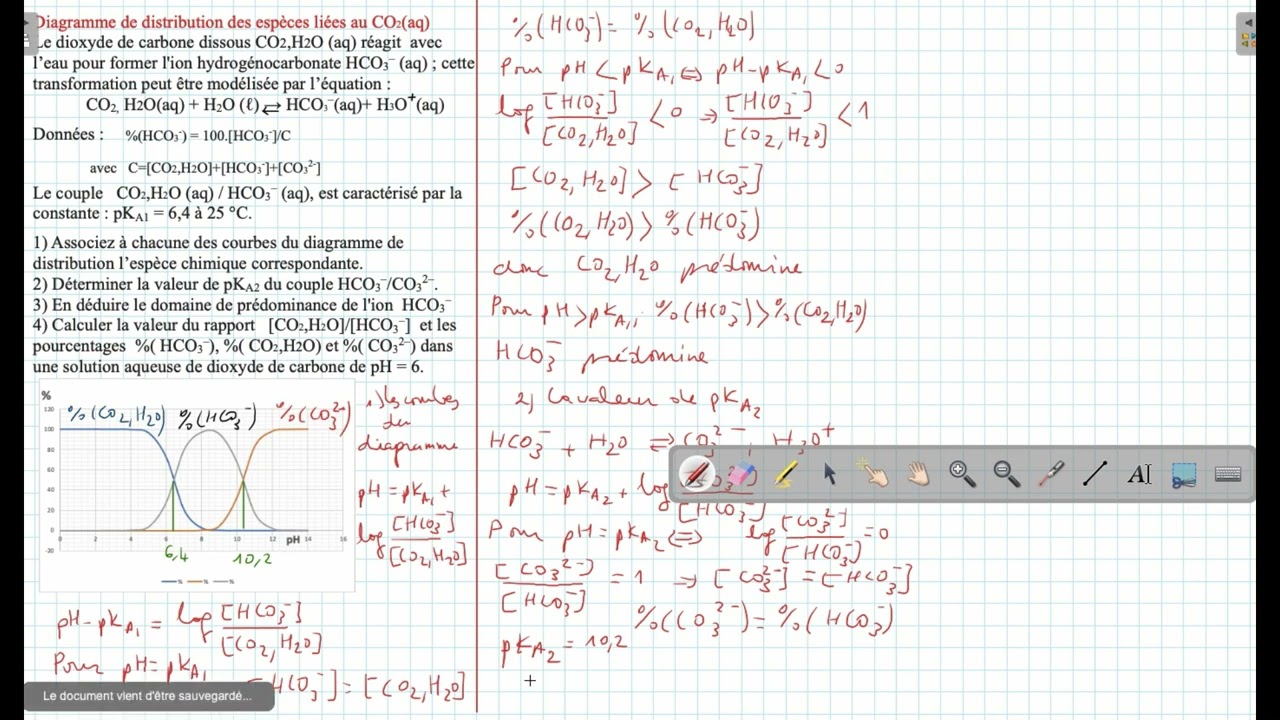
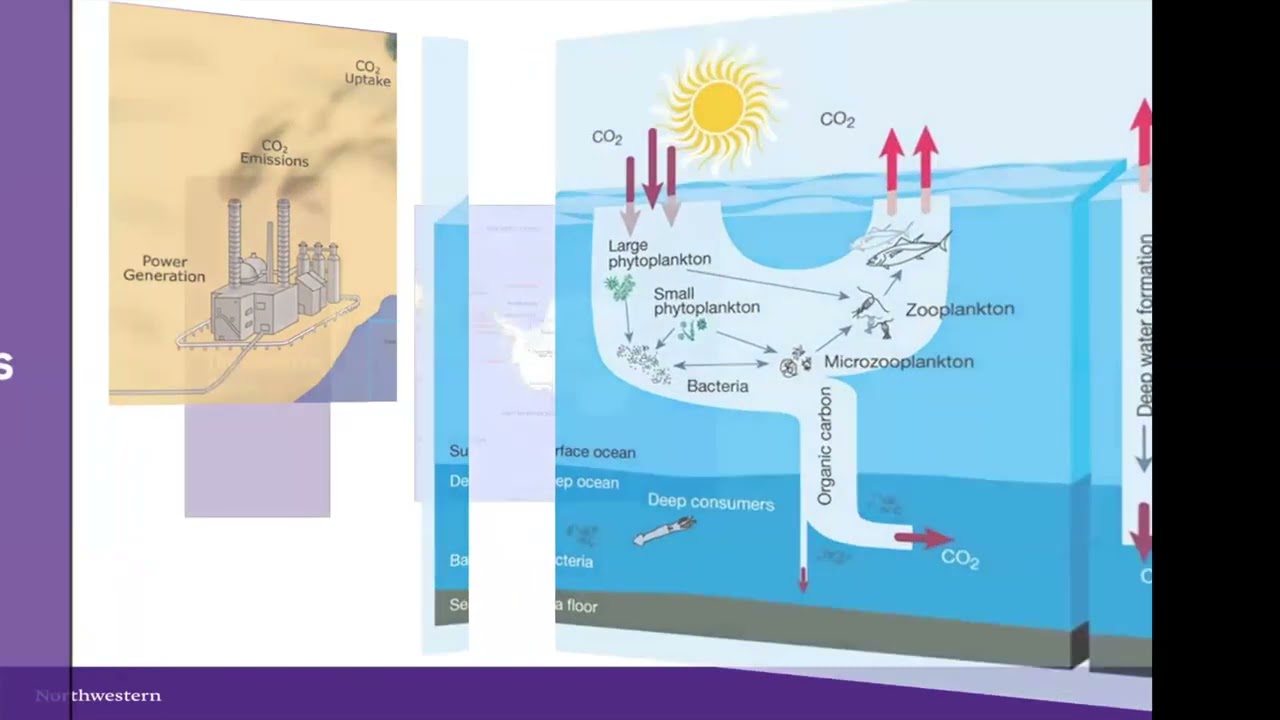
this program is a presentation of uctv for educational and non-commercial use only check out our YouTube original Channel uctv Prime at youtube.com/ uctv Prime subscribe today to get new programs every week [Music] [Music] [Music] [Music] this iconic picture from a former colleague of mine Professor Keeling at the scrips institution of oceanography shows the seemingly inexurable rise in carbon dioxide in the atmosphere over the past 50 or so years and he also started looking at the seaw water off Hawaii and showed clearly that you could see also the gradual decrease in PH associated with that that we've come to talk about as ocean acidification and in essence when we talk about ocean acidification we often explain it rather straightforwardly and so I'm going to do that first and then as we go further into it you'll see that it's not necessarily quite that straightforward CO2 goes into seawater reacts with water to form bicarbonate ion but in addition to forming bicarbonate ion we get some extra hydrogen ion which goes on to react with carbonate to form still more bicarbonate in essence this reaction that you're increasing this dissolved CO2 it's reacting with the carbonate decreasing that increasing the bicarbonate the change in hydrogen concentration is almost a side effect of those changes in carbonate species concentrations and also because the carbonate ion concentration decreases the saturation state of calcium carbonate decreases the saturation State being defined in this fashion essentially the ratio between the concentrations that are in seawater with what they would be if it were at equilibrium the equilibrium solubility product and as I note there you know one can think of calcium carbonate saturation State as a measure of how easy it is to form a shell it's got a more technical chemical meaning but is a biological process that's probably the easiest way to think about it so as we go on and look at the changes we're talking about these are really the two key features ultimately once you know about CO2 chemistry you'd like to say okay if we do increase the CO2 in the atmosphere how much would the pH in the ocean be expected to change how would you calculate that or what would the consequence Chang in the saturation state of one of the forms of calcium carbonate aragonite B would this be the same all over the oceans and then really for your experimental purposes perhaps one of the more important pieces and this is really the content of most of our second lecture today how would you go about measuring what was in a sample of sea water and planning an experiment how would you modify the chemistry of a samp composition of a sample of sea water to be the composition that you wanted to inflict upon your organism so where should we begin as I've said there's a lot that I'm leaving out here really I'm going to talk basically with a a brief introduction to carbon dioxide equilibria in seawater and I'll talk a little bit about the things you can measure in seawater so that you can see just how it's changing as you modify the composition but these are not separate pieces the acid base equilibria in seawater the analytical measurements and the desired results kind of all feed together one on another you can't easily separate them one from another I wrote for this handbook guide to best practices for ocean acidification research a chapter on the carbon dioxide system in seawater and you should be able to download that from the EPA website if you want to read it much of what I'm going to talk about today is covered in that chapter some fragments perhaps less so some fragments more so but as a good introduction this exists so acidbase equilibria in seawater there's a whole variety of possible acidbase systems in seawater of which the carbon dioxide system is by far the most important but certainly not the only one the water itself is of course an acid-based system there's also boric acid in seawater there may be ions such as the nutrient phosphate which can be present in various acid base forms there could be organic acids that you don't really know what they are but they're still there and affecting the acidbase chemistry so it's not just carbon dioxide but we're going to focus on carbon dioxide and then indicate how the others affect that so carbon dioxide equilibria in sea water the first thing to recognize is that one of the things is gas solubility where we have an equilibrium between the composition of a gas phase and what's actually present in the aquous phase in the seawat itself and this is represented by an equilibrium constant solubility constant which relates the concentration of the aquous CO2 to a measure of the concentration in the gas phase that product of mole mole fraction and total pressure is essentially the partial pressure of CO2 in the gas phase so what this essentially says is that as you change the concentration of of CO2 in the air above seawater if it's at equilibrium you also change in proportion the concentration of unionized CO2 in the sea waterer the complexity with CO2 is that in addition to being a gas it's also an acidbase system and so the CO2 itself can dissociate reacts with water to form hydrogen ion and bicarbonate ion and the carbonate I can also dissociate again to form hydrogen and carbonate I and these two again have equilibrium constants relating the concentrations of the species where this term H+ throughout my presentation I will be talking about as the total hydrogen concentration suffice it to say that there are many ways you could Define a term like that essentially it's related to what we think of as pH but as this is indeed the short version we will do without that hour and a half of lecture you'll be glad to hear so the relationships between concentrations is really the key factor involved in equilibrium chemistry of CO2 in seawater the a variety of possible things that you could measure and I'm just going to list these quickly so that they're familiar in your mind as we go on the first the total dissolved in organic carbon this I've written it as carbon total other people often write it as DIC or tco2 sometimes the Greek Sigma for some of the carbon species it's basically the total concentration of CO2 present in the sea waterer as CO2 species that is the CO2 the bicarbonate the carbonate it's usually measured in units of moles per kilogram of solution the moles are obvious moles are a standard chemical unit per kilogram of solution the convenience of that is that it makes this term temperature and pressure independent thus if you take a sample of seawater from the deep ocean where it might be at 3,000 M depth and at a temperature let's say of 2 or 3° Centigrade and you bring it up to your ship where you actually make the measurement but now you make it in the lab where the pressure is just atmospheric pressure and the temperature is a good deal warmer than 3 or 4° Centigrade but you know depending upon where you are somewhere between 20 and 30° Centigrade nevertheless you're measuring exactly the concentration that was present in the deep water of course the proportions of these change as you change the temperature and pressure they change because those equilibrium constants that I showed you previously are each functions of temperature pressure and also the salinity of sea waterer so for sample of a fixed salinity the change is simply due to the changes in temperature and pressure total hydrogen concentration or pH pH is defined here minus the decadic logarithm of the hydrogen concentration or the decadic logarithm of the reciprocal of the hydrogen concentration why ah who really knows it was put written first that way over a 100 years ago where the logarithmic scale was convenient for the large range of concentrations that were being used the decision to choose the reciprocal of the hydron concentration rather than the hydron concentration itself is lost in the midsts of time nevertheless this is how it's done and you might as well remember lower pH numbers more acidic higher pH numbers less concentration of hydrogen ions this pH as it's a logarithm of something is necessarily A dimensionless quantity however the thing it's a logarithm of is not dimensionless it too is in moles per kilogram of solution strictly I should have written this as the ratio between the concentration and the unit so that it ended up as a number and I could take the logarithm of a number now this is the concentration of an acid-based species in the same way that each of these concentrations with temperature and pressure dependent this concentration also is temperature and pressure dependent thus if you measure the pH of a sample of sea waterer and you change its temperature it will have a different pH if you change the pressure it will have a different pH another advantage of the temperature and pressure Independence is if you mix two seawaters of different total carbon you can tell simply by the proportions of the mixture and the total carbon of the individual Parts what the mixtures total carbon will be this doesn't work for pH you can't just mix two solutions and say the average will tell me what the pH is it won't it may be somewhat close but it certainly will not be accurately so and the last CO2 related acid base measurement that's really commonly made is referred to as the partial pressure of C CO2 I alluded to this when I talked about solubility and strictly people talk about the partial pressure of CO2 or the pco2 of a water it's a property of the seawater but really it's also the property of a gas in equilibrium with that seawater of an air in equilibrium that sea water so more strictly you should say that it's the partial pressure of CO2 in air that is in equilibrium with the water sample here pco2 would be the mole fraction times the pressure of equilibration in that gas that's in equilibrium and therefore you can see the pco2 is directly proportional to this concentration and the constant of proportionality is the solubility coefficient k0 again as this is a single species it's temperature and pressure dependent and the units for pco2 are always pressure units usually micro atmospheres when somebody says the pco2 of sea water is 400 PPM they are committing at the very least a Phar possibly they don't really even know what they're talking about p2s pressure units and the key is this relationship here the seawater has a particular pco2 if you equilibrate it with air at a total pressure one atmosphere then in indeed numerically the pco2 would equal the mole fraction if micro atmospheres and parts per million but you could just as e easily have equilibrated it at a pressure of two atmospheres in which case this mole fraction would be half as much because the pco2 being a property of the water sample would barely have changed remember I did say it was a function of pressure and it is but changing from one atmosphere to two atmospheres is a very small absolute change in pressure and so the actual concentration of CO2 and the actual value of the k0 ly change at all so these three parameters are things you measure directly that relate to the CO2 equilibria we'll introduce later one further one total alkalinity but for now we won't go there so what I'm going to take a little bit of time now to do is talk about the way that you can think about the relationship ship between the concentrations of the various species present in Sea waterer in a way that may make sense to you I I hope it does we'll we'll see at the end essentially we can think about these relationships on this plot where I'm plotting the carbonate ion concentration against the dissolved unionized CO2 concentration and as you'll see later two degrees of freedom such as are represented on an XY plot is quite sufficient for a complete description of the system well first these two possibilities first the red if we're going to put any actual values on this plot we have to specify a cinity and temperature because all these species are functions of solinity and temperature implicit in all the discussion I'm doing now is that we're talking at one atmosphere this is a convenience we talking about it now but probably a realistic one because most of your experiments are probably done in the laboratory not in pressurized seawater containers and most of the concern for ocean acidification is the change in composition of surface sea Waters as a result of taking in CO2 from the atmosphere so that pressure of approximately atmospheric pressure is the most important first thing we notice is that this scale here in pco2 of course is directionally proportional to the scale in CO2 and the constant of proportionality given up there as the equilibrium constant the green line is the point at which the saturation state of the calcium carbonate form aragonite is equal to one if you you recollect this formula essentially we're saying that the saturation state is proportional to this formula well the calcium ion concentration in seawater essentially depends upon the solinity the solubility product upon the salinity and the temperature and the pressure thus essentially this Omega is proportional to the carbonate concentration and although this is one twice as high would be two 3 four so on so this you can imagine the position at which you know the saturation State the pH you actually know the pH directly in terms of these two one can look at this equilibrium constant this is the equilibrium constant essentially for saying CO2 plus water goes to two hydrogen ions and carbonate just going straight through that sequence of acid base equilibria thus ph's are straight lines on a plot like this well first immediately here you see one of the problems if somebody gives you a seawat sample and says the pH is 7.9 in principle it could lie anywhere along that line for composition telling you the pH by itself doesn't tell you enough you have to have at least two pieces of information so when you say I've adjusted my sea water to be a pH 7.6 well that could be anywhere along that line without more information you don't know enough about the composition of the water equally we could do this plot in terms of carbonate and CO2 and just plot Contours of bicarbonate ion the equilibrium constant relating them is this one and this is the equilibrium constant for that very first chemical equation I showed you of CO2 reacting with water and carbonate ion to give bicarbonate immediately looking at this those of you that are familiar with typical magnitudes of CO2 variables in sea water will recognize that the concentrations here are far too high for typical sea water with bicarbonate levels let's say of 5 Millar 5,000 microl and this becomes a little clearer if instead I plot total carbon so your seawater range of total carbon is typically between about 1,00 and maybe about 2500 so seawater itself actually just fits in a band on this picture so consequences of CO2 equilibria first this that in a system at equilibrium that's got both a gaseous and an aquous phase the state of the CO2 system is described by knowing the pco2 in the gas phase and also all these concentrations you have to know them all to have a complete description of what's going on but there are relationships between those various concentrations When A System's at equilibrium we're essentially saying there are equilibrium constants present that relate concentrations so this unionized CO2 in the water is related to the pco2 in the gas phase the hydrogen concentration bicarbonate and CO2 are related to each other because this particular product is a constant which is a function of Sol and temperature similarly for the K2 this is the key part there are thus only two degrees of freedom you can only vary out of these five you can only vary two of them independently once you change two all the others the values are fixed so that if we go back to these pictures you see that if the two were varing a carbonate and CO2 then the pH is fixed the bicarbonate concentration is known the total carbon is known the pco2 was known the Omega the saturation State also known so that this is potentially a problem I think if you're imagining an experiment on an organism I've heard when speaking to biologists people say oh that depends upon you know such and such an organism depends upon the the CO2 concentration in the sea water the pco2 its photosynthetic ability depends upon the pco2 well yes may maybe how would you know because you may know the pco2 but if instead and one of the other options is discussed that somebody says but it's the bicarbonate that it's taking up then at this point here we have a known pco2 and a known bicarbonate I cannot change easily I can change the pco2 and keep the B and change sorry keep the pco2 constant but change the bicarbonate by simply going up that line but essentially I have to substantially change the composition of the water away from that of sea water and so these experiments are not done in anything approaching a natural seawater to do this this is probably in part why many of the physiological studies you see on organisms go over far larger ranges of CO2 chemistry in part I think it's for the convenience of doing it but the feature is you can't say aha it really matters what the carbonate ion concentration is and what the pH is well if you matters what the carbonate ion concentration is and what the pH is everything else is fixed you can't vary more than two things at once and so as you start to think about the CO2 system this is probably one of the more important aspects recognizing that you cannot set up a seawater where the carbon dioxide the bicarbonate and the carbonate are independent endly controlled for concentration if you control two the third one is fixed as to what it has to be whether you want it that or not and that's always the the difficult part and the other part of course which is I've not said but it's it's fairly Apparent from this picture is that there's always a lot more by carbonate then there is any carbonate or CO2 simply because of the form of equations within this PH range if you go essentially if you're in the PH range between the two equilibrium constant that is between a pH of 6 and a pH of 9 bicarbonate will always be the dominant species if you want to go to pH is above nine then you can get carbonate to be the dominant species pH is below six CO2 neither of these are really very realistic particularly in a seawater environment so people don't typically go there so there are only two degrees of freedom and you can only alter two independently of one another so let's just talk a little bit we talked a lot about CO2 and I mentioned at the beginning that there were other acid based systems in sea water do those change this Mantra or or not well one of the first you should consider perhaps is water dissociation itself where you can have an equilibrium where water dissociates to give hydrogen ion and hydroxide ion and again with an equilibrium constant the KW which function of solinity temperature pressure so we've already said with two parameters we knew hydr so if we we know hydrogen and we know this equilibrium constant we know hydroxide so there's not much more there except we had to have one more piece of information the additional equilibrium constant for water itself probably the most significant acid-based species in sea water in addition to the carbonate system is boric acid it's about 20% of the total concentration of CO2 so CO2 concentration perhaps around 2,000 micromoles per kilogram boric acid around 400 micr moles per kilogram again boric acid forming hydrogen and bortin and an equilibrium constant so if we know the equilibrium constant we've added essentially two new species if we know the equilibrium constant we still have added one degree of freedom to this how do we cope with that well one of the very convenient factors is that the total dissolved Boron that is the sum of these two concentrations is a function of solinity and so again we know two additional things we can explain two additional species concentrations with the hydrogen concentration which already we discussed so again we haven't really added that much we've said okay instead of with five we knew three therefore there are two we said with seven we know five therefore there are two or with eight we know six therefore there are two and in essence this is the key for every additional acidbase system that you add you also need to know the equilibrium constants appropriate to that acidbase system and ideally or most conveniently the total concentration so if we're talking about the phosphoric acid system which has four separate acid based species H3 P4 H2 P4 minus H P4 2 minus and the phosphate sign p43 minus there are three equal IA there between those species and in addition the total phosphorus so four new species but four new pieces of information needed if you don't know the equilibrium constant or the total concentration essentially you're stuck about describing that acidbase chemistry does that matter not if you're interested in the CO2 system and if you've either measured pH or total carbon or pco2 as the measurements because then you still get all the information you had about the pco2 because for this additional spe uh acid base system that you don't know it will potentially influence the hydrogen concentration but that's already built into what you know and essentially the hydrogen concentration is proportional to the ratio of the acid and base forms of each acidbase pair sometimes you will see people talk in textbooks about pH as a master variable and the essential idea is that as you change the pH the ratios of the acid and base forms change strictly that's backwards you can't just change the pH it can't be done so what the pH is telling you is what that ratio is and that's probably the better way to think about it so where do all these acid based things come in they come into one other item you can measure the total alkalinity and often you'll see the total alkalinity written by this expression it's bicarbonate two carbonates a borate a hydroxide minus h plus and again it's usually measured in moles per kilogram of solution and it's measured by an acidbase titration you work out how much acid your seawater sample takes to titrate all these species it has a very useful and interesting property it's temperature and pressure independent now I'm not sure about you but certainly my first glance that was how in the hell could that be so because every one of these species is temperature and pressure dependent it's not like total carbon where at least you can say well yeah I'm keeping track of carbon atoms I know what's happening here I can see that if I have a closed system I don't gain or lose any carbon atoms so really one of the interesting questions is why is this particular sum of species independent of temperature and pressure well I think it's fair to say that that too could be another hour and a half worth of lecture so we'll just kind of cut it down to the minute and a half and see if that's sufficient to help essentially what this is trying to keep track of is hydrogen atoms only it does it in a rather confusing and convenient way confusing because clearly these aren't all the hydrogen related species and minus and plus I mean how do you keep track of chemicals what's minus a concentration of a chemical a negative concentration essentially it's keeping it relative some arbitrarily defined zero where the zero is defined so as to make it convenient in particular one of the things you want to Define out of this completely is water because in the water in seawater there's about 55 moles of water so there's 110 moles of hydrogen ion if at the same time you're looking at this particular species which ph8 around 10us 8 you can see that we're 10 orders of Mag magnitude different and that's not a convenient arithmetic problem to cope with so you say we're just going to Define alkalinity relative to pure water that means hydroxide is where it's lot pure water has lost one proton hydrogen is as though pure water had gained one proton hence the sign difference between those two we should add in other zero species CO2 we've lost one proton to get to this one we've lost two protons to get to there hence the two boric acid we lose one proton to get to there why is this convenient because at the point where you titrate to the equivalence point you say would be a solution that was that which you would get if you just mixed water CO2 and boric acid so it's enough the alkal cinity is enough acid to get you to CO2 plus boric acid plus water does that necessarily explain this maybe if you feel comfortable that by forcing it into being a mass balance equation no matter how seemingly grotesquely forced it makes sense but there is one other way to think about it that perhaps is a little more obvious to follow through if you think of a sample of a very simple seawater that contains all these species plus of course the ones I mentioned the water the CO2 the boric acid but also the cats sodium magnesium calcium potassium and the anions chloride and sulfate the sum of the positive charged ions sodium magnesium potassium calcium and hydrogen must equal the sum of the negative charged ions it's you're going to have a neutral solution it's not going to be a positively charged solution or a negatively charged solution so it's hard to see that but rearranging that in your mind this sum here is actually equal to the difference between sodium Plus 2 * magnesium it's a doubly charged cation 2 * calcium plus potassium minus chloride minus 2 * sulfate of course all those six pieces sodium magnesium potassium calcium chloride sulfate are each individually independent of temperature and pressure so that particular combination must be independent of temperature and pressure and this is that combination so in essence Ence it's a mass balance equation or it can be thought of as related to charge balance either way these are things that are independent of temperature and pressure but it has one other particular facet that is really convenient to think about when thinking about CO2 chemistry in seawat and it's this if you add CO2 to sea water you do not change the alkalin again I'd say that that's not necessarily obvious because you will change the bicarbonate and carbonate we saw that and if that you do that you change the pH which will change this and this and this so everything in that alkalinity term will change but the total won't when you add CO2 well again you can go back to my comment that it's the cats sodium magnesium potassium calcium minus chloride sulfate the annion and say add more CO2 makes no difference take CO2 out makes no difference take add sodium bicarbonate aha we added sodium alkalin had to go up you could fudge this by looking at that and set this whole equation saying hey no CO2 in it clearly adding CO2 won't make a difference that's not an ideal way of thinking about about it cuz there are ways to confuse you in that probably you won't come across them but it could be done the real key is this that it's not changing the alkalinity adding the CO2 well not much because if you add CO2 to sea water then of course if you had 1 kilogram of sea water and you added 1 milligram of CO2 it now weighs 1 kilogram.1 1000.1 G right so really the Alin is diluted a tiny bit by adding the CO2 but nobody measures it well enough to see that difference so nobody usually talks about that difference so this assumption is safe this is a complexity of that choice of concentration scale so what does this imply when we come to acidify sea water here's our picture we're going to choose a seawater that's somewhere on that diagram and see how its composition changes as we acidify it and we're going to acidify it to a pH of 7.3 so let's imagine we start with this seaw water right here an alkalin of 2300 a pH of 8.2 that gives it a pco2 of about 260 the you can read the carbonate ion concentration again a little bit above 225 we're going to acidify pH 7.3 well there are two ways you could change the pH to 7.3 that people have used there's numerous ways you could do it but there are two that people have used typically one is if you add CO2 to the system and you will change the pH the other is if you added something like hydrochloric acid to the system so if we add CO2 to the system it follows along that line so although we might be changing the concentration of the gas phase increasing the pco2 as you can see at first for a small increase in pco2 there's a very fast change in the carbonate ion concentration and then in the later part a slower and slower change in the concentration until we come to a pH of 7.3 and at that pH the pco2 would be quite High 2,630 the carbon concentration fairly low 37 with a saturation state of about.57 so saturation State well below one so you could imagine because alkalinity 2300 salinity 35 this is the same water that you would find in the middle of the North Atlantic why do I say that because this is the canonical water chosen to be the standard seawater for salinity measurements and an alkalinity of 2300 is the alkalinity it has and the alkalinity that's gone into the composition calculation when this is talked about as a reference seawater for the most recent definition of solinity in the thermodynamic definition from uh last year so if you took a sample of that seawat taken out of a few ampols of standard sea water this is the track it would go along well people don't always do that sometimes they just add acid to get to a pH of 7.3 after all the pH of 7.3 was what they thought was the important experimental variable well if you do that you go along a similar but diverging track essentially adding acid you more quickly reduce the carbonate ion concentration and so it drops down quickly comes through to this point here they're both at the same pH they're significantly different compositions of solution pco2 is about 20% different a difference of 400 that may or may not be what you consider uh important to you but it looks obvious the aragonite saturation state is about a factor of 0.1 different so although the pH is the same although the salinity was the same although the temperature is the same although you started with the same sea water you ended up in noticeably different places and so when you're designing an experiment to look at how a seawater composition change affects a biological organism you should bear in mind that if lab a added CO2 and lab B added acid part of the difference could be that they're not actually putting their organisms in the same composition as seawater of course organisms themselves are sufficiently independent and separate from one another in their behavior that most of your problem is probably that and not the chemistry but the chemistry you can fix another way to think about this is in terms of changes of alkalinity and of total carbon so so if we have a picture like this adding CO2 essentially changes total carbon without changing the alkalinity so that when we go back to this picture coming down this red line that's a line of constant alkalinity of alkalinity about 2300 I could have drawn the same picture I did for total carbon for lines of constant alkalinity on this picture that really tells you that most of the sea water you will ever find is around that red line in a kind of thickish band on the other hand when you add a mineral acid like hydrochloric acid to sea water you don't change the total carbon except by the dilution that you've expanded the amount of solution you've got there so if the acid's strong enough you won't see much of a change but you do change the alkalinity so that again those two pictures here essentially the red line is a constant alkalinity the purple line is following along constant total CO2 you don't end up in the same place but I've made this impossible picture um which I will take a few moments to discuss because it's taken the same sort of things that we had before and superimpose them now on that picture in terms of alkalinity and total dissolved carbon first the red lines 180 280 500 those are the p2s so that Loosely pco2 is changing these diagonal lines getting higher and higher as we go to higher total carbon and lower alkalinities essentially the pco2 is roughly proportional to the total carbon to alkalinity ratio at the same time the blue lines are pH and so people often use going to a particular pH as a convenient way of going to a particular pco2 as you can see the lines are not ident parallel to one another so that's not really an ideal way of doing it but again you have the problem that we had in that original experiment that if you just add CO2 or acid in this initial part the carbonate ion concentration changes very quickly and then in this later part a lot more slowly and that's in essence because you're either going across this way or down that way just to give you one final touch the green is where the aragonite saturation state is greater than one the yellow less than one so you can see that the line between the green line is another line that's not quite parallel so the carbonate concentration is not so different from being parallel to the proportional to the CO2 or proportional to the pH but not exactly as a result if you're coming down changing the alkaline to adding mineral acid it takes you a while till you come down into that yellow region you can go from 2300 across those are the differences well why would you care the way that I like to think about it is this that realistically you should say I have an organism and I'd like to expose it to such and such a composition of seawater where that composition maybe you have a theory that changing the carbonate ion concentration will affect the calcification R of the organism in that case it probably makes sense to explicitly Target carbonate concentration values not just pH once you know a carbonate ion concentration you can say well how am I going to get there well you have a number of possibilities but one of the things you condemned to is you probably only have one sord of sea water available here in Santa Barbara it's whatever they pump in appropriate and that has a particular alkalinity that afternoon which probably changes a little bit with time and how do you get somewhere well you can say okay I could just control the pco2 this ocean acidification that's what we're worried about well you could but probably if you're interested in experiment in looking at calcification rates you should choose the pco2 to get you the carbonate ion concentration you want for that alkalinity which is a matter of doing some arithmetic with the CO2 system and there are programs that allow you to do this arithmetic relatively straightforwardly they're all mentioned in that uh article I talked about there's one called CO2 Cal which for the ultimate in geekdom you can put it on your iPhone this perhaps is O Overkill so the key is to decide where you want to be and then decide how you can get there if the composition you want is different from the composition you have how do you get there well let's imagine you wanted to be here and you are actually here you're going to have to take out some alkalinity and add some CO2 that's how you would get there the easiest way to do that is perhaps a combination of adding acid and bicarbonate why bicarbonate because it's much easier to add CO2 already dissolved in the water than to Bubble it in to dissolve it in so if you decide how much you're going to change it by you can calculate the mixture that would have to be added to your sample and get it there relatively straightforwardly and the way to think about that calculation is in terms of changes in alkalinity and changes in total carbon because alkaly and total carbon can be thought of as components that can be mixed so the mental picture is where do I want to be where am I what are these each in terms of alkalin in total carbon even if that's not what I measured then what would I need to add to what I've got to get to where I want to be go there then you can come to the second stage which is and how would I keep it that way and there you might want to just control the pco2 at a particular level to hold it there because you will have M you will have changed the alkalinity to what you want it to be and addition or loss of CO2 is not going to change the alkalinity so controlling the pco2 is okay controlling the CO2 while monitoring the pH would work work there's all these possibilities but as I said at the beginning there are only two things you have control over we can call them alkalinity and total carbon we can call them pH and alkalinity we can call them CO2 concentration and carbonate concentration it really doesn't matter you can only control two of them that's at once the problem and the advantage that you have here so the consequences only two can be controlled you cannot design perfect experiments to study organism physiology the ideal would be you say hey I want to see how you matter how CO2 matters to you no let's not clutter this up with bicarbonate and carbonate it could be done that could be done but you'd have to be an acidic solution and mostly the pH would be the thing your organism didn't like long before it decided it didn't like the CO2 so you can't design perfect experiments So the plan is to choose the one where you at least get what you plan to get if you know the seawater composition you have to start with and know where you want to go to it's much easier to think about the changes as though they occur in total alkalin and total dissolved in organic carbon because those are essentially straight line shifts on that plot whereas those shifts on the other kind of plot I showed you clearly have a lot of curvature it's not straightforward to say okay how much CO2 should pco2 should I be going to should I be adding changing so for batch processes you can change the alkalinity for systems where you've got the sea water continually flowing through your tank it's really inconvenient to change the alkalinity by any significant amount and this is always going to be a problem because I presume that here at Santa Barbara as probably at Bodega and certainly at scripts the alkalinity varies throughout the year so that if you have organisms growing and you always just put the local sea water in they're necessarily exposed to changing CO2 conditions how much does it really matter not as much as you might have feared because a typical alkalinity off here on the West Coast might be around 2200 if your alkalinity changes so that you can measure it well we can measure very easily changes of five or 10 15 20 25 30 40 50 that's still only just over 2% which means that if you're holding it a constant pH the carbonate ion concentration will be varying by 2% or the pco2 the CO2 concentration will be varying by 2% so although the alkalin is clearly varying in a way that you can notice it may not matter for the quality of your experiment if it does then you have to have a more elaborate system but you should be aware of what the alkalin actually is doing the difficulty with the alkalinity and you'll recollect the form of the equation is that as there are more acidbase species present there are more terms in this equation and the terms are there in that equation even if you don't know which acid based species are present and so you can look at an alkaline and say is it changing without necessarily knowing can I interpret it accurately in terms of the CO2 system and we'll come back to that discussion a little later when we talk in the second part of this about measurement of CO2 parameters but I think it's important to recognize that you can indeed alter the alkalinity you can measure it you can alter it without entirely knowing how to interpret it and so that's the essence of my first talk today to talk about the iniquities of the equilibria the fact that this doesn't give you the total control you'd like over CO2 chemistry but that all the pieces that you do know are related to one another by a fairly straightforward algebraic system thank you [Music] [Music] GL [Music] [Music] [Music]
Up Next

12:10
Ocean Acidification: Shells on Acid Demonstration
@waseagrant
23K views•2016-04-06

83:56
Biocatalysis and Catalysis in Islatravir Synthesis | Merck Webinar
@SCIwheresciencemeetsbusiness
675 views•2020-10-08
10:06
1H NMR: Determining Number of Peaks from Structure
@MSJChem
59.2K views•2017-04-06

17:31
Edible Water Bottles: A DIY Guide to Sodium Alginate Spherification
@ryan
10.5M views•2019-06-21
Related Study Plans & Knowledge Roadmaps
Structured learning paths in Chemistry
chemistry
Nuclear Chemistry: Decay, Meds & Fuel Cycle
01Introduction to Nuclear Structure and Radioactivity
02Decay Dynamics and Kinetics
03Radiation Interaction and Detection
+ 2 more learning modules
24h5 modules
Explore Roadmap
chemistry
Supramolecular Chemistry: Forces & Machines
01Foundations of Chemical Bonding and Intermolecular Forces
02Introduction to Host-Guest Chemistry
03Thermodynamics and Dynamics of Self-Assembly
+ 2 more learning modules
16h5 modules
Explore Roadmap
chemistry
Photochemistry: Excited States & Reactions
01Foundations of Light-Matter Interactions
02Molecular Orbitals and Electronic States
03Photophysical Processes and Jablonski Diagrams
+ 2 more learning modules
18h5 modules
Explore Roadmap
chemistry
Coordination Chemistry: Bonding & Properties
01Introduction to Transition Metals and Ligands
02Crystal Field Theory (CFT) and Geometry
03Magnetic Behavior and Spin States
+ 2 more learning modules
14h5 modules
Explore Roadmap