


![The Psycho Realm-A War Story-Book ll 2003 [Disco Completo]](https://i.ytimg.com/vi/SXl3un4X4aY/sddefault.jpg?sqp=-oaymwEmCIAFEOAD8quKqQMa8AEB-AH-BIAC4AOKAgwIABABGGUgWihIMA8=&rs=AOn4CLBfOSw_0NCJGA5pWntYvnWHfXKDSw)

![Teologia politica-- Carl Schmitt - Walter Benjamin- - [Carlo Galli]](https://i.ytimg.com/vi/GYFVu1fCxQw/sddefault.jpg)


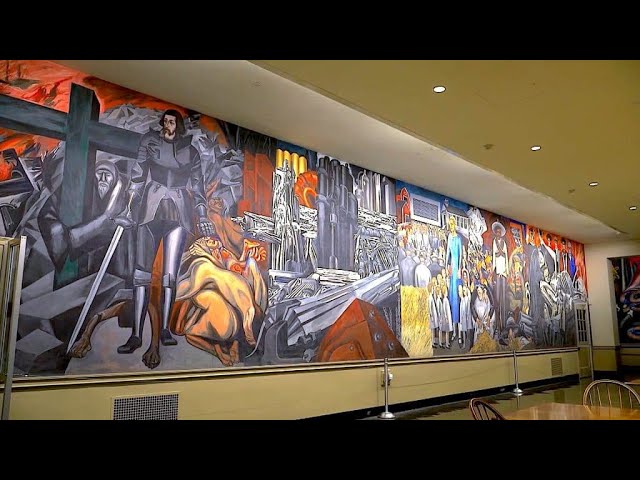

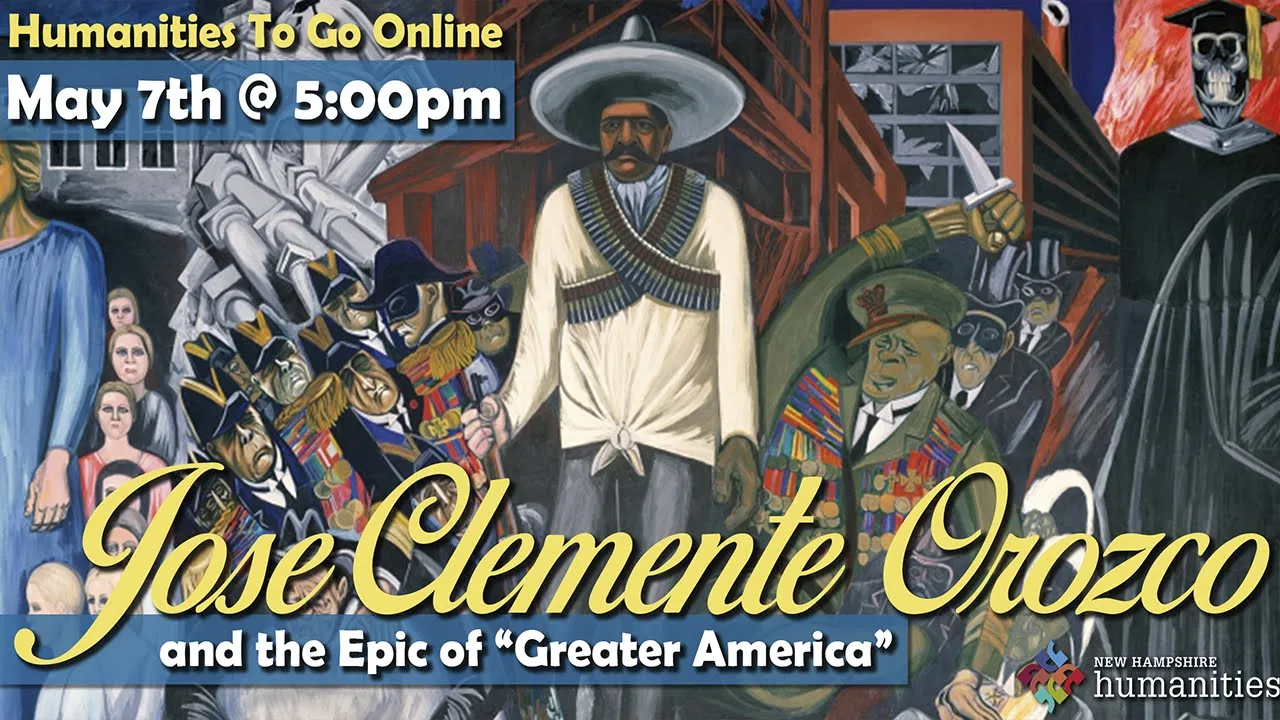





Mexican muralist Jose Clemente Orozco's 'Epic of American Civilization' (1932-34) at Dartmouth College presents American history as a catastrophic event rather than progressive development, using Walter Benjamin's concept of 'messianic time' to critique both historicist narratives and the politics of indigenismo. Orozco depicts Quetzalcoatl, Cortes, and Christ as interconnected messianic figures whose prophecies reveal the ongoing trauma of conquest, while his final panel of a racially ambiguous worker reading a book symbolizes the weak messianic power available to viewers to recognize the past's claims on the present and envision a new, equitable civilization.
Orozco's Epic of American Civilization: Messianic Time & Conquest
Added:Familiarity with the Mexican Muralism movement, particularly the styles, political motivations, and works of 'Los Tres Grandes' (José Clemente Orozco, Diego Rivera, and David Alfaro Siqueiros).
A basic historical understanding of the Spanish conquest of the Americas and the subsequent colonization of indigenous civilizations.
An introduction to Walter Benjamin's philosophy of history, specifically his concepts of 'messianic time' and history as a series of catastrophes rather than linear progress.
Knowledge of Orozco's mural cycle 'The Epic of American Civilization' at Dartmouth College, including its general structure and themes of sacrifice, industrialization, and rebellion.
A comparative analysis of Orozco's tragic, cyclical vision of history with Diego Rivera's more optimistic, technological-utopian Marxist narratives.
Further study of Mary Coffey's art historical scholarship on the institutionalization of Mexican muralism and the politics of national identity.
Exploration of decolonial theory and aesthetics, focusing on how contemporary Latin American artists continue to critique Eurocentric narratives of modernity and progress.
Application of the concept of 'monumental history' to analyze contemporary public art and monuments that address colonial trauma and historical memory.
6.8K views25likes1:02:11Original Release: 2012-05-02
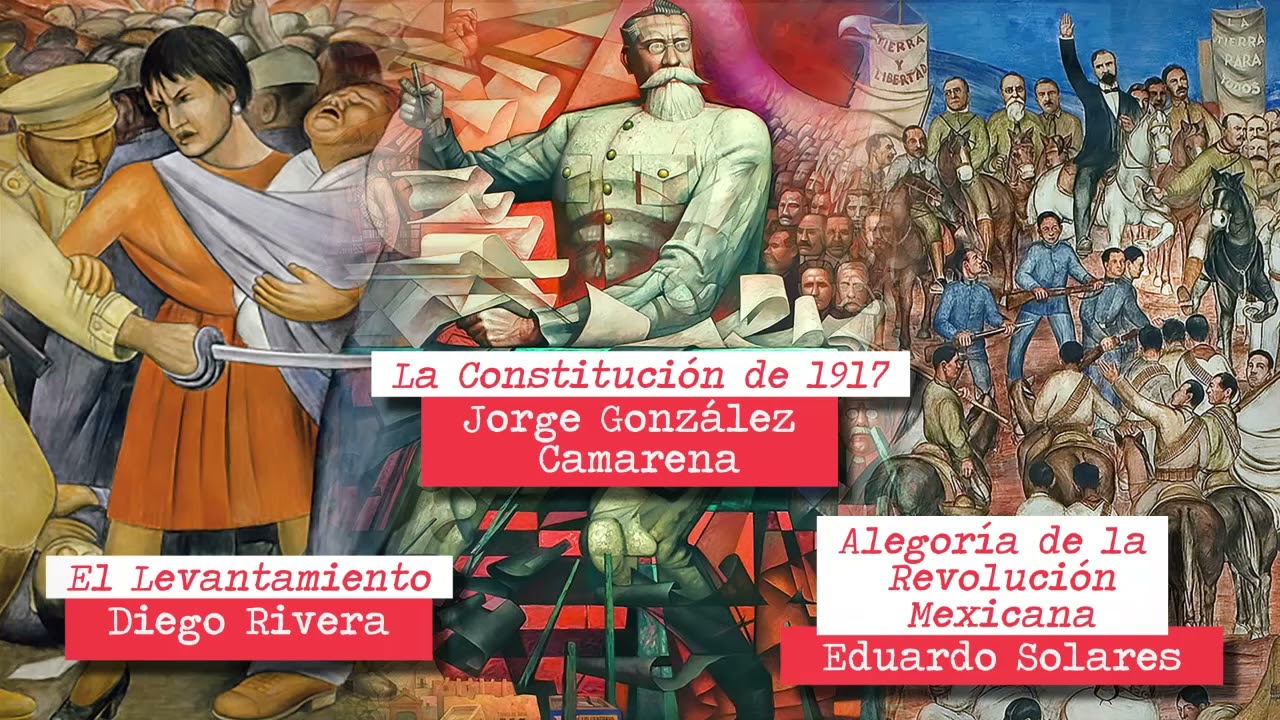
my name is Michael Taylor I'm the new director of the hood Museum of Art I think I can only say that for about another two weeks but I'm gonna still say new for a while it's great to be here um please turn off your cell phones um I myself need to remind when I get back to my seat to do that and welcome to the first inaugural manam Foundation lecture we would like to express our deep thanks to the mantam foundation which has generously funded an endowment that supports scholarship of the Orosco mural as well as its care and conservation the foundation has also through a separate Grant made possible a new lighting scheme for the mural that is currently in development and this is very exciting I think that the murals will be lit in a way that they never have been before and you'll see them with fresh eyes I cannot think of anyone more appropriate to deliver this anoro lecture than merry coffee associate professor of art history at dmouth college and to my mind the leading scholar on the work of Jose Clemente arasco Professor coffee received her PhD in art history from the University of Illinois at abana champagne in addition to teaching courses on American art and culture Mexican and Latin American Art and Mexican muralism Professor coffee has also taught specialized courses on public art fluxus and Museum practice as well as the introductory survey of Western Art history before joining The Faculty at darmouth she taught at pona College from 1999 to 2001 and was a faculty fellow and internship coordinator at New York University's graduate program in museum studies from 2001 to 2004 Professor coffee has published many articles and catalog essays including angels and prostitutes Jose Clemente orosco's cathis and the politics of female allegory in 1930s Mexico that was in the new Centennial and new Centennial review I should say and I'm not the fourth great one rafino too and Mexican muralism in too a modern icon reinterpreted for the Santa Barbara Museum of Art she's recently completed her book how a revolutionary Art became official culture murals museums and the Mexican state which will be published next year by Duke University press this much anticipated book offers the first study of the reciprocal relationship between Mexican muralism and Mexican Museum practice through case studies of the nation's three most significant public museums all of which include Major Works of mural art namely the Palace of Fine Arts the National History Museum and the national anthropology Museum professor coffey's book traces the transformation of Mexican muralism from a public art with radical social intentions into a form of State propaganda she she's currently conducting new research for a second book on the exhibition of folkart within Mexico and the United States that explores the role that folkart has played in cultivating National and transnational identities as well as the development of the tourist economy she's also the co-author of the hood Museum of Arts brochure on D marar Rosco mural and has delivered a podcast on it for visitors her lecture today is titled Cortez and the angel of History Reflections on orosco's Epic of American civilization and Messianic time please join me in welcoming Professor Mary [Applause] coffee well thank you for being here tonight can you hear me I think this is the first time I've addressed Dart myth um and it's it's wonderful to be doing it on this occasion I want to uh share um my mich's um enthusiasm for the Manon foundation and the care and the um uh resources that they're putting toward scholarship on this important mural cycle uh and the conservation and preservation of it uh here at Dartmouth College and I want to say one other thing before I begin um uh I wanted to acknowledge two of my uh colleagues George Edmonson and Claus madic I'm not sure if Claus is here uh but I acknowledge them because they invited me to participate in a Humanities Institute at the Leslie center for the Humanities uh two years years ago on the states of exception a body of theory a political theory that I was not very familiar with at the time and it sort of come to fruition now it's taken me a couple of years to really um work out uh the impact that some of what we read in that Institute uh um has had on my thinking about this mural and in particular it was the my introduction to Walter Benjamin's um thesis on the philosophy of history and that's what I'm going to be talking about today uh and it is preliminary it's new work for me so it's uh exciting and a bit um unnerving to be presenting something in such a draft form but I'm really eager to uh get responses to the work as I move toward uh revision so with that uh I'll begin and I need to ask that the lights be lowered a bit thanks in thesis n of his thesis on the philosophy of History the German Jewish theorist Walter benhin writes quote a clay painting named Angelus novas shows an angel looking as though he is about to move away from something he is fixedly contemplating his eyes are staring his mouth is open his wings are spread this is how one pictures the angel of History his face is turned toward the past where we perceive a chain of events he sees one single catastrophe which keeps piling wreckage upon wreckage and hurls it in front of his feet the angel would like to stay awaken the dead and make whole what has been SM smashed but a storm is blowing from Paradise it has got caught in his wings with such violence that the angel can no longer close them this storm irresistibly propels him into the future to which his back is turned while the pile of debris before him grows Skyward this storm is what we call progress end quote this Infamous description of Clay's work encapsulates benham's critical understanding of history as well as the method of his material historiography Benjamin treats Clay's image as a dialectical one in which time has been arrested and history is revealed to be a single catastrophe rather than a chain of events the angel faces the past with his back turned away from the future his recognition of the true nature of History while terrifying holds the possibility of redemption he wants to awaken the dead and make whole what has been smashed but the violent wind of progress prevents him from doing so benham's idiosyncratic reading of Clay's image provides an oblique critique of historicism likewise as metaphor it performs the task of the material historian which benhin describes as quote retaining that image of the past which unexpectedly appears to man singled out by history at a moment of danger end quote this man singled out by history is endowed with what Benjamin calls a weak Messianic power to liberate the fullness of the past from the historicist reduction if historicists treat the past as a universal and eternalized sequence of events unfolding in empty time according to a tileology of progress the materialist historian understands the so-called facts of the past are a construction of the present whereas historicists empathize with the Victorious when laying out the course of history the material historian views the past from the standpoint of the oppressed historicists maintain that our present is the logical and necessary outcome of a process set in Motion in the past and that any aberration from this logic of progress is but an anomalous State of Emergency the materialist sees that the state of emergency is not the exception but the rule and that Redemption can come only if we recognize quote the constellation our own era has formed with the an episode or event from the Past end quote benin's understanding of history as a creative and constructive act counters the causal logic of historicism with a conception of history that crystallizes in what he calls mesonic time mesonic time refers us not to the Past nor to a utopian future but rather to the now of the present a moment of danger that holds the potential for us to recognize the claim the past has made on us in my remarks today I read orosco's epic of American civilization as a dialectical image in benhin in the benjaminian sense like the angel of History Orosco refuses to reassure us with a utopian vision of the future and instead faces the American past in his mural American history is presented from the standpoint of the continent's indigenous peoples as a catastrophe progress represented by Cortez is indeed a storm blowing from Paradise for in orosco's telling the military and spiritual conquest of the Americas represents a destructive rather than constructive origin for the modern nation state what critical power does orosco's unexpected image of the American past demand of us his emphasis on catastrophe wreckage and debris I argue speaks to a revolutionary hope for social justice for Redemption but his materialist history like that of Benjamin is antihistorical cultural practices of the modern nation state but also the Alternatives articulated by artists and intellectuals on the left thus his vision of redemption has to be approached as something other than the vulgar Marxist Utopia ISM of his Pier Diego Rivera and likewise despite the culminating scene of Christian apocalypse I insist that orosco's epic does not partake of Christian eschatology rather the messianism that structures orosco's mural conjures the weak Messianic power that Benyamin ascribes to us tonight I interrogate orosco's engagement with messianism both Pagan and Christian and the way that Messianic prophecy structures the spatial organization and thematic content of his cycle in particular I focus on three Messianic figures catel kuad Cortez and Christ and the relation between them to better ascertain the constellation Orosco is forming between the pre-conquest past and the moment of danger in which he painted I maintain that the ongoing power of orosco's mural lies in its demand that we recognize its concerns as our own my remarks today represent my initial attempt to bring orosco's mural into a dialogue with Benjamin's the on the philosophy of history and in particular his concept of mesonic time however I want to be clear that I am not describing a causal relationship uh whereby Orosco is intentionally illustrating Benjamin's Theory rather I see them as generating analogous insights about the ethics of History due to each man's vexed relationship with historicist national cultural projects and the political regime's benefiting from them in benham's case I am referring of course to the National Socialist exploitation of anti Antiquity when constructing the mythology of the Third Reich and for Orosco it was Mexico's post-revolutionary state and the official indino promoted by Artisan intellectuals to construct an autonomous national identity rooted in Imperial Aztec civilization the Epic of americanist civilization consists of roughly 24 scenes dispersed across the walls of the Orosco room in Dartmouth bakerberry Library Orosco executed the mural in true Fresco between June of 1932 and February of 1934 while employed as a visiting professor in the art Department despite the literary references in his title orosco's epic is not a story rather it is comprised of discret images juxtaposed with one another in a provocative but non-didactic manner writing in 1934 as he completed the cycle Orosco emphatically declared quote in every painting as in any other work of art there is always an idea never a story the idea is the point Point of Departure the first cause of the plastic construction and it is present all the time as energy creating matter the stories and other literary assoc associations exist only in the mind of The Spectator the painting acting as the stimulus commenting on this statement Renato Gonzalez Mayo has noted that the Spanish word for story istoria is also the word for history Mayo Likens what he characterizes as Eric AOS Go's asymmetrical handling of form and narration idea and history to the dialectical materialism of Soviet filmmaker s eisenstein's Montage Theory this dialectical as opposed to linear approach to image making demands an active viewer who must work to synthesize the meaning of often abrupt juxtapositions within the sequence of panels rather than passively read a seemingly cohesive visual narrative moreover the dialectical approach agitates against the progress agressive or evolutionary structure of most historical mural Cycles Orosco as we will see posits a discontinuous and eruptive model of history that is asymmetrical and radically questions the relationship between past present and future this is an overview of the cycle I'm assuming most people have seen it but just to be clear it's been sort of stretched out into into long single images but these are the migration ancient uh Human Sacrifice the scene of Keto quad's arrival golden age and departure Aztec Warriors the prophecy Cortez and the cross the machine Anglo and Hispano America um modern Gods um or the birth of dead knowledge uh and then uh modern human sacrifice and the modern migration of the spirit I'm going to be referring to select panels throughout the mural uh today and um I just want to note that the titles were not given to that the panels by Orosco so I we have to they're they're descriptive and I think and relatively accurate but we have to take them with a grain of salt when using them uh in our analysis so Orosco described the idea animating the Epic of American civilization as an American idea this idea was embodied by the myth of ketzel kuad which Orosco described as not only an autous myth but also a living one quote pointing clearly by its prophetic nature to the responsibility shared equally by the two Americas of creating here an authentic New World civilization end quote as this suggests orosco's America is not synonymous with the United States or Mexico as some of his critics at the time would have it rather the America to which he refers is hemispheric encompassing all of North America and symbolically extending South to include Latin America as well while orosco's point of view clearly derives from his experiences as a Mexican his Fresco is not an expression of nationalist sentiment rather he situates his New England audience in this oblique way to a strange us Americans from their habitual and in his mind parochial understanding of American History instead of inaugurating his epic along the Eastern seab Board of the Contemporary United States with a settlement of devout Christians fleeing religious persecution he begins it with migrations of indigenous peoples throughout North America and the subsequent development of great cultures with impressive achievements in agriculture the Arts and Science in this way he reminds his viewers that American civilization precedes European Contex act while also casting colonization in the imposition of Christianity as violent and destructive rather than the benevolent beginnings of a manifest destiny this is a schematic map that shows you where the panels are located within the archetectural space Orosco uses the architectural division of the reserve reading room to divide his Fresco into two related but separate epics the two halves of the cycle are separated physically by the reserved desk which in turn marks the historical rupture between pre and postconquest America so the desk is situated here uh and the cycle breaks ancient America is on the west modern civilization is on the right and then this is the Koda which I'll be referring to at the end of the paper which faces the reserve desk and lies outside of the um cycle as such The West Wing initiates the Epic with scenes depicting an ancient Golden Age inaugurated by the the arrival of the Tolen man God Ketel koad the story continues along the east wing with disturbing images of the modern world that follow from Hernan Cortez's military and spiritual conquest of this civilization or rosu uses the myth of ketzel koad to allegorize the trauma of Conquest while the figure of Ketel kadle is found throughout Mesoamerican civilizations the exact origins of the myth are obscured by the fact that Source information has invariably been filtered through Spanish Colonial interlocutors nonetheless the most popular and pervasive account describes Ketel kuad as a historical ruler of the law city of Tolan who was either named after a God or deified subsequently for his great leadership and a god with manifold attributes as a deity Ketel Kad is associated with the wind as well as the Morning Star but most significantly he is a boundary Crosser a feathered serpent who combines attributes associated with both Earth and Sky the man God often referred to as topal Ketel Kad is credited with Banning human sacrifice and with the introduction of the cultivation of ma and the Arts his enlightened Reign was corrupted by tkot lioka who drugged and humiliated him resulting in banishment disgraced and rejected Ketel quel took leave of his people on a raft of serpents The Legend Continues that upon his departure he prophesized his return in the year one read or as we know at 1519 the date of Cortez's arrival at Veracruz at which point he would avenge himself and destroy the civilization that had rejected him Gonzalez Mayo suggests that orosco's version of The Myth was influenced by two books he would have encountered in dartmouth's library the first is Samuel goodrich's lives of the celebrated American Indians from 1849 in which Ketel quad's Reign is explicitly described as a golden age and his achievements in the Arts religion science and politics are enumerated the Second Source John Hubert corin's the song of Ketel quad published in 1931 transcribes n wled fragments from the Florentine codex that pertain to the leader and the mythology surrounding his return Mayo argues that Orosco depicts Ketel kuad as both a historical leader and a deified prophet in the arrival panel ketok kuad appears in his guise as the fabled ruler of the toltech emerging at the Crossing of the pyramids of the Sun and the Moon and the ancient city of teot wakan and here are the pyramids in the departure panel his beard has grown wild and he Bears the aspect of a wizened prophet as he points dramatically toward the arrival of Spanish conquistadors who will destroy the society that rejected him in this way the sequence of panels dedicated to ketzel quad's myth dramatizes the ruler's transformation from man to God as well as his mythical return as the white bearded God Cortez in the shift from arrival to departure Orosco employs the symbolic metaphor of daylight and dusk ketzel Kad Rises like the sun Illuminating Tolen civilization and then departs with the fall of night thereby calling his association with the Morning Star while also characterizing his repudiation as the end of an enlightened epic and the prefiguration of a dark age for American civilization orosco's version of The Myth then is indebted to postconquest Spanish sources that were widely accepted in his day but which are now heavily debated according to this story the Spanish Conquest was understood by its victims as the Fulfillment of Ketel kad's prophecy and Cortez because of his white poor and beard was perceived as Ketel koad returned Orosco uses this myth to establish a relationship between the ancient and modern world essentially rewriting Enlightenment narratives of European encounter with the Americas from the standpoint of what he believed to be an indigenous world view despite his praise for ancient indigenous civilization Orosco draws a contrast between the accomplishments of toltech and Mayan peoples signified in the architectural references to the pyramids of teot wakan and chichan itah so here we have taakan and here the Castillo from chicha so these are specific architectural monuments associated with these two specific cultures um Orosco makes a distinction between the Mayan and the toltech and the Aztecs this contrast is evident in two ways in the western half of orosco's cycle first Orosco characterizes ancient human sacrifice as barbaric and outside of the enlightened reign of Ketel koad second he frames the interregnum of Ketel kad's reign with equivalent but opposing scenes of Aztec Warriors the Spanish conquistadors thereby sorry Aztec Warriors and Spanish conquistadors thereby drawing a parallel between these two imperialistic and militaristic civilizations they literally face off along the northern wall of the western Corridor with Ketel kad's Golden Age positioned between them as if an enlightened parenthesis within a longer history of Imperial aggression by situating the scene of sacrifice prior to Ketel kad's arrival within the sequence of panels Orosco endorses the claim that ritual sacrifice was banned by the toll taken leader in this panel Orosco Associates Human Sacrifice with the Aztec explicitly despite the fact that several groups practiced human sacrifice and that historically the Aztec postdate ketzel ku's legendary Reign so as an image of Aztec brutality this panel should logically follow the sequence dedicated to Kel koad however here as in other instances Orosco deliberately issues a linear historical narrative in in favor of a dialectical juxtaposition of ideas barbaric sacrifice versus Enlightenment in both the ancient human sacrifice and Aztec warrior panels Orosco makes reference to well-known statuary associated with the Imperial practices of the Aztecs the carved Effigy Of The Feathered Serpent located along the base of the Aztec warrior panel refers to those lining the ceremonial pyramid at teot wakan in reference to the Aztec's emulation of tol taken Urban Design in their efforts to link their empire to toan and the enlightened Legacy of Ketel Ko's Reign two of The Warriors are dressed as Eagles and jaguars in reference to Ketel kad's struggle with tkat lioka and the other two are rendered in the guise of Ketel Kad as the wind God this is that depiction based on illustrations in corin's book this Orosco shows how Aztec veneration for Ketel Kad underpinned their military aggression Orosco draws a visual distinction between Ketel K the enlightened leader and the Petrified image of The Feathered Serpent that the Aztecs appropriated and deployed symbolically in Warfare this contrast is between oral tradition the legend of Ketel Kad depicted along the north wall and the construction of Heritage through material cultural practices of appropriation through this contrast between a dynamic and living process on the one hand and the historicist petrification of the past into cultural Treasures on the other Orosco calls attention to the symbolic practice of tracing political Origins to an idealized anen regime Orosco lends contemporary resonance to this critique in the scene of ancient human sacrifice as well here a sacrifice takes place before a monolith whose attributes combined features associated with whz lauchle the god of fire and War and the patron of the Aztec city of tenlan and his ferocious mother kuat Le and I'm showing you the quat Le monolith here and an illustration of one kind of illustration of whe lley that shows some of the um uh attributes associated with him conventionally and we can see in this monolith that there's a combination of the um uh hearts and Palms necklace that Kat Le wears with the spear and shield uh and um uh this little little red decoration that often appears in images of um weoley so there's a sort of combined image of the two both deities are closely associated with the ritual Precinct at Tano chitlan where one of the two sacrificial pyramids was dedicated to whitle and perhaps more significantly the infamous Stone monolith depicting Kat Le was found originally uncovered during the colonial period the Kat Le monolith was subsequently reburied then briefly dis intered in the 18th century at the request of Baron Alexander Von hanold and finally placed in storage until the late 19th century when Mesoamerican Antiquity and Aztec civilization in particular was reinvented by liberal Elites as the origin of Mexico's mesiso Heritage this 19th century revivification of the Aztec past was enhanced and exacerbated in the post-revolutionary period by both politicians and intellectuals it reached its apogee with the opening of the national anthropology Museum in 1964 where the kuat is today venerated with an a soaring two-story Gallery dedicated to a glorified Mexico Deno Tian orosa would have been very familiar with its predecessor institutions wherein the monolith was exhibited in historic displays alongside the heroes of Mexican Independence creating what historian Luis Morales Morino calls a Museo Patria a patriotic museology that functioned as propaganda for subsequent phases of Mexican statecraft orosco's reference to the Kat monolith in particular suggests that this scene of ancient sacrifice does more than indict Aztec ritual practice it also subtly calls attention to the role of Heritage and the blood rituals of the modern State this point is made explicit in the modern Human Sacrifice panel located across the corridor as a mirror image of the ancient scene here the skeletal remains of an unknown soldier lies buried beneath Laurels while the flame a flame Burns eternally in his honor an aggressive War Monument takes the place of theat monolith while a fat cat politician stands in for a high priest pronouncing on the heroic sacrifice of the nation's dead Orosco develops I'm glad somebody's laughing Orosco developed this panel after returning from a three 3 month sojourn through Europe taken after he just after he'd begun the cycle and he returned and completed it while in France he visited the Tomb of the Unknown Soldier which had only recently been installed between the L Triumph This colossal Monument anchors a sequence of triumphal arches that line the Shan Le in Paris a Grand Boulevard that comprises the city's historic axis modeled after Roman architecture The Arc exemplifies French neoclassicism commemorating Revolutionary and Napoleonic Wars It's symbolically Associates modern France with Imperial Rome the Eternal Flame was added in 1920 to memorialize French soldiers who perished during World War I their anonymity stands in stark contrast with the meticulous recording of Victories and Generals named on the arches in inner and outer Surface by calling attention to the eternal flame in particular Orosco indicts the depersonalization of death within Modern Warfare and the rationalization of Slaughter through the glorifying rituals of National Heritage we need to keep these Aztec mexican and French examples of historicist cultural appropriation in mind when assessing orosco's representation of a pre-conquest golden age for I argue that when evoking indigenous Antiquity Orosco is not endeavoring to repeat the strategies of the azex toward the toex and even more so he's not endorsing the politics of Heritage employed by the modern State rather orosco's depiction of ketzel kad's golden age serves to facilitate an antihistorical critique of the contemporary politics of indigenismo that were being institutionalized by the ruling party in Mexico through the artistic collaboration of his um peer Diego Rivera Mexican indino was developed as part of a the progressive social agenda of the Mexican mural Renaissance spearheaded in 1921 by the post-revolutionary state in order to restore a sense of Civic Unity after the 10-year civil war minister of Education Jose vasconcelos asked artists to paint edifying murals in the auditoriums and courtyards of federal buildings the artists many of whom had been radicalized by socialism soon redirected bascon solos' modifying agenda by executing mural cycles that emphasize not only the country's divisive class-based and ethnic antagonisms through scenes of Conquest Revolution and proletarian struggle but also a sympathetic view of Mexico's vast indigenous and peasant underclass and just as a point of reference I'm showing you two of the most famous images from this period uh Diego Rivera's uh one of the panels from his ministry of public education murals where we see the venerated tjuana this indigenous woman um presiding over uh a table in which Mexico's various race racialized and uh sort of class um uh citizenry is seated in sort of the new table of Brotherhood uh and over here an example from Orosco from the national Preparatory Museum that shows Cortez and Malin his sort of concubine uh and translator presented as the sort of primordial parents of modern me meso Mexico uh these are two examples of the how indino uh registered itself in visual artart positing race as an ethnic Force the muralist issued the cultural superiority of European tradition from classical Antiquity to the present and cultivated instead a modern art rooted in autochtonous American sources a variant on modernist primitivism in kismo differs somewhat from the appropriation of non-western cultural forms by European artists such as Pablo Picasso's interest in African sculpture because it was motivated less by a desire to critique academic standards in art and more by a search for authentic identity Mexican artists viewed indigenous culture not as an external other but rather as an internal other that must be recuperated and brought into the cultural imaginary the Mexican self they insisted must be conceived of through the colonial relationship between settlers and Indigenous peoples and cultures by the mid 1920s government patronage had all but dried up promot prompting artists to seek private commissions and Regional centers throughout Mexico and in the United States however by the end of the decade Mexican Presidents had begun to appreciate the propagandistic value of the muralists radical politics and under the administration of plutarco Alas cayes and his proxies collectively known as the maximato the state awarded a high-profile commission to Diego Rivera to paint the history of Mexico in the grand staircase at the National Palace the headquarters of the federal government and in subsequent years several Mur mural artists were employed to decorate key Federal institutions this is the National Palace Rivera's Commission coincided with K's program to institutionalize the revolution through the creation of a ruling party the national revolutionary party or as it's known the PNR Rivera's radical populism provided a progressive face for the conservative politics and political authoritarianism of a maximato moreover as Leonard fulgurate has shown the national populism and discursive rendering of Mexico's history in Rivera's National Palace mural coincided neatly with ka's rhetoric about the institutionalized Revolution Rivera's mural is divided into three scenes that correspond with the Northwest and South walls of the stairwell uh this is the north wall this is the West Wall this is the South Wall we'll I'll show you details in a moment the north wall depicts the Aztec World configured as the nation's past the Western Wall provides a spatially and chronologically complex Narrative of Mexican history from the point of Conquest to Revolution and the South Wall is dedicated to a Marxist vision of Mexico of today and tomorrow the north wall Rivera situates Aztec civilization as modern Mexico's point of origin like Orosco Rivera recalls the Aztec veneration of Ketel Kad by depicting the man God four times in an array of representations that reveal a clever integration of ethnographic research into his modernist figurative idiom in the upper left corner we see the plumed serpent emerging from a volcano in the center we see the historic man God toin Kel KO seated and ministering to his followers on the top right he appears again departing on a raft a serpent raft uh and at the top he uh at the very top of the wall ketok kuad appears as the falling or Setting Sun establishing a circular logic that connects up with the iconography of the South Wall ketok kad's Reign is likewise idealized in Rivera's mural however as the viewer moves toward the larger Western Wall depicting Mexico's Mexico from the conquest in 1930 scenes of social unrest appear as an indigenous agitator attempts to organize tribute paying subjects against the abuses of the Aztec empire so it's very idealized over here but as you move toward the Western Wall we see now um images of of tribute uh and exploitation with this sort of Aztec um communist agitator here trying to rally um his fellow men against uh the Empire on the Western Wall the imagery is organized into three horizontal registers with scenes as Spanish Conquest depicted along the bottom episodes from the colonial period in the middle and groupings of peasants and leaders associated with Mexico's post Independence history aligned across the top the imagery is likewise organized into five vertical bands framed by the arches of the architectural space these bands house clusters of historical figures associated with key military struggles in the nation's history the French intervention and the US invasion are represented in the outer arches while the Revolution and reform uh Wars framing frame the central Arch dedicated to Mexican Independence as fulgurate has argued there is a general shift from illusionistic scenes of hand-to-hand combat along the lower register to a more static and spatially compressed depiction of history as discourse toward the top as the viewer moves from the Lower Landing up the stairs to arrive at a balcony situated at a remove from the Fresco she is at first immersed in the near life-size battle scenes but eventually steps back to enjoy a distanced view her body now oriented toward the Fresco in a similar manner as the many peasants depicted from behind in the act of witnessing or reading the numerous texts that accompany the figures in each AR and I'm referring here to these figures that are dispersed throughout the mural through their backs to the viewer reading all these proclamations that are proferred by the uh leaders of Mexican political history for this reason fulger claims that the viewers movement Echoes the shift from action to Institution exper to discourse that the mural promotes the historical Chron uh and chronological complexity of the Western Wall is centered around an Aztec sculpture of an eagle with a war Banner in its beak this reference to an actual Aztec relief carving recalls the prophecy of an eagle with a serpent in its beak a lighting upon a cactus that instructed the mesika on where to found the imperial capital of tenos chitlan it also corresponds with a toponym of the modern Mexican flag a motif that 19th century liberals appropriated from the mesika to ground their new Nation within indigenous Antiquity the symbol of Empire and Nation anchors the central vertical band connecting the scene of the Aztec warrior cak's heroic struggle against Cortez with the radical priest Miguel hidalgo's Uprising during the independent struggle and Amano seat's revolutionary factions agitating for land and reform so we have quok down here idalgo here sapata here straight line it thereby draws a straight line from the indigenous past to the modern state that asserts Aztec culture as a force of resistance animating the nation's long struggle for Independence and social justice against a host of colonizing and exploitative forces the Southern Wall completes the cycle with a scene depicting Mexico of today and tomorrow and as with its Mirror Image across the stairs we see scenes of industry and exploitation with a communist agitator attempting to organize the working classes in the place of El koad Rivera depicts Carl Marx holding a Communist Manifesto and pointing dramatically toward the East where a Utopian city rises as an emblem of the future freed from class antagonism so here's Marks here are the various agitators like orosco's mural River's historical cycle is structured by Ketel kad's myth only at the National Palace it is the white bearded Marx who represents the Pagan God's prophetic return the brilliant son behind Marx represents Ketel quad's symbolic return in the rising of the Morning Star Marxism brings about the destruction of class exploitation shown depicted throughout the mural and thus the utopian reinstatement of katel kad's enlightened rain Rivera's treatment of the prophecy corresponds with what Georgio agamben calls the oxymoronic structure of messianism in which an idealized past is married with a utopian vision of the future the two incommensurate temporalities are joined in the figure of the Messiah whose coming promises to literally take us back to the future Rivera's messianism likewise melds the class politics of Marxist theory with the racial politics of indigenismo in a way that nationalizes socialism by crafting it as the Fulfillment of Ketel kad's prophecy he thereby partakes of the same historicism as the kayas regime despite his Marxist political orientation I think we need to view a Rosco's mural as a critical response and reply to Rivera's National Palace mural and it Bears noting that this mural was incredibly controversial and extremely well publicized in in its day so Orosco was very aware of what what Rivera was up to at the National Palace I think we need to view orosco's uh returning to orosco's arguments about idea versus Historia we can now see that it was Rivera's discursive approach to visual narration and the historicist symbolic structure of his cycle that Orosco was refuting we can see this not only in orosco's dialectical as opposed to linear approach to storytelling but also in how he handles the prophetic structure of messianism for if we were to interpret orosco's handling of the myth of katel koad through the conventional structure that Rivera employs we would have to view Christ not Cortez as his return according to this logic orosco's mural would assert the indigenous past as an idealized point of reference for a future Utopia with Christ's Resurrection configured as the Messianic event that completes the prophecy and brings about a return to Ketel kad's Golden Age Not only would a reading of this nature situate each section of the cycle in a chronological relationship past present future but also it would set up Orosco as a Christian militant even Zealot akin to Rivera as vulgar Marxist there are at least three arguments that mitigate against this interpretation first there is ample evidence textual and visual that Orosco was extremely opposed to the historicizing indino Rivera deploys shortly before beginning the Dartmouth commission orosa published a Manifesto entitled New World new races new art in which she pointedly criticized the artistic quote Looting of indigenous remains of the new world with the object of copying its ruins or its folklore end quot Orosco calls for a new art something that will Express the unique spiritual and physical materiality of the new world He suggests the Manhattan skyscraper as an Exemplar of these new values and calls for a mural art that draws from its example Orosco is clear throughout the manifesto that American Artist should not look to an idealized past whether European or indigenous but rather cultivate an authentic expression forged in the unique properties of the now given the clarity of his conviction on this point it is difficult to imagine that he would endorse an atavistic return to an indigenous Antiquity in his Fresco cycle second orosco's depiction of Christ destroying his cross begs questions about how to interpret the apocalyptic climax of his cycle it is conventional to view this scene as an image of the resurrected Christ who returns to destroy rather than redeem humankind rather than accept his martyr signal by the cross Christ chops down the Implement of his sacrifice refusing to die for our sins and instead bring about bringing about Kingdom Come so that the spirit might migrate to a new age this interpretation is hard to sustain however because of the unorthodox Liberties Orosco has taken with christological iconography although bearing the marks of his crucifixion Christ appears in the guise of the pantocrator or judge his resurrected body if indeed it is a resurrection scene is not Immaculate thereby his human Humanity rather than his divinity is emphasized the small panel entitled chains of the spirit is here that follows this image presents a scene of chains locks weapons and keys presided over by vultures Dawning clerical collars this iconography suggests that Orosco is actually referring to the anastasis or harrowing of Hell an episode from the passion conventionally associated with Easter the anasasis takes place before the resurrection during the three days and three nights that Christ's body remained dead in the Tomb typically Christ is shown releasing Adam from the chains of bondage often using his cross to skewer Hades while keys and locks are stwn about in her exhaustive study Anna cartsonis notes that the anastasis betrays temporal ambiguities in that it refers to Resurrection but it takes place during the death of Christ in conventional anastasis scenes this emphasizes the difference between Christ's human body and his embodiment as the logos incarnate in his panel Orosco has layered referen then to the pantocrator with multiple episodes from the passion with an emphasis on what cartonis calls the temporal ambiguities of the anasasis like early Christian illuminators Orosco refrains from depicting the resurrection and thus the triumphal outcome of that Christian eschatology predicts rather the padlocks and vulturous clergy depicted in Chains of the spirit suggest that the spirit has not been released or migrated thus this scene does not seem to bring the prophecy to a close rather it leaves us arrested in time still still waiting for mesonic redemption in the end of days while aros's image partakes of the visual ambivalence about the resurrection and the temporal ambiguities of conventional anasasis iconography it omits Adam's rising up from Hades if Christ's Rescue of Adam is meant to guarantee Redemption orosco's image refrains from any such guarantee orosco's image of a vengeful Christ does not satisfy the longing for Messianic Redemption that it would seem to solicit we need to read this refusal within the context of contemporary political theology and in particular the Messianic claims of Hitler in Germany the chos in Mexico and even the secular presidential politics of the PNR as well as Rivera's mesonic characterization of Marx Orosco seems to have understood perhaps implicitly the danger of the political Embrace of messianism in the 1930s and thus he evokes it only to undermine its promise that a messiah will come to redeem our path to make us whole Orosco toyed with the idea of rendering an indigenous Christ in the final scene and and had he done so it would be more compelling to interpret this final scene as Ketel kad's return much as Mark's functions in Rivera's mural however he aband he abandoned this idea preferring instead to keep the relationship between the three mesonic figures in the mural ambiguous and unresolved by prophecy finally and this is my third argument against the historicist interpretation of the messianism in orosco's mural the physical and thematic structure of the cycle mitigates against this kind of historicist reading orosco's exploitation of the architectural features of the resort Reserve Corridor asserts a radical break between ancient and modern worlds this cleaving of the present from the past is represented as well as a rupture with orality and myth the past is available to us only through oral tradition as a myth the present is characterized by a material history grounded in the trauma of Conquest an event that irreparably sundered modern America from the indigenous past thus the two halves of the mural establish an asymmetry between past and present present the time of myth and the time of History suggesting that these two approaches are being ju opposed rather than placed on a Continuum we might read this juxtaposition as an attempt on orosco's part to lift modern history into the realm of History to glorify American nationalism with an within an autous myth of indigenous prophecy however I am arguing that in orosco's mural we are presented with two incommensurable temporalities held side by side in a dialectical image in the climactic scene the time of his history has come to a stop this is not a transitional Moment In A Narrative of progress it is an image of time standing still the time of now shot through as Benjamin would say with chips of mesonic time orosco's rendering of the American past is not intended to be an historically accurate depiction of Kel kad's Reign rather it represents a part of the constellation our era has formed with a definite earlier one by evoking ketzel kad's prophecy Orosco conjures the historicist mode of IND kismo employed by both the aor authoritarian State and the Marxist LEP but only to defy the conventional logic of messianism that we see in Rivera's National Palace mural orosco's Fresco does not in fact depict a messiah that will take us back to the future rather the arrest we experience in the final panel enacts what Benyamin calls a Messianic cessation of happening that endows us with quote a revolutionary chance in the fight for an oppressed Past end quote so if Orosco is not calling for a return to Ketel kad's Golden Age what then is the oppressed past that his dialectical image commands us to recognize to Hazard a response I recall rosal's comments about the living myth of ketzel Kad in which he argues that the myth points quote clearly by its prophetic nature to the responsibility shared equally by the two Americas of creating here an authentic New World civilization end quote we should recall as well orosco's Manifesto in which he argued that a new authentically American culture follows from the physical and spiritual a the new races of the new world keeping these two statements in mind I want to review orosco's depiction of Anglo and Hispano America and suggest how his characterization of the two Americas informs the Koda for I argue Anglo and Hispano America depict the mutual failure of the two Americas to heed Kel Ko's prophecy however in the Kota Orosco hints at what an authentic New World Civilization might be Anglo and Hispano America follow immediately scenes of Conquest in modern industry in these panels their relative succcess and failure seems to flow from the technology AED greed displayed by The Conquistadors and its transmogrification into a dehumanized industrial modernity Anglo Amer while politically stable is stultifyingly conformist peopled by a homogenized race of zombie-like white ethnics Hispano America is dynamic but riddled with political corruption and caught up in cycles of Bloodshed its populist revolutionaries stand up for an unrepresented underclass but are routinely done in by a foreign and domestic Elite the variation of skin tone in this panel reflects the intersection of race and class that perpetuates Latin American social inequality both Americas suffer from the racial antagonisms that European exploration and colonization set in Motion in its Relentless promotion of a singular wasp identity Anglo Amer excludes all difference from its National imaginary Hispano America on the other hand exploits racial difference to maintain an exacerbate class hierarchy in these panels Orosco foregrounds race and racism as key features of American nationalism and state formation he shows that National imaginaries predicated on an empty promotion of racial hybridity are as socially destructive as those structured by its disavowal neither America has grappled effectively with the ethical dilemmas of the postcolonial settler State and thus both and implicitly all nationalisms fall prey to the blood ritual of industrialized Warfare depicted in modern human sacrifice in the Kota Orosco depicts yet another temporality one in which the industrial achievements of the modern epic continue but without sacrificing human life labor and Leisure to the almighty machine Orosco symbolizes this new age through Modern steel frame architecture in the image of a racially hybrid man depicted in workers's Garb but shown in Repose reading a book this meso man stands in for the promise of a racially Equitable America wherein the values established by Ketel kad's enlightened rain might once again be possible possible Orosco visually evokes this analogy by likening the body and posture of the modern industrial man to that of the sleeping figure lying beneath ketzel Kad in the arrival panel a low brick wall indicates the building of a new civilization in the ancient scene just as a steel frame skyscraper signifies the new man under construction in the Fresco's Koda in this way Orosco argues modern and ancient Humanity are connected genealogically and spiritually despite the radical change our social environment has undergone Orosco is careful however not to indulge in Easy utopianism the alternate temporality suggested in his Coda is left deliberately vague and stripped of anacronismo points to the possibility of a new age imbued with the ethical values of Ketel kad's Reign without implying that it will constit constitute a return to a prelapsarian past Preparatory drawings reveal that aoso models his reading figure after a Dartmouth undergraduate in the sketch we see a square J Collegiate male with a crew cut wearing a sport coat in every way this figure corresponds with the conventional image of the Dartmouth man an athletic studious white Anglo-Saxon Protestant however as he developed the image Orosco turned his Dartmouth wasp into a racially ambiguous worker it is important to recall that Dartmouth is a private college and a raced worker like the one Orosco deps would have been would have had a hard time gaining access to the libraryies resources in the 1930s a fact that Orosco must have noted so what are we to make of this Koda um to the artist indictment of the modern history of the Americas some are tempted to see this as an endorsement of communist Politics whereby the worker becomes the subject of History others see this figure as a mesiso and read the final panel as a reference to the Mexican school's endorsement of a future oriented Cosmic race and still others see this man as an African-American and read his presence as an overt critique of the racial politics of 1930s United States following benine I argue that this is indeed a masiso figure whose racial identification is left deliberately ambiguous what matters is that he represents the new races that Orosco exalted in his Manifesto he does not represent the worker as the subject of history as my Marxist colleagues would have it but rather he is a configuration of the weak mesonic power that we possess to conclude then I offer a reading from one of my Dartmouth students Nicola Tucker who was given the task of writing about a Rosco's mural and the Epic form in my senior seminar on Mexican muralism in her essay Tucker Tucker argued that it is the viewer who plays the part of the epic hero in a Rosco cycle treating the Fresco as a performative right through which the viewer under goes a radical re-education in American history and emerges transform she suggests that the myso worker quote embodies the new state the Dartmouth student initiate enters after performing the cycle end quote in this new state the hero of America's epic is transformed from the hegemonic privileged white subject into a working class myso he is no longer the progy of a European gen genealogy but rather the hybrid offspring of the violent encounters between Europeans and their colonized or enslaved others and here it is significant that orosco's figure could just as easily be read as African-American as mistio for Orosco there is no savior no Messiah who will make whole what Cortez sundered our Salvation does not rest with an atavistic return to a pre-or hasian reality nor will it come from an historicist construction of an indigenized nation state it will come if and only if we recog I the race problem as our own and here I reiterate that it is significant that Orosco executed this cycle in and for a US American Audience by transposing the body of the white Dartmouth undergrad with the body of a raced worker Orosco visualizes what our Redemption would look like Redemption will come when we can see ourselves through the living prophecy of Ketel quad when we can cease thinking of Anglo Americas having nothing to do with Hispano America and when both Americas grapple with the psychic consequences of living in a post Colonial settler State when we can see the mtio worker reading in the Kota not as a symbol for a period politics of race and class but as a true reflection of ourselves we are only now beginning to recognize the image of the past that Orosco has seized as a concern of our own we are only now beginning to exercise the weak Messianic power to which this past has a claim in characterizing the Revolutionary hope of benham's notion of mesonic power Walter Homer writes that quote each possibility that was Miss in the past remains a possibility for the future precisely because it has not found fulfillment for the past to have a future merely means that the past possibilities have not yet found fulfillment that they continue to have an effect as intentions and demand their realization from those who feel addressed by them end quote I would like to end with this quote to demonstrate the hope that I see in the mesonic structure of orosco's Epic of American civilization the fact that we are all here commemorating his achievement at dartm missum 80 years hence suggests that there is still a future for ketzel kad's golden age in our America that's the end so I'm I'm happy I know it's a long talk but I'm happy to entertain questions question Sude and it's often referred to as a theory of melancholic history also his Messiah is not going to be Jesus Christ a Jew second so the Messiah has not come IDE M Messianic time has not yet been defin so I wonder if and and you do make it clear that that the the appearance of Christ in the appear of a fulfilled history but I wonder if your emphasis on Hope is too hopeful doesn't take into consideration you know the depression depressive view history that have yeah I mean in the end I don't think as as um misanthropic and uh dark as Orosco was I don't think he was as hopeless as Benjamin and that is a function of his privilege I mean he really he wasn't a Jew in Hitler's Germany he was a relatively privileged Creole you know miso in in in Mexico um uh I ended on hope uh because I do think there is hope in the mural and I wanted to kind of push against this sort of the the criticism that it often receives as this just this dist you know slash and burn you know criticizing everything you know from Christianity to Dartmouth to Anglo America um because I do think uh and this is sort of picking up on on uh benin's those those moments in the thesis where he talks about Hope um uh where he talks about the possibility of uh restoring the fullness of the past so that any moment from the past could possibly be um uh um uh could have resonance and be recognized by us as as a concern of our own which would sort of potentially undo the kind of violent reduction of historicism that seeks to constantly identify our present with this sort of history of military victories essentially um so I think there is a little hope in there although I think for Benjamin it's a kind of desperate hope um uh and uh for Orosco I think uh he's also quite um skeptical about any Utopia any future any idology any anyone who claims to have the answer for anything um but I think that he is focusing on the oppressed that is telling the history of the Americas from the standpoint of the oppressed for precisely the same reason uh to to move us away from a kind of Victorious teleological Progressive notion of enlightened nation building uh toward one that has a has a more just um social and sort of racial um has an Ethics at least of of sort of social justice uh so uh and that last panel it's it's unusual for him you know he really refrains from doing this again and by sort of depicting something that could be interpreted as a utopian even Marxist image um in favor of just these men of Fire that's kind of the most utopian he gets after this um and and that that Koda really stymies um Scholars a lot who who either want to read it as just a full-on endorsement of of Marxism which I just do not believe it is um uh or as some kind of uncritical embrace of a vascon Salan notion of a cosmic race you know another prophetic kind of account of America um and I I I do think in the sort of explicit racializing of that figure that he is is sort of suggesting that it's race is the is the hinge that we have to um we have to work with we have to see ourselves as called by ancient indigenous mythology instead of seeing ourselves as somehow totally separate from what from that I don't know if that totally gets at your question but yeah AA ask you about your your view statue of the broken statue of the Buddha yeah that was behind I know the other thing is that a broken column column yeah uh so Rosco does this a lot I mean the Buddha is is a little strange um I think it's there uh because he's he is trying to sort of indict all of civilization you know not just Christian civilization so he kind of throws it in there as an as a icon of something outside of the the you know Western tradition I think I mean it's it's it's an open question the column is is a motif he uses over and over and over again it always as an architectural marker it always signifies Western Civilization he often uses it to depict the imposition of of um European culture in the Americas and I brought I'm glad you asked because I did bring these images of um two other iterations of Christ destroying his cross that Orosco painted one very early in his career in the destroyed cycle at the national uh uh prepar uh this is was actually titled the Redeemer um he ultimately destroyed this image and repainted much more um kind of Contemporary Images in instead and the other is a very late work uh an oil uh also of Christ destroying his cross where you can see these symbols of culture um strewn about books and columns and the cross of course and then the fire the Flames of purification which show up again and again and you know there are lots of ways to interpret this one is as sort of Christ you know this apocalypse um uh another related one is in Mexico in the 1930s there's a whole lot of propaganda circulating on for and against the Cristo War this war fought in the Name of Christ um a sort of coup fought in the Name of Christ against the post-revolutionary regime in which images of Christ are sort of deployed both as an emblem of the prophecy of sort of Christian rectitude and also as a on the other side by the leftists as um uh an image of um sort of hypocrisy Etc um and the sort of final so Orosco seems to be responding to that iconography a lot in these murals um and the final thing is ronat Gonzalez Mayo argues that for Orosco this is really a sort of symbol of um the destruction of old orders of of language uh bringing about a new language and this to me feels very benjaminian and sort of very much in his sort of understanding of um of post mesonic time where where where literally words mean that words start to mean their their real meaning uh and everything before that is this confusion um uh and so uh Gonzalez Mayo thinks that's what this image means for me it it's just it's always an open question because his representations of Christ are so unorthodox that they're very um slippery and I'm I'm not I don't feel like I can say for sure but I I have this hunch that I keep pursuing I don't know does that help yeah okay thanks it's really great and there's a reception in the Kim Gallery upstairs but thank you Mary for a wonderful lecture thank you
Up Next
6:15
Mexican Muralists: How Los Tres Grandes Remade American Art
@whitney_museum
119.6K views•2020-02-11

114:18
Christian Iconography: History, Theology, and Meaning | Fr. Panayiotis Papageorgiou
@Trisagionfilms
58.8K views•2020-02-21

3:32
Orozco Murals at Dartmouth: Art History & Legacy Explained
@dartmouth
7.3K views•2013-01-23

16:34
Earliest Depictions of Jesus in Art: 10 Ancient Images Explained
@UsefulCharts
5.9M views•2022-06-03
Related Study Plans & Knowledge Roadmaps
Structured learning paths in Art History
art-history
Gothic Cathedrals: Engineering, Light & Society
01The Birth of the Gothic: Romanesque to Suger's Vision
02The Structural Triad: Pointed Arches, Ribbed Vaults, and Flying Buttresses
03Theology of Light: Lux Nova and Sacred Geometry
+ 2 more learning modules
14h5 modules
Explore Roadmap
art-history
Pre-Raphaelites: Realism, Symbolism & Critique
01The Victorian Art Establishment and Academic Formula
02The Founding of the PRB and Radical Realism
03Medieval Revivalism and Literary Symbolism
+ 1 more learning modules
8h4 modules
Explore Roadmap
art-history
Street Art: From Subways to Art Market
01Subcultural Origins in Philadelphia and New York (1970s)
02The Subway Era and Style Wars (Late 1970s - 1980s)
03The East Village Scene and Early Gallery Crossover
+ 2 more learning modules
10h5 modules
Explore Roadmap
art-history
Classic Maya Art: Iconography, Glyphs & Ritual
01Foundations of Classic Maya Visual Culture
02Deciphering Maya Hieroglyphs & Text-Image Integration
03Sacred Geography and Cosmological Architecture
+ 2 more learning modules
14h5 modules
Explore Roadmap