José Clemente Orozco, a Mexican muralist trained as an academic painter, created the largest and most complex of his U.S.-based murals at Dartmouth College in 1932-1933, where he was invited by two art professors to teach fresco painting; the unique architectural space with its central reserve desk allowed him to develop his artistic vision by depicting pre-Columbian mythology (specifically the Quetzalcoatl myth) as an American myth connected to the history of conquest, and this mural serves as an essential educational asset in art history courses where students conduct intensive research on individual images to develop deep appreciation for the complexity of public art.
Orozco Murals at Dartmouth: Art History & Legacy Explained
Added:Deep Dive
An understanding of the Mexican Muralism movement and its core figures, known as 'Los Tres Grandes' (Orozco, Rivera, and Siqueiros).
Latin American Arts in America with artist John D. Estrada
178
The three greats (Los Tres Grandes)—Diego Rivera, José Clemente Orozco, and David Alfaro Siqueiros—were commissioned by post-revolutionary Mexico to create educational murals rebuilding national identity. Rivera, influenced by European Cubism in Paris, brought narrative storytelling to public art. Orozco invented spray paint and created three-dimensional murals that enveloped buildings, shocking audiences with unflinching critiques of both government and revolutionary violence. Siqueiros, politically radical, attempted to assassinate Trotsky. Together, they established muralism as a powerful tool for social commentary, influencing Jackson Pollock and transforming American art.
Click to watch →
Why Murals? | The Art Assignment | PBS Digital Studios
142.8K
In the 1920s, Mexican painters were hired by the government to create murals telling the story of the Mexican Revolution and the aims of the new government. The three most famous painters from this movement were Diego Rivera, José Clemente Orozco, and David Alfaro Siqueiros, collectively known as Los Tres Grandes (the Three Great Ones). Each had a significant impact in demonstrating how murals could define governmental aspirations and tell complex narratives about society.
Click to watch →

HAGO TU TAREA Y SI FALLO TE DOY $100 DÓLARES 🤑
191.1K
Diego Rivera, José Clemente Orozco, and David Alfaro Siqueiros were three of the most important Mexican muralists of the 20th century. They are collectively known as the Mexican Muralists. All three were Mexican artists who created large-scale public murals depicting Mexican history, culture, and social issues. They were also friends and contemporaries, though not all three married Frida Kahlo (only Rivera did).
Click to watch →

Latinx Culture: Los Tres Grandes: Mexican Muralism
345
Mexican muralism emerged after the Mexican Revolution (1910-1920s) as a form of art with strong social intent. The new government commissioned artists to create public murals that would educate even the most illiterate masses about Mexican history and the revolution. Murals were placed on building sides and streets because they are accessible to everyone without needing to visit museums. The three most prominent muralists, known as 'los tres grandes' (the big three)—José Orozco, Diego Rivera, and David Siqueiros—were commissioned to create this public art that served educational and social purposes.
Click to watch →

Ciclo de Conferencias: El Arte Mexicano. El muralismo. Silvia Fernández
5.1K
Mexican muralism is a pictorial manifestation that integrates with architectural wall materials, drawing from and modifying its space to create bidimensional composition. It encompasses symbols, images, values, thoughts, traditions, and national history. The Three Greats—José Clemente Orozco, Diego Rivera, and David Alfaro Siqueiros—created monumental public art, developed muralist theory, established a vanguard aesthetic, painted new historical subjects, created didactic murals, forged political symbols, addressed universal themes, and trained new generations of muralists across Mexico, the United States, and Latin America.
Click to watch →
Deep Dive
Historical context of the Mexican Revolution (1910–1920) and how it influenced national identity and public art.
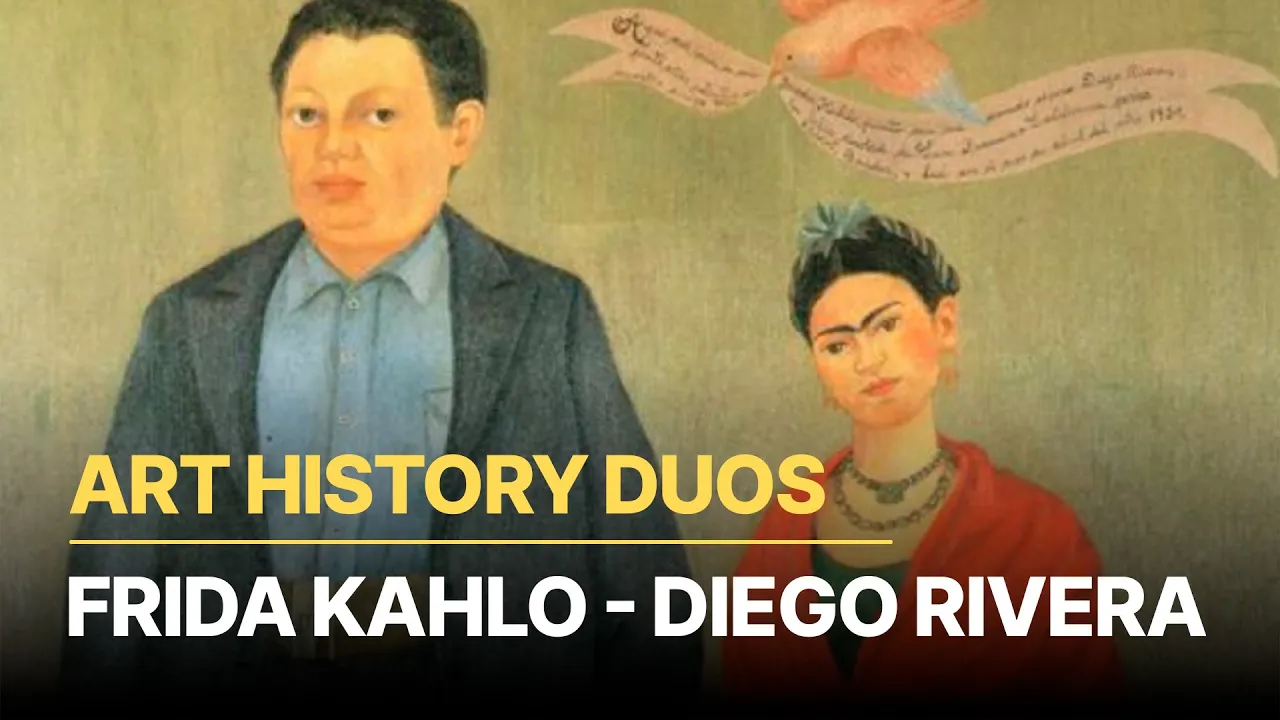
Frida Kahlo - Diego Rivera | Love, Art, and Revolution
1.4K
Following ten years of armed conflict (1910-1920), the Mexican Revolution brought winds of freedom to artists suppressed for too long. The revolution brought forward indigenous culture after centuries of contempt for pre-Hispanic art. Minister of Education José Vasconcelos brought together the three most influential artists—Rafael Coronel, José Clemente Orozco, and Diego Rivera—to teach the entire country Mexico's glorious history through mural painting. Since few Mexicans were literate, Vasconcelos wanted to use walls to spread revolutionary messages. Diego took over huge walls in the National Palace, depicting Aztec ingenuity and Spanish colonization. Meanwhile, Frida's true passion was popular arts, collecting over 450 religious articles that strongly influenced her work. This period established how public art serves national education and identity formation.
Click to watch →
Диего Ривера. Рассказывает Александр Таиров.
20.4K
The Mexican Revolution (1910-1920) was a period of intense social and political upheaval that resulted in 500,000 to 2 million deaths, representing approximately one-seventh of Mexico's population. The revolution overthrew the dictatorship of Porfirio Díaz, who had ruled Mexico for decades and oriented the country toward European values. This revolution created the political and social conditions that enabled the development of Mexican muralism and public art, with Minister of Education José Vasconcelos promoting art as a means of educating the public and building national identity.
Click to watch →

The Art That Made Mexico: Paradise, Power and Prayers - 1. Paradise (BBC)
1.1K
The Mexican Revolution (1910-1920) killed over a million people and radically reshaped national identity. Francisco Goitia witnessed battles firsthand, producing haunting landscapes depicting war's horror with unprecedented authenticity. After the war, his style transformed from darkness to hope, painting Teotihuacan's pyramid as pregnant with reborn prehispanic culture. Meanwhile, Saturnino Herrán synthesized landscape, prehispanic allegory, and fine art in works like 'La Llorona,' depicting indigenous flower sellers carrying marigolds for Día de los Muertos. These artists shifted focus from European subjects to ordinary lives of indigenous rural poor, marking a total shift in Mexican art toward genuine national expression rooted in local traditions and landscapes.
Click to watch →

La Academia de San Carlos
21.7K
The first decade of the 20th century marked artistic renewal rejecting prolongations, with Saturnino Herrán achieving modernism with national and costumbrista characteristics. The 1910 Revolution transformed society, and the student strike of 1911 overthrew Rivas Mercado, leaving a rebellious Academy. Open-air painting schools emerged in Santa Anita, Churubusco, Coyoacán, and Sochimilco, breaking from academic traditions. Architecture had favored comfortable backgrounds while poorer students formed independently, as exemplified by José Guadalupe Posada. As Mexico experienced revolutionary transformation, the defeat of academicism fostered national art culminating in muralism—the definitive expression of Mexican artistic identity that would define the nation's cultural legacy.
Click to watch →

Los Tres Grandes—Mexican Muralists’ Influence on the Artists of the WPA
604
The Mexican Revolution (1910-1920) created the political conditions for a national art movement. After Díaz's 31-year dictatorship ended in 1911, revolutionary leaders Villa and Zapata fought for land reform and indigenous rights. The 1917 constitution established secular education, land redistribution, and labor protections. President Obregón then promoted national unity through cultural celebration, commissioning muralists to depict Mexico's history and revolutionary struggles. This political context enabled Los Tres Grandes—Rivera, Siqueiros, and Orozco—to emerge as artists who used public art to shape national identity and advance socialist ideals, establishing a model for how art could serve political and social purposes.
Click to watch →
Deep Dive
The fundamental techniques and challenges of fresco painting, specifically painting on wet lime plaster.

La tecnica dell'Affresco
269.6K
Fresco painting is an ancient technique where artists paint on wet lime plaster (intonaco), requiring a light and fast application similar to watercolor; the process involves preparing a cartoon (full-size drawing), transferring it to the wall using spolvero (pouncing), applying a thin layer of pure lime (velo) over the intonaco, and painting while the plaster is still wet to allow the pigments to chemically bond with the lime as it dries.
Click to watch →

Fresco Paintings | ArtBlock
5.6K
Fresco painting is an ancient artistic technique where pigments mixed with water are applied to fresh, wet lime plaster, creating a permanent bond with the wall; the term 'fresco' comes from the Italian word for 'fresh,' and true fresco (buon fresco) requires working within a narrow time window of about 7-9 hours per section (called 'giata') before the plaster dries, while secco fresco uses dry plaster with binders for easier corrections but less durability; this technique has been used since at least 2000 BCE and remains relevant today, with artists from Giotto to modern creators continuing to use it for its unique combination of artistic expression and architectural integration.
Click to watch →

UPTGT (कला) Class (23) #art #arthistory #finearteducationpoint #harisirfineart #fineart #arthistory
2.7K
Wall painting techniques have specific classifications. Impasto technique uses oil paint, acrylic, or watercolor, but is most commonly associated with oil paint. Fresco technique is performed on fresh lime plaster. Tempera can be applied to both paper and walls. The correct sequence for tempera is: Gesso preparation, sizing, drawing, then painting. Fresco buono involves painting on wet plaster.
Click to watch →
Ep 5 Orchha Palace history, Fresco Paintings at Palace, Bundelkhand Palace, Madhya Pradesh
953.5K
The Bundeli school of fresco painting represents a distinctive artistic tradition that flourished in Orchha. The technique involves applying paint to wet lime plaster, keeping it moist with tamarind water (which prevents fungal growth), and using vegetable colors prepared with mineral-rich rainwater. This method creates paintings that remain vibrant for centuries. The palace contains approximately 500-year-old frescoes depicting Bundela rulers on elephants and horses, showcasing the valour of local kings. Notable works include the 'Dwaadash Nari Kunj' painting, which appears to show an elephant but actually depicts twelve women in one image. This demonstrates the exceptional skill of Bundela painters in creating complex visual illusions that maintain their brilliance even after centuries of exposure.
Click to watch →
![चित्रकला [Class-2] राजस्थान कला एवं संस्कृति | by Rohit Sir #rajasthanartandculture #rohitsirgk](https://i.ytimg.com/vi/D2eiFZ_63Tk/maxresdefault.jpg)
चित्रकला [Class-2] राजस्थान कला एवं संस्कृति | by Rohit Sir #rajasthanartandculture #rohitsirgk
120.6K
There are two main fresco painting techniques: 'Fresco Buono' (wet plaster) and 'Fresco Secco' (dry plaster). In Fresco Buono, paintings are created on freshly applied wet plaster, becoming part of the wall. In Fresco Secco, paintings are applied after the plaster has dried, allowing the painting to be separated from the wall.
Click to watch →
Deep Dive
An overview of early 20th-century Pan-Americanism and the intellectual exchange between Latin American artists and U.S. academic institutions.
200 años de fracasos en la integración latinoamericana - Déjà Vu
4.3K
At the end of the 19th century, Pan-Americanism emerged, including the United States in integration efforts. The first Pan-American Conference was held in 1890, and the Pan-American Union was founded in 1910. By this time, the United States had become a continental power that would defeat Spain in the Spanish-American War, taking Puerto Rico, Cuba, and the Philippines. This transformed the relationship from equals to one of primus inter pares. The Roosevelt Corollary to the Monroe Doctrine in 1904 established the right of the United States to intervene in Latin American affairs, leading to numerous interventions in Haiti, the Dominican Republic, Central America, and Cuba. This period of American dominance continued until FDR's Good Neighbor Policy in the 1930s. The concept of Latin America consolidated in the second half of the 19th century, particularly toward the end of the century. José Martí published 'Nuestra América' in 1891, generating intellectual antiamericanism. This coincided with the Romanticism movement that sought to create a distinct identity and reclaim what was considered proper. Latin American identity was constructed around two complementary components: Hispanism (emphasizing Spanish heritage) and Indigenism (emphasizing indigenous roots). Rubén Darío's poem to Roosevelt in 1903 expressed Latin American resistance to American influence, describing the United States as 'the future invader of the innocent America that has indigenous blood, still prays to Jesus Christ, and still speaks Spanish.'
Click to watch →
Encuentros IV - Contact Zones: Workshops and Art Schools
2.1K
This presentation examines how artistic workshops like Mexico's Taller de Gráfica Popular and Venezuela's Taller Libre de Arte facilitated cross-cultural exchange between Latin American and U.S. artists during the mid-20th century, demonstrating how collaborative spaces enabled the transmission of techniques, ideas, and political perspectives across borders while navigating complex relationships between cultural diplomacy, artistic ideology, and economic survival.
Click to watch →

La Verdad Sobre la DOCTRINA MONROE y Por Qué TRUMP raptó a MADURO
55.6K
Latin Americanism emerged in the 19th century as a cultural and political movement. In 1836, Michel Chevalier introduced the concept of a culturally Latin America opposed to Anglo-Saxon America. In 1856, Francisco Bilbao coined the term 'Latin America' and proposed a federal confederation of republics. Colombian propagandist José María Torres Caicedo further developed this concept. Unlike pan-Americanism, Latin Americanism encompasses only Spanish and Portuguese-speaking nations. Meanwhile, the British Empire maintained influence through trade, debt, and Masonic lodges. In 1823, British Prime Minister George Canning coordinated with the US to prevent any European power from recovering Spanish American territories, establishing Anglo-American cooperation that shaped Western Hemisphere politics.
Click to watch →

O Brasil nos arquivos de espionagem do bloco soviético -- videoaula
66.7K
The intelligence cooperation document mentioned activities to discover Pan-Americanism or the Monroe Doctrine in Latin American countries that had this organization in political form, with the goal of reinforcing a tendency to replace Pan-Americanism with Latin Americanism. The Moraz Institute in Buenos Aires was identified as a location where Czech intelligence had the possibility of agent networks to facilitate these operations.
Click to watch →

Panamericanismo e Latino-Americanismo em Arturo Ardao
1.2K
Panamericanism, originating from the United States in 1889, represents a continental unity project under US hegemony driven by economic expansion and Manifest Destiny ideology, while Latin-Americanism, emerging from France in 1836 and gaining prominence in Latin America as a reaction to US influence, represents a collective project of Latin American nations based on shared cultural, linguistic, and historical ties to Spanish and Portuguese heritage.
Click to watch →
Prerequisite Knowledge
- Concept 01An understanding of the Mexican Muralism movement and its core figures, known as 'Los Tres Grandes' (Orozco, Rivera, and Siqueiros).
- Concept 02Historical context of the Mexican Revolution (1910–1920) and how it influenced national identity and public art.
- Concept 03The fundamental techniques and challenges of fresco painting, specifically painting on wet lime plaster.
- Concept 04An overview of early 20th-century Pan-Americanism and the intellectual exchange between Latin American artists and U.S. academic institutions.
Subsequent Learning
- Step 01A detailed iconographic analysis of 'The Epic of American Civilization' mural cycle at Dartmouth.
- Step 02A comparative study of Orozco's darker, more existential style against Diego Rivera's more optimistic, Marxist-industrial narratives.
- Step 03The debate surrounding censorship, academic freedom, and the public reception of controversial leftist art in 1930s America.
- Step 04Modern methods of art conservation and the preservation challenges of keeping indoor frescoes stable over decades.
Mural's Origin
Student Impact
Mural's Origin
0:07Playing Section
- 1
Orozco was invited to Dartmouth to teach fresco, an ancient technique revived by Mexican muralists.
- 2
The mural reflects a pan-American vision, using the Quetzalcoatl myth to address conquest history.
- 3
This room enabled his artistic growth, allowing complex comparisons between ancient and modern worlds.
Ideological Backlash and the Paradox of Institutional Co-optation
While mainstream art history celebrates Jose Clemente Orozco’s 'The Epic of American Civilization' for its revolutionary critique of colonialism, the murals have faced significant historical opposition and continue to provoke critical debate. Upon their completion in 1934, conservative alumni and traditionalists condemned the work as 'grotesque,' 'un-American,' and leftist propaganda that rejected Western educational values in favor of a dark, Mesoamerican-centric narrative. In contemporary art criticism, a major counterpoint focuses on the paradox of institutional co-optation. Critics argue that Dartmouth College—an elite, historically colonial Ivy League institution—uses the murals to project a progressive, inclusive brand, effectively neutralizing their radical, anti-institutional message. From this perspective, housing Orozco's scathing condemnation of academic bureaucracy ('Gods of the Modern World') within a university library transforms urgent political dissent into a domesticated aesthetic commodity, undermining the murals' revolutionary intent.
Deep Dive
A detailed iconographic analysis of 'The Epic of American Civilization' mural cycle at Dartmouth.
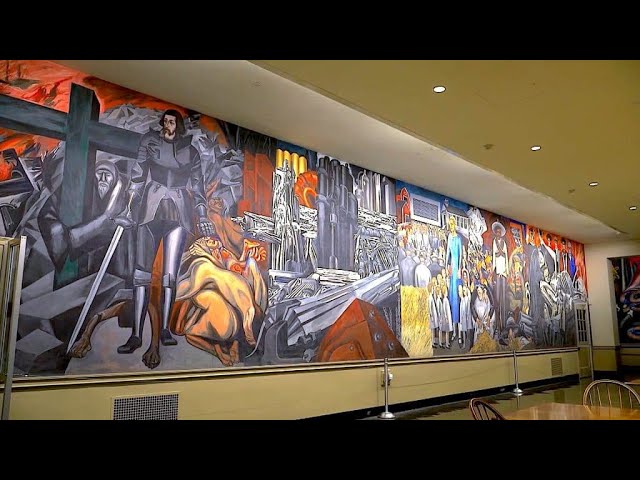
Learn About Orozco’s Epic of American Civilization at Dartmouth’s Baker-Berry Library
978
Mexican artist Jose Clemente Orozco, one of 'Los Tres Grandes' of Mexican muralism alongside Diego Rivera and David Alfaro Siqueiros, created the monumental 'Epic of American Civilization' (1932-1934) at Dartmouth College's Baker-Berry Library, which depicts the history of North America from Aztec migration to modern industrialization across 24 panels covering 3,200 square feet; unlike typical American narratives that glorify Manifest Destiny, Orozco devoted approximately 50% of the mural to indigenous cultures and presented a critical view of Anglo-American expansion, concluding with a dark vision where the Messiah returns as a destructive entity rather than a liberator, reflecting his skepticism about redeeming the violence of modernity.
Click to watch →

#muralismo Épica de la civilización americana", Mural Jose Clemente Orozco en Dartmouth College
797
José Clemente Orozco's mural 'Epic of American Civilization' at Dartmouth College presents a powerful expressionist critique of human history as a linear progression of destruction and dehumanization, beginning with Mesoamerican human sacrifice and continuing through modern nationalism and industrial warfare; the work uses dramatic caricature and structural elements to condemn bourgeois society, colonialism, and the hypocrisy of dominant cultures while showing solidarity with marginalized peoples, representing a Mexican muralist tradition that served as a language for social transformation following the Revolution.
Click to watch →
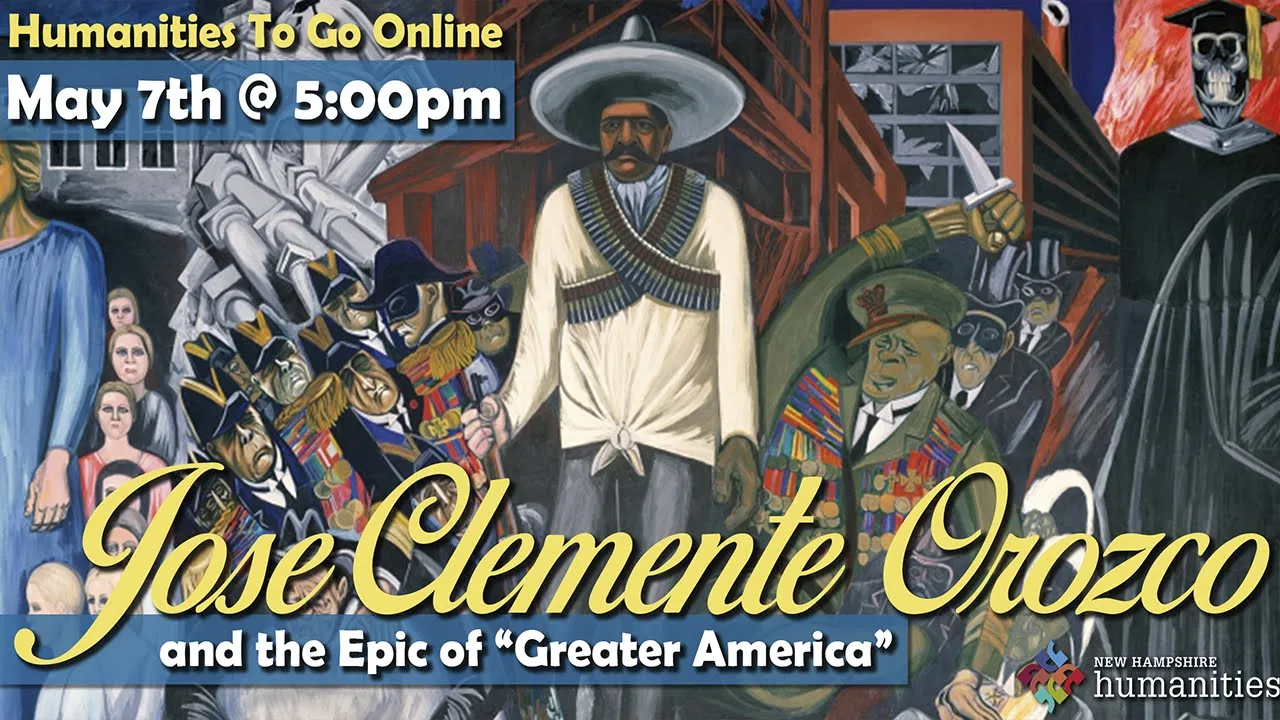
Jose Clemente Orozco and the Epic of “Greater America” - HTG: Online
1.5K
José Clemente Orozco's 24-panel fresco cycle 'The Epic of American Civilization' (1932-1934) at Dartmouth College presents a unique structure where ancient and modern halves are separated by a reserve desk, symbolizing the rupture caused by the Spanish conquest. The west wall chronicles Quetzalcoatl's arrival and departure, while the east wall begins with Cortez's arrival, creating a disjunctive relationship between mythic and historical time. Orozco rejects narrative storytelling, employing a montage aesthetic that places ancient and modern America in disjunctive rather than continuous relation. Rather than experiencing the mural by walking around the corridor from past to present, viewers should stand within the space of crisis and contemplate the juxtaposition of ancient and modern imagery. The mural stages an epic journey that the viewer undertakes rather than depicting a protagonist, making the viewer the hero who embarks upon a perilous journey and emerges transformed. James Truslow Adams's 1931 book 'The American Epic' coined the phrase 'American Dream' and popularized Frederick Jackson Turner's frontier thesis, asserting that settlers were motivated by liberty rather than conquest. Adams anachronistically imposed a political boundary between the United States and Mexico onto the 16th-century imperial contest between Spain and England, minimizing Spanish presence in the territorial United States to assert a strict cultural distinction between Anglo-American and Hispanic-American civilizations. Maria de Guzman argues the Black Legend functioned within early 20th-century America to constitute Anglo-American empire as an anti-empire innocent of Spanish barbarities. The ideological construction of 'Hispanic' systematically excluded non-white, non-Anglo-Saxons from the category of American, enabling the construction of Latin American immigration as dangerous intrusion threatening Anglo-Protestant culture. Fifty percent of the United States was once under Spanish rule before the Mexican-American War, yet this history remains obscured. Orozco uses cubist fragmentation to represent Anglo-America's homogenized citizenry, equating it with industrial design efficiency. The rigid geometry and relentless whiteness present a vision of the racialized nation-state where all difference has been expelled to secure WASP boundaries, yet this order has been achieved at the expense of freedom. Orozco depicts Mexico as a victim of internal and external corruption but focuses on the revolutionary peasant as emblem of popular struggle—the only dark-skinned protagonist in the modern half—invoking Zapatismo's agrarian platform focused on land and liberty.
Click to watch →

Man of Fire: José Clemente Orozco’s Revolutionary Murals
6.6K
Almost everyone asks about Prometheus's genitalia—Orozco painted the figure without them but was pressured to add them, doing so in non-binding secco which over time flaked off. While Orozco had introduced blue and earth tones into the mural central panel, he greatly expanded his palette in these side panels with striking passages of black and white, pink, violet, orange, yellow, green, yellow-green, and blue-green. Looking toward Prometheus at the top are Zeus, his consort Hera, and below Io who is seen metamorphizing, posing into a white heron—she's been punished by Hera for being one of Zeus's mortal lovers. In Greek mythology, the centaur Chiron was the founder of medicine and after Prometheus's release offered to die in his place. Fellow centaurs in agony express their despair; below them a female centaur trapped in the coils of a huge serpent rears violently nearby, throws up imploring arms. As a memorial to her fiancé Felipe Carrillo Puerto, Alma Reid also paid for Orozco's five new school murals. Orozco had joined Reid's Delphic Circle and she convinced him to compose these murals following one of its major precepts: dynamic symmetry using golden ratios, which entailed a framework of rectangles and triangles to promote continuity, flow, rhythm, and balance within a design. In his autobiography, Orozco wrote that he wanted to discover how convincing and useful the principles were—ultimately he found them over rigorous. In this panel just outside the room holding the four main panels, the figure thinks, plans, and creates the advancements that will lead to a just social order. For these new school murals, Orozco returned to a subdued palette dominated by earthly reds flecked with shades of gray, black, and brown. Governor of the Yucatán Carrillo Puerto was assassinated by Huerta in 1913, representing Mexican socialism—he's seen in Struggle of the Occident. Next to Chichen Itzá and above Mexican peasants on the right we see Lenin and Stalin representing the international family of communism. This panel was painted two years before Rivera painted Lenin in his doomed Rockefeller Center mural. In Struggle of the Orient, we see African and Asian slaves alongside manacled white-collar workers breaking out of their bondage, confronting gas-masked soldiers. A serene Gandhi sits off to the right. The Homecoming of the Worker presents an idolized vision of domestic comforts—a table piled high with food and books and the affection that rewards productive labor. There was vocal opposition to some of the 11 people sitting at the table of universal brotherhood, mainly to the central figures at its head: a Negro and members of the despised racist, a Mexican peasant and a Jew, joined by two Asians, an African, a Sikh, a Tartar, an American art critic, a French philosopher, and a Dutch poet. To my mind, these are Orozco's least successful murals overwhelmed by rigid rules—their composition lacks the continuity, flow, rhythm, and balance of his other murals which dynamic symmetry sought to achieve. Dartmouth College was founded by missionary Eleazer Wheelock aiming to educate local Native Americans—he paraded around with a drum, a bottle of hooch, and a Bible. By the time Orozco arrived, Dartmouth was a bastion of white male Protestant privilege. The school thought murals could make its studio art program less theoretical and more practical. Nelson Rockefeller was a student and convinced his mother to underwrite the costs. Dartmouth first approached Diego Rivera but he was unavailable, busy planning the Rockefeller Center mural. Ignorant of Orozco's work and reputation, the art faculty invited him to lead a fresco painting workshop over a weekend—which in reality was an audition. Orozco envisioned great possibilities for the library and devised a mural cycle of 23 panels divided into two chronological sections: the first spans the arrival of indigenous people in the Americas and the height of the Aztec civilization; the second covers the arrival of Cortés to the present day. In both aspirations and ideals are frustrated by humanity's innate availability. Ancient Migration presents man's potential for both strength and weakness, good and evil—what begins with hope grows progressively more pessimistic. Quetzalcoatl, the feathered serpent god of the Aztec, commands the Indian world to set aside greed, superstition, and militarism for culture and learning. He adopted human form and brought the arts and sciences to man—skills and knowledges that the deities possessed but denied to humans. These are represented by the construction of the pyramids and a farmer tending his fields and a sculpture in the act of creation. We see the strident colors that Orozco will employ throughout the Dartmouth murals. Quetzalcoatl is betrayed by his enemies, sailing east on a raft of serpents—he points to a dismal future. Cortés took advantage of the belief that Quetzalcoatl would return after 52 years, encouraging the Aztecs to view Cortés as their hero god, leading to their enslavement and 300 years of Spanish occupation. The prophecy was the first panel Orozco painted—he then made his first and only trip to Europe, spending three months visiting museums and soaking up their art. The arrival of Cortés in Veracruz introduces us to the civilization of the modern world. Above are the ships Orozco burned so his soldiers couldn't flee, and a Franciscan priest hugs a huge cross. Within a few decades of their arrival, the Franciscans would own half of Mexico's land and wealth. Below heaps of slain and subjugated natives are fed into the maw of fantastical machines. For the first time we see Orozco's preoccupation with the modern museum, the modern machine age, and the title of this vignette and the evils brought about by man. Anglo America is a world of conformity—the children, school teacher, and participants at a town hall meeting all have the same inexpensive inexpressive features. Orozco respected the democratic process but what he shows us is dull and chilling. By contrast, the Mexico he left behind is vital and dramatic if chaotic and corrupt. Politicians and generals hoard money while the Mexican peasant stands in for Zapata and Latin American idealism—but note the American general raising a knife about to stab him in the back. Porfirio Díaz gave the United States and its companies rights to oil, mining, and the railroads, and the U.S. government actively helped Huerta overthrow Madero. Education is pictured as a nightmare of futile learning and sterile knowledge—a row of skeletons and academic gowns attend the birth of false knowledge of grotesque skeletal fetus wearing a mortarboard, books follow in a spurt of afterbirth, and jars containing more skeletal fetuses float through the air.
Click to watch →
MANTON FOUNDATION ANNUAL OROZCO LECTURE | White Zombies and Black Labor
723
José Clemente Orozco's 'Epic of American Civilization' at Dartmouth College contains a conspicuous silence regarding slavery and black labor in American history, despite depicting the conquest of the Americas. Through symptomatic reading, the mural's modern sections—particularly the 'Modern Industrial Man' panel—can be decrypted as haunted by what Anne Anlin Cheng calls 'the shadow of the lost object,' representing the buried but formative ghosts of enslaved peoples in American national formation. Orozco's zombified Anglo-American citizens and the revolutionary guerrilla figure in Hispano-America serve as spectral manifestations of anti-blackness and the fear of Haiti that structured U.S. racial formation, revealing how racial violence and exclusion are foundational to modern American civilization.
Click to watch →
Deep Dive
A comparative study of Orozco's darker, more existential style against Diego Rivera's more optimistic, Marxist-industrial narratives.

ENGL 4394/HIST 4366 LECTURE 7
726
The three great Mexican muralists had distinct styles: Rivera painted sensualities, bodies of corn, flesh, and voluptuous fruits; Orozco painted desperation, skin and bone bodies, mutilated and bleeding, with severity and contortion; Siqueiros was withdrawn and turbulent inside, practicing painting as a ceremony of solitude. Rivera speaks of hope, Orozco seems to say that whoever steals the sacred fire from the gods will deny it to his fellow men.
Click to watch →

José Clemente Orozco: muralista rebelde que retrató la herida mexicana
944
The destruction of Rivera's Rockefeller Center mural for including Lenin confirmed something Orozco had known since Sanil de Fonso: any wall, however grand, hangs by a thread when power feels threatened. The same monster that destroyed Orozco's work in Mexico also destroyed Rivera's in America. The rivalry took on darker, more ambiguous tones—they were enemies, yes, but also victims of the same monster. By the 1940s, Orozco had become respected, almost institutionalized—receiving awards, exhibitions, and young artists seeking him out. Yet he distrusted round praise, knowing the same society that celebrated him today could tomorrow reduce him to predictable phrases in educational brochures. To resist petrification, he worked in small formats—drawings, gouaches, lithographs—where his hand seemed freer, more ironic, more immediate. He continued returning to themes: faceless crowds, trapped men, the line between sacrifice and violence. While the country spoke of golden age, cinema, and brighter futures after war, Orozco kept seeing unchanged realities: inequality, fanaticism, how easily any discourse could become domination tool. His true legacy emerged after his death in 1949—when students entering Dartmouth library, visitors crossing Hospicio Cabañas threshold, and Mexicans seeing Catarsis for the first time felt their worldview shift. In those moments, Orozco won the game that mattered most: not being forgotten. Over time, the rivalry between Rivera and Orozco transformed from competition into recognition of complementary visions—Rivera as epic narrator of hope, Orozco as implacable anatomist of human cost of that hope.
Click to watch →
Man of Fire: José Clemente Orozco’s Revolutionary Murals
6.6K
José Clemente Orozco was one of the great painters and muralists of the 20th century whose central subject was Mexican history. His murals reveal the complexity and contradictions of his nation. His love for Mexico was passionate, and he wanted to create art that would allow Mexicans to take pride in themselves and their heritage. However, his vision was clear-eyed, hard, and relentless. His pessimism was as great as his idealism, and his work conveyed anguish over unending war, corruption, and injustice. Painting assails the mind and persuades the heart. The human form was Orozco's primary expressive agent, with extraordinary renderings of bodies, arms, and hands that are sometimes difficult to distinguish. He generally avoided painting individuals, creating anonymous types instead. Despite his disillusionment with the world, Orozco never lost belief in the individual's capacity for freedom. He believed beauty could be redemptive. Along with Diego Rivera and David Alfaro Siqueiros, Orozco was one of the three Mexican painters known as Los Tres Grandes (the Three Great Ones). Their combined output spanned 50 years, each developing a unique aesthetic style. Their thematic concerns reflected their politics—Rivera's politics fluctuated depending on what best suited him, while Siqueiros was a committed Stalinist who participated in the first assassination attempt on Trotsky's life in April 1940. In contrast, Orozco had little faith that human beings, especially groups, might bring about social change. He never joined a political party, and his moral vision registered contempt for party lies and broken promises. He didn't much like the military or church either. Orozco formally studied art at a time when curricula focused on European academic painting. Along with growing opposition of Mexico's middle class to the repressive government of Porfirio Díaz (in power since 1876), students too began to rebel. 1910 marked the first centenary of Father Hidalgo's Grito de Dolores (Mexicanos Viva México!), the opening salvo in Mexico's bid for independence from 300 years of Spanish occupation. Orozco and other young artists opposed a planned exhibition of contemporary Spanish painters, setting up an alternative with Mexican artists. While willing to learn from 'ancients and foreigners,' they believed they could do as much or more. During the revolutionary years from 1910 to 1920, Orozco worked as a cartoonist influenced by the corrosive engravings of José Guadalupe Posada, whose work satirized the entire 34-year Porfiriato until his death in 1913. Posada is one of the few mentors Orozco acknowledged. Minister of Education José Vasconcellos understood that murals could affect national cultural renewal—that citizens could learn Mexico's history and culture in the same way that people during the Italian Renaissance learned Bible stories from church frescoes. Following the revolution in 1923, he hired Orozco, Rivera, and Siqueiros, directing that their murals mirror his own philosophical ideologies and aesthetic vision, which rejected classical European styles. The murals would be painted as frescoes. The first commission was for the National Preparatory School (El Colegio de San Ildefonso). Orozco's first mural, Maternity, located on the school's ground floor, shows Italian Renaissance influences—a mother and child surrounded by Botticelli-like angels—but rebellion was in the air. Progressive students protested the mural to the extent that a ministry official hastened to the school and waving a pistol shouted 'Death to the students who resist beauty.' The church ladies holding a charity bazaar were not content to have Orozco stop work during their event and protested what they thought was a nude virgin. Orozco responded, 'I had no intention of painting a virgin—I was painting a mother.' When Orozco was working on murals at San Ildefonso, the church ladies ordered the dismantling of his scaffold and hung material over these and other murals. Orozco was working on which he himself ultimately destroyed. Two murals to the left of Maternity were destroyed—some say by politically conservative students. One panel showed Christ rejecting his sacrificial destiny by chopping down his cross; when this panel was destroyed, some say by politically conservative students, Orozco incorporated Jesus's head into the mural that replaced it. A shift in Orozco's style became evident in 1926, with simpler, starker compositions. Like Rivera, Orozco chafed under Vasconcellos's aesthetic restrictions. Siqueiros led the way from the apolitical and metaphysical to an art more overtly didactic, political, and populist, evident in his Burial of a Sacrificial Worker. Outraged, Vasconcellos fired all three, then rehired them, but ultimately just resigned. In his autobiography, Orozco wrote that what distinguishes mural painters from any other similar group is their critical gift. On the second floor of San Ildefonso, several murals joined 'The Rich Banquet While the Workers Fight,' all lashing out at the corruption of contemporary Mexican life. In 'The Rich,' overdressed arrogant women strut along following a pied piper-like dandy, with a dowager in red stepping on a woman and her baby, her mouth curled in distaste at garbage stuck to her foot. Liberty floats precariously over a doorway, the ropes vulnerable to easy fraying, holding broken chains—she wears a red hat (the liberty cap of the French Revolution), which for Orozco represented false ideals that ultimately betrayed their goals. In 'The Last Judgment,' it's the rich sinners who are saved while the pious indigenous poor are damned, prodded by devils to hell. In 'The Drunken Dance Macabre,' law and justice are codependent—not independent, with a knife in law's hand and blood on justice's shirt. At age 21, Orozco was making fireworks using gunpowder that blew up and injured his left hand. Gangrene set in and both hand and wrist had to be amputated to save his life. Exempt from fighting in the revolution, he was horrified by what he saw. He said, 'I don't trust or glorify revolution since I've witnessed too much butchery.' In contrast, Rivera liked to pretend he had fought alongside Zapata but the truth is he spent the entire ten years of the revolution in Paris. Siqueiros however did fight, joining Carranza's forces in 1914 at age 18. In his autobiography, Orozco wrote most ironically, 'I played no part in the revolution—I came to no harm and I ran no danger at all. To me the revolution was the gayest and most diverting of carnivals.' In reality, Orozco was more pessimistic and dubious about the gains of the revolution. In Rivera and Siqueiros's return to San Ildefonso's ground floor, we find the Revolutionary Trinity of 1926. Its dark palette in images of violence and bloodshed convey the senseless inhumanity of war. A peasant soldier and urban worker are joined together not in triumph but in despair—the peasant rings his hands and anguish, all brute energy, a muscle; the soldier is blinded by a red flag transformed into the liberty cap (which for Orozco represented broken promises).
Click to watch →

Mexican Muralists: Rivera, Orozco, Siqueiros & Revolutionary Art
105
Mexican muralism emerged after the Mexican Revolution (1910-1920) as a uniquely Mexican art form that celebrated working-class people and indigenous heritage, with three major artists taking distinctly different approaches: Diego Rivera was an idealist communist who optimistically depicted the Revolutionary Trinity (soldier, farmer, factory worker) united and hopeful; José Clemente Orozco, who witnessed revolutionary violence firsthand, was a realist anarchist-syndicalist who depicted the same trinity suffering, divided, and blinded by their own power; and David Alfaro Siqueiros was a modernist experimenter who used industrial techniques like spray paint and projectors, collaborated with other artists, and directly influenced American abstract expressionism, including Jackson Pollock.
Click to watch →

Mexican Muralism: Aesthetic & Political Legacies of Los Tres Grandes
6.5K
José Clemente Orozco was characterized by expressive, expressionistic figuration with angular forms, agitated color application for fresco, and central solitary heroic figures sacrificing themselves for humanity. Politically, he was a divested anarchist who became disillusioned with anarchosyndicalism's failures in Mexico and believed only in the social agency of painting itself. His tragic dimension separated him from Rivera and Siqueiros.
Click to watch →
Deep Dive
The debate surrounding censorship, academic freedom, and the public reception of controversial leftist art in 1930s America.

Jed Perl and Geoffrey O'Brien on Art Writing in America 1945 - 1970 | New York Studio School
372
Many early critics and artists were disaffected leftists who had been Marxists or Soviet sympathizers in the 1930s. After witnessing the disappointments of leftist movements (including Stalinism and fascism), they found that the arts—particularly painting—became a region where freedom could still be exercised. André Breton's statement that any artistic expression was an expression of revolutionary spirit became meaningful for these figures. They retreated into celebrating art's heroism as a form of personal and creative freedom after losing faith in political alternatives.
Click to watch →

A relação nefasta da esquerda com a ciência
9.2K
The phrase 'in the name of science' has become a cliché used to support any defense, making questioning supposedly scientific claims equivalent to being a 'denier.' The new left dominates university environments, particularly in human sciences but also in hard sciences like mathematics and physics. This dominance manifests through boicotes, cancellations, patrols, and persecutions of those who dissent. The dominant leftist ideology includes theses that capitalism is inherently evil, socialism has the best ideals despite failures, and all differences between men and women are results of social conventions. Universities function as closed systems of ideas rather than places of intellectual exchange. The left's dominance perpetuates through the education system, starting from primary and secondary schools. When individuals express ideas that deviate from the dominant doctrine, they begin experiencing small discomforts that can grow over time into significant problems. Academic cancellation is a practice where people wait for any slip-up to cancel someone, not necessarily for what they said but for who they are. Within academic environments, there are no limits to retaliation against those who dissent. The left has maintained hegemony in public discourse for decades, and when they noticed a voice of opposition emerging, they became uncomfortable because it threatened their dominance. The left uses education as a tool of control, and society should pay attention to what happens inside schools, including curricula, adopted books, what is taught in classrooms, how classes are conducted, how research is done, and how public competitions are conducted. These are instruments of control that society does not seem interested in examining. A recent paper in the United States shows that there are 8.5 left-leaning professors for every non-left-leaning professor. The ratio between donors to the Republican Party and the Democratic Party is even worse, with almost 100 times more professors who donate to the Democratic Party than to the Republican Party. This creates an environment where there is no way to have pluralistic thought, as the dominance is so overwhelming. The speaker argues that changing the academic environment cannot be done through laws that dictate what should or should not be taught, because someone will always choose to put their worldview into what they teach. The only way to change this is to change the ideas in society so that people demand different ideas and reject the current philosophy.
Click to watch →

Robert Cherny on "The Coit Tower Murals::
108
In June 1934, architect Arthur Brown Jr discovered a hammer and sickle symbol over a west window at Coit Tower, sparking immediate controversy. Edward Bruce of the PWA in Washington called it a 'tempest in a teapot over the Communist symbols.' An Art Commission committee recommended removing everything above windows because symbolic paintings didn't fit the representational style. The only way to remove fresco paintings is to break out the plaster entirely, as pigment becomes part of the wall. In 1941, Park Commissioner Lurman called some murals 'objectionable, awful, terrible, and communistic,' wanting parts destroyed. The Park Commission unanimously passed a resolution to the Arts Commission, which ignored it. Pearl Harbor bombing shifted public attention away from the controversy. During the McCarthy era, letters to editors demanded action against 'Communist murals at Tower,' but public commissions remained silent. Ralph Stackpole warned in 1941 that prejudices grow until they reach the point of destroying art, noting that next would come books, referencing memories of Nazis burning books in the 1930s.
Click to watch →

TPUSA MORPHS INTO INTEL OPERATION ERASING CHARLIE'S LEGACY
3.8K
The speaker explicitly categorizes calls for censorship as 'leftist behavior.' The speaker argues that Ben Shapiro's criticism of Tucker Carlson for allowing Nick Fuentes to speak represents a form of censorship that the left typically employs. The speaker notes that Shapiro's criticism implies Tucker was endorsing anti-Semitic views, which the speaker rejects as an unfair interpretation of simply presenting controversial views for public discussion.
Click to watch →
Public Lecture Video (07.16.2019) The Politics of Painting
423
There was strict censorship about what could be displayed in public spheres, especially not at official exhibitions. This culture of fear created self-censorship among artists. The breaking point came around 1935 with mass arrests of 400 proletarians and communists, including artists and writers. After this point, artists didn't even try to resist government policy. Many arrested artists were forced to convert their ideology to military fascist ideology and publicly declare support for the war to avoid prison, with only a hundred resisters remaining until the very end. The 1939 Berlin exhibition of pre-modern Japanese art represented Japan's attempt to build cultural spheres with Germany and Italy, with Japanese artists having access to visual materials from these countries and discussing how the world power was moving from democratic countries to totalitarian regimes where the state controlled artistic production about nation and race.
Click to watch →
Deep Dive
Modern methods of art conservation and the preservation challenges of keeping indoor frescoes stable over decades.

Mount Athos • The Holy Mountain
60K
Only one day brightens the sober winter season—the feast day of St. Andreas, patron saint of the Skiti. The celebration is organized for religious authorities of Mount Athos and other monks honoring the saint. The church built in 1900 displays all its splendor. Prayers and chants begin at noon and last for 12 full hours, from dusk until dawn. A meal is prepared using a fish base, a luxury compared to usual fare. The monks eat in silence while sacred texts are read, with the meal lasting barely 15 minutes. Father Paul responds to requests for help, summoned by the Stavro Nikita Monastery built upon the sea nearly 1,000 years ago. He evaluates an exceptional fresco by the Creian School, badly damaged by time. Before work begins, an initial sample is taken to indicate appropriate treatment. Analysis at the art school of Aignon in France reveals fine blue layers on the surface with thicker layers underneath. The faculty of science participates, with organic chemistry improving intervention efficiency. The art school of Aignon is unique, training students to work outside Europe. Each year, only six obtain degrees permitting field work, traveling to Egypt, Thailand, Eastern Europe, and other destinations during their five-year study.
Click to watch →
AQUI EL DINERO SE ESCONDE EN LAS PAREDES
118.5K
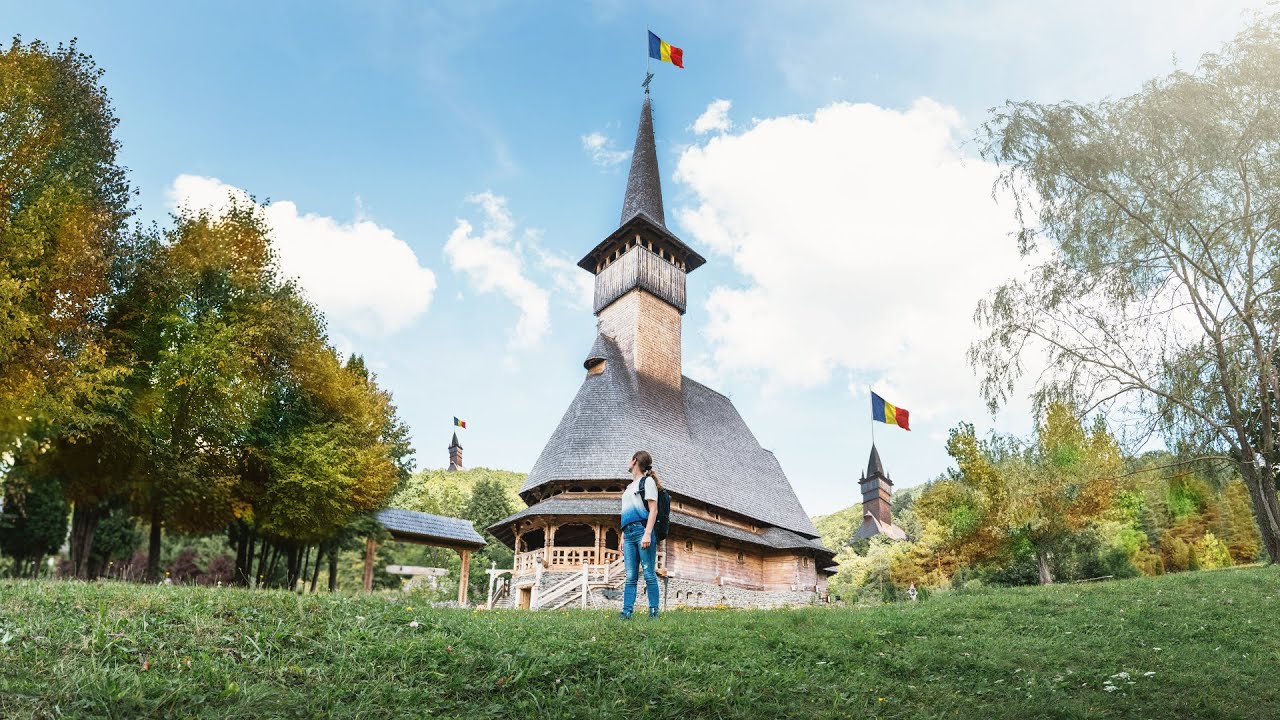
The frescoes in wooden churches reveal important information about traditional religious art techniques and preservation challenges. Unlike modern churches, these frescoes were painted on canvas and then attached to walls rather than painted directly on the walls. Over time, candle smoke from the lack of electric lighting darkened the frescoes, requiring three years of restoration to restore their original appearance. This demonstrates how traditional churches faced unique preservation challenges and how restoration efforts help maintain cultural and religious heritage for future generations.
Click to watch →
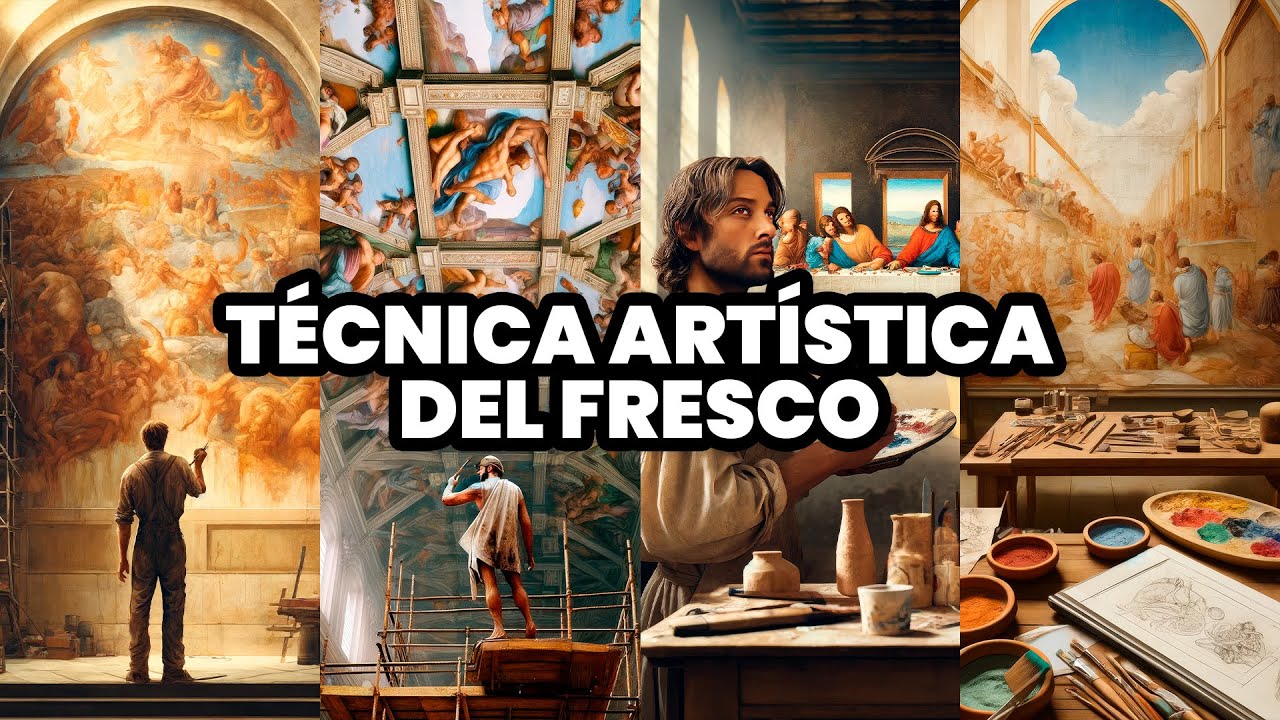
La Historia del Fresco
1.2K
Renaissance fresco conservation faces challenges from humidity, temperature changes, pollution, and natural deterioration. Modern techniques combine art and science, using microscopy and spectroscopy to analyze materials and understand original techniques. Surface cleaning requires extreme caution to avoid damaging underlying paintings, while environmental control (humidity, light, temperature) is crucial for preservation. Fresco continues influencing contemporary art, offering a return to tactile, permanent creation in an era of digital media. Artists balance traditional techniques with modern approaches, using fresco's demands for careful planning as valuable exercises in discipline and creativity. The technique's history and masterpieces continue inspiring artists across disciplines.
Click to watch →

Фиксики. Дай пять! Новая серия "ОРИГАМИ"
375.7K
Paintings require careful preservation: they should not be touched, exposed to bright light (which causes fading), or placed in complete darkness (which allows microorganisms to develop). Museums avoid flash photography. Historical artists painted on cave walls, then on stone temple walls using wet plaster that dried with the paint, creating durable frescoes. Painting on canvas became more convenient. Modern artists can paint on clothing, dishes, vehicles, and even human bodies. Proper storage requires moderate temperature, ventilation, and protection from drafts.
Click to watch →

Il Restauro dei Dipinti Murali in Santa Maria delle Grazie - cp
166
Modern fresco conservation employs systematic scientific methodologies including: (1) visual assessment of structural conditions, (2) microscopic examination of pigment samples, (3) cross-section analysis using resin embedding, (4) identification of deterioration mechanisms like sulfatation, and (5) evaluation of historical interventions. These techniques enable conservators to distinguish between original artwork and later additions, assess the stability of existing materials, and develop appropriate treatment strategies that respect both the artwork's integrity and its historical context.
Click to watch →
Mural's Origin
Student Impact
Mural's Origin
0:07- 1
Orozco was invited to Dartmouth to teach fresco, an ancient technique revived by Mexican muralists.
- 2
The mural reflects a pan-American vision, using the Quetzalcoatl myth to address conquest history.
- 3
This room enabled his artistic growth, allowing complex comparisons between ancient and modern worlds.
Ideological Backlash and the Paradox of Institutional Co-optation
While mainstream art history celebrates Jose Clemente Orozco’s 'The Epic of American Civilization' for its revolutionary critique of colonialism, the murals have faced significant historical opposition and continue to provoke critical debate. Upon their completion in 1934, conservative alumni and traditionalists condemned the work as 'grotesque,' 'un-American,' and leftist propaganda that rejected Western educational values in favor of a dark, Mesoamerican-centric narrative. In contemporary art criticism, a major counterpoint focuses on the paradox of institutional co-optation. Critics argue that Dartmouth College—an elite, historically colonial Ivy League institution—uses the murals to project a progressive, inclusive brand, effectively neutralizing their radical, anti-institutional message. From this perspective, housing Orozco's scathing condemnation of academic bureaucracy ('Gods of the Modern World') within a university library transforms urgent political dissent into a domesticated aesthetic commodity, undermining the murals' revolutionary intent.
An understanding of the Mexican Muralism movement and its core figures, known as 'Los Tres Grandes' (Orozco, Rivera, and Siqueiros).
Historical context of the Mexican Revolution (1910–1920) and how it influenced national identity and public art.
The fundamental techniques and challenges of fresco painting, specifically painting on wet lime plaster.
An overview of early 20th-century Pan-Americanism and the intellectual exchange between Latin American artists and U.S. academic institutions.
A detailed iconographic analysis of 'The Epic of American Civilization' mural cycle at Dartmouth.
A comparative study of Orozco's darker, more existential style against Diego Rivera's more optimistic, Marxist-industrial narratives.
The debate surrounding censorship, academic freedom, and the public reception of controversial leftist art in 1930s America.
Modern methods of art conservation and the preservation challenges of keeping indoor frescoes stable over decades.
7.3K views45likes3:32@dartmouthOriginal Release: 2013-01-23
>> Speaker 1: So Orozco came to Dartmouth at the behest of two art professors here who had been looking around for an artist to come and teach the art students the technique of fresco, which is an ancient technique, but it had been recently revived by the Mexican muralists as part of the state-sponsored public art program after the revolution.
So Orozco painted originally at Pomona College -- he had a college commission there -- and then he was brought to Dartmouth.
In terms of his broader career, these murals are essential.
He had, he was trained as an academic painter.
While he was here painting these murals -- in part, I think, because the space was so conducive to a cycle and wasn't as chopped up and complicated spacially as some of the places he'd been painting earlier -- he really developed as an artist.
Dartmouth represented for him a larger vision of the Americas -- America before national divisions, the dividing up of the Americas -- and so he wanted an American myth.
And he looked to pre-Columbian mythology to find one and chose the myth of Quetzalcoatl because of its origins in the Americas, and because it is a story that is intimately connected with the history of conquest.
So for his U.S.-based work, this is the largest mural and the most complex.
And so here he had this enormous room to work with and this room that was [inaudible] with very large expanses of wall and not divided up into little pieces by architectural elements.
He also had the benefit of a room that is divided right down the middle by the reserve desk, which gave him this great kind of structure that he could use to compare the ancient and the modern world and to treat them in equal portion, proportion.
My class is on murals, and we focus a lot on the Orozco mural in my mural courses and all my courses, because they're here, and it's an amazing asset for students studying fresco art or public art.
They come to the class curious because they walk to this room, they use this room, they study in here, they've been looking at the murals, and they find them to be typically confounding.
So you have a range of responses from "I don't understand them; I want to know more" to "I'm really interested in Mexican art, and I want to know more" to "I love them."
You know? So that's kind of their range of what brings students to my class.
In the course of our course work, what we do is we focus really intently.
Students are typically assigned a small image from the mural that they work on all term long, conducting a sequence of research, structured research exercises that'll introduce them to different kinds of research: primary, secondary, visual analysis versus historical-contextualization, etc. And this process of really having to dig into one image while taking it into consideration in its relationship to the whole really helps them to generate a really deep appreciation for the complexity of the mural.
By the end of the course, usually every student is utterly enamored with these murals, and they become kind of proselytizers for Orozco, dragging their friends and their family into the room and incredibly excited about public art and incredibly excited about these murals in particular.
And they've actually volunteered to lead tours and done student-oriented events in here to kind of try to broaden student appreciation of the mural.
Up Next

80:18
Diego Rivera's Detroit Murals: Ford, Art & Exploitation Explained
@UCBerkeleyEvents
13.6K views•2010-02-26

114:18
Christian Iconography: History, Theology, and Meaning | Fr. Panayiotis Papageorgiou
@Trisagionfilms
58.8K views•2020-02-21

62:11
Orozco's Epic of American Civilization: Messianic Time & Conquest
@dartmouth
6.8K views•2012-05-02

16:34
Earliest Depictions of Jesus in Art: 10 Ancient Images Explained
@UsefulCharts
5.9M views•2022-06-03
Related Study Plans & Knowledge Roadmaps
Structured learning paths in Art History
art-history
Gothic Cathedrals: Engineering, Light & Society
01The Birth of the Gothic: Romanesque to Suger's Vision
02The Structural Triad: Pointed Arches, Ribbed Vaults, and Flying Buttresses
03Theology of Light: Lux Nova and Sacred Geometry
+ 2 more learning modules
14h5 modules
Explore Roadmap
art-history
Pre-Raphaelites: Realism, Symbolism & Critique
01The Victorian Art Establishment and Academic Formula
02The Founding of the PRB and Radical Realism
03Medieval Revivalism and Literary Symbolism
+ 1 more learning modules
8h4 modules
Explore Roadmap
art-history
Street Art: From Subways to Art Market
01Subcultural Origins in Philadelphia and New York (1970s)
02The Subway Era and Style Wars (Late 1970s - 1980s)
03The East Village Scene and Early Gallery Crossover
+ 2 more learning modules
10h5 modules
Explore Roadmap
art-history
Classic Maya Art: Iconography, Glyphs & Ritual
01Foundations of Classic Maya Visual Culture
02Deciphering Maya Hieroglyphs & Text-Image Integration
03Sacred Geography and Cosmological Architecture
+ 2 more learning modules
14h5 modules
Explore Roadmap