














The Diagnostic and Statistical Manual of Mental Disorders (DSM) evolved from a limited 1921 manual to a comprehensive guide driven by three converging forces: psychiatric researchers needing measurable conditions for study, pharmaceutical companies requiring specific diagnoses for drug marketing, and insurance companies needing particular categories for reimbursement. While the DSM-3 represented a significant shift toward symptom-based reliability, subsequent editions like DSM-5 have faced criticism for creating artificial boundaries between overlapping conditions (such as removing bereavement exclusions and merging substance abuse with dependence), reflecting how social, economic, and political interests shape psychiatric classification rather than purely scientific discovery.
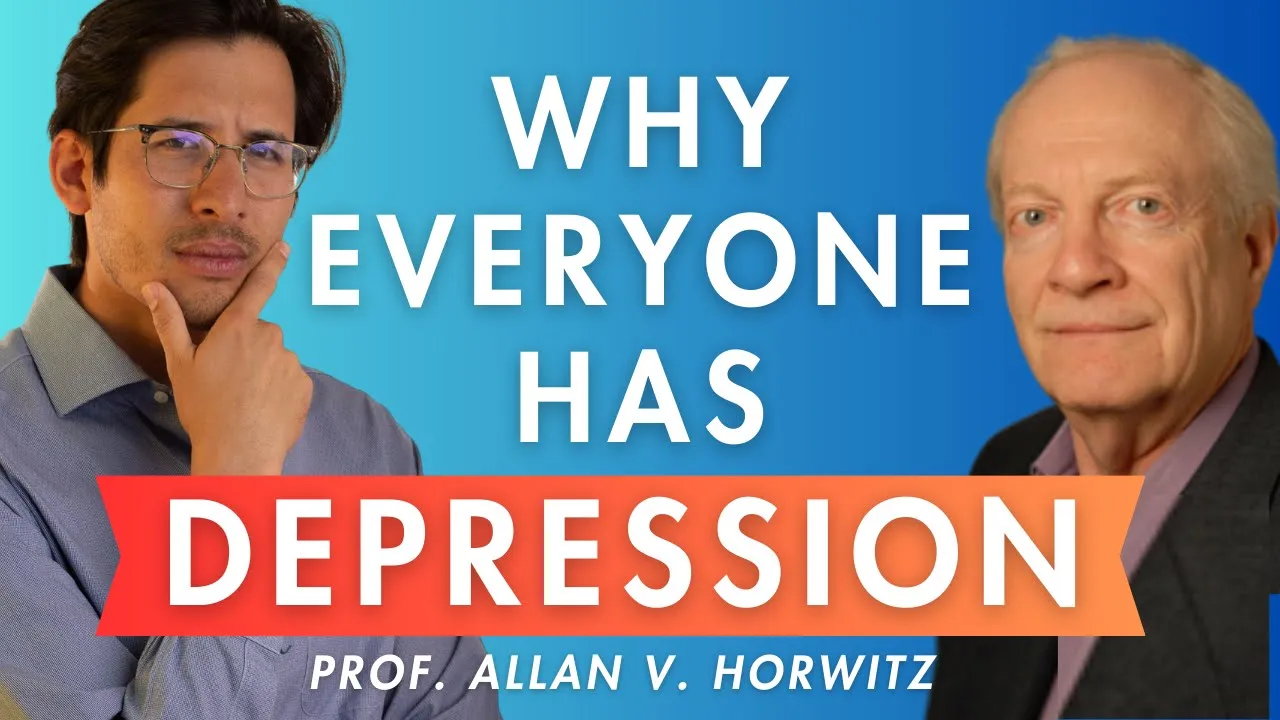
DSM: A History of Psychiatry's Bible | Allan Horwitz Interview
Added:hello everybody welcome to a new episode of the center i'm your host as always ricardo lopes and today i'm joined for a second time by dr ellen orwitz he is board of governors professor emeritus of sociology at rutgers university and today we're going to talk about his latest book the sm history of psychiatry's bible so dr orwitz welcome to the show it's a pleasure to have you one again oh well it's a great pleasure to be on again with you ricardo okay so tell us perhaps a little bit about uh what do you think people should need to know or the main things people should need to know about the history of the development of psychiatry and how it became sort of a cultural phenomenon for people then to be able to understand how the dsm came about yeah well psychiatry really became a major cultural phenomenon in different times in different places that is certainly it probably really emerged in um europe and with freud's work which became enormously popular really in the teens and especially in the 1920s um and early 1930s until the european analysts were really forced to emigrate to the united states it took longer to gain popularity you know in the us um and but really after the second world war especially in the 1950s early 1960s it became enormously popular in the united states and particularly in its you know psychoanalytic version and and really has maintained a very visible cultural presence although in a very revised form and i think the dsm the diagnostic manual is really at the heart of its current popularity and when did the psychiatric diagnosis first appear because that's really the cracks of what we're talking about here yeah well diagnoses first appeared in a very limited sense in the 19th century and they were mainly confined to only the most serious kinds of conditions such as schizophrenia bipolar disorder the sorts of things that inpatient um inpatient patients would have in hospitalized settings that in the united states the first diagnostic manual appeared in 1921.
it had 22 different categories 21 of which were psychotic conditions because it was really meant for use in asylums within institutions and one categories have covered all of the neuroses but so that was one very early predecessor of the dsm the immediate predecessor would have been a manual that was developed by u.s army psychiatrists in world war ii who found really two major things first that a very high proportion of soldiers in combat were suffering psychiatric breakdowns and the second thing was that the kinds of breakdowns they had which were clearly a response to their incredibly stressful experiences just weren't encompassed by the existing manual which was meant to deal with inpatients so they um derive or they created a brand new manual that in many ways strongly resembles the first dsm this was published in 1946 the year after the the war ended and really served as the model for the first dsm which was published in 1952 and that manual combined two major sorts of influences the first was an emma gray psychiatrist adolf meyer who really emphasized how most mental illnesses were a combination of inborn predispositions of and of environmental factors so it was people who were responding to their circumstances so the environment was very important aspect and so in addition to myers influence sigmund freud's um notions that if you have new erotic illnesses and that anxiety is really sort of at the heart of a whole wide spectrum of different um of different neurotic conditions so that influence focused on very very general underlying processes um rather than outward symptoms so the dsm-1 and the dsm-2 which came 16 years later in 1968 really didn't pay a lot of attention to sort of the overt symptoms of some condition they were um much more general in their outlook but they sufficed in the 50s and the 60s because nobody cared much about diagnosis they weren't um most therapy was not paid for by insurance that there was very little regulations over uh you know a drug what drug companies could advertise their products for the federal government really had very little concern with diagnoses so these the dsm-1 and dsm-2 were perfectly satisfactory manuals for that period of time when diagnosis just was not very important so what would you say led to the development of those early psychiatric diagnosis i mean of course one does not necessarily excludes the other but was it primarily science scientific developments and the scientific understanding of mental disorder or any other psychological category or was it driven mainly by by for example politics legal issues issues related to wealth care and insurance and stuff well it's really both that a variety of factors kind of converge to make a symptom-based manual with lots of diagnoses almost inevitable the first you know had to do with the research psychiatrists who really barely existed before the 1960s and they came um to be quite a powerful group within psychiatry and as researchers they needed measurable kinds of conditions the dsm-1 and dsm-2 were really not very clear they could be sort of operationalized in many different ways if you're a researcher who's trying to measure mental illness they were clearly inadequate manuals so you have a research community that's getting more and more powerful and that needs specific diagnosis so that's one factor a second factor had to do with the pharmaceutical industry and which really starts developing into a very potent societal force in the 1950s where their products which are marketed for very very general conditions and not particular sorts of diagnosis that changed in the early 1970s when the food and drug administration which in the united states regulates um the marketing and promotion of all drugs said they could no longer advertise their products for you know the stress of life or which is was you know a very common marketing technique at the time they had to prove effectiveness with particular kinds of conditions like depression or anxiety or you know some concrete measurable issues so that really turned the pharmaceutical companies into needing very particular diagnoses that they didn't find in the existing dsm-1 and dsm-2 a third force which you also mentioned earlier had to do with third-party health insurance where at least in the united states the government at the time didn't pay for um mental health care and in the 50s most patients paid out of pocket for therapists that third party health insurance really starts to grow and flourish in the 1960s and insurers really also i mean if you have people saying well i'm just stressed out or you know my kids are having problems and that makes me you know you feel feel bad well that's not really going to cut it job as a reimbursable kind of condition so the insurers are also looking at more particular diagnoses so those were three potent forces the psychiatric researchers the drug companies and the insurance companies all are sort of clamoring for a much more specific kind of diagnostic manual and were the researchers in particular in conflict with the medical practitioners for example yeah well probably the most well-known was robert spitzer who went on to become the major designer of the dsm-3 which was really the revolution in psychiatric diagnoses there were you know a number of others mainly connected with two um institutions in the united states one was um washington university of saint louis which was a sort of anti-psychoanalytic outpost of really medical minded thinking saying well psychiatric diagnosis should be comparable to medical diagnoses samuel goose and eli robbins would have been the two major figures connected with the washington university group and the second major group was at columbia university which is where spitzer was donald klein was a another very influential psychiatrist affiliated with colombia and also a major drug researcher so those are a few of the major figures and how did the way people think about mental disorders change with the advent of the dsm well prior to the dsm-3 um people really talked about such general entities as were well-known neuroses psychosis but not really particular specific diagnoses after the dsm-3 things like major depressive disorder social anxiety disorder traumatic stress disorder um attention deficit disorder i mean you have for the first time really very particular diagnoses coming into broad cultural consciousness and really become a part of most everyday conversation and what shaped and shaped still in the dsm-5 now and probably in the future in the dsm-6 the criteria associated with each diagnosis i mean how are they developed yeah for the most part i mean say the current dsm-5 is remarkably similar to the dsm-3 i mean there are changes in particular criteria but there have really been no major changes in the dsm since 1980 when the dsm-3 came out which is not to say psychiatrists haven't tried to make major changes and certainly in the um lead-up to the dsm-5 this would have been in the first decade in the first 12 or 13 years of the 21st century where researchers who had been you know sort of the major proponents of the dsm-3 um came to realize that the whole system just wasn't very good it was actually very misleading that is based on the notion that you have several hundred different distinct psychiatric diagnoses whereas in fact what they're finding is there's a very small number of much more general kinds of conditions so they attempted to make a thoroughgoing change in the manual and almost completely unlike in 1980 where they succeeded in implementing the dsm-3 they completely failed to try and change the dsm-3 in the proceedings of the the dsm-5 and so the result now is the current manual the dsm-5 um is really nobody thinks it's especially good but it is especially necessary and espec and particularly for clinicians who for the most part depend on third-party payments they need to put some specific diagnoses to get reimbursed i mean this is in the united states i mean the situation is different in other countries um so clinicians fought the attempt to change the dsm quite fiercely and were successful and so the manual we have now is um substantially the same as the dsm-3 in 1980.
uh are there any specific diagnosis or diagnostic categories you could tell us about that have been either added or removed from the dsm across its history not for scientific reasons but for other kinds of reasons like politic political reasons reasons having to do i mean for example to serve certain personal interests or something like that yeah there have been a few um examples of that probably the best known was in 1973 when homosexuality had been a psychiatric diagnosis in the dsm-1 and then in the dsm-2 so and this was around the same time when a very activist gay movement had mobilized they had a lot of publicity they were very active at psychiatric meetings challenging the homosexuality diagnoses they were able to have the american psychiatric association vote on whether homosexuality should be a mental disorder and they voted no it should not be and homosexuality was removed from the manual and has not reappeared and probably never will reappear as a mental disorder but just to show you how much things have changed in terms of the value of diagnoses in the most recent dsm 5 gender dysphoria was a condition that a you know a few gay activists opposed because you know it's saying almost you know transsexuals have mental illnesses and that's wrong to stigmatize them in that way making the same argument that was used against homosexuality several decades before but in this case the same gay advocacy organizations opposed removing gender dysphoria from the manual and the reason wasn't that they really thought it was a mental disorder was that to get sexual reassignment surgery you need to have some sort of diagnosis and so gender dysphoria became a necessity for someone looking for sexual reassignment surgery and again it wasn't because anybody thought it was a mental disorder just was a social necessity so that now you have the gay organizations opposing its removal and so the manual does have a category of gender dysphoria for very practical reasons so in the book you go through three different interpretations or possible interpretations of the dsm scientific progress harmful impacts and the social perspective could you tell us about them and perhaps tell us if you think that any of these is more correct than the others yeah well the first explanation is you know the dsm has represented progressive scientific progress and that i think there was a legitimate case to make that the dsm-3 in many ways was superior to the manuals that came before it the dsm-4 made a few incremental changes really didn't um change much at all what the problem with the scientific progress explanation came with the run-up to the dsm-5 where it's the same people who in the past had claimed that you know the dsm is this great movement forward are the same ones who are saying well it's really no good and it's really not an accurate representation of the reality of mental illnesses so that now the first interpretation of dsm as progress is in a very precarious state even though you still hear the leaders of say the american psychiatric association proclaiming this in fact um in other settings they have almost demolished their own argument so that is one explanation a second is the um basically the dsm or psychiatric diagnoses as really harmful as instruments of social control that are used to stigmatized behaviors that mainstream people don't like that was um is not certainly not a new explanation probably the most prominent and very well-known proponent was thomas um thomas who you know first raised this in the early 1960s and still basically made the same argument for um 40 or more years you know after that and i think especially um you know in the 1960s and 1970s you did have a very vocal group proclaiming that the dsm diagnoses repress and stigmatize people that argument was taken up by feminist opponents saying that it's especially women who are repressed by dsm diagnoses one of the big problems with looking at psychiatric diagnoses as instruments of social control is for the most part not completely some people still resist psychiatric diagnoses but for the most part they are overwhelmingly popular there's people are seeking treatment voluntarily that mental health has now become a major positive rallying cry seeking therapy is no longer nearly as stigmatized as it had been decades ago so that while to a certain extent you know in occasional instances psychiatry is used as an instrument of social control for the most part it's a reactive to the wishes of laypeople who want psychiatric treatment so there's i think major problems in both looking at the dsm as scientific progress and as an instrument of social control okay the third explanation that i go through and certainly is the one that i um adhere to so looking at the dsm as a product of social forces that you know as you know looking at the social context of dsm and you see just many different interest groups psychiatric researchers mental health clinicians insurance companies the federal government the drug companies that all of these influence the shaping of the dsm and for them diagnosis are practical necessity so it's looking at how they influence the dsm and how they really use the diagnoses in the manual so if the diagnosis that were developed created were to serve these particular interests and purposes you mentioned earlier can we say that they are scientifically reliable enough for us to even say that for example what comes out of randomized controlled trials and the push for more research based empiricism is even reliable in the end i mean can we trust any of that yeah well one of the major arguments for implementing the dsm-3 in 1980 was that it was a far more reliable system than the earlier dsm's had been and for most that is generally true because it's yeah much easier for different clinicians to agree well this person has this symptom or that symptom as opposed to well this person is suffering from an underlying trauma that happened to them when they were two years old so there was an argument to be made that the dsm was more reliable in the trials that were made of the diagnoses in before the dsm-5 this would have been in the you know early 21st century turns out the reliability was much lower than was thought to be and that it really was not very high and so this because the whole dsm system had been built on the foundation of being reliable even if it had problems with validity um at least it should have been reliable and now there's even some question about its reliability so but do you think that in general we can scientifically trust these mental disorders as entities and how they're used in research well there's really come to be quite a gap between researchers and the dsm because the researchers now are coming to see mental illness more in terms of very broad conditions um internalizing factors such as depression and anxiety and there may depression and anxiety are probably the two major conditions but they much more often appear together so that somebody who's depressed is also anxious somebody who's anxious is also depressed so that they're not that separable so that it might make more sense to talk about internalizing conditions than externalizing conditions then you have things like substance use some of the personality disorders that are marked by acting out kinds of things so instead of internalizing problems you externalizing you externalize problems so you have this group of conditions that are externalized as well as internalized well that looking at mental illness in that way is a far cry from the close to 300 distinct diagnoses in the current um dsm so there's really now coming to be a disconnect between the way researchers study mental illness and the dsm conditions yeah in fact in the book at a certain point you mentioned that it took uh two decades or almost two decades after the publication of the sm-3 for psychiatric researchers to recognize serious problems with the basic characteristics of mental disorders i mean they found out that they were virtually the opposite of those portrayed in the manual and i'm just going to read the main ones here they were overlapping rather than discrete dimensional more than categorical generalized than not specific and reflective of a small number of basic processes as opposed to hundreds of distinct conditions that would summarize the argument i would add one thing that when the dsm-3 was published in 1980 genetics in a serious way was just starting to um to flourish and i think the belief was you know once more studies were done once more knowledge would accumulate that particular genes would be found to underlie various kinds of disorders that has turned out to be almost a complete failure and what has been found when you look at say for example schizophrenia that an enormous number of genes are connected to it instead of a single gene many many genes each of which has a very small effect so that the initial thinking that there was some gene that would underlie different mental disorders is now rejected as a model for genetic study and instead researchers are looking at how large numbers of genes are connected each in a small way to various conditions that relates to for example genome-wide association studies where really hundreds and even thousands of genes get connected to particular mental conditions that's correct yes so what changes then when we move from the sm-3 to the sm-3r and the sm4 yeah well dsm-3r and dsm-4 both of them were mainly just sort of working out the most obvious problems with dsm-3 neither manual made any fundamental changes in um in the diagnostic system um so they really in more ways than not the dsm-3r and dsm-4 are extensions of the dsm-3 but if i remember correctly it was during this time that a specific condition social anxiety disorder was introduced correct yeah and that would be one of i think a small number of um new conditions that um came about in the manual social anxiety disorder is especially interesting because it was almost completely the creation initially of the pharmaceutical industry which should have saw a potential gold mine if you can convince people that things like getting nervous before giving a talk is a sign of a mental disorder that requires taking a pill to get over your anxiety and there was just enormous um you know advertising campaigns around social anxiety disorder that were hugely successful and that social anxiety disorder is perhaps the best example of the creation of a new kind of psychiatric disorder and as you say that happened in the dsm-3r so let's get now then into the dsm-5 what was it supposed to bring new to the table and did it leave deliver on its promises or not yeah well the main impetus behind dsm-5 which originally the researchers who were in charge of revising the dsm-4 wanted to do was to make the dsm more in line with findings from research studies which as in the passage you had read before they still indicated that mental illnesses were more overlapping than discrete were not so much categories separate from the other categories as um you know overlapping with each other that were more gradations you know you have a little bit or medium amount or a lot instead of either you have the condition or you don't so they really wanted to change the new dsm-5 to reflect those sorts of things making the whole system much less of a various categories each of which are seen as independent of the others they almost completely failed in trying to do this and the reason a couple of reasons they did is first of all just psychiatrists certainly are medically trained and in medicine you know you basically you you have a condition or you don't have a condition so there's people are just trained to think in terms of you know what kind of disease does this person have so just their whole way of thinking was to foreign to medically trained um physicians the second and possibly even more important reason is that clinicians um may fully believe the same thing that researchers do i mean they see mental illnesses as overlapping is not distinct as dimensional and not categorical but they have no choice but to use diagnosis they need to say this person has major depressive disorder they can't say well they have a little bit of um you know of depression but maybe not enough for a real diagnosis that just doesn't allow them to function as professionals they require diagnoses even though many or possibly even most of them don't fully believe in the reality of the diagnosis they do realize they need them as a practical necessity we've already touched on genetics a little bit but do you think that these emphasis on the biological approach related to genetics and neuroscience primarily basically this quest to finding biomarkers of specific mental disorders is a scientifically sound one or not yeah well in a very limited way i mean certainly are probably some genetic contributions to many kinds of mental disorders on the other hand and this was really brought out very forcefully in a pretty recent book by thomas insell who had been the head of the national institute for mental health for many years and was really responsible for moving that agency which was the primary sponsor of research on mental illness in the united states in a very very genetic direction and um what incel's newest you know book says he was wrong i mean he just says that turned out to be a uh to direct the field in totally the wrong direction and in fact what's needed is much more attention to the kinds of services that people with serious mental illnesses have and it's these you know sorts of treatments and therapies and housing being an especially prominent need this is the direction the field ought to go and it should really turn away from these genetically oriented studies towards more of a focus on social services so in the book you also mentioned regarding the dsm-5 how it reduces the validity of certain diagnosis and you give the examples of major depressive disorder and substance use disorder could you explain that yes well with major um depression i think when it came into the dsm-3 it had like all of the other dsm-3 diagnoses a list of nine symptoms you have to have five of those nine symptoms to get a diagnosis of major depressive disorder there is one exception to that that if someone close to you had just died and you were grieving the death of that person then even though you would almost expectably have you know you would be sad you might have loss of appetite problem sleeping it would be very easy for someone who is grieving to make to meet the symptom-based diagnostic criteria for major depression so the dsm-3 put in an exception that so it said even if you have five symptoms for a two-week period which was the time period for the depressant symptoms you won't get a diagnosis of major depression of major depressive disorder if someone close to you has just died to get a diagnosis first of all your condition would have to last at least two months instead of two weeks still seems a little short period two months but at least it was longer than than two weeks you know or if you had an ex extremely severe if you had a say a psychotic episode or if you're hallucinating well then if you have that sort of um severe symptom you can still get it but most people would be exempted from the diagnosis well in the dsm-5 they um the the um committee that was charged with developing the mdd major depressive diagnosis got rid of the um bereavement exclusion so now it's basically saying anybody who has fi any five symptoms for a two week period can get the depressive diagnosis i think any lay person would realize the um invalidity of that i mean that it's normal to be sad after uh you know someone dies that this was i think a major step backward in in diagnosis um yeah and the the other thing you mentioned was the substance use disorder i think that would be a second instance where there used to be in you know dsm-3 and dsm-4 two separate categories of substance abuse and there's one category of substance dependence which is pretty much what it says that people who need to make continuous use of a variety of it could be opioids it could be alcohol it could be marijuana but people who um require and often increasing amounts of the substance there was a second category of substance um abuse which really meant the social consequences of substance dependence that is getting arrested um and going to jail or you know getting drunk and over sleeping and missing um your crucial exam um in school the next day so these were the had to do with the social consequences what happened in dsm 5 was these two separate categories were put together into a single category and actually you need fewer symptoms rather than more symptoms to get a diagnosis now of substance use disorder so the crazy thing about that especially when um in kind of like the united states now where you're seeing such major changes especially in marijuana laws regarding marijuana we're now in a number of states it's use is is completely legal as opposed um you know so you can't be arrested so now the implication is if you drive across a state line i mean from a state where marijuana use is legal into one where it's illegal you put yourself at greater risk of getting a mental illness diagnosis because of um the criteria which is completely crazy but the merging of substance dependence with substance abuse has created this possibility of just having negative social consequences is now grounds for a mental um disorder so there's a second example where i think the dsm-5 moved backwards from earlier diagnosis yeah so of course the book is focused on the dsm but do you have any opinion on the icds does it suffer from the same issues or not i think to a much lesser extent just i'm not nearly as familiar with the icd as with the the dsm but i think it's far less purely symptom-based than the dsm and which is a good thing and i am aware of the icd just made some major changes in the personality disorders um category where now it really has become much more dimensional rather than um categorical seeing it in a much more general way which is what the researchers who were trying to revise the dsm-5 had tried but failed to implement the icd successfully implemented so if you you know are in favor of seeing mental illnesses as more dimensional than categorical then you probably would like at least in the personality disorders part the icd much better than the dsm so even with all of these problems do you think that there are aspects of how the development of the diagnostic criteria for certain mental disorders got developed uh across the history of the dsm that are scientifically valid scientifically sounded that that we should keep i mean when it comes to thinking about the future the development of future editions of the dsm yeah well i think there's coming to be a real disconnect between the sort of nature of what's emerging as the true nature of mental illnesses which are very broad very overlapping um not discrete diseases at all um with just the practical need to have discrete diseases is the basis of a diagnostic system so there's this almost irreconcilable conflict between what the mental health professions require in their day-to-day work and what researchers need to have um and i don't know how that's going to work itself out in the future i i would say the current situation is pretty much of a mess but if there's going to be any satisfactory resolution um i don't see the way forward but do you think that it still has some positive outcomes like for example a widespread acceptance of people who suffer from certain mental disorders and perhaps some posit other positive effects that it have on culture and also possibly the fact that it's easier for people with a particular diagnosis to get access to wealth care and insurance yeah there's certainly the positive impacts of the dsm you have been to facilitate treatment for people who want to um to get treatment i think in respect to children there's been many positive impacts that it's now much much easier for families to get mental health services for their kids um although on the other hand it's also much easier for children to get medication and possibly over medication and for parents to be relying on medication to control their children so it's sort of a mix that does have positive impacts but it also carries uh you know negative impacts as well so generally speaking do you think that we should keep the dsm and perhaps try to change it in a way that goes more along the lines of what the researchers are finding or perhaps just start from scratch well in an ideal world i think starting from scratch wouldn't be a bad idea in the real world that's just not going to happen and even the kinds of reforms that researchers want such as making conditions more dimensional rather than strict either or categories that may also be just practically impossible that is the dsm serves not just research functions but also you know as noted a number of times clinicians need it to get re reimbursement that um drug companies at least in the united states have no choice but to advertise their products for particular conditions even though in fact they treat a wide they're not disorder specific at all the the popular medications um so practically speaking i don't see major revisions coming down the pike so one last question then what would you personally as a sociologist and with what you research about diagnosis diagnostic criteria the dsm and so on would suggest in terms of how should people try to change how things are then well i think just taking particular diagnosis little less seriously would be a good um you know a good thing that i think there's really a strong tendency for people to think well i have post-traumatic stress disorder or you know i have asperger's um you syndrome or i have major depression and you know in fact you you know you you don't feel good but maybe you're not using specific diagnoses as a way to interpret your experiences i think would be a positive development so even if psychiatry is can't change the diagnostic manual for practical reasons at least individuals can take it a little bit less seriously and do you think that that would have a positive impact on people and how they deal with what they experience mentally yeah i i do think that um you know thinking of you know you're having problems with relationships is maybe a a more positive way of dealing with a problem than saying oh i have anxiety disorder or i have major depressive disorder that you know going on in looking at your own circumstances and how you're dealing with people how you're feeling generally is a healthier way to approach your life than in look then in looking for a particular diagnosis so the book is again dsm a history of psychiatrist bible i will be leaving a link to it in the description box of the interview dr orwitz thank you so much again for coming on the show and it's always a pleasure to talk to you okay yeah um i've enjoyed it and i'll look forward to talking with you again hi guys thank you for watching this interview until the end if you like what i'm doing and to help me keep the channel sustainable please visit my patreon page or paypal and consider making a pledge there otherwise and if you like what i'm doing please share the interview leave a like and hit the subscription button the show is brought to you by enlightens learning and development done differently check their website at enlights.com i would also like to give a huge thank you to my main patrons and paypal supporters karen litzke and blanchett peregola arsene laguerrero francis ford edins frederick sunder ricardo valdimiro craig healy adam castle olaf alex jonathan vessel jacob clinkby matthew whittingbird arnold wolfe tim hollissie enriquelania jean connors paulina baron philip first connor connolly jerry mueller herbert guinty rutgers bo weingarten rebecca newberger goldstein then the matriarch robert windage nasi harther co supe mark navs colin holbrook susan pinker bernard saycious pablo center simon colombo george pina phil cabana mark blythe roberto iguanzu mikel stormy neumann samuel andreeft yagnunz bernard dugne alexander dunbauer fergal cassini evan bodrenko hall herzog don ross jonathan librant ozil bullet nathan nguyen stenton t samuel korea eric eins mark smith j.w juan weir tom hamel label slow and wilson yacilla then sullen romain roach remitting grigoriev diego london correa tom ruff yannick catherine and patrick tobin al ortiz guy madison gary g hellman juan linhars lee the cosmetic sima adrian yaeggi nick golden paul tolentino john barbaza jules price edward hall evan brunner franco bartolotti gabrielle ponce cortes ursula litzke denis cook scott zachary fish tim duffy and todd shackleford my producers is our webby jim frank lucas stefaniakian gilligan wisconsin tom van gdam curtis dixon john linares benedict mueller vaguely giddy sardis friends thomas rumble and noon welder and my executive producers michel ruzzieski rosie james pratt matthew lavender sergio corriando and bogdan knivets thank you for all
Up Next
Health in All Policies Explained: A Public Health Framework
@APHAPublicHealth
28.5K views•2022-02-15

Triumph of Orthodoxy Icon: Byzantine Art & History Explained
@BenCallan
2.1K views•2024-08-06

FastAPI vs Flask vs Django: Choosing the Right Python Web Framework
@TechWithTim
302.5K views•2024-05-26

Game of Thrones Opening Credits: A Cinematic Analysis
@gameofthrones
46.3M views•2011-04-18
Related Study Plans & Knowledge Roadmaps
Structured learning paths in General & Interdisciplinary Studies