


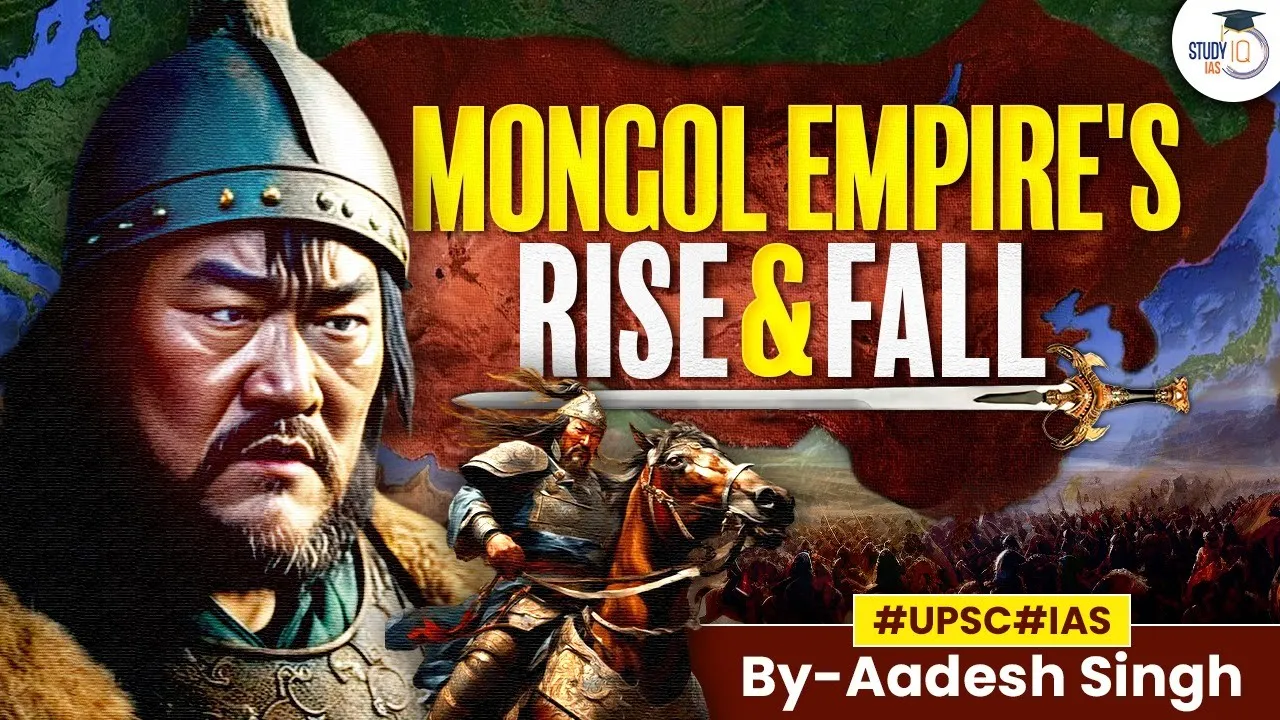
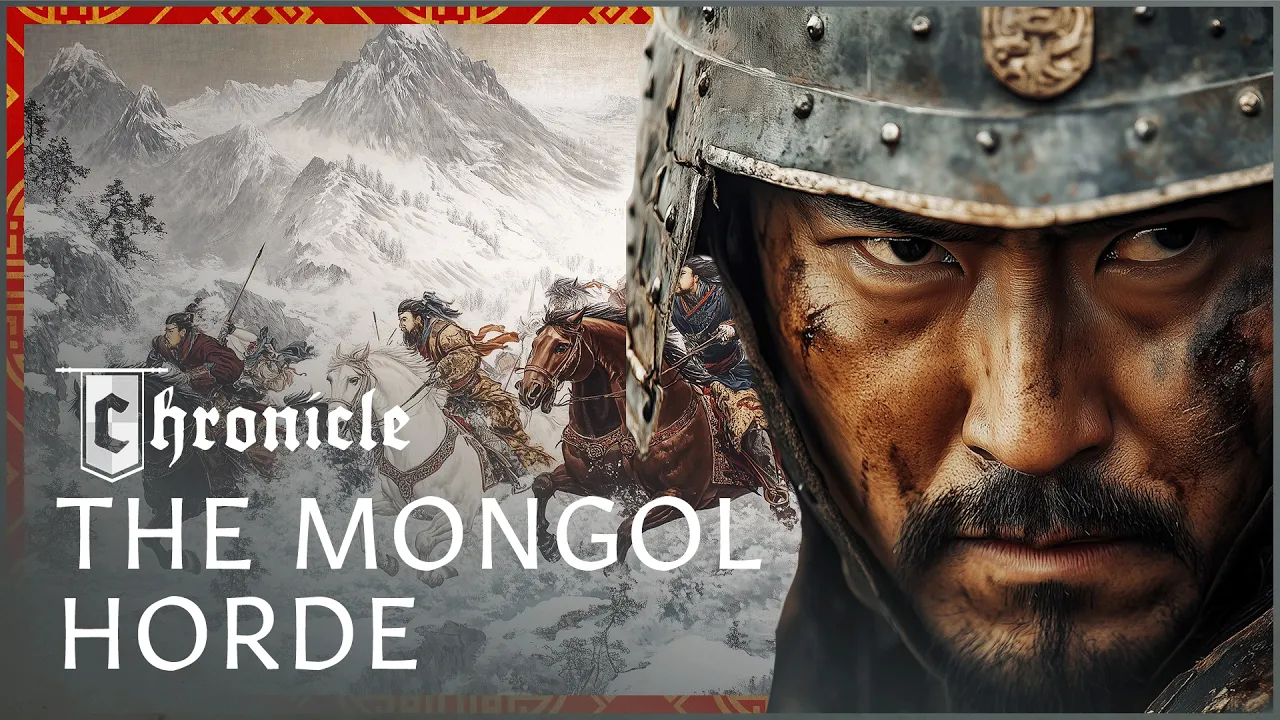













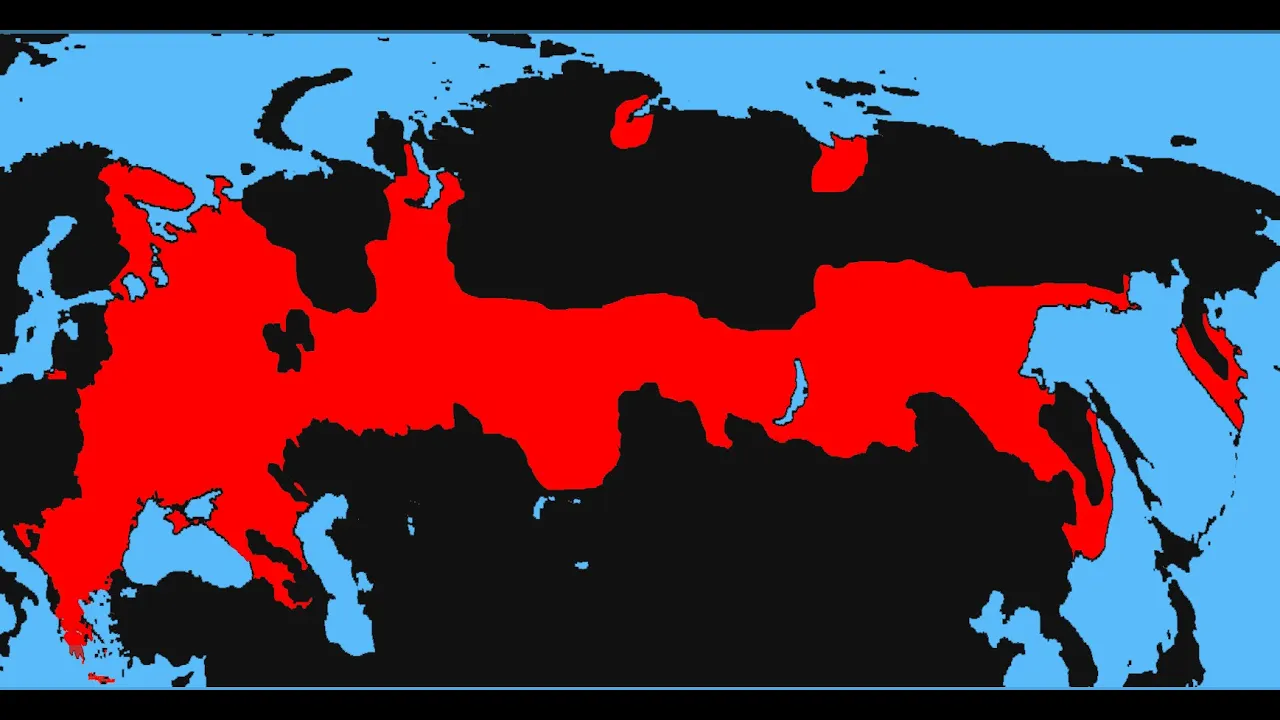

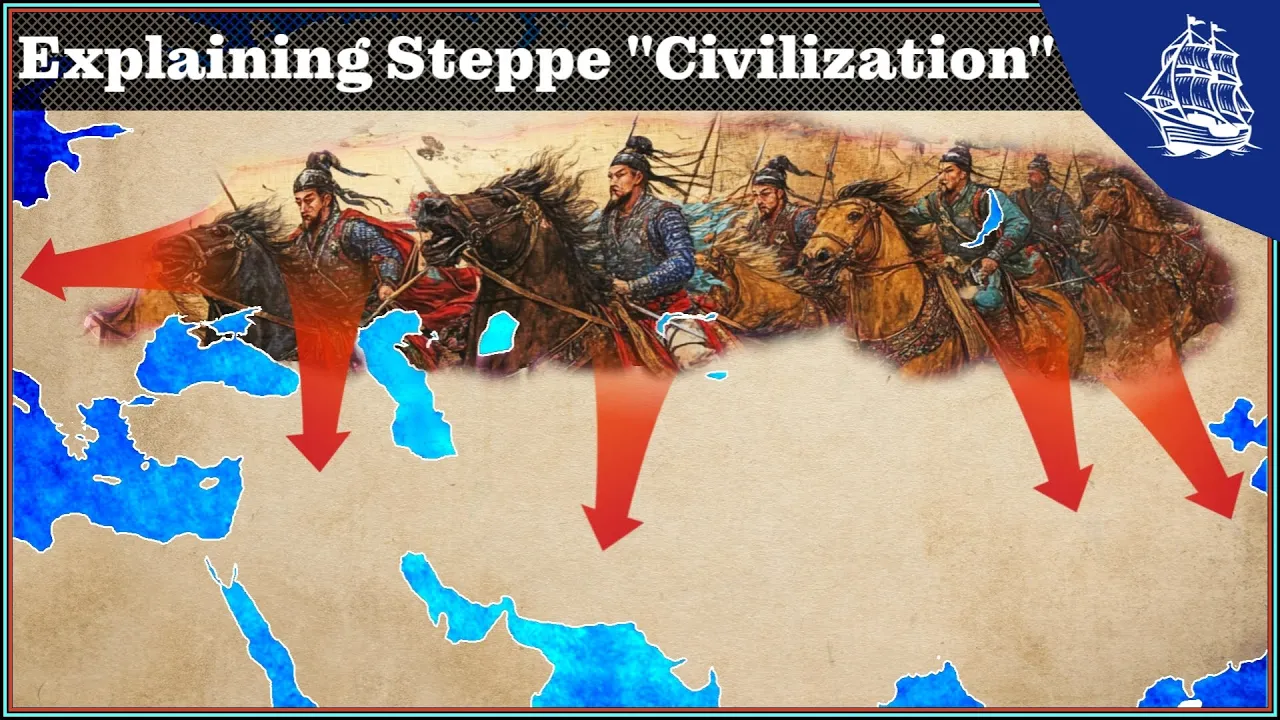
The Mongols were so effective in military and political affairs because their nomadic lifestyle naturally developed key capabilities: exceptional mobility through horseback riding from childhood, daily life functioning as military training, strict discipline enforced through severe punishment, and pragmatic use of auxiliary forces from conquered territories. Their decimal military organization (units of 10, 100, 1,000, and 10,000 men) allowed efficient command and control, while their psychological warfare tactics—offering mercy to surrendering cities and terrorizing resisters—maximized conquest efficiency. These factors combined to create the largest continuous land empire in history, stretching from Korea to Hungary.
Why Were the Mongols So Effective? Military Strategy & Logistics
Added:Understanding of the Eurasian Steppe geography and the pastoral nomadic lifestyle, particularly the survival skills, horsemanship, and archery developed from youth.
The historical context of the early 13th century, specifically how Genghis Khan unified the warring Mongol tribes into a cohesive confederation.
Basic concepts of medieval warfare, including the traditional reliance on fortified cities, feudal armies, and heavy infantry in sedentary civilizations.
The political landscape of Eurasia prior to the Mongol conquests, including the fragmentation of Northern and Southern China and the Khwarazmian Empire.
The division of the Mongol Empire into the Four Khanates (Yuan Dynasty, Golden Horde, Ilkhanate, and Chagatai Khanate) and their respective administrative systems.
The concept and economic consequences of the 'Pax Mongolica', including the facilitation of transcontinental trade along the Silk Road and technology transfer.
The epidemiological impact of Mongol connectivity, specifically how their trade and military networks contributed to the rapid spread of the Black Death.
A comparative analysis of the long-term cultural, political, and demographic legacies left by the Mongols in modern Russia, China, and the Middle East.
243.7K views7.4Klikes20:55Original Release: 2018-09-25
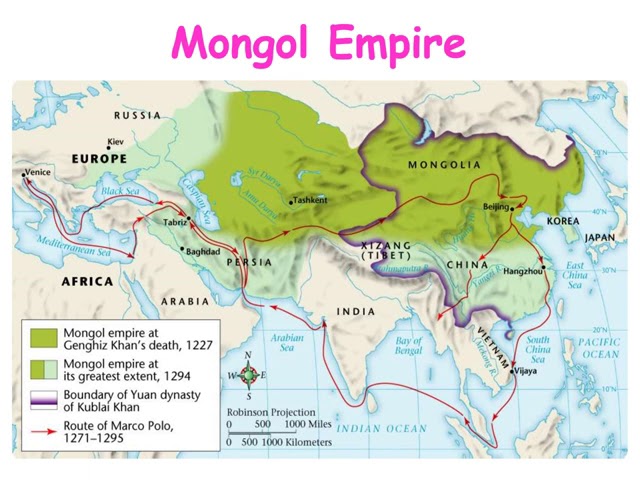
The Mongols created the largest land empire before the rise of the British Empire. The Mongol Empire of the 13th and 14th centuries was the largest continuous land Empire that has so far existed. At its greatest extent, it stretched from Korea to Hungary including - except for India and the southeast of the continent - most of Asia as well as a good deal of Eastern Europe as a As a whole it lasted for well over a century and parts of it survived for very much longer.
Hence, the question is how and why were they so effective in both military and political affairs?
The first element that often comes to mind is the Mongol speed and mobility.
Since basically every Mongol was trained to ride from an early age on the Mongols were experts in horseback riding.
Similarly, they regularly had to move all their possessions over long distances. As such many aspects of a military campaign for them were not particularly different from their regular life.
Additionally the Mongol tribes usually fought among themselves if they were not united under one can.
Thus warfare was also a common element in their lives as such the Mongols possessed both tactical and operational speed which allowed them to outflank, encircle and/or surprise their enemies.
For high mobility a key element were the Mongols' horses. As such the Mongols brought along spare horses during campaigns Each Mongol went on campaign with a string of several horses. The number quoted varies, but something [on] the order of five horses per man would seem not to have been unusual.
At least one author notes that the Mongols preferred riding mares since they would provide milk.
Another factor Is that the Mongolian horses were smaller and known for the hardness and frugality.
[Bernard S.] Bachrach notes that the Mongolian horses were grass fed and not straw-fed like most European horses thus requiring mostly a pasture and not [loads of] other fodder.
As such the logistical requirements were reduced as long as there was enough grass.
Yet, this dependency on grass could be an issue as well, since the Mongol horses were less suited to provide it with other fodder.
...and some argue that mongols failed in Syria to due the lack of proper pastures there.
Furthermore the speed of the Mongol forces caused be used to deceive the enemy in terms of numerical superiority.
Modern scholars usually assumed the following size for Ghengis Khan's Army: "...in theory at least the strength of the pull a mongolian component of chingus khan's army arranged between 105 thousand and one hundred twenty-nine thousand if this was in stark contrast to what outsiders reported at the time Chronically is riding from outside the Mongol Empire tentacles much higher figures Touzani variously reports Chinggis Khaan army the detect the Kaurava Zhongshan is being 700 to 800 thousand strong The mum look for Teamcenter at al omari Estimated the number of soldiers on the register of the ill cannot in his days 200 to 300 thousand both morning and checks an argue that this Overestimation likely was caused by the Mongols mobility and additional the use of deception techniques as well This was not only done on operational but also done tactical level the mounting of dummies and spare horses the device sometimes used could have defect on the battlefield of Multiplying the apparent size of the army and increasing the terror in the hearts of the enemy soldiers The second major factor for the Mongols success is the daily routine was similar to a constant military training Which was also recognized by contemporary authors every adult male was warrior both Yanni and the Latin missionary William of Rubik recognized this similarly Morgan notes the nature of nomadic Society on the steppe was such that to speak of the Mongol armies really no more than to speak of the Mongol people in one of its natural aspects But a whole of life was a process of military training the same techniques that were necessary for survival in a herding and hunting Environment were with very little adaptation those used in warfare Let's look at hunting first, which is mentioned by several authors Now likely the first association many heavy hunting is tracking down enemies and shooting with the bow Although the ball was a crucial button. The principles most denoted by offers with hunting work disappear and coordination the ability of commanders to coordinate effectively the movement of major formations on the battlefield was another hallmark of the Mongolian military machine this maneuverability was achieved by frequent peacetime exercise Usually in the form of vast handing expeditions in which the army participated as units And it was also a matter of discipline Discipline was strictly enforced within the Mongol army Generally off a stretch the strict discipline was obligated and then it was enforced with severe Punishment as such the death penalty was common Additionally rewards were distributed as well to encourage proper behavior For combat operations this man that Mongolian field commanders were expected to adhere strictly to prearranged operational plans If a unit failed to appear at the proper place at the specific time, its commanding officer was promptly punished No matter what the excuse offered Discipline was also crucial or not a fact that it is less exciting and particularly unglamorous, you know the dreaded l word Logistics and quite unsurprisingly the Mongols mastered this crucial element of warfare as well Similar to many other points here it resulted from the monomeric Lifestyle and particularly the activity of herding the Mongols possessed various kinds of animals the five most important were in this order horses sheep camels cattle and goats Each of them require different attention and was used for specific Aspects and such the frequent control movement of the herds in search of water and Farah was neither aimless No unbounded it was a well-established animal cycle from spring to summer to winter camp Additionally the force or better the herd composition was not straightforward Because the herds were complex composed of animals with different rates of movement and divergent food and water Requirements the herd at migration time had to make very fine calculations concerning daily distances traveled route staking anticipated better conditions and the like to accommodate the desperate needs of his species any major migration of the complex hoods together with people possessions was thus a complicated problem in logistics requiring careful planning and execution Training that the Mongols were later put to good use in the far-ranging military campaigns Now it's very important to add that the Mongols were not pure Normans Several scholars note that pure nomadism is mainly a construct checks and points out that the Mongols required grain manufacture good especially weapons furs fish and other products This of course also implies that the Mongols had an awareness of the limited of self-sufficiency And as they also likely counted for acquiring various goods as well Now if you're not into logistics I can recommend to you this video for my second channel wider Verma was a combat effective anyway back to the Mongols and not a key aspect as long time for use of this channel Well know his organization the Mongol armies were organized among several different aspects probably most known one is the decimal organization this meant that units were established along the lines of multiples of 10 as such an Alamo stoop of 10 men a yagong consisted of 10 r1 thus 100 men a Ming Han consisted of tenure goon toss thousand men and Finally a two men consisted. You guessed it of tank Ming ham thus ten thousand man Most office knows the Ming. Hen was the most important unit Although as always with authorized ranks in reality. There was likely quite some discrepancy So straightforward and uniform a system was no table convenient The one may wonder how many units actually had the precise round number of man that they were supposed to have Why anything like it in you and China humans were classified into toads with seven thousand five thousand and three thousand man This decimal system had a long tradition yet It was used on a far larger scale but Chinggis Khaan than before and used for the reorganization of the mongol army along effectiveness Loyalty and solidarity the imposition of the decimal system afore The king is can an opportunity to undermine tribal authority and morality and to replace it to some extent with military discipline and solidarity old enemies such as the Tatas carry yet and Neyman were systematic broken up as tribal groups and assigned piecemeal to composite units of 1,000 or Distributed as dependents of mayhem made of other people's as such the reorganization provided all the social control What is more the reform was a defeat for a complex?
Traditional division of forces based on clan and family bonds as well as for social and economic connections of particular warriors Nord is very important here that some tribes are mostly kept intact in the old structures namely those that had demonstrated reality Before to chinnese can this tribal?
Reorganization was also along the lines of establishing a more centralized inferior structure Which would self can for exhibiting control over the army and his empire for this the guard called Kashyyyk was created by Chinggis Khaan the Kashyyyk made up of conquerors to on companions not only protected chingus khan's person and performed the numerous duties associated with Imperial Household it also function is a training core for those given command in the military at large and Hence in this early phase employed in governing the Empire as such the guard accompanied it the can constantly Thus the central government of the early Mongolian state in a sense. The Imperial Guard was located wherever it sovereign chose to a light Since we covered logistics and organization already It is not time to move to the more famous and usually highly overrated cousin namely the military historians equivalent of pickuplines tactics Cherrylle, and the mongols used light and heavy cavalry The first principle weapons was the composite bow whereas the later was armored and used as main weapon lances Thus a regular engagement threw off the round the following method the light cavalry did not usually engage the enemy at close quarters instead they rode across the front wrong ranks with valiant arrows or if he was Advancing with two ahead of him and shot over their shoulders with equal accuracy When he had opened his ranks and left him disorganized the broker way onto either flank Leaving the front clear for the heavy cavalry to drive in blow Another approach was to faint flight. This was performed by the man who died the suicide drugs Although more an honor to the courage and not as a job description They would move ahead of the army and engage the enemy and then break ranks and flee This route convinced the enemy to pursue them during an extended pursuit The enemy would tie out and disperse his army by the mongols would lead them to the main army the persuading the flight and heavy cavalry units that would engage first with arrows and then Charge the remaining forces Now, let's move to the next factor previously I mentioned that the key element was the high discipline of the Mongol army or checks and notes that the rigorous discipline enforced within the Mongol army which made a profound impression the contemporary observers is Unlikely to have surpassed discipline prevalent in the ranks of the shuriken chin, though it does seem that the Mongoose military operations were accompanied by extremely careful suit chittock planning and involved adhesion to the most rigid timetable and such let's look at the element that supported the regular combat namely planning and psychological warfare one key aspect before the start of a campaign was the collection of maps based on this information to Guatemala select the campsites and the routes of the army this planning also included operation that nowadays would likely be called psyops psychological operations during the detailed planning that preceded every Mongol campaign z-cube messengers were sent to alert spies in the target territories and bring back the first Reports and merchants set out. Carrying propaganda Either to create panic or to persuade dissidents that the invaders are sympathetic to the cause Additionally the Mongols applied a combination of carrot and stick Although the stick was around a heavy one. The Mongols policy was that any city which surrendered without fighting would be spared?
But the doors across the Mongol army to suffer casualties could expect no mercy the Mongols usually kept their word and the message to charge from the number of cities that did surrender on demand seemed Speedily to have spread this approach was not limited to cities alone But also for commanders in their units as note burner on offer as a matter of policy the Mongols Encouraged and rewarded such defections and the results had been gratifying many Qin commanders Especially those of non Schwerin origin came over with the unit's intact This is also linked to the next major factor namely pragmatism probably some of you might wonder how did the Mongols?
Conquests at fast lands with cavalry alone Since quite many cities would have blocked their ways and cavalry isn't the most effective unit when it comes to sieges as you might have Learned in mountain blade while the Mongols actually used a large amount of axillary forces usually from the conquered territories this of course required an effective Administration and this is a very important part because the Mongols were not only successful conquerors They also managed to keep their empires for a substantial amount of time unlike a Napoleon for instance Which are covered in another video does the must have used some effective forms of administration diplomacy and empire management Some even argued that there was some form of grand strategy it more notes that this was highly unlikely The difficulty lies in the absence of any evidence whatsoever for the grand strategic plan except for the events themselves Let the most fury is very attractive but inevitably it remains no more than theory as such I would call this factor pragmatism Because it also fits into the steppe lifestyle which often did not afford various luxuries and convenient in Flexibilities that are more safe and rigid lifestyle brings with it Here are some examples that demonstrate this pragmatism in terms of empire building at first let's look at auxiliary forces as previously outlined the Mongoose encouraged at enemy forces defected and Using these troops was mandatory for successfully conquering the various lands it would not have been possible to conquer such enormous areas if the Mongol army proper had alone been available for Very early days Chinese troops were used in large numbers in the soon empire of its vast wall cities Its numberless waterways and its rice paddy fields could hardly have been taken by any number of cavalry maneuvers These defective units were needed for several purposes like garrison duties guarding mountain passes and using siege Equipment has such a key contribution of conquered areas was to provide auxiliary troops to the Mongol Empire Especially for siege warfare since the Mongols had limited experience with it and such operations were rata manpower intensive Ideally complete units affected but if necessary new units were raised as well as such it was crucial that an effective administration was in place Ideally an existing one the Mongols were undoubtedly pragmatists. They were not too proud to learn from other peoples Especially from people's who had both a respectable steppe pedigree and experience in techniques necessary for administering a great Empire This was crucial since the conquered areas at very different customs and laws as the mongols themselves acknowledged Life of the city was different from that of the steppe and many officials for laws Commerce and government were recruited or kept in charge if the defector several officials who defected was surrendered without resistance were routinely left in the old post administering countries and prefectures the principal Responsibilities were to maintain order and mobilize the resources of the areas for the benefit of the Mongolian military machine Another aspect in which the Mongols excelled was communication similar to other points They likely used existing infrastructure and institutions and kept them effective or even improved upon them It would hardly have been possible to rule an empire the size of the mongols effectively without an adequate system of communications such a system called the yum was therefore created by the Mongols and its Organization and efficiency were among the features of the Mongol government that most impressed European observers Note that the same author clarifies that the Mongols likely did not invent the Yom concept yet adopted it and extended it Substantially across the whole empire the system serves several purposes transportation of goods movement of invoice Transmission of royal orders and as a network for intelligence To summarize the Mongols were able to conquer an empire in reach from Korea to Hungary to their military and political capabilities many ft seemed to have been derived from the experiences and habits of living as nomads in the steppe as Such pragmatism mobility and flexibility. We're key principles default out of necessity as Nomads, they had to move Reger either large herds of different animals which required careful planning due to the requirements of the diverse herds and the limits of the terrain as Such they had a keen talent for logistics additionally the nature of the nomadic Society on a step was such that to speak of the Mongol armies really no more than to speak of the Mongol people in one of its natural aspects For the whole of life was a process of military training The same techniques that were necessary for survival in a herding and hunting environment But with very little adaptation those used in warfare The life in the steppe was harsh and arrows would have dire consequences Not only for the individual but also for a herd and as such the whole community This might explain the extensive focus on discipline The legal pronouncement of Chinggis Khaan as far as they have come down to us seemed mainly concerned with military discipline the extent Fragments indicate that the punishments with disobedience were severe and the military units were held collectively responsible for the behavior of individual members It seems that the mangas and Chinese can later really perform major Innovations yet often adapted or improved existing structures for instance Chinggis Khaan used the traditional Decimal system yet applied a non vast scale to allow for more social control of the different tribes and improve both reality and military effectiveness similarly the Mongols made extensive use of auxiliary forces Especially for Judas their own army was unsuited for like garrison duty and siege warfare Furthermore they also recognized that although the Empire had been conquered on horseback It will not be ruled from horseback as such they often used existing infrastructure institutions Bureaucracy and actively encouraged the defection of officials but also military units and cities yet They also said frightful examples against tolls the pull of stiff resistance yet one final question remains If a majority of the key elements for effectiveness were coming with him the Mongol Society for a long time Why did not refer stomp large part of Asia in the Middle East and Eastern Europe before Chinggis Khaan and others were in power?
After all Chinggis, Khaan was not the first one who united the tribes well this was likely due to Chinese cons and orders directing the Mongol army against an external enemy and Thus preventing in fighting the boot disunited as modern points out But if it was not used against external enemies, it would not remain in being for long While I hope you learn something new if you like this contents consider supporting me on patreon remember every single dollar helps Big thank you here to Andrew for refuting the script and trust him for providing further sources as always sauce and description Thank you for watching and see you next
Up Next
68:18
Mongol Empire's Rise: Genghis to Kublai | Historical Documentary
@KingsandGenerals
13.1M views•2018-08-26

33:02
The Great Schism of 1054: Causes and Consequences
@SacredCathedrals
113.5K views•2026-02-19

91:57
The Geopolitics of the Ukraine War and the Rise of Global Autocracy
@JordanHarbingerShow
468K views•2025-04-19

17:05
Understanding the Cold War: Superpower Conflicts and the Road to Détente
@OverSimplified
46.1M views•2019-01-24
Related Study Plans & Knowledge Roadmaps
Structured learning paths in History
history
Byzantine Iconoclasm: Theology, Art & Politics
01Foundations of Byzantium and Early Christian Images
02The First Iconoclasm: Leo III and the Crisis of Images
03Empress Irene, Nicaea II, and the Second Iconoclasm
+ 2 more learning modules
9h5 modules
Explore Roadmap
history
Iranian Revolution (Causes, Events & Legacy)
01The Pahlavi Dynasty and the Roots of Discontent
02The Spark of Rebellion and the Rise of Khomeini
031979: The Fall of the Shah and the Climax of the Revolution
+ 2 more learning modules
8h5 modules
Explore Roadmap
history
Mali Empire: Mansa Musa, Trade & Timbuktu
01Foundations of the Mali Empire
02The Trans-Saharan Gold and Salt Trade
03The Reign and Pilgrimage of Mansa Musa
+ 1 more learning modules
6h4 modules
Explore Roadmap
history
1947 Partition: Politics, Borders & Legacies
01Foundations of British India and the Divide
02The Political Negotiations and the Mountbatten Plan
03Drawing the Boundary: The Radcliffe Line
+ 2 more learning modules
8h5 modules
Explore Roadmap