




























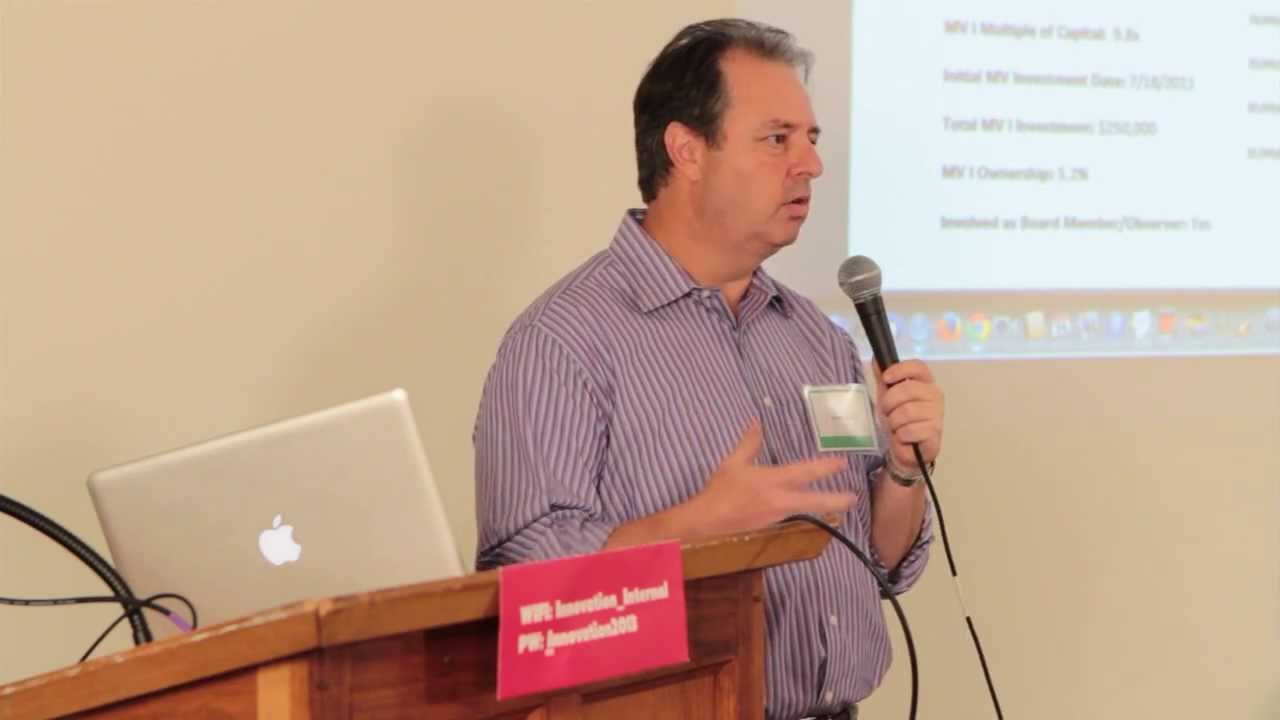

Billionaires drive economic progress by creating innovations that make life more convenient, transforming luxuries into affordable commodities, solving problems governments cannot, building platforms that enable regular people to build wealth, fostering brilliant talent, creating new industries, setting global quality benchmarks, raising living standards, teaching wealth-building principles, making services free for users at the expense of businesses, turning around failing industries, strengthening national economic resilience, funding passion projects, and proving that anyone can achieve success through creation and value-building.
15 Economic Benefits of Billionaires and Why They Matter
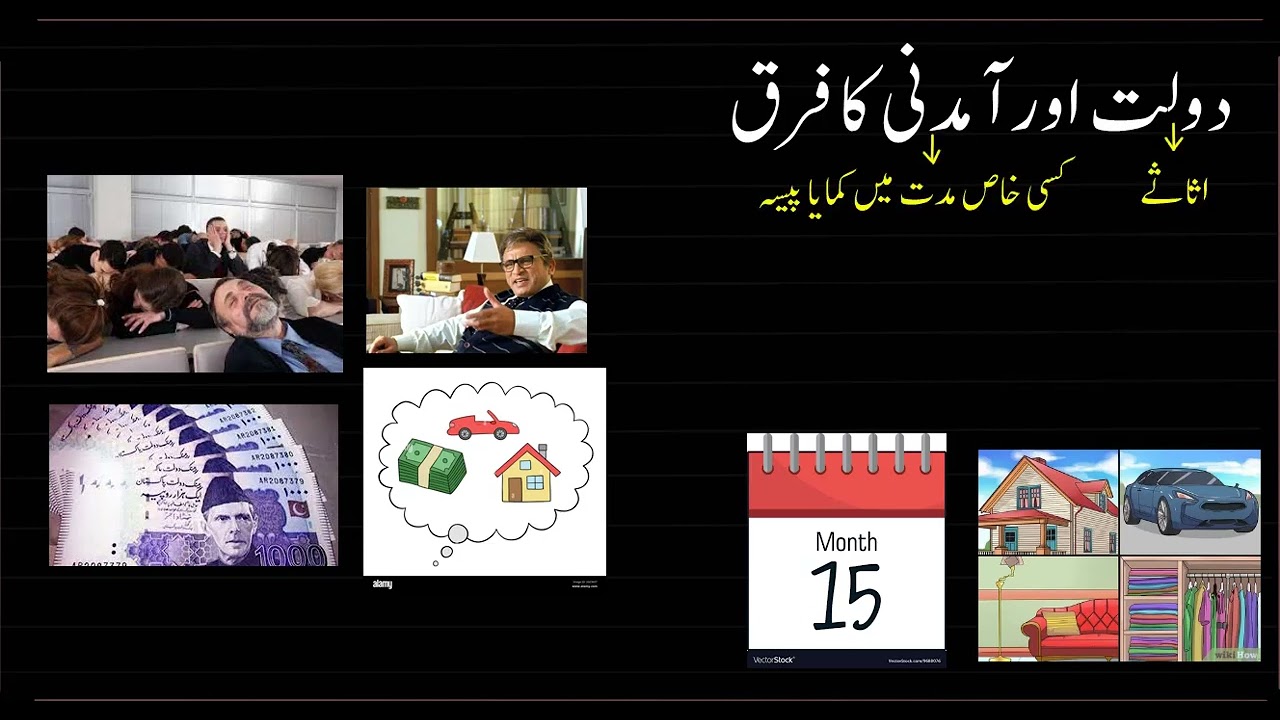
Added:Understanding the distinction between wealth (accumulated assets and equity) and liquid income.
Basic principles of capital accumulation and how private investment drives economic growth.
The concept of 'creative destruction' (Schumpeterian economics) and market-driven innovation.
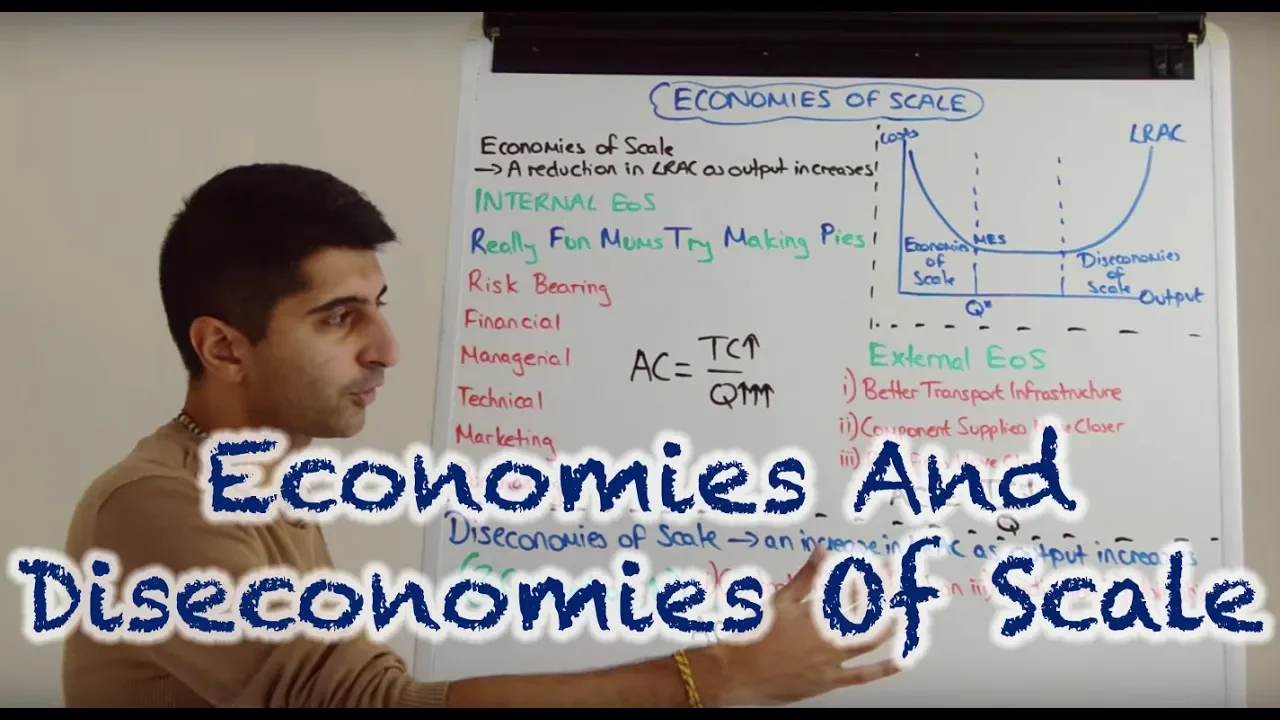
How economies of scale operate to reduce production costs and lower consumer prices.
Analyzing the economic debates surrounding wealth inequality, the Gini coefficient, and progressive taxation policies.
The role of antitrust laws and regulatory frameworks in preventing monopolies and maintaining market competition.
Evaluating the impact of 'philanthrocapitalism' and private foundations versus government-funded social welfare.
Investigating the mechanics of venture capital, seed funding, and how high-risk entrepreneurial ventures scale.
26.3K views1.5Klikes20:13Original Release: 2026-01-04
You know, 85% of all of the innovation and patents in the world come from the private sector. Unless you [music] built, sewn, or grew it yourself, everything around you is made by someone. Last year, 288 people became new billionaires. [music] That's five new billionaires every week. 70% of them were self-made. You gave them your hard-earned money because you benefit from the goods and services they give you. Those [music] who do it at scale got extremely rich. They've earned it.
People love to scream eat [music] the rich. But if the rich stopped working, most of you would run out of things to eat, buy, or use. If you hate billionaires, you're probably hating the wrong ones. Some expand the pie, some steal slices. [music] So stay until the end and we'll give you the filter. Here are 15 reasons why the world needs more billionaires. [music] Welcome to Alux, the place where future billionaires come to get inspired.
Number one, governments do not push humanity forward. Everything you love about life was either made by God or a billionaire. Fundamentally, [music] your rewards in life are in exact proportion to your contribution. Money is the receipt. Nobody built a reusable rocket that could take humans to another planet ever. So, whoever does it deserves to be extremely rich. The car you drive is faster and [music] safer because of billionaires. You can fly across the ocean because of billionaires. You've got access to all of the music, all the knowledge, all the people, all of the entertainment in the world because of billionaires. You become a billionaire by pushing humanity forward. Okay? That is your reward.
Billionaires risk their own money.
Governments risk yours. Governments are necessary, [music] but they're too busy failing at keeping it all together.
Talent rarely works for the government.
If you think billionaires are corrupt, look at your local municipality.
Billionaires earn their wealth by solving problems for you. Governments earn by taking money that you've worked for at the threat of jail or violence.
Number two, they make your life more convenient. Bezos will be the second trillionaire because nobody before him made it possible for you to have anything you want [music] delivered to your door in 24 hours. Four out of five people aged 10 plus own a mobile phone globally. That's 4.9 billion smartphones being able to access data centers around the world, [music] consume media, and communicate by beaming signals to towers and satellites orbiting our planet because someone built them. You can look into a piece of glass, talk to it, and see anyone anywhere in the world. Google and Apple Maps allows you to see any street in the world for free. YouTube is free. They built and grow things on the other side of the planet, put them on airplanes and boats, and bring them to your doorstep, and you have the audacity to look down at the people who were able to figure all of that out. Really?
Number three, billionaires turn luxuries into affordable commodities.
Only the rich had a chauffeur. Now you Uber everywhere. Only the rich would see other countries, but now you book a $199 flight across the world. [music] Only the rich had vacation houses, but now you can rent an Airbnb. Your Netflix subscription is cheaper than what you used to spend going to the cinema. Music is free. Online education is free. You can learn literally anything you want to get good at for freaking free. Buy every yard stick. If you're watching this video, you're living a life of extreme luxury compared to anyone [music] 50 to 100 years ago.
Number four, they solve big problems that others couldn't solve. Groups look for consensus. Individuals look for truth. Governments spend a lot of money trying to minimize [music] risk. They're built to avoid blame. From the transistor to the shipping container to cures for diseases to connecting everyone in the world, all of them done by the private sector. [music] Neither the US, Russia, or China were able to build a reusable rocket. But a billionaire found the smartest people in the world and gave them the resources to do it. SpaceX made science fiction reality. The reward is that he's about to become the world's first trillionaire. You laughed at him while his rockets were exploding, but failure is what leads to breakthroughs. Most breakthroughs [music] look like a waste right before they look like history. In terms of any kind of crisis, [music] the solutions come from the private sector, not from governments. These billionaires are billionaires because they build radio towers, put satellites [music] in space, put millions of miles of cable through the ocean to give you the internet. Yet, most people hate on the rich without realizing just how impactful they are to everyone's lives.
Number five, they create platforms that [music] allow regular people to build wealth. Google gave us email for free.
[music] YouTube pays us to create content to release it to everyone. Apple gave us an environment to deploy our [music] app to millions of people.
Amazon, eBay, Shopify, Stripe allow you to sell anything you want to anyone around the world for free or very cheap.
Social media allows you to talk to people you don't know and tell them about what you do. You become a billionaire by creating millionaires.
They build the infrastructure that anyone could use to get rich. [music] All you need today is a smartphone, an internet connection, and a skill. They removed the gatekeepers and lowered the barriers to entry for everyone.
>> [music] >> You no longer need permission. You need competence. And yes, some billionaires are [music] taking a cut. Good. Because they built the rails, maintained the infrastructure, fought the regulations, [music] handled the fraud, and made it stable enough for you to plug your dream into it. [music] Platforms create opportunities at scale. So, use platforms to make yourself [music] richer. If you're a high net worth individual, stop playing alone, okay?
Join us at alux.com/app. [music] Scan this QR code and you'll get 50% off the lifetime membership. Now, this is not an option that we offer very often.
So, if you're serious, now [music] is the time to subscribe because this offer ends on January 7th. One taxdeductible payment of $4.99 and unlimited lifetime membership [music] to everything the app offers, plus everything coming in the future. With the launch of the Alux network, the ecosystem that we've built on the inside is even more like a digital club for entrepreneurs and high netw worth individuals. Building your empire should not be isolating. So, I'll see you on the inside. In the meantime, let's get back to it. Number six, [music] they foster and invest in brilliant people. Talent needs room and resources [music] to bloom. That is why true talent never works for the government.
Peter Teal became a millionaire by putting money on the internet when he built PayPal. [music] But he became a billionaire by taking half a million dollars and giving it to Mark Zuckerberg to build Facebook and connect everyone in the world. [music] He gave Vitalik $100,000 to drop out of school and build Ethereum. [music] He keeps finding smart people and giving them money to build things of value. You might not know this, but Jeff Bezos was one of the early people to give Google founders enough money to build their first search engine. This repeats in every [music] industry. Okay. Sam Altman was able to bring together literally the smartest software engineering minds in the world and [music] secure enough money for them to build artificial intelligence. You can become a billionaire either by being [music] brilliant or by removing all of the roadblocks ahead of brilliant people.
Number seven, [music] they create new industries. A billionaire doesn't just start a company, they create an ecosystem. They're the reason why your parents don't know what your job title means. One new industry means new jobs, new suppliers, new tools, new skills, new universities teaching it, new careers for people who haven't even been born yet. AI engineers get paid tens of millions of dollars per year. This is an industry that did not exist 5 years ago.
Think [music] about it. Before streaming, Twitch streamer just wasn't a thing. Before smartphones, app developer wasn't a thing. Before crypto, blockchain engineer wasn't a thing.
Before EVs went mainstream, battery supply chain was not a thing. Before private space, reusable rocket engineer wasn't a thing. People complain that technology replaced jobs, but it also created entire categories of work that pay more than anything your grandparents could ever imagine. The old industries go away only if they're no longer needed. Those we need, well, they get optimized for maximum efficiency. Prices go down and everyone eats. Billionaires are the ones crazy enough to light the match and burn the millions, sometimes billions, until the world finally says, "Okay, that is actually the future."
Number eight, they set global quality benchmarks. Now, you don't realize it, but billionaires raised your standards so high you're now impossible to please.
You get angry if your food arrives cold.
You get angry if the website loads in 3 seconds instead of one. You get angry if customer support doesn't respond instantly. You get angry if a product feels cheap. That expectation of quality is a luxury. Once the benchmark is set, everyone else has to follow or die.
Billionaires force the entire market to level up. Number nine, they rise living standards for the masses.
Your standard of living goes up when productivity goes up. And productivity goes up when someone builds a better machine, a better process, [music] a better system. That system is usually a business. Capitalism makes luxuries become common. [music] This is the billionaire flywheel.
Innovation makes it expensive at first.
[music] Scale makes it cheaper next. And competition makes it normal forever.
Businesses reduce the cost of survival.
Cheaper food, cheaper clothing, cheaper communication, cheaper entertainment, cheaper [music] access to information.
The end result, you need fewer hours of work to afford the [music] same life.
That is literally what advancement looks like. A century ago, you washed clothes by hand. You preserved food to survive the winter. [music] You wrote letters and waited weeks. You worked more hours for less comfort. Today, you press a button and you [music] get clean water.
You get instant communication. You get entertainment on demand. [music] You get access to knowledge that kings never had. That did not happen because society became [music] nicer. It happened because billionaires fought to win your money. And the only way to win long term is to give you more value for less [music] effort at a price you are willing to pay. And more billionaires means more competition to deliver value. [music] And competition is what turns expensive into normal.
Number 10, they're the best teachers on how to build wealth. Now, the richest people in the world are [music] walking case studies. Okay, the five big lessons here. First of all, wealth is a byproduct of creating useful change. The new replaces the old because it's more useful. Second, the real currency is [music] leverage. You need to build the machine that builds the product. The bottleneck is not ideas. It is execution at scale. Third, ownership is the only uncapped [music] income. To be rich, you need to own something that increases its value output over time. Fourth, [music] billionaires are professional risk managers. If the reward is big enough, you might as well take [music] the risk.
And fifth, there needs to be a reward for those who get it right and prove what is possible. [music] Just by showing you that it's possible, they're opening up the floodgates for others to do the same. Look, you can think that they've got lucky as much as you want.
And although that might be true for some millionaires, it is not true for billionaires. To get to a billy, you need to do it right over and over and over again. risking and compounding everything while literally changing the world. The more you study billionaires, the more you realize your financial reality improves once you start thinking [music] like a billionaire. Billionaires know that wealth is information. Markets give brutal feedback. That feedback [music] creates competence. Competence creates wealth. they think in multipliers and that you need to work together with other people to build things bigger than you're able to build on your own. Inside the Alux app, we bring people who coach billionaires to show you how to think like one. If you're worth between 2 million and $10 million and want to be worth over 100 million in the next decade, join the room at alux.com/app. [music] And remember to scan that QR code to get 50% off your lifetime [music] membership.
Number 11, they make it free for the user at the expense of big businesses.
Gmail is free for you because we at Alux and companies like us pay thousands of dollars every month to Google. Email is not free for big companies. Economists call this a two-sided market. A platform brings two groups together, then charges one side more so the other side can pay less, sometimes zero. You are the subsidized side. Businesses are the paying side. Businesses fund the infrastructure and you get the benefit.
This is not charity. This is strategy.
The platform makes the experience frictionless for the masses, then monetizes attention, distribution, and demand. A kid with a phone has access to tools that used to be reserved for corporations [music] and governments.
Number 12, they can turn around failing industries. Now, there are industries that get lazy because they are protected. They become inefficient. They overcharge. They underdel. They stop innovating. Then someone with real capital shows up and says, "Cool story.
We're going to replace you." That is literally the buzz word of the last decade. Disruption. Now, here's a simple example everyone understands. Taxis. For years, it was a cartel. Dirty cars, rude drivers, no accountability, and cash only. Then Uber showed up and suddenly you could see the driver, the price, [music] the route, and the rating. Now even old taxi companies had to clean up, add apps, [music] and compete. Billionaires can do what bureaucracies cannot. They can take control, rewrite incentives, and force a broken system to tell the truth. They can take a dying company and inject better leadership, better incentives, [music] better technology, better talent. And when it works, everyone benefits because the industry gets dragged [music] into the modern era. Number 13. A country's economic resilience depends on billionaires. When a country only exports a few things, it is fragile. One shock, one price drop, one geopolitical event and the whole system starts coughing. The more pillars of economic support a country has, the better the lives of its people. And billionaires create export champions. They build companies that sell to the world. As with people, countries get resilient when they can sell valuable things to the world across many [music] industries. The United States is rich because it absorbs money from other countries. Dubai is rich because it's convincing millionaires to invest their own money in projects over there. The UK is a great example. When wealth creators leave, the tax [music] base shrinks, investment slows, and talent follows. A country with no billionaires is usually a country renting its future, importing tech, importing platforms, importing value.
Number 14, they fund passion projects that are not economically viable.
Governments fund what gets a votes.
Billionaires fund whatever the hell they want. A family member has a rare disease that nobody's working on? Have a crack at it. Want to live forever? Sure, throw money at that, too. Ocean cleanup, space exploration, art, culture, museums, scholarships. Find out what's at the bottom of the ocean. Sure. And many of these might not be economically viable for anybody else, but if they're important to billionaires, there will be resources to explore. This is why the world needs more billionaires because the frontier is expensive and progress often starts as a bad [music] investment that only becomes obvious after it works. And number 15, they prove it's possible for anyone. Not everyone.
Because not everyone can become a billionaire. Most people don't want the tradeoffs, [music] the stress, the risk, the responsibility, the years of being misunderstood. But it does matter [music] that it's possible for anyone because the existence of self-made billionaires proves the system can still reward creation. In 2025 alone, [music] UBS reports 196 people became self-made billionaires through their own business activity. [music] And on the Forbes 400 in 2023, about 70% were classified as self-made. Forbes, that means this is not a closed aristocracy. It is a game with an entry point. [music] And because of the devaluation of money, a billionaire will soon be the equivalent of a millionaire in the 1970s. So when we say the world needs more billionaires, we mean we need more people chasing big problems, [music] more people building scalable solutions, more people creating industries, companies and capabilities that make society richer. Because a society that punishes its top builders eventually runs out of builders. So, as more and more people reach the status of billionaire, do you have the ambition to become a billionaire in your lifetime?
How much money do you think you want out of life? Let us know in the comments.
And since you stuck with us until the very end, here is a bonus. Builder billionaires [music] versus taker billionaires. Now, most people hate the rich because they mix two totally different groups into one label. Builder billionaires [music] get rich by building things that create value. They solve problems, create jobs, and make life cheaper, faster, and better. Taker billionaires [music] get rich by controlling access. They use politics, monopolies, loopholes, and regulations to block competition and extract money without creating much value. So, here's the twist. The world does not need more billionaires in general. The world needs more builder billionaires [music] because builders expand the pie. takers just fight over the slices. So if you want a better world, don't aim your anger at wealth. Instead, aim it at corruption. Aim it at anything that keeps others from having a shot at becoming a billionaire themselves.
[music] If you think you've got what it takes, write the word billy in the comments.
[music] We're curious to see how many of you think you'll die a billionaire, and we'll say a big hello to those of you who do. Thanks for joining us today, Alux, and we'll see you back here next time. Until then, take [music] care, my friend.
Up Next
80:25
Enshittification: Why the Internet Is Getting Worse | Doctorow & Bastani
@NovaraMedia
402K views•2025-12-07

5:07
Impact of Yuan in Indo-Russian Trade Amid Sanctions
@WION
261.9K views•2022-07-01
10:33
Behavioral Economics Explained: Rationality, Nudges, and Risk
@crashcourse
1.1M views•2016-03-12

113:18
The Age of Easy Money: Fed & Inflation | Full Documentary
@frontline
21.2M views•2023-03-15
Related Study Plans & Knowledge Roadmaps
Structured learning paths in Economics
economics
Sovereign Debt: Defaults, IMF & Restructuring
01Introduction to Sovereign Debt & Government Bonds
02Debt Sustainability & Credit Ratings
03Anatomy and History of Debt Crises
+ 2 more learning modules
12h5 modules
Explore Roadmap
economics
Market Design: Matching Theory & Gale-Shapley
01Introduction to Market Design and Price-Free Markets
02Two-Sided Matching & The Gale-Shapley Algorithm
03School Choice Systems and Mechanism Design
+ 2 more learning modules
10h5 modules
Explore Roadmap
economics
Impossible Trinity: Forex, Capital & Policy
01Introduction to Monetary Policy and Central Banking
02Exchange Rates and International Capital Flows
03The Mundell-Fleming Model
+ 2 more learning modules
8h5 modules
Explore Roadmap
economics
Healthcare Economics: Market Failures & Systems
01Introduction to Healthcare Markets and Market Failure
02Asymmetric Information and Adverse Selection
03Moral Hazard and Insurance Design
+ 2 more learning modules
12h5 modules
Explore Roadmap