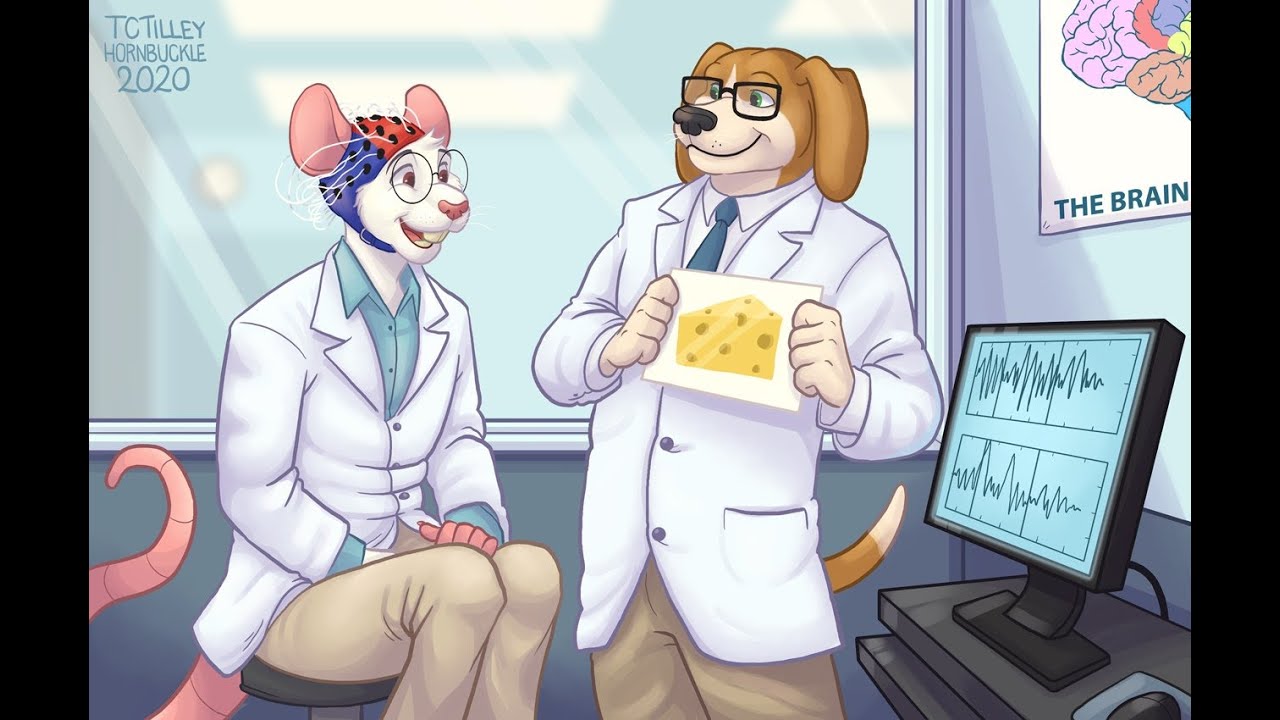





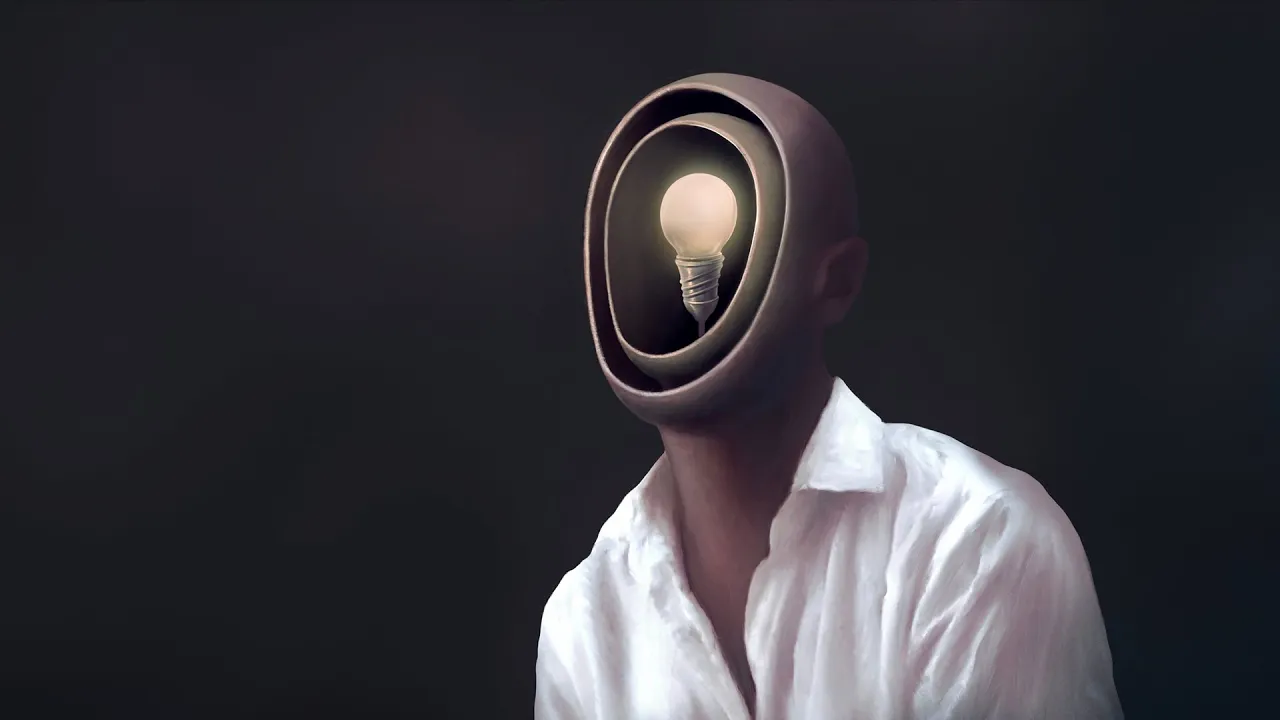

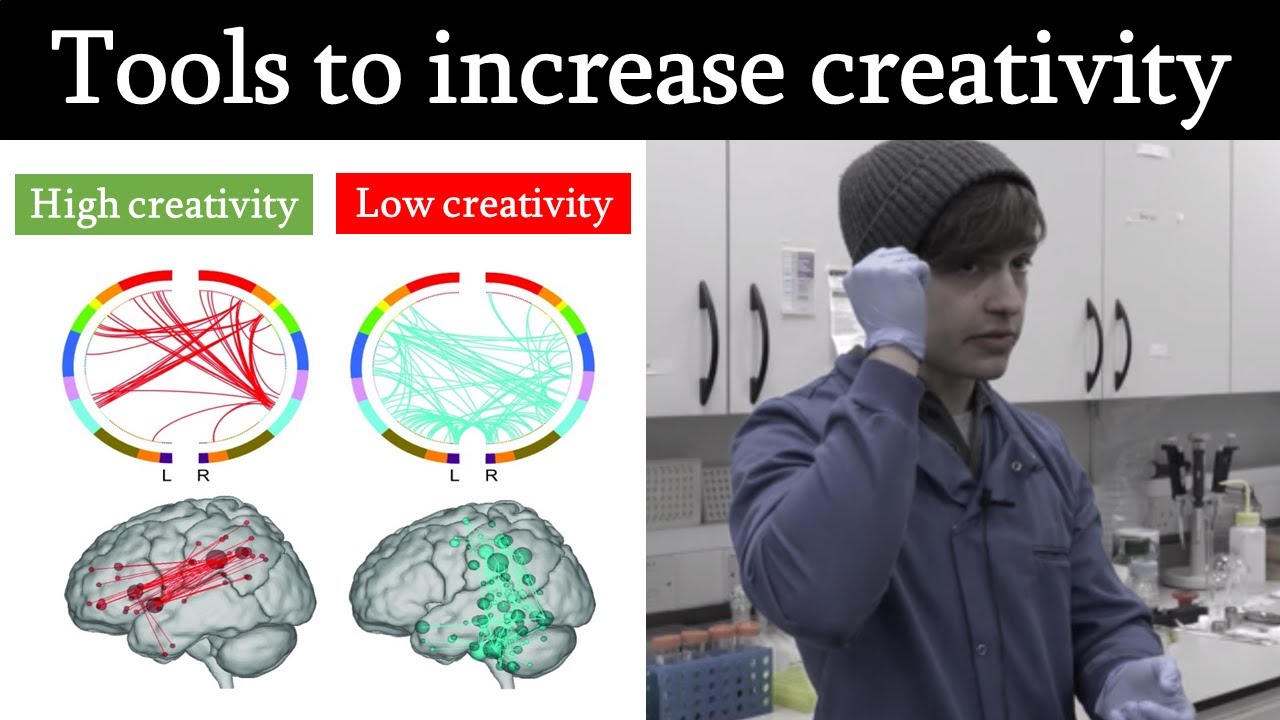













Creative insight, or the 'Eureka moment,' is a sudden burst of understanding that occurs when the brain brings together weak or remote associations between ideas, typically in the right temporal lobe, and is facilitated by creative individuals' tendency to be more distractible and absorb more environmental stimuli, which can trigger these unconscious connections to pop into conscious awareness.
The Neuroscience of Eureka Moments with John Kounios, PhD
Added:Basic neuroanatomy and neuroimaging techniques, particularly Electroencephalography (EEG) and functional Magnetic Resonance Imaging (fMRI), which are used to measure brainwaves and blood flow during cognitive tasks.
The fundamental distinction in cognitive psychology between deliberate, step-by-step analytical problem-solving and sudden, intuitive insight-based problem-solving.
The concept of neural networks, specifically the interplay between the Default Mode Network (associated with daydreaming and creative synthesis) and the Executive Control Network (associated with focused attention).
Basic principles of semantic memory networks, detailing how the brain stores, organizes, and retrieves conceptual associations.
Practical applications of cognitive incubation, such as leveraging sleep, positive mood, and non-focused attention to systematically foster 'Eureka' moments in daily life.
The exploration of neuromodulation techniques, such as transcranial Direct Current Stimulation (tDCS), to investigate whether creative insight can be artificially facilitated.
The study of computational creativity and Artificial Intelligence, analyzing whether neural networks can truly replicate human-like leaps of insight or if they are limited to analytical processing.
Clinical and therapeutic implications, examining how deficits in insight and cognitive flexibility manifest in various neurological and psychiatric conditions.
1.8K views17likes14:59Original Release: 2011-06-15
[Music] hello and welcome to the drexal interview I'm your host Paula morance con and today our guest is cognitive neuroscientist Dr John kunos Dr kunos a professor here at Drexel University is involved in exploring the part of the brain where sudden creative Insight takes place Dr kunas welcome to the drexal interview thanks we're happy to be here um people have called this sudden burst of creative understand understanding or Insight that you study the Eureka moment or the aha moment can you tell us a little bit about what this kind of insight is and how it differs from normal forms of thinking processes well most people have had this kind of sudden Insight it occurs when you're you're working on a problem you get stuck usually you don't know how to proceed you don't know what the solution is and perhaps you've even given up for a while and then the solution just pops into awareness pops into Consciousness seemingly from nowhere uh it could be in a dream it could be while you're taking a shower it could be while you're doing something completely irrelevant but it just pops into Consciousness and um this has been known about for a long time I me even in uh ancient Greek times there's the story of uh Archimedes the mathematician uh he had been so the legend goes uh he had been given a commission by King Hiro King hyro had had bought a gold crown and he suspected that it was uh mixed in with with a baser metal and he asked aredes to determine whether this Crown was really pure gold or had something Bas or mixed in but to do it without damaging the crown so Archimedes thought about it and thought about it and uh he one day he was going to take a bath and he filled the tub with water and as he stepped into the tub and saw the water level rising he had this sudden flash of insight and so so the legend goes He shouted eureka and started running out of the building running down the street without even putting his clothes on and the solution to the problem was that any object displaces an amount of water that's equal to the volume of the object so if he if he took the crown immersed it in water he could measure the amount of water it displaced and then if you took this the same weight pure gold and immersed it in the tub and measured the amount of water it displaced and if they were the same then the crown had to be pure gold if they were different then it was wasn't just pure gold but that that's the quintessential aha moment or Eureka he literally shot Eureka which in Greek means I found it okay and there have been other famous incidents um from Legend usually Isaac Newton sitting under the apple tree and the Apple boing his head and the theory of gravity occurring to him but everybody's had at Le you know usually more mundane uh insights about solving a problem about interpersonal relationships about almost anything uh so the uh uh and and usually these creative insights they differ from normal thought in that they seem to come from nowhere I mean if you sit down and do arithmetic problem it doesn't come from nowhere you know step by step by step how to do it uh but when you you have a creative Insight usually you're not totally aware or aware at all of the the steps that must occur to get that to that solution and uh usually those go on beneath the level of awareness and then just hop into Consciousness at certain point well from what the two examples that you gave the gravity example the Apple falling and then the bathtub example both happen in very different contexts from where the actual problem solving would take place there's a kind of an analogy aspect working there is that part of what constitutes this Insight moment well it can it doesn't have to be uh sometimes we have an Insight by recognizing how a particular situation may be in in a deep way similar to some other situation that we've encountered in the past and usually that analogy it's not obvious uh so it's not immediately apparent but something can can spark it to pop into Consciousness um but there are situations where it doesn't have to be analogy I mean there are all sorts of uh uh word problems and arithmetic problems or geometrical problems or even interpersonal problems that we might have that don't necess necessarily rely on tapping some past experience we've had it's just the the idea is that that these creative insights usually involve what we call remote associations between things so we have ideas that are associated and some of them are weakly associated so we don't uh they don't immediately pop into Consciousness but on certain in certain situations these distantly remote distantly or remotely Associated ideas can emerge into Consciousness and usually it's very suddenly so the nonobvious becoming obvious okay and how then do you measure that I mean there's something to do with gamma Rayes gamma waves excuse me not Rays we're not in uh science fiction here but tell us how do you measure gamma waves and and uh where where do they occur could you tell us a little bit about that process uh in in our research we uh we looked so so far we've looked at a particular type of problem that involves finding the these remote Associates I'll give I'll give an example okay uh we give say three words to a person and they have to think of a fourth word that forms a a compound or familiar phrase with each of the three words so one example would be the person might be given the three words Pine sauce and crab and if you take them moment think about it's not obvious what word can can fill the the bill there the solution to that one is Apple pineapple crab apple applesauce okay and frequently but not always when people solve a problem like that they have an aha moment um but not always so what we do is we give people a series of these problems and after they solve each one for the ones that they do solve they don't solve all of them we ask them did you have an aha or not for that particular solution so we can look we can separate the problems the ones that they solve that individual solve with the sudden flash of insight and ones that they didn't and we measure brain activity while they solve these problems so we can look separately at brain activity when they solve a problem with a flesh of insight and when they solve a problem without a flesh of insight and we compare them and we've used two different brain scanning techniques this is research that I've done in collaboration with a colleague at Northwestern University uh Mark Jung Bean uh he's used functional magnetic resonance imaging which is just MRI a lot of people have MRI but you can look at activity in the brain rather than just the brain structure and I've used EG electrogram to look at uh electrical activity in the brain the uh my colleague Mark's brain scanning technique the fmri gives you really good information about specifically where in the brain something is happening but it's less precise about when it happens EEG gives you not really precise information about where something's happening but it tells you exactly when it's happening so what we found is by comparing the two techniques is that when people solve this kind of problem and they have a flash of insight that uh it corresponds to a sudden change in electrical brain activity high frequency electrical brain activity uh called uh gamma waves and it's in the right temporal load so it's just above the right year and uh the fmri shows that that's exactly where it's happening and the EG shows that this happens at just the moment that the person has the idea pop into their heads the solution so it seems to be right hemisphere specifically right temporal lobe just about the right ear at least for these kinds of verbal problems now we're starting to look at other kinds of problems uh to do with interpreting pictures or uh riddles and things like that to see whether other erors of the brain are involved in having sudden insights but we haven't gotten to that point so preliminarily we don't know if this is a Eureka area of the brain or one of several possible Eureka areas of the brain but this is the area that shows up again and again in both of your research and one is the when and the other is the where right okay that's fascinating what about the leadup to the Eureka moment is there any way that you can trace what's going and this Subterranean process I guess that that leads to the Eureka moment are there traces of that elsewhere in the brain well that's a very good question because the in in uh Behavior research that studies how people solve these problems just from looking at their behavior there seems to be no evidence of any answer to the solution up to the moment when it pops into their head so the the the implication of that is that there's really nothing going on and then all of a sudden it pops into the head but we know that that's not completely accurate we the studies have been done uh in which uh stimula been presented to one hemisphere of the brain or the other so for instance if you present if a person's looking straight ahead and you flash a stimulus on their left that information goes first to the right hemisphere of the brain If you present it on the right it goes first to the left hemisphere of the brain and by selectively presenting stimula to the left or right hemisphere it's been shown particularly by my colleague Mark Jung deman that uh information about the correct response about the solution to the problem does seem to exist in the right hemisphere before you get the solution so the the the solution seems to be activated but it's weak and it hasn't yet popped into Consciousness and it's just waiting for some event just kind of nudge it right into the threshold of awareness FC so that it pops into Consciousness um by measuring EG uh We've shown that before the solution pops into Consciousness before you have that burst of high frequency EG activity in the right hemisphere uh there's something interesting going on in another part of the brain uh in visual part of the brain where that process visual information and that is for a brief moment less than a second uh the brain seems to reduce visual information going to the right hemisphere it's almost like uh if I ask you a hard question sometimes you might close your eyes or look to the side so you can focus on your own thoughts well it seems as if the brain does the same thing in certain situations it can cut off the flow of incoming information for a moment to concentrate in that to concentrate to find that weakly activated subconscious solution which then pops into awareness wow and it's specifically again for the kinds of problems we've looked at right hemisphere of the brain and not not the left hemisphere now have you correlated this at all with well I guess you've given particular sorts of problems to people but have you looked at the people themselves the the the um the subjects of your study in terms of the kinds of work they do for example or the sort of thinking they do generally and how it might correlate with their having these moments I can think of certain professions for example where this would be more common than others and people's brains would be more attuned to to that kind of thinking well we we're just starting to look at that and there is some prior research that suggests that people who have these insights and in general people who seem to be more creative exactly what that means we're not yet sure right um have uh a different way of deploying attention so people who are tend to be creative tend to spread their attention out uh they tend to not be they tend to be distractable um so for instance I might find it hard to sleep if there's noise going on around or to concentrate on something if there's a distraction going on whereas people who are at the the uh Le say less creative again exactly what that means we're not sure tend to focus very well and shut out distractions very well they're more methodical they're more methodical and they're they're less distractable now what seems to be going on is that people whose attention is spread out uh take in more of the environment they take in peripheral stimula things going on around them and those stimula can trigger these unconscious Concepts and boost them a little so they can pop into awareness so you could be say uh you could have worked on a problem for a while thought about you know what do I do in this situation and then have no idea and then you give up for a while you maybe you walk down the street and your attention is all spread out and maybe uh something caught your attention a little bit maybe something in a store window or something on a magazine cover and that's just enough to Prime an a weak Association that will pop into Consciousness but if you're walking down the street and your attention is narrowly focused you don't don't take in all those stimul the environment and then they can't they can't energize these unconscious insights yeah that's fascinating to me as a writer and as knowing many people who are poets for example the whole notion of making those connections of unlike things it seems to me that is so much part part of the creative processes to link things that you wouldn't normally think of together and that seems to be what this notion of distractability uh that seems to be very much does that ring through it rings true and and being you know scattered and and just picking up stimuli and then having it help you solve a problem that is really fascinating um tell me something though um when we talk about Insight we tend to think in terms of problem solving or even I mean if we're thinking about writing or poetry working out something that's somewhat intellectual is there any sense in which a certain kinds of relational things or even emotional things can be perceived as Insight um can you have an Insight that you hate someone one for example
Up Next
19:57
Network Neuroscience: How Brain Structure Mirrors Social Networks
@pennngg7505
1.5K views•2015-12-05
21:55
Deciphering Neural Circuits Controlling Anorexia in Mice | Richard Palmiter
@AllenInstitute
2.3K views•2011-10-10

4:10
Vagus Nerve (CN X): Anatomy, Nuclei & Functions Explained
@Alilamedicalmedia
305.2K views•2022-10-31
13:03
How Exercise Benefits Your Brain: Science Explained
@TED
11.4M views•2018-03-21
Related Study Plans & Knowledge Roadmaps
Structured learning paths in Neuroscience
neuroscience
Appetite Regulation: Brain Circuits & Hormones
01Foundations of Endocrinology and Brain Anatomy
02Introduction to Energy Homeostasis
03Peripheral Signals: Leptin, Ghrelin, and Insulin
+ 2 more learning modules
14h5 modules
Explore Roadmap
neuroscience
Neuroeconomics: Value, Risk & Brain Mechanisms
01Foundations of Neuroscience and Brain Anatomy
02Introduction to Neuroeconomics and Subjective Value
03Dopaminergic Prediction Errors & Reinforcement Learning
+ 3 more learning modules
18h6 modules
Explore Roadmap
neuroscience
Spatial Navigation: Cells, Grids & Brain Maps
01Foundations of Brain Anatomy and Memory
02Place Cells and Head-Direction Cells
03Grid Cells: The Brain's Coordinate System
+ 2 more learning modules
12h5 modules
Explore Roadmap
neuroscience
BCIs: Neural Decoding & Prosthetic Control
01Neuroscience Foundations: How the Brain Signals Intent
02Signal Acquisition: Recording the Brain's Activity
03Neural Decoding: Translating Brain Waves into Data
+ 2 more learning modules
25h5 modules
Explore Roadmap