William Holman Hunt's 1853 painting 'The Awakening Conscience' uses rich symbolism to depict a woman's spiritual awakening from a materialistic life, where the woman's reflection in a mirror reveals her true self as she turns away from her wealthy but morally empty partner toward spiritual enlightenment.
The Awakening Conscience: Victorian Morality in William Holman Hunt's Art
Added:Deep Dive
The Pre-Raphaelite Brotherhood: Understanding the artistic movement founded by Hunt, Millais, and Rossetti, characterized by detailed realism, vibrant colors, and moral seriousness.

pre raphaelite brotherhood
63.9K
The Pre-Raphaelite Brotherhood was formed in 1848 as a group of seven artists including William Holman Hunt, John Everett Millais, and Dante Gabriel Rossetti. Named after Italian artist Raphael, they believed European art had become mechanistic after Raphael. Inspired by the German Nazarene Brotherhood (1809), they sought to return to medieval spirituality and authentic artistic expression. The group included painters, poets, and critics, with Thomas Woolner as the only sculptor. They published 'The Germ' magazine and operated as a secret society, concealing membership from the Royal Academy due to their belief that Academy artists created artificial paintings.
Click to watch →

Literary Movements in English Literature | Complete Overview
45.3K
The Pre-Raphaelite Brotherhood was a late 19th-century English movement beginning in 1848, ostensibly based on undoing innovations by Raphael. They rejected Renaissance realism as treachery and wanted to return to the simplicity, truthfulness, and spirit of devotion in Italian painting before Raphael. Major figures include Dante Gabriel Rossetti, William Holman Hunt, John Everett Millais, William Morris, and Christina Rossetti (most were painters as well as poets).
Click to watch →

Let’s Discuss the Pre-Raphaelites Brotherhood ~ Soft Spoken Art History ASMR Style
8.4K
The Pre-Raphaelite Brotherhood was an association of painters formed in London in 1848, based in England during the 1800s. Named after the Italian painter Raphael, they sought to return art to a pre-Raphael era characterized by naturalism and bright colors. The founding members were William Holman Hunt (21), John Everett Millais, and Dante Gabriel Rossetti. They deliberately challenged the Royal Academy's established style of brown paint and idealized subjects, publishing their manifesto in The Germ. Their principles emphasized painting direct from nature with objective truthfulness and genuine ideas, with sympathy for art before Raphael. This movement represented a young, alternative force in British art, similar to how punk rock or hippies represented alternative culture in later decades.
Click to watch →
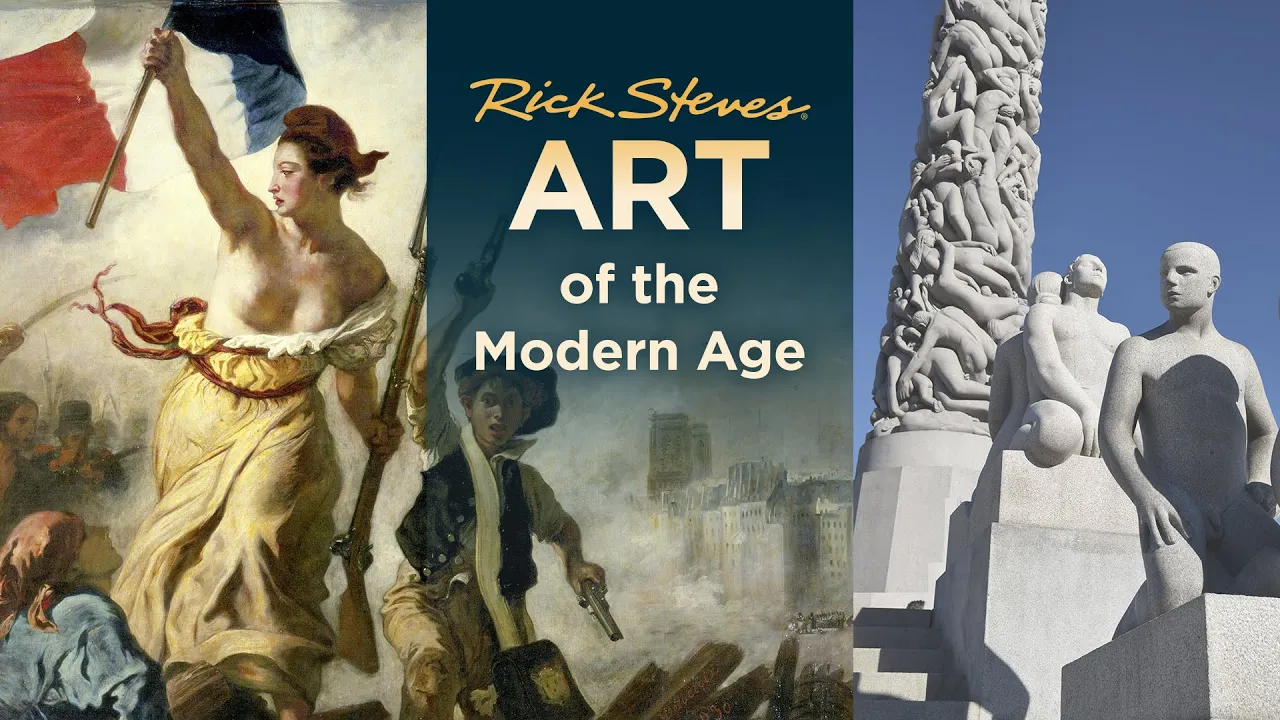
Rick Steves Art of the Modern Age
234.9K
Around 1850 in England, a spirited brotherhood of artists called themselves the Pre-Raphaelites. Turning away from the frenzy of the Industrial Age and inspired by the dreamy medieval world before Raphael, they reveled in medieval damsels, mythical goddesses, and legendary lovers immersed in nature's serenity. They created melancholy visions of pure beauty, exemplified by their quintessential masterpiece 'Ophelia,' where the tragic figure is captured between saintly and sensual states while nature simultaneously flourishes and decays around her.
Click to watch →

Прерафаэлиты l В Поиске Неземной Красоты l История Возникновения Братства l #ПРОАРТ
25.5K
The Pre-Raphaelite Brotherhood was formed in 1848 by three students of the Royal Academy of Arts: Holman Hunt, Dante Gabriel Rossetti, and John Everett Millais. They were dissatisfied with the conservative Victorian art system and sought to reform it. The name 'Pre-Raphaelite' comes from their admiration for artists who worked before Raphael, particularly Florentine Renaissance artists from the Quattrocento period such as Perugino, Bellini, Fra Angelico, and Botticelli. They believed these earlier artists had captured nature more authentically than Raphael and his followers.
Click to watch →
Deep Dive
Victorian Social Morality and Gender Roles: Familiarity with 19th-century British societal expectations, specifically the rigid domestic ideals and the societal stigma surrounding 'fallen women'.
![La Regina Vittoria (1819-1901) - di Giovanni Aldobrandini [2016]](https://i.ytimg.com/vi/7bLtG_7gaOk/maxresdefault.jpg)
La Regina Vittoria (1819-1901) - di Giovanni Aldobrandini [2016]
13.4K
Victorian society emphasized austere morality uniting aristocrats, bourgeoisie, and workers through values of family devotion, religion, patriotism, and conventional behavior. Women's roles were severely restricted—confined to marriage and motherhood, unable to vote, own property independently, or hold bank accounts. Their education was limited, and acceptable professions were restricted to teaching and domestic service. Female sexuality was strictly controlled while male vice was tolerated. This double standard created prostitution proliferation, with nearly 9,000 prostitutes in London by mid-century. Victorian values emphasizing respectability, duty, and fear of shame profoundly shaped society. Margaret Thatcher later invoked these ideals in the 1980s. Liberalism constituted a fundamental characteristic of Victorian civilization, enabling Britain to develop institutions respecting fundamental freedoms while managing complex social changes, though this same civilization involved exploitation and oppression in colonial contexts.
Click to watch →

Charla La Sexualidad en Klimt y Freud, en el Real Club Náutico de Gran Canaria
132
Victorian sexual morality was characterized by extreme repression. For both men and women, sexuality was considered dirty and vicious, to be avoided except within marriage. Women's sexuality was reduced to reproductive function - outside of this, they had no sexuality. Women were confined to the private sphere of home and child-rearing, while men were allowed to pursue sexual desires privately, including with prostitutes. This created a double standard where men could publicly appear as family men while privately satisfying their desires.
Click to watch →

What was the Victorian Era like? | Intro to 19th century culture, social class, work, family & love
23.8K
Victorian society enforced rigid separate spheres, confining women to domestic roles as moral exemplars while men dominated politics and business. Women faced immense pressure to embody angelic perfection while providing comfort and moral guidance. The rise of women's rights movements challenged these norms, advocating for female equality. Victorian attitudes toward sexuality were extremely conservative, avoiding open discussion. Men could cheat discreetly, while ultra-conservative families promoted the idea that wives should not enjoy marriage. Average Victorians accepted marital intimacy but rarely discussed it. This harsh moral framework extended to parenting and employment, fostering the 'stiff upper lip' attitude of enduring hardship without complaint.
Click to watch →
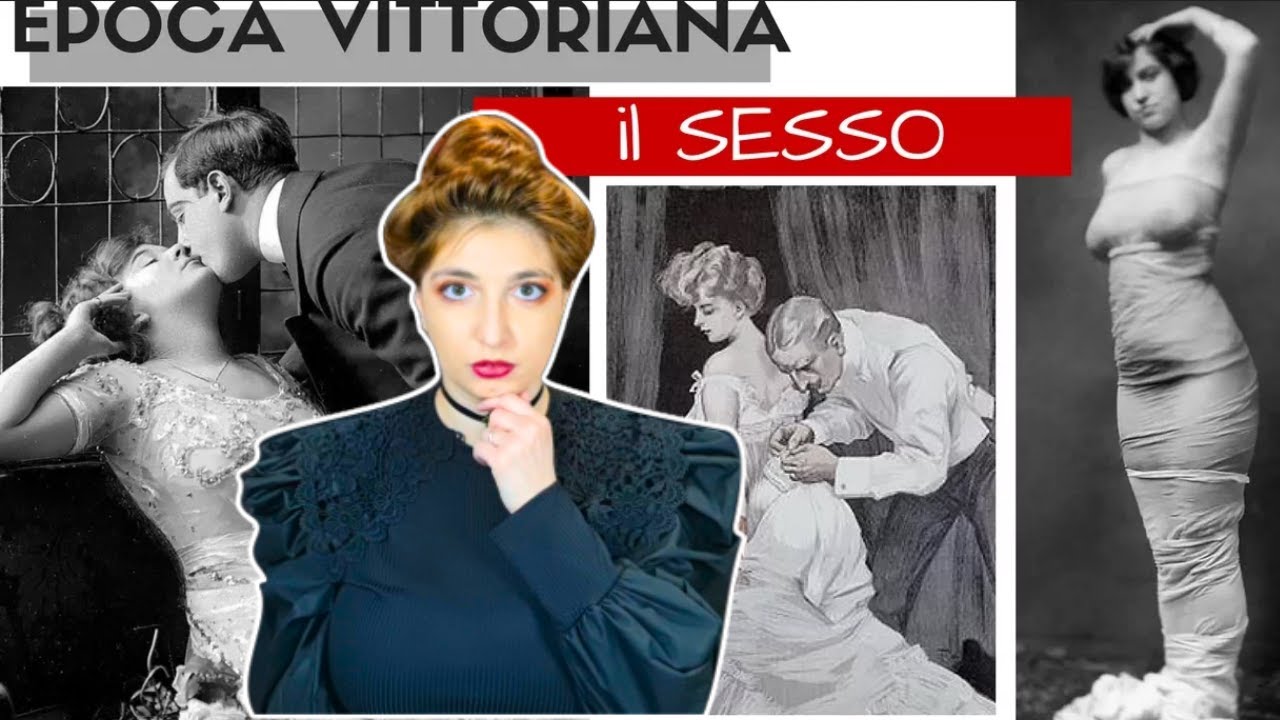
PAZZA EPOCA VITTORIANA 3 - IL SESSO parte 1 MAD VICTORIAN AGE - SEX part 1 (SUB ENGLISH)
610.6K
Victorian society maintained a facade of moral purity that concealed widespread sexual practices including prostitution, orgies, BDSM, and pedophilia. Women were viewed as 'Angels of the Hearth' without sexual agency, becoming their husbands' property upon marriage. Legal frameworks explicitly permitted husbands to have affairs while punishing wives for infidelity. Men enjoyed sexual freedom while women faced severe social condemnation for any sexual expression. Medical ignorance led to dangerous practices like the missionary position as the only acceptable sexual act, with masturbation considered life-threatening. Female pleasure was denied, and hygiene practices like using bidets were deemed sinful. This system institutionalized gender inequality and sexual double standards.
Click to watch →

پرونده کوردلیا باتکین؛ انتقام زنانهای که تاریخ رو شوکه کرد
16.7K
Victorian society maintained rigid gender roles and social structures that governed all aspects of life. Marriage was a formal arrangement rather than a romantic partnership, with men proposing through family introductions and pre-marital relationships being taboo. Women were expected to be domestic, modest, and reserved, while men were the breadwinners. Activities like drinking, gambling, and socializing in bars were considered masculine pursuits. Victorian beauty standards often conflicted with individual self-perception, as society might describe someone as 'fat' or 'ugly' while they believed themselves beautiful. Photography was considered unusual and even scandalous, with people who posed for photographs often seen as vain or eccentric. Victorian sexual morality was extremely strict, with public discussion of sexuality being taboo and women who engaged in sexual activities outside marriage being severely stigmatized.
Click to watch →
Deep Dive
Symbolism and Iconography in Art: Basic knowledge of how narrative paintings use everyday objects, interior design elements, and body language to convey deeper moral or spiritual meanings.

Introducing Art History
102.9K
Iconography is the study of visual content and symbols within a piece of art. Symbols are images that stand for other images or encapsulate larger ideas. In Christianity, symbols identify specific people: a female saint with a broken wheel is likely Saint Catherine (martyred on the wheel), a woman with a baby and lily is the Virgin Mary, a man with a key is Saint Peter, Saint Lucy has her eyes plucked out, Saint Francis has stigmata, and Saint Jerome is depicted with the Bible.
Click to watch →

OS SEGREDOS DE SÃO MIGUEL
33.9K
In sacred art, certain colors and symbols have specific meanings. Yellow is always present as a background in religious images, and halos are always golden or yellow. These elements represent the splendor, the place of light, and the place of the saint who has passed through tribulations and achieved eternal life. While these symbols are not exclusive to any particular patron saint, they form part of a broader iconographic tradition that communicates spiritual truths through visual language. The figure of Archangel São Miguel has been prominent since the beginning of Christian art. In Romanesque and Gothic cathedrals, when Christ Pantocrator (Christ as Judge) was not represented, São Miguel was often depicted with the balance. His importance was such that he was the second most prominent figure after Christ. When entering a church, one would see him on the tympanum of the door, weighing souls, always holding the balance from the Apocalypse passage where he contends with demons. While the Bible does not explicitly describe São Miguel's role in guiding souls, medieval literature developed this function through artistic and literary tradition.
Click to watch →

The Return of Jesus THE BOOK OF REVELATION Session 67
8.6K
Iconography is a form of art that conveys spiritual truths and theological stories through symbolic imagery. Unlike historical photographs, icons are not intended to be understood literally. Every element in an icon usually has an underlying meaning and tells a theological story. In the early church, iconography was often referred to as 'the Bible for the illiterate,' communicating biblical stories and theological truths for those who could not read. The vast majority of Protestants would accept pictures in children's Bibles, Christmas ornaments, or artistic portrayments of Jesus, as these are not intended to be literal representations but rather artistic expressions of faith.
Click to watch →

Saiba mais sobre Iconografia
13.5K
Iconography is the study of images, icons, and written representations, where images are considered 'written' because they translate God's word into comprehensible visual form. Historically, the Church used icons, stained glass, and religious images to evangelize illiterate populations during the Middle Ages. Key symbolic elements include the Pantocrator (All-Powerful One) seated on a throne above an arch, representing God the Father. Incense symbolizes prayer rising to God. The Book of Revelation features 24 elders, seven candlesticks representing the Holy Spirit, and four living creatures (also called Evangelists) that predate the Evangelists and appear in the Old Testament, symbolically representing the four wheels of God's chariot.
Click to watch →

CI MANCAVANO GLI SCACCHI
83.2K
Religious art uses specific visual symbols to convey meaning: bipenne weapons have two blades; cathedral mosaics feature religious figures like Saint Joseph (with beard and crown) and the Madonna (with red hair and child); gardens and fountains symbolize paradise; lions represent strength and royalty; crowns and rubies indicate divine status; arrows and fallen figures may represent martyrdom or sacrifice. These symbols help viewers identify and interpret religious narratives through visual cues.
Click to watch →
Prerequisite Knowledge
- Concept 01The Pre-Raphaelite Brotherhood: Understanding the artistic movement founded by Hunt, Millais, and Rossetti, characterized by detailed realism, vibrant colors, and moral seriousness.
- Concept 02Victorian Social Morality and Gender Roles: Familiarity with 19th-century British societal expectations, specifically the rigid domestic ideals and the societal stigma surrounding 'fallen women'.
- Concept 03Symbolism and Iconography in Art: Basic knowledge of how narrative paintings use everyday objects, interior design elements, and body language to convey deeper moral or spiritual meanings.
Subsequent Learning
- Step 01Comparative Victorian Art Analysis: Examining companion pieces or similar thematic works from the era, such as Augustus Egg's triptych 'Past and Present' or Dante Gabriel Rossetti's 'Found'.
- Step 02Art as Social Commentary: Investigating how 19th-century visual arts functioned as a vehicle for social reform, challenging or reinforcing class and gender structures.
- Step 03Feminist Art History Perspectives: Analyzing the depiction of female agency, spiritual redemption, and the 'male gaze' in Victorian narrative painting.
- Step 04Victorian Material Culture: Exploring how the rapid rise of industrial manufacturing, consumerism, and home decor in the 1850s influenced contemporary artistic themes of domesticity and superficiality.
Opening Moments
Opening Moments
0:14Playing Section
- 1
Capture initial reaction moment with emotional outburst.
- 2
Establish scene with background music and atmosphere.
- 3
Initiate experience through sensory auditory elements.
Feminist and Socio-Economic Re-evaluations of the Fallen Woman
While traditional readings of The Awakening Conscience celebrate William Holman Hunt’s moralizing narrative of spiritual redemption, feminist and Marxist art historians offer a critical counter-reading. Rather than viewing the woman’s realization as a pure, divinely inspired spiritual awakening, these critics argue the painting exposes the systemic hypocrisy of Victorian gender and class structures. Scholars highlight how the work reinforces the patriarchal trope of the 'fallen woman,' placing the entire moral burden of the illicit affair on the female subject, while her wealthy male companion remains comfortably unchastised and free from societal ruin. Furthermore, the cluttered, gaudy interior is analyzed not just as a set of moral symbols, but as a critique of capitalist commodification, wherein the woman herself is kept as a consumer object. From this perspective, Hunt’s painting is less an objective celebration of Christian redemption and more a reflection of Victorian anxieties surrounding female autonomy, class exploitation, and the containment of women within rigid domestic spheres.
Deep Dive
Comparative Victorian Art Analysis: Examining companion pieces or similar thematic works from the era, such as Augustus Egg's triptych 'Past and Present' or Dante Gabriel Rossetti's 'Found'.

Большинство людей не понимают, что происходит на этой картине
64.2K
Victorian art employed symbolic composition where every object served as evidence in a visual narrative. William Holman Hunt's 'The Awakening Conscience' demonstrates this technique: the woman's missing wedding ring reveals her status as a mistress; the overly polished room indicates a 'maison de convenance' rather than a true home; the cat attacking a wounded bird symbolizes her vulnerable position; the discarded glove represents future abandonment; the fraying tapestry depicts her unraveling life; the glass-covered clock shows her existence trapped in a display case. John Ruskin taught the public to read paintings object by object, transforming visual art into a form of moral and psychological analysis where material details communicated deeper truths about human condition.
Click to watch →
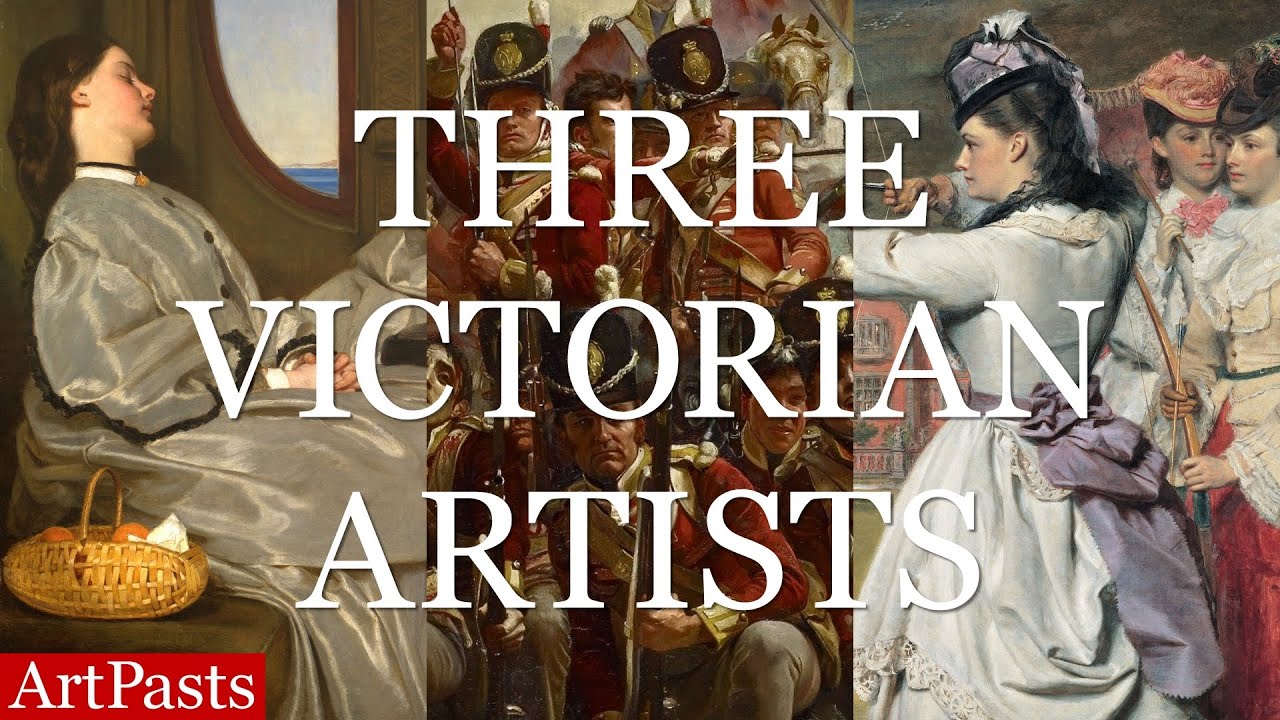
Compilation - Three Victorian artists
246
This video analyzes three significant Victorian artists: Augustus Leopold Egg's 'The Travelling Companions' (1862), which explores themes of observation, privacy, and the male gaze through its enigmatic composition; Elizabeth Thompson (Lady Butler), who broke barriers as a successful woman military painter in a male-dominated field; and William Powell Frith's 'The Fair Toxophilites' (1872), depicting Victorian women practicing archery, a sport that became increasingly popular among women in the 19th century as a socially acceptable form of outdoor exercise and social interaction.
Click to watch →

23-03 Victorian Art
552
Victorian art contained complex social critiques hidden beneath seemingly innocent surface appearances, as demonstrated by five key examples: Turner's 'Plowing Up Turnips' (1809) contained multiple meanings including rural poverty and worker discontent; Constable's 'Flatford Mill' (1816) represented childhood memories during the harsh Year Without a Summer; Millais's 'Christ in the House of His Parents' (1850) provoked outrage by depicting the Holy Family realistically; Whistler's 'Nocturne' (1877) sparked the famous trial about artistic interpretation; and Fildes's 'The Doctor' (1890) later became a political tool in debates about healthcare policy.
Click to watch →

L'Art en Question 3 : BOTTICELLI - La Naissance de Vénus (version finale)
142.5K
Victorian art created a contradiction: while painting more female nudes than ever, artists insisted on viewing them as art to be appreciated disinterestedly, like children playing. The female body was required to remain chaste without sexual allusion, while desire was transferred to surrounding characters. This resulted in scenes that became ridiculous, with exaggerated poses and gestures that constantly reminded viewers of the nudity without sexuality.
Click to watch →
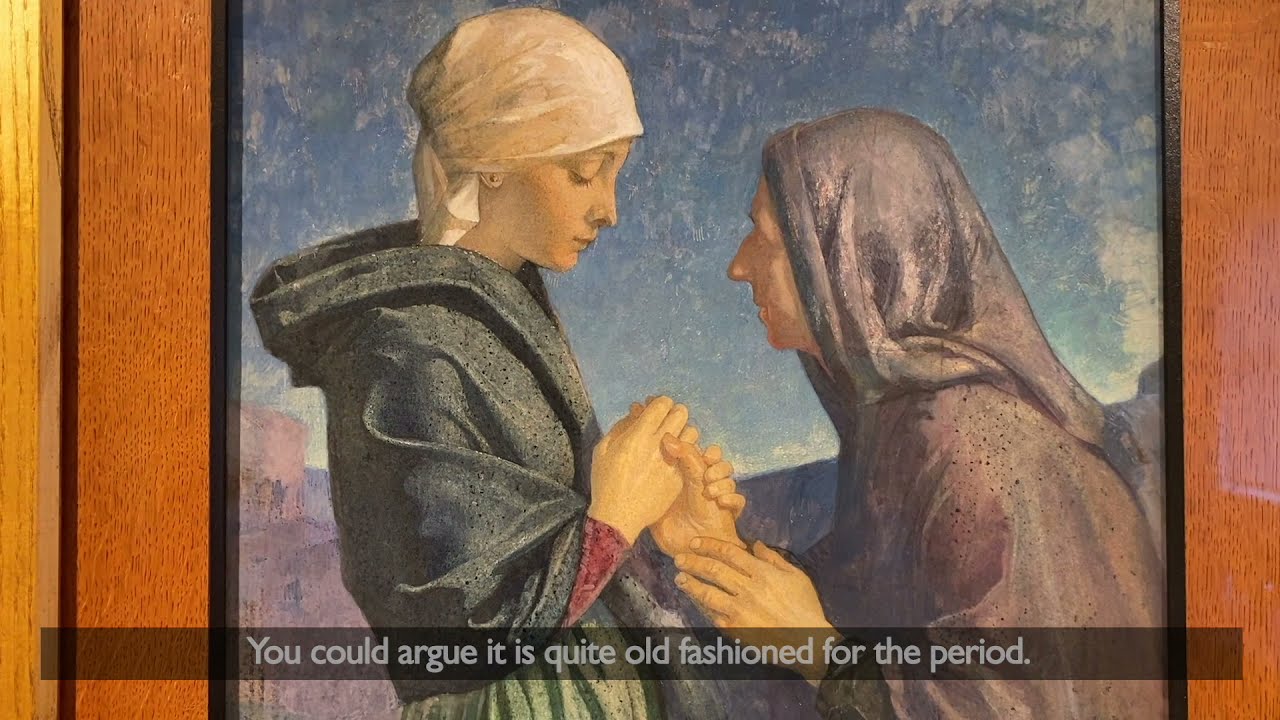
Advice for new Collectors from dealer Harry Moore-Gwyn
198
This comprehensive guide covers essential principles for art collectors and Victorian art appreciation. Key collecting strategies include identifying undervalued opportunities in non-contemporary markets, prioritizing personal appreciation over investment potential, and ensuring authenticity by purchasing works in their intended form. Victorian art analysis reveals how fairy tale themes, particularly Sleeping Beauty, influenced artists like William Morris and Ben Jones, creating decorative works that blend narrative with aesthetic beauty. The analysis demonstrates how Victorian artists balanced human interpretation of religious subjects with decorative elements, creating works that remain technically fine and visually appealing.
Click to watch →
Deep Dive
Art as Social Commentary: Investigating how 19th-century visual arts functioned as a vehicle for social reform, challenging or reinforcing class and gender structures.

Trump RAGES After BRILLIANT Protest Statue Appears on National Mall
69.2K
Protest art serves as a powerful medium for social and political commentary, using creative installations to critique leadership decisions and societal issues; in this case, a golden throne installation at the Lincoln Memorial mocked President Trump's controversial White House bathroom renovation, highlighting public frustration with perceived wasteful government spending during times of national crisis.
Click to watch →

1 HOUR BEST OF Mickey Mouse TikTok Puppet REACTS 2022 (@HassanKhadair) TRY NOT TO LAUGH CHALLENGE
1.2M
This segment explores how art can serve as commentary on humanity, such as depicting sharks eating humans and then humans eating sharks. It demonstrates how anatomical knowledge can be applied to artistic creation, and how art can explore themes of nature, humanity, and our relationship with the natural world. The content shows how artistic expression can convey complex social and philosophical messages through visual representation.
Click to watch →
Los salseos de las pinturas 🔥
143.8K
Artworks often encode complex historical events and social commentary through visual symbolism, as demonstrated by Raphael's 'The School of Athens' which depicts philosophers with faces of contemporary artists and subtly criticizes Michelangelo through visual details, and 'A Huguenot on St. Bartholomew's Day' which uses the white handkerchief symbol to represent the tragic persecution of Protestants during the 1572 massacre.
Click to watch →

Raja Shaheb HD (রাজা সাহেব)| Full Bengali Movie |
667.6K
Art can serve as powerful social commentary. The video shows how a character creates art to express social issues, demonstrating how artistic expression can address societal problems. It also explores how artistic interpretation requires understanding the audience, with characters discussing how art should be understood by viewers. The narrative demonstrates that art can serve as powerful social commentary, and that artistic interpretation requires understanding the audience.
Click to watch →

I’m Malnourished & My Skin is Falling Off
1.6M
Art serves as a powerful medium for social commentary and political expression. The host analyzes Sam Fender's song 'Love It If We Made It,' describing it as a protest song that addresses multiple global issues including school shootings, immigration, and political corruption. She explains how artists can encapsulate complex social experiences through music, creating works that resonate deeply with audiences facing similar challenges.
Click to watch →
Deep Dive
Feminist Art History Perspectives: Analyzing the depiction of female agency, spiritual redemption, and the 'male gaze' in Victorian narrative painting.

Buenismo Bien | 06x14 | Eugenia Tenenbaum, la historia que necesitamos
51K
Art historian and science communicator Eugenia Tenenbaum explains how to apply feminist perspectives to art analysis, revealing how museums have historically excluded women, racialized artists, and minority voices from art history narratives. She argues that major museums like the Prado and Reina Sofía still predominantly display works by male artists, with over 80% of collections being male-created works. Tenenbaum emphasizes that art is not merely a historical artifact but a living reflection of contemporary society, and that viewers should maintain curiosity, question information presented as absolute truth, and challenge established narratives to develop a more inclusive understanding of art history.
Click to watch →

LIFE IN ROME: an art history deep-dive! ft. a slow week, museums & sharing some thoughts
55.6K
The speaker provides detailed book recommendations for art history and feminist theory. General overviews include 'The Story of Art' by E.H. Gombrich (Western-focused) and 'Gombrich's Art and Illusion' (focuses on how images work). For global perspectives, they recommend books covering major developments worldwide, though many remain Western-centric. For Japanese art history, they recommend Penelope Mason's work. In feminist art history, they recommend 'Women, Art, and Society' by Whitney Chadwick, Linda Nochlin's 'Representing Women' and 'The Female Nude,' and Griselda Pollock's 'Vision and Differences.' For Roman art specifically, they recommend Natalie Boymel Kampel's work on gender theory and female representation. The speaker notes that these theories, while valuable for modern art, require adaptation when applied to antique art.
Click to watch →

Art, Thought & Difficulty: Feminist Art History Lecture
58.5K
Feminist art history involves pluralizing the many histories of art to acknowledge that there isn't a single story of art. Rather than being a subset of art history, feminist interventions occur from another space within art history. Key concepts include 'old mistresses' (challenging the term 'old master'), 'vision and difference,' 'gender and the color of art history,' and 'differencing the canon.' This approach recognizes that art history has been shaped by class, race, gender, and empire, requiring new conceptualizations to address these entanglements.
Click to watch →

Educación crítica en museos: espacios para el feminismo a cargo de Sofía Albero Verdú
540
Feminist art history emerged from Anglo-American scholarship, beginning with Nochlin's 1971 article questioning why no great women artists existed. The first generation sought to demonstrate women artists could be discussed using the same criteria as men, hoping this would provide assimilation into existing narratives. Griselda Pollock critiqued this approach, arguing the art historical canon is a 'tailor-made suit' for men, making assimilation problematic. She also criticized essentialist approaches that assume women artists share an essential feminine essence, which obscures diverse experiences and resistances.
Click to watch →

Pour une esthétique de l'émancipation. Rencontre avec Isabelle Alfonsi autour de son ouvrage
238
Virginia Woolf argued that masterpieces emerge from collective thinking and embodied experience, not solitary genius. Donna Haraway's situated knowledge challenges abstract, disembodied perspectives. Feminist art history, pioneered by Linda Nochlin, examines material conditions of artistic production. This approach reveals how traditional art history's 'genius' narrative obscures social realities. The tension between individual creation and collective political engagement animates feminist art historical research.
Click to watch →
Deep Dive
Victorian Material Culture: Exploring how the rapid rise of industrial manufacturing, consumerism, and home decor in the 1850s influenced contemporary artistic themes of domesticity and superficiality.

DIGGING The THAMES for Treasure!
31.9K
Victorian society produced a vast array of material objects that reveal complex social dynamics and technological innovation. Mudlarking along river foreshores uncovered Victorian-era bottles, ceramics, and personal items discarded in dumps. Industrial innovations included Henry Barrett's 1872 screw-in bottle stopper, acid etching for glass marking, and new consumer products like blue dye stones and hollow waist pots. Medical practices combined scientific progress with questionable remedies, exemplified by Thomas Holloway's Ointment—a largely ineffective treatment promoted through aggressive advertising. British commerce operated within global networks, with Fortnum & Mason sourcing cocoa through East India Company relationships. Domestic life produced diverse artifacts including skeleton keys, bodice buttons, and silver jewelry marked with hallmarks indicating purity, date, and maker. These objects—from practical tools to religious devotion aids—demonstrate how material culture reflected Victorian social hierarchies, technological capabilities, and commercial ambitions.
Click to watch →

RICHES in DITCHES! Scottish Victorian Rubbish Tip! Plus Casting a Lion Head in Silver! (Mudlarking)
66.6K
Victorian rubbish tips contain artifacts revealing daily life, including marbles (German, clay, Cod), pipes, bottle stoppers, tiles, ceramics, and toys. These objects demonstrate domestic consumption patterns, manufacturing practices, and social behaviors. The diversity of finds—from functional items like tally slates to decorative objects like painted teacups—provides evidence of Victorian material culture spanning multiple aspects of daily existence.
Click to watch →

Wow! Insane Mudlarking Haul! - Northern Mudlarks - Mudlarking & Treasure Hunting!
22K
This comprehensive section covers systematic archaeological discovery methods and Victorian-era material culture. The hosts discuss how artifact distribution varies by location and time, requiring lowered expectations after productive periods. They examine 19th-century pressed clay pottery with layered clay wedges pressed into molds, demonstrating industrial-era manufacturing techniques. Paint pan discoveries reveal commercial production for consumer markets, while toxic pigment warnings (lead in whites, arsenic in reds/greens) illustrate hidden dangers in everyday objects. The progression from broken doll parts to complete finds illustrates artifact rarity and preservation challenges. Victorian consumer culture produced distinctive decorative arts including glass doll eyes, Egyptian Revival jewelry, and commemorative pipes, revealing how aesthetics drew inspiration from ancient civilizations while serving contemporary markets.
Click to watch →

Did I Just Find Something PICTISH? Metal Detecting Scotland
23K
The Victorian and Edwardian periods produced distinctive material culture visible in metal detecting finds. Buttons from this era feature shanks for attachment and varied decorative elements. Military and police buttons display crowns and heraldic symbols, with more elaborate back designs indicating official status. Cooking pots were frequently recycled, leaving behind handles while complete pots rarely survive. These artifacts document social hierarchies, uniform systems, and economic practices of the time. The prevalence of certain items reflects daily life, transportation methods, and technological constraints of the period.
Click to watch →

Land of Lost Souls/Soles - 100+ Year Old Lost Treasures - Mudlarking & Treasure Hunting
28.9K
Discarded everyday objects from Victorian-era landfills serve as valuable social history archives, revealing insights into daily life, consumption patterns, and cultural practices of people from over a century ago; these objects—including chimney sweeping brushes, penny licks, school slates, pipes, figurines, dolls, and shoes—provide tangible connections to the past that museums often overlook, demonstrating how what was once considered rubbish can become treasure for understanding historical human experience.
Click to watch →
Opening Moments
Opening Moments
0:14- 1
Capture initial reaction moment with emotional outburst.
- 2
Establish scene with background music and atmosphere.
- 3
Initiate experience through sensory auditory elements.
Feminist and Socio-Economic Re-evaluations of the Fallen Woman
While traditional readings of The Awakening Conscience celebrate William Holman Hunt’s moralizing narrative of spiritual redemption, feminist and Marxist art historians offer a critical counter-reading. Rather than viewing the woman’s realization as a pure, divinely inspired spiritual awakening, these critics argue the painting exposes the systemic hypocrisy of Victorian gender and class structures. Scholars highlight how the work reinforces the patriarchal trope of the 'fallen woman,' placing the entire moral burden of the illicit affair on the female subject, while her wealthy male companion remains comfortably unchastised and free from societal ruin. Furthermore, the cluttered, gaudy interior is analyzed not just as a set of moral symbols, but as a critique of capitalist commodification, wherein the woman herself is kept as a consumer object. From this perspective, Hunt’s painting is less an objective celebration of Christian redemption and more a reflection of Victorian anxieties surrounding female autonomy, class exploitation, and the containment of women within rigid domestic spheres.
The Pre-Raphaelite Brotherhood: Understanding the artistic movement founded by Hunt, Millais, and Rossetti, characterized by detailed realism, vibrant colors, and moral seriousness.
Victorian Social Morality and Gender Roles: Familiarity with 19th-century British societal expectations, specifically the rigid domestic ideals and the societal stigma surrounding 'fallen women'.
Symbolism and Iconography in Art: Basic knowledge of how narrative paintings use everyday objects, interior design elements, and body language to convey deeper moral or spiritual meanings.
Comparative Victorian Art Analysis: Examining companion pieces or similar thematic works from the era, such as Augustus Egg's triptych 'Past and Present' or Dante Gabriel Rossetti's 'Found'.
Art as Social Commentary: Investigating how 19th-century visual arts functioned as a vehicle for social reform, challenging or reinforcing class and gender structures.
Feminist Art History Perspectives: Analyzing the depiction of female agency, spiritual redemption, and the 'male gaze' in Victorian narrative painting.
Victorian Material Culture: Exploring how the rapid rise of industrial manufacturing, consumerism, and home decor in the 1850s influenced contemporary artistic themes of domesticity and superficiality.
34.5K views138likes0:28@Art-Docent-0Original Release: 2026-03-23
Up Next

57:27
How to Write SOPs Faster with ChatGPT: Step-by-Step Guide
@Scaletime
5.9K views•2023-03-20

12:54
Triumph of Orthodoxy Icon: Byzantine Art & History Explained
@BenCallan
2.1K views•2024-08-06

9:49
FastAPI vs Flask vs Django: Choosing the Right Python Web Framework
@TechWithTim
302.5K views•2024-05-26

1:42
Game of Thrones Opening Credits: A Cinematic Analysis
@gameofthrones
46.3M views•2011-04-18
Related Study Plans & Knowledge Roadmaps
Structured learning paths in General & Interdisciplinary Studies
general-studies
Elevator Engineering: History, Physics & Cities
01From Hoists to Safety Brakes: The Dawn of Vertical Lift
02Hydraulic vs. Traction: The Engineering Physics of Elevators
03Modern Speed, Safety, and Algorithms
+ 2 more learning modules
12h5 modules
Explore Roadmap
general-studies
Rubber: Material Science, History & Geopolitics
01Origins of Natural Rubber & Mesoamerican History
02The Chemistry of Natural Rubber & Vulcanization
03The Geopolitics of the Rubber Boom & Colonization
+ 2 more learning modules
12h5 modules
Explore Roadmap
general-studies
Containerization: Evolution, Logistics & Trade
01Ancient Trade & Bulk Cargo: Amphorae to Barrels
02The Industrial Revolution & Cardboard Packaging
03The Containerization Revolution: Malcom McLean
+ 2 more learning modules
12h5 modules
Explore Roadmap
general-studies
Textile Tech: Evolution, Labor & Global Impact
01Pre-Industrial Textiles: Handloom & Cottage Industry
02Mechanization: The Spinning Jenny to the Power Loom
03The Factory System & Global Labor Transformation
+ 2 more learning modules
10h5 modules
Explore Roadmap