


















The DSM-5 Cross-Cultural Issues Sub-Group addressed how cultural factors influence mental health diagnosis by expanding diagnostic criteria to account for culturally varied symptom presentations, developing the Cultural Formulation Interview as a standardized assessment tool, and clarifying the relationship between cultural concepts of distress and psychiatric diagnoses to improve clinical accuracy across diverse populations.
DSM-5 Culture Changes: Clinical Impact for Mental Health Professionals
Added:Basic understanding of the DSM-5's structure, purpose, and standard diagnostic criteria for mental health disorders.
The core concept of cultural competence and cultural humility in clinical psychology and psychiatric practice.
Fundamentals of standard clinical assessment, intake procedures, and diagnostic interviewing.
Familiarity with how culture was historically treated in previous editions, such as the 'culture-bound syndromes' of the DSM-IV.
Practical application and mastery of the Cultural Formulation Interview (CFI) and its supplementary modules during client intake.
Deep dive into the DSM-5's 'Cultural Concepts of Distress', including cultural syndromes, idioms of distress, and cultural explanations.
Developing culturally adapted treatment plans and evidence-based interventions tailored to diverse patient backgrounds.
Examining systemic inequalities and diagnostic biases in psychiatric practice, particularly concerning marginalized cultural and ethnic groups.
34.2K views142likes21:10Original Release: 2014-06-12
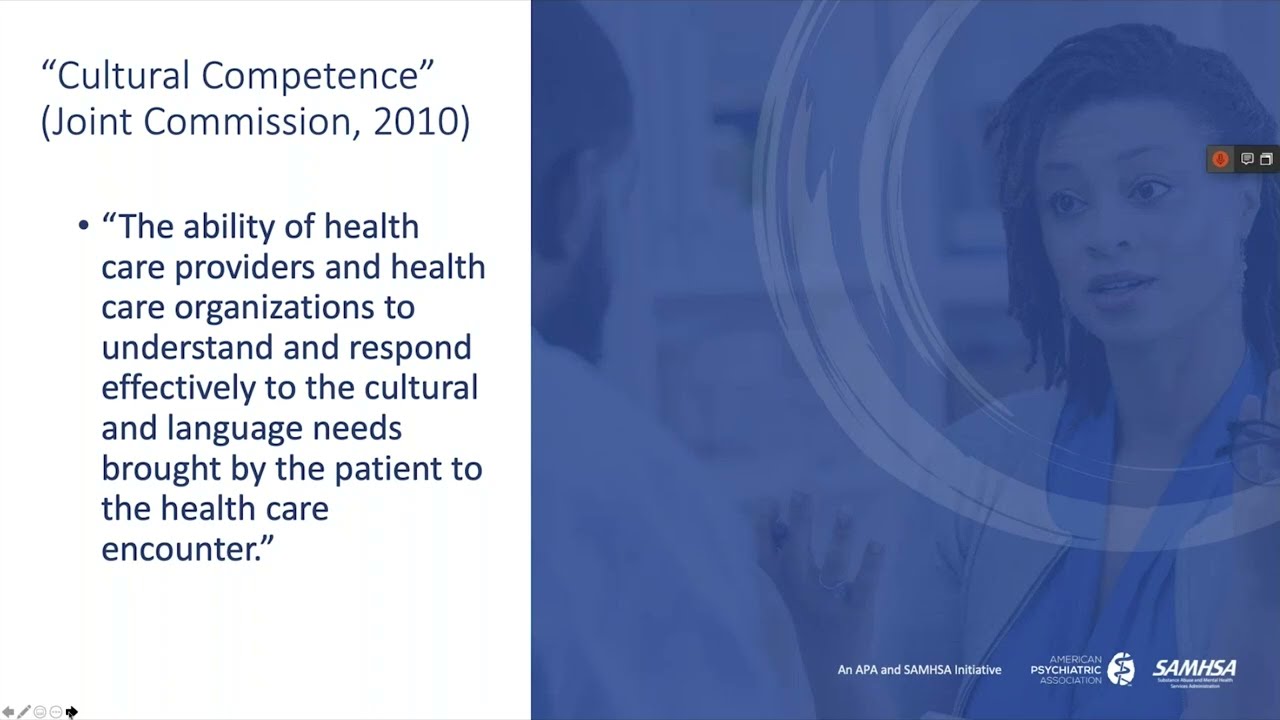
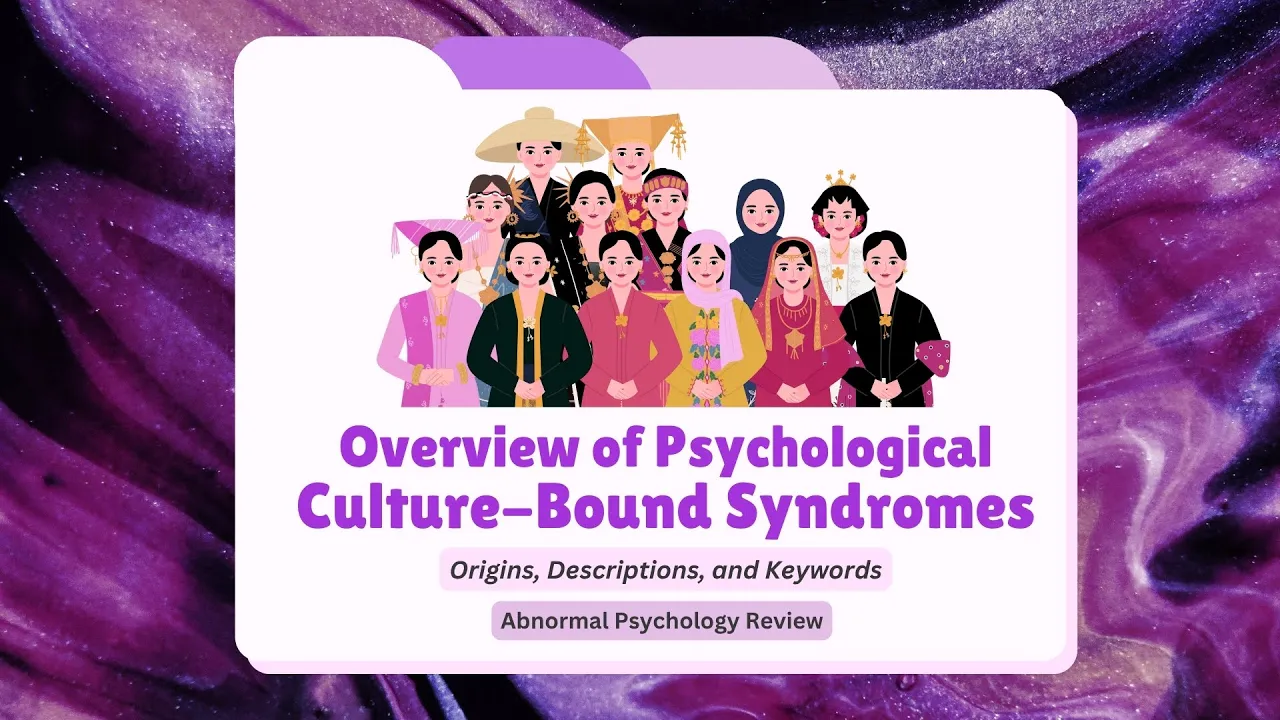
it's almost like the person was experiencing distress in a different way that was very understandable from a psychiatric perspective but wasn't exactly the kind of uh combinations of symptoms and attributions that are explained in the manual and you have to do this translation process that the dsm5 now helps clinicians try to manage [Music] there are several ways in which these cultur related changes in dsm5 can affect the daily work that providers carry out one important way has to do with cultural assessment the cultural formulation interview which is this operationalized way of conducting a cultural assessment I hope becomes very widespread and clinicians use it to figure out what patients perspectives are what their fam's perspectives are what they expect from care what what their concerns about care are and so on so that they can get a better sense of what the patient then his or her family and social network are thinking about so that they can negotiate treatment better explain their approach for diagnosis better and so on so that's something we have high hopes for um another part of the manual that I I hope will be useful is these are these changes in the criteria and the text that describe for clinician s a more uh a kind of more inclusive way of doing uh an assessment of a particular Disorder so that if the disorder uh presents in a way that's not exactly like the sm4 the new changes in dsm5 explain just how the disorder can vary so that it still can be diagnosed as the disorder that we all know from DS sm4 so that for example with social anxiety disorder if there a a more of a concern about offending others rather than being humiliated this doesn't throw the clinician off so much that they don't see that the rest of the presentation is just like social anxiety disorder and therefore this new change is a way of increasing the sensitivity of the diagnosis so that people can pick up different presentations and in addition I'm hoping that the explanation of how cultural concepts of distress and psychiatric diagnosis fit together what are their relationship is might help in general overcome some of the misdiagnosis and the confusion that may happen when disorders present in a way that is different or the the patient experiences symptoms from disorders that IND and4 are considered separate and yet they're experiencing them together as one presentation that somehow the clinician doesn't get completely confused by this new way of putting the disorders together if you will and or Di diagnosed with 10 disorders or you know get just very get very confused about whether it's one disorder or another but rather this hopefully explains just how much diversity there is in presentation and what's a good way to think about the relationship between these culturally specific ways of describing disorder and distress that are not not currently in the manual and how to sort of crosswalk those presentations with the diagnosis that are in the manual the task force from DS4 dsn5 which is the executive leadership group of dsm5 put together what they called the study group which is a study group that cuts across a group that cuts across uh the different work groups and task force in terms of key crosscutting areas in dsm5 and the purpose of the crosscultural issue subgroup was to tackle the areas in dsm5 that needed some information on culture cultural variation in Sim PA ology in prevalence in risk factors in course any number of topics that cut across a disorder or set of disorders the uh crosscultural issue subgroup prepared along with the experts in those areas prepared material for DSM 5 and also develop material that was useful for the diagnostic process as a whole uh such as a a cultural assessment and other areas that I will describe in this uh in this interview one of the function of the crosscultural issue subgroup was to work with the work groups for particular disorders and identify topics that had a cultural focus and should be clarified from DSM 4 to dsm5 and these could take many shapes one was for example the issue of whether the same criteria for a disorder applied across all cultural groups and in what we did there was to do a literature review of work on culture and phenomenology presentation experience of disorders symptoms and see where the points of variation were and there were several disorders where we found that the existing criteria in some ways didn't incorporate all the ways around the world in which that particular type of disorder could be expressed so take the example of social anxiety disorder order uh social anxiety disorder is quite prevalent around the world but the prevalence changes a fair amount in fact contrary to the idea that you know disorders have the same prevalence everywhere psychiatric disorders have the same prevalence everywhere in fact uh studies that have been done epidemiologically using the same instrument around the world with the same time frame of 12 months trained in the same way that the admin the people administering are trained in the same way discover that the prevalence 12-month prevalence of social anxiety disorder can vary 34 fold from 2% in parts of Asia for example to 6.8% in the United States so it's a tremendous variation in prevalence it's always not an extremely common disorder it's less than you know it's 6 point at most 6.8% but still that's uh quite prevalent and very different from 2% and so the range of prevalence was important and and it to point out in the sm5 and in addition there's also the issue that in certain uh experiences certain places uh social anxiety disorder is experienced a fair amount as being some as acting in a way that would embarrass another person might offend the other person like Japan and Korea are kind of famous for this idea the notion of tyin kusho in Japanese my Japanese is terrible but at least Tai K that uh the concern is that you might offend rather than that you yourself be embarrassed and when this is studied it's discovered that fair number of people in Japan Korea and so on are both uh concerned about offending and concerned about being embarrassed and the same is true in many other parts of the world Australia the US where people are both afraid of being embarrassed or humiliated and sometimes afraid of offending so it's a bit of um uh it's true that certain prevalences tend to be most common certain ways of experiencing it tend to be more common in certain places but they're not exclusive to those places it might have to do with what one first presents with or to a clinician or what is most Salient to that group for example for individualistic westerners it might be more Salient to speak and be first concerned about humiliation yourself but it's not it's it's also true that you might be concerned about offending others in some sense secondarily and perhaps in other parts of the world it's the other way around where you present you say that you're concerned about offending others that's very true but it doesn't dispute deny the fact that you might also be concerned about being humiliated so it's maybe a matter of emphasis and one of the things we did was to include in the criteria both types of fears so you can be feared about humiliation or embarrassment you can be afraid of that but you can also be Afra afraid of offending others or being rejected by others and both of those are now included in dsm5 as part of the criteria of fear of negative evaluation as opposed to dm4 which only mentioned humiliation or embarrassment as an example of fear of negative evaluation so it's a way of expanding the criteria so that more ways of being socially uh uh anxious are included panic attacks are also quite huge human quite prevalent around the world but they can take different forms and uh the work of my colleague Devon Hinton in Cambodia for example shows that uh panic attacks among cambodians is uh associated with certain symptoms that are uh important Salient Salient in terms of Cambodian understandings of how the body works and how anxiety expresses and that may be connected to the unbalanced flow of cayal in the body uh a wind-like substance if you will that uh is thought to be or experienced as being out of balance with anxiety disorders and other disorders so because of this type of presentation involving this substance people may have different symptoms like uh uh headache or neck pain or tinitus different symptoms that may be associated with the anxiety of a panic attack that are not so common necessarily in other parts of the world so there what we did to make sure that uh presentations that may be slightly different from the what was described in dm4 to make sure that those presentations are not missed we included a note to the criteria saying how these other symptoms could also be present in panic attack and should not if you will confuse a clinician when they present to to think that it's not panic attack in that case that they're seeing as long as the person also fulfills fills all the other symptoms of panic attack that are in the manual an issue that was very important to the crosscultural issue subgroup in terms of the the role of culture in dsm5 had to do with uh describing better how a clinici could conduct a cultural assessment as part of a regular mental health interview and DS sm4 had a narrative description of what should be included in such a cultural assessment and that's called the outl line for cultural formulation that appeared in appendix I of DSM 4 but we wanted to take that narrative description and include with it a set of questions a more operationalized questionnaire set of questionnaires really that clinicians could use in terms of assessing for culture in a clinical interview that would kind of Orient guide clinicians who may not be so sure how to apply the narrative description in real time we wanted to give them a set of examples and instructions guidelines more about how they might do it and so we developed this set of questionnaires there three kinds one is a general core questionnaire a basic assessment that can be used with any patient in any setting by any clinician so it's not meant for minorities or underserved populations alone it's meant for any cultural group and we all have culture if you will of one kind or another and so they can be used with any patient to find out how they understand the illness what's the priority for them what does their social network think is going on what are their preferences for care what have they done in the past that has helped or not helped what is it in their context an environment that helps that doesn't help their illness so all these things are part of a basic assessment 16 items um in section three of dsm5 and in addition we had two other sets of questionnaires that could be useful one is an equivalent sort of basic questionnaire but for informance that can either be used for collateral information if you wanted to in addition to interviewing the patient you wanted to know more information or sometimes if the patient is unable uh to uh you know help you with the interview at that time if they're very very young or if they're demented any number of these possible uses you could use the informant uh CFI we call it cultural formulation interview or in addition the third set of questions has to do with more supplementary in-depth model modules that take the parts of the basic assessment and ask more questions about them so there's a set of questions on cultural identity and on explanatory models and on uh you know any number of other you know sort of aspects of the interview that could be done in more depth as well as modules for spe specific populations such as children or elderly or immigrants and refugees and caregivers also those are the extra modules that you can use and if you you can flexibly use all or some of these questions and questionnaires to uh help carry out a regular assessment in a way that is sensitive to cultural factors one other aspect of what the cross-cultural issue subgroup wanted to do was explain briefly but clearly what we felt the relation ship is between what are called the culture bound syndromes and the psychiatric diagnosis in the rest of dsm5 and we did that by in two ways one is to have a description in section three uh in the new section on Assessments in section three we had a general description that talked about this relationship how how to think of the relationship between what we now call cultural concepts of distress as opposed to cultural bound syndromes cultural concepts of distress and the psychiatric diagnosis so first we describe how to think about their relationship and then in the glossery uh in the appendix sorry we have a glossery that lists nine examples of different cultural concepts of distress and helps the clinician walk through how to think of them so we give the data on their description sometimes their prevalence and specifically what research has shown over the last 20 to 30 years is the relationship between these cultural Concepts and psychiatric diagnosis so take for example attack the nervous which is a condition that I study other people study which is a a fit of emotionality that people can have common in Latin America but elsewhere too but that people can have in response usually to adversity and it is often characterized by a sense of being completely out of control it can be highly associative highly disruptive one out of every seven first attack are associated with a suicidal attempt so it's a very strong loss of control emotional reaction and this type of uh presentation can be quite confusing to clinicians it might seem like seizures to some or panic attacks to others or intermittent explosive disorder to others any number so what we did was describe what atakes are and explain that this kind of uh pathology this kind of way of experiencing distress can be very pathological and difficult and um it can be diagnosed in multiple ways depending on the characteristics of the individual attack so it's not a onetoone relationship with only one disorder but rather it's a way of being distressed that can cut across disorders from a psychiatric perspective and the issue for the clinician is to figure out this particular instance of atak is it like panic attack is it like intermittent uh explosive disorder is it like a dissociative disorder what is it what how does you how do you do a translation from this particular set of episodes to the psychiatric diagnosis it's almost like the person was experiencing distress in a different way that was very understandable from a psychiatric perspective but wasn't exactly the kind of uh combinations of symptoms and attributions that are explained in the manual and you have to do this translation process that the dsm5 now helps clinicians try to manage if you're a trainee and you're looking at this video there are several areas of cultural Psychiatry that are very exciting at the moment and that you might find interesting one of them has to do with how a cultural Psychiatry approach can really inform the U the priority of establishing a good communication with uh patients and tailoring what we offer patients in treatment and how the treatment is delivered to their ideas and concerns and expectations of care and the one of the ways to do that involves the cultural formulation interview which is a way of assessing for culture in a clinical situation and in particular what the patients understandings are and expectations and their social networks expectations and understandings so communication and engagement of patients and clinicians through a a better sense of understanding each other is one a key area in cultural Psychiatry uh another area has to do with what is the best way policy-wise treatment wise uh uh public healthwise of reducing the disparities that currently exist in the health of underserved po population groups such as cultural groups of one kind or another and also in the care and the mental health services delivered to different underserved groups so anything that has to do with disparities reduction at all those levels is of great importance at the time related to that is the general issue of global mental health what is the best way to deliver Mental Health Services in low resource areas what's the best way to learn from low resource areas in high resource areas so that we actually can Implement very effective and uh uh disseminable approaches in developed countries as well as you know improving the the care in developing countries how to shift tasks between a General Health System and a mental health system these are all important areas while at the same time being uh uh uh you know honest to the changes to the ways in which people in different countries understand and expect the the care to be delivered and understand and expect the way they express illness so it's not to just import models from the West to the rest as they say but rather to actually take seriously what people in the rest of the world are actually how they experience Psychopathology and how they understand the problem needs to be treated that's the third area the the fourth area that I think might be very interesting to trainees has to do with the training of cultural Psychiatry itself and it would be a great role for trainees to get involved in thinking about the best ways to train other trainees in cultural Psychiatry and we're are now exploring the best ways to train in cultural Psychiatry and there are different approaches for how to do it uh adper The Residency training or trainers organization has uh um a set of model curricula that have been chosen and in general a Canadian Psychiatric association has a set of guidelines for the best ways to teach cultural Psychiatry so in general there's a a movement of foot to find a good way to teach cultural Psychiatry and it would be a perfect venue for trainees residents other interns people to get involved in terms of how to uh how to do that in the best way [Music]
Up Next

9:37
Medical Pluralism: Coexistence of Diverse Health Systems
@TheHumanConditionEWU
947 views•2023-11-06

12:54
Triumph of Orthodoxy Icon: Byzantine Art & History Explained
@BenCallan
2.1K views•2024-08-06

9:49
FastAPI vs Flask vs Django: Choosing the Right Python Web Framework
@TechWithTim
302.5K views•2024-05-26

1:42
Game of Thrones Opening Credits: A Cinematic Analysis
@gameofthrones
46.3M views•2011-04-18
Related Study Plans & Knowledge Roadmaps
Structured learning paths in General & Interdisciplinary Studies
general-studies
Elevator Engineering: History, Physics & Cities
01From Hoists to Safety Brakes: The Dawn of Vertical Lift
02Hydraulic vs. Traction: The Engineering Physics of Elevators
03Modern Speed, Safety, and Algorithms
+ 2 more learning modules
12h5 modules
Explore Roadmap
general-studies
Rubber: Material Science, History & Geopolitics
01Origins of Natural Rubber & Mesoamerican History
02The Chemistry of Natural Rubber & Vulcanization
03The Geopolitics of the Rubber Boom & Colonization
+ 2 more learning modules
12h5 modules
Explore Roadmap
general-studies
Containerization: Evolution, Logistics & Trade
01Ancient Trade & Bulk Cargo: Amphorae to Barrels
02The Industrial Revolution & Cardboard Packaging
03The Containerization Revolution: Malcom McLean
+ 2 more learning modules
12h5 modules
Explore Roadmap
general-studies
Textile Tech: Evolution, Labor & Global Impact
01Pre-Industrial Textiles: Handloom & Cottage Industry
02Mechanization: The Spinning Jenny to the Power Loom
03The Factory System & Global Labor Transformation
+ 2 more learning modules
10h5 modules
Explore Roadmap