





![[1] re: David Benatar on how to think about feelings ...part 1 of 2](https://i.ytimg.com/vi/r7RwErKDGXM/sddefault.jpg?sqp=-oaymwEmCIAFEOAD8quKqQMa8AEB-AHUBoAC4AOKAgwIABABGGUgVChKMA8=&rs=AOn4CLB8g3DE90bhBb_6knHdpwEaG1cD7Q)
















![이 모든 것의 끝에 서있는 자, 누구인가?! ㅣ[지배종] 사건 파일 하이라이트ㅣ디즈니+](https://i.ytimg.com/vi/WIedlGhOmd0/maxresdefault.jpg)

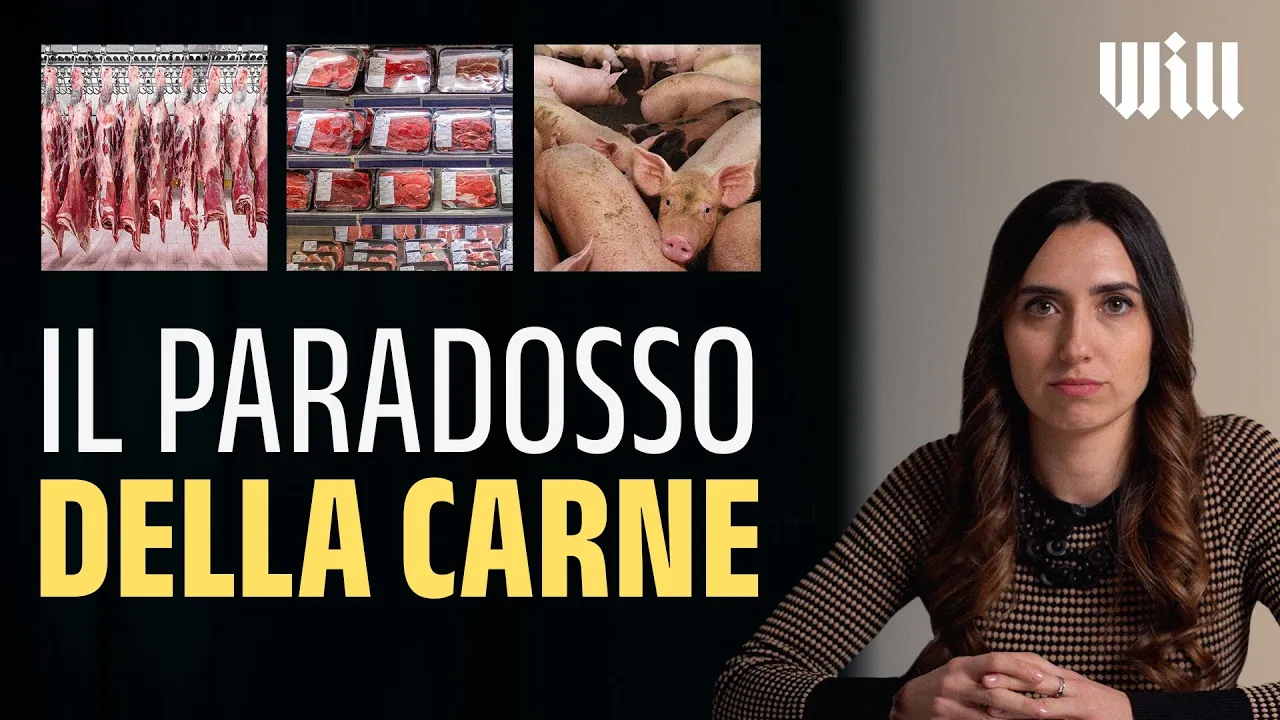
This documentary explores the ethical dimensions of meat consumption through utilitarian and rights-based philosophical frameworks. Peter Singer argues that species membership is not a morally relevant criterion, advocating for a utilitarian approach that weighs the interests of all sentient beings equally, including animals. Gary Francione presents a deontological rights position asserting that all sentient beings have inherent rights not to be regarded as property. The film examines scientific evidence showing farm animals possess complex cognitive abilities and emotional capacities similar to humans, challenging traditional moral boundaries. While Singer concludes that reducing animal suffering requires moving beyond meat consumption, philosopher Dan Shahar counters that individual dietary choices have minimal impact on systemic change, suggesting people should focus on causes they are personally suited to address rather than feeling obligated to adopt vegetarianism.
Animal Ethics and Meat Consumption: A Philosophical Analysis
Added:imagine intelligent aliens discover earth we're in complete awe at the Elegance of their language their art technology and their wisdom but shortly after they arrive the aliens begin to put us in cramped stalls they force females to breed take their babies away and drink their milk they force us to eat from morning to night so that we're so fat that even as children we can't stand on our own finally as teenagers we're carted off to factories to be slaughtered on assembly lines we protest but the aliens don't understand our outrage they're far too intellectually Superior and they like the way we Taste of course we wouldn't agree with the aliens Behavior but would it be morally wrong foreign [Music] to the heavens we might sometimes wonder how our actions will be perceived throughout eternity some people would think that the question of what is right or wrong is entirely subjective that it's up to me what I think is right or wrong is what cancer you may have some completely different View and we're just exchanging preferences just like maybe you like Indian food and I prefer Chinese food I don't believe that that's true [Music] singer at Princeton University is one of the most influential philosophers today thank you [Music] I believe that there is scope for reason and argument in discussing ethics and at the very least that there are people many people who hold positions that they haven't thought about haven't reflected on and that when they do reflect on it they find that many of their beliefs are not really consistent Peter singer's world view centers on the doctrine of utilitarianism [Music] it is trying to weigh up the net balance of uh pleasure versus pain or happiness versus suffering and to maximize that so the right action for a utilitarian is the action that has the best consequences for all of those affected and best consequences here means promoting the greatest amount of well-being for all of those affected if we took a utilitarian perspective and had to decide between several possible actions we would have to consider how each will affect the happiness of all those involved let's say we're expecting 10 guests for dinner three of them like roast beef seven like chicken what should we cook as a doctor should we give preference to other doctors in a disaster so that we can work together to save more people should we hope the tobacco lobbyist who asks for directions to the German Parliament even if he's likely to cause great social harm with the extra office time he gains by getting there quickly foreign [Music] utilitarians we calculate what each possible action would contribute to the total happiness in the universe then we choose the one that maximizes it we direct the lobbyists to the woods prioritize the other doctor and naturally we'd make chicken that's the way utilitarianism works but Peter Singer has taken it a step further he asks what about the interests of the chicken you can't draw the line between the species because I don't believe that species is itself a morally relevant Criterion any more than I believe that rice or sex is a morally relevant Criterion and if you want to move to something that maybe a morally relevant Criterion like uh capacities of various cones mental life then you're always going to get the possibility of an overlap between humans who lack these capacities because of brain damage or genetic abnormality and animals who have these capacities therefore to a higher degree than those particular abnormal humans if we look back in time we can see how the concept of a species has no clear boundary imagine you take your mother by the hand and she takes her mother's hand and her mother takes her mother's hand back through the family tree you follow it down for thousands and millions of years and there's a chimpanzee somewhere in Africa doing the same thing he takes his mother's hand and the mother takes her mother's hand back into the past until you find a common mother the chain of human beings and primates would be about one thousand kilometers long you and the chimpanzee are distant cousins reaching out to each other across the ages if species were a moral boundary then at some point there would be a mother and a child one would be human and the other animal one would be our moral equivalent and the other not at all [Music] we humans are far closer to a chimpanzee than a chimpanzee is even to a dog let alone to an oyster or something that's not even a vertebrate but our legal system traditionally recognizes only one distinction in the animal kingdom Homo sapiens and everyone else thank you well here are our choices I could sit here in the witness box metaphor is that I'm a witness testifying for Animals Gary francione is Professor of Law and philosophy or I could sit here in the jury box that I'm one of the jurors or he pioneered teaching animal rights in the 1980s I could sit up here where the judges sit he's closely examined the history of the relationship between animals and the law your choice in the West before the 19th century animals were largely excluded from the moral and legal Community altogether they were regarded as things I mean you had people like Descartes who did not believe that animals were sentient so he didn't think that anything he did to them mattered because they didn't have any interests and so he used to cut the animals up and the animals would scream and and he dismissed this as being this is just a machine made by God but is really no different from machine a machine made by humans that needs oil when a machine made by humans needs oil it makes a squeaking noise when a machine made by God is adversely affected in some way it it makes a a screaming noise but there's no pain perception there there's no there's no mind there's no sort of mind that has a preference a want or desire for that pain to stop today many countries have animal protection laws they forbid causing animals unnecessary suffering the thing is is that because the animals are property our moral thinking is tremendously skewed in a very bizarre weird Direction Gary francione explains what he sees as a contradiction in Animal Protection Law the laws that provide for the protection of animals are interpreted in a way that reflect their proper their status as Channel property and it means in essence that the laws can't really apply to them in a meaningful way because the laws don't permit us to look at use the concept of property means that the owner is able to use it but they can't without violence if a person wants to keep livestock the animals must be confined and those who want to eat animals must kill them [Music] then the only question becomes is the treatment necessary given uses that may not be necessary because the reality is we don't need to eat animals by declaring animals as property the law puts economic interests and competition with animal interests that's why we accept that female pigs can be left in narrow cages for weeks and that 23 hens can live in one square meter and turkeys who are so overfed they can't stand up we cut off the pig's tails and turkey's beaks we separate newborn calves from their mothers and simply accept that pigs and Stockyards scream for their lives before they're slaughtered we accept it all because we have to in order to use animals effectively so what does it mean to say we shouldn't inflict unnecessary suffering on food animals what does that mean it means that we shouldn't inflict unnecessary unnecessary suffering on animals we shouldn't inflict gratuitous suffering on animals the laws assume that institutionalized exploitation is a legitimate exercise of property rights so what you end up with are cases where kids are lighting dogs on fire cats and microwave ovens those are that's that's what you have for animal cruelty all right have a safe week everybody francione says there's only one way to end the routine torture of livestock animals need rights I subscribe to a rights position that is I'm not a utilitarian uh and I believe that um all sentient beings have the right not to be regarded as property he believes in in alterable rights and responsibilities that always apply in deontology the ethics of Duty and obligation there's no way in the good and bad consequences of an action instead there are universal laws that all reasonable beings in the universe can agree on that's how francione differs from Peter Singer and his utilitarianism people who think that humans have rights and also those who think that animals have rights say there are some things that you must never do to a human no matter what the consequences so a difference in the case of humans might be suppose that a terrorist had put a nuclear bomb in the center of New York and the only way you could find the bomb in time to disarm it would be to torture the terrorist well a really strict human rights Advocate would say torture is wrong we never have a right to torture it's all it's always a violation of a human right a utilitarian would say if you've tried everything else and this is the only way to stop the nuclear bomb going off in the center of New York um you would be justified in torturing the terrorists utilitarianism and deontology are two of the most important schools of thought within ethical philosophy often they result in opposite conclusions someone basing their choice on the ethics of responsibility would treat an injured doctor first even if that meant you'd save fewer people a deontologist would show The Tobacco lobbyists the way to Parliament because telling people the truth is a fixed rule but when it comes to eating animals both schools of thought have come to the same conclusion the only real instance in which we'd have a debate would be about the use of animals in biomedical research to cure serious human illnesses where there's a real conflict that's the actuation in which there is a plausible conflict that would justify using and killing animals and so in a sense we engage in what we suffer from what I call moral schizophrenia and I'm using that literally I'm saying it's it's sort of like a moral version of classical delusional thinking on one hand we all accept that animals matter morally no doubt about that we accept that they matter morally and we have moral obligations that we owe directly to them to treat them humanely and to not inflict unnecessary suffering but yet we all engage or most of us engage in behaviors which are inconsistent with that so you'll have a situation where tonight some people will be watching this documentary and who believe that they believe that it's wrong to inflict unnecessary suffering on animals and while they're watching your documentary they're going to be eating their meat and their fish and their chicken and you know drinking their milk and eating their eggs which is bizarre when you think about it they don't need to be doing that and if they really believed what they say they believed they wouldn't be doing any of that foreign does moral reflection inevitably lead to the conclusion that we must do without animal products entirely the common starting premise is that animals like us are sentient but what do we actually know about the inner life of animals which many of us eat every day [Music] pigs are extremely clever they can learn all sorts of things University researcher Sarah hinza is analyzing the emotions of livestock in Vienna as you see they have fun doing all sorts of things especially getting into Mischief she wants to understand their inner lives the most important thing is that we ask questions in a way that can be understood in a piggy way foreign [Applause] Bells open doors and push buttons we're trying to draw conclusions about the animal's emotions from their behavior physiology and cognition the pigs solve complex problems they're able to learn what happens behind each door and differentiate between long and short sounds foreign the researcher's current project is focused on boredom they want to find out if pigs which are held in conventional bear holding pens get bored this is about chronic boredom it's not like this it's Sunday afternoon and things are a bit dull this is really about chronic boredom which we know can trigger alcoholism suicidal thoughts and depression in humans hence and her team have created a complex experimental environment allowing them to study Pig's behavior and reactions to certain stimuli the basis for this test is the study of human psychology this study showed that when humans are forced to sit for a certain time let's say 15 minutes for example and they're not allowed to dream or Daydream or sleep then they begin to give themselves electric shocks even after being told beforehand that these shocks cause great discomfort apparently boredom is so bad we would rather harm ourselves than experience nothing on and do something in this test we want to find out how ready the animals are to work for something even if it isn't always positive as it's been in the past instead it might be neutral or slightly negative so we're not working with electric shocks Cecilia instead the researchers work with a burst of air which the animals find unpleasant the pigs spend up to 12 minutes alone and completely isolated in a box pen it's Cecilia's turn At first she shies away from the Hostile blast of air and stays away from the buzzer for minutes at a time the data hasn't been analyzed yet but we've already seen that at right around 12 minutes the animals start to say well I don't want to push it again but towards the end they actually begin to give themselves this burst of air Cecilia is even quicker at four minutes and 15 seconds she begins accepting unpleasant experiences in exchange for boredom [Music] that's just like humans with electric shocks [Music] and these are actually pigs that will later be fattened slaughtered and the meat sold that's also quite relevant for us you also see that these animals have such a rich repertoire of behaviors they can learn and we see what types of personalities they have no pig is like another another you can tell them apart from their character the animals have names the doctoral candidates work with them every day and they really know them and that's not easy we talk about it a lot and it works for me personally for example because we are hoping to generate data and knowledge that will actually help a very large group of animals and it's not just pigs who are surprisingly like us many farm animals have astonishingly complex in our lives chickens are able to add up to five sheep can distinguish between photographs of different people researchers have even been able to demonstrate that cows actually experience Joy when they learn something new the basic hypothesis of animal ethics that animals have feelings and interests can hardly be rationally denied but where do we draw the line do mushrooms maybe have mines or bacteria or plants [Music] if the organism or an entity has it then it is something it's like to be that entity evolutionary biologist John Mallett is focused precisely on the distinction between the sentient and non-sentient world the function of Consciousness is to take many types of sensory information from all our senses and assembling that into a mapped picture of the world sort of a simulated theater of the mind on this stage in our minds we arrange our sensory Impressions like actors and props everything that happens around us also takes place in this simulation with the help of this inner World we're able to foresee what will happen next and try out how different actions will affect our environment and the functions of the emotional aspect of Consciousness is to assign importance to various objects that we perceive or various stimuli [Music] because there's a great deal happening in the mind stage at the same time Nature has come up with a Brilliant Invention feelings the actors that trigger the strongest feelings in us have the greatest impact on our Behavior yeah this is what I want John Mallett has examined countless brains from this he's developed his theory of the formation of consciousness he says that anyone who wants to understand why feeling came into the world needs to take a trip back in time to our planet's ancient history to the early Cambrian Period the story starts out a little over half a billion years ago with sea scum on the ocean floor it's called a microbial mat these microbial mats are made up of bacteria and algae a layer of one-celled organisms like a giant green carpet of plaque on the sea floor it was maybe this thick on all the shallow sea floors on Earth in just a tremendous nutrient Source a tremendous food source the first animals existed at this time but we wouldn't recognize them as animals today some of them were really bizarre anchored to the mat and then they were like shaped like leaves but the ones we're most interested in he has worms there were so many different kind of worms as we see by their worm trails it was even called a warm world there's a big difference between this worm world and today's Animal Kingdom there apparently was no predation at all it was a world without claws and teeth and the worms as the most active animals at the time just seemed perfectly happy and satisfied with their Rich Buffet of their food source of the microbial mats and then everything changed the first worms began to eat one another it was probably just as simple as one species of worm starting with Scavenging finding a half rotten piece of worm and finding that's a really rich nutrient source and then to specialize on eating other living worms of other species that's how these worms more or less by accident became the world's first meat eaters and with that it set off a huge competition a huge competitive Cambrian arms race at Dynamic speeds it took a few million years the hunted animals developed diverse strategies to protect themselves from predators shellfish came into existence worms learned to bury themselves in the sand but the most interesting counter strategy against predation was fast Escape up to this point life on Earth followed a slow rhythm of growth just as plants do today but if you wanted to respond to threats in real time then you had to be able to accurately perceive the world around you that led to the evolution of camera image-forming eyes where they could see the Predators coming real sensitive skin where they could feel vibrations from predators coming or for a really great sense of smell so they could smell the predators in the area and could be could be coming the most decisive factor for successful Escape was knowing that Predators could still be there even when census didn't perceive them at that moment the inner stage was born and with it Consciousness the Predators were evolving in the same way in order to catch the prey I pray that hid well or pray that moved away if I asked the Predators also had to evolved image forming camera eyes so they could see their whole environment just like the the prey could they could build this theater stage of the mind that I told you about and along with Consciousness came feelings giving significance to The Impressions on the inner stage if there's a big big dangerous predator coming suddenly that gets assigned lots and lots of important importance in the importance ranking of all the things on our theater stage from an evolutionary standpoint feelings exist primarily to save us from being eaten animals talented in perceiving pain and fear prevailed the taxon that was best at escaping the Predators was our own ancestors the first vertebrates the the first fish [Music] all of the vertebrates of today descended from these first flight animals fish amphibians reptiles birds and mammals and the first Predators turned into the anthropods and cephalopods of today insect spiders crabs and octopuses had the first Predators as their ancestors and we're linked to all of them by the magical capability of feeling what that would mean for for all the other organisms the the lights are out there's nothing it's like to be them so a line can actually be drawn there is life without Consciousness plants and fungi and perhaps worms muscles or jellyfish their movements are just reflexes because they're unable to feel anything what we do to them doesn't matter to them and there are animals that can suffer animals like us and the ones we eat if we want to avoid inflicting suffering then it makes an enormous difference which beings we choose to eat for nourishment doesn't that say it all from a moral standpoint foreign [Music] visitors to New Orleans Louisiana can observe an extremely rare species Dan Shahar is a philosopher who argues in favor of eating meat it's so easy to make bad arguments here like you've heard bad arguments and they're at the tip of your tongue you know this is tasty so therefore I should eat it that's not a good argument we need to to take this a lot more seriously if we're going to formulate a genuine defense of this practice that most people engage in every day his argument starts at the supermarket this hidden one I think that might be our winner actually for him there's a difference between buying a pork shoulder to barbecue with neighbors and being responsible for the conditions in which an animal is kept and killed the impact of one sale is so small it hardly makes a difference grocer can't afford to make their decisions about what items to stock in a way that would be sensitive to whether or not one person decides to have you know Tofu for dinner tonight or pork chops sees vegetarianism as a type of activism but he says vegetarian Behavior will only have an effect when many people take it up but even if you think that individuals don't make a really tangible difference it's surely the case that the vegetarian movement overall is making that kind of impact we should celebrate them we should applaud them to the extent I disagree with vegetarians it is mainly because vegetarians often think that it's wrong not to be a vegetarian and that's the thing I don't think is right there are a tremendous number of really important problems in the world that are crying out for people to tackle them and my view is just that it's okay for people to focus on some of them and you know accept that they're not going to tackle every problem that's the central point of shahar's argument one person alone cannot be active in all social movements at the same time that's why no one is obligated to take part in a certain movement just as we don't need everybody to be Hospital nurses just as we don't need everybody to be Farmers right we don't need everybody to be the same kind of activist what we need are activists of many kinds tackling many different kinds of problems and collectively working to make the world a better place Shahar holds that the strength we have available to act morally is a limited resource and going without also requires strength there are costs right maybe you like to eat meat maybe uh it's convenient for you maybe um you know it's a way of fitting in or connecting with certain Traditions that are important to you or or maybe you just don't want to have to approach Meal Time as if it's this morally weighty decision um you know vegetarians tend to think that those costs aren't that important but the number of people who try to become vegetarian and give up on it for precisely these kinds of reasons uh suggests that you know this is this is something that is important to be reckoned with the costliness of of taking on this form of activism Shahar has decided not to pay the price yet he says his decision requires even greater commitment Elsewhere for other causes to be justified meat eaters for the most part have you know a job to do in looking themselves in the mirror and saying am I doing enough to try and tackle the problems of the world and I think if people do that think they will tend to find that the answer is no and they should be doing more but I think that that's true of vegetarians and vegans too right you know vegans and vegetarians are doing something about a certain set of problems but there's no way that you know eliminating a certain set of products from your diet is a satisfactory response to the range of serious problems that we face in the world [Music] gahar's Theses sound convincing a single purchase makes no difference and not all people should commit to the same things but what if we take those thoughts further how would we answer pedophiles who could make the very same argument that downloading a single image makes no difference at all and that instead of supporting the rights of children we should commit to another good cause can something that is morally wrong really be so easily rationalized yes [Music] okay grab a plate handmade make it happen What remains is more likely our admission that doing without animal products is harder for us than we wish it to be but what would happen if you take taste out of the equation researchers all over the world have long been looking for alternate ways for us to satisfy our appetite for meat foreign [Music]
Up Next

Lincoln Douglas Debate Format Explained by Coach Joe Vaughan
@nsdaspeechanddebate
97.8K views•2012-11-08

John of Damascus on Holy Images: A Theological Defense
@BannedBooks
139 views•2026-04-25

Should We Destroy the Machines? Big Tech Surveillance Critique
@TheStoriesWeTell303
167.9K views•2025-11-30
The Myth of Sisyphus: A Greek Legend of Eternal Punishment
@TEDEd
8.6M views•2018-11-13
Related Study Plans & Knowledge Roadmaps
Structured learning paths in Philosophy