





















E-waste presents a significant environmental challenge, with global production reaching 57 million tons annually and projected to double by 2050; however, sustainable solutions exist through repairing devices (like smartphones and computers) instead of replacing them, reusing functional components (such as balcony solar power plants using second-hand modules), and recycling raw materials (extracting silver and silicon from discarded solar panels). These approaches reduce electronic waste, conserve valuable resources, decrease CO2 emissions, and support healthier working conditions for e-waste recyclers worldwide.
E-Waste Recycling Innovations: From Solar Panels to Smartphones
Added:Understanding the basic definition and environmental impacts of electronic waste (e-waste), including the hazards of toxic heavy metals like lead, cadmium, and mercury.
Familiarity with the concept of a Circular Economy versus a Linear Economy (take-make-dispose), specifically how material loops are closed.
Basic knowledge of the lifecycle and key components of consumer electronics (e.g., lithium-ion batteries, rare earth elements) and solar photovoltaic (PV) systems.
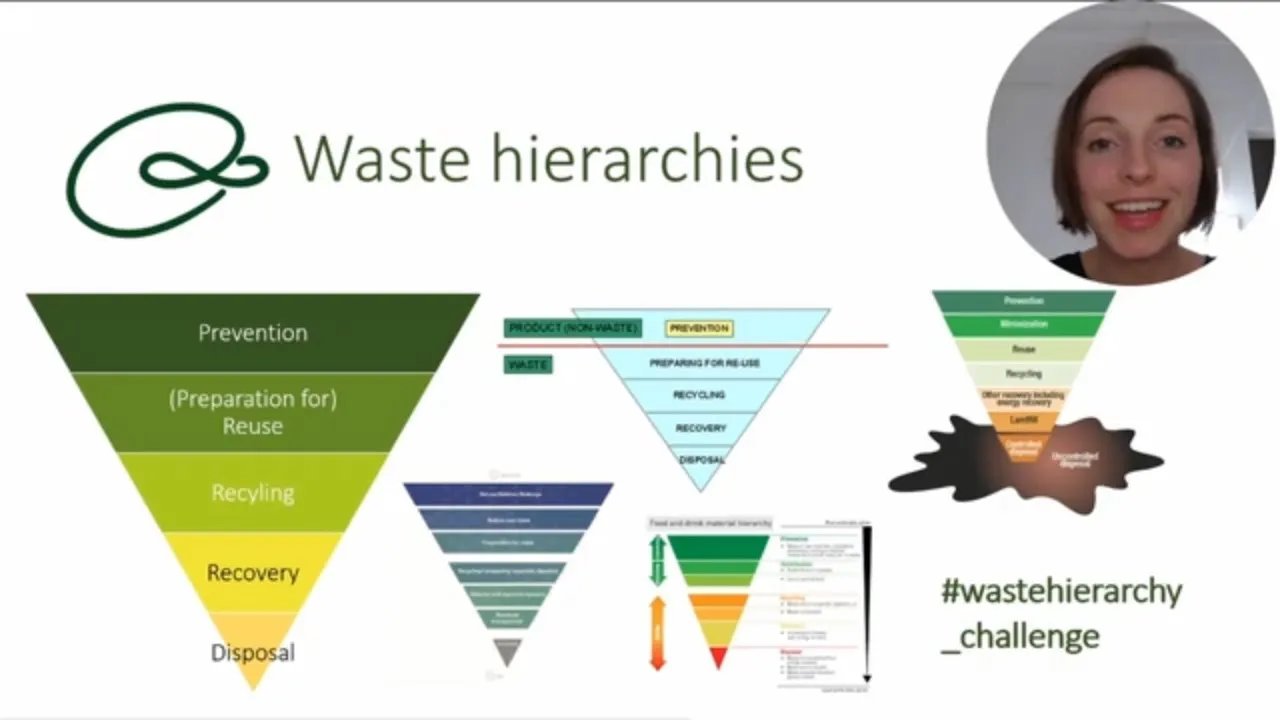
Awareness of the waste hierarchy, particularly the distinction and prioritization of 'reduce' and 'reuse' over 'recycle'.
In-depth study of Extended Producer Responsibility (EPR) legislation and global e-waste frameworks, such as the European Union's WEEE Directive.
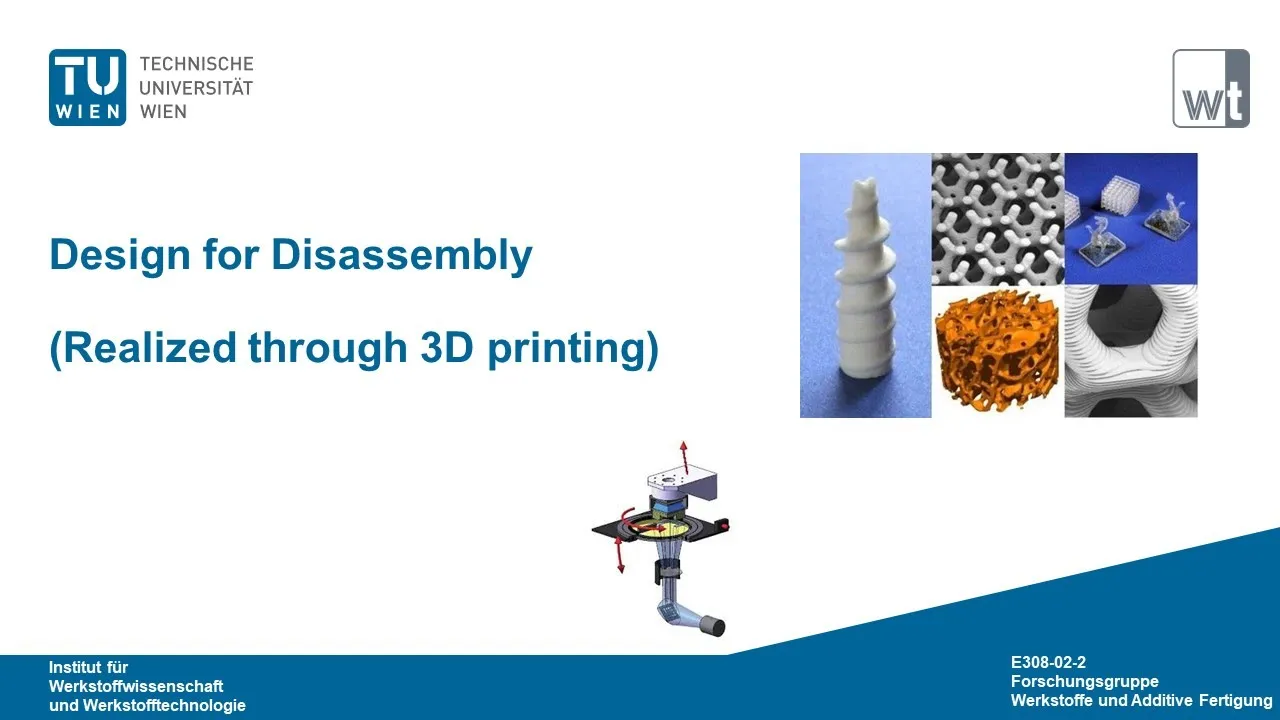
Exploration of the engineering principles behind 'Design for Disassembly' (DfD), which aims to make future electronics easier to repair and recycle.
Analysis of the economic and logistical feasibility of Product-as-a-Service (PaaS) business models, such as device leasing and subscription-based electronics.
Investigation into advanced metallurgical and chemical extraction techniques (pyrometallurgy and hydrometallurgy) used to recover high-purity precious metals from circuit boards.
255.4K views3.5Klikes28:26Original Release: 2023-06-20
Weíre forever buying new tech and throwing out old stuff.
Iíd never thought about it before, e-waste was a new topic for me.
And there are treasures to be found if you know where to look.
Usually these modules would all be discarded, but ideally, we can salvage 70 percent.
Raw materials can be recovered from e-waste, without releasing toxic fumes in the process.
Many people arenít aware of the risks.
There are many innovative ways e-waste can be reduced and recycled.
Let's take this with us.
Careful with the rail.
Itís possible to do your part for the energy transition in the comfort of your own home.
In Hamburg, renewable power plants are being installed on private balconies.
Theyíre constructed out of used solar modules.
Itís great that we have modules that can be given a second lease on life.
I'm very pleased about that.
Theyíd have landed in the shredder otherwise.
Engineer Martin Wilke used to research the efficiency of gas-fired power plants.
Heís now switched his focus to solar power specifically, to recycling old photovoltaic panels.
Customers are very satisfied.
Theyíre eager to produce their own solar power.
New modules probably cost around 200 euros.
Ours are less than a third of that 60, 70 euros.
Martin Wilke finds buyers through the SoliSolar association, which helps people assemble balcony power plants and connect them to the grid, generating up to 600 watts of power.
A used module is an even more sustainable solution.
A normal photovoltaic module has to be in action for two years to produce the electricity that was used for its own production.
But with a secondhand module, thereís an immediate benefit for the climate.
How sensitiveís this surface?
Stefan Grofljohann has bought two used modules.
Heís learning how to install them.
We all have to think about how weíll produce electricity in the future.
A balcony power plant is the simplest way to do that.
Two modules with 600 watts of power provide enough electricity to run a washing machine and refrigerator.
A saving of more than 100 euros per year.
Stefan Grofljohann lives close by.
With the help of his wife, it takes him just a few hours to install the system on his balcony.
Look, weíll have solar power when the sun shines.
So where exactly do the used modules come from?
Careful, we need to get out of the way Weíre dismantling the panels and taking the modules down.
Martin Wilke is now in Magdeburg.
40,000 solar modules have been producing solar power here for more than 10 years.
Some of them are being dismantled because the site needs to be renovated.
At the waste management company he worked for, Wilke saw mountains of solar panels end up in the shredder even ones that were still functional.
His plan to reuse them opened up a new line of business.
The motivationís simple: We want to avoid unnecessary e-waste.
In 50, 100 yearsí time, I want my children and grandchildren to still have a planet worth living on.
These solar panels had been underperforming which is why the operating company hired Martin Wilke.
The modules donít have any obvious cracks or defects, but they are underperforming.
When the sun is shining, each of these photovoltaic panels should produce 235 watts of electricity.
After 10 years, the output might be slightly reduced.
For a solar panel park geared to maximum profit, thatís a problem.
If the output dropped by four or five percent, theyíd still be perfect as a balcony power plant.
Itís a business model with great potential.
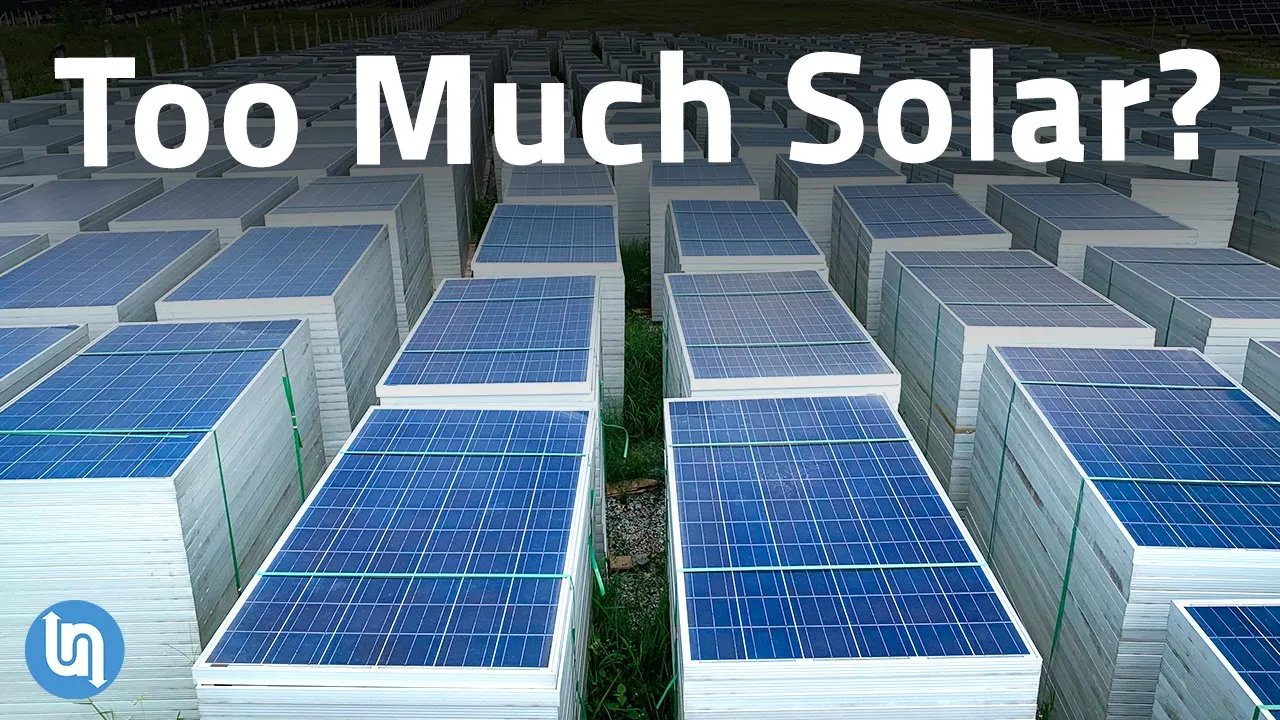
Germany is facing a surge of used solar modules.
Thatís partly due to the Renewable Energy Sources Act from 2000, which guaranteed fixed prices for solar power for 20 years.
Many solar parks will go out of operation when exposed to the much lower market price.
Experts predict by 2030, there will be one million tons of used modules in Germany alone enough to cover an area larger than 11,000 soccer fields.
Every salvaged solar panel means 20 kilos less electronic waste.
Is this one coming away?
E-waste will also be recycled in this warehouse in India.
Swiss entrepreneur Dea Wehrli is creating a space where workers can safely dismantle hazardous waste.
In India, in Delhi, e-waste is taken apart in neighborhoods where there children are playing, where food is being cooked.
Wehrli wants to help put an end to that.
Tens of thousands of people in India make their living off e-waste risking their health in the process.
In a suburb of Delhi, the EcoWork project wants to improve their working conditions.
Dea Wehrli developed the concept together with an Indian-Swiss team.
Here theyíre building up to 40 workstations, which will be available to rent.
Thereís a lot of light, sturdy tables.
We give them tools.
They also have gloves.
The idea is that they have a safe and healthy working environment.
which they urgently need.
Recycling e-waste produces toxic fumes, endangering not only workers but also their families.
Many people arenít aware of the risks.
Most get into the business because itís in the family, and itís always been done the same way.
EcoWork wants to show people they do have options.
The team regularly visits districts in Delhi that are hubs of the informal e-waste industry.
Today Anurag Gupta is accompanying Dea Wehrli.
You see that? LCD screens.
Alright, that's all screens.
The import of e-waste has been banned in India for many years.
Yet an estimated 50,000 tons are illegally imported from Western countries every year.
According to Indian law, defective equipment can only be dismantled by officially licensed companies.
But in reality, more than 90 percent of the scrap is illegally taken apart in backyards.
We canít reveal exactly where this man is working.
The police could turn up at any time.
This is all copper.
This is all iron core.
The worker is extracting metal from old transformers.
He earns the equivalent of just one euro per hour.
The company he works for buys e-waste and sells the metals to recyclers thatís where the money is made.
But for the worker, one kilo of copper is worth just 10 euros.
Dea Wehrli knows to get him into the EcoWork hall, she has to convince his boss.
It's not easy, but this type of solution-oriented work and starting up a business with a great team is very gratifying and energizing.
Most people in these backstreets are make a living dismantling and recycling electrical parts.
Dea Wehrli wants to take the industry out of the confines of city neighborhoods.
Electronic waste contains highly toxic substances, including lead, cadmium and mercury.
A safe workplace would help protect workers from the health risks of exposure to these substances.
I am dealing with air conditioner, fridge, washing machines, cameras, CCTVs Aslam Malik is a major player in the e-waste sector.
Convincing him to get on board would be a breakthrough for the EcoWork team.
Would it be interesting for you to get a workspace there and continue working there?
Actually, I am very excited to do some business with you there.
We are very excited as well.
Onto the next e-waste dismantler, just a few streets away.
Again, we canít reveal the exact location like most people in the sector, this man works under illegal conditions.
So many cellphones.
Hi, I am Anurag.
The young man specializes in cell phones.
He buys them for about 20 cents each.
Here camera.
This is camera.
13,000 rupees per kilo.
Thatís about 145 euros.
The circuit board with chips is the most valuable component.
Itís worth 75 cents.
It contains precious metals.
250 grams of gold can be extracted from one ton of mobile phones.
Compared to only five grams of gold from one ton of gold ore from a mine.
Electronic scrap is a precious commodity here.
But the dismantlers are in desperate need of safe working conditions.
6,000 kilometers away, efforts are underway to prevent e-waste from being produced in the first place.
Britta Berndt runs 10 day-care centers in Strasbourg, France.
If a team memberís cell phone breaks, itís a crisis.
But she knows who to call if it does.
A colleague had her phone in the pocket of her hoodie, and accidentally put it in the washing machine.
I assumed it was a lost cause, but we called this service and in just 24 hours, my colleague had a phone again.
A broken display?
No problem.
A replacement device is delivered in no time at all and at no extra cost.
Priscille Cadart works for Commown, a cooperative promoting sustainable electronics.
Their business model focuses on renting.
It's the only business model that makes manufacturers reduce their range and stop issuing new models all the time.
Then manufacturers and rental companies have an interest in the device lasting as long as possible.
The basic idea of Commown is that devices are rented out rather than sold.
Customers get comprehensive support, repairs, and replacements.
And the longer a device is rented for, the lower the cost.
Commown's headquarters are just a few kilometers away.
The broken display is replaced immediately so that the cell phone can go back into circulation as soon as possible.
Nothing is thrown away here.
If a device canít be fixed, at least its components can be recycled.
The cooperative was founded by Elie AssÈmat, whoís now in his late 30s.
He grew up on an organic farm and studied physics.
Heís always been interested in sustainability and was keen to tackle the overproduction of electronic products.
We try to keep the devices in circulation as long as possible, including the parts.
All these modules here have been checked and can go to customers when they need something replaced.
The idea is to reuse them as often and for as long as possible.
This only works with technology that can be easily repaired.
Today Elie AssÈmat is meeting with computer manufacturers from Switzerland.
Theyíve brought along a new Notebook, to add to Commown's existing range of products.
This is our current product range, mainly Fairphones, for example the Fairphone 4, and computers from why! open computing.
The common feature of all these devices is durability.
As most devices are used for far too short a time, more than 57 million tons of electronic waste are produced worldwide every year the equivalent weight of more than 5,000 Eiffel Towers.
This could double to 110 million tons by 2050 if consumer habits donít change.
Who will time me while I change the keyboard?
Hold on... OK, go.
Entrepreneur FranÁois Marthaler is proud of how quickly the parts can be removed from the new Notebook.
The competition would take hours.
Voila!
It's out.
35 seconds!
The battery can be replaced in no time a job that typically has to be done at a repair shop.
The trend is to use adhesives in devices.
We're trying to slow down this trend and convince people that today, in 2023, even with a computer like the one Nicolas has been using for almost 10 years, you yourself can do pretty much everything you need.
This is the first laptop released by Francois Marthaler and his business partner Nicolas Guignard.
Itís been regularly upgraded and repaired and still works flawlessly today.
An instruction manual is available online.
We encourage our customers to open up their devices themselves.
Other manufacturers say thereís no guarantee, but there is with us.
The EU Commission has introduced a ìright to repairî for consumers.
But Commown doesnít want to wait until new legislation is approved.
The cooperative has rented out about 3,700 devices so far.
Sometimes Elie AssÈmat delivers equipment himself.
Today heís visiting some Commown customers across the border in Germany.
Weíre off to a good start in Germany.
In the last two years weíve seen 60 to 70 percent growth in rentals, not bad at all!
We want to keep that up.
Growth that for once doesnít result in yet more e-waste.
A batch of used solar modules from Magdeburg has arrived in Hamburg.
Theyíre being checked on this new test lane which cost several hundred thousand euros.
So I can open this up, this is our sunlight simulator.
Once the lid is closed, the simulator lights up with 1,000 watts.
On the computer screen, the team can see how much electricity the solar cells are still producing.
First impression, there's something wrong with the module.
Maybe itís damaged.
We'll look at the EL image.
EL is electroluminescence.
Special cameras scan the entire module at the second inspection station and produce a kind of X-ray image.
This reveals any damage.
Thereís definitely a crack, but it's not bad.
It generates 15 watts less than what the manufacturer says, but you can still use it for a balcony power plant.
Once the used modules have been inspected, they get a sticker and a two-year warranty.
2ndlifesolarís seven employees can check up to 800 modules per day.
The success rate is excellent.
There are parks where 80 percent of the modules are junk, and there are parks where just 20, 30 percent are defective modules.
Usually these modules would be disposed of, but we can ideally save 70 percent by running these tests.
But what happens to the 30 percent that fail the tests?
They contain valuable raw materials that are lost in the shredding process.
Salvaging raw materials.
Thatís what workers will be doing at the EcoWork site in India.
So welcome to EcoWork, really great that you are here.
Three e-waste entrepreneurs are at the meeting, including Aslam Malik.
Just to envision so this area here, that will be all work units.
The scrap metal dismantlers will be provided with a fully equipped co-working space with flexibly sized workspaces that can be rented for days, weeks, or even months.
There will also be lockable storage areas, as well as break rooms and conference rooms.
Big players like Aslam Malik could potentially join forces with smaller businesses.
We can bundle their products, and send larger volumes directly to processors.
And with a larger volume, you can usually get a better price.
Itís not yet clear what the service will cost.
In a first step, Dea Wehrli wants to recruit mostly small entrepreneurs already paying rent for workshops and base the fees on that.
Thereís still a lot of negotiating to do.
The hall is nice.
But it would be difficult to transport materials.
Itís a long way, so costs would be higher.
In the long run, the idea is for EcoWork to be self-supporting.
For now, the project is still financed by the Swiss National Science Foundation and donations.
A trial run will start in the summer, with an official license so no one has to worry about police controls.
The best thing is that no one will stop us from working here.
We won't be chased away and threatened.
And, crucially, everything thatís recycled here wonít end up in unsafe backyard workshops, but with licensed companies that work more safely and efficiently, including in Western countries.
In Europe, there are plants that recover metals and buy circuit boards from all over the world.
So circuit boards that are dismantled here at Ecowork could find their way to Europe.
A key factor, given growing shortages of raw materials.
From India to southern Germany.
Commown founder Elie AssÈmat is visiting a mill.
Itís very dusty, so any smartphones and computers used here must be extra robust and easily repairable.
Elie AssÈmat is here with a German colleague.
They want to draw in corporate clients that use a lot of computer hardware and electronic devices.
Theyíve brought along an especially robust smartphone for the boss.
Heís been testing another out for the last two weeks.
I can access the image remotely and switch the machines on and off if necessary.
Miller Dennis Brosig needs the second mobile phone for his colleague on the night shift.
A combination of dust and humidity means cell phones tend to stop working properly here.
Some button breaks, or the screen, or the battery, and unfortunately you can't repair it yourself.
And getting it repaired was getting too costly.
Now we have an alternative that will hopefully last five or ten years.
The robust mobile phone costs 21 euros 70 cents monthly to rent in the first year.
In the second year, the price drops by 10 percent, in the third year by another 30 percent to 13 euros.
The fact that the entire company is now switching to rented devices is thanks to Filip Krumpe.
The computer scientist started out as the mill's IT manager and then became its sustainability manager.
We tend to think a lot about sustainable food, sustainable agriculture, but itís only in the last couple of years that I began thinking about how to make technology more sustainable because it has a very large carbon footprint.
A lot of the hardware used here could be replaced.
But Commown has a policy.
As long as the equipment isnít broken, the cooperative doesn't want to earn money by replacing it.
Filip Krumpe agrees.
It doesn't make sense to switch to something sustainable if what you have still works.
We try to use and repair what we have for as long as possible.
Still, business is going well.
Elie AssÈmat expects a turnover of more than one million euros this year.
His vision is to transform the electronics sector.
If I do nothing, I can't face myself in the mirror in the morning.
I must do something that has a positive impact on the world.
Renting out sustainable electronics and boosting durability saves on CO2 emissions and avoids e-waste.
But at some point, a solar module will be permanently broken.
Martin Wilke wants to find out how to recover the valuable raw materials contained in them.
A young startup has developed a process that entrepreneurs Fridolin Franke, Jan Bargel and Jan-Philipp Mai hope will revolutionize the recycling market for solar modules.
Until now, only poor-quality aluminum and glass could be recovered from the shredding and sorting process.
Iím very curious about this technology.
Itís about extracting silicon and silver, separating these raw materials, and that's very important to me.
This machine solves the first problem the young entrepreneurs faced: Most of the modules have a glass layer on top thatís firmly attached to the solar cells underneath.
First, Jan Bargel breaks off the glass pane with a chisel.
Then a special lamp heats the module to around 200 degrees and loosens the adhesive.
The glass can then be pried off with a sharp metal spatula.
If the process goes well, there's nothing left it's perfect.
Cleanly separated.
Thanks to this process, the fragments can be made into bottles and jars.
With conventional shredding, the glass is so impure that it can only be used for insulation material.
The thick film that remains is especially valuable.
The printed conductors are made of pure silver.
Underneath are the solar cells, made of silicon.
The inventors are very proud of their second machine.
What does this machine do?
I canít tell you exactly that's our trade secret.
I can tell you this much; thereís a rotating tool that scrapes off the layers.
Itís a noisy process.
The tool first scrapes away a layer of plastic in tiny fragments and then grinds off the silver tracks.
Whatís left is a glittering dust.
That's not pure silver, is it?
No, youíre right, it's silver dust, there's about three percent silver in it.
But that's enough for the refinery to purify it into pure silver.
There are about 14 grams of silver in each module.
This means that 700 tons of silver could be recovered from the one million tons of old modules that are expected to amass in Germany alone by 2030.
Almost half the amount used by the solar industry worldwide every year.
The residual foil with the silicon goes to a specialized partner company.
Whatís produced there are so-called silicon pellets.
They look like this and can be reused as metallurgical silicon.
Silicon is a critical raw material in Europe.
The world market for silicon is dominated by China.
The three entrepreneurs want to build a fully automated pilot plant in the next few months that can recycle up to 150,000 modules per year.
Itís very exciting.
I think one stepís missing until itís ready for series production.
Then itís a great solution to recover raw materials thatíve so far been.
Uncovering the treasure troves in e-waste reduces dependency on raw material imports.
As does repairing devices instead of throwing them away.
And even better in the long run, fewer raw materials will be needed in the first place.
Up Next
56:30
Investigating Modern Slavery in Smartphone Manufacturing
@ENDEVRDocs
898.1K views•2021-03-28

5:07
Impact of Yuan in Indo-Russian Trade Amid Sanctions
@WION
261.9K views•2022-07-01

42:26
Free Trade's Broken Promise: Winners, Losers, and Protectionism
@DWDocumentary
2.7M views•2018-06-06

113:18
The Age of Easy Money: Fed & Inflation | Full Documentary
@frontline
21.2M views•2023-03-15
Related Study Plans & Knowledge Roadmaps
Structured learning paths in Economics
economics
Sovereign Debt: Defaults, IMF & Restructuring
01Introduction to Sovereign Debt & Government Bonds
02Debt Sustainability & Credit Ratings
03Anatomy and History of Debt Crises
+ 2 more learning modules
12h5 modules
Explore Roadmap
economics
Market Design: Matching Theory & Gale-Shapley
01Introduction to Market Design and Price-Free Markets
02Two-Sided Matching & The Gale-Shapley Algorithm
03School Choice Systems and Mechanism Design
+ 2 more learning modules
10h5 modules
Explore Roadmap
economics
Impossible Trinity: Forex, Capital & Policy
01Introduction to Monetary Policy and Central Banking
02Exchange Rates and International Capital Flows
03The Mundell-Fleming Model
+ 2 more learning modules
8h5 modules
Explore Roadmap
economics
Healthcare Economics: Market Failures & Systems
01Introduction to Healthcare Markets and Market Failure
02Asymmetric Information and Adverse Selection
03Moral Hazard and Insurance Design
+ 2 more learning modules
12h5 modules
Explore Roadmap