















![[개정판, 기침제거ver] 토양학 합본 - 10강~14강](https://i.ytimg.com/vi/SklMMiGSWOk/maxresdefault.jpg)







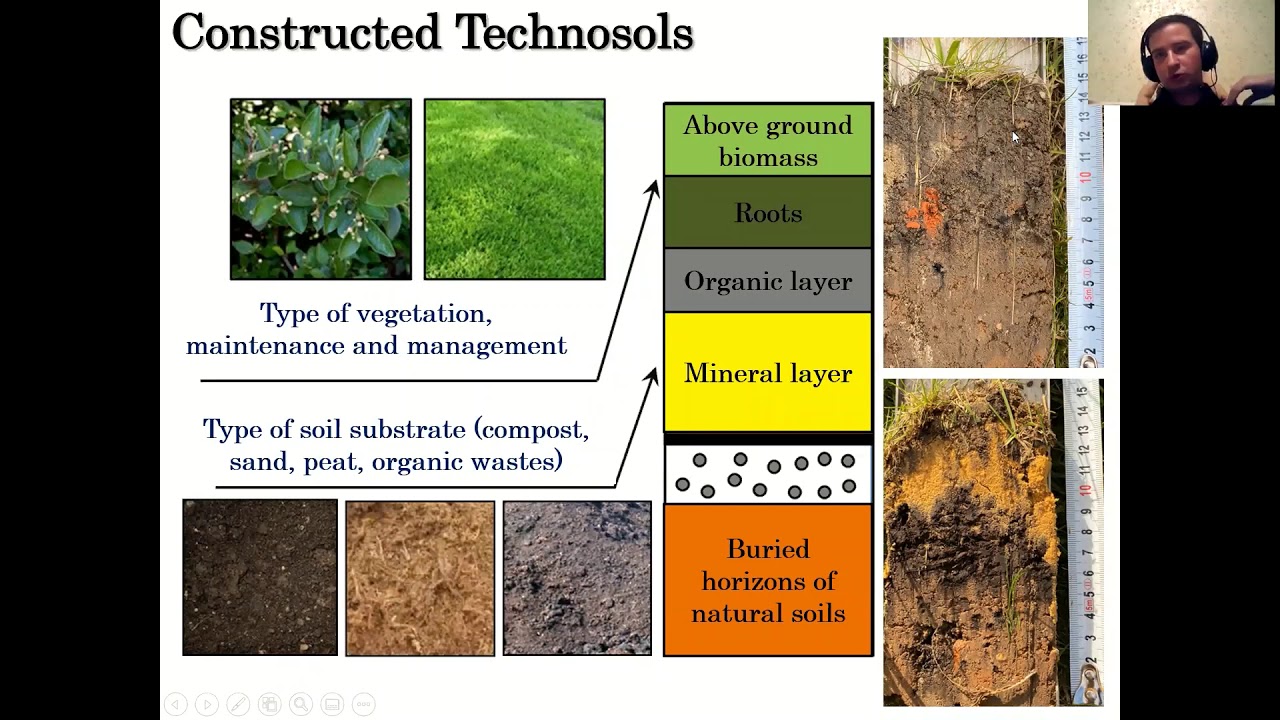
Urban soils, known as technosols, serve as historical records of pollution and remediation efforts; these human-altered soils contain artifacts, garbage, and contaminants from industrial and urban development, requiring careful management to prevent environmental harm, with modern approaches focusing on immobilizing non-recyclable waste in construction materials rather than spreading it in landscapes.
Urban Soils: Pollution, Remediation & Technosols Explained
Added:Fundamental soil science concepts, including soil horizons, physical-chemical properties (such as pH and cation exchange capacity), and basic soil biology.
An understanding of common environmental contaminants, particularly heavy metals, hydrocarbons, and persistent organic pollutants, including their typical industrial sources.
The concept of the Anthropocene and how historical human activities leave physical and chemical footprints in geological and pedological layers.
Basic ecological concepts regarding bioaccumulation and the pathways through which soil pollution can affect human health and urban ecosystems.
Advanced soil remediation methodologies, such as phytoremediation, bioremediation, electrokinetic separation, and soil washing.
The official classification, taxonomy, and mapping of Technosols and Anthrosols according to international systems like the World Reference Base (WRB) for Soil Resources.
Urban planning, environmental policy, and brownfield redevelopment strategies, focusing on the legal and safety frameworks of reclaiming contaminated urban land.
The engineering and fabrication of artificial soils (constructed Technosols) using recycled municipal and industrial waste streams to support urban green infrastructure and circular economy goals.
790 views21likes5:25Original Release: 2024-12-05
is the s from hilers hilam is a small City where all our broadcasting stations are from television and radio and this is you see a buildup of this is this original heatland soil Poole um which was used to be on the border of the city but then the city of hilom got connected to the rail station and in 50 years it grew four times its size um and in 18 by The End by the end of the 19th century hon was not a very clean city as were most cities in the world uh because there was no sewer system yet so all the dirt was on the streets and there was a medical doctor he made a map which around the same time was done in London and New York of where his patients lived what diseases they had and where the water wells were and then he saw this relation people got ill from the water and he made a claim in the in the local uh government to drain the the the the the water out of the city first my by making superficial drains which later was developed into uh into the sewer system but first it was drained out of the superficially out out of the city to Fields next to the city infiltration BS and that was actually this soil this soil was an infiltration bed so now it's nicely polluted with polar aromatic carbons heavy metals Etc later when the sewer system was in place they they put a garbage heap as they do still in some place they just uh bring the garbage out of the city make big heaps and that's it and you see that here that's actually this location um until that was different processed and then they needed more space in the city and the garbage she was leveled they put half a meter of construction s the pavement and then they started building so this is actually the the street level um and until in the end of the 1970s they discovered soil pollution in melons they found actually that people have put a lot of material in the soil in the past like industrial refuge and then uh yeah environmental thinking grew uh realization that that we can actually pollute the soil and with that the groundwater so then a big program was started that lasted at least for 10 years to make an inventory of the whole country where are source of pollution and where should we remediate what are criteria what is polluted what is not Etc what is danger for human health and this area in hilon was opened uh it was an urban area opened for remediation and then the municipality asked us can you take a profile for education so that we can explain to the people why their streets are open for so long and what we are doing there so then that was it hang in the in the municipality of hilm and ultimately it came here so we see here the natural soil the garbage sheep and then there's uh construction Senter with artifacts and and that makes it a technosol a technosol in WWE classification requires a minimum of 20% artifacts uh and and and the yeah the pavement the pavement so when I explain this to students I say this is an aconic garbc heric technosol and they all start to laugh of course because they're quite exotic names but once you understand that that terminology you say aconic is sealed garbc is from garbage remains Urban urbic is from Urban and technosol means it is in deeply influenced human soil so yeah and uh this bottle here the most asked questions did you put it there on purpose no it was already there and I mislabeled it as a perfume bottle but I was corrected by a nurse a retired nurse who visited Museum and she said this is a penicillin bottle which was used in hospital so yeah so that's our Arabic and noway and then the question is well we got the environmental thinking about soil pollution developed but we also had a pH where we dump things in the sea or just put them in the in the landscape of course we don't do that anymore but what do we do now we bring it we we select uh uh let's say garbage and what is non-recyclable we bring to plants which is which burns the residue but then still you have a residue and where do you leave that and I asked people from the industry and actually there's still no good solution to that than to lock it into Building Material roads Etc and for instance this is a phase in the Netherland where we thought we just spread the residue over large areas like in our coastal zone this is from the mass near rdam but then they found out of course this material is not inert it also has still chemical processes so heavy metals were leeching into the Sandy top subsoil so that also not done anymore now yeah it's made to construction material so yeah immobilize it for longer periods that is actually the AL uh let's say uh divided into recyclable classes and have the minimum material that is non recyclable and then yeah process it to keep it yeah safe for longer period
Up Next

81:50
Urban Agriculture & Trace Metal Contaminants in Soil
@FVASunimelb
297 views•2021-11-23
62:52
HUMUS sapiens: Open Soil Research & DIY Ecology | 36C3 Talk
@mediacccde
1.7K views•2019-12-29
14:30
Microplastics Everywhere: How Plastic Impacts Our Lives
@TEDx
100.9K views•2018-05-08
10:28
Ice Stupa Artificial Glaciers: Solving Ladakh's Water Crisis
@SonamWangchuk66
3.2M views•2015-05-03
Related Study Plans & Knowledge Roadmaps
Structured learning paths in Environmental Science
environmental-science
Phytoremediation: Soil Clean-Up & Plant Biology
01Introduction to Soil Contamination & Heavy Metals
02Plant Anatomy and Nutrient Transport Basics
03Biological Mechanisms of Hyperaccumulation
+ 3 more learning modules
16h6 modules
Explore Roadmap
environmental-science
Ocean Noise: Cetacean Impacts & Mitigation
01Fundamentals of Underwater Acoustics
02Marine Mammal Bioacoustics
03Anthropogenic Noise: Shipping & Seismic Surveying
+ 2 more learning modules
16h5 modules
Explore Roadmap
environmental-science
Road Ecology: Corridors, Overpasses & Fencing
01Foundations of Habitat Fragmentation and Carnivore Ecology
02The Road Barrier: Ecological Impacts of Transport Infrastructure
03Principles of Ecological Corridors and Connectivity Mapping
+ 3 more learning modules
14h6 modules
Explore Roadmap
environmental-science
Ocean Acidification: Kelp Buffering & Shellfish
01Fundamentals of Ocean Chemistry & pH
02Chemical Pathways of Coastal Acidification
03Bivalve Physiology & Calcification Under Stress
+ 2 more learning modules
18h5 modules
Explore Roadmap