















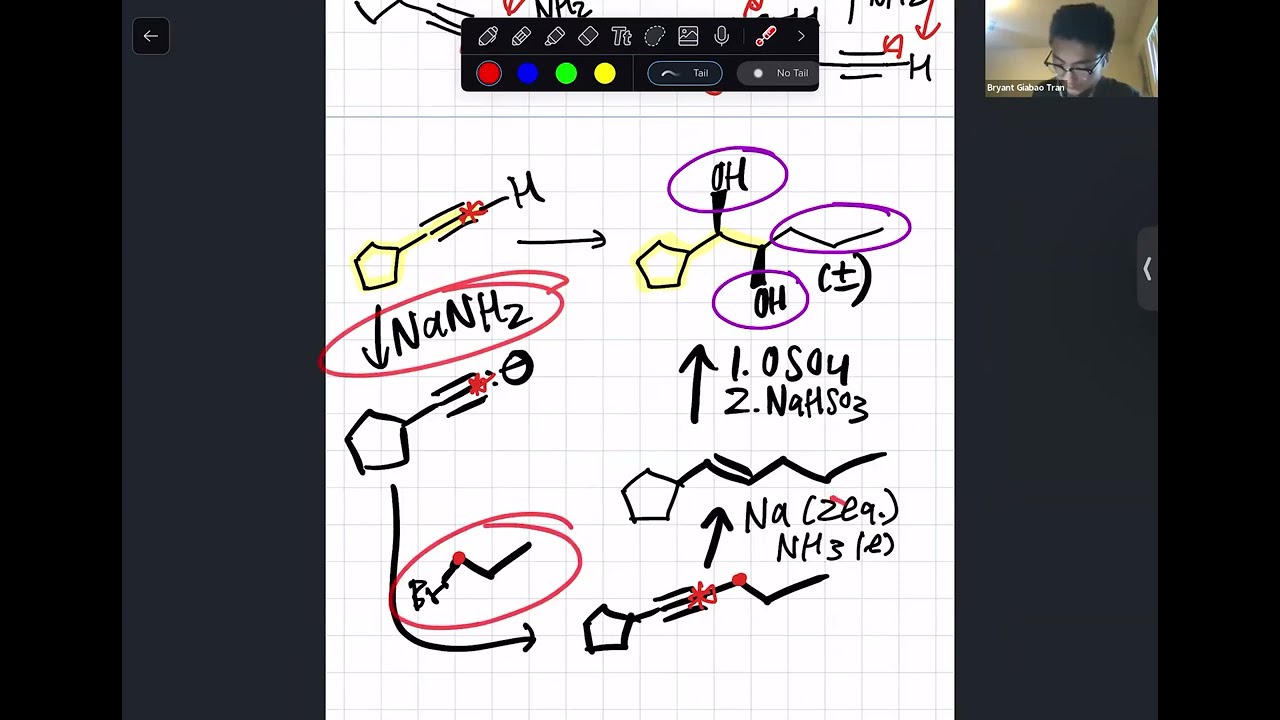


This video provides a comprehensive final exam review for first-semester organic chemistry, covering essential topics including functional group identification, IUPAC nomenclature, carbocation stability (tertiary > secondary > primary, with allylic carbocations being more stable due to resonance), hybridization determination (count groups: 4=sp³, 3=sp², 2=sp), formal charge calculation (Valence Electrons - Bonds - Dots), Lewis acid-base concepts, acid strength comparisons (pKa values: carboxylic acids ~4-5, phenols ~10, alcohols ~16-18, amines ~35-40, sulfonic acids ~-2), resonance stabilization principles, stereochemistry (R/S configuration using Cahn-Ingold-Prelog rules, meso compounds vs racemic mixtures), conformational analysis (Newman projections, gauche interactions), and reaction mechanisms (SN1/SN2, radical reactions, addition reactions).
Organic Chemistry 1 Final Exam Review | Functional Groups & Reactions
Added:this multiple choice final exam review is for those of you who are taking the first semester of organic chemistry so let's go ahead and begin number one which of the following functional groups is not found in the molecule shown below for each of these questions pause the video and work on the problem first see if we can get the right answer and then once you have selected your answer unpause the video to see the solution so let's go ahead and begin our goal is to find out which functional group is not found in a molecule so let's identify all the function groups that are in the molecule so what is this what functional group do we have here c-h-o this is equivalent to this expression here that is an aldehyde so therefore we can eliminate answer choice e now what about this functional group in the Middle with two oxygens what is that called that function of group is known as an ester and Esther has this General shape it has a carbon with two oxygens and it has an R Group one attached to the carbon and the other attached to the single bonded oxygen atom so that's an ester after that we have an nh2 group this is known as an amine you can also divide it as R and H2 so D is out of the question what about this group this och3 group will kind of what functional group is that so notice that we have an oxygen attached to two carbons which is basically equivalent to an oxygen attached to two R groups this is known as an ether so a is eliminated next we have a cooh group that is known as a carboxylic acid which if you write it out it will look like this you have an R Group and then you have a carbon which is double bonded to an oxygen and it has an o h so that's a carboxylic acid and this is an ether now the carboxylic acid is not listed as an answer so we don't have to worry about that next we have this oh which is an alcohol so C is eliminated which means that b is the right answer and what about this group what is this group called so as you can see if you see a carbon attached to an nh2 group that's an amine if you have an nh2 group attached to a carbonyl group that is known as an amide or amide which is not listed so therefore answer Choice V is the right answer for this problem number two what is the IU pack name for this compound is it a is it b or is it C or D well let's find out the first thing that we'll need to do is we need to identify the longest chain so let's begin counting from left to right this is one two three four five six if we go to the right it's seven but if we go up eight so that is the longest chain eight carbons is associated with octane so we can eliminate answer Choice D and C because the parent name is heptane now here's a question for you should we count it from left to right or right to left if we count it the way we have it notice the substituents we'll have a methyl on three a methyl on six and an ethyl on four which correlates to answer choice B B has an F14 and two methyls on three and six now if we count the other way notice that we still have a methyl on three and six but we have an ethyl on five which correlates to answer Choice a so do we want the ethyl to be on 4 or on five you want to count it in such a way that the substituents have lower numbers so therefore B is the right answer so you want to count it in this direction so when you name it you want to start with Ethan since e comes before m and then we have a 3 6 dimethyl and then because we have an a carbon chain it's octane if you recall methane is associated with one carbon ethane two propane three butane is four pantaneous 5. hexane is six heptane is seven octane is eight nine is nine and decade is 10.
so B is the right answer for this problem number three which of the following carbocations shown below is most stable so what do you think the answer is going to be so go ahead and take a minute and work on this example now what we need to keep in mind is that tertiary carbocations are more stable than secondary carbocations which are more stable than primary carbocations and the reason for this is due to the inductive effects and hyperconjugation in the inductive effects the carbon atoms which are electron donating groups relative to the positive charge they can donate electron density to the positive charge by means of the inductive effect that is through the sigma Bond so that's one way they can donate electron density to a starving carbocation which really wants electrons the other way is by means of the overlap of atomic orbitals which is known as Hyper conjugation so let's say if you have a carbon atom with a plus charge and let's say there's another ch3 group and so here's a CH Bond that's next to it so there are electrons in this orbital and that orbital can overlap with the MTP orbital below it and so that's how electron density can be donated to the carbocation by means of the by means of hyperconjugation which is through the overlap of atomic orbitals so when these two orbitals overlap electron density can be shared so those are the main reasons why tertiary carbocations are more stable than primary ones a tertiary carbocation this basically a carbon that has three other carbons attached to it and the carbon in the middle has a plus charge so it's a carbocation so that's why it's called tertiary because there's three carbons attached to the carbon with the plus charge and so the more methyl groups that you have next to carbocation the more electron density that can be donated which means you have a more stable carbocation now what about allylic carbocations a secondary allylic carbocation is more stable than a regular secondary carbocation and a little carbocation is one that has a plush charge one carbon away from the double bond and the reason why allylic carbocations are relatively stable is due to the resonance stabilization of the carbocation this double bond can move here creating a resonance form that looks like this so as you can see the plus charge is shared between two carbon atoms as opposed to one and as a result it's more stable so those are the main things you need to look for so keep in mind that tertiary carbocations are more stable than secondary and primary ones and that allylic carbocations are more stable than those that are not allylic now let's identify the type of carbocation that we have in every choice so let's start with part A what type of carbocation do we have so let's focus on the carbon with the plus charge how many other carbons are attached to it so we have one two three because there are three carbons attached to it is a tertiary carbon and notice that it's one carbon away from a double bond which means it's tertiary and it's allylic now what about B what type of carbocation do we have so focusing on the carbon with the plus charge that carbon is attached to two other carbon atoms and it's adjacent to a double bond which means that it's secondary and it's allylic so moving on to part C the carbon with the plus charge is adjacent to two other carbons but it's too far away from the double bond so it's simply a secondary carbocation and now this carbon with a plus charge is only attached to one carbon atom which means it's a primary carbon and it's too far away from the double bond so it's not allylic so therefore D is the least stable primary carbocations are not stable at all the most stable is answer Choice a it's tertiary and it's allylic so if we had to rank it compound a is the most stable after that the next most stable is b a secondary allylic carbocation is more stable than a regular secondary carbocation due to Resonance Evan B is more stable than C and D is the least statement but answer Choice a is the answer that's the most stable carbocation that we have in this selection number four identify the hybridization of the indicated atoms shown below from left to right so is it A B C or D how can we determine the hybridization so feel free to try this one now before we work on a solution let's review how to find the hybridization of an atom so let's start with methane CH4 so what you want to do is count the number of groups and lone pairs attached to the carbon single bonds double bonds triple bonds count them as one group so one two three four the carbon atom has four groups four groups correlates to sp3 s1p3 one plus three adds up to four so that's the hybridization on the center carbon atom so let's do some more examples so you can get familiar with this next let's try formaldehyde since it has a double bond now how many groups are attached to the carbon atom one two three the double bond has one group don't count it as two so we have three groups which corresponds to SP2 one plus two adds up to three three groups will always correspond to SP2 four groups will always correspond to sp3 that's a quick and simple way to find the right answer now let's try a settling what is the hybridization at the carbon and at the hydrogen so if we focus on a carbon atom that carbon atom is attached to a hydrogen and a CH group so it has two groups which means that it's SP hybridized two is basically one plus one if you don't see an exponent it's one now what about the hybridization on hydrogen hydrogen is only attached to one atom so it only has one group one group correlates to s now what if there are lone pairs let's use ammonia as an example an H3 what's the hybridization on the nitrogen atom so what we need to do is count the number of groups and lone pairs so nitrogen has three atoms and a lone pair so it has four groups 4 correlates to sp3 1 plus 3 adds up to 4.
next let's use sulfur dioxide as an example so here's the Lewis structure of SO2 what's the hybridization on the sulfur atom so sulfur has two groups and a lumpia so it has a total of three groups which is SP2 so it's SP2 hybridized now what if we have more than four groups let's use a phosphorus pentachloride for example what's the hybridization on a central phosphorus atom so here we have a total of five groups so it's going to be S1 P3 D1 s only has one orbital so there's no S2 P only has three orbitals so you shouldn't have P4 D has five orbitals so we don't have to use all five the exponents have to add up to five one plus three plus one is five so therefore what do you think the hybridization will be for sulfur hexafluoride sf6 so sulfur has six groups in this case so six corresponds to S1 P3 D2 one plus three plus two is six so now that you know how to find the hybridization of an atom go ahead and finish this problem so let's start with ch3 so we have a carbon attached to three hydrogens and it's attached to carbon at the right so let's put C here so this carbon has four groups attached to it which means that it's sp3 hybridized so let's put sp3 here now we need to go in order from left to right so in each answer Choice the first answer should be sp3 we can eliminate a which is SP2 so we're between b c and d now let's move on to carbon number two so that carbon we can see has three groups is attached to the ch3 on the left the ch2 on the right and the oxygen three groups correlates to SP2 one plus two is three so that's the second answer it's SP2 so we can keep b c and d the same as you can see the second answer they're all SP2 so we can't eliminate anything at this point now let's move on to carbon number three so we have a carbon that has two hydrogens so we can draw it like this and then to the right we have another carbon and to the left we have another carbon so the carbon the ch2 carbon has four different groups and as we know four correlates to sp3 we can eliminate answer Choice B because the third option is not sp3 we need to keep C and we need to keep d so looking at C and D we can see that the next option is SP what we need to focus on is the last one but if you look at this carbon you can see why it's SP hybridized it's attached to a carbon and another carbon so it has two groups which correlates to SP one plus one is two now if we focus on the hydrogen that hydrogen is only attached to one group it's attached to one carbon atom and one group correlates to s so the hybridization for any hydrogen atoms is always asked because hydrogen cannot form two bonds it can only form one Bond which means that c is the right answer D doesn't have S as the last option so this is it number five which of the following Lewis structures contain a sulfur atom with a formal charge of plus one so go ahead and try this problem the formula that I like to use is this one the formal charge is equal to the number of valence electrons minus the number of bonds plus the number of dots in a structure so let's start with answer Choice a sulfur has six valence electrons if you go to the periodic table you'll find that sulfur is in group 6A of the periodic table and typically elements in that group have six valence electrons so all of the sulfur atoms in each of these molecules have six valence electrons as a free atom now in structure a or in compound a sulfur has four bonds one two three four and it doesn't have any visible lone pairs so it has zero dots six minus four is two so the formal charge on this sulfur atom is plus two so we can eliminate answer Choice a now let's move on to B sulfur has six valence electrons in B it has six bonds two three four six it doesn't have any lone pairs so the number of dots is zero six minus six is zero so we can eliminate answer Choice B it's neutral in that molecule now let's move on to C ulfur has six valence electrons and in this structure sulfur has only one Bond but notice that it has six dots 2 4 6.
1 plus 6 is 7 and 6 minus seven is negative one therefore we can eliminate answer Choice C so D has to be the answer but let's go ahead and use the formula to get the answer sulfur has six valence electrons and this structure has one Bond plus two so that's three Bonds in total and we can see that it has two dots or one lump here three plus two is five six minus five is one and so that's the formal charge of sulfur in answer Choice D so D is the answer that's what we're looking for number six which of the following represents the best solution structure for the cyanide ion is it A B C or D so which answers can we eliminate we're looking at answer Choice d notice that nitrogen which is a second row element has more than eight electrons every Bond represents two electrons so it has a triple bond which equates to six electrons and two lone pairs so nitrogen has 10 electrons around it which violates the octet rule that limits in the second row like carbon nitrogen oxygen fluorine they cannot have more than eight electrons in the second row you have 2s2 P6 there is no 2D 10. so second row elements can have at most eight electrons two plus six is eight so we can eliminate d nitrogen violates the oxide rule now in answer Choice C what's the issue here carbon has an incomplete octet notice that it doesn't have eight electrons it has six now it's possible for an element to have six however it's not stable it's not the best Lewis structure it has two four six electrons so we can eliminate answer Choice C answer Choice A and B carbon and nitrogen both have eight electrons which means that their octet requirements are satisfied now what we need to look at is the formal charge we need to find out which one is more stable the compound that is most stable is the one with the minimum formal charge where the formal charge is closest to zero so let's start with b let's calculate the formal charge we know it's equal to the number of valence electrons minus the bonds plus the dots so starting with carbon carbon has four valence electrons naturally it's in group 4A of the periodic table and in this structure it has two bonds and it has four dots two lone pairs corresponds to four dots every lone period has two dots so two plus four is six and four minus six is negative two so that is the formal charge of carbon in this structure so let's go ahead and write that now what about the formal charge of nitrogen nitrogen naturally has five valence electrons it's in group 5A of the periodic table and in this structure it has two bonds and it also has four dots so two plus four is six five minus 6 is negative one now let's go ahead and calculate the formal charge of carbon and nitrogen in the other compound so starting with carbon we can see that it has three bonds one lump here so it has three bonds and two dots three plus two is five four minus five is negative one now what about nitrogen nitrogen has five valence electrons it too has three bonds it has a triple bond and it has a lone pair so two dots five minus five is zero so is it better to have a formal charge of negative one and zero or negative 2 and negative 1.
negative one is closer to zero than negative two is so we can eliminate B if you have a formal charge of negative two it's not good it's not stable also the total charge for Cyanide has to add up to negative one if we add these charges they add up to negative one if we add these two charges they don't add to negative one so this is not the correct Lewis structure for cyanide this is it number seven which of the following represents a pair of resin structures do you think the answer might be A B C or D so what can we do in order to identify a pair of resin structures is there a better way of figuring this out instead of drawing everything it turns out that there is a quick way to identify a pair of resin structures is to identify the ones that are not resin structures if any atoms are moving from one spot to another spot it's not a resonance structure if you want to draw a resin structure only the electrons are free to move and not the atoms so if we look at answer Choice a this represents a hydride shift the hydrogen moved from the tertiary carbon to the secondary carbon and when that happens the plus charge is going to move from the secondary carbon to the tertiary carbon so basically they trade places so because a hydrogen was moved this is not a pair of resonance structures now looking at d we could see that the location of the bromine atom and the hydrogen atom were reversed so anytime you're moving around atoms it will not be a resonance structure so D can be eliminated in fact these are basically CIS and trans isomers this is the CIS isomer and this is the trans isomer an assist isomer you have two groups facing one side and in the trans isomer the two groups are on the opposite sides now let's move on to part C notice that we have a keto Eno tautomerization going on here a hydrogen was moved from this carbon onto the oxygen before there were three hydrogens and now we only have two so hydrogen was transferred from one part of the molecule to the other part of the molecule which means that these two do not represent a pair of resin structures the only answer is answer Choice B if you draw all the hydrogen atoms notice that none of them were moves we still have six hydrogen atoms three on each carbon and so no hydrogens were transferred the only thing that moved toward the electrons two Pi electrons in the double bond which transfer to the oxygen as we can see here and anytime you move electrons without moving atoms you're going to generate a resonance structure so answer Choice B is the right answer number eight which of the following would best act as the Lewis base so in its problem we need to identify which ones are the Lewis acids and eliminate them and then we can easily see which one is going to be the Lewis base a Lewis base is a nucleophile it's electron Rich it's full of electrons which means that it has a lot of Lone pairs and it may have a negative charge a Lewis base can donate a pair of electrons Lewis acids on the other hand are electrophiles they're electron poor they're deficient in electrons and typically they may have a positive charge but the most important thing you need to know is that they have the ability to accept a pair of electrons so let's look at answer Choice a is it a Lewis base or is it a Lewis acid can it accept a pair of electrons or will it donate a pair of electrons if we draw the resonance structure notice that the carbon atom will have a positive charge the oxygen now has a negative charge so therefore the carbonyl group which correlates to aldehydes and ketones they're typically electrophilic they tend to act as Lewis acids let's say if we take a Lewis base like hydroxide hydroxide can donate a pair of electrons to the carbon which means that acetone and ketones and aldehydes are all electrophilics I mean electrophiles which means they're Lewis acids so we can eliminate answer Choice a now what about answer Choice B is it a Lewis acid or is it a Lewis base or is it neither let's find out so the methyl radical has an unpaired electron since it doesn't have a pair of electrons it cannot act as Lewis base for anything to act as a Lewis base it has to donate a pair of electrons which means two electrons the radical only has one unpaired electron so it can't donate two electrons it just doesn't have it now can the methyl radical accept a pair of electrons so let's say if we react it with hydroxide can hydroxide donate a pair of electrons to it form in a bond let's say if it did this Bond will be created and the oxygen which had three lone pairs now has two the carbon still have the three hydrogens and it should still contain the radical or this unpaired electron notice that this structure is not possible carbon cannot have four bonds and at the same time have an unpaired electron that would violate the offset rule and it's not possible carbon cannot have nine electrons which means that a radical cannot behave as a Lewis acid nor can it behave as Lewis base particularly this particular radical now what about bh3 is that a Lewis acid or is it Lewis base so we can see that Boron doesn't have a lump here so it can't act as a Lewis base it can't donate a pair of electrons however it can act as Lewis acid it can accept a pair of electrons from hydroxide and then what's going to happen is we're going to get this product so in this example hydroxide which donated the pair of electrons is the Lewis base or the nucleophile bh3 which accepted the pair of electrons is the Lewis acid also known as the electrophile so by default the answer has to be water and if we draw water the water has a lone pair we can draw it like this it has two lone pairs actually and let's relax it with the H3 so like hydroxide water can use one of its lone pairs and donate it towards the Boron atom and so we're going to get a product that looks like this Boron is going to have a negative formal charge oxygen is going to have a positive formal charge and so we can clearly see that water is behaving as the Lewis base which is the nucleophile so D is the right answer number nine which compound is the strongest acid so let's look at each answer choice so for answer Choice a we have a carboxylic acid you can see the function of group c-o-o-h and what you want to do is you want to be able to determine the pka of each of these molecules if you know the pka you can tell which one's the strongest acid as the pka decreases the strength of the acid increases so the one with the lowest PKA is going to be the strongest acid carbon silic acids have a PK of about four to five now answer Choice B we have an alcohol which most alcohols have a PKA roughly between 16 and 18.
in the case of ethanol ethanol has a PK of 15.9 answer Choice C represents phenol it has six carbons five hydrogens and an oh group whenever you see c6h5 it's a Benzene ring attached to something else every carbon atom in the Benzene ring has five hydrogen atoms so c6h5 represents phenol and phenol has a pka of about 10.
next we have methylamine mostamines have a PKA roughly of about 35 to 40.
and e is a sulfonic acid whenever you see an so3h group these acids are very strong this particular acid has a pka of about negative two so the right answer is answer Choice e but now let's talk about it let's go over a few things so how can we find out the answer if we don't know the pka values the first thing you want to compare is the element attached to the hydrogen atom in our examples is either an oh group or an nh2 group the carboxylic acid has an oh group the ethanol molecule and phenol has an oh group even sulfonic acid has an oh group the only one that's different is the nh2 so whenever you have a different element attached to a hydrogen you can use the trend found in a periodic table acid strength increases as you go to the right due to increase in electronegativity and as you go down due to increase in size so what this means is that h i is more acidic than hbr which is more acidic than HCL and that's more acidic than HF href is more acidic than water and water is more acidic than NH3 which is more acidic than CH4 but let's focus on this water contains an o h Bond NH3 has an NH Bond so the o h bond is more acidic than the NH Bond if everything else is equal assuming that they have the same charge if one is positive and one is neutral you can't use this comparison either they both have to be neutral or they both have to have a negative charge or both be positively charged so the oh group is more acidic than the NH Group which means that D cannot be the strongest acid so that's how you can eliminate D without knowing the PK values now let's look at B and C because both of them contain an oh group so ethanol has a pka of 15.9 and phenol has a pka of 10.
and they both have an oh group attached to a carbon so why is phenol much more acidic than ethanol the answer has to do with the stabilization of the conjugate base the more stable the conjugate base is the more acidic the conjugate acid will be so that's the conjugate base of phenol also known as ethoxide and this is going to be the conjugate base of phenol which is phenoxide so the conjugate base of ethanol is ethoxide in case I said that incorrectly and the conjugate base of phenol is phenoxide so notice that the negative charge on phenoxide is not localized is delocalized it can move around we can draw a resin structure take a lone pair form a double bond and push the negative charge here because the negative charge can move about the ring the conjugate base is more stable and when you have a more stable conjugate base you can have a stronger conjugate acid so the negative charge is shared between the oxygen atom and three other carbon atoms the negative charge can jump every two carbon atoms so it can move to these other positions indicated in red so that's why phenol is more acidic than ethanol it's due to the resonance stabilization of the conjugate base so we can eliminate answer Choice B since C is more acidic than b now let's compare a with c so let's start with the conjugate base of phenol let's redraw and if we draw the resonance structure we know that this electron or those pair of electrons can move here pushing a negative charge on a carbon atom and that will give us this particular resonance form and we can draw two other resonance forms so this lone pair can move here and push the other two electrons on the next adjacent carbon so now the negative charge is in that position so the negative charge is going to keep jumping two carbons away so now we can draw another resonance form so as you can see the phenoxide ion has a total of four resonance forms the negative charge can be placed on one oxygen atom or three carbon atoms now let's draw the conjugate base of acetic acid which is known as acetate and let's draw the resonance form to draw the conjugate base all we need to do is take off the hydrogen now this negative charge can move to the other oxygen atom giving us these two resonance forms so here's a question for you why is it that phenol is more acidic than acidic acid I mean I take that back why is it that acetic acid is more acidic than phenol when the phenoxide ion has more resonance structures because typically the more resonance forms that you have would indicate a more stable conjugate base which means a stronger acid but we don't see that acetic acid is stronger and it only has two resonance forms so when we draw the conjugate base of acetic acid so why is it that acetic acid is a stronger acid when it should be phenol if we look at the number of resin structures so not only should you look at the number of resin structures but you should look at where the negative charge is being placed on one type of atom is it better to put a negative charge on an oxygen atom or on a carbon atom oxygen is more electronegative than carbon electronegativity increases towards the right so it's a lot more stable to put a negative charge on an oxygen atom than a carbon atom so if we look at the first pheasant structure the negative charge is placed on the oxygen atom so let's assume that those two are equivalent now in the second resonance form of the acid ion the negative charge is also on an oxygen atom but in the remaining three forms of the phenox ion the negative charges on a carbon atom it turns out that putting a negative charge on a single oxygen atom is more stable than putting a negative charge on three carbon atoms because carbon really doesn't want to have a negative charge oxygen can stabilize it better and so that's why acetic acid is more stable or more acidic than phenol is because you have a negative charge on two oxygen atoms as opposed to one oxygen atom in the case of phenol so put in a negative charge on the second oxygen atom increases disability by a huge amount as you can see based on the number acetic acid is much more acidic than phenol now this case is apparent if you compare answer Choice a and answer Choice e so let me get rid of this stuff so let's draw the conjugate base of methane sulfonic acid instead of drawing a methyl group I'm just going to represent it with an R Group so we'll need to take off the hydrogen now if we draw the resonance form we can take a lump here and form a double bond causing the negative charge to move on the other oxygen atom so we can get this resonance form and to get the next one we can use the lone pair form a double bond breaking the other Pi Bond so as you can see because there's three oxygens there's three different resonance forms that we can draw for the sulfonic acid so the negative charge is shared between three oxygen atoms as opposed to two in the case of acetic acid and we can see the pka difference is significant so that's why methane sulfonic acid is the most acidic one is because first you're placing a negative charge on an atom that can stabilize it or that can take the negative charge like oxygen and the quantity of oxygen atoms there's three resonance forms that negative charge can be shared between three oxygen atoms as opposed to two in the case of acetic acid or as opposed to one in the case of phenol so the more resin structures that you have and if you can place it on an atom that can stabilize a negative charge that will increase the stability of the conjugate base making the conjugate acid more acidic number 10 what is the IUPAC name for the compound shown below so take a minute and work on this problem so what do you think we should do first the first thing that I would recommend doing is converting the condensed structure into a line structure so we have a ch3 and a ch2 that's two carbons right there once you draw a single line and then we have a carbon double bonded to another carbon and then we have a ch3 on the bottom a ch2 on the top and then a carbon which is attached to three methyl groups and then let's draw the hydrogen as well so that's the line structure now the next thing we need to do is identify the longest chain so if we start from this end this is going to be carbon one two three four five six seven so it's going to be a heptane derivative as opposed to a hexane derivative which means we can eliminate D hexene in the case that there's six carbon atoms in the longest chain but we can see that there's seven now we need to know the correct the right direction in which to count it should we count it from left to right or right to left as we count it from right to left notice that the double bond is between carbons four and five we need to give the double bond priority let's count any other direction so let's say this is carbon one two three four five six and seven notice that if we counted from left to right the double bond is now between three and four instead of four and five which is better so now let's go ahead and name it notice that we have a methyl group on carbon 4.
and we have two methyl groups attached to carbon six so it's four six six as opposed to 2 2 4.
now we'll be doing a and b everything looks the same except one is e and the other is z so we need to know which isomer do we have is it e or is it Z so we need to determine which group has more priority so on the left side is it the hydrogen or the ethyl group the ethyl group has more priority than the hydrogen carbon has a higher atomic number than hydrogen now what about on the right side is it the methyl or is it these groups of carbons that we see here if you have a chain of carbons that's going to have more priority than a single carbon atom if you analyze this this is a methocarbon compared to a secondary carbon a secondary carbon has more priority than the methyl carbon so the highest priority groups are on opposite sides when they are on opposite sides you have the E isomer if they're on the same side you have the Z isomer so answer Choice a is the right answer number 11.
which of the following molecules has the S configuration A B C or D well let's find out let's start with a so first we need to rank each group based on their atomic numbers bromine has the highest atomic number so we're going to give it a score value of 1.
it has the highest priority next fluorine has a second highest atomic number and then it's carbon so fluorine is going to be group number two carbon is 3 and H is number four so what you do is you count it from one two and three ignore four so going in the direction starting from one to two to three notice that it's rotating in the clockwise Direction which is r now before you count it you need to make sure that group number four is in the back which it is so a is not the answer we're looking for because it has the r configuration so we can eliminate answer Choice a now let's move on to B so we can see that is relatively easy to assign the configuration whenever H is in the back you just simply have to count it in a direction starting from one to two to three now what about when H is in front well let's do everything that we did we know H is going to be number four now between these three groups they all start with a carbon but the ch3 doesn't have an oxygen so this is going to be group number three between these two which one will have a higher priority well the carboxylic acid has more oxygens than the alcohol so therefore that's going to be group number one and this is going to be group number two so what he needs to do is count it in a direction from one to two to three but because H is in the front you need to reverse it as we go from one to two to three this is clockwise that's R but because H is in the front and we want it to be in a back we need to reverse it so we get S which means that c is the correct answer so you always want group number four to be in the back now we know that B and D has to be R but for the sake of practice let's go ahead and work through those examples and let's prove that it's all right now in B notice that group number four is not in the back so what do you do in a situation like that well let's find out so we know hydrogen is going to be group number four but which one is group number one so notice that we have a carbon atom a carbon atom and a sulfur you need to compare the first atom that's attached to the center carbon atom before you look at the second atom so you can't look at bromine yet you have to focus on the ch2 sulfur has a higher atomic number than both of these carbon atoms so therefore sulfur or the sh group is group number one it has the highest priority now these two carbon atoms are similar so let's move on to the second atom relative to the chiral carbon and let's see if there's a difference bromine has a higher atomic number than oxygen so therefore this is going to be group number two and this will be group number three now there's a method that you can use if you don't have let's say like a one of those ball and stick models this is a method that I use to quickly determine if it's going to be RS if you have a group that's in the front or in the back put it in a circle so group number two is in the front which means that we're going to have to reverse our answer to get the right answer when we assign r as configuration now at the top we have number one to the right of number one we have a four and to the left of number one we have the three so you want to put the three numbers similar in the form of a triangle around the number that's in a circle now currently group number one is on top we want to rotate the molecule such that group number four is on top so let's rotate it counterclockwise so now 4 is going to be on the top two is still in a circle and keep in mind the stuff that's in a circle represents what's in front now one is going to be to the left and 3 has moved to the right now what we're going to do is we're going to flip the molecule we're going to flip it in such a way that number four is going to kick out number two so four is going to be in the front one and three are going to flip in the upward Direction so 4 is in a circle two has been kicked out and one and three are at the top now now we can count it from one to two to three so right now this appears to be as counterclockwise but because number four is in the front we need to reverse it so the answer is r which means B is not an answer now what about the last one D the answer that we're looking for is s and we know that c is the right answer so let's prove that answer Choice D has the r configuration feel free to try this method yourself go ahead and pause the video and try so first let's Identify the four groups that we have we know the hydrogen is number four now if we compare the carbon atoms with the oxygen oxygen has a higher atomic number so the oh group is number one now comparing the methyl group and the aldehyde group the aldehyde group has an oxygen so it's going to beat the methyl group so this is going to be number two the methyl group is number three so group number three is in the back let's put that in a circle so for this one we don't have to reverse it because what's inside the circle is already in the back we want group number four to be in the back of the molecule right now group number one is on top so let's put that here four is to the right of number two and two is to the left so let's rotate the molecule counterclockwise we want four to be on top so we can kick out three so now we're going to flip the molecule such that 4 Kicks out three and one and two are going to flip to the top so it's going to be one two four in the center three below so keep in mind what's in a circle represents what's in the back so we just got to count it from one two to three so this is the r configuration so therefore only answer Choice C has the S configuration so answer Choice C is the right answer number 12. which reaction will generate a pair of anatomers what do you think the answer is going to be well let's start with d if we combine an alkene with osvian tetroxide and H2O2 or hydrogen peroxide we're going to get two alcohol functional groups on the same side basically with sin addition now we can get two in the front and we can get two in the back so these two molecules are they a pair of anatomous or is it a single miso product it turns out that these are the same notice the symmetry even if the chiral centers change configuration if there's a line of symmetry it will not be a pair of an atomers instead we have a miso product which means these two compounds are identical so therefore D is eliminated that's a miso product now what about answer Choice C deuterium works the same way as hydrogen deuterium will add across the double bond turn it into a single Bond and the reaction proceeds Vias in addition which means the two determ atoms will be on the same side so therefore this will generate a miso product as well so you get a single product so answer Choice C is eliminated now let's move on to B if we combine an alkene with a peroxy acid it could be rco3h another proxy acid you might see is MC PBA basically they do the same thing if we put these two together we're going to get an epoxide now the epoxide reaction works with synodition which means that it's on the same side so we can write it like this is one where we can draw the product we can also draw it like this as well so as you can see there is a line of symmetry and so it can't be a pair of an atomos if there's a line of symmetry so this too generates a meso product so B is eliminated which means a has to be the answer bromine adds across a double bond via anti-addition and so the products will look like this notice that all chiral centers have been reversed in the two products and also that we do not have a line of symmetry so if you look at it carefully this side is the same as that side and these two br's are not the same one is in the front and the other is in the back now you might be thinking well there's two carbons here only one carbon here but if you draw it like carefully let's say if we draw it this way the line of symmetry really exists here so as you can see these two carbons they're symmetrical about each other this is on the line of symmetry and these two bromy atoms because one is in the front and the other is in the back they're not symmetrical so that's why we don't have a line of symmetry in this case and so a would represent a pair of Naturals number 13.
which of the following Newman projections represents the most stable conformation of this molecule here so go ahead and try this problem the first thing we should do is we should draw a better structure let's expand the condensed structure so let's start with the ch so that carbon has a hydrogen and it has two ch3 groups attached to it so it looks like this next it's attached to another CH group so basically that's a carbon with a hydrogen and this ch is attached to a ch3 and it's attached to a ch2 ch3 group so that's the structure that we have and looking at the answers we can see that these two methyl groups corresponds to these two methyl groups and this hydrogen also corresponds to it so therefore we're viewing it along the C2 C3 Bond so the C2 carbon is the one in the front the C3 carbon is behind it we can't see it now attach the C3 carbon we have I'm going to highlight it in yellow we have a ch3 group we have a hydrogen and we have an ethyl group so now you know how to turn a condensed structure into a new in projection so looking at a B and C a b and c have the right number of carbons however D does not a b and c all have three methyl groups answer Choice D only has two methyl groups so therefore D doesn't have the right number of carbons we can eliminate answer Choice d now let's just get rid of a few things so we need to identify the most stable conformation of the new projection that represents this molecule along the c2c3 bond so how can we do this we need to count the number of gouge interactions this is a Galaxy interaction the ch3 groups are 60 degrees apart so we'll call this a methylmethyl gauche interaction this is another methylmethyl gouch interaction and that's a methyl ethyl gauche interaction so a has three gouge interactions B also has to read gouge interactions here we have a methyl ethyl gouch interaction another methyl ethyl and a methyl methyl gouch interaction now looking at answer Choice C there's only two gaussian reactions a methyl methyl gaussian struction and a gouge interaction between a methyl and ethyl group so because answer Choice C has the least number of gaussian reactions and all of these are staggered conformations acid Choice C represents the most stable conformation now between A and B which one is more stable so the methyl methylgot interactions are the same so we can cancel one of them and the methyl ethyl gouch interactions are the same now B has an additional methyl ethyl gouch interaction a has an additional methyl methyl gaussian reaction so which requires more energy to put a methyl group next to an ethyl group or two methyl groups next to each other now the ethyl group is bulkier or bigger than the methyl group so there's going to be more steric strain when a methyl interacts with an ethyl so therefore because this more steric strain and answer Choice V it's going to be less stable than a so if we had to rank it C would be number one it's the most stable then a would be number two is the second most stable and B would be number three it's the uh the least stable out of what's listed here due to the extra methyl ethyl interaction and we can't compare D because that represents a completely different compound but C is the right answer for this problem number fourteen which is the most stable conformation of Trance one floral 4-methylcyclohexane so first let's identify which of these represents trance and which ones are CIS isomers so a is it a trans isomer or CIS isomer the fluorine is in the equatorial position which is towards the side but notice that it's going down slightly so it's equatorial down and the methyl group is in the equatorial position but it slanted slightly up so if one position is up and the other is down that is going to be the trans isomer now looking at answer Choice B the fluorine is in the axial opposition so I'm going to put U for up the methyl group is in the axial down position so that also represents a trans isomer and the acid Choice C the fluorine atom is in the equatorial down position and the methyl is in the axial down position so because they're both in the same direction that is in the downward Direction this represents the CIS isomer now for answer Choice d fluorine is in the up position and methyl is in the equatorial opposition so they're in the same direction so this also represents a CIS isomer so we can eliminate answer Choice C and D we're looking for the trans isomer now in answer Choice a both groups are in the equatorial position and that's the choice B they're both in the actual position which one is more stable axial or equatorial while there's something called one three-dioxyl strain so let's say if we start from the fluorine on the third carbon you have a hydrogen and if you count the other direction there's another one fluorine interacts with these hydrogen atoms making the actual position less stable so therefore the most stable conformation is the one that has all the groups in the equatorial position so answer Choice a is the answer number 15. which reaction will produce a racemic mixture of chiropracts so what do you think the answer is going to be well let's go through each one once we add hbr to a double bond or to an alkene the double line is going to turn into a single Bond and we just got to add the bromine atom now this reaction typically occurs with macaron the car video chemistry however because the two carbon atoms across the double bond have the same substitution they're both secondary carbons this reaction is not Regional selective so you can put the bromine atom on any one of those two carbon atoms so let's put it there this particular product is it Cairo or a chiral the carbon that bears the bromine does it have four different groups it has a bromine atom it has a hydrogen atom but notice that the left side is equivalent to the right side so it's not chiral so that's an a chiropra product which means we can eliminate answer Choice a now what about B will B generate an a carb product well this carbon is secondary this one is treasuring the bromine is going to go on the tertiary carbon the reason for that is because tertiary carbons are tertiary carbocations are more stable and we can go over the mechanism later but for now this is going to be the product now this particular product is the Cairo or a chiral so analyzing the carbon that has the bromine atom and that carbon has a bromine atom an ethyl group but notice that it has two equivalent methyl groups so it doesn't have four different groups which means that it's a chiral so we can eliminate answer Choice B now what about C in this reaction there's going to be a carbocation rearrangement you're going to get the same product as the answer Choice B so C is eliminated the correct answer is d but let's talk about why we have one butane and we're going to react it with hydrobronic acid so in the mechanism the first thing that's going to happen is the nucleophilic double bond is going to grab a hydrogen in hbr expel in the bromate atom now initially bromine has three lone pairs but once the hbr bond breaks bromine is going to pull the electrons toward itself bromine is more electronegative than hydrogen and so when that Bond breaks that's why it pulls the electrons toward itself now where is the hydrogen going to go should we add the hydrogen to let's say the primary carbon or the secondary carbon the hydrogen is going to go on a primary carbon if we put it there we're going to get a more stable secondary carbocation if we put the hydrogen on a secondary carbon we're going to get a less stable primary carbocation which we don't want that so now the bromide ion which now has four lone pairs instead of three and it has a negative charge it's attracted to the carbocation and so it could approach it from the front or the back and that's how we can get a racemic mixture of products so if it approaches it from the front we can get this product or if it approaches it from the back we can get this product and both of these compounds are current so if we Analyze This carbon it has a CH regroup it has a bromine it has a hydrogen and it has an ethyl group so we have a recintic mixture of Chiropractics now granted this may not be a 50 50 equal racemic mixture it could be 40 60 55 45.
now what about the other reaction in part C we mentioned that we're going to go over it let's talk about the mechanism so just like in the previous reaction the double bond is going to react with hbr it's going to acquire the hydrogen and just like before we're going to put the hydrogen on the less substituted carbon that is the primary carbon so we can get a more stable secondary carbocation now the secondary carbocation is adjacent to a tertiary carbon whenever you see that is going to be a hydride shift and so this hydrogen is going to Glide towards that carbocation and so the hydrogen and the carbocation they're going to trade places so now the plus charge is on the tertiary carbon and the bromide ion can attack from the front or the back but it doesn't matter because that carbon is not chiral due to the methyl groups so because that carbon has two methyl groups it doesn't have four different groups so therefore this product is a car and based on this mechanism you can write out the mechanisms for answer Choice A and B there's no carbocation rearrangement for those so the first step is going to be the same we just add hbr and then the bromide attacks the carbocation and you'll get the product so that's it for this problem 16. which radical is most stable is it going to be A B C or D well let's identify each radical so let's start with a this carbon is secondary because it's attached to other carbons and it's adjacent to a double bond so this is a secondary allylic radical now looking at answer Choice B this carbon is also secondary and it's next to it's one carbon away from a Benzene ring so this is a secondary benzylic radical here we have an arrow radical the unpaired electron is directly attached to a double bond and for answer Choice C we have a tertiary benzylic radical and the reason why it's tertiary is because the carbonate Bears the radical is attached to three other carbons and it's one carbon away from the Benzene ring so which of these is most stable well it turns out that the tertiary benzylic radical is the most stable one tertiary radicals are more stable than secondary radicals by the way this is a secondary Arrow radical the radical is attached to two other carbon atoms and so we have the most substituted radical enhanced Choice C but also notice that it's attached to three bending rings so there's a total of 10 resonance structures that you can draw there's nine additional structures including well if you add this one then it's a total of 10. but not including this one there's nine other resonance structures that you can draw this compound only has a total of four resonance structures a only has a total of two resonance structures D doesn't have any D is the least stable it's not good to put a radical directly attached to a double bond or directly on the Benzene ring so if we had to rank it C is number one it's the most stable the second most stable would you think it's a or b the second most stable is going to be B the secondary benzylic radical as we mentioned before it can form four resin structures including the one that you see here whereas an a it can only draw we can only get two resin structures so therefore B is going to be the second most stable a is the third most stable and D is the least now let's talk about the resin structures that we can draw let's start with the secondary allylic radical now when dealing with radical compounds you need to use half arrows half arrows represent the flow of one electron and a four arrow represents the flow of two electrons so the double bond basically has two electrons on it so we can represent like this one of the electrons will move to form a double bond and the other unpaired electron will move in this direction the other one will stay where it is so we're going to get this particular resonance form and this is going to be a radical left on the primary carbon which of these two resonance contributors is more stable which one contributes more to the resonance hybrid the what the one that's more stable is the secondary radical secondary radical is a more stable than primary radicals so if you ever get a question to ask you which one is the major residence contributor it's simply the resonance form that's more stable now let's say if you're going to draw the resonance structure from this form instead of using two dots here 's what we need to do there's going to be three arrows that you need to show instead of two so the first arrow and the second arrow is going to be the same however you need to show this third Arrow where the radical is going to be placed on the primary carbon and this would lead us to get this product now going back to this compound let's show all four resin structures feel free to pause the video and try it yourself so first we can break this double bond and put a radical two carbons away from the first one so the radical is over here next is going to drop two carbons away to the next position so one electron will move over here and this radical where that unpaired electron will combined with it to form a double bond and the other unpaired electron will form a radical two carbons away so now we have a double bond here and this is a tertiary radical now for the last one we can follow the same process so this is the four pheasant structure that we can draw and so that's it so now you know how to draw the different resonance forms when dealing with radicals and double bonds number 17 which proton is most acidic well let's find the pka values and whichever hydrogen has the lowest PKA value that's going to be the one that's most acidic so what is the pka of a hydrogen that's attached to let's say an alkyne the PK is about 25.
for a hydrogen that is basically part of an alkane carbon the PK is very high it's about 50 to 60.
a hydrogen that's attached to an alkene the PK is around 44 if I remember correctly it's somewhere in the 40s and for an alcohol the pka is about 16 to 18.
so clearly we can see that the oh group is going to be the most acidic it has the lowest PKA value so D is the answer so if we had to rank it this is the most acidic the second most acidic is the hydrogen that's attached to the alkyne this is the third most acidic and this is the lease and so that's it for this problem number 18. which halide will react most rapidly with a hydroxide ion in an sn2 reaction is it A B C or D well the first thing that we should do is we need to convert the condensed structure into a line structure so let's start with a we have a carbon that's attached to three methyl groups and we have a bromine atom on it so basically this is a tertiary alkyl halides it turns out that tertiary alkyl halides do not work very well in the sn2 reaction and the reason for that is due to steric hendrons the hydroxide which is a nucleophile is going to have a difficult time approaching the carbon that it needs to attack and the reason for that is because these bulky methyl groups they block approach to the carbon that it has to attack so those method groups block that carbon they protect them from nucleophilic attack and so that's why terrestrial Aqua halides do not work very well for SC2 reactions so a is eliminated now looking at answer Choice B this is one bromobutane so we have four carbons and a bromine atom that's a primary alkyl halide primary alkyl halides work pretty well for sn2 reactions methyl halides work better than primary halides because the methyl carbon is very accessible to the nucleophile primary halights work better than secondary ones and secondary halides are more accessible than tertiary ones answer Choice C has three carbons and a bromine atom but answer Choice C represents a primary alylic halide and answer Choice d represents a vanillic halide the bromine is attached to a carbon that is part of the double bond system now something else that you need to know is that vanilla halides do not work at all for sn2 reactions and for sn1 reactions so therefore we could eliminate answer Choice d so we're between B and C so which is better a primary alkyl halide or a primary allylic halide it turns out that allylic halides are more reactive toward sn1 and sn2 reactions then their alkyl halide counterports so a primary allylic halide works better than a primary alkyl halide so C is a better substrate than B it's going to react more rapidly in the sn2 reaction so this is the answer 19. what is the major product that results when R2 bromobutane reacts with sodium iodide and acetone so first let's draw our R2 bromobutane we need to put the bromine atom in the front and we need to put the hydrogen in the back so let's make sure it's r the bromine atom has the highest priority next is the ethyl group then a methyl group so if we count it from one two to three H is in the back which is group number four we can see that we have the r isomer now we're going to react this with sodium iodide and acetone so what kind of reaction will we have is this an sn2 reaction is it an sn1 typically when you have an alkyl halide reacting with some sort of nucleophile you have to think about nucleophilic reactions and elimination reactions this particular reaction is an sn2 reaction we have a secondary alkyl halide and sodium iodide the iodide part is the good nucleophile and acetone is a polar aprotic solvent aphotic solvents do not have any oh or NH groups and they work well for sn2 reactions so what kind of product will we get and the sn2 reaction the iodide is going to attack the substrate it's going to act as a nucleophile it's going to attack the carbon from the back expel in the bromine atom because it approaches it from the back side we're going to have inversion of configuration so the iodide is going to be in the back and now H is in the front so before we have the r isomer now we have the s isomer so the product is 2 iotobutane but the S isomer so B is the answer the only way we can get a mixture is if it was an s in one reaction then D would be correct but this is an essential reaction which doesn't yield a racemic mixture it only gives you the inverted product so s and two reactions always occur with inversion of configuration so B is the answer number 20 which reagent will produce the product shown below so how can we convert three methyl 1 butane into 3-methyltribunal well let's start with answer Choice a water with h plus is equivalent to h3o Plus this reaction will give us an alcohol but rearrangements will occur it turns out that the oh group will be on the tertiary carbon which is not what we want so answer Choice a is not the right answer now let's focus on answer Choice B hydroperation followed by oxidation this reaction occurs with more common cough anti regiochemistry or just anti-mocrine the car video chemistry you know what I mean in this case the oh group will be on the less substituted carbon atom of the double bond so it's going to go on a primary carbon as opposed to the secondary one so B won't give us the answer that we want now answer Choice C that we have MC PBA metachloroproxybenzoic acid once we add that we're going to get an epoxide which will look like this and then once we add h3o Plus the ring will open giving us two alcohols which we don't want two alcohols we want one we don't want to dial so C is a limit the only one that will give us the markovnikov product without rearrangement is mercury acetate with water followed by sodium borohydride so D is the right answer now let's go over a few things particularly the mechanism of some of these reactions so let's react to this alkene with H2O Plus so the first thing that's going to happen the double bond is going to grab a hydrogen expel in water now we're going to add the hydrogen on the last substituted carbon of the double bond that is on a primary carbon if we do that we're going to get a secondary carbocation now the secondary carbocation is adjacent to a tertiary carbon which means that a hydride shift will occur and so now what we have is a tertiary carbocation and at this point water is going to react with it so now oxygen now has the positive charge anytime oxygen has three bonds it's going to have a plus charge now what we need to do is use another water molecule to get rid of one of these hydrogenones so the final answer is this particular alcohol so as you can see a is not the right answer it's not the product that we want so now let's move on to B so once we add boron I'm going to write it like this once we have bh3 it's going to react with the alkene forming this product the hydrogen is going to go on a more substituted carbon since hydrogen is more electronegative than boron and the bh2 group will go on the less substituted carbon now once we add sodium hydroxide with hydrogen peroxide the net result is that the bh2 group will be replaced with an oh group and so this is the product for that reaction now let's talk about the reaction in part C or answer Choice C so first we're going to reacts it with a proxy acid rco3h or mcpba this will give us an epoxide now once we have h3o plus to it which I'm going to write it up the oxygen is going to receive a hydrogen from H2O Plus so it's going to be activated and once h3o plus loses a hydrogen it converts into water now water is going to attack and the secondary carbon as opposed to the primary carbon it turns out that the secondary carbon has more partial charge than the primary carbon and so that's why water is attracted to it if you draw the resonance structure of this molecule which Bond should we break this one or this one if we break this Bond this will give us a primary carbocation which is not stable however let's say if we break the other Bond this will lead to a more stable resonance structure which is a secondary carbocation now the resonance hybrid is somewhere in between these two structures so because this carbon has a positive charge in one of the resonance forms then this one has to have significant partial positive charge which means water is attracted to that carbon so it's going to attack the secondary carbon and not the primary one so we're going to have an oh group on this carbon and a water on the other one so now all we need to do is use another water molecule to get rid of one of the hydrogens and so now we have a diol which occurs with anti-addition but that's not the product that we're looking for now let's focus on the oxymercuration demerculation reaction so the alkene will react with Mercury acetate the Mercury atom has a lone pair so the double bond is going to attack the Mercury atom cause them one of the acetate groups to be expelled and the lone pair on the Mercury atom will simultaneously react with the double bond so we're going to get this cyclic mercarinium ion which looks like this at this point mercury has a positive charge the acetate that was kicked out has a negative charge now this carbon just like before and the other example has a significant amount of partial positive charge so the water that's in the reaction will be attracted to it so it's going to attack from this side causing this bond to break and so the Mercury atom is going to be on the primary carbon on a secondary carbon we have an oxygen now we need to remove the hydrogen we can use water or better yet we can use acetate which is a weak base so now we have this intermediate and in the last step we need to add sodium borohydride now the mechanism for this step is not precisely known but we do know the enemy Zone the enemy result is that the Mercury group will be replaced with a hydrogen now since we don't have to show the hydrogen we could simply write the final product like this it's two methyl or rather 3-methyl tubutanol and so that's it number 21 what is the major product of the reaction shown below so we have a cycloalkene and a hydroboration oxidation reaction what do you think the major product is going to be well first let's look at the regiochemistry we have a secondary carbon and a tertiary carbon that are part of the double bond system now the hydroboration oxidation reaction is an anti-malcarbonyl carb reaction which means that the alcohol the oh group should be on the less substituted carbon that is the secondary carbon since it's an anti-moc common computation reaction so therefore C and D will not be the answer we can eliminate those two so now let's move on from the regiochemistry and let's analyze the stereochemistry of the reaction and answer Choice a the methyl group and the alcohol group their cysts with respect to each other here is trans which one will be the right answer so what we need to know is that the hydroboration oxidation reaction occurs with sin addition now this in addition it doesn't have to do with the methyl group because the methyl group was already present in the reaction descended Edition is between the hydrogen and the o h so in both cases the methyl group is in the front so let's rewrite that now we need to put the oh group on the secondary carbon and the hydrogen on the tertiary carbon so the hydrogen has to be on the back I'm going to put it in red we're adding the hydrogen to it and because the oh group and the hydrogen has to be sin with respect to each other meaning they have to be on the same side the oh group has to mean it back so this reaction is in addition with respect to the hydrogen and the oh group that are added across the double bond but it's trans if you compare the oh group and the methyl group so therefore the correct answer is answer Choice B so the reaction is syn addition but that's it's sin with respect to the H and o h it appears to be trans because you don't look at the hydrogen is not visible here if you're just looking at the CH string at oh it will be trans but with respect to the hydrogen and the o h those two groups should be on the same side so B is the right answer for this problem number 22 what is the major product from the reaction of propane with bromine and water so propane has three carbons and a double bond and so we're going to react with br2 and H2O whenever you reacts and now Kane with bromine and water you're going to get two functional groups you're going to get a bromine atom and you're going to get an oh group so we can eliminate answer Choice D we're not going to get two alcohol groups and we're not going to get two bromine atoms so we're either between a or c now it turns out that the more electronegative atom goes into more substituted carbon which is the oh group so the oh group is going to go on a secondary carbon and the bromine is going to go into primary carbon so the correct answer is answer Choice C but let's write up a mechanism for this reaction so the first thing that happens is that the alkene reacts with bromine so the double bond is going to attack one of the bromine atoms expel in the other and at the same time bromine attacks the double bond so initially bromine has three lone pairs and the bromine that gets attacked is going to use up one of its lone pairs it's going to form a cyclic intermediate so it's going to have two lone pairs left over and it's going to have a positive charge the other Broman atom leaves as bromide and it's going to have four lone Pairs and a negative charge now we have water in the solution and because the reaction is dissolved in water there's a lot more water molecules than bromide ions so water is going to attack the carbon now keep in mind there's considerable partial positive charge on the secondary carbon and water it has an oxygen for partial negative charge that oxygen is attracted to this partially positive carbon atom it's going to attack it from the back expelling the bromine atom to the other side and so that's why the oxygen is on the secondary carbon and the bromine is on a primary carbon it's because of the backside attack now the oxygen has a positive charge there's one more step in this reaction we need to use another water molecule to get rid of this hydrogen and so this is going to be the product it's one bromel two propanol number 23 which of the following represents a free radical termination step is it going to be a B C or D so here are some things that you need to know let's say if you have a reaction a plus b turns into C plus d anytime you have two radicals one on each side this is going to be a propagation step if you have a radical on the left and on the right side now let's say if you have two radicals on the left side this is going to be a termination step and if you have two radicals on the right side as opposed to the left side this is an initiation step and that's a quick and simple technique to distinguish initiation from propagation from termination so we're looking for a termination step so we're looking for the reaction that has two radicals on the left side so answer Choice B fits that description so B is the answer B is a termination step now looking at answer Choice a is it initiation or propagation because there's a radical on the left and on the right side it's a propagation step the same is true for C looking at answer Choice d we have two radicals on the right side so that's an initiation step and so that's it for this problem number 24 what is the major product of the reaction shown below is it A B C or D now what you need to know for this type of problem is that when you mix bromine with HV either UV light or even heat it's going to be a radical reaction and whenever you have a halogen reacting with an alkane this is an alkane under radical conditions the bromine is going to replace the most substituted hydrogen so if you have a primary hydrogen a secondary hydrogen and a tertiary hydrogen it's going to replace the tertiary hydrogen now we do have a tertiary carbon this carbon is tertiary which means the hydrogen attached to its tertiary so bromine is very selective it's going to go for the tertiary hydrogen now if we had chlorine chlorine is non-selective it's going to go for any hydrogen that it can get this hand on it's very reactive bromine is less reactive more selective so it's going to replace the tertiary hydrogen which means that c is the right answer now let's go over the mechanism of that reaction so the first thing that happens once we add UV light the bromine molecule is going to split into two parts once it gains enough energy each bromine atom is going to take one electron and the two electrons in that Bond so we're going to get two bromine radicals once we generate the bromine radical in that initiation step the next step is going to be a propagation step the bromine radical is going to react with the tertiary hydrogen so this two electrons in this Bond one of those electrons will be used to form the bond between H and BR so that's going to be a side product the other electron it's going to stay on the tertiary carbon so we're going to get a tertiary radical now this radical we can react it with another bromine molecule since we have plenty of them in the reaction so one of the electrons in the bond between the two Broman atoms we'll react with the radical giving us the product the other bromine atom is going to take the other electron with it regenerating the bromine radical so that is a propagation step since we have one radical on the left and one on the right alternatively we can get the same product using a termination step so we could start with the tertiary radical and react it with a bromine radical so these two would simply combine and keep in mind when dealing with radical reactions typically you're going to be used in half arrows which represents the flow of one electron a full Arrow represents the flow of two electrons and so those are the different ways that you can get the product you can get it through a propagation step or even a termination step the propagation step is more likely because there's a lot more bromine molecules than bromine radicals the amount of bromine radicals in a solution is very small so this step will occur more frequently 25 what is the major product of the reaction shown below NBS with heat or light works the same way as br2 with HV MBS produces radical bromine very slowly when activated with heat or light so we know that the radical bromine is going to replace the hydrogen that will lead to the most stable radical in the last example the reason why it went for the tertiary hydrogen is because of the stability of a tertiary radical a tertiary radical is more stable than a secondary radical which is more stable than a primary radical so what we need to do is figure out which radical is more stable looking at answer Choice a the bromine is on this carbon so let's say if we take away the bromine atom and just simply put a radical there will that radical be the most stable radical if we take away bromine that's going to be a primary radical here if we take away the bromine it's a vanillic radical phenylic radicals are not stable so we can eliminate answer Choice B now if we put it here this is going to be a primary radical but because it's one carbon away from the Benzene ring it's a benzylic radical which means that it's stabilized by resonance so C is a good answer but if you look at D it's a secondary radical and because it's one carbon away from the Benzene ring it's also benzylic it turns out that you can get a mixture of c and d however the question once the major product of the reaction because the secondary benzylic radical is more stable than a primary benzylic radical and D is going to be the answer the major product is d the minor product is C you won't get a or b and if you do get it it's going to be very very very very very low but D is the answer number 26 Which acid has the lowest PKA is it going to be A B C or D so how can we find the answer well we can use the trend on a periodic table as you travel from left to right acidity increases due to increase in electronegativity so an oh group is always more acidic than an nh2 group keep in mind the typical pka of an alcohol is 16 to 18.
and 4 in the mean it can be anywhere from 35 to 40.
so we're looking for the one with the lowest PKA we're looking for the strongest acid now which one is more acidic an amine or protonated Amine anytime you add a hydrogen to something the one if the positive charge is going to be more acidic than a neutral one a pronated amine has a pka of of about 9 to 10. as you can see this is much lower than this one so we can eliminate answer choice B and the pronated amine is more acidic than the alcohol so we can get rid of a now the protonated alcohol is even more acidic if oh is more acidic than nh2 then oh plus two must be more acidic than NH3 Plus so clearly the correct answer is C a pronated alcohol has a PKA somewhere in the negative range it could be like negative 2 or negative 3 but it's very acidic so this is the answer number 27 what is the IUPAC name of the molecule shown below so first let's identify the longest chain so this is going to be carbon one two three four five we want to count it in that direction so we can get a two bromel and the alcohol in three if we count it the other direction we're still going to get the ohtron 3 but the bromine will be on four and you want to count it in such a way to get the lowest numbers so we're going to count it from the top to the bottom so there's five carbons and the functional group is in alcohol so it's pentanyl which means that we can eliminate answer Choice d so everything else is the same two bromo three pentanyl the only thing that's different is the configuration so we need to determine if we have an r or an s isomer so let's start with this chiral Center carbon number two now we know that the hydrogen is group number four it has the lowest priority bromine has the highest this entire group here is going to be group number two and then number three is the methyl group now we need to know when dealing with a fissure projection is that the groups on the sides in this case the H and the BR they're in the front so we need to reverse it the group above and below they're in the back so keep that in mind now let's go ahead and count it so starting from one going towards two and skipping four go from one to two to three if we travel from one to two to three notice that we're rotating in the clockwise Direction which would indicate R but because H number four is in the front we need to reverse it so therefore this is going counterclockwise or opposite to the direction of a clock therefore this is the s isomer so on carbon two keep in mind this is carbon two this is carbon three on Carbon 2 we have an an S configuration so therefore it's not going to be 2R it has to be 2s so now the last thing we need to do is find out the other carl center if it's r or s so o h has the highest priority if you compare this group with this carbon oxygen has a higher atomic number next if we compare this carbon and this one there's no difference so we got to move on to the next group bromine has a higher atomic number than the second carbon so this entire group above that's going to be let's call it group number two H is number four and the ethyl group is number three so counting it from one to two to three ignoring four this appears to be the r isomer but we need to reverse it since group number four in this case the hydrogen is in the front so because it's in the front we're going to reverse it and now it's um it's going to be s so it's 2s and 3s therefore answer Choice a is the right answer number 28 which reaction will produce a meso product go ahead and pause the video work on this problem it turns out that the answer is B now let's talk about why let's go through each one so here are a few things that you need to know let's say if you have a CIS alkene plus a synodition reaction this will lead to a miso product if the product has a line of symmetry so that's important if it doesn't have a line of symmetry then this will lead to a pair of enantiomers or potentially even diastemers depending on the structure but let's assume that we do have a line of symmetry for all of these examples it's going to be a miso product now if we have a CIS alkene and let's say an anti addition reaction this will lead to a pair of anatomers so I'm going to write e n for Naturals now let's say if we have a trance alkene plus let's say a synodition reaction this will also lead to a pair of enamorous and if we have a trans alkene plus an anti addition reaction this will lead to a Mesa product if there's a line of symmetry so let's consider the first reaction so here we have a trans alkene and we're going to react it with potassium permanganate under basic conditions as indicated by the base hydroxide the temperature is going to be low and the concentration is also low so this reaction under cold dilute conditions will produce a diode and this is a synodition reaction so the two alcohol groups will be on the same side so this is going to be the product but notice that we don't have a line of symmetry and a trans alkene plus a synodition reaction would lead to a pair of anatomers so the other product that you can draw will look like this so we get a mixture of two products for this reaction so that's what we could eliminate answer Choice a now let's focus on answer Choice C we'll get back to B later so we have cyclohexene which you can view it as a CIS alkene and we're going to react it with bromine in carbon tetrachloride the solvent carbon tetrachloride is inert so you don't have to worry about it so we have a CIS alkene and an anti-addition reaction this will lead to a pair of anatomers because it's anti we're going to put one bromine atom in the front and the other in the back and as you can see we do not have a line of symmetry to draw the enactment simply reverse the chiral centers and so this is going to be the product of this reaction now let's move on to part C so this time we're going to react cyclohexene with water under acidic conditions which is equivalent to hgo Plus so the only thing that's going to happen is the alkene will be replaced with an alcohol and we're going to add one oh group and as we can see the carbon that has the oh group is not chiral the left side is equivalent to the right side so therefore we get a single product and it's not a miso product we only have one chiral Center we don't have two car centers now let's talk about answer Choice B which is the answer so we have a trans alkene and an anti-addition reaction this will lead to a meso product if there's applied excuse me a line of symmetry so one chlorine atom we're going to put it in the front and the other one we're going to put it in the back face in the same direction initially now single bonds have free rotation so we can draw a different conformant so if we change the confirmation by rotating this molecule the CL that was in the back is now in the front and so notice that we do have a line of symmetry which means that this is a meso product number 29 predict the major product of the reaction shown below so we're reacting one butanol with pyridinium chlorochromate so we have a primary alcohol and which of these products will be the product of the reaction are we going to get a carboxylic acid and aldehyde an alkene or alkene chromium trioxide is an oxidizing agent so it won't be reduced into an alkane and we're not going to get an alkene it turns out that this entire reagent is equivalent to PCC PCC converts primary alcohols into aldehydes now you don't need to know the mechanism of this reaction but you simply need to know what this reagent will do if you have a secondary alcohol it can oxidize it into a ketone but know that it will convert a primary alcohol into an aldehyde so C is the answer PCC is a mild oxidizing agent now if you have a strong oxidizing agent it can oxidize the primary alcohol to a carboxylic acid the PCC won't take it that far number 30. which fee agent will produce the product shown below is it going to be a hydrogen gas with a platinum Catalyst B deuterium gas with a Palladium catalyst C hydrogen gas with Palladium mixed with calcium carbonate or D sodium metal mixed with liquid ammonia and which one will convert the alkyne into a trans alkene so we can draw the alkyne like this so the alkyne has five carbon atoms let's call this carbon one two three four and five now what's going to happen if we add hydrogen gas with a platinum catalyst this will simply convert it to a five carbon alkane so we could eliminate answer Choice a now what about answer Choice B what if we add deuterium and what's going to happen if we use the Palladium catalyst well this will be reduced to an alkane but by means of the addition of deuterium atoms instead of hydrogen atoms to convert the alkyne to an alkene first we need to add two determ atoms now it won't stop here this will continue to go from the alkene to an alkane we need to add two additional deuterium atoms so this is going to be the product of answer Choice B which is not the answer that we're looking for now what about mixing hydrogen gas with Palladium over calcium carbonate what's gonna happen this is basically the lender's Catalyst the lender's catalyst is basically hydrogen gas used in the Palladium Catalyst but it's a deactivated Palladium Catalyst it's deactivated once you add an ionic compound to it instead of calcium carbonate you can add barium sulfate so if you see Palladium over barium sulfate this still represents the lindler's catalyst and what it's going to do is it's going to convert it into a CIS alkene as opposed to a trans alkene so this is the product of the Limitless Catalyst using this as the reactant so we can eliminate answer Choice C which means that we know the answer has to be D if you add sodium metal with liquid ammonia it's going to give us the trans product now you can use another alkaline metal doesn't have to be sodium metal you could use lithium metal with liquid ammonia it will lead to the same product so D is the right answer
Up Next

Retrosynthesis Introduction: Organic Chemistry Basics for Beginners
@gatechemistry
42.9K views•2018-07-17
Biocatalysis and Catalysis in Islatravir Synthesis | Merck Webinar
@SCIwheresciencemeetsbusiness
675 views•2020-10-08
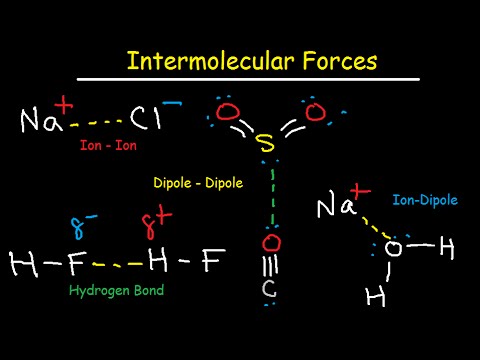
Intermolecular Forces: Hydrogen Bonding, Dipole-Dipole, Ion-Dipole
@TheOrganicChemistryTutor
2.5M views•2016-06-17
Edible Water Bottles: A DIY Guide to Sodium Alginate Spherification
@ryan
10.5M views•2019-06-21
Related Study Plans & Knowledge Roadmaps
Structured learning paths in Chemistry