



![14. Mecanismo de Reação SN1 e SN2 | Substituição Nucleofílica | Reação Orgânica [QO]](https://i.ytimg.com/vi_webp/W-RlgUfDwRc/maxresdefault.webp)





![GOC Class 11 One Shot Chemistry [ Concept + PYQs ] AP TS EAPCET 2025](https://i.ytimg.com/vi/6xjzvqf2y0E/maxresdefault.jpg)



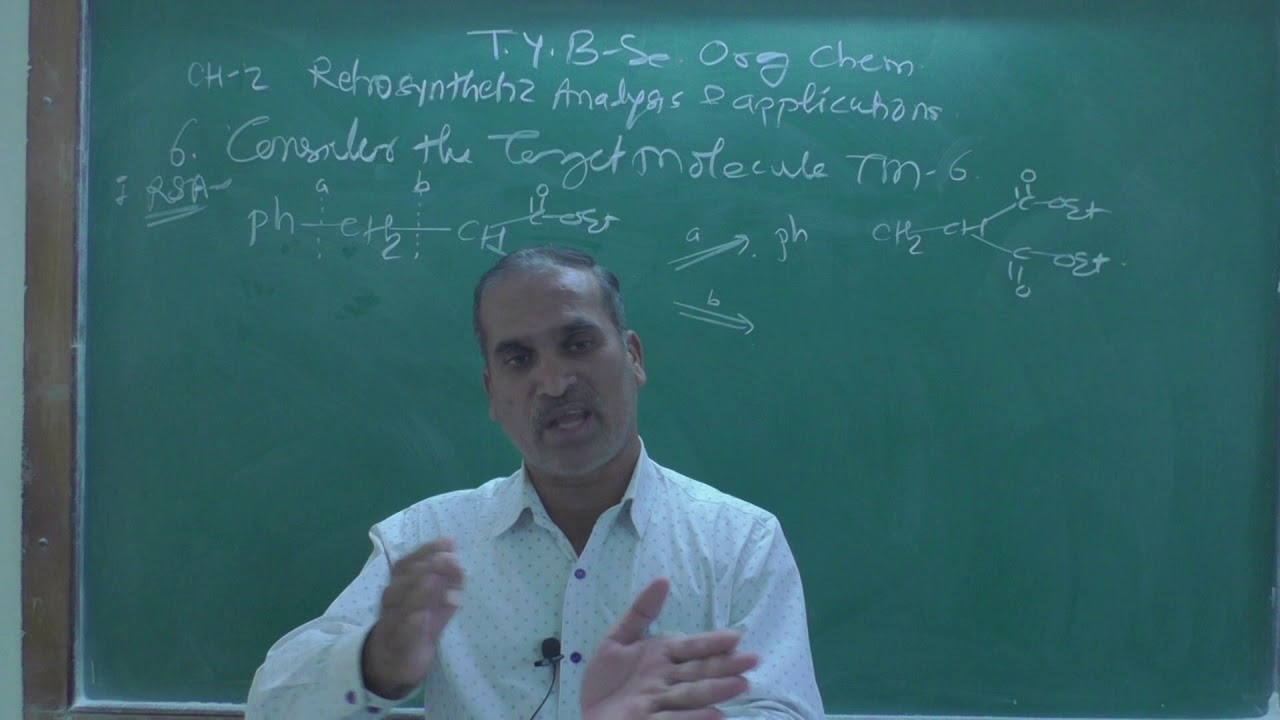






![ORGANIC SYNTHESIS//PROTECTING GROUPS//M.Sc FINAL YEAR CHEMISTRY[ORGANIC SPECIALIZATION]](https://i.ytimg.com/vi/qKhTkCOUTjo/sddefault.jpg)


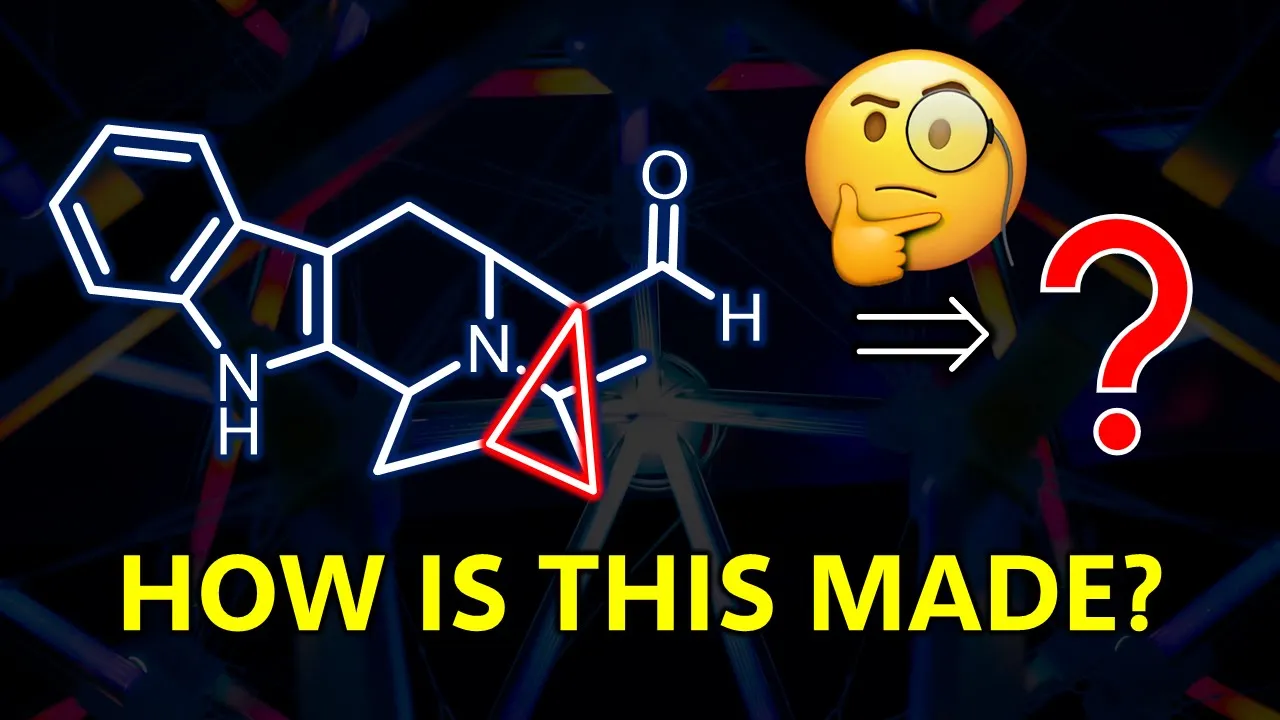
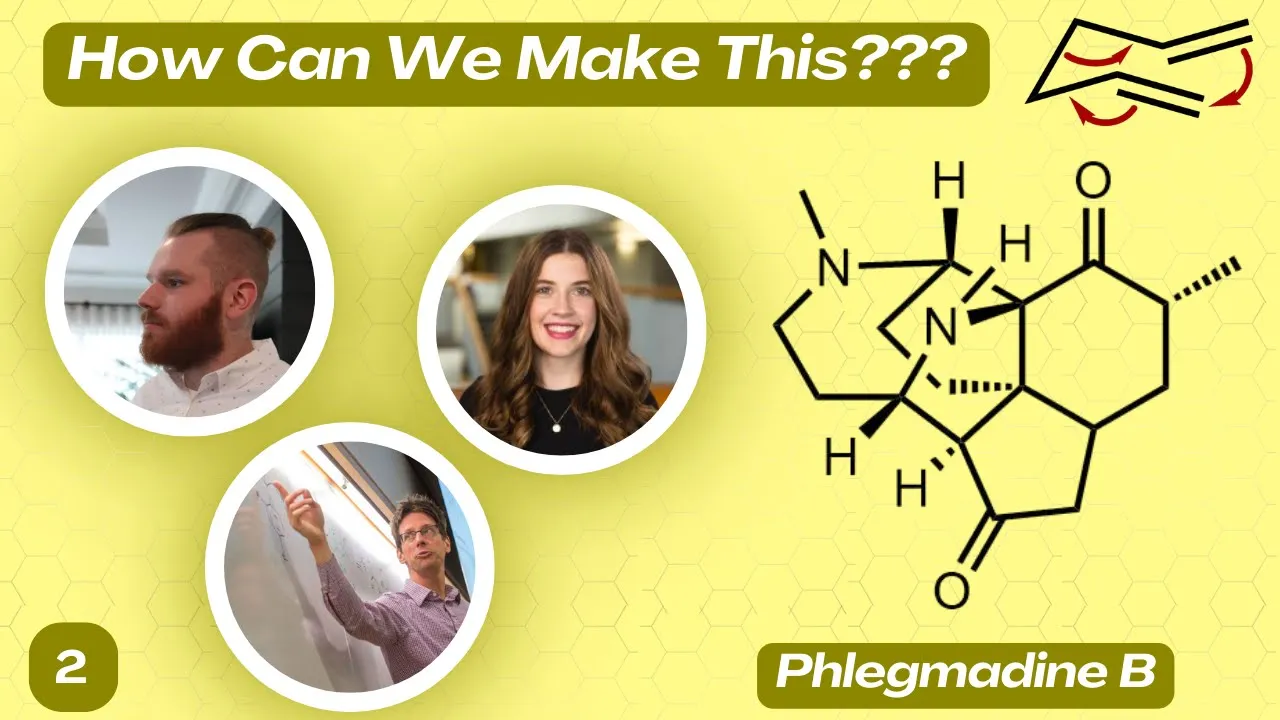

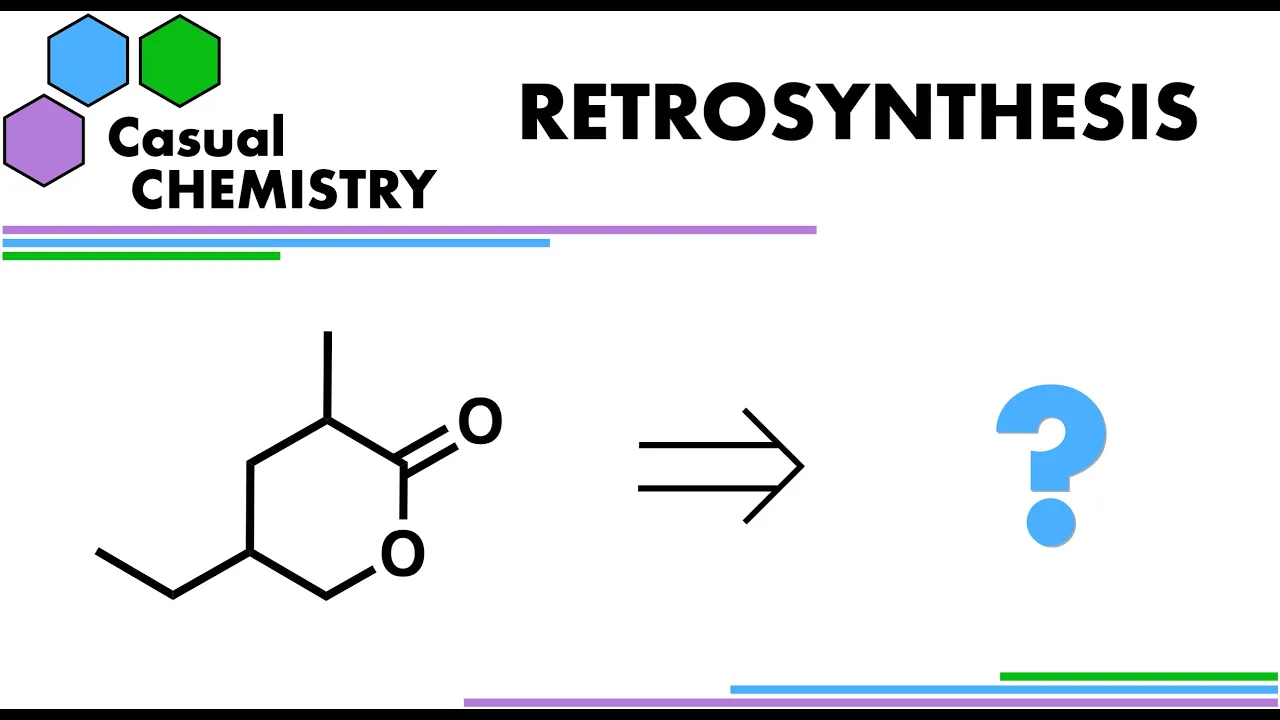
Retrosynthesis is the fundamental approach in organic chemistry where complex target molecules are systematically broken down into smaller, commercially available fragments through logical disconnections, enabling chemists to design efficient synthetic routes by working backward from the desired product to identify appropriate starting materials and reaction pathways.
Retrosynthesis Introduction: Organic Chemistry Basics for Beginners
Added:Familiarity with basic organic functional groups (such as alcohols, carbonyls, and alkenes) and their structural characteristics.
Understanding of fundamental organic reaction mechanisms, particularly nucleophilic substitution (SN1/SN2) and addition reactions.
Competency in electron-pushing formalism (curved arrow notation) to describe the making and breaking of chemical bonds.
A solid grasp of electrophilicity and nucleophilicity, including the stability of organic intermediates like carbocations and carbanions.
Translating theoretical synthons into practical, commercially available 'synthetic equivalents' (reagents).
Applying Functional Group Interconversion (FGI) to modify structures and facilitate strategic disconnections.
Learning advanced two-group disconnections, such as those used for 1,3- and 1,5-difunctionalized compounds (e.g., Aldol and Michael additions).
Understanding the use of protecting groups to shield sensitive functional groups during multi-step organic synthesis.
Analyzing the retrosynthetic design and total synthesis of complex pharmaceutical molecules and natural products.
42.9K views769likes11:54Original Release: 2018-07-17
hey guys so I am an educator at an Academy and you can follow me over there if you're interested to watch videos on basic concepts of chemistry or physical chemistry topics you can also recommend this to your juniors and to your younger siblings right all you need to do is download the an Academy learning app and watch my videos over there now let's just begin with our topic so very good evening to all of you today we are going to talk about credit row since Isis right now retrosynthesis is like the basics of organic chemistry or the most app you can say the most application part of organic chemistry because retro synthesis is used in everything their organic chemistry deal with organic chemistry you have to do with retrosynthesis right so the organic chemistry that you learn on a day to day basis it all comes down to retrosynthesis if you can effectively do retrosynthesis you can be a very good practical organic chemist and you can design a lot of noble molecules for yourself right so understanding this point is the fundamental thing that you need to do as organic chemist right and if you are able to master the subject trust me you will now again in chemistry because this is the piece is a fundamental of organic chemistry okay so we start with a basic introduction so whenever you get a molecule okay you do the retro synthesis of the molecule let us see you identify a molecule if let's say I'm working in medicinal chemistry you identify our target molecule okay you argue identify our target molecule and you want to design that molecule to design that molecule what you do is you do a retro synthesis of this target molecule okay you do the retro synthesis of this target molecule once the retro synthesis is done you have identified now when you do the retrosynthesis you have to do it in such a way retrosynthesis basically means dividing the molecule or you know dividing the molecule or subdividing the molecule into smaller fragments smaller fragments such that you come to a very very easy molecule which can be easily you know procured from the commercial companies okay so you come to come down to a very very easy looking molecule which can be easily procured commercially and from there you start the synthesis so you have to break down a very complex molecule which is your target molecule into smaller molecules by known reactions okay preferably they should be named reactions or reactions which are very high yielding reactions okay so this is how you need to disconnect the molecule okay so this is what reticences basically is taking a complex molecule and disconnecting that molecule by known reactions so that to come come with a product which can be easily procured from the market and then from there you start the forward synthesis okay so retrosynthesis basically the backward synthesis of a molecule in other words it's also called as reverse engineering so sometimes there is a product that already let's say the hackers the ones who work in computer software and everything they already know about the code of a software so the reverse engineer to find out how did they design the cool okay so it's in something similar to that right now what is sentence so sentence are basically imaginary structures that you need to design a molecule okay and these symptoms or intermediates not imaginary or you can also call them intermediates are basically the ones that you require okay we'll come on to the you understand the definitions more clearly once we look at the reactions okay so let's say over here if you look on your right let's say this is our target molecule okay so you can see this is our target molecule now the most favorable disconnection according to your organic chemistry what do you think can be okay Sophie the more you practice the more things will get better for you like the more you'll understand so let's say this is the one cue earlier at first you will need a lot of guidance but once you do a lot of disconnections you'll understand yes from where do you have to disconnect so let's see if I disconnect this molecule from here the one where I have shown the arrow between the nitrogen and the carbon bond the carbonyl carbon and the nitrogen if I disconnect this point generally if you see between nitrogen and carbon which is more electronegative nitrogen is more electronegative right so if I disconnect this point this nitrogen carbon bond the negative charge will decide on the carbon the only nitrogen sorry so you can see the negative charge is there on the nitrogen and the positive charge is there on the carbon so these are the intermediates that reform once we describe that bond and these intermediates are what is called sin tone that when you do a logical disconnection whatever intermediates you get okay that those are known as sin tones now the important part is this sin tones which they correspond to which reagent you need to identify to which reagent this sentence correspond to so let's say this we can design with the help of this n is - we can be this agent we can use okay this is the reagent we can use to make and it's - to make our to make NH - ok because if we add any base to this to this we are any base the what will the base - it can abstract this NH right it can abstract this hydrogen from the image okay so this is what is possible okay this is one possibility and for this synth on this one over here what we can use we can use acetic anhydride okay we can use acetic anhydride or what we can do is we can also use this compound okay Co and like we have this and we have CA so this also can act this reagent that I've drawn can also act as can also act as a reagent for this particular synth on because you can see if chlorine chlorine is electronegative so chlorine will have a delta negative charge and carbon will have a delta positive charge so it can act as this particular sin tone that we require so either acetic anhydride or this compound can act as a synth on for this particular molecule now once I add the place or the base let's say will abstract the proton from right it can try from that which also but let's see I'm just taking a particular case that it starts from NH okay so once it abstracts that NH proton this NH minus will be generated and then this NH minus can come and attack this carbon over here and the flowing will be kicked off and we'll get our final product over here okay but let's see this molecule is not available commercially let's say this particular molecule the para at oxy R&D is not available commercially let's say so the next step we use is functional group inter conversion now this no.2 can be easily made okay as compared to NH 2 if let's say we are starting from phenol this is our starting material I know - can be more easily made than in h2 ok so we do functional group in terms of inter conversion that is from NH 2 we go to n ok now from no.2 we we can go simply to phenol norm phenol you want to make Fahrenheit off and on how can you do that you can do simple nitration okay hno3 and h2so4 if you simply are nitric acid and sulfuric acid you can simply simply do the nitration and the nitration will happen either at the ortho position or the para position I mean there will be a 50/50 percent needed for power and also positions so let's say you get at the para position then you all know that how to convert no2 20 h 2 right it's a pretty simple reduction reaction once you do that from no2 you can get NH 2 so this now I'm talking about the forward synthesis so this is the sign for retrosynthesis for retrosynthesis this is the sign you can see over here also this is the sign for retrosynthesis that means you're going backward okay so retrosynthesis is basically the backwards in this is and for forward synthesis you simply simply use arrow this is the sign for forward synthesis and this is the sign for retrosynthesis okay so we did nitration and from nitration we reduce it to NH 2 and from NH 2 what we did we added a base and we added acetic anhydride or acyl chloride and finally we got our target molecule so this is the way you approach a particular molecule so this is a very simple looking molecule but this is the procedure you use to make even more complex molecules okay now this there are two things that you need to know what is consonant pattern and one is a dissonant pattern I think there must be some mistake with this slide this consonant pattern is overlapping the structures very sorry for that so let's say let's talk about your consonant pattern and this one this one in pattern what exactly is that so in consonant pattern what happens is let's say oxygen if you compare oxygen and carbon wherever you find a functional group you start giving them the charges okay so let's say on oxygen we have a negative charge because if we compare of steel and carbon oxygen is more electronegative so we'll get will give a Delta negative charge to the oxygen so now what you do is simply you will have to give a delta positive charge to the carbon because if one atom has a negative charge the other will have a positive charge then we move on to the next carbon if you so we have to give alternate negative and positive charges so if you're given a negative charge to this ox this carbon occupies a delta positive charge so automatically the alternate position that is this particular carbon over here this will occupy the enter negative and then the next carbon will have Delta positive so the next carbon has Delta positive then here we have oxygen so the oxygen will have Delta negative charge so this pattern is called a consonant put pattern that means it it follows the electronegativity electronegativity since oxygen is more electronegative it's having Delta negative and so does the other coughs change it also has dealt a negative charge but let's see what is this one right pattern this one in pattern is basically I'll draw this structure again over here okay so let's say we have this molecule over here okay so now you give dealt let's start with this oxygen we give Delta negative charge to this oxygen okay so this carbon occupies Delta positive now if you move on to the next carbon in this field occupied enter negative and that means the oxygen will happen to positive so the polarity has reversed even though oxygen is more electronegative it is having Delta positive charge okay so this kind of pattern is called your dissonant pattern okay so basically you're 1/3 Daiki tones 1 3 dye ketones follow consonant pattern and 1/2 Daiki don't follow this one and pattern ok this is a 1/2 ty hito it's for it's following up this one in pattern similarly if you see another ketone over here this is 1 2 3 4 this is 1 4 ketone so one funky tone also follows up this one and pattern because if you see let's give Delta negative through this oxygen so this carbon has Delta positive then we again we have Delta negative on the next carbon then we have Delta positive again and then in the next step we again have Delta negative for this carbon over here again will have Delta negative for this I am going to opposite way ok so let's say we have Delta negative for this carbon now this oxygen will have Delta positive charge ok this oxygen will have Delta positive charge so you can see there's a dissonant pattern because oxygen again has a delta positive charge but if we talk about 1 5 Daiki tones we get negative charge over here positive on this carbon then negative on this then positive on this then negative again and then positive on this carbon so the oxygen will have Delta negative charge so this over here is called consonant pattern so one third I ketones one side like we don't show confident part okay so this is the basic of your retrosynthesis very interesting initially you might struggle with it but once you get the hang of retrosynthesis it is very very interesting alright so I hope you found this video useful thank you so much for watching
Up Next

11:30
Chemoselectivity and Protecting Groups | Organic Chemistry
@crashcourse
56K views•2021-08-11
83:56
Biocatalysis and Catalysis in Islatravir Synthesis | Merck Webinar
@SCIwheresciencemeetsbusiness
675 views•2020-10-08

11:15
Polymer Chemistry Crash Course: Molecular Weights & Dispersity
@gatechemistry
37.1K views•2018-05-28

17:31
Edible Water Bottles: A DIY Guide to Sodium Alginate Spherification
@ryan
10.5M views•2019-06-21
Related Study Plans & Knowledge Roadmaps
Structured learning paths in Chemistry
chemistry
Nuclear Chemistry: Decay, Meds & Fuel Cycle
01Introduction to Nuclear Structure and Radioactivity
02Decay Dynamics and Kinetics
03Radiation Interaction and Detection
+ 2 more learning modules
24h5 modules
Explore Roadmap
chemistry
Supramolecular Chemistry: Forces & Machines
01Foundations of Chemical Bonding and Intermolecular Forces
02Introduction to Host-Guest Chemistry
03Thermodynamics and Dynamics of Self-Assembly
+ 2 more learning modules
16h5 modules
Explore Roadmap
chemistry
Photochemistry: Excited States & Reactions
01Foundations of Light-Matter Interactions
02Molecular Orbitals and Electronic States
03Photophysical Processes and Jablonski Diagrams
+ 2 more learning modules
18h5 modules
Explore Roadmap
chemistry
Coordination Chemistry: Bonding & Properties
01Introduction to Transition Metals and Ligands
02Crystal Field Theory (CFT) and Geometry
03Magnetic Behavior and Spin States
+ 2 more learning modules
14h5 modules
Explore Roadmap