
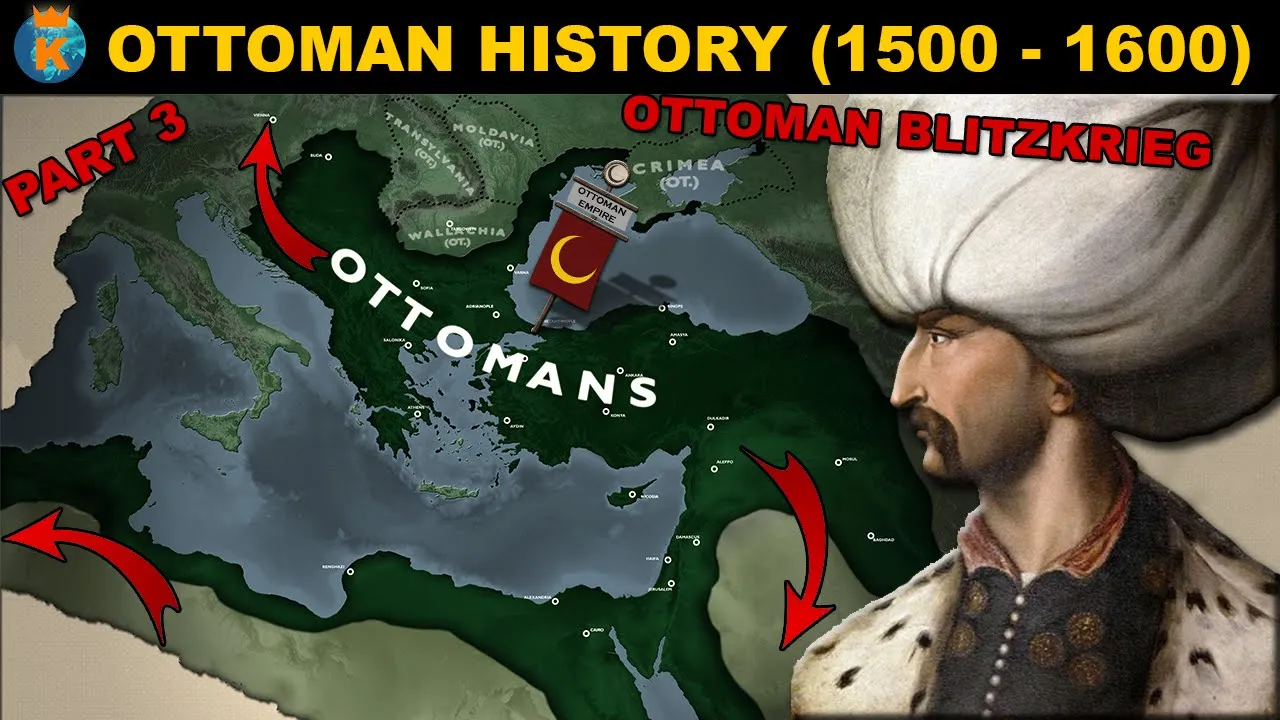



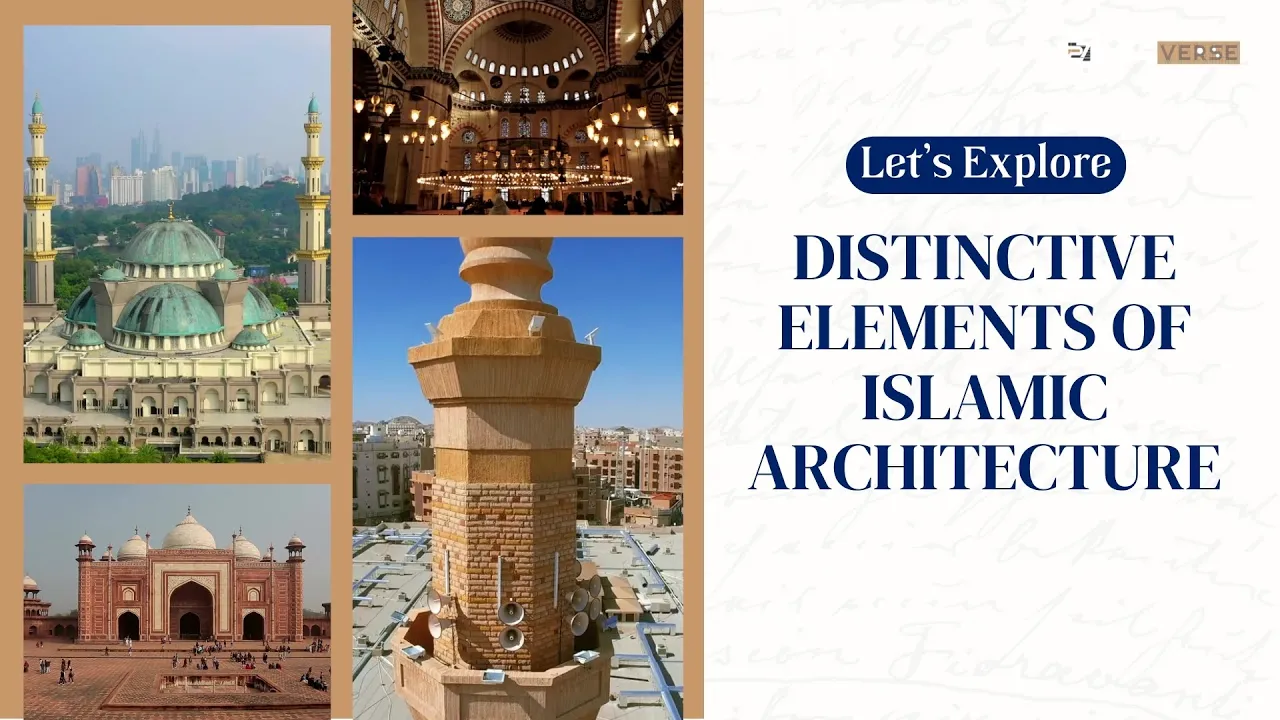
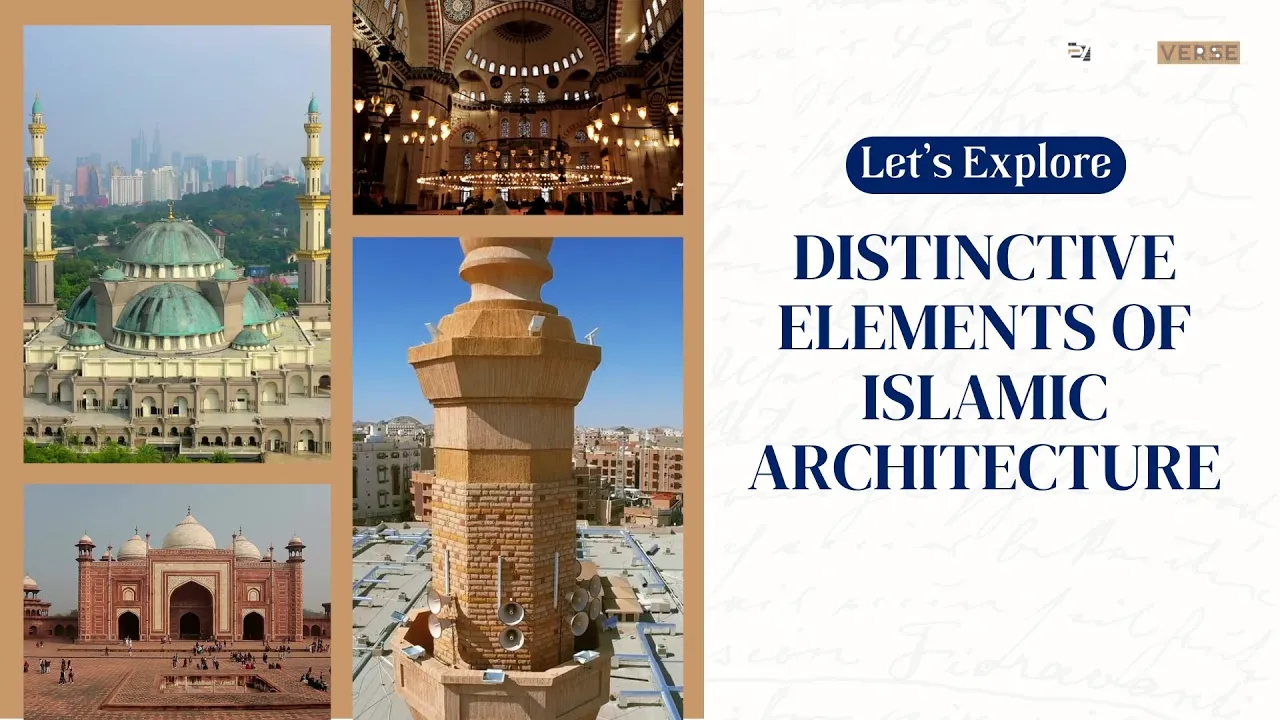
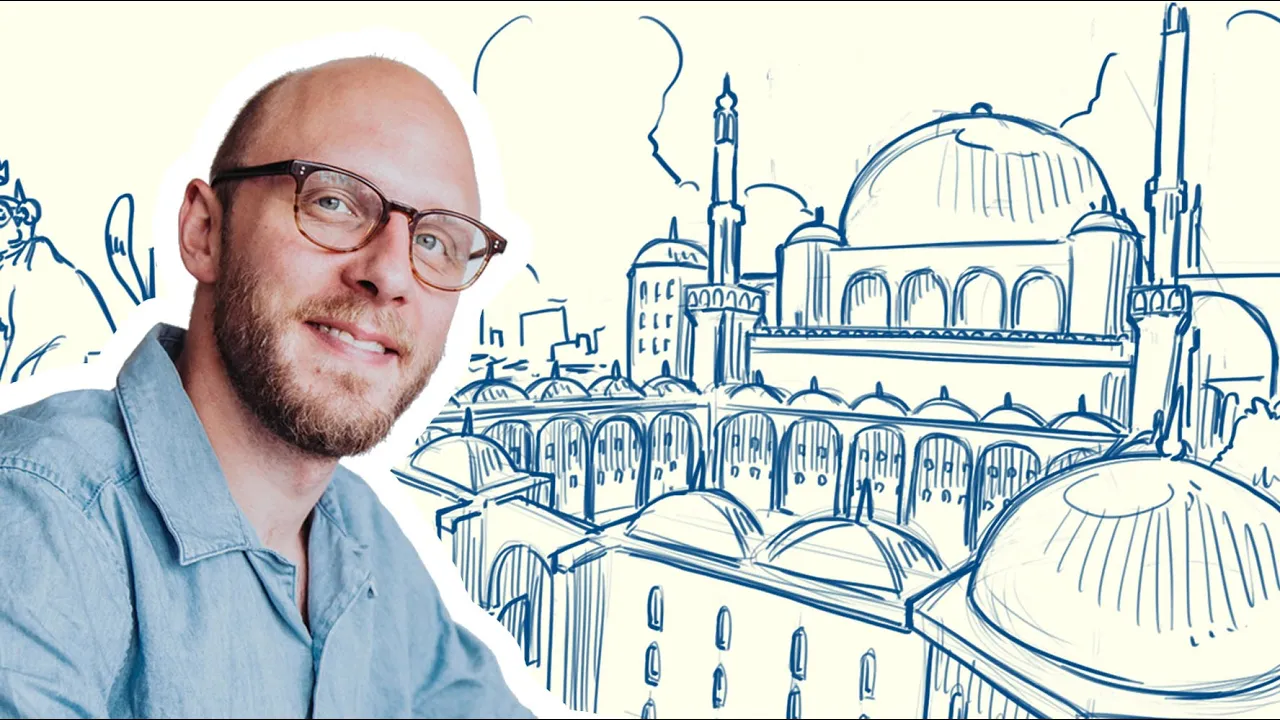













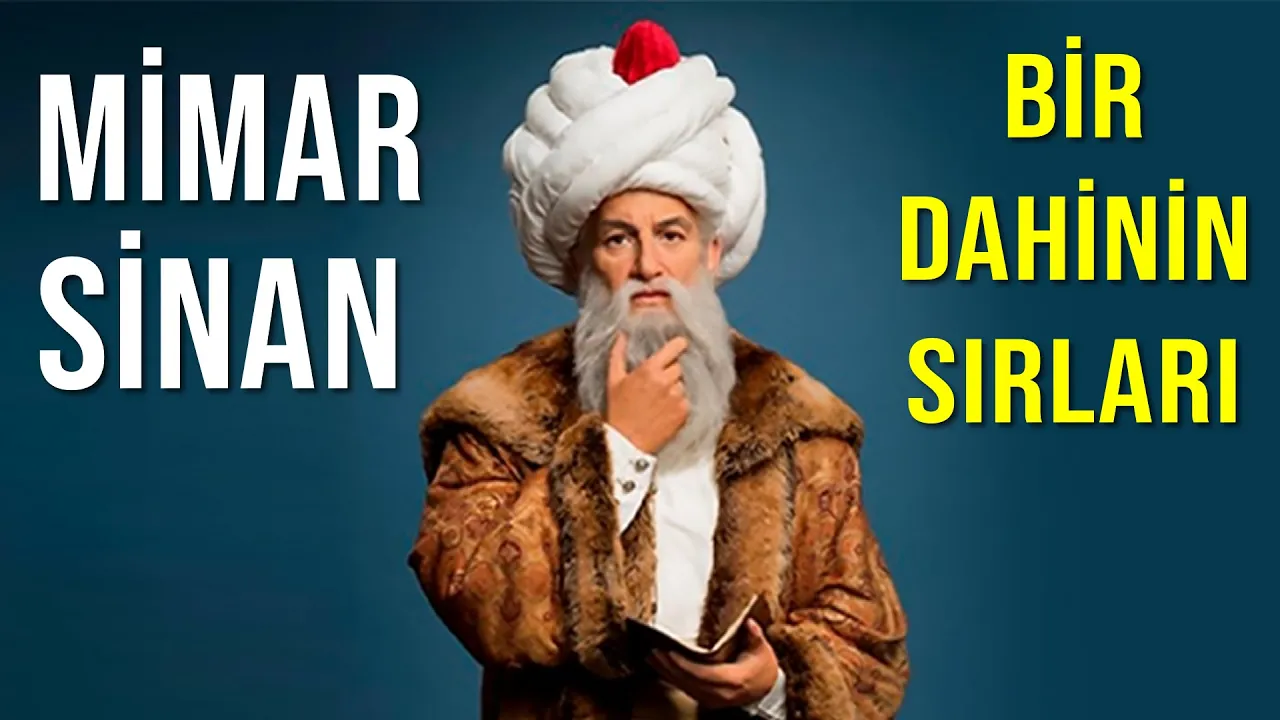
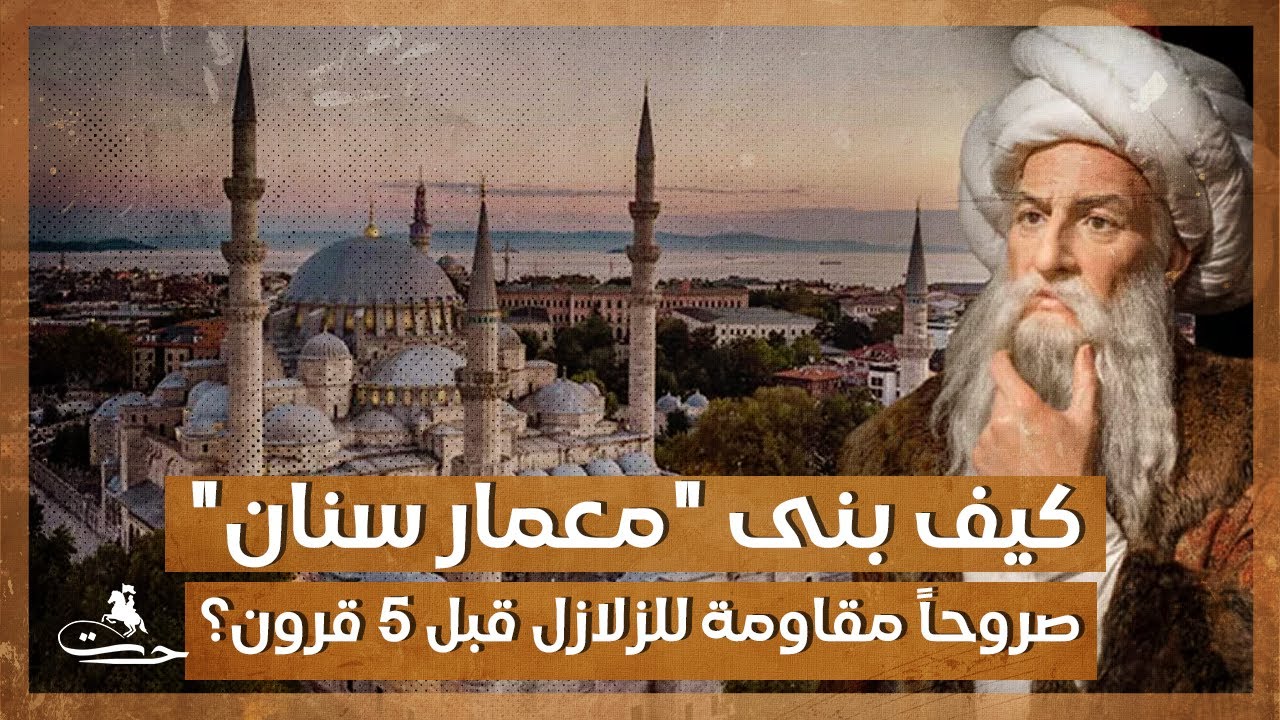

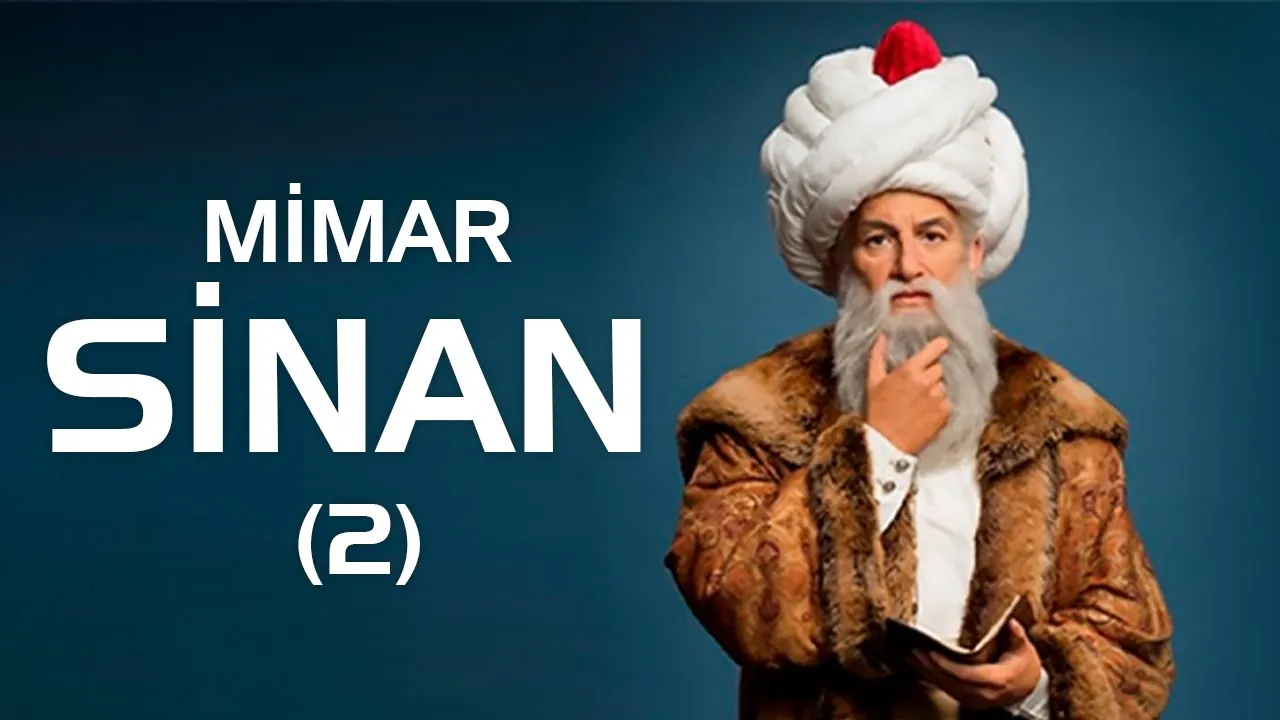
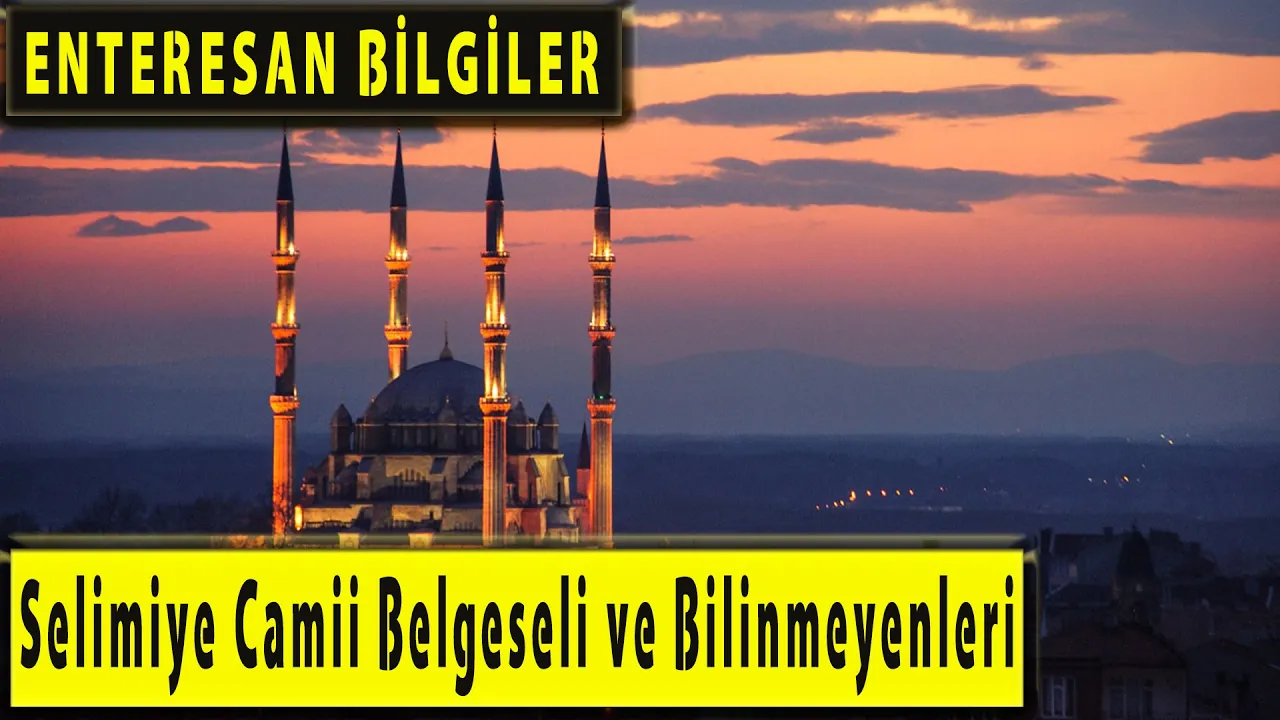



Mimar Sinan (1488-1588), born in Kayseri, Anatolia, was the chief architect of the Ottoman Empire under Sultan Suleiman the Magnificent, renowned for his revolutionary architectural innovations including the Süleymaniye Mosque (1550-1557) with its 53-meter dome and 249 windows, the Selimiye Mosque (1568-1574) featuring a 31-meter dome on an octagonal plan, and the Kırkçeşme water project spanning 55 kilometers; his works demonstrate a progression from semi-skilled work to masterpieces that integrated engineering excellence, aesthetic beauty, and social functionality across three continents, representing the apex of Ottoman architectural achievement.
Mimar Sinan: Ottoman Architecture & Imperial Legacy Documentary
Added:The historical timeline of the Ottoman Empire during its Golden Age, particularly the reigns of Suleiman the Magnificent and Selim II.
Basic elements of Islamic and Byzantine architecture, such as dome construction, pendentives, minarets, and the layout of a mosque.
The structural significance of the Hagia Sophia as an architectural benchmark and design challenge for Ottoman builders.
The concept of a 'Külliye' (social complex) and its role in Ottoman urban planning and civic life.
A comparative analysis of Ottoman classical architecture with contemporary Western Renaissance architectural design principles.
The advanced structural engineering and seismic-resistant techniques pioneered by Mimar Sinan that allowed his buildings to survive major earthquakes.
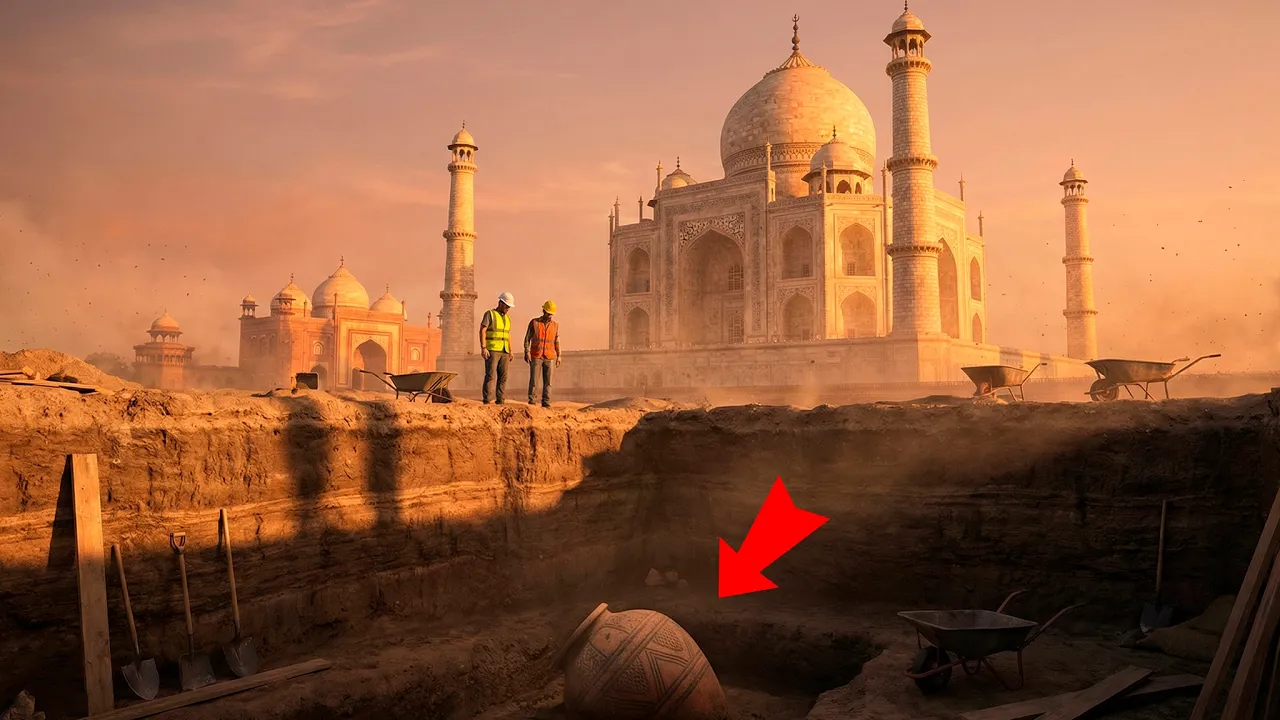
The global transmission of Sinan's style, including the work of his students on iconic landmarks like the Taj Mahal in Mughal India.
Modern heritage preservation challenges and conservation science applied to 16th-century stone masonry monuments.
68.5K views528likes1:00:48Original Release: 2015-08-29
[Music] kaiseri established in the very middle of Anatolia has been a door for tribes migrating from east to west and from west to east kaiseri was known as mazaka and in the first century BC the city was taken under Roman hegemony and its name became cesaria after the battle of malasar the city was conquered by the sauks and it was a turning point for the history of kaisera The Monuments that were erected in that era are still standing in all their beauty after 1,000 years and this is an indicator of what type of civilizational experience the city and its inhabitants had FTI Sultan Mt officially added kaiseri to the Ottoman Empire in 1463 after this date kaiseri started to have the longest social and political stability period in its history the village of arnas in gessi District of kaiseri is a well-rooted place that gets its share of Beauty from the mount argas even though it appears to be a common Village today arnas was home to the Hittites capid doans and Byzantium since year 2000 BC in order to have elite soldiers for the army of the Ottoman Empire conscript boys were gathered until that time the boys were gathered only in rumelia however the boys began to be gathered in Anatolia on the order of yavu Sultan Sim KH and in 1512 as a twist of fate the first boy to be gathered from Anatolia was a Youngster of the age of 21 his acceptance into the military at a rather late age was the result of his grandfather's request who was the most famous is Carpenter in the vicinity of K City speech for speech speech for speech spe fore spech speech foreign speech for speech for speech forign speech foreign fore for speech forign speech fore young sinan began to head for the house that he was born in and raised for the preparation of the journey more than a house it was a world full of secrets and made of passages of arches and crosss using human hand and patience it would be better understood why sinan from Kai city was called to Istanbul instead of any other youngster from any other place in Anatolia when can you consider the architectural places that became a school for him since his childhood in addition to the magic of argia standing up in mystery being a Muslim and using the Turkish language very well he has made himself accepted in the palace not only as a soldier as he participated in the wars but at the same time he attracted the attention of the upper command by the useful chores he did as a master of stone and wood during military Expeditions senan had an opportunity to visit large cities such as Aleppo Damascus and Jerusalem and he studied all The Monuments carefully in 1529 sinan joins the Belgrade Imperial campaign as a janissary he takes part in the RADS military campaign in 1522 he works together with the teams that built roads and bridges for the armies passage during the military campaigns when he returns he is promoted to the rank of commissioned officer he joins the Battle of Mohawk in 1526 and becomes the chief technician sinan took part in the military campaigns of Vienna in 1529 and Germany in 1532 he took part in the Iraq campaign in 1534 in this campaign the military reached the shores of Lake van Lui Pasha called sinan to ask of the status of the enemy that was positioned across the lake and he wanted to make preparations accordingly when the war with Iran became inevitable the vizer lutfi Pasha Excellency wanted to know the status of the enemy soldiers on the other side of the water and asked for a building of ships that would cross over the tatvon sea he invited me and ordered be responsible for the construction of ships even though the conditions were not favorable with the help of God Gathering my friends and managing to put together three gallots I gathered all the Necessities such as sails anchors and ores and equipped it with guns such as cannons and rifles these memories of sinan and most of the information we gathered about his life are taken from his work of structures book The fore foreign forign fore speech foreign foreign forch fore foreign for foree foreign foreign speeech for by 1538 the Ottoman Empire was on three continents and had a land area of 14 m893 th000 Square km this huge geography and especially Istanbul were having trouble not possessing unique architectural characteristics that belonged to the Ottomans the new Grand vizer lutvi Pasha insisted that only sinan could perform this Duty properly sinan could not suppress his feelings for the art of architecture he dreamt of the large moss baths and palaces that he could erect and they were in front of his eyes at all times now his wish came true and he had the biggest opportunity in his life it was 1538 and sinan was just 49 years of age now sinan became the head architect who is responsible from all construction works in the vast lands of the Ottoman Empire and he was the favorite head architect of suan the Magnificent the first task that sinan the architect carried out as head AR was the haseki social complex in 1539 which was ordered by hurm Sultan the wife of suon The Magnificent this structure carries the components of Ottoman architectural culture in which sinan was born into haseki Sultan Masque is described as The Masque with the first Mason [Music] Dome another important Monument that seen on the architect built at bikash as a head architect was a mausoleum next to the Sea for the famous Turkish Seaman Barbarosa htin Pasa with whom he participated in military campaigns and who he liked personally when Barbarosa Hy din Pasha was promoted to the rank of Fleet Admiral in 1534 he requested that senan build this structure in his good health the first important and unique Monument Cen on the architect constructed is the mirima Sultan social complex at usadar mirima is the only daughter of sulan the Magnificent and huram Sultan and she will use the concession that was never given to any other princes and had a large mosque with two minettes a social complex and a Terrace opposite of usadar Port which would be built in her name and having the name of Mima sulan consisted of a MOS a college the Quran School baths a soup kitchen and a lodge since the land on which the mosque was built was sloped it needed to have a Terrace on the bosphorous side the set that was built for the purpose of protecting the mosque provided a vantage point where the beautiful view across the Bosphorus could be seen sulan the Magnificent lost his beloved and very well-trained son Prince mmed after a sickness at the age of 2 2 when Prince mhmed was the governor of manissa on November the 5th 1543 the sultan was in belgrad and he promptly returned to Istanbul and gave the order for the construction of a large mosque in Shad Basha District of [Music] Istanbul sinon had meticulously shaped the prince's tomb and mainly used red mounted gem on the tomb later on he used the same Stone on the mosque body freezes and minettes the wooden geometric shapes in the Tomb over the symbolic coffin of the prince resemble a throne that symbolizes his sultanate that would never be realized in this world but would be Eternal in this tomb the shade Meed Pasha was designed in 1543 and completed in 1548 and it is the first mosque that AR arit sinan built as a Chief Architect sinan considered Shar mosque as his apprenticeship Monument however the mosque offered many different solutions in terms of engineering and Architectural aspects and was different from all other existing monuments including is sopia he stated that in this Almighty structure all types of Fine Arts are in harmony with each other still at the beginning of his career sinan was putting the first brushes to a new landscape work for Istanbul with this superb structure the Acoustics in the Shaadi mosque are ensured by a type of audio channels embedded in the middle of the sidewalls it is well known that isul has been established on Seven Hills within the walls sulan the Magnificent and the architect sinan decided that the sumana mosque and its complex would be built on the third Hill of the 7th where an old Palace was situated it must have been the most important decision since the conquest of Istanbul to build this new complex on the top of the slopes that were rolling down to the shores of the busy Golden Horn and from where Aya Sophia topa Palace the Bosphorus and the Golden Horn were all visible the design of the monument and the construction site were determined however when it was completed it would neither belong to Sultan Suliman as it was named after him nor to its architect sinan it was to be a symbol of a cultural Apex of a civilization that spread over three continents and would make constantinopolis truly able according to the calligraphy placed on top of the grand inner door that opens to the stone Courtyard with a fountain that the construction of the sulman mosque began in 957 by the hijri calendar and 1550 by the Gregorian calendar and the construction completed in 964 hij and 1557 by the Gregorian calendar the Dome of the mosque was closed on Saturday the 16th of August [Music] 1556 the construction work not only carried out for the suim Mania but a city and region Zone planning was made and all details for the houses around the complex were determined in terms of their sizes and even their colors sumana mosque is covered by a dome that is 53 M high and has a radius of over 26 M it is different from the other similar structures with its aesthetic appearance the placement of the Dome and the Arches that carry the Dome the relation between the Dome and arches is a Wonder of engineering as well as a good example of sinan's dazzling art a mystical spaciousness and a feeling of contentment is provided with a very high Dome within the mosque one of the most important features of the mosque is that despite its huge volume a well illuminated space is obtained due to the successful usage of light this heartwarming appearance of Lights obtained by placing 249 windows in a systematic manner over seven [Music] Stories the windows that decorate the niche on the Southern Wall are covered with colored glass the art of the stained glass still used traditionally today so we were coming to Turkey through other places in the Middle East so first we went in Lebanon and Syria we went in Egypt and Palestine and Israel and now we are here in turkey and uh we were just thinking about yes what's the differences that we could see and it's true that for example in the sumani musk we were very impressed by the number of floors of stained glass we had never seen such a high and so much light coming in um and also the the justos of a very simple technique with uh kind of a classic and simple forms with then the more um elaborate uh stucco sculpture that we had seen everywhere else that we had been in the Middle East the niche of the mosque and a marble masonry Masterpiece of the mimar are the best samples of nichan mimbar in ottoman art all the components within the mosque are the best implementations that summarize sinan's General understanding of art magnificence and [Music] simplicity sinan used very little tile decoration it is not possible to find any tile decoration in the mosque other than those used on the panels and situated at both sides of the niche and the 10 inscriptions written in dark blue background with white script located at the lower Windows of the communion Portico while not using tile decoration within the mosque senan was very generous in using the scripts of the calligrapher kisari as he mentions about him in the kiah of the scriptor ahed kisari and Hassan cheli are the two great calligraphers who both worked on sumana and selmia Moss as one being the master and the other The Apprentice is forign for forign foreign speech foreign speech for speech speech forign speech foreign spech for speech two of the minates of the sumana mosque are located at the corner of the intersection with the main building and the fountain Courtyard and the other two shorter ones are placed in the northern tips of the courtyard there are four minettes representing suan the Magnificent as the fourth Sultan since the conquest of Istanbul and 10 minet balconies pointing out the 10 Sultan since the establishment of the Ottoman Empire the fountain located at the center of the courtyard and surrounded by four minettes in each corner represents the kabba the main door of the mosque where it opens into an inner Courtyard is a masterpiece in terms of its decoration and Architectural features many of the structures around suim Mana that are built on the 34,000 square m area are the schools these schools provided Educational Services for many centuries within the complex a hospital soup kitchen lodging place and Lieutenant rooms and baths were built some of the schools within the complex provide Library Services even today the sumana library is one leading handwritten book library of the world the editor's copy of the Tes buan a biography of sinan that was written by Sai Mustafa chelbi is also kept in this [Music] Library sulan the Magnificent rests in front of the mass nishe the sultan died on September member 7th 1566 during the zikar military campaign and the Sultan's organs were buried next to his State tent and his body arrived in Istanbul on the 28th of November and was buried here the door script was not designed with the Sul Mania complex but it was understood that it would be done by sinan the architect on the request of suleman's son selim II The Beloved wife of sulan The Magnificent huram sultan died at the age of 49 in 1558 and her tomb is located next to his 289 pieces of tile were brought in from isnic for tile decorations and Dome scripts were written by the calligrapher Hassan Chi sinan calls the sumana mosque his semiskilled period work and sulan mosque and its complex consist of 18 buildings and what is not only the name of a complex where on reached the Apex of his art and Architectural skills the sumana complex is a magnificent piece of art that crowns the ottoman Empire's greatness in political and Military fields and is a symbol of civilization rising from this land sulan the Magnificent provided the architect with full authority to start the kesme water project while sumana complex was still under construction despite the opposition of the vizer rustem Pasha the Kirk cheshme water alleys project construction began in 1554 with a much greater cost than the sumana complex and was completed before 1563 and Still Remains intact today Kirk cheshme was the biggest water project of the century and a total of 33 of the water archers were built of which five of them them are Monumental and 28 of them had a single Arch the total distance of the Kirk chesi facilities from the galleries to erapa was over 55 km the oldest document relating to the Kirk cheshme project was a draft distribution drawing sinan placed detailed explanations on this drawing and gave some of the measurements for instance the measurements for the mova arches width of 100 Turkish yards and the Kovu Arch's width of 120 Turkish yards found to be proper with the measurements taken recently one of the Monumental water distribution arches within the Kirk chesi project is mova Arch the mova arch consisted of 16 arches furthermore a pedestrian path was placed in the middle of the water Arch this slender structure resisted many earthquakes and storms over the centuries and it just shows the Excellence of sinon's engineering knowledge the mova art is equal in Worth to the sumana mosque and the salimia mosque today it is located within a dam and despite the rising Dam Waters it still stands in good condition after 450 years and it challenges all arches made or to be made with its engineering and aesthetic [Music] features the water Gallery reaches to gueler after M Arch since there is no pedestrian path in the center of the arch the empty space ratio is greater and it enhances its appearance the double layed 700 an 11 M long uzun is the largest structure of the facilities and is located on the West Branch of the Kirk cheshi facilities there are 50 ottoman arches on the top layer and 47 ottoman arches at the bottom Lair the masonry at every point of zun is properly executed according to the draft drawings kept at topa Palace the beginning point of the distribution line is shown as kuk or as it is called today Kur at it is most likely that sinan has repaired this Arch and included it in the Kirk cheshme facilities the distribution line of Kirk cheshme terminates in the erapa pools outside of the city Walls Within the limits of the savaka region the incoming waterers flow rate and quantity are measured and distributed to different galleries all of the monuments of scen on the architect are one way or another in contact with water when the Kirk cheshme waterways were completed he built the bum Bridge which reminds one of the waves of the marous sea with its smooth sharp and geometric appearance it is between the Sea and the lake and four small Islands low surfaces are connected in line with the soft Topography of the surrounding area the sloped line of the road that ascends and descends four times over the sharp arches is an important product of cenon's worlds of shape he describes this unique monument in his autobiography as that skylike bridge was an astonishing piece of work of the [Music] time on the other side of the bridge sinan built a small mosque and lodging for suu Basha the minat of the small mosque was carved from a solid Stone and it is the only sample of of such a small Moss that sinan constructed the senan fountain in front of the small Moss looks like it brings the Kirk cheshmi water to today the lodging house that is opposite of the small mosque has been repaired by the municipality and has become an exhibition Hall and it provides a different appearance with its 24 stoves on both sides of it according to a tale the chimneys of these 24 stoves were heating the the feet of the bridge and preventing the icing on the bridge one of the other monuments of sinan relating to water was the hurm sultan baz that he constructed just opposite of hagya sopia thei hurm Sultan bath built by sinan in 1556 is one of the most successful samples of the 56 baths built by sinan it consists of two separate sections for women and men with 75 M length and two domes at each end with undressing and entrance sections underneath it has a unique beauty where the sections for men and women are reciprocal of each [Music] other sinan the architect is basically an architect of Istanbul after he became head architect he designed and constructed his Grand monuments for Istanbul therefore a sinan monument Rises to the sky from each Hill at the Historical istle Peninsula the architect of sumana and Istanbul identified by his monuments made Istanbul out of Constantinople with his 36 buildings and he examined the limited material and Technical Resources of his era and tried all possible architectural possibilities with refinement proficiency pleasure feelings and with great Aesthetics the head architect in Istanbul provided many monuments in different vicinities of the Ottoman Empire the first and largest ottoman mosque and soup kitchen was built in 1516 by yavu Sultan Sim yavu stayed in Damascus for 4 months during the winter and ordered that a large mosque be built next to the tomb that he built for the famous thinker I Arabi to the opposite of the Tomb and the mosque in the salali district of Damascus a soup kitchen would be built after yavo to serve daily food and beverages to the needy on behalf of the Ottoman government the largest ottoman monument in Syria was planned approximately 20 years after yavu Sultan Sim's conquest of Syria and sinan designed and constructed it the construction of the Damascus Sania complex or as it is known with its local name of teia Sania started at the same time with the Su Mania complex in Istanbul in 1550 and was realized by the associates of senan the complex was a product of simple planning in terms of both placements and Architectural structures cenan avoided assertive designs in all structures that were built outside of Istanbul where he could not inspect the construction and preferred Simplicity in such structures having the name of sulan the Magnificent and being the first structure erected in an Arab land with classical ottoman type architecture it was designed to serve the traveling hjj groups we are in Syria very proud because we have maybe eight buildings some of them small and some big like KRA and halab in alipo and the tea Sania in Damascus but we would like to talk about tea behind me there is the two minates similar of many minates in Istanbul and the M here is a typical sinani stock the school that was not part of the original plan would become an important Educational Center with professors attending from Istanbul in the coming years the last representative of Ottoman Heritage Sultan vahed Dinan died in Italy in 1926 when he was in Exile and upon his will his body was transported to Damascus and buried in the garden of this Mosque of which had the name of his grand grandfather sulon the Magnificent another Center where sinan's monuments can be found in Syria is the city of Aleppo in the Square where the historical Aleppo Castle's door is located there is the hevia comp complex named after hre Pasha the mosque is a unique scan monument and it is dated back to the era of HEV pasha's governance of Damascus in this case the first stone doed mosque should not be hiiki Sultan mosque in Istanbul but should be the HEV Pasha mosque however it is thought that this mosque was built in 1541 when HEV Pasha was the viser the large and single Dome of the husia mosque is the most important feature of the complex another feature is the stubby sharp and ConEd minettes of the mosque the hospice structure and the school that surround the complex are still operational as a structure where Educational Services are provided there is another Monument of sinan within walking distance from the hevia complex through the narrow streets of Aleppo the mosque of the governor of Egypt duag Ginza Pasha or for short OD a mosque it has a single Dome double Portico and it is completely made of cut stone even though it is constructed in typical ottoman plan and mass placement like other ottoman structures it carries local features in it as well the Beloved wife of sulan The Magnificent hurm Sultan established a foundation named haseki sultan imaret within the center of Jerusalem and inside the city walls the imaret or as it is known as Elan still stands with its entire Splendor and it still operates to fulfill the foundation's purpose today in 1550 the imaret was the most effective section of the foundation and hot meals cooked in giant pots would be served up to 500 people in the morning and in the evening the structure was used as a vocational school for Orphans and in a way it's still serving in line with its original purpose the food is still being cooked and is served to orphans San actually is associated with the city and from the inscription which we can follow we feel that he named himself as second suan before it's the first is the prophet and this is an honor really foran and for his subject to take care for B makd and for Jerusalem or Sharif it's not just San who pay attention for the Jerusalem and its importance its inhabitant and its rank in Islamic faith his wife korim or roana as it is mentioned in Western literature also gave Jerusalem one of the biggest the most important charitable Foundation we mean with this it is sulan imar or what it's called in local Jerusalem tiia tiia and local language it's mean where you can get free food sure imar it's in Turkish it's a complex Foundation which houses or comprises a MOS a teaching place and a free kitchen but for Jerusalem people the main important which really left its imant it's the free kitchen the furthest small mosque Miss UL AA and kubet usara the location where the Prophet Muhammad's Ascension took place was renovated during Suliman the Magnificent ARA and Caya tiles decorating the structure survive till today when you look down from the Mount of Olives over Jerusalem two important structures are spotted by everyone one of them is the superb walls that surround Jerusalem all around like a necklace and the other is the golden dome MOS that looks like a Jewel attached to the necklace the place of this mosque is the place where the Prophet sulan constructed the first temple the holiest place of this Holy Hill was secured by walls that were built by the sultan sulan as sinon the architect describes him the sulan of the ARA there are seven main gates on the walls and the most magnificent gate is the Damascus gate and it opens to the Muslim section of the city besides the imaret and fountains the most meaningful and prominent structure that remains from the ottomans are the walls of Jerusalem next to the kubet Sara there is a unique structure constructed by sinan the kubus sil Suman in a sense took a different kind of architectural tactic by staying at eye level and creating the walls that meet anyone coming to the city in a very strong and obvious fashion declaring the ottoman presence in fact there are people who say that from a defensive perspective the walls probably weren't very functional and they wouldn't necessarily have stopped a very serious invading Army but they were truly impressive and still are today the fountains on the other hand couldn't be seen by anyone except at eye level inside the city and yet for people who live there dayto day walking around the city they would have been an immediate reminder of the Ottoman presence these things are all in place when hurm Sultan comes to establish her her imaret and by that time also she had already finished several building projects in in Istanbul in Mecca in Medina and this was her final project Sultan suan started the enlargement works of the kabba in 1551 and Kar Mustafa was was appointed to the job who was a palace architect and was on duty in Cairo the only remaining parts of the Kaba on which the hands of cenon touched were the porticos around the cabba another senon project realized in this land was a 20 kilm long Water Project in which water was brought into Arafat where people gathered for the hjj the project was named after mirima Sultan the daughter of sulan the Magnificent and the waterways and bridges are still standing today these water conduits just below the jebali ramet hill are the traces of Ottoman water civilization when we search for the traces of a civilization in the Ottoman Empire we come across sinan the architect from Mecca in the farthest South to the Crimea in the farthest north devlet Gan requested from sinan a building a very big mosque for himself the port city of yevpatoria was chosen for the mosque and Cen on plan the biggest structure for yev boria it was impossible for sinan to attend the construction site since at the same date he was engaged in large [Music] projects according to AIA cheli this two Miner at mosque is the tallest largest and most magnificent Monument of yoria and it was constructed by a pal architect sent from Istanbul Evia cheli states that the ottoman monuments in triala Greece are countless the still remaining otoman structure here is again a monument of sinan the Tomb and Masque of osmana nowadays it is used by the Greeks as an exhibit hall with its lead coverings taken out half of its minet is broken down and the minbar is lost the choban Mustafa Bridge built in srad a neighboring city of ad is still operational today despite heavy traffic on it and it joins the beautiful shores of the Marita when you come to Sophia you will look for sofu meet Pasha mosque but you won't be able to find it because sinan's widest single Dome mosque except for the one in ID now serves as a church the mostar bridge was built by sinan student htin in 1566 and the bridge is accepted as a world heritage site that connects Bosnia to us and the whole world there is no other example where an architectural structure influences the environment quite like this the mostar bridge is like a rainbow that shows how powerful sinan and the students of sinan were and it has been just hanging there on the narva river for 450 [Music] years another of sinan's registered structures in mostar is the kago meet Pasha mosque with a single Dome and three porticos the small structure was designed in Istanbul by a skillful Palace architect and it has proper Dimensions vagad is a town situated on the Drina River a branch of the Sava and about 110 km away from Saro within the borders of today's Bosnia and heroa the stone bridge that was built in the 16th century and joins the two sides of the river is a bridge that has its own story and became the subject of a novel and its author Evo andrich received the 1961 Nobel literature prize the bridge on the Drina was constructed as a gift to this land by sinan the architect at the order of the vizer soku Meed Pasha who came from scovic of nearby Village situated between the mountains that surround the [Music] town these monuments that hide the ottoman history in their water fountains porticos on the scripts where a date was written could be in geography with a different name today but they are the living Ness of a culture and civilization it is possible to find a scon monument in any corner of Anatolia in Van in the east to west in Ed from dier in the South to ismet in the north while some of sinan's moths have been totally or partially renewed as in the case of the fvia mosque in isid the ch Kaz isander Pasha and Bam Pasha MOS located in di arakur stand still as unique examples in the cultural texture there is a monument of sinan in the capital anara the mosque was built for the Anatolian Governor janabi ahed Pasha in 1565 and it preserves its classical architectural shape the soku meet Pasha MOS and complex located in an important Harbor City of the past in the pasas vicinity of hatai is a very important complex constructed next to a castle by the Sea it is a very important lodging facility sample that sheds light on 16th century lodging houses with its soup kitchen mosque and Caravan Sarai after sumana and before the selia mosque sinan constructed the Rasha mosque in 1568 one of his masterpieces this mosque is placed on a raised platform and shops were located at the lower level and located in a busy U Market District with the slopes of sumana complex rolled down towards the Golden Horn despite sumana's Simplicity the rustam Pasha mosque exhibits all the details of Turkish tile Arts the decorations and Harmony on the niche and the mebar resemble a Tile gallery and they Dazzle AAS sulan mosque was built on the hill in front of the gate to aded just outside of istambul walls and in a way it shows the directions to aded where sinan would travel after sumana [Music] Monument the hadim ibraim Pas mosque built in siliva by sinan had a single Dome and it resembles celmia and it just shows sinon's art Will's integration the structural group composed of a mosque and school was built in 1553 for the admiral of the fleet sinan Pasha in [Music] isul the slenderness of the hexagonal feet and arches that separate the central Dome from the transcept was the pursuit of sinan at the sinan Basham mosque the mosque in the complex built by Kar Ahmed Pasha one of the viers of kanuni in top Kapa is a structure that can be shown as an example of sinan's new Pursuits the zal mamut Pasha mosque that was completed in 1566 coincides with sinan's developmental period the mosque built on a sloped land descending to the Sea and between two roads that were in different levels sinan without needing to level off the land and without pushing hard on the topographic conditions of the land and texture of the social and physical conditions of the city preferred to provide a solution of course the monuments of sinan from suan to celmia from semiskilled work to master ship are not limited with these structures however all of these monuments carried his art and Architectural Solutions one step further each time and at the end he put through the most important monuments of the Turkish ottoman civilization after sulan the Magnificent died in 1566 his son Salim II inherited the throne the new Sultan who was a poet and a musician wished to own the best of everything and he began to act to have a Mosk and complex that were bigger than sumana the only place for this big mosque in Istanbul was where the sulam at mosque is located today however at that time the Palaces of soku Pasha and RM Pasha were occupying the land instead of demolishing his son-in-laws and his sister's house he shared his idea of building the mosque in the Border City of Ed for which he always fond of it with the head architect the construction of celmia began in 1568 and it is accepted as the Crown Jewel of the Classical period ottoman architecture at the same time it is an apex for sinan the architect where he could exhibit his art intelligence and Technical experience to the full sinan completed the work in 1574 when he was at the age of 85 and called selmia mosque his Masterpiece the basic idea that was emphasized in the outer appearance and internal space was a notion of collectivity it is located on a flat piece of land controlling the city and placed within a courtyard surrounded by walls the mosque consists of a worship area with dimensions of 40 m in length and 60 m in width the amalgamation of the main hall forms a fused octagon that becomes more apparent as it goes up and it is crowned with a huge Dome the minettes that are placed on the Four Corners within equal distance of each other provide Power for the center motion the Magnificent Dome that resembles a helmet and the weighted Dome increase the structure's plastic effect that can be observed from far away distances celmia mosque is covered with a magnificent Dome of 31 m 22 cm eight elephant feet Carry This Magnificent do having the idea of placing the Dome on an octagonal plan provides Inner Space integration and shows the extreme Point reached by otoman architecture having only one big dome stresses the feeling of Integrity [Music] further sinan the architect follows a tradition in selmia which was used in the Anatolian cuk and early ottoman era moths in the middle of the DED area he placed a muin and a small fountain hence he increased the central placement feeling even more it is no coincidence that the measurements of the Kaba and the measurements of the muine place are identical in ratios the fountain underneath probably represents the Zam Zam well under the Kaba what the reverse tulip motive placed on the marble column of the Gathering Place represents is kept like a secret the inside decoration of selmia mosque is similar to the architecture in terms of Conformity especially the mimbar that resembles lace work and the miab made out of white marble are the most Charming examples of his pleasure and Power in his art the mines that are placed on the four sides of the Dome provide the feeling of verticality a stripe body implementation is used on the minettes and as a result the minettes look longer than they really are and to reach the balconies of two minettes there are three staircases that rise spirally with each other the courtyard of the fountain is surrounded by porticos on four sides and in the middle there is a fountain with 16 Corners that adds size and elegance to the open courtyard sinan kept the sizes of the other complex structure small and low in number to have the Moss stand with all its [Music] magnificence the celmia mosque is the Apex point for sinan personally and for the ottoman Turkish architecture in general the Art and Soul richness that shows itself in the magnificence of the Celio MTH appearance is a reflection of a life spent on three continents for almost a century me for spee for foreign speech foreign spee foreign for speech fore speech foreign speech for speech fore forch fore for speech foree foreign for speech for speech The Monuments that he completed between the years of 1571 and 1586 are described as his final compositions when we listen to the composition of sinan over and over again we come across a modest fighter who produces monuments to make the Earth more beautiful having an extraordinary imagination designing his monuments by taking care of the considerations of the civilization that he was a member of and shaping them as he found more beautiful ways to perform sinan the architect's structure is the sharp edge of the science as Sunan the Magnificent States AIA Sophia stands on a premier spots of the historical Peninsula by itself with the contradictions in its Inner Space and mass standing on the outside it had a new meaning with the addition of retaining walls made by the ottoman Architects to keep it standing and the richness of shapes along with the addition of two thick minettes by sinan the standing of C and Aya sopia carried on by building the tombs of Sultan Salim II and Sultan Murat III next to Aya [Music] Sophia a Sophia is evidence that the Ottomans approached civilizations before them with respect and it was protected with the additions made and the additions themselves were supplemental they glorified it and ensured that it would reach today with its adorning beauty sinan the architect constructed so Kulu Meed Pasha mosque and a complex near kadura Port in 1571 the stairs that lead to the Moss Courtyard make one realize that the integration of architecture with the physical environment and Rich and differing features has taken place as in the case of the RM Pasha mosque the unique samples of 16th Century Tile art can be found in the kadura mosque over the Dome bow and around the ceiling of the muin are placed decorations that make it spectacular these are the few examples of otoman decorative art that managed to reach our day it is important for creating a framework for the blue and white tiles with dark red and golden yellow [Music] colors another Monument that c erex vers ULU meet Pasha is the AAP Kapa mosque the central area of the mosque is covered by a dome that sits over an octagonal base which is carried by 8 ft following the aak Kapa soku meet Pasha mosque sinan built the important monuments on his late part of life on the shores and it created the first steps for social and religious life to be developed on the shores of the Bosphorus with the Waterfront architecture P Pasha Masque may look like different architectural structure at first glance it could not have been designed by anybody else but sinan to have the reflection of vaults of the selmia and P pasha's magnificent windows with sharp arches on the external side and who can sail to the New Horizons without any hesitation saleim II left the throne in a shorter time than his father to his son Murat III after crowning his reign with a selia mosque after serving to a grandfather and later to his grandson as head architect sinan constructed the palace for the fourth generation Murat iiii it was the only Monument that was made as a palace and still survives today even though approximately 40 such monuments were erected by sinan at the same time the kitchen of the palace was renovated after redesigned by [Music] sinan and it became the main element that protects the Integrity of the palace and complements the side that overlooks the marmura [Music] sea kuch alip Pasha mosque is one of the last important examples of sinen on AR chitecture that reaches extensity with unity it was built by the shore in front of topan of which the first section of it was facilitated by FTI sulan meet the remaining part of topan was completed by sinan kich alipasha was the name of one of the three naval commanders that sinan given their names to his monuments after sinan Pasha and Pi Pasha aik valid Sultan Masque and the complex started in 1570 and completed in 1583 and it is described as the last big project of sinan a mosque School darish Lodge soup kitchen hospital and a bath was constructed by the mother of Murat III it spreads over a large piece of land in usar toptas [Music] vicinity for speech fore spee foree fore foreign foreign foreign spee for spech forch foreign speech for speech for speee for speech for foree speech speech foreign speech foran would not disregard the city in which he was born and he erected the kumu mosque in 1584 the square main body was covered with a dome that had 12 little Windows on it the smallest and most beautiful Moss that he began to build in 1580 would be one of his last monuments 42 years after constructing his biggest project mirima sulan mosque his last Small Monument Shasha mosque located in usadar next to the [Music] Bosphorus it is so close to the sea that the waves reach the walls of this small but Serene mosque while it decorates the Bosphorus like a downto earth Beauty it is just like sinan who decorated all of his stumble and the ottoman geography with his downto Earth approach Murat Pasha mosque the last Monument of sinan was erected outside of isul in the city of Governors Mana without doubt he gave the most importance to sumana mosque out of all his monuments before he died he designed his own tomb and he picked a small area just next to the sudman mosque it is an open Tomb with a symbolic Dome the following words on his script bring him to the eternity from the year 1588 Gregorian The Best of The Architects sinan has passed away from this world [Music] it is my sincere wish that the kind-hearted people look at my works until the end of time and see the honesty and hard work in my efforts and remember me in their prayers God willing [Music] [Music]
Up Next

1:32
Introduction to Python for Data Science | Microsoft & DataCamp Course
@edXOnline
192.9K views•2016-01-14

12:54
Triumph of Orthodoxy Icon: Byzantine Art & History Explained
@BenCallan
2.1K views•2024-08-06

9:49
FastAPI vs Flask vs Django: Choosing the Right Python Web Framework
@TechWithTim
302.5K views•2024-05-26

1:42
Game of Thrones Opening Credits: A Cinematic Analysis
@gameofthrones
46.3M views•2011-04-18
Related Study Plans & Knowledge Roadmaps
Structured learning paths in General & Interdisciplinary Studies
general-studies
Elevator Engineering: History, Physics & Cities
01From Hoists to Safety Brakes: The Dawn of Vertical Lift
02Hydraulic vs. Traction: The Engineering Physics of Elevators
03Modern Speed, Safety, and Algorithms
+ 2 more learning modules
12h5 modules
Explore Roadmap
general-studies
Rubber: Material Science, History & Geopolitics
01Origins of Natural Rubber & Mesoamerican History
02The Chemistry of Natural Rubber & Vulcanization
03The Geopolitics of the Rubber Boom & Colonization
+ 2 more learning modules
12h5 modules
Explore Roadmap
general-studies
Containerization: Evolution, Logistics & Trade
01Ancient Trade & Bulk Cargo: Amphorae to Barrels
02The Industrial Revolution & Cardboard Packaging
03The Containerization Revolution: Malcom McLean
+ 2 more learning modules
12h5 modules
Explore Roadmap
general-studies
Textile Tech: Evolution, Labor & Global Impact
01Pre-Industrial Textiles: Handloom & Cottage Industry
02Mechanization: The Spinning Jenny to the Power Loom
03The Factory System & Global Labor Transformation
+ 2 more learning modules
10h5 modules
Explore Roadmap