









![[Full Part. 1~6] Start-Up OST | 스타트업 OST Playlist](https://i.ytimg.com/vi/G3V4exZ7Tsg/maxresdefault.jpg)


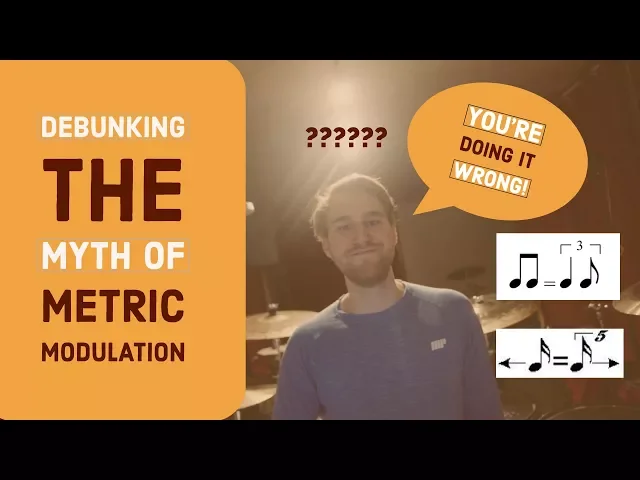
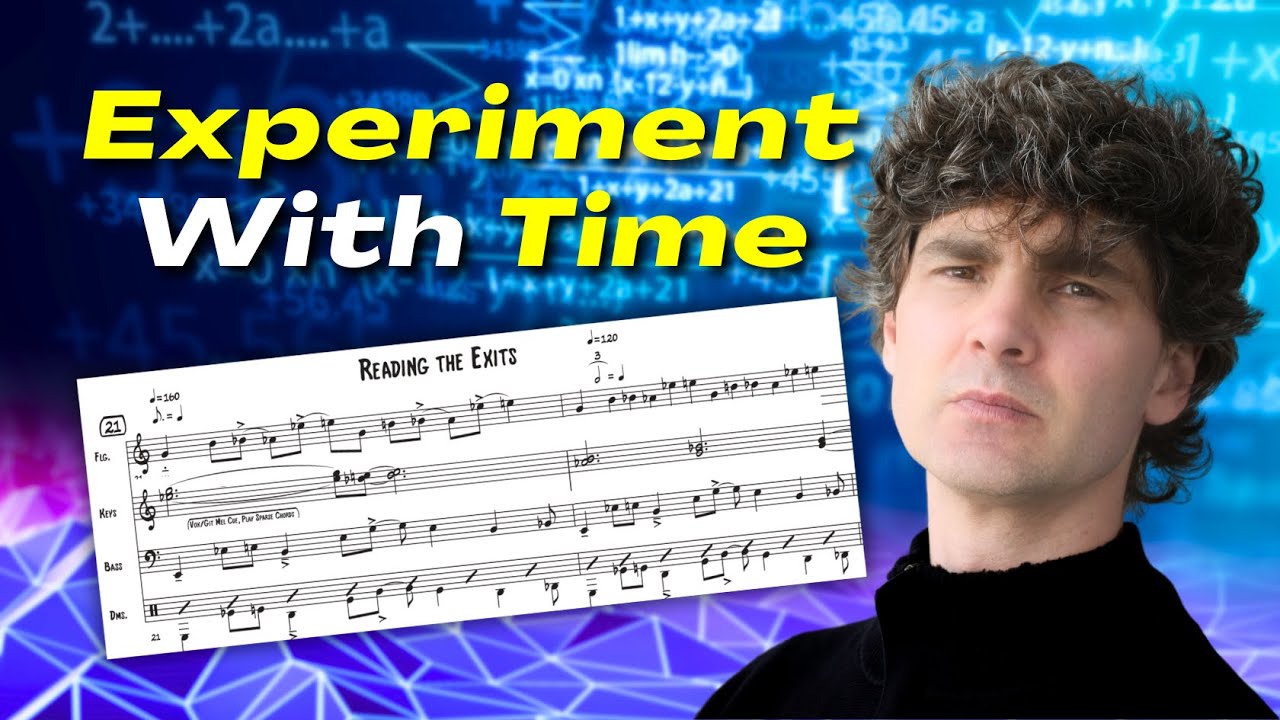


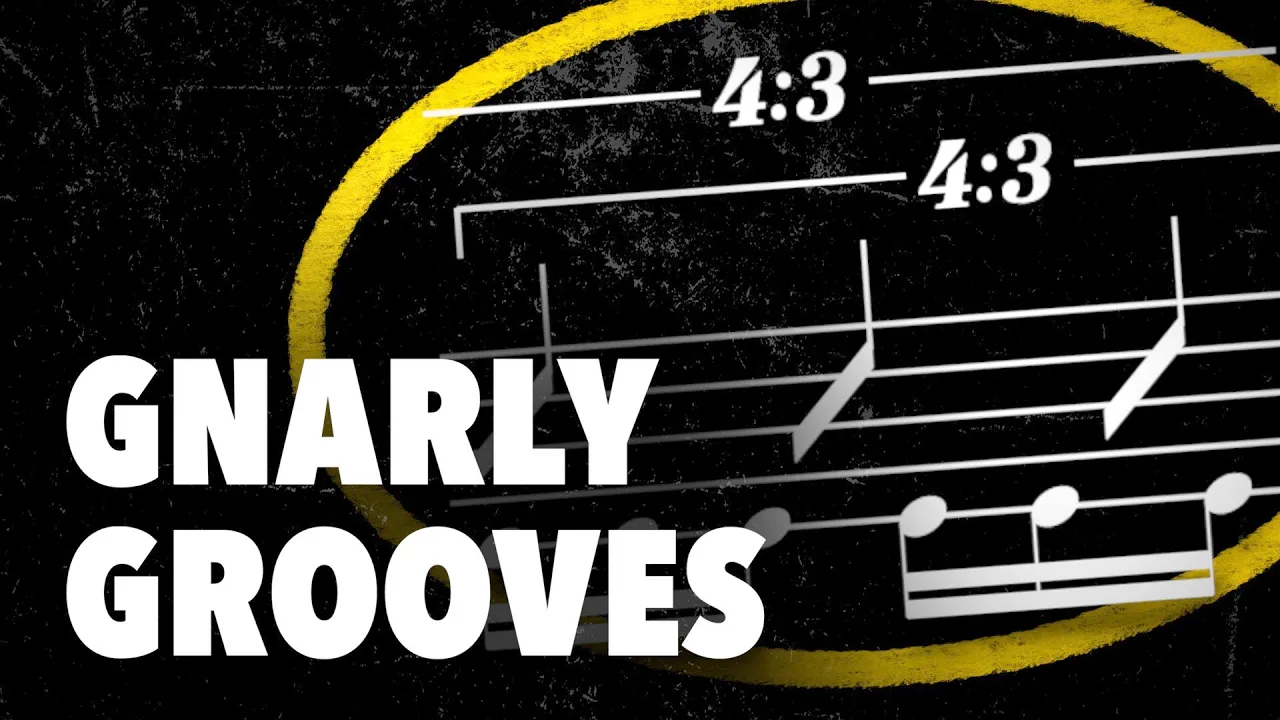
![POLYMETER - Understanding and Using Complex Rhythms [MUSIC THEORY - RHYTHM]](https://i.ytimg.com/vi_webp/MqyrPzvN3Zc/maxresdefault.webp)





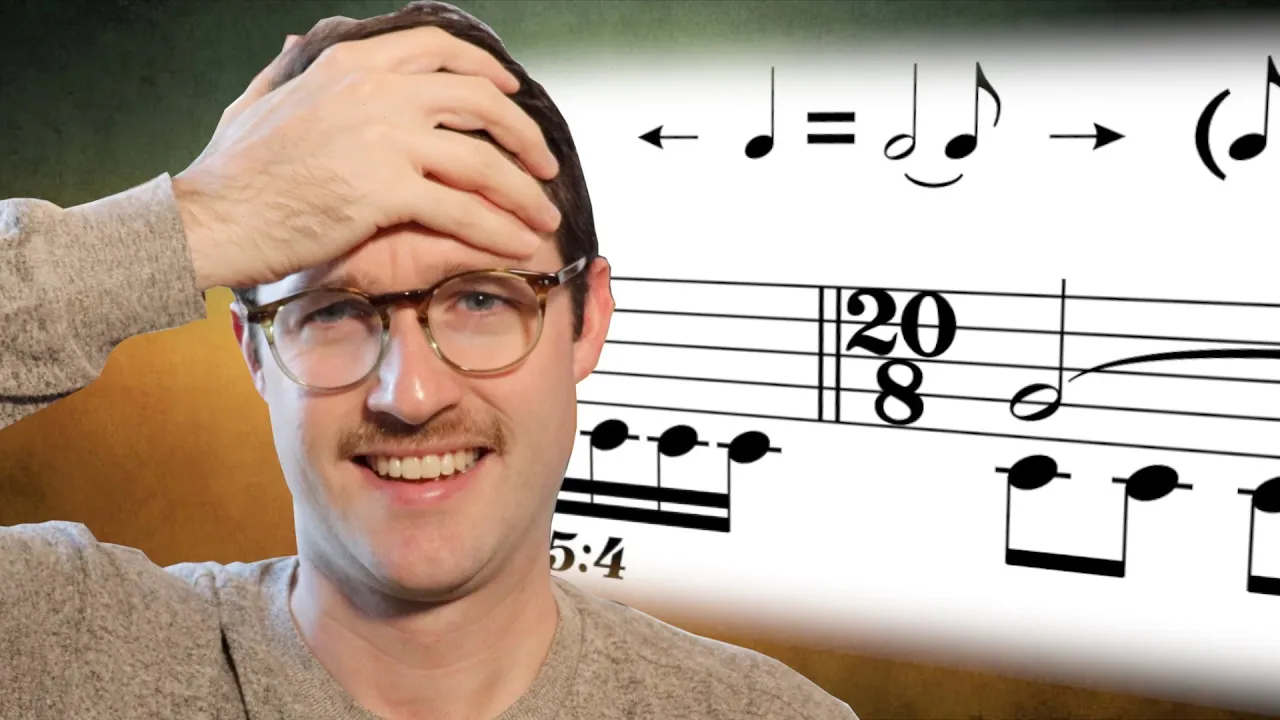
Metric modulation is a compositional technique that changes the meter (time signature) of a piece by using a mathematical relationship between the old and new tempos, often through a pivot rhythm that serves as a bridge between the two meters; this technique can be used for smooth transitions between musical sections (transitional modulation) or to create perceptual illusions by making listeners feel they're hearing the same pattern in a completely different rhythmic context (recontextual modulation).
Metric Modulation Explained Through Jazz, Rock, and Classical Examples
Added:Understanding of basic music notation, time signatures (simple, compound, and asymmetric), and rhythmic subdivisions.
Familiarity with the concept of tempo (BPM) and how a steady pulse functions in musical performance.
Knowledge of polyrhythms and cross-rhythms (such as 3:2 or 4:3), as metric modulation often relies on pivoting through these subdivisions.
Awareness of rhythmic ties and syncopation, which are essential for visualizing and feeling shifting beats.
Study of Elliott Carter's compositions (such as his String Quartet No. 1), who pioneered and formalized the technique of metric modulation.
Practical application of metric modulation in musical composition and arranging to create seamless, mathematically precise tempo transitions.
Exploring advanced rhythmic concepts such as polytempo and polymeter, where multiple tempos or meters occur simultaneously rather than sequentially.
Developing performance and ensemble synchronization skills to execute complex rhythmic transitions accurately in a live band or orchestral setting.
72.8K views3.6Klikes18:27Original Release: 2022-07-16
[Music] I will people often say that maths and music are closely related that there's a lot of overlap that they have a lot in common I think there's some truth in that particularly when it comes to rhythm and if there's one place that you really feel the maths in music it's the concept of metric modulation we're going to talk a bit about what that is but I want to make sure we don't get totally lost in the technicalities it's easy to come up with some fiddly metronome scheme and try to seem all impressive what I hope I'll be able to show you is that in this case this started with a genuine musical impulse a real idea that I then had to find the best way to put into a usable recipe for the performance [Applause] [Music] foreign [Music] [Applause] [Music] spectacular minac theater for a performance of my Opera the firework Maker's daughter it's a piece I wrote about 10 years ago and one of the things I'd forgotten about it was that at one point in the score in the space of about nine bars it performs not one but two metric modulation so I suppose a kind of double metric modulation the maths involved isn't off the scale it would definitely make fans of the number File channel laugh at its Simplicity but it's enough for a composer like me to well at least need to check the figures to make sure I've got it right so today we'll delve into what a metric modulation is what user composer might have for it and whether my double metric modulation actually worked or was anything like a good idea let's start with the metric part of the metric modulation and that refers to of course a meter a meter is a fairly fundamental part of Music Theory but it's a little harder to Define than you might think it's not just a beat because well I could just bang out a beat like this and we haven't really got to meet her yet to have a meter you need to have different accents in your beat and those accents need to repeat in a regular pattern so if I accent every four beats now I have the first part of what a meter is this is four in a bar we've already got two levels of motion the faster level defines the beat and the slower level organizes those beats into repetitive groups but we're still not quite finished it's four in a bar but for what we need a third level which defines how these beats are divided up the division we're most familiar with is two and it's subdivisions 4 8 16 and so on but a division into three is also fairly common or if you're into sun gazer or Jacob Collier you might try dividing into five or seven but those are both much less common we can call these divisions pulse groups so now we have three levels of motion the fastest is the pulse groups here every group of two pulses we get a beat and every four beats we get an accent or a downbeat and when that whole structure repeats we can finally call this whole thing a meter and we can give that meter a time signature in this case 4 4 a repeating pattern of four quarter notes so if a meter is this quite complex series of repeated beats and accents what is a metric modulation well you might have guessed it's a way of changing from one meter to another but the crucial thing is that the new meter has some kind of mathematical relationship to the old one and that involves the use of some kind of pivot let's think for a moment about a more common kind of musical modulation a harmonic modulation is a way of moving between two keys using a pivot chord a chord that's common to both keys to make the transition a bit smoother so for example if we're moving from C major to D major we might use a pivot chord of E minor which is found in both keys and with that little sort of sleight of hand of a pivot chord we arrive at the new key foreign modulation is a similar idea but to do with meter instead of Harmony take the current metric structure and replace it with a new one that moves at a different speed and again you do so by taking one element of the existing meter and using it as a pivot into the new one here's a standard 4 4 dance speech Four quarter note beats one two three four I'm going to add on a fairly common keyboard pattern which uses dotted eighth notes but still sits within the 4 4 structure [Music] now the idea of a metric modulation is to take something like this dotted eighth note pattern and make that the basis of a new meter so let's allow the dotted eighth notes to keep repeating and we'll strip everything but the drums out and now when we remove the drums we're left with this pulsing Rhythm which becomes the pivot to move to an entirely new meter foreign [Music] to change time signature as well as Tempo in this example but there's no rule about how this works you can keep the same meter or you can change it the only thing is that the tempo of the first meter is in some way related to the second so what's the relationship between the speed of this meter and the original meter well this is where the maths comes in in the amount of time it used to take in the old Tempo to play 3 16th notes we can now play 4 16th notes so the new Tempo is four thirds of the old one so if the initial speed was quarter note equals 100 the new Tempo is 133.3 let me just check that 100 yeah that's right now this is the tempo relationship I used for the first of my own metric modulations and then I followed it by a second one which was also in this four-thirds relationship so that makes 177.7 recurring now Adam Neely recently did a video about decimal points in metronome marks which he calls cringe this BPM is cringe and he's not wrong but metric modulations are one way that a quite reasonable compositional Choice can lead to an awkward looking metronome Mark we'll talk about that a little at the end but before I show you my own example I want to show you a few other examples of genuine musical reasons composers have for using metric modulations in his paper the evolution of the metric modulation Nick Heartland identified two main types or uses of the metric modulation one that's all about Transitions and the other he calls recontextual but I might call something like musical Illusions a transitional modulation uses the modulation as a navigational device to transition from one section to another now I never thought I would feature this Artist as an example of metric modulation but in Lionel Richie's Say You Say Me as a great example of a transitional modulation the song has an up-tempo middle eight which is reached by pivoting over a repeated power chord the original Tempo is quarter note equals 60 and you could hear these as triplets within that say it together naturally but in fact they pivot and become eighth notes in the new Tempo after the metric modulation two parts of the old triplet become two eighth notes so the tempo is three over two or one and a half times faster so quarter note equals 90.
naturally so you're thinking out the answers and I Love Lionel Richie for a demonstration of how almost Limitless the transition possibilities of a metric modulation are check out this moment from an arrangement of Autumn Leaves by Winton Marsalis [Music] in an impressive feat of mathematics there are six consecutive modulations but the cunning trick is that the time signature changes match the metric modulations to elongate the bar by the exact amount that the tempo shortens it thus maintaining the bar length throughout the tempo is slowly increased throughout the modulations until it reaches double that of the initial Tempo meaning that the trumpet can continue playing the solo at an unaltered Tempo over the top the transition has gone full circle [Music] but probably the king of transitional modulations is the composer who really became synonymous with the whole technique the American composer Elliot car water here's a passage from his first string quarter [Music] [Applause] [Music] every few bars there's a new metric modulation and this allows Carter to become a lot Freer in the way his rhythm operates it's music that's effectively in a constant state of transition it's incredibly challenging to perform but it allows for very different kind of rhythms than anyone it had ever used before Carter's music was the first to really explore the full potential of the metric modulation but he may also have given the technique a bit of a bad name because well it's pretty challenging to bop your head along with all of those Tempo changes [Music] but head banging to a metric modulation is actually a thing and this is where we come to the second type of metric modulation the recontextual modulation the start of dream theater's track the mirror uses this chugging guitar pattern and recontextualizes it three different ways it starts in three four the tempo then doubles but also moves to a 12 8 and then halves but into a four four meter [Music] foreign won't be surprised to find he messes around with this stuff too and for him the recontextualizing is almost a way to challenge your belief in the meter [Music] you see the concept of meter we've been discussing has a lot to do with perception once we've perceived a meter whatever it is we're hardwired to expect it to continue we anticipate the next part of the meter structure in our minds and we get some of our enjoyment of music from that very anticipation and the thing is we still hear or feel the meter in our minds even when there's minimal evidence of its continued existence so feeling the meter is almost an active faith [Music] and for people like two grand and I suppose myself this is our cue to have some fun messing with your perceptions this is the piece drip that hamasian wrote for the Berkeley Middle Eastern Fusion Ensemble so this section starts in a heavy 4-4 Rock beat with occasional interspersed quintuplet ideas and then the last group of quintuplets becomes the pivot and these quintuplets become the 16th notes of the new section foreign [Music] it really feels like the gears in the car have changed like we've moved to a lower gear so we can accelerate and put on more power the 16th notes continue for a while before we finally discover we're actually in a 4-4 meter [Music] okay [Music] it's a really disorientating moment our brains have to well convert to this new Faith as it were and adapt to this newly established meter its metric modulation as an oral illusion and this is exactly the kind of concept I had in mind for my own metric modulation [Music] [Applause] so this whole final section of my Opera is a kind of celebratory dance I called the carnival of light and sound I had this very specific visual image for the whole section the American composer Charles Ives famously loved the sound of two marching bands marching past each other in a parade well in my imagination I saw a sort of marketplace with all kinds of different bands and music going on all celebrating away independently so Each corner you turn there'd be a new fragment of Music taking over and I kind of threw everything into overlapping and overlaying music in any way I could think of in this whole section in the opening for example there are these kind of whoops which speed up out of time [Music] foreign [Music] and then a new idea bursts in mid phrases if it's been going on out of earshot and you just suddenly opened the door [Music] and this metric modulation was perhaps the most extreme moment of all of this when I was genuinely trying to capture some of that exciting disorientation you might feel as a bustling Carnival the key to the recontextual or musical illusion kind of metric modulation is that something has to remain audibly the same on both sides of the metric modulation so we don't initially hear the change now that can sometimes be easy to achieve and sometimes quite hard and my piece as both of these options so for example if I want to keep this stream of notes in the piccolo and accordion going along at the same speed it needs to become triplets in the new Tempo because the time it took three of them here now takes up a whole beat [Music] [Applause] so that's easy enough but now check out the base pattern I wanted to keep this going again sounding the same through the metric modulation so although it looks completely different it's actually playing the same pattern [Music] now this is very confusing and difficult for the bass players thankfully our bassist Zoe was able to handle it but if you follow the Beat from conductor Patrick in this clip you'll get a sense of how strange it really is [Music] [Music] and just like in tea Grand hamasian's piece the real payoff to my metric modulation comes a few bars later when the vocals enter it's another moment of recalibration when our brains are forced to accept that they're in a completely different metric environment to the one they thought [Music] foreign [Music] [Applause] [Music] [Applause] [Music] [Music] [Applause] that he does so we saw earlier that these math skills of mine led to a Tempo that denotate it accurately would have to be 133.3 recurring and then 177.7 recurring I think we can all agree that's not a great look you might even say this BPM is cringe I settled for leaving off the decimal point another possibility would be to simply just show the metric modulation itself without writing the new Tempo although in more complex scores with numerous modulations that might cause some confusion I have to admit that even putting coordinate equals 133 feels a bit uncomfortable because it's not a marking you find on any metronome the weird thing is that even in all of those bucket loads of modulations in Elliott Carter's first string quartet he managed to avoid a single decimal point I guess he must have planned it out in advance and only used modulations that produced nice whole numbers anyway if you'd like to hear the rest of the firework Maker's daughter I've put up the score and the recording on my patreon as well as a vlog of the preparations that went into the new production at the minac theater I was hoping to use some clips from that performance but although we had some great weather on the night I was trying to record it got a little windy but hopefully there'll be more Productions in future and you can come and check for yourself how my metric modulations work in practice thanks to everyone who supports me thank you for watching and I'll see you next time [Music] [Music]
Up Next

23:02
Metric Modulation and Non-Dyadic Time Signatures Explained
@CadenceHira
121.4K views•2025-11-02

10:20
Mozart's Musical Dice Game Explained: History, Rules, & Fun
@webpianoacademy
5K views•2023-03-13
13:49
12-Tone Equal Temperament and Global Tuning Systems
@DBruce
109K views•2019-02-01
10:49
Understanding John Coltrane's Giant Steps: A Music Theory Analysis
@Vox
10.4M views•2018-11-12
Related Study Plans & Knowledge Roadmaps
Structured learning paths in Music Theory
music-theory
Composing Galant Music: Partimento & Schemata
01Foundations of Figured Bass and Keyboard Harmony
02The Rule of the Octave (Regola dell'Ottava)
03Galant Schemata: The Building Blocks of Form
+ 2 more learning modules
30h5 modules
Explore Roadmap
music-theory
Decoding Overtone Series: Tuning & Drone Music
01Acoustic Foundations: The Physics of the Overtone Series
02Tuning Systems: Equal Temperament vs. Just Intonation
03Microtonality and Spectralism: Beyond Standard Pitches
+ 2 more learning modules
24h5 modules
Explore Roadmap
music-theory
Impressionist Harmony: Scales, Planing & RPGs
01Foundational Music Theory: Keys, Intervals, and Seventh Chords
02Impressionist Color: Chord Planing and Parallel Harmony
03Whimsical Textures: Pentatonic Cascades and Whole-Tone Scales
+ 1 more learning modules
14h4 modules
Explore Roadmap
music-theory
Negative Harmony: Axis Reflection in Indie Pop
01Music Theory Foundations: Scales, Intervals, and Triads
02Functional Harmony and the Circle of Fifths
03Demystifying the Negative Harmony Axis Reflection
+ 2 more learning modules
16h5 modules
Explore Roadmap