









![Are You In Tune? Or Is Your Guitar In Tune? [They Are Not The Same Thing]](https://i.ytimg.com/vi_webp/W7NOoNyqirc/maxresdefault.webp)



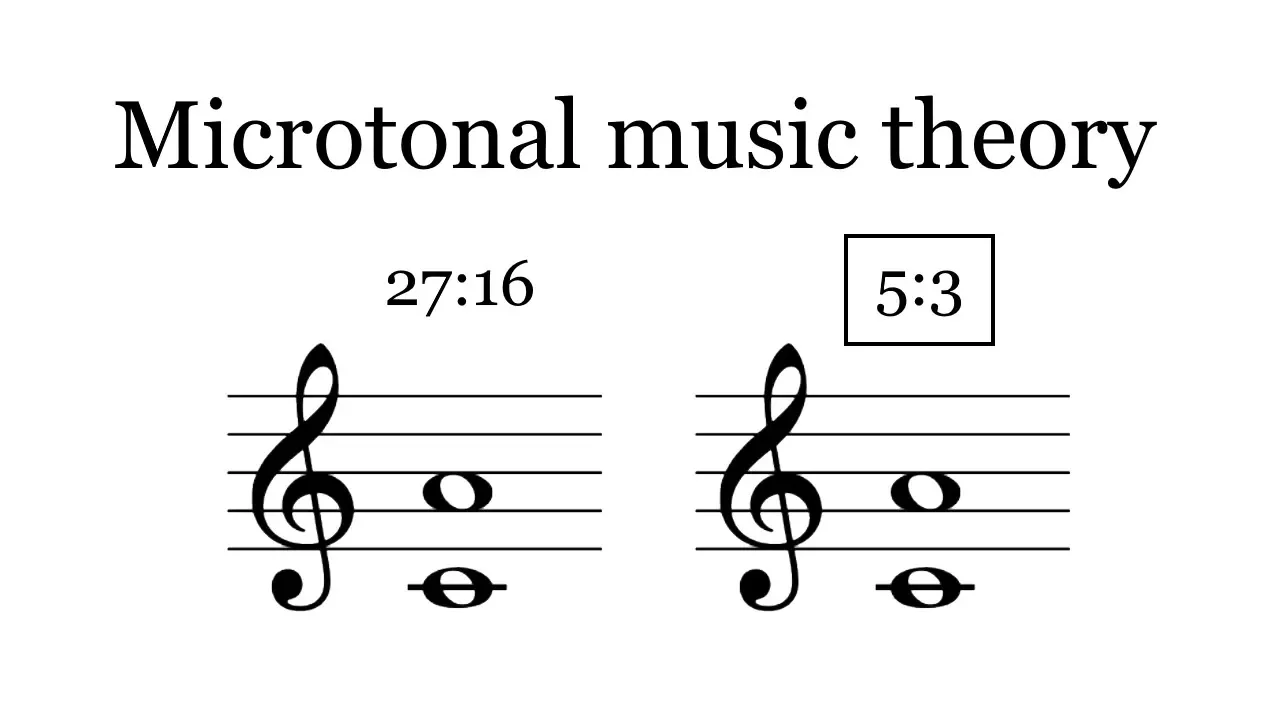




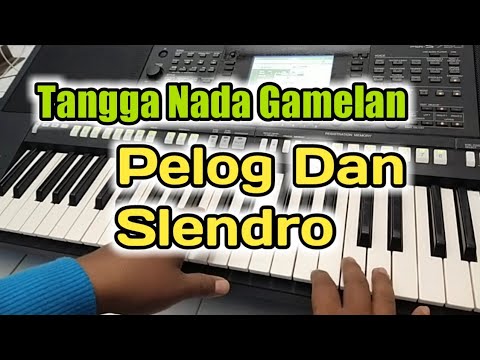




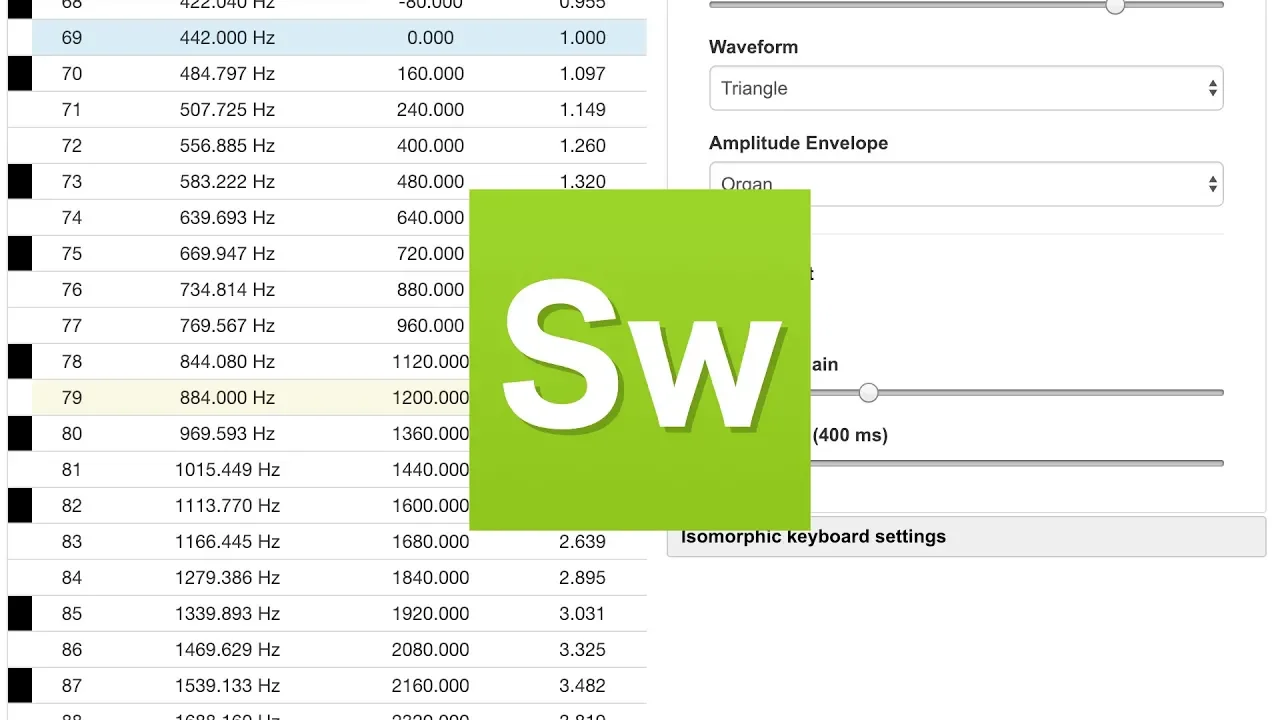

Musical tuning systems vary significantly across cultures, with many traditions using non-12-note divisions of the octave (such as the West African kora's hardin no tuning with slightly different intervals, Arabic maqam with quarter-tones, and the equidistant tonic systems of Central Africa and Java with 5-7 divisions), and these alternative tunings are not inherently 'out of tune' but simply reflect different cultural approaches to pitch relationships that have been increasingly threatened by the global dominance of 12-tone equal temperament.
12-Tone Equal Temperament and Global Tuning Systems
Added:The physics of sound, specifically how frequency (measured in Hertz) relates to perceived pitch and the acoustic harmonic series.
The concept of the octave and how basic musical intervals are represented as mathematical frequency ratios (e.g., 2:1 for an octave).
The definition of 12-Tone Equal Temperament (12-TET) as the standard Western tuning system that divides an octave into 12 logarithmically equal semitones.
The distinction between 'just intonation' (tuning based on pure, whole-number ratios) and 'tempered' tuning systems.
Microtonal and xenharmonic music theory, exploring alternative divisions of the octave such as 19-TET, 22-TET, or 31-TET.
Ethnomusicological analysis of specific regional tuning systems, such as the Indonesian Slendro and Pelog scales or African heptatonic tuning structures.
Psychoacoustics and sensory consonance, investigating how the human brain perceives harmony when exposed to non-harmonic timbres and non-standard tunings.
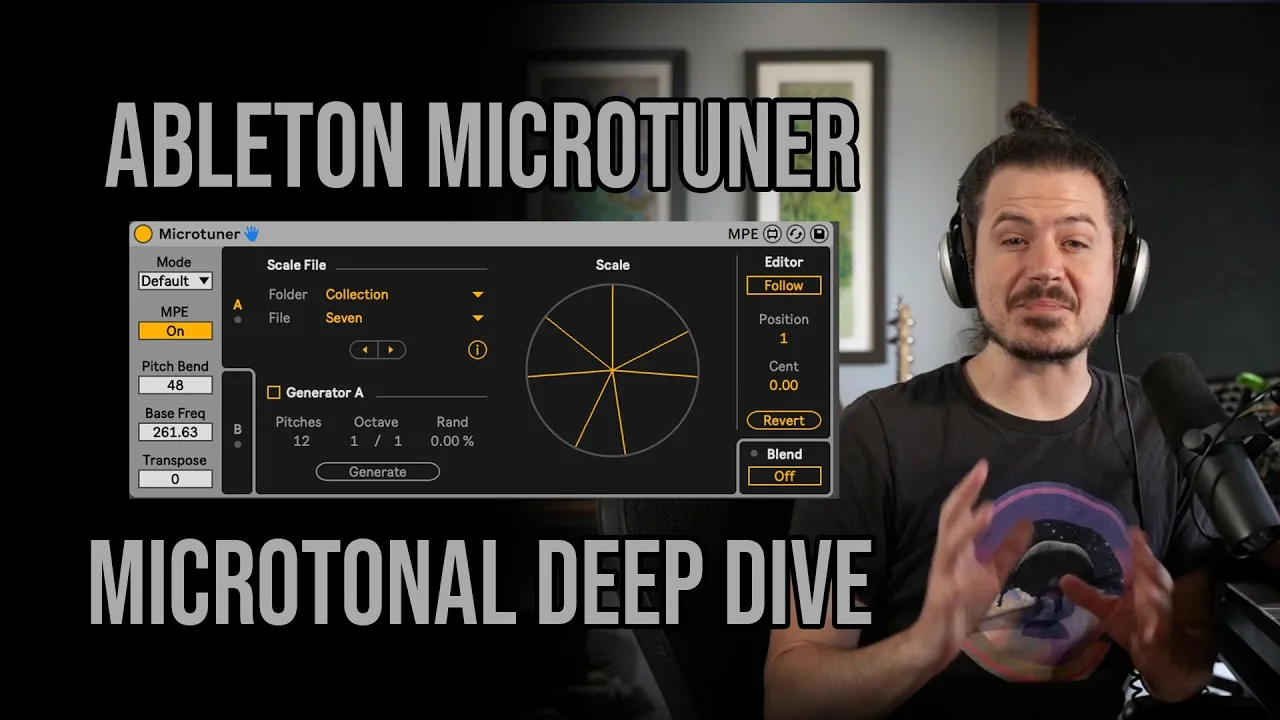
Practical digital sound synthesis, including how to program and use Scala files (.scl) to apply custom microtonal tunings in Digital Audio Workstations (DAWs).
109K views6.5Klikes13:49Original Release: 2019-02-01
[Music] hello my name is David Bruce so imagine the musical world as being like a jungle a rainforest full of weird and wonderful creatures all carving out their own unique way of doing things you've got some tiny orange poisonous frog over here flying squirrel over there a long-tailed monkey wherever you look there are new ideas new ways of approaching things that you've never thought of looking into this musical jungle is constantly inspiring constantly refreshing it's like a mirror that reflects not who you are but who you could be or who you might become but then one day you notice that all the creatures in the jungle have started looking the same they look a bit like you so now when you look in that mirror you just see the same old reflection every time it becomes grey now you might feel that the world is rich with all sorts of different styles of music that our forest is still full of life but there's one particular area I want to look at where the biodiversity is rapidly shrinking and most of us haven't even noticed and that area is tuning most people these days tuned to what's known as equal temperament so an equal temperament the octave is split into twelve divisions each of the notes are exactly the same distance from one another this has become so commonplace that most of us barely stopped to think about it so I wanted to look at some of those exotic species that have lived successfully in our musical jungle for quite some time some of which have more than 12 divisions of the octave some have less some don't even have octaves but as we'll see some of these creatures are now under threat from the rise of equal temperament bear in mind that when you hear some of these they may sound unusual and different to you but if they sound weird what you're really hearing is your own equal temperament conditioning I had a really good insight into this when I was working with an Iranian musician who was fluent in both cultures so he would travel back to Iran to play Iranian music and spend the rest of his time in the West surrounded by equal-tempered music now Iranian music just like Arabic music which we'll come to in a moment has notes which to those of us used to equal temperament sound out of tune [Applause] and what this guy told me was that his ears took several days to acclimatize each time he moved between cultures and I mean both ways so when he was in the West and surrounded by equal temperament then Iranian music did sound out of tune to him but then after a few days back in Iran the western music sounded out of tune it reminds me of how people who speak multiple languages often take a few days to switch their brains into the new language so it's important to know that with each of these traditions once you get used to them none of them would sound out of tune it's just your equal-tempered hearing that perceives it that way so let's start with a rather beautiful exotic creature this is the west african kora it has a harp like sound and in many ways it's scale sounds familiar here is hounds very light Lydian mode with that sharp fourth in this example by Foday Musa su so it sounds like a simple F major scale but listen carefully some of the notes is slightly different than we're used to this is the hardy no tuning found in choral music and compared to the equal-tempered scale the second note of the scale is slightly low and so is the sixth so here's a standard F major scale and here it is in the hardy no tuning [Music] the difference between the two G's is tiny [Music] the distance between the F and the G changes from 200 cents in equal temperament to 185 in the hardy no tuning but even though it's so small it's hard to perceive it's every bit as precise as the tuning of equal temperament by the way if you're interested in exploring different tunings you might want to check out the latest version of the doric o notation software which includes the ability to set and play back any number of divisions of the octave up to I think 7000 in this case all I had to do was look up the sense as they're known between each note of the hardy no tuning and then set each letter of the scale here to that number if you have more than seven notes all you have to do is create a new accidental for that note and then specify for the accidental how far away it is from the main note I'm really impressed by how easy it is to explore and invent your own tunings with this and I think it could be quite revolutionary for some of us so there were several other core tunings each slightly different the Soter scale is probably the most different from equal temperament it has a flattened second and fifth and a sharpened third fourth and sixth [Music] but as modern kora players have attempted to introduce the instrument often playing alongside Western instruments what's happened is the tuning has become more and more converted over to equal temperament in many cases you could argue there's no alternative there's definitely a sense that the richness of the original tuning is becoming something of a cultural relic less often heard in public that said it's good to see some traditional minded players like Villar KC Socko reviving these old original tunings like here the Tomorrow Masanga [Music] my next example is certainly a thriving tradition particularly through North Africa in the Middle East there's perhaps one small example of how the influence of equal temperament has affected how the theory of the music has been perceived but on the whole this is still one of the kings of our musical rainforest and for those of us used to equal temperament it really does show how successful other approaches to tuning can be I'm talking of course about Arabic music our big music is based on the melody form called the maqam which is a bit like a scale but with added traditions of ways of playing the notes within the scale the three most common mahkumat are a rust seeker and by arti [Music] you can see that some of the notes are different from the Western and tempered scale they're labeled here is half flat or as a quarter tone as it's sometimes called because it's half of a semitone so you might think of that as halfway between the equal-tempered tunings that the phrase quarter tone is itself a misnomer it's a short term that many people including Arabic musicians themselves use and again it's probably come about through the Western attempt to delineate things so even if it's not in our clean 12 divisions the most it can be is 24 clean divisions right thinking in these homogenized equally spaced tunings doesn't fit very well with Arabic music which is usually learnt by ear the notes actually played in Arabic music are not easily systemized into any kind of structure the e half flat occurring in the rust for example is tuned higher than the e half flat in the Biot E indeed the Arabic musician and scholar Sammy al Buscemi's demonstrates in this podcast that he can articulate 12 different pitches all of which he thinks of as some kind of e thanks to the magic of digital splicing I took the e from 12 different Macomb phrases and juxtaposed them next to each other so you could hear the differences twelve different notes each one slightly lower than the preceding one all of which I and other musicians would refer to as some kind of e [Music] and of course the flexibility of the tuning is not a consequence of Arabic musicians being less precise it's rather the opposite they're able to distinguish between slight variations in tuning that might go unnoticed in a Western context and here you can already see how this brightens our gray outlook on our own music we do tend to think of the notes of our equal-tempered scale as being discrete and unchanging we're used to thinking of notes of the piano keyboard which once tuned are fixed in place but even in western music that's not the case any string player will tell you that there are different ways you'll play the same note a leading note for example that's heading towards the tonic will usually put played slightly higher or a third that is leading towards the fourth will be tuned higher than a third that's part of a stable tonic triad what matters is the context but let's push beyond our limited blinkered thinking even further in the next system we'll look out there is a system of tuning but it doesn't even require that the same notes in the same group of players or even on the same instrument are necessarily tuned to exactly the same pitch this is a system of tuning which is so far removed from the concept of equal temperament that it's only fairly recently researchers have been able to start to get a sense of how the tuning is conceptualized there are two distinct cultures one in central Africa and one in the Indonesian country of Java nobody quite knows how but these two cultures have an almost identical system of xylophone based tuning known as equity enter tonic there's also a knack we have two tonic so in these cases the octave is not split into 12 or 24 but 5 or 7 equal divisions of the octave at least that's been the theory so in the five note scale each note is more or less equidistant from the other creating pitches unlike any of the ones we're used to in central Africa the Central African Republic specifically there are a large number of tribes that use the equipment atomic scale each operates with a slightly different system of tuning and researchers have often tended to patronizingly assume that they just didn't really care about tuning but since the 1980s Frederick wasa sim ha aram and others have been studying both the music of Central Africa and Java and have enlisted technology to try to gauge precisely what the local musicians themselves considered to be a really tuned scales so they brought synthesizers and generated a whole range of different tunings and asked the locals to give feedback what they eventually found was that there was indeed a rigorous system in place in which the highest priority was placed on the spacing between notes in an ascending line rather than on the precise relationship of the frequencies and through systematic study of hundreds of trial recordings the pair found that three distinct intervals were acceptable between neighboring notes intervals of 200 cents 240 and 280 cents but the placement of those three intervals within the scale was crucial so for example the presence of a 280 cent interval at the high end of the scale was considered incorrect or out of tune but switched these two intervals around and now it's in tune but within the various constraints they found what's amazing is that different instruments within the same Orchestra or even different octaves on one instrument could be tuned differently so long as they obeyed the rules that they don't covered so even the octave unison itself was unimportant I found that quite amazing is such a huge difference in perception that it's quite hard for people accustomed to western music to even conceive of that the octave itself wouldn't be important and I think that really goes to show that we need to keep our minds open to the riches of the world and how many possibilities there are out there one other thing I'll say straight away is that I've understood more clearly from looking into all this that the relationship between tuning and instrumentation is pretty crucial equal temperament really helps when you have a bunch of different types of instruments all playing together especially when some of them are fixed on or not easily retuned in the West for example you can match the changes of temperament over the to the introduction of new instruments and ensembles whether it's the pure toned intonation of the earliest vocal music through to the use of mean tone tuning with the addition of vile consorts and then to the rise of equal temperament wants strings keyboards and voices were all starting to play together in the early baroque if you know of any other really interesting tuning systems do let me know in the comments I'd love to look into more of this thank you so much for watching thanks as ever to my patrons over at patreon do please like subscribe and share with your friends and I'll see you next time [Music]
Up Next
52:46
Maqam Unit 2 Review: Comparing Bayati, Hijaz, Kurd, Saba
@abushumays
1.3K views•2021-06-27

10:20
Mozart's Musical Dice Game Explained: History, Rules, & Fun
@webpianoacademy
5K views•2023-03-13

17:26
Why Stravinsky's Rite of Spring Is So Popular Despite Its Dissonance
@DBruce
203.9K views•2021-03-19
10:49
Understanding John Coltrane's Giant Steps: A Music Theory Analysis
@Vox
10.4M views•2018-11-12
Related Study Plans & Knowledge Roadmaps
Structured learning paths in Music Theory
music-theory
Composing Galant Music: Partimento & Schemata
01Foundations of Figured Bass and Keyboard Harmony
02The Rule of the Octave (Regola dell'Ottava)
03Galant Schemata: The Building Blocks of Form
+ 2 more learning modules
30h5 modules
Explore Roadmap
music-theory
Decoding Overtone Series: Tuning & Drone Music
01Acoustic Foundations: The Physics of the Overtone Series
02Tuning Systems: Equal Temperament vs. Just Intonation
03Microtonality and Spectralism: Beyond Standard Pitches
+ 2 more learning modules
24h5 modules
Explore Roadmap
music-theory
Impressionist Harmony: Scales, Planing & RPGs
01Foundational Music Theory: Keys, Intervals, and Seventh Chords
02Impressionist Color: Chord Planing and Parallel Harmony
03Whimsical Textures: Pentatonic Cascades and Whole-Tone Scales
+ 1 more learning modules
14h4 modules
Explore Roadmap
music-theory
Negative Harmony: Axis Reflection in Indie Pop
01Music Theory Foundations: Scales, Intervals, and Triads
02Functional Harmony and the Circle of Fifths
03Demystifying the Negative Harmony Axis Reflection
+ 2 more learning modules
16h5 modules
Explore Roadmap