



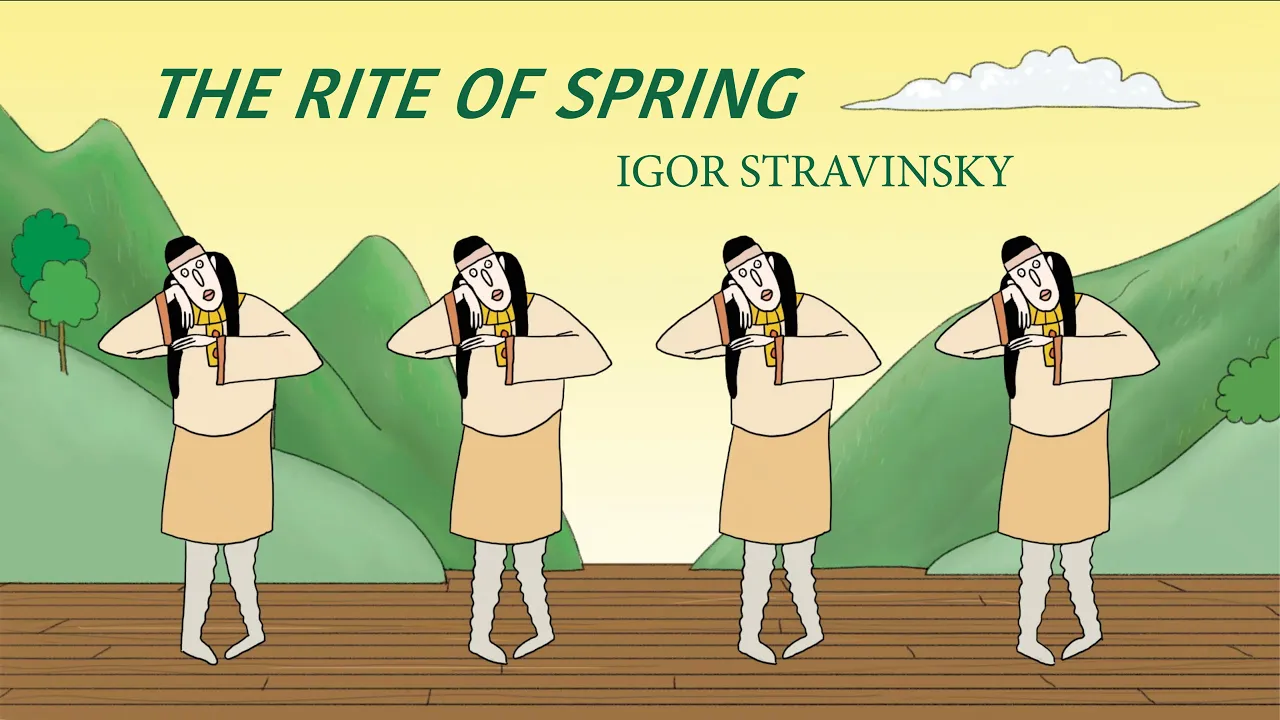




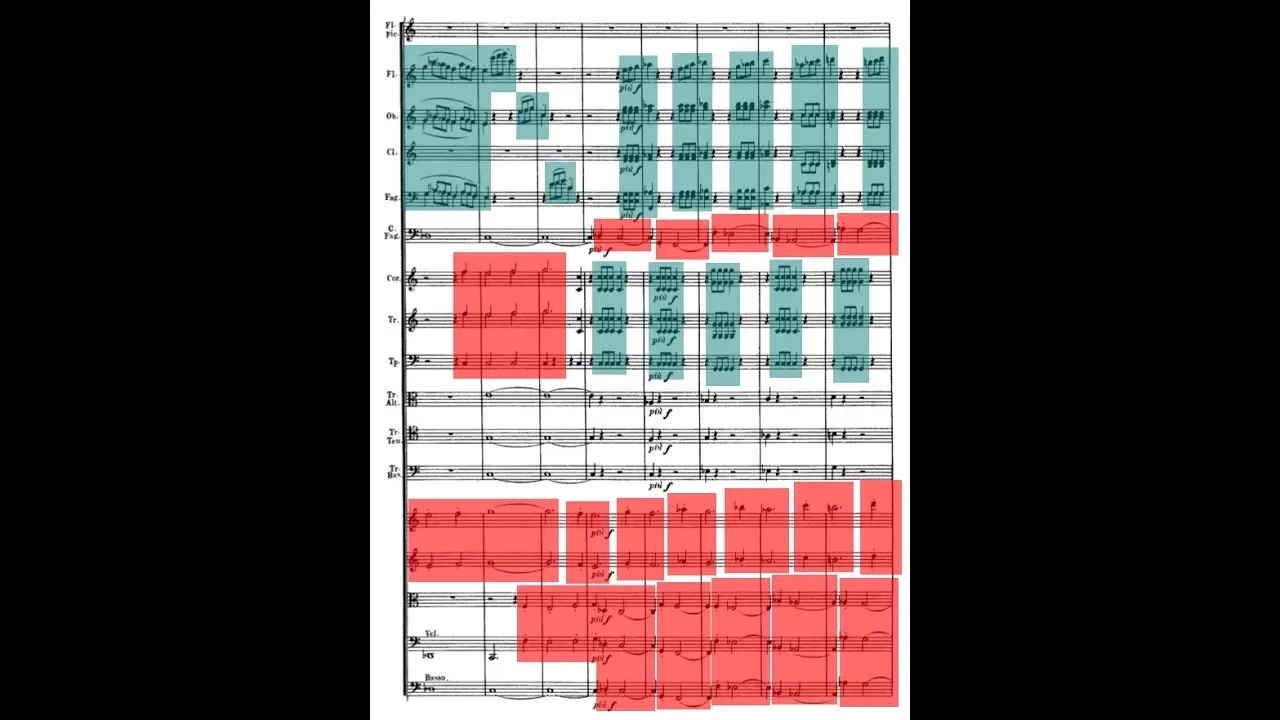










In Stravinsky's The Rite of Spring, the unique combination of extreme dissonance and repetition creates an innovative musical effect where repeated dissonant sounds become normalized and accepted by listeners, transforming what would otherwise be jarring or unpleasant sounds into powerful and influential music; this technique, known as 'repetition legitimizes,' is demonstrated through six distinct approaches including repeating the same dissonant chord multiple times, presenting dissonance horizontally as melodies, separating dissonant elements into background and foreground layers, providing tonal relief moments, having instruments oscillate between semitone-apart chords, and progressively building dissonance intensity within a repeating pattern.
Why Stravinsky's Rite of Spring Is So Popular Despite Its Dissonance
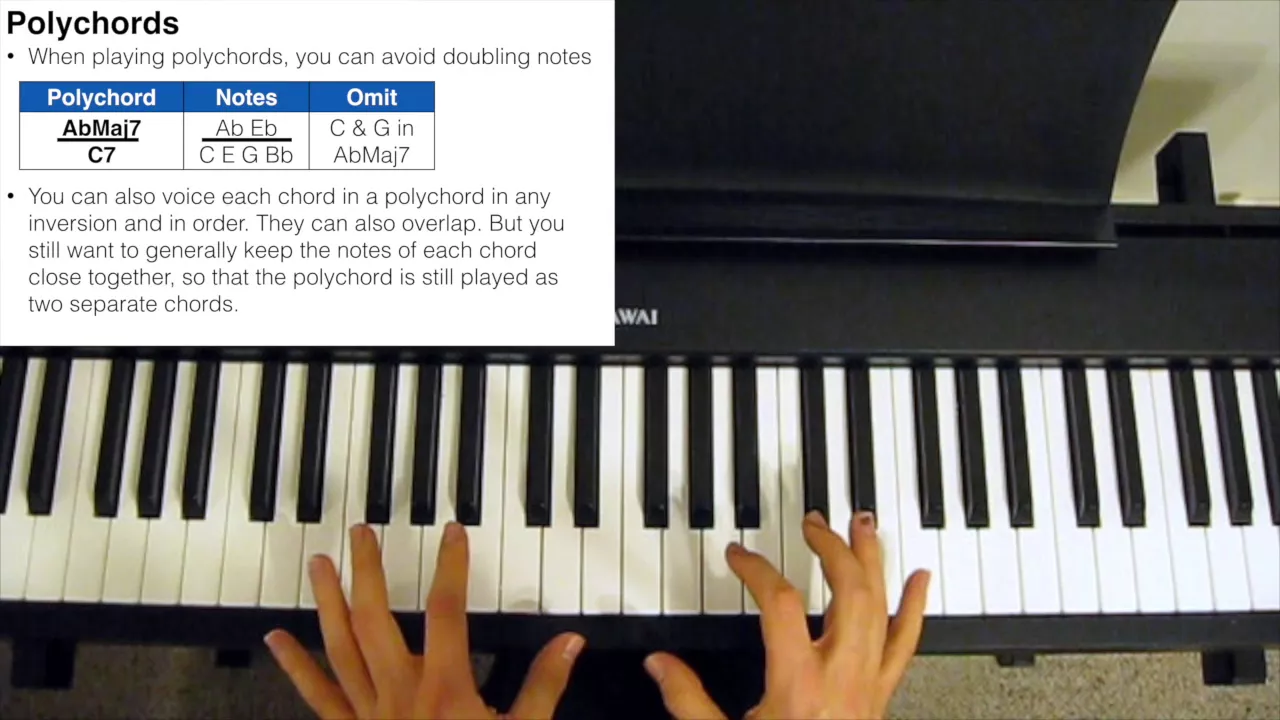
Added:hello welcome or welcome back to my channel my name is david bruce those of you who follow adam neely's channel will have heard him use the phrase repetition legitimizes repetition legitimizes repetition legitimizes repetition legitimizes repetition legitimizes well today i want to talk about that concept but in relation to probably one of the most shocking innovative and influential classical works of all time stravinsky's the right of spring [Music] i like very much [Music] when adam uses that phrase repetition legitimizes he's mainly talking about it in relation to jazz improvisation the theory goes if you play something that sounds wrong you don't like run away from it and pretend it never happened instead you make it seem intentional you go back to it you repeat it you go over and over that same wrong note and suddenly you make it right the act of repetition has legitimized that wrong note and i started to play him this chord 59 times the same chord there was a little bit surprised he asked me only one thing which was very appendic last a very long time this way and i said till the end my dear the right of spring is a hugely popular work it gets done all the time and any orchestra that performs it is pretty much guaranteed to sell out but it's also one of those artworks like say the mona lisa which has just been talked about so much that it's really hard to see it with clear eyes we're always told that the right is a piece that's about rhythm it's additive rhythms there's no more four four bars instead it's rhythms built out of kind of lego pieces stacked one on top of the other and sure the rhythms are great and we'll see a few of them in a minute but i sat down and tried to think about which bits of the piece gave me the biggest thrills the biggest chills which are the moments that i just can't wait to hear every time and i was surprised because it wasn't really the rhythm that did it for me the bits that really got to me were all about something else they were about harmony harmony and it's a harmony that's famously dissonant i recently did a video all about the top 10 most shocking chords in classical music and the right really should have featured there but the truth is i couldn't decide on just one single chord there are just so many unique and uniquely dissonant chords in this piece so in the end i decided it needed its own separate video but how can such a dissonant work be so popular aren't we always told people prefer a nice c major nice friendly consonants why can't i have nice things well this is what i think is the key the right is very dissonant but not really in the same way as say a piece by arnold schoenberg where lots and lots of different dissonances fly by all the time the right tends to take one very dissonant sound and just stick with it so the dissonance as adam would say becomes legitimized by repetition once you see it like that you can start to see why it was so influential and i don't just mean on other classical composers dissonance repeated is the shtick of an awful lot of the most popular genres of the 20th century music this is a fairly classic funk groove played by corey wong from the group wolfpack it's based around the simplest kind of dissonant chord a dominant seventh that's a chord that's thought of as dissonant because it creates a tension that needs to resolve to the tonic in fact this one is even more dissonant than i first realized it's actually a d9 but it has a seventh of all things in the bass so it's a really good example of a repeated dissonance so keep that idea of a rhythmically repeating dissonance in mind because we'll see stravinsky's version of it a little later does it last a very long time this week it lasts a very long time this week to the end my dear [Music] till the end my dear another genre that uses repeated dissonance is heavy metal particularly gent metal bands like meshuggah make a feature out of repeating harsh dissonant sounds [Music] beautiful music baby so much so that stravinsky's sometimes jokingly called the first gent composer and again i think the translation works remarkably well of course there are different ways you can repeat things and we'll look at six different ways that stravinsky uses so six different ways to repeat a dissonance [Music] and we'll start with the simplest here's one famous passage where the same dissonant chord is thumped out no less than 11 times it's not a great example because you mainly just hear those timpani thuds but the chords themselves are built out of two three note chords both have a perfect fourth and an augmented fourth so you get the dissonance of a tritone and the dissonance of a major seventh in both of those two chords [Music] that sounds like a painful reality but what i want to focus on here is the one chord we've heard so much of already the one stravinsky loved so much i like very much [Music] it's probably the most talked about chord in the piece with all sorts of theories about what it actually is but to start with it's almost impossible to see this chord as anything other than the way it feels under the hands at the piano it's an e major chord with an e flat major dominant seventh slapped on top as one critic said to create a harmonic effect of the right one merely needs to play on two pianos transposing the music by a tone in one part but not the other now the critics mocked him for this but they're not actually that far from the truth and i'm pretty sure that in the case of this chord that's how stravinsky would have discovered it what happens if i put an e flat chord on top of this e [Music] some theorists have tried to describe it in terms of key signature if you imagine that like the corey wonky it's a basically a dominant chord well jazz harmonies often take a dominant chord and can get pretty dissonant as they pile up notes on top so is that what's going on here well if it is a dominant chord where would it resolve to the root is e natural so would it resolve to a major [Music] you know when i first played that i thought it definitely didn't sound like it resolves like that but now i listen again i can sort of hear it the other way it might resolve is onto a flat major with treating the upper part of the chord the e flat as the dominant seventh others have described it as part of the octatonic scale which alternates whole steps and half steps tones and semitones and which stravinsky's teacher rimsky-korskov was fond of but there's an extra e flat here which kind of scuppers that theory so if this was just one dissonant chord in a sea of dissonant chords it might not stand out but by continually repeating it we focus less on the dissonance itself and start to hear it just as some kind of object we start to become familiar with it method two is to make the dissonance melodic or at least horizontal because they're often not exactly melodies they're more like arpeggios or short melodic fragments you can see here in his sketches that stravinsky was thinking about dissonance in a melodic way this repeated three note idea runs through the augers of spring section [Music] it's taken from the top three notes of the e flat seven chord so with an e major arpeggio beneath [Music] it's the perfect way to extend that opening chord into a horizontal plane a little later stravinsky keeps the three note motive but finds another repeating dissonance to clash with it it's a trilled c and d natural taken as a group of five notes it's almost as dissonant as you can get and yet separated out into a background trill and a foreground motive that could be you know from the pentatonic scale well it just sounds much cooler right after this section comes one of my favorite moments in the harmony of the piece we first hear a kind of g minor melody in the horn in the flute but then for a moment the dissonance dissolves and we're left with this glorious passage in a kind of e flat dorian mode where the same tune is suddenly completely free of dissonance [Music] actually the idea of having some kind of tonal or modal melody above a repeating dissonance can definitely count as our third strategy [Music] this is the section called ritual action of the ancestors [Music] so again when you hear this repeated rhythmic dissonance the connection to those funk and gent ideas sounds so striking but then check this out a five note modal melody it just plays gently above the dissonant chords beneath and i think this is another way that stravinsky makes dissonance more palatable by sometimes giving us these wonderfully tonal moments sometimes even at the same time as something far more dissonant [Music] for our fourth technique we come to for me what is probably the most chill inducing moment of the whole piece it's the opening of the second part [Music] if it sounds familiar it's because john williams was shall we say very inspired by it in the music he wrote for the june c of tatooine sequence in the original star wars film the distinctive sound is another clash of two chords a half step apart only this time the distance rocks back and two between two different equally clashing chords you have a d minor chord in the strings while the woodwind rock back and two between an e flat minor and a c sharp major so just like the three notes in that motif surrounding the little c d trill so the woodwind chords float a semitone either side of the underlying chord [Music] both are incredibly dissonant but with the distance softened by virtue of being in different instruments i don't know about you but it just gives me the creeps every time [Music] technique number five is a way of piling up the distance so it's a repeating pattern but each time the distance is more and more extreme [Music] this is from the section known as spring rounds we start with this progression which on the piano sounds quite jazzy it's a minor 9th which then moves melodically up and down in parallel motion [Music] it's not massively dissonant although the voicing of the chord does emphasize that clash of the minor second in the middle there are also some pretty intense clashes with the moving bass line like like this one but then while the rhythmic pattern and the melody line remain unchanged the chords pile on far more dissonance in the middle of the texture you have a diminished chord with a sharp seven a bit like that chord we saw earlier because it has the major seventh and the tritone these themselves then start to move downwards in parallel motion i think the build-up of these melodic and the harmonic dissonances makes this one of the most powerful uses of repeated dissonance it's just so intense [Music] finally let's look at one of the most distinctive ways to repeat dissonance from one of the most distinctive sections of the piece the closing sacrificial dance [Music] this section starts with pretty much that same chord that stravinsky loves it's a d7 on top with an e flat major seven of some kind below [Music] only now it's chopped into that classic stuttering rhythm but the repetition now alternates two different dissonant patterns cutting back and two between them this little pattern uses stravinsky's technique of holding the somewhat dissonant chord while the melody line above changes and the music then alternates between these two sections [Music] here again stravinsky heightens the tension by adding extra dissonance so in a way this final section culminates all of the techniques we've seen piling them one on top of the other swapping between them but all in their heart are building on this idea of repeated dissonance hey dorian oh i'm glad you'd like the video thanks oh thanks i'm glad you enjoyed it oh what's that hang on i'll just get the translator machine i want to say okay thank you that was really nice of you well i hope they do all join my patreon so so now you know if you want to make dorian happy go and join my patreon thanks so much for watching see you next time and don't worry i'll get you some more bird seed [Music] you
Up Next

How to Build Chords That Fit a Key: Music Theory Explained
@MichaelNew
422.8K views•2012-06-09

Mozart's Musical Dice Game Explained: History, Rules, & Fun
@webpianoacademy
5K views•2023-03-13
12-Tone Equal Temperament and Global Tuning Systems
@DBruce
109K views•2019-02-01
Understanding John Coltrane's Giant Steps: A Music Theory Analysis
@Vox
10.4M views•2018-11-12
Related Study Plans & Knowledge Roadmaps
Structured learning paths in Music Theory