Stravinsky's famous 'Augurs of Spring' chord is a polytonal chord combining E major (or F flat major) in the bass with E flat 7 (or E flat dominant 7th) in the treble, creating a distinctive harmonic sound through the tension between the semitone interval between E flat and E natural; this chord can be played on guitar using specific voicings and serves as a powerful tool for connecting chord pairs and creating melodic lines through arpeggio connections.
Stravinsky Rite of Spring Chord Analysis: Augurs of Spring Guitar Lesson
Added:Deep Dive
Understanding of basic triad and seventh chord construction, specifically major triads and dominant seventh chords.

How Seventh Chords Work Part 2: Music Theory Explained
271K
Seventh chords are built by adding a seventh interval to a basic triad. The three seventh intervals are major 7th, minor 7th, and diminished 7th. A fundamental rule of chord construction states that any two notes in a chord must be a third apart (major or minor third), not any other interval. Starting with a major triad, only two valid seventh chords can be created: the major 7th chord (major triad + major 7th) and the dominant 7th chord (major triad + minor 7th). The diminished 7th interval cannot be added to a major triad because it would violate the rule of thirds, as the fifth and seventh would be only a whole step apart.
Click to watch →

Difference between Maj7-Min7-Dom7 |C .........V......s Live 1
185.3K
To build triads from a scale, take every other note (1-3-5). Major triads use: Root + 2 + 1/2. Minor triads use: Root + 1/2 + 2. For C major: C-E-G (major), D-F-A (minor), E-G-B (minor), F-A-C (major), G-B-D (major), A-C-E (minor), B-D-F (diminished). Seventh chords add tension: Major seventh (1-3-5-7), Minor seventh (1-Flat3-5-Flat7), Dominant seventh (1-3-5-Flat7), Half-diminished seventh (1-Flat3-Flat5-Flat7). The dominant chord (5th degree) creates tension that resolves to the tonic.
Click to watch →
7th Chords Demystified: Major and Minor Variations for Guitar
1.1K
Seventh chords are built by adding an additional note to major or minor triads. A major 7th chord adds a major third above the perfect fifth (C-E-G-B). A minor 7th chord adds a minor third above the perfect fifth (C-E-G-Bb). A dominant 7th chord is a major triad with a minor third above the perfect fifth (G-B-D-F). In the major scale, the first and fourth chords are major 7ths, while the fifth chord is a dominant 7th. In the minor scale, all seventh chords built from minor triads are minor 7ths. The dominant 7th is named because it's the only way to construct this pattern without going out of key, occurring from the dominant position of the major scale.
Click to watch →
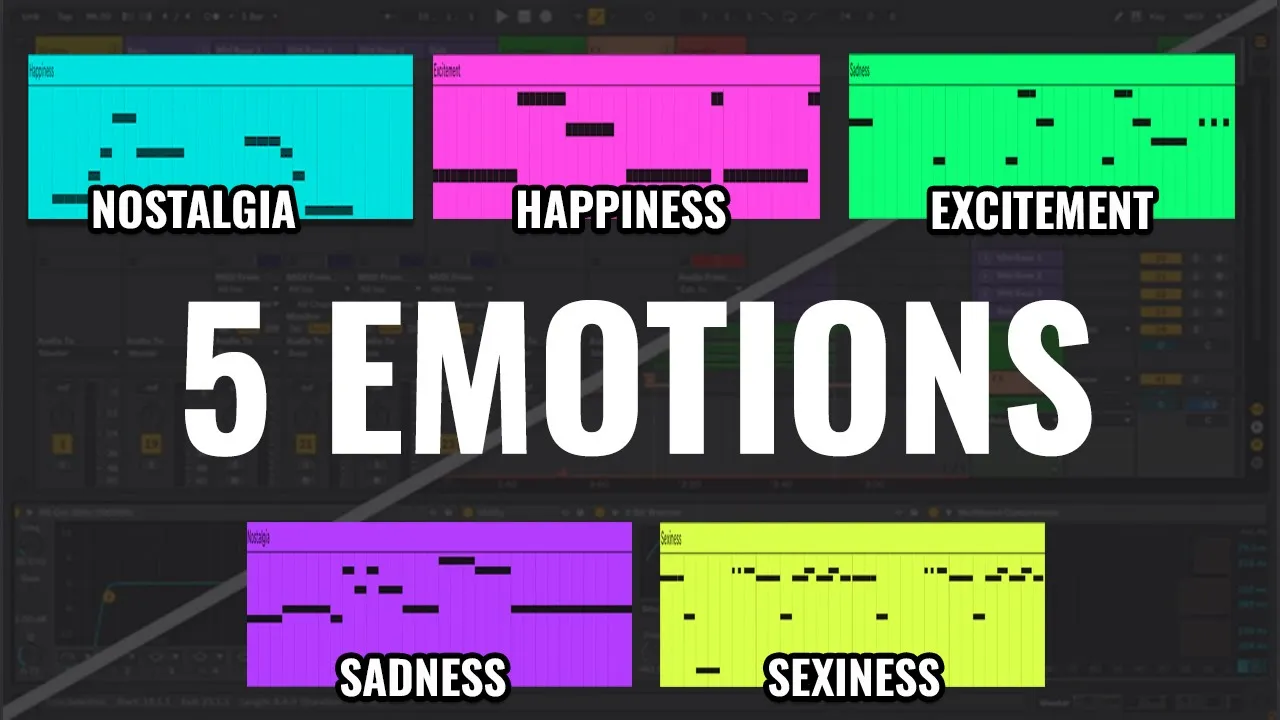
How to Create EMOTIONS with MELODIES
382.6K
To construct a major triad, start with the root note of the chord and count up two notes, skipping one note each time. For example, in C major: C (root), E (third), G (fifth). To make a seventh chord, count up seven from the root, which includes the first, third, fifth, and seventh notes. This creates a richer harmonic sound. Adding a ninth extends this further by including the ninth note above the root.
Click to watch →

코드 귀카피에 꼭 필요한 지식!! 기타 코드 구성음 쉽게 배우기 # AZ의 EZ레슨
70.4K
A triad chord consists of three notes: the root (1st degree), the 3rd degree, and the 5th degree. The 3rd degree is the most critical element that determines whether a chord is major (bright, happy) or minor (dark, sad). A seventh chord extends a triad by adding a 7th degree, creating more complex emotional qualities. Major seventh chords have a major 3rd and major 7th, while minor seventh chords have a minor 3rd and minor 7th, and dominant seventh chords combine a major 3rd with a minor 7th, creating tension and resolution.
Click to watch →
Deep Dive
Familiarity with the concept of polytonality and polychords (the simultaneous overlaying of two distinct keys or chords).
Polychords and Polytonality in Film Scoring: A Guide
82.1K
Poly chords are two or more unrelated chords stacked on top of each other, part of bitorality or polytonality where multiple keys play simultaneously. They are notated with a horizontal line separating chord symbols. The sonic colors depend on chord relationship—related chords may function as extended chords, while unrelated chords create tension. The fewer common chord tones, the more tense the sound. Voicing significantly affects dissonance: close voicing creates more tension while wide voicing reduces it. In orchestral settings, poly chords are separated by register: violins and high woodwinds play the top chord while bass, cello, and low woodwinds play the lower chord. Polytonal chords progress from highly dissonant to related by one chord tone to very related (functioning as extended chords). Mediant chord relations (thirds apart) can create poly chords that almost function as single extended chords. Polytonal passages can be constructed to feel grounded by starting with clear chords before introducing polytonal texture. These chords can be intentionally ambiguous, with single note sets interpretable as multiple different chords. They can resolve to regular chords. Polytonality combines effectively with planing and can expand to tri-tonality. This technique is extensively used in major film scores including The Planets, The Rite of Spring, Star Wars, Close Encounters of the Third Kind, E.T., and War of the Worlds. Understanding technique is crucial for professional musicians because it allows creating music even when not inspired, providing a reliable foundation for delivering work on deadline.
Click to watch →

Compose with Polychords
3.5K
Polytonality has been used throughout musical history, from Mozart's musical jokes to modern film composers like John Williams in Star Wars. A poly chord consists of two or more distinct chords sounding simultaneously, notated with a horizontal line (diagonal indicates a slash chord). To harmonize a melody with poly chords, take melody notes as the top of each chord and select appropriate bottom chords. A downward-moving bass line while the melody moves upward creates cohesion. The Patrica chord (G flat major over C major) is a famous poly chord used by Stravinsky. Polytonality can also be understood as key centers stacked one on top of another, such as violins in A flat Lydian while viola and cello play in C Lydian. To create polytonality, keep chords in one hand in a specific key while transposing the melody to a different key. Poly chords can generate melodic material by collapsing the chord into a scale and using those notes for melody writing.
Click to watch →
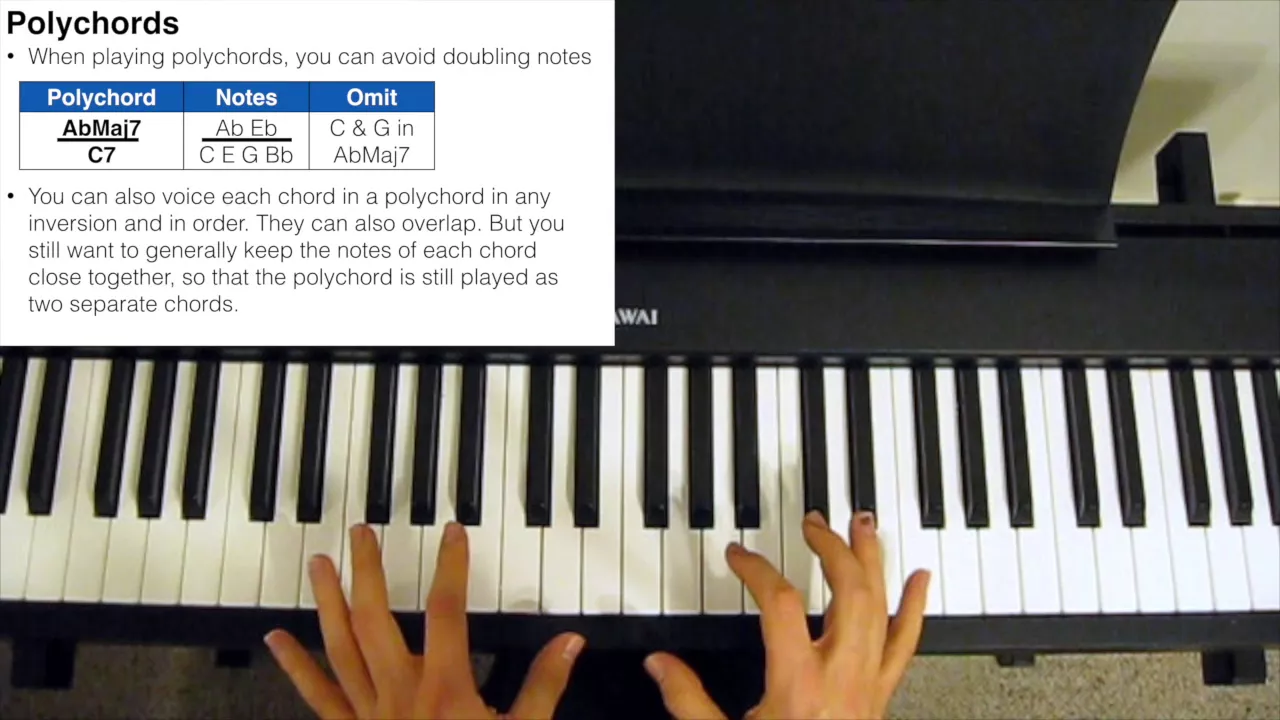
Jazz Piano Tutorial - Polychords
22.6K
A polychord is a jazz harmony concept where two or more chords are superimposed on top of each other, written as two chords separated by a horizontal line. There are two primary approaches to thinking about polychords: treating them as a single chord entity (where you analyze all notes to determine the resulting chord name, such as D major over C major seven becoming C major 13 sharp 11) or as two separate entities creating polytonality (where you can improvise scales appropriate for each individual chord). When playing polychords, musicians should avoid doubling notes and can use various voicings, inversions, and overlapping techniques. Polychords can also include unavailable tensions in modern jazz contexts and can extend to three or more chords.
Click to watch →
Advanced Harmony Tutorial - Using Two Keys Together - Beyond Polytonality
133.3K
Polytonality is a harmonic technique where two distinctly different keys exist simultaneously, each with its own tonal center or home court. This technique became popular during the early to mid-20th century in classical music. The famous Petrushka chord by Igor Stravinsky demonstrates this concept, combining C major and F-sharp major chords to create extreme dissonance.
Click to watch →

Analysing Prince's Original 24 Track Desk Recording of Let's Go Crazy from the Purple Rain Sessions.
63.2K
Polychords occur when two different chords are played at the same time. In this section, Prince plays an F chord over a C# bass note, creating a C# major seventh with a sharp five. This creates dissonance because the guitar voicing includes the third, making it more complex than simply playing a power chord over a different bass note.
Click to watch →
Deep Dive
Intermediate guitar fretboard knowledge, including how to visualize and execute basic arpeggios and scale shapes.
The #1 Fix For The Intermediate Guitar Rut
44.4K
The lost intermediate plateau occurs when guitarists cannot play scales in all keys without shifting positions, caused by incomplete fretboard knowledge; the solution involves mastering the circle of fourths to visualize the fretboard and memorizing note names across all six strings, which enables instant navigation of any scale in any key without moving up or down the neck.
Click to watch →

How To Go From Beginner To Intermediate On Guitar?
238.5K
Intermediate guitarists must understand triads (root, third, fifth) and learn notes on the fretboard, starting with low E and A strings in four-fret cells. Music theory functions as vocabulary and grammar—it enables communication but doesn't automatically make someone great. Chord shapes can change while representing the same chord; players should find comfortable fingerings based on their hand anatomy. Economy fingerings optimize efficiency based on fretboard position. Suspended chords (sus4) replace the third with the fourth note, creating distinctive sounds. Major triads use root, third, and fifth from the major scale. Arpeggios break chords into sequential notes for outlining chords in solos.
Click to watch →

The Chord/Scale Secret Most Guitarists NEVER Learn
98K
Learning arpeggios is essential for knowing the guitar neck because they teach where all chord tones are located everywhere on the fretboard. Once mastered in positions, behind the note, above the note, and as spread triads, arpeggios allow confident navigation of any chord progression. This knowledge prevents being lost during improvisation and enables instant access to melodic ideas. Arpeggios form the basis for understanding chord shapes and are more effective than the CAGED system for comprehensive fretboard knowledge.
Click to watch →

Master The Fretboard In 30 Minutes
272.1K
To master the guitar fretboard efficiently, learn the five positions of the major scale (based on the 1st, 2nd, 3rd, 5th, and 6th notes of the scale) and the five positions of the pentatonic scale, then practice spread triads and arpeggios; this systematic approach allows you to visualize the entire neck and play any chord or scale pattern anywhere on the fretboard.
Click to watch →
ポール・ギルバート先生のフレーズ構築アイデア教室 ヤング・ギター2019年7月号
177.7K
This comprehensive segment covers essential guitar techniques for developing musicality. The instructor demonstrates an unusual pick grip using two fingers and thumb for hard hitting and muting, followed by a half-step and whole-step lick pattern with hammer-ons. The segment teaches arpeggio patterns for outlining chords, specifically a C major triad with D in the bass and D major, using only four notes (C-E-G plus D) going up and back down. The instructor also demonstrates playing a G minor scale while intentionally omitting the sixth note, using a three-note-per-string shape that moves down two frets to play D-C-Bb. The James Brown dominant 9 chord is explained as requiring formal music education to learn, involving stretching to the E string and shifting the hand down one fret. The segment emphasizes that strong hammer-ons and pull-offs are essential to avoid tangling, and that rhythm and chord movement are crucial for funky guitar playing.
Click to watch →
Deep Dive
Basic understanding of music theory analysis, particularly Roman numeral analysis and functional harmony.

Armoni Dersi: Caz Akorları ve Çözülümleri
48.9K
In functional harmony, chords are named using Roman numerals based on their proximity to the tonal center. The chord whose root is the tonal center is called 'I' (one). The chord whose root is a fifth above the tonal center is called 'V' (five). The chord whose root is a fourth above the tonal center is called 'IV' (four). This system allows musicians to understand chord relationships regardless of the specific key being used.
Click to watch →

שיעור תיאוריה מוזיקלית למתחילים!
15.4K
Roman numerals analyze chord function: uppercase (I, IV, V) indicates major chords, lowercase (ii, iii, vi) indicates minor chords, vii° indicates diminished. This abstraction allows understanding harmonic function independent of specific key. The progression I-IV-V-I is the same harmonic function in any key. The hierarchy of harmonic function (tonic, subdominant, dominant) creates the emotional structure of Western music, with tension and resolution driving musical interest.
Click to watch →
Music theory concepts ranked by importance (tier list)
1.1M
Roman numeral analysis describes chord progressions in relation to the key using Roman numerals (I, ii, iii, IV, V, vi, vii°). This system allows musicians to think about chord relationships abstractly, recognizing that progressions like I-IV-VI-VI will sound similar regardless of the specific key. This analytical approach is particularly valuable for understanding functional harmony and chord relationships across different tonal centers.
Click to watch →
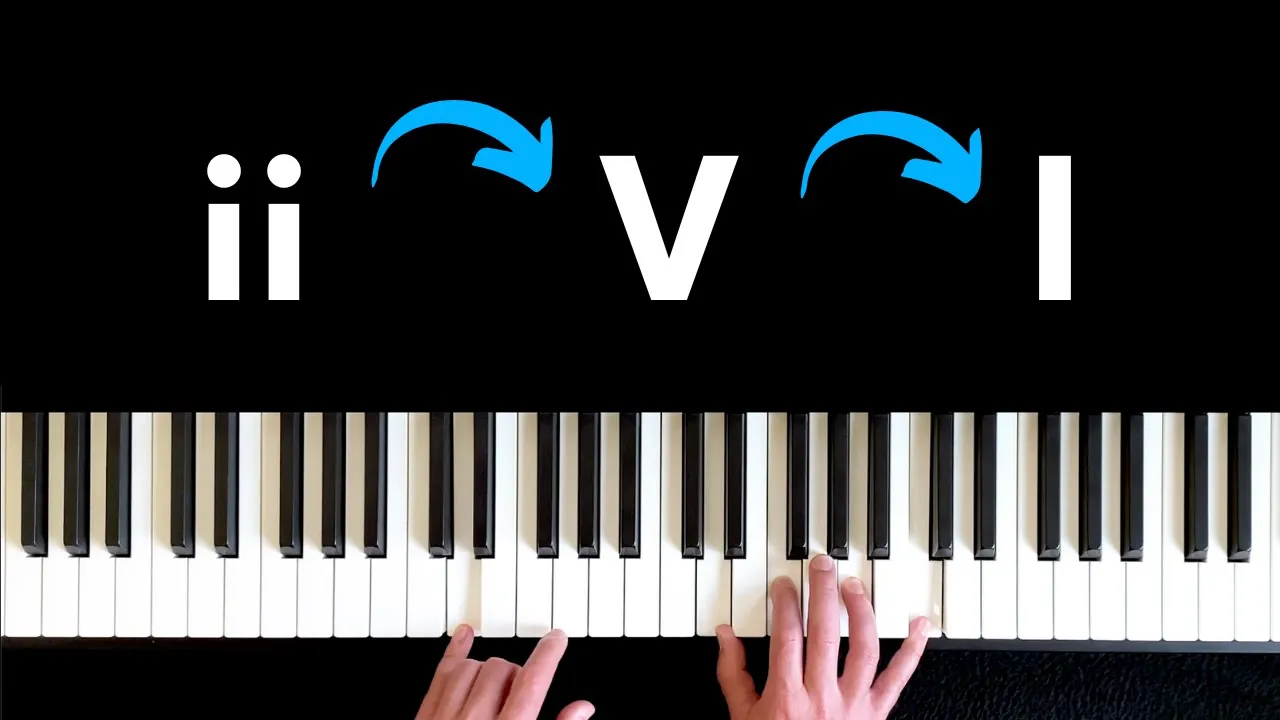
The ii - V - I chord progression, explained
6.6K
Roman numerals identify chords by their position within a key rather than specific note names. In C major, II = Dm, V = G, I = C. This system enables easy transposition across keys (Bm7, Edim7, Amaj7 in A major). The ii-V-I progression uses diatonic seventh chords (Dm7, G7, Cmaj7) containing all scale notes. Our ears perceive chord functions (II-V-I) more than specific names, allowing songs in different keys to share the same harmonic structure. The V-I resolution creates essential tension-release that defines Western music's cadential language.
Click to watch →

Harmonia Funcional - O que é ? Conceitos Básicos!!!
3.9K
Roman numeral analysis (I, II, III, IV, V, VI, VII) provides a universal notation system for functional harmony that transcends specific keys. The same Roman numerals represent identical functional relationships regardless of the actual notes used. For example, G major functions as V in C major but as I in G major. This functional equivalence allows musicians to analyze harmonic progressions across different keys. Additionally, functional harmony provides notation for modulation and tonal regions: V indicates modulation to the dominant, vi indicates relative minor, and S/SM indicate subdominant/submediant regions. This systematic approach enables musicians to understand and analyze how music moves between tonal centers throughout a composition.
Click to watch →
Prerequisite Knowledge
- Concept 01Understanding of basic triad and seventh chord construction, specifically major triads and dominant seventh chords.
- Concept 02Familiarity with the concept of polytonality and polychords (the simultaneous overlaying of two distinct keys or chords).
- Concept 03Intermediate guitar fretboard knowledge, including how to visualize and execute basic arpeggios and scale shapes.
- Concept 04Basic understanding of music theory analysis, particularly Roman numeral analysis and functional harmony.
Subsequent Learning
- Step 01Application of triad pairs and polychordal soloing techniques in jazz fusion, progressive metal, or modern classical guitar improvisation.
- Step 02In-depth study of Stravinsky's use of the octatonic scale and its relationship to the 'Augurs of Spring' harmony.
- Step 03Exploration of complex rhythmic concepts associated with the piece, such as asymmetrical meters, syncopation, and shifting accents on the guitar.
- Step 04Analyzing and adapting other 20th-century orchestral works (such as those by Béla Bartók or Claude Debussy) for solo guitar or guitar ensemble.
Chord Anatomy
Voicing Variants
Rhythmic Use
Arpeggio Lines
Chord Anatomy
0:03Playing Section
- 1
Identifies the famous Stravinsky chord structure with bass and treble layers.
- 2
Explains polytonal nature combining E major and E flat dominant seventh.
- 3
Demonstrates a guitar voicing for exploring the harmony.
Octatonic Scale and Pitch-Class Set Theory vs. Polytonality
While analyzing the 'Augurs of Spring' chord as a polytonal juxtaposition (Eb7 over Fb major) is common for practical guitar instruction, prominent music theorists reject this 'bitonal' reading. Theorists such as Pieter van den Toorn and Arthur Berger argue that Stravinsky's harmonic framework is unified, derived primarily from the octatonic scale (an eight-tone scale of alternating whole and half steps). From this perspective, the Augurs chord is not two competing tonal centers, but a single pitch-class set within a coherent octatonic collection. Critics argue that treating these harmonies as isolated polytonal chord pairs for improvisation oversimplifies Stravinsky's linear voice leading, modernistic pitch-class relationships, and rhythmic drive, reducing a complex, non-functional masterpiece into static, jazz-like vertical structures.
Deep Dive
Application of triad pairs and polychordal soloing techniques in jazz fusion, progressive metal, or modern classical guitar improvisation.
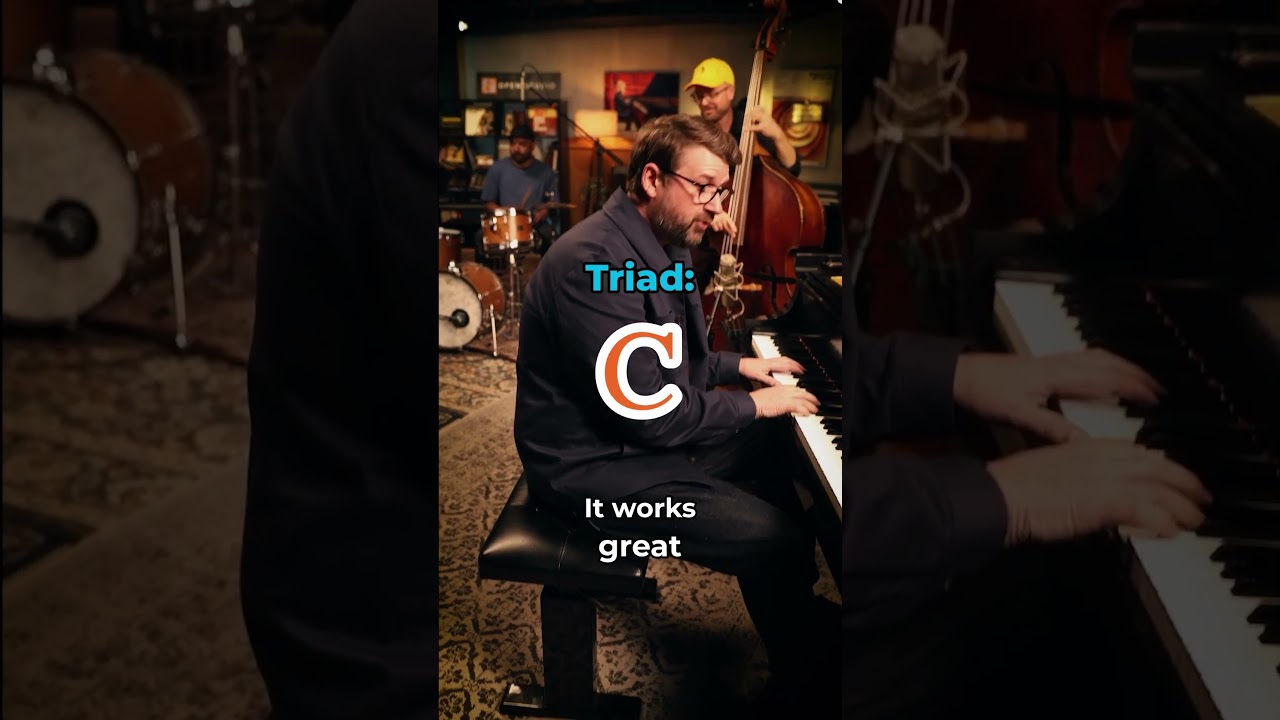
Triad Pairs!
802.3K
Triad pairs are a jazz improvisation technique where musicians add a complementary triad to their primary chord progression; for example, over a D minor chord, adding a C major triad creates a rich harmonic texture that works for chord accompaniment, melody support, and soloing across all minor keys.
Click to watch →

PARES DE TRÍADAS | REFRESCA tus solos con este SIMPLE concepto.
17.4K
Triad pairs are a guitar improvisation technique where two triads (typically the fourth and fifth degrees of a major scale, such as Re and Mi) are played alternately to create a seven-note scale sound while simplifying mental processing during improvisation; this technique can be applied to various modal contexts by changing the underlying chord (e.g., Re-Mi triads over D# minor create Phrygian sound, over C major create Lydian sound, over B minor create Dorian sound, over A7 create Mixolydian sound, and over Bb7 altered create altered dominant sound), and can be played using different inversions, string groupings, and octave separations to create diverse harmonic textures.
Click to watch →

TRIADS ARE COOL
14.9K
Triad pairs are pairs of major triads used in jazz improvisation. A major triad is built from the 1st, 3rd, and 5th scale degrees. To use triad pairs over a dominant seventh chord (F7), build a major triad based on the flat 7 (E-flat) and the root (F). The E-flat major triad contains the flat 7, 9, and 11, while the F major triad contains the root, 3, and 5. Play these triads in inversions across the full range of the instrument. When soloing, isolate the harmonic sound and use only those two triads without adding other notes, focusing on rhythm, intervals, phrasing, articulation, and dynamics. The same triad pairs can be used over a major seventh chord (E-flat major 7), where the E-flat major triad contains the 1, 3, and 5, and the F major triad contains the 9, sharp 11, and 13th. The sharp 11 sound is common over major seventh chords. Learning one concept and applying it to different situations creates different sounds.
Click to watch →

Video Lesson: Jazz Box - "Triad Pairs"
81.3K
Triad pairs are a jazz improvisation technique where two adjacent major triads from a scale (such as F major and G major in the key of C major) are used as building blocks for melodic lines; the method involves first learning all inversions of these triads, then practicing rhythmic bridging between them, and finally breaking up the standard 1-3-5 pattern to create more fluid and unpredictable improvisational phrases.
Click to watch →
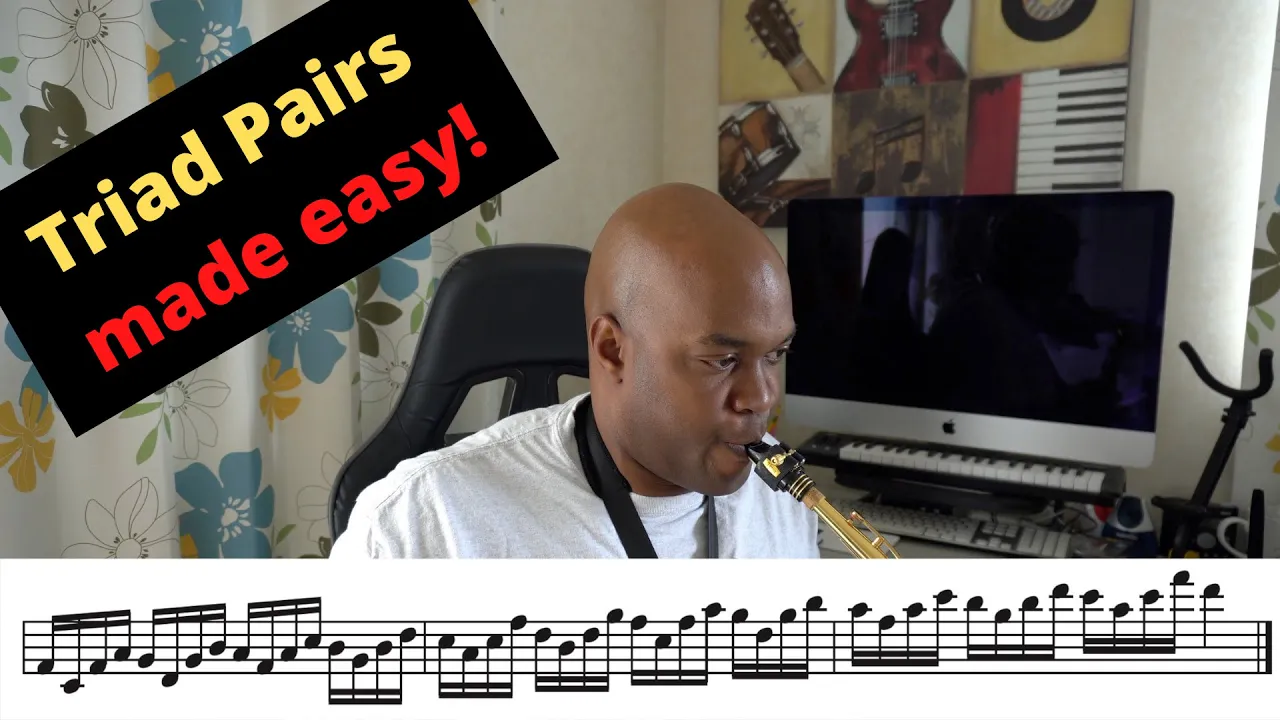
Triad Pairs for Improvisation
37.1K
Triad pairs are two major triads separated by a whole step (e.g., F major and G major) that can be used together for improvisation over various chord progressions including C major, D minor, and G7 chords, as well as the entire 2-5-1 progression in any key; practicing these patterns in multiple inversions and backwards helps develop technique and ear training.
Click to watch →
Deep Dive
In-depth study of Stravinsky's use of the octatonic scale and its relationship to the 'Augurs of Spring' harmony.

Inside Chamber Music Lecture: Stravinsky's Duo Concertant
345
Neoclassicism involves modern composers reinterpreting historical styles like Bach's contrapuntal textures. Stravinsky described this as 'a great composer does not imitate a great composer, steals.' The octatonic scale (symmetrical scale built from alternating minor thirds) produces harmonies impossible in major/minor keys, such as the Petrushka chord (C major with F-sharp). Stravinsky used this scale extensively in The Rite of Spring, creating distinctive otherworldly sounds. This combination of neoclassical references and octatonic innovation characterizes his mature style.
Click to watch →
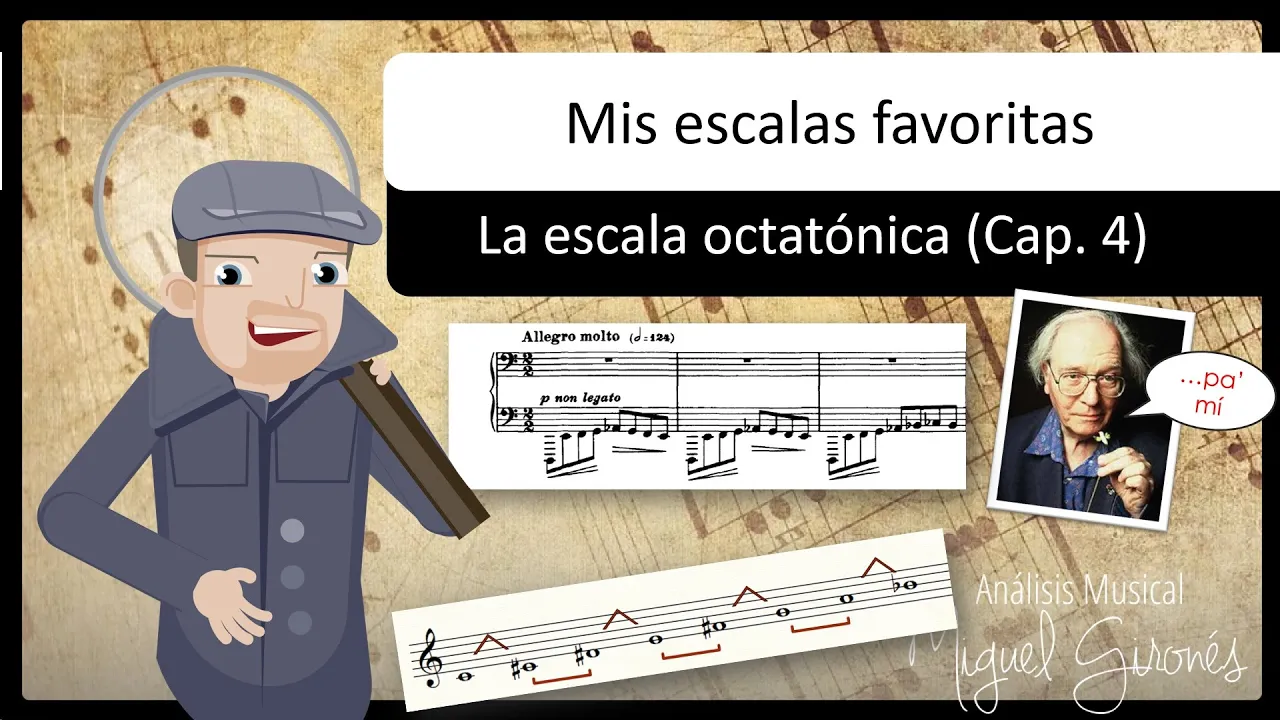
🪜🏆 Mis escalas favoritas (cap. 4) | La escala octatónica
628
The octatonic scale represents an anticipation of chromatic harmony, with the diminished seventh chord functioning as a tonic embellished with surrounding notes. This creates 'forbidden notes' that tonal music avoids. The augmented second interval appears as a difficult boundary to cross in tonal music. Clara Schumann's nocturne demonstrates early intuition of octatonic concepts, using a diminished seventh chord with a natural note that could connect semitones. Igor Stravinsky is widely recognized as the first composer to prominently employ the scale, popularizing it in 'The Firebird' (1910). Mozart also used octatonic elements in Symphony No. 40, with passages based on diminished seventh chords and appoggiaturas creating six of the eight scale notes.
Click to watch →

Inside Chamber Music with Bruce Adolphe: Ravel Quartet in F major for Strings
29.8K
The octatonic scale is an eight-note scale that divides the octave symmetrically into alternating half steps and whole steps. Unlike most scales which have seven notes with one repeated, the octatonic scale has eight distinct notes that repeat. This symmetrical division creates a unique harmonic palette that differs from traditional major and minor keys. The octatonic scale provides a new palette for creating harmonies using the same basic notes but with different relationships. Chord progressions in octatonic music are not in any single major or minor key but belong to the octatonic set. This creates fresh, different chord progressions that weren't possible in traditional harmony. The symmetrical nature of the octatonic scale means that chords can be moved around while maintaining their octatonic relationships, creating a sense of harmonic fluidity and coloristic richness. Wagner, despite not knowing about the octatonic scale as a theoretical concept, occasionally wrote passages that hint at octatonicism, demonstrating that composers can intuitively discover octatonic relationships without understanding the theoretical framework. Symmetrical scales like the octatonic scale provide composers with more harmonic options because they are 'poised right in the center' of the octave. Unlike traditional scales that have a fixed position, symmetrical scales allow movement in any direction. This creates a sense of harmonic readiness and flexibility. The diminished chords that divide the octatonic scale symmetrically (minor third, minor third, minor third) allow composers to move freely through harmonic space, creating a sense of infinite possibility. The Russian school of composition, represented by composers like Mussorgsky, was different from German, French, and Italian traditions. It was exotic and influenced both Debussy and Ravel. Borodin's music contains purely octatonic passages where two chords are not in the same key but belong to the same octatonic scale. The relationship between these chords is a tritone, which is a fundamental interval in octatonic harmony. This demonstrates how octatonic scales allow for chord progressions that would be impossible in traditional major-minor harmony. Stravinsky's Petrushka and The Rite of Spring contain octatonic passages where chords only exist together within the octatonic scale. Debussy's Symphony of Psalms also features octatonic passages where three chords are perfectly normal harmonies but don't belong in a key together—they only belong in the octatonic set. This opened up a new palette for composers, similar to how impressionism opened up a new sense of color.
Click to watch →
Aula 3, Curso USP de Harmonia/Contraponto I (Harmonia e sistema), Prof. Rubens Russomanno Ricciardi
4.2K
The octatonic scale (scale of eight tones) creates interesting harmonies and can lead to polytonality (multiple tonalities simultaneously). In Stravinsky's 'The Rite of Spring,' the octatonic scale creates a near-polytonal effect. Polytonality involves combining different tonalities in the same musical passage. The pentatonic scale has strong roots in various civilizations, including Asia and pre-Columbian America. In the 20th century, composers revisited these scales within the tempered system, creating 'exotic' or 'oriental' sounds.
Click to watch →
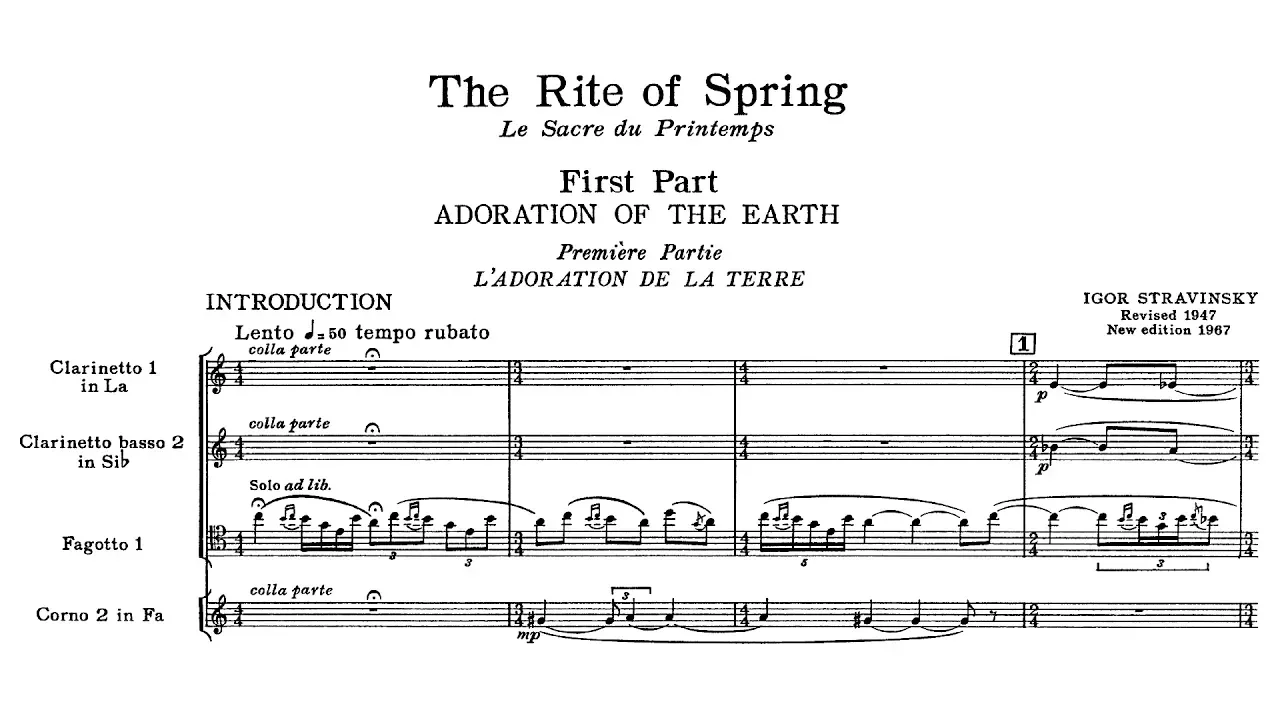
Igor Stravinsky - The Rite of Spring (1913)
3.4M
Igor Stravinsky’s The Rite of Spring (1913) is structured in two parts: Part I, “Adoration of the Earth,” and Part II, “The Sacrifice.” Part I includes the Introduction, followed by “The Augurs of Spring, Dances of the Young Girls,” “Ritual of Abduction,” “Spring Rounds,” “Ritual of the Rival Tribes,” “Procession of the Sage,” and “Dance of the Earth.” Part II begins with an Introduction, then proceeds through “Mystic Circles of the Young Girls,” “Glorification of the Chosen One,” “Evocation of the Ancestors,” “Ritual Action of the Ancestors,” and concludes with the “Sacrificial Dance.” The recording featured is by the New York Philharmonic Orchestra from 1958, conducted by Leonard Bernstein. The version presented is not identical to Bernstein’s original score; the uploader edited in some missing notes. The recording contains mistakes but is valued for its addicting power and intensity, making it the uploader’s favorite. A link to the official score is provided through Boosey & Hawkes. Additional links are included for the uploader’s video production workflow and a score-processing program they developed.
Click to watch →
Deep Dive
Exploration of complex rhythmic concepts associated with the piece, such as asymmetrical meters, syncopation, and shifting accents on the guitar.
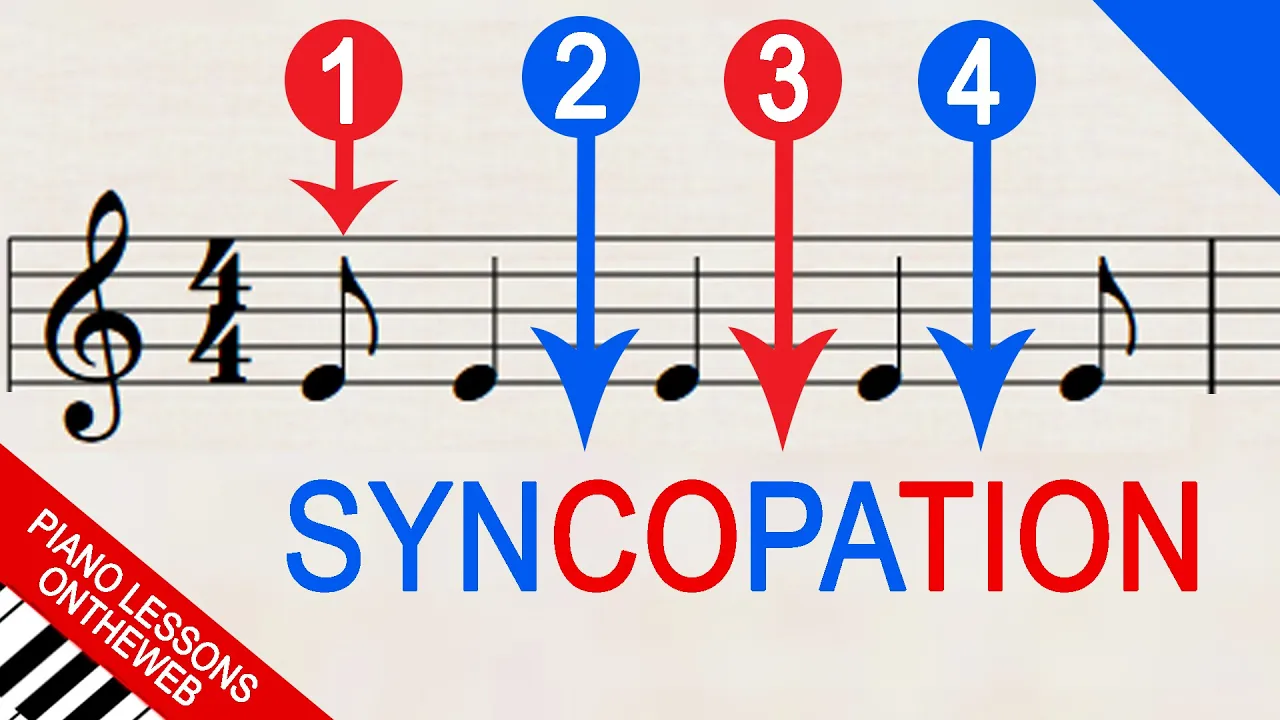
How to Count Syncopated Rhythms for Beginners
234.2K
Before learning syncopation, students must understand natural accents in musical measures. In 4/4 time, accents occur on beats 1, 2, 3, and 4, with beat 1 being the strongest, beat 3 the second strongest, and beats 2 and 4 weaker. In 3/4 time, accents occur on beats 1, 2, and 3 with similar strength hierarchy. Syncopation fundamentally involves removing these natural accents from the beats and shifting them to the 'ands' (off-beats between beats). When accents occur on the and of beat 1 instead of beat 1 itself, the rhythm takes on a shuffling quality. A fully syncopated measure has all notes occurring on the ands rather than the main beats, creating a distinctive displaced rhythmic effect that differs significantly from straight, unaccented rhythms.
Click to watch →

Lungs - Townes Van Zandt - Complete Guitar Tutorial
39.9K
This section addresses challenging rhythmic concepts essential for advanced guitar playing. The instructor explains syncopation—placing accents on unexpected beats—and introduces upbeat counting (the 'and' counts between main beats). When counting with syncopation, every beat has an upbeat ceiling, requiring comprehensive counting methods. The instructor demonstrates measures starting on the upbeat of beat one and ending on the upbeat of beat four. Various strategies are presented for mastering complex rhythms: using sentences for rhythmic phrases, counting with upbeat values, and creating mental anchors by singing along with recordings. The section emphasizes that understanding concepts intellectually helps anchor them in memory, complementing muscle memory development.
Click to watch →
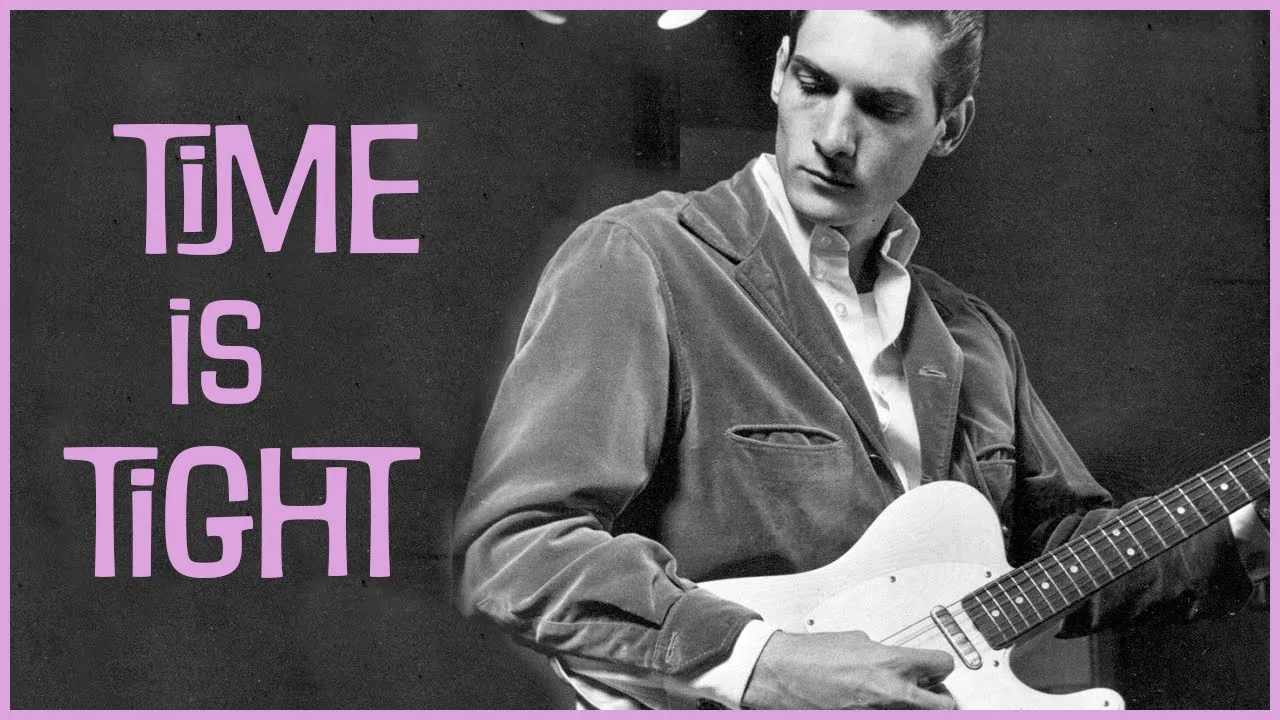
Time is Tight: masterful soul rhythm from Steve Cropper
141.8K
The guitar solo contains syncopations and pushes that emphasize upbeats (the 'and' counts). The pattern includes emphasis on beats two and three, creating a distinctive rhythmic feel. While Cropper plays most of the solo straightforwardly, he occasionally adds variations like hammer-ons between notes (such as hammering from G to A) to add flavor.
Click to watch →
Rhythm Guitar Mastery & The Power of Syncopation! #rhythmguitar #funkguitar #guitarist
10.5K
Syncopation in funk guitar is the technique of intentionally leaving spaces or 'holes' between notes to create tension and release, which makes music breathe and feel funky. This concept, explained by Art Neville as 'like a washing machine' with the 'in between' being what makes it funky, involves shifting accents to unexpected beats (such as playing on beat four and then the 'and' of four) to create a subtle form of tension that makes music compelling. The key principle is that playing nothing or leaving space is often more powerful than playing every note, as demonstrated in New Orleans funk guitar styles where musicians use power chords with slight bends and strategic accents to create that characteristic funky groove.
Click to watch →
Синкопа в музыке.Что такое синкопа
48.9K
Musical time is divided into equal segments called beats, similar to syllables in speech. Like speech has stressed and unstressed syllables, music has strong and weak beats, with the first beat of each measure always being strong and naturally emphasized. Accents are the emphasis or highlighting of particular sounds, performed louder than surrounding sounds. Syncopation is a specific technique where a note begins on a weak beat and continues onto the following strong beat, creating rhythmic displacement. This differs from regular accents, which simply emphasize a beat without necessarily extending across beats. Syncopation creates distinctive 'off-beat' tension and release that characterizes many musical genres.
Click to watch →
Deep Dive
Analyzing and adapting other 20th-century orchestral works (such as those by Béla Bartók or Claude Debussy) for solo guitar or guitar ensemble.
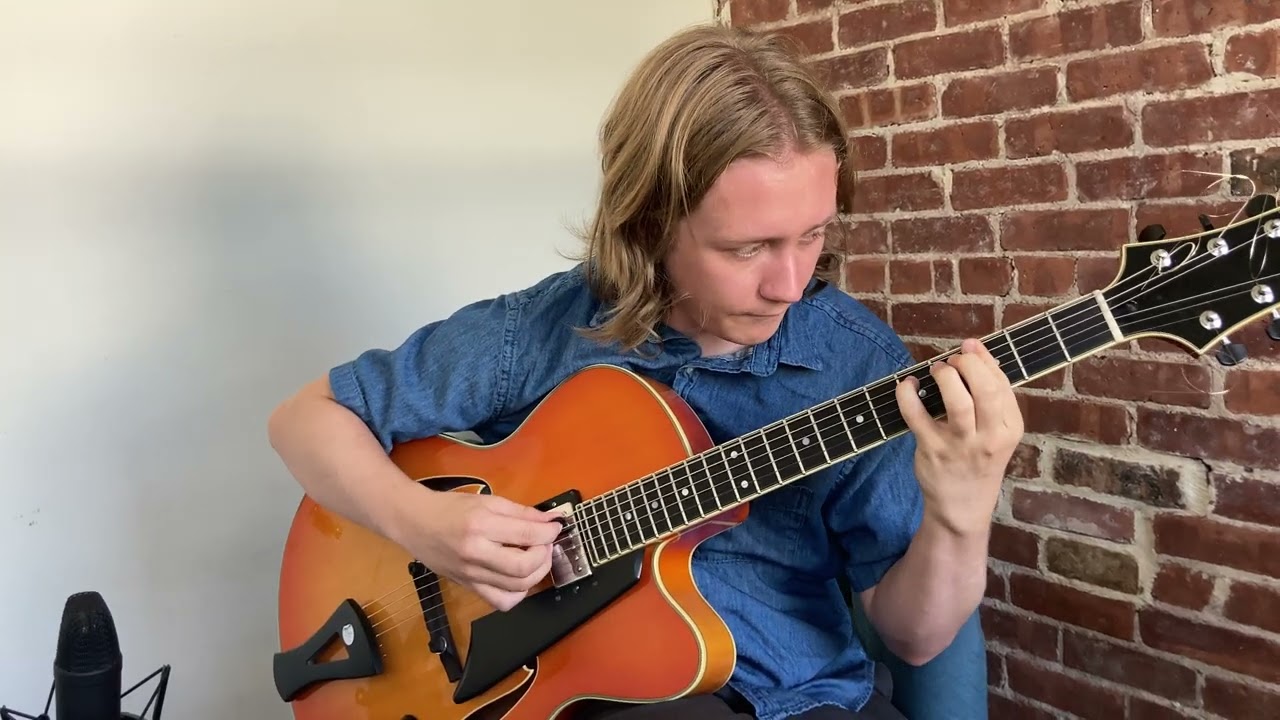
Claude Debussy - Suite Bergamasque: Prelude on guitar
305
This video presents a guitar arrangement of Claude Debussy's Suite Bergamasque Prelude, showcasing how classical piano compositions can be adapted for guitar performance through creative interpretation and adaptation.
Click to watch →
![[Béla Bartók] Bulgarian Dances - 23rd Iserlohn Guitar Symposium 2014](https://i.ytimg.com/vi_webp/S3ZzMml9iyQ/maxresdefault.webp)
[Béla Bartók] Bulgarian Dances - 23rd Iserlohn Guitar Symposium 2014
3.1K
The video features a performance of Béla Bartók’s Six Dances in Bulgarian Rhythm, arranged for guitar quartet by Richard Wright. The piece was performed during the 23rd Iserlohn Guitar Symposium in 2014, with highlights of all six dances presented, culminating in the full final movement recorded at the actual festival concert. Bartók, a Hungarian composer and pianist (1881–1945), is recognized as one of the most important 20th-century composers and, alongside Liszt, as Hungary’s greatest composer. He was a pioneer in the collection and analytical study of folk music, co-founding comparative musicology, which evolved into ethnomusicology. The performance was given by a quartet of students from the Yehudi Menuhin School, who also participated in master classes with William Kanengiser (Los Angeles Guitar Quartet), Chris Ruben (Baltic Guitar Quartet), and Rene Izquierdo during the symposium. The recording was made using a Sony microphone and edited with Sony Vegas Pro 12 and Adobe Audition 1.5. The video transitions into the live concert footage during the sixth dance.
Click to watch →

20th Century French Music Recital - Steve Cowan and Adam Cicchillitti, guitars
1.3K
This virtual recital, filmed live at l'Entrepôt in Lachine, Québec, features guitarists Steve Cowan and Adam Cicchillitti performing arrangements of 20th-century French compositions originally written for piano and harp. The program includes works by Maurice Ravel, Claude Debussy, Federico Mompou, and Germaine Tailleferre, all adapted for two guitars. Only José Evangelista’s Retazos was originally composed for guitar, though it was deemed unplayable in its solo form, prompting Cowan and Cicchillitti to spend years arranging it for duo performance. Their arrangement of Retazos was recorded in 2019 for Analekta’s album "Focus," which features exclusively Canadian music. The selected pieces were chosen for their contrasting moods and intimate musical language, deemed well-suited to the expressive capabilities of the guitar. Arrangements were made by the performers themselves, with specific credits given to Cowan and Cicchillitti for their transcriptions of Debussy, Mompou, and Tailleferre, and to Henderson-Kolk for Ravel’s Prelude. The concert was part of a series organized by artistic director Richard Turp and Concerts Lachine, created during the coronavirus quarantine to provide musicians a platform without a live audience. The performance highlights the adaptability of French impressionist and modernist repertoire to the guitar duo medium.
Click to watch →
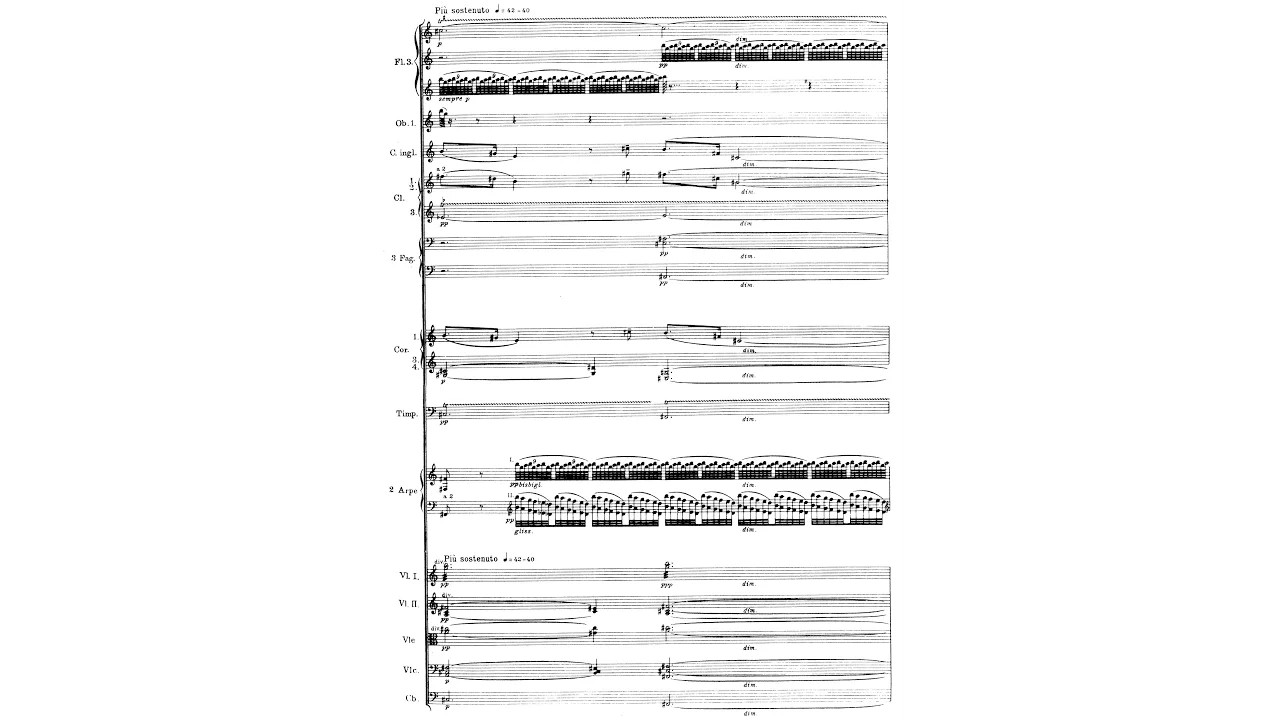
Bartok's "Két kép (Two Images), Sz. 46" (Audio + Score)
12.2K
Bartók’s "Két kép (Two Images), Sz. 46" consists of two orchestral movements composed during his early exposure to French composer Claude Debussy’s music. The first movement, subtitled "In Full Flower," is an Adagio in ternary form, marked by Impressionist techniques including whole tone scales, pedal tones, and ostinati, reflecting Debussy’s influence. It features pastel orchestral colors and contains thematic material later developed in Bartók’s opera Bluebeard’s Castle and ballet The Wooden Prince. The second movement, "Village Dance," contrasts sharply with the first: it is loud, boisterous, and folk-inspired, employing modal melodies reminiscent of Hungarian folk tunes alongside Debussyian harmonic elements. Structured as a rondo (ABACA), its formal clarity is occasionally blurred by thematic development. The work requires large orchestral forces uncommon for Bartók, including tripled woodwinds, five trumpets, two harps, a celesta, tuba, and expanded percussion. While the title and some harmonic effects resemble Debussy’s "Images," the orchestration, harmony, melody, and meter align more closely with Debussy’s "Nocturnes." Despite its popularity during Bartók’s lifetime and critical acclaim for its vividness, the piece has been criticized for imbalance—its second movement being significantly more substantial than the first—and for stylistic outdatedness. The recording features the Hungarian National Philharmonic Orchestra under Zoltán Kocsis’s direction.
Click to watch →

Bartok - 3 Piano Works, arranged for guitar
1.3K
This video presents three of Béla Bartók's piano compositions—'Evening in the Village' (from 10 Easy Pieces), 'Drinking Song' (from For Children No. 36), and 'Bagatelle Op. 6 No. 2'—arranged for acoustic guitar by Ed Chang. The arrangement was created using a 'SynthFont' derivation from a MIDI transcription by Franganillo, making these complex classical pieces accessible to guitarists. The project, part of The Daily Beethoven initiative, aims to help musicians understand various classical works by adapting them to guitar, which allows guitarists to better perceive melodic and harmonic structures.
Click to watch →
Chord Anatomy
Voicing Variants
Rhythmic Use
Arpeggio Lines
Chord Anatomy
0:03- 1
Identifies the famous Stravinsky chord structure with bass and treble layers.
- 2
Explains polytonal nature combining E major and E flat dominant seventh.
- 3
Demonstrates a guitar voicing for exploring the harmony.
Octatonic Scale and Pitch-Class Set Theory vs. Polytonality
While analyzing the 'Augurs of Spring' chord as a polytonal juxtaposition (Eb7 over Fb major) is common for practical guitar instruction, prominent music theorists reject this 'bitonal' reading. Theorists such as Pieter van den Toorn and Arthur Berger argue that Stravinsky's harmonic framework is unified, derived primarily from the octatonic scale (an eight-tone scale of alternating whole and half steps). From this perspective, the Augurs chord is not two competing tonal centers, but a single pitch-class set within a coherent octatonic collection. Critics argue that treating these harmonies as isolated polytonal chord pairs for improvisation oversimplifies Stravinsky's linear voice leading, modernistic pitch-class relationships, and rhythmic drive, reducing a complex, non-functional masterpiece into static, jazz-like vertical structures.
Understanding of basic triad and seventh chord construction, specifically major triads and dominant seventh chords.
Familiarity with the concept of polytonality and polychords (the simultaneous overlaying of two distinct keys or chords).
Intermediate guitar fretboard knowledge, including how to visualize and execute basic arpeggios and scale shapes.
Basic understanding of music theory analysis, particularly Roman numeral analysis and functional harmony.
Application of triad pairs and polychordal soloing techniques in jazz fusion, progressive metal, or modern classical guitar improvisation.
In-depth study of Stravinsky's use of the octatonic scale and its relationship to the 'Augurs of Spring' harmony.
Exploration of complex rhythmic concepts associated with the piece, such as asymmetrical meters, syncopation, and shifting accents on the guitar.
Analyzing and adapting other 20th-century orchestral works (such as those by Béla Bartók or Claude Debussy) for solo guitar or guitar ensemble.
1.1K views107likes6:54@CliffordMartinOnlineOriginal Release: 2025-05-21
[Music] Hi guys, today a look at Stravinsk's the right of spring chord. This chord is an extremely famous chord as it sounds like this. Okay. Okay. So for this chord, we have an E major or F flat major in the bass and an E flat 7 or E flat dominant 7th in the treble. And it's a poly tonal or bonal chord. And we're going to play them both [Music] together. Such a beautiful Stravinsky sound. Employing Stravinsk's rhythm.
This is how it [Music] sounds. Now, one last thing. Stravinsky calls this chord of E major, F flat major. And that's because we have an E flat key signature. So in this lesson, I'll look at it on the guitar. Although you can't actually really play it on the guitar unless you have an extra string and an extra finger to do it justice anyway. But here is a voicing for the guitar with which we can explore the harmony. So I've taken a three note guitar chord voicing of E flat 7 and on the top I've got a G sharp in the bass and the B and the E natural to make E major or E major first inversion.
Here is another chord voicing with an open E and a G sharp and on top of that an E flat second inversion dominant [Music] chord. So we have now let's join the two chord voicings together.
[Music] Okay, let's break this into two chords.
E flat suspended fourth, second inversion, and E major. Straight away, you can hear the unique sound of this chord and of Stravinsk's harmony.
[Music] Lovely [Music] sounds. So for instance, here we have So we have this like idian sound here for [Music] E. So although you have this sort of um quite a tonal sounding chord, it's actually very very um melodic. And the way that it works in the movement, the two semmit tones really suppose from the E flat to the E natural or E natural to the E flat create this wonderful sense of movement in the way that it's um structured.
Okay. Now with this chord we will employ Stravinsk's um rhythm pattern and strum the chord.
[Music] This chord is also extremely useful for joining together chord pairs. So we have E major and E flat or E flat 7. Here's a basic example.
[Music] Now let's join it up down here. Going back to E down to E [Music] flat. Here's a little exercise or line by joining together the two arpeggios. So let's take the E major triad.
And now we're going to play E flat major starting as a second inversion going up to the note [Music] E. Now we're going to come down like E Lydian back to E [Music] flat. And from here G sharp implying E and then back to E flat [Music] 7 again implying E and E [Music] flat. And again, this is just a little idea, but you do see how you can connect these arpeggios together and create some really beautiful lines. Anyway, if this video is of any use to you, then please smash that subscribe button. That really does keep the channel going. Smash the like button. That helps me enormously with the algorithm. Click the notification button if you like this video and write a comment if you want. And I'll see you all in the next video. And thank you for watching.
Up Next

17:26
Why Stravinsky's Rite of Spring Is So Popular Despite Its Dissonance
@DBruce
203.9K views•2021-03-19

10:20
Mozart's Musical Dice Game Explained: History, Rules, & Fun
@webpianoacademy
5K views•2023-03-13

47:36
Understanding Diatonic 7th Chords in Major Keys | Music Theory Tutorial
@GracieTerzian
54.7K views•2022-03-02
10:49
Understanding John Coltrane's Giant Steps: A Music Theory Analysis
@Vox
10.4M views•2018-11-12
Related Study Plans & Knowledge Roadmaps
Structured learning paths in Music Theory
music-theory
Composing Galant Music: Partimento & Schemata
01Foundations of Figured Bass and Keyboard Harmony
02The Rule of the Octave (Regola dell'Ottava)
03Galant Schemata: The Building Blocks of Form
+ 2 more learning modules
30h5 modules
Explore Roadmap
music-theory
Decoding Overtone Series: Tuning & Drone Music
01Acoustic Foundations: The Physics of the Overtone Series
02Tuning Systems: Equal Temperament vs. Just Intonation
03Microtonality and Spectralism: Beyond Standard Pitches
+ 2 more learning modules
24h5 modules
Explore Roadmap
music-theory
Impressionist Harmony: Scales, Planing & RPGs
01Foundational Music Theory: Keys, Intervals, and Seventh Chords
02Impressionist Color: Chord Planing and Parallel Harmony
03Whimsical Textures: Pentatonic Cascades and Whole-Tone Scales
+ 1 more learning modules
14h4 modules
Explore Roadmap
music-theory
Negative Harmony: Axis Reflection in Indie Pop
01Music Theory Foundations: Scales, Intervals, and Triads
02Functional Harmony and the Circle of Fifths
03Demystifying the Negative Harmony Axis Reflection
+ 2 more learning modules
16h5 modules
Explore Roadmap