
























Leonhard Euler proved that the number of ways to decompose a whole number as the sum of distinct summands (D(n)) is equal to the number of ways to decompose it as the sum of odd summands (O(n)). This elegant theorem demonstrates that these two seemingly different partition problems yield identical counts for any positive integer n. Euler proved this identity using generating functions, showing that the infinite product P(x) = (1+x)(1+x²)(1+x³)... equals Q(x) = 1/[(1-x)(1-x³)(1-x⁵)...], thereby establishing D(n) = O(n) for all n.
Euler's Genius: A Mathematical Tribute by William Dunham
Added:Basic understanding of complex numbers and the imaginary unit 'i'.
Familiarity with transcendental mathematical constants, specifically 'e' (Euler's number) and 'pi'.
Introductory concepts of graph theory, including the definitions of vertices, edges, and network connectivity.
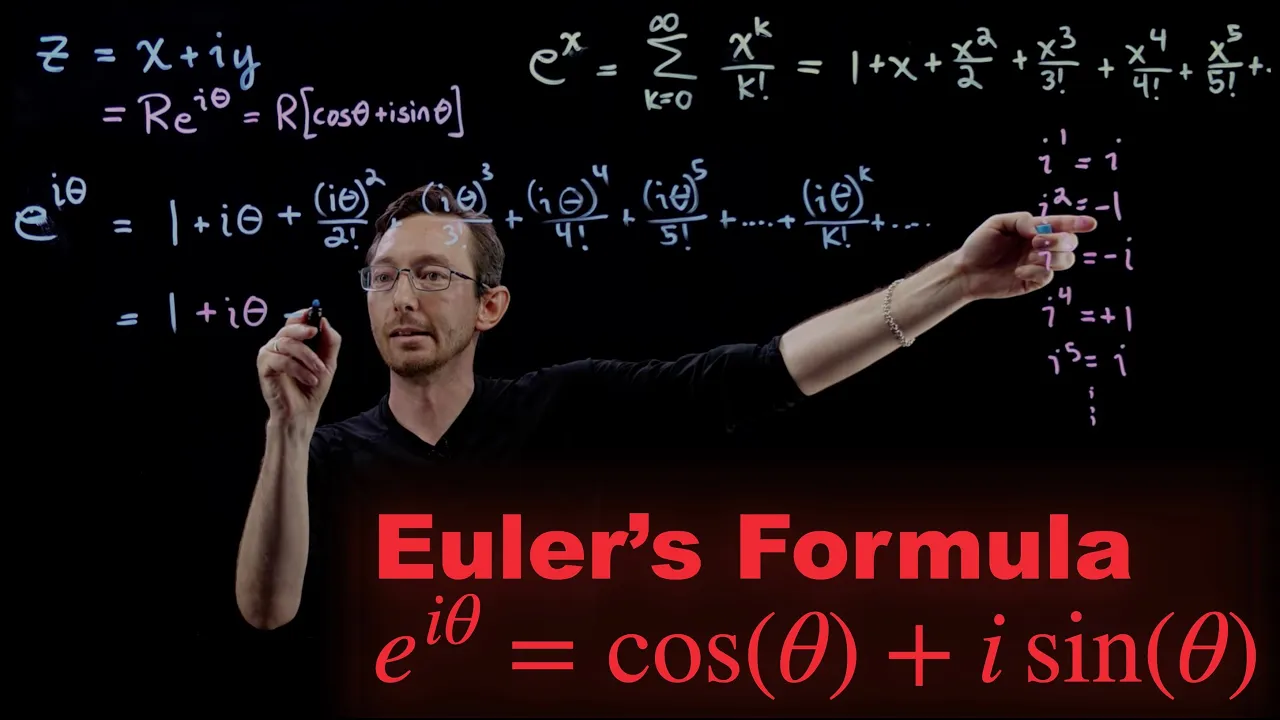
Fundamental notions of infinite series and calculus, particularly Taylor series expansions for exponential and trigonometric functions.
Basic principles of number theory, including prime numbers, divisibility, and modular arithmetic.
Complex Analysis, exploring the broader applications of Euler's formula in complex exponentials and contour integration.
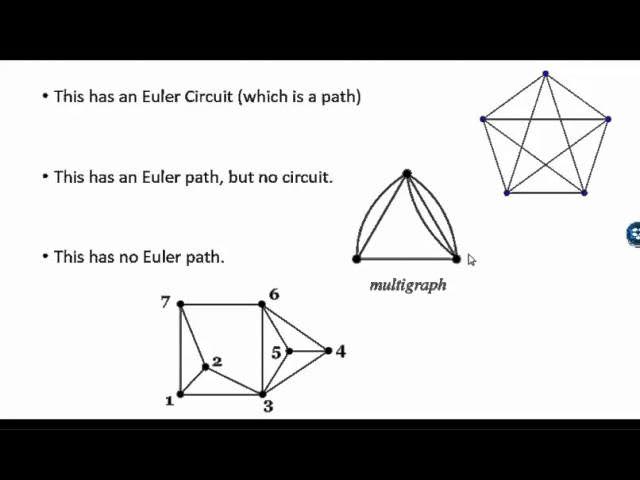
Advanced Graph Theory, including Eulerian paths, Hamiltonian circuits, and topological invariants like Euler's characteristic (V - E + F = 2).
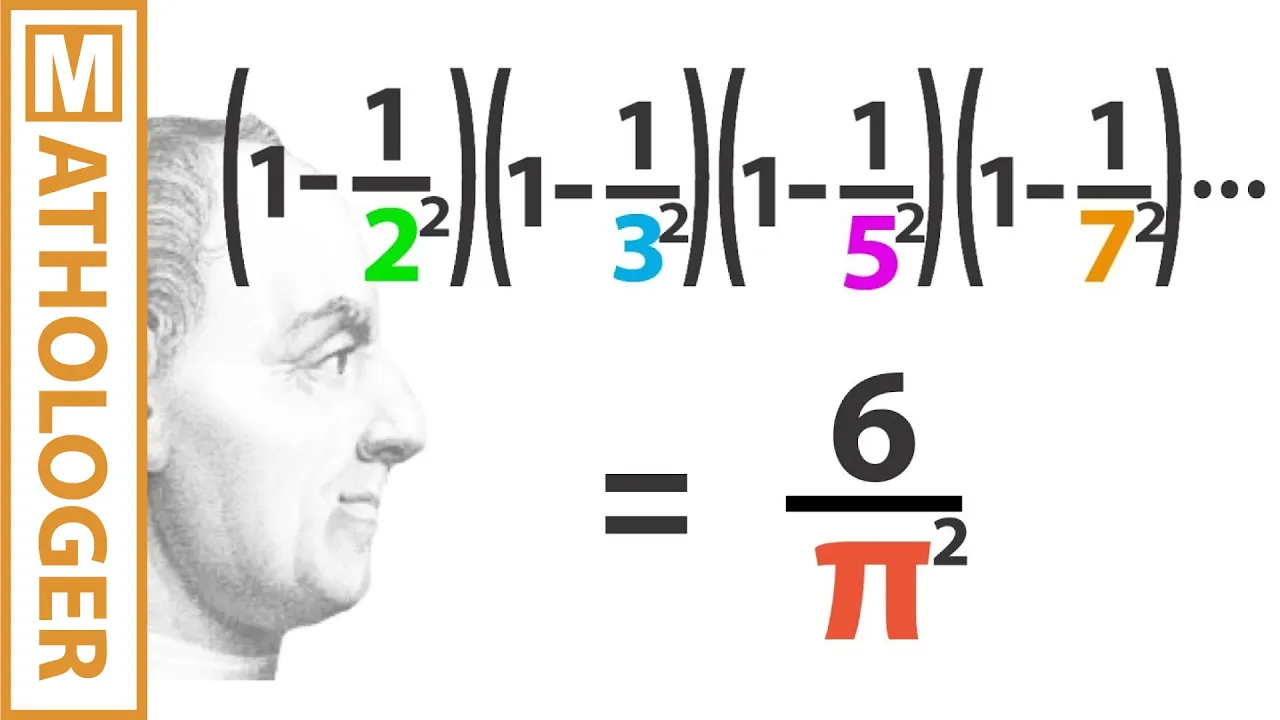
Analytic Number Theory, investigating the Euler product formula and its foundational connection to the Riemann Zeta function.
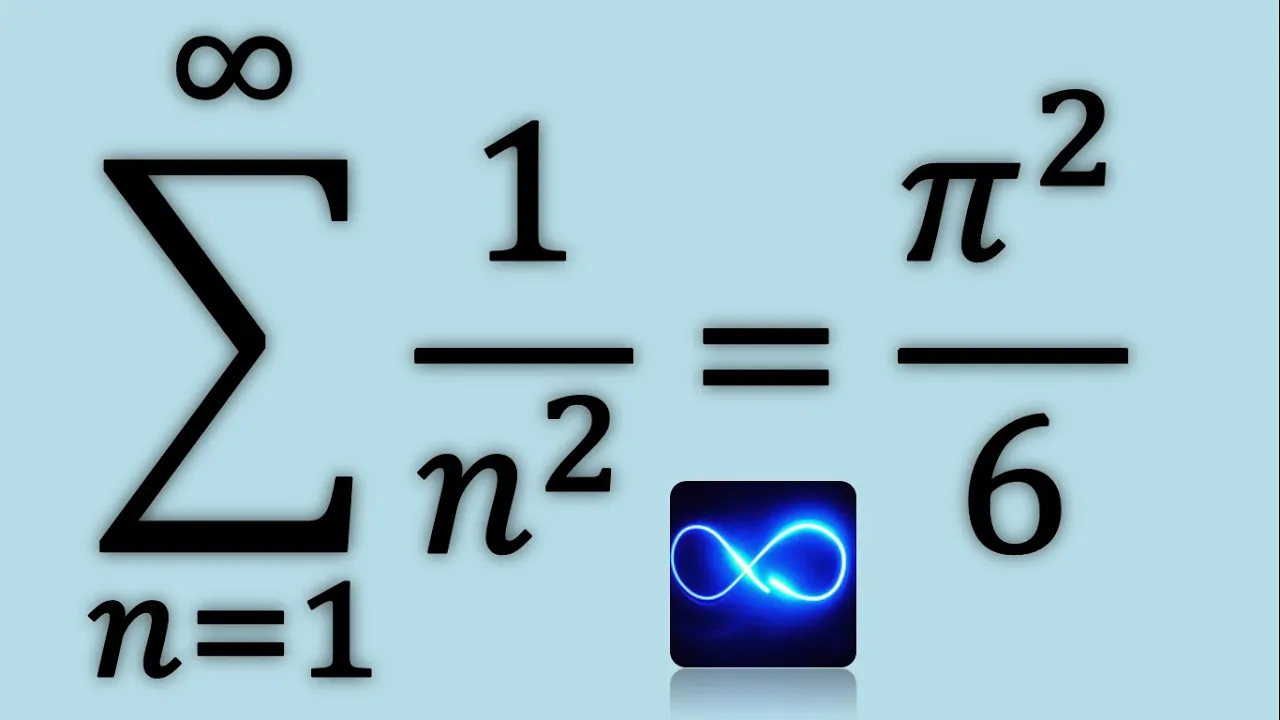
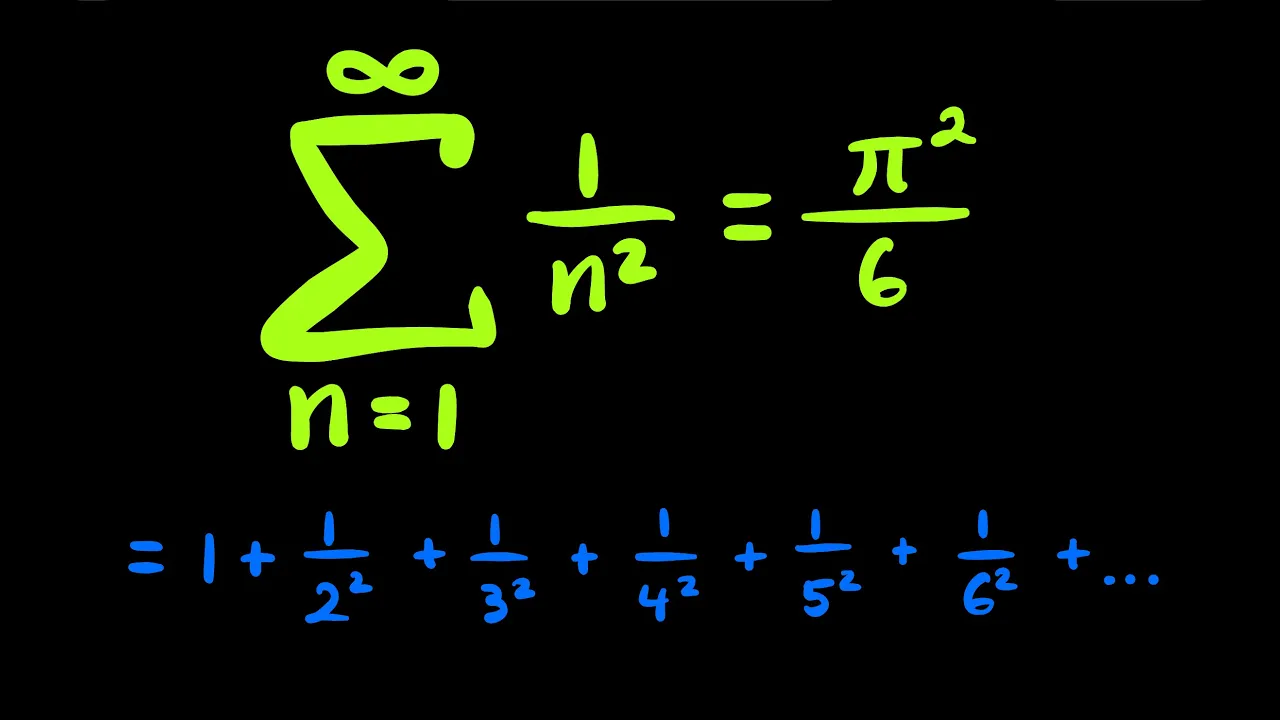
The Basel Problem and its implications, diving into Euler's innovative techniques for summing the reciprocals of squares.
Practical applications of Euler's work in Fourier Analysis, signal processing, and electrical engineering.
350.9K views5.4Klikes55:07Original Release: 2011-11-23
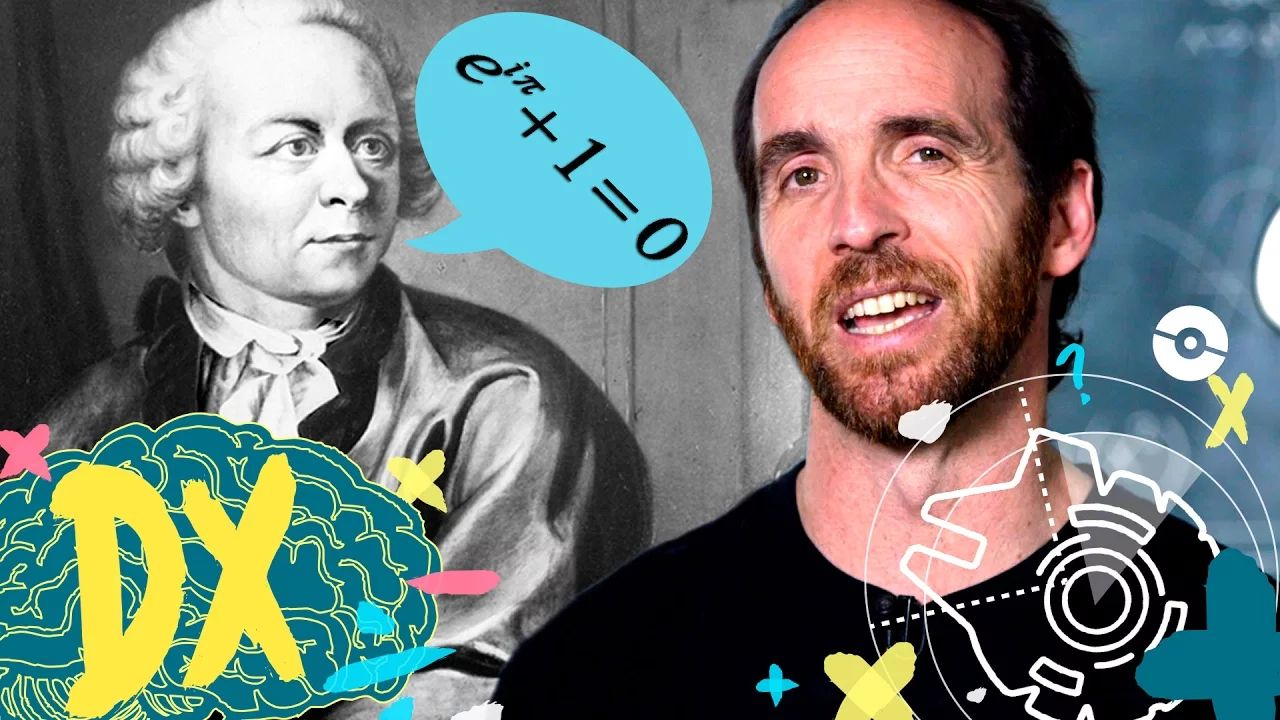
e e so without further Ado I'd like to introduce Bill Dunham who will speak about [Applause] Oiler well thank you Jim pleasure to be here this evening to talk about Oiler my favorite mathematician someone who's on everybody's short list of one of the greatest mathematicians of all time so here he is that is Oiler the official title of this portrait is the hman portrait after the artist who did it the unofficial title is Oiler emerging from the shower you know if if the Portrait Painter were coming over I don't think I'd wear this but that's what he decided to wear um here's what I want to do tonight break this talk into three parts give a a brief biography so you have some dates to hang his life on give a survey a broad survey of half a dozen or so of his great achievements but without the mathematical detail but just to give you a sense of of the breadth and the depth of his legacy and third um I actually want to show you an oian proof with all the mathematical detail involved so we can look over his shoulder and watch him work now and before you get scared the prerequisites to this are just high school math you don't have to be a Harvard graduate student to understand the mathematics but I predict that people are going to leave here impressed with what he could do when he got going so that's the the goal it's a it's a busy agenda let's start with the biography and here it is in a nutshell um Oiler was was born in 1707 in bosil Switzerland last year was his tur and tenery people were celebrating all over the world in 1720 this very bright young lad was off to study with Johan berui a name you might know one of the members of the great beri family bernui was in bosel and Johan would go I mean Oiler would go and study with him bruli gave him Direction gave him guidance gave him mentorship um in 1922 Oiler graduated from the University of bosel and if you get out your calculator you'll see he was 15 at the time um pretty good um in 1727 he's off to St Petersburg to the academy at St Petersburg and remember in those days the great courts of Europe were surrounded by these acmis there was the Royal Society in London the Paris Academy the Berlin Academy and Russia wanted its own so there was this new Academy at St Petersburg and went there to help give luster to the to the court to the Monarch to the nation he stays there until 1741 when he goes to the Berlin Academy which was then being run by Frederick the great and he plopped down there it was like a free agent went to another team stayed there until 1766 when he's back to St Petersburg and stayed in St Petersburg until his death in 1783 Oiler was buried in St St Petersburg subsequently he was buried in Leningrad and today he's buried in St Petersburg so it's amazing um now these dates make him almost the exact contemporary of Benjamin Franklin so if you want to sort of compare him to someone from this side of the ocean think Ben Franklin these are almost exactly the same lifespan um on the personal side uh he was married he and wife cathina had 13 children but unfortunately with the child mortality being what it was in the 18th century only five of these children made it to adolescent so it would have been a great deal of Heartache in the oiler family um he had by all accounts a phenomenal memory Oiler could memorize anything books plays tables you know most people have to look up logarithms but if you can memorize them that makes it a lot quicker and this memory would serve him well when physical uh ailments hit in 1730s he lost Vision in his right eye apparently an infection got loose something we could probably cure with just an antibiotic but it not only cost him his vision it destroyed his eyeball his whole eye was was deformed and so he just had no use of his right eye so he his productivity goes down right wrong doesn't bother him he keeps going and continues until 1771 when he lost Vision in his left eye this was a cataract 1771 they tried eye surgery and you don't even want to think about eye surgery in 1771 it was painful and it failed and so Oiler is essentially blind so his productivity goes down right wrong it goes up he actually gets more productive when he can't see what he would do is he would go into a room that'd be a table of scribes and he would just start spouting his mathematical papers and they'd be writing furiously Oiler could think up mathematics faster than most people can write it if a new paper came in and he wanted to know what was going on with lrange or something that' read it to him he would hear it with this incredible memory he could see it in his Mind's Eye and absorb it very well Oiler thus is the great inspirational story from the history of mathematics he's someone who is confronted with a disability and doesn't let it beat him he is the Beethoven of mathematics you know Beethoven composed music he never heard Oiler was producing mathematics that he couldn't see and if you don't believe me that that he was productive even though he lost his vision let me just indicate that in 1775 he produced over 50 papers and he was blind so Oiler was incredibly productive even with the blindness this idea of producing a lot of papers feeds into the next slide his mathematics is distinguished by its quality and its quantity really distinguished both of these are superior Beyond imagining let me address the quantity first nobody ever did more mathematics than Oiler uh his output was phenomenal they tried to publish it all in 1911 the Swiss Academy of Sciences says we're going to publish Oilers collected works the first volume is this big big heavy book right it's heavy to carry around well in 1911 that came out another volume in 1912 1913 they're still coming they're not done it's 97 years later and Oilers work is still coming out at the moment the work called the opah Omnia has 75 volumes this guy has 74 cousins all of this mass and uh 25,000 pages of mathematics and nobody's quite sure when they're going to finish this I mean it's going to be deep into the 21st century the grandchildren of the original editors of this are old and and it's still coming out so the quantity of his work is breathtaking here here's one other indication of that um after he died there was a there was a backlog you know there were paper still in the chain paper still in his desk it took decades to clear the backlog and after he was dead he published 228 papers now trust me that's more than most living people can publish oer published more mathematics dead than anybody else um so the quantity of his work top-notch but the quality of his work was just as good you know if he had done a lot of stuff and it was just driel it wouldn't we wouldn't be remembering him here tonight the qu the quality of his work is extraordinary and although that's a little harder to measure maybe so what I did was this I went to the online dictionary called math world and I typed in Oiler and then any term in mathematics that carries his name came back as a hit and you know if it's in the dictionary it's really important something that's not just an insignificant little result but something so great that it's got his name on it it's in the dictionary so I typed in Oiler and I got 96 entries 96 things in mathematics are named after him from the oiler line to the oiler identity to the oiler product sum formula most branches of mathematics have something named after him and just for comparison sake gaus 70 Koshi was a 33 and some people farare even less well so you know this guy was incredible he's so incredible he even has his own comic book there's an Oiler comic book that the berkhower put out a graphic novel about his life so how I mean how cool is that right um okay well so that's Oiler now now I want to start showing you some of the things he did that made him famous here's one that really is important the number e 1748 oil and here it is there's the document in which e appears and you see it there in the middle of the page he says um for the sake of brevity we will use the letter e to stand for the number 2.718281828 459 Oiler loved calculating long strings of decimals so there it is uh he says which therefore denotes the base of the natural or hyperbolic logarithm so he knows e is important he knows it's the base of the natural logarithm and you want to calculate it at home there's how you do it down there at the bottom 1 + 1 over 1 plus 1 over 1 * 2 plus 1 over 1 * 2 * 3 uh that converges very fast and you know if you know the series expansion of e to the X and you put in one sure enough that's it so Oiler gave us e if he had done nothing else that would warrant a sentence in the math history books but but he did so much else here's one same year Oilers identity wow hope everyone's seen this e to the ixal cine X plus I sinx a very amazing formula a strange what connection between the exponential function and the trigonometric functions between real numbers and complex numbers all in one fabulous formula um here's how he published it that's from his work um e to the he wasn't using I so he wrote e the plus v * theus1 is equal to cosos period v that's because this was an abbreviation for cosine was so you had to put a period there in those days plus the square root of minus one time the S of a so there it is in 1748 now anytime anybody shows you Oilers identity they do the next thing you kind of have to Math teachers are required you let in which case you get e to the I pi equal cosine pi plus I sin pi s of Pi is 0 cosine Pi is 1 e to the I Pi is 1 bring the one over and you get this amazing equation e to the I Pi + 1 equals 0 Falls right out of Oiler identity now Math teachers at this point will always say the following they will say this is an incredible link among the most important numbers in mathematics if you were going to have a party and you wanted to invite the five most important numbers to your party you know who would you invite we invite zero right the additive identity you'd invite one the multiplicative identity if you want to do calculus you invite e if you want to do geometry you invite Pi if you want to do complex numbers you invite I one zero eiip Pi the dream team of numbers right there and they're all in that one equation it's amazing it's amazing that it's amazing that there is an equation that links them actually and it's amazing that it's such a simple consequence of Oilers identity back in 1988 the journal mathematical Intelligencer did a survey of the world mathematical Community asking people to vote for the most beautiful result in mathematics and you send in your you know your postcard what's the most beautiful result it was American Idol for math formulas um of all the mathematics ever done this one as the most beautiful result ever um and it's from Oiler it's so beautiful that it inspired someone to write a poem which I shall now inflict upon you um somebody wrote e to the I Pi + 1 equals 0 made the mathematician Oiler a hero from real to complex with our brains in great Flex he led us with zest but no fear so okay so that's something else Oiler did how about this oil's polyhedral formula 1752 he tells us that V plus FAL e+ 2 where we're talking about polyedra you know solid figures with polygons as faces like a cube and where V is the number of vertices F the number of faces e the number of edges and this amazing relationship holds um like for my Cube V the number of vertices is eight right Four Corners top and bottom F faces is six think of a dice or D eight and six is 14 number of edges four around the top four around the bottom four vertical 12 plus two Bingo it works but what Oiler realizes is it works not just for Cubes but it works for icosahedron icosahedra do decahedra and a wide wide collection of solid bodies it's this amazing link in that math intelligence or survey of the most beautiful results in history this was number two so Oiler has the top two slots you know AO himself um he himself was a little more circumspect about this he wrote I find it surprising that these General results in solid geometry have not previously been noticed by anyone so far as I am aware you know kind of a surprise something this simple had escaped notice but of course there hadn't been an Oiler before to notice it so that's pretty good uh What else well there's the bosel problem so the year is is 1734 when Oiler solves this great Challenge and here's what it is back in 1689 yakob bruli who was Johan Bern's brother Johan being Oilers Mentor challenged the mathematical Community to find the exact sum whoops gotta go over here of this infinite series and he issued the Challenge from bosel where yakob was so it became known as the Basel problem what's the exact answer what is 1 plus a 4th plus a 9th plus a 16th see what we're doing we're taking the whole numbers squaring them inverting them adding forever infinite series what's it come out to be well yakob couldn't figure it out Johan beri couldn't figure it out Nets couldn't figure it out it was hard nobody could figure it out they knew it converged they knew it converged to something less than two but they wanted the exact answer and the first person to get that exact answer would be famous and that person was Oiler and the answer you know the answer pi^ 2 over 6 that is a strange answer right that is in fact correct and Oiler gave at least four different proofs in his career that it really is pi^ squ over 6 one way to fill up 75 volumes is to keep doing the same thing multiple ways amazing result right in the math intelligen or poll of the most beautiful formulas of all time this was number five so Oiler has top the charts like like the Beatles used to do when I was a kid you know he had one two and five all right what else well the bridges of Kennings BG probably you know this one this was sort of famous um this is a picture from one of Oilers papers showing the town of Kingsburg with the river flowing through dividing around that Island at a and then splitting and going around the land mass at D and you can see the little Bridges connecting various pieces of land now the story is that the good burgers of Kingsburg on Sunday afternoon would take a stroll and the goal was to walk around here and cross each Bridge once and only once what we now call an Oiler Pat but they couldn't every time they tried it they either missed a bridge or they found themselves Crossing a bridge they had already crossed so they're perplexed you know what's going on here and so they ask the mayor I don't know why but the mayor of Kingsburg and he didn't know of course so he wrote to Oiler and he says can you explain this you know is this possible and Oiler proves that it isn't this particular configuration you cannot walk around here and cross each Bridge once and only once and then Oiler shows when you could do it he drew some other neat little pictures with complicated Bridge arrang ments which would work and nowadays we look at this and see this as the first instance of what's now called graph Theory where you have vertices or nodes connected with edges the land masses or the vertices the edges or the bridges and you know a whole subject is getting born here as Oiler approaches this problem um now he himself little more circumspect he said this solution Bears little relationship to mathematics and I do not understand why to expect a mathematician to produce it rather than anyone else for the solution is based on logic alone he saw it as like a puzzle and he didn't think it was math you didn't need integrals or anything now don't tell your graph Theory friends that he said this okay um actually if if he were to come back today and see what has happened to graph Theory I'm sure he would recognize it as mathematics all right anything else well yeah how about geometry plain geometry now you would think that that had all been discovered you know by the time Oiler got here uid had done all his geometry Archimedes and was there anything left to discover about triangles well actually four big fat volumes of Oilers collected works are geometry he discovered lots of stuff and one of the things he does is the oiler line and you may or may not have ever seen this but um if you have a triangle any triangle it could could be isoceles it could be right but it needn't be anything special you can consider the intersection of the altitudes remember the altitudes go from each vertex perpendicular to the opposite side and they all go through a point which is called the orthocenter you can consider the intersection of the medians now the median goes from each vertex to the middle of the opposite side and those are concurrent they all go through a single point called the centroid and you can consider the intersection of the perpendicular bis sectors so if you take each side take the bis sector and drop a perpendicular those meet in the point which is called the circum center it's the center of the inscribed Circle these points were known to the Greeks these aren't special or anything they've been around a long time now I'm going to try to do this with my PowerPoint let's hope this works there's a triangle I want to look at the intersection of the altitudes from each verx perpendicular to the opposite side so there's my altitudes kind of perpendicular and they all maintain that point the orthos center okay so we'll leave that there and get rid of that stuff okay now I want to get the intersection of the medians from each vertex to the middle of the opposite side so we want to do the medians and here they come from the vertex to the middle of the opposite side and they meet in the point yeah get rid of that and then I want the intersection of the perpendicular bis sector so here comes there this we here we go perpendicular bis sectors split each side put up the perpendicular they meet in a point called the circumcenter and what do you see they line up no one had seen that Oiler proves that no matter what the triangle these three points will fall on a line which is now in his honor called the oiler line it was an amazing piece of geometry that had escaped all the great geometers in the past and Oiler shared something else the ratio of those two segments is always 1 to two exactly that the centroid is half as far from the circum Center as it is from the orthos it's a neat piece of geometry in the subsequent Century lots of interest is devoted to plain geometry and I think part of it is because Oiler thought this was important enough and he found interesting things and so you see a Renaissance of geometry in the 19th century okay what else well how about number Theory now Oiler was one of the great number theorists four big fat volumes of number Theory I want to show you something I like this is not the most important thing he did in number Theory you know what number theory is it's the study of whole numbers primes composits that sort of thing this isn't the most important thing he did but it's just kind of neat it's a definition that had been around that said two whole numbers are amicable friendly if each is the sum of the proper whole number devis of the other that needs an example right okay so how about an example how about 220 and 284 if you ever see this this will be the example you see I promise you so what I want to do is look at the proper divisors of 220 by which I mean whole numbers that divide evenly into 220 but aren't 220 that's what the proper means it's less so if you collect them all there they are 1 2 4 5 10 11 20 22 44 55 and 110 that's all the proper divisors the 220 has and you add them up and trust me you get 284 H now you take the proper divisors of 284 all the whole numbers that divide into 284 1 2 471 142 284 does but we don't count that it's my proper add those up and you get 220 each of these is the sum of the proper divisors of the other it's totally useless but but it's intriguing right if you're if you're a number theorist you will be intrigued by this strange reciprocity I have a friend this is the truth when he married the love of his life he gave her a keychain with the Number 220 on it and his has 284 to represent their amicability their their Eternal friendship it's really sweet nerdy but sweet right okay now here comes a brief history of amicable numbers it's a short history the Greeks knew that pair 220 and 284 they knew it somehow and remember the Greeks the Pythagorean philosophy that underlay Greek mathematics sort of exalted the role of whole numbers sort of these metaphysical entities so the Greeks thought this was really spectacular and they sought another pair and they could find no others they couldn't find anymore that's all nobody finds anymore until the nth Century Islamic mathematician Tabit iban Kura who finds a rule that generates two more pairs so there was the Greek pair and he found two more however this rule apparently didn't make it to Europe after the Renaissance so the folks in Europe didn't know that Tabit had been down this path and so they thought there was just one pair and in 1636 the French mathematician FMA finds another pair it's those two 17296 and 18416 the sum of the proper divisors of 17296 is 18,46 and vice versa exercise for the reader you know you can check this guess what that was one of tubit numbers actually FMA had gone down the same path he didn't know it in 17th century France there was a great mathematical rivalry FMA had an opponent decart they hated each other and here is FMA finding a pair so now deart has to find a pair to prove his worth and he goes to work on it and in 1638 he finds that pair know if you if you really loved your wife you'd give her a keychain with that number guess what that's the other one of tobits numbers these three are the loow hanging fruit of amicable numbers and so they deart and font were just going down a previously trotten path so now it's 17 1638 three pairs are known 100 years later three pairs are known that's it these are very hard to come by when Oilers alive only those three were known and so he thought well maybe I should give this some thought and he worked on it and he found 58 in a 1750 paper he finds 58 pairs so the the world Supply went from 3 to 61 with one person now this is what Oiler would do to a problem he'd just blow it out of the water you know he increased the world supply of amicable numbers by a factor of 20 how'd he do it he saw a pattern that no one had seen and it allowed him to just sort of generate these things willy-nilly great Insight um Oiler also did Applied Mathematics in fact more than half of his 75 volumes are in things like mechanics Optics Acoustics I'm not talking about that tonight but let me just show you this cool little picture I found in one of his papers where he's talking about a pump that he is invented um so he did applied math and then while we're looking at pictures how about this every seen those before ven diagram yeah that's a ven ven diagram right we all know the little circles to connect ideas uh no that's not a VIN diagram V lived in the 19th century I took this out of Oilers work in the 18th century not a VIN diagram we should call this an Oiler diagram however if we do this Vin is gone right what else did Vin do that you so you know Oiler doesn't need this you know for for his credibility so I think we'll let Vin keep keep his diagram and then before I get to my proof one more thing I just find this intriguing this is not important particularly but it's a curiosity we back in the 18th century the the issue of factoring polinomial was important and the question was could all polinomial be shattered into first and second degree pieces I'm talking about real pols and real factors so you know if I gave you x to the 4th minus one 4th degree you could break it into x^2 + 1 X2 minus one two quadratics and then further break the x s + one I mean the x square minus one into X plus one xus one no complex numbers here just real numbers so there's a fourth degree that can be broken into real first and second degree pieces the question was is this at least theoretically possible for all real polinomial if you know the fundamental theorem of algebra you can see that's what this is in its real Incarnation but people didn't know the answer it was up in the air if it if it's true such a decomposition is possible you had to supply proof but it's if it's false you just need one counter example that can't be factored and guess what Nicholas bruli who was Yan's son and yacob's nephew wrote to Oiler and said I found a fourth degree that cannot be factored so that answers the question this fourth degree polinomial x 4 - 4x CU + 2x2 + 4x + 4 is irreducible it cannot be factored down case closed well wait a minute now Nicholas bruli couldn't Factor it but that doesn't mean it can't be factored Oilers saw how to do it he broke it into two quadratics this one and this one okay now two issues here first of all that can't be right right look at this these quadratics with square roots embedded within square roots are you telling me those two things multiply together to give that simple looking fourth degree on the top with just integer coefficients well I confess that one rainy afternoon I multiplied these back together and all the square roots cancel it really works so the one fact that's amazing is this is right this is true the factorization problem from hell right second question how did he do it you know is this finally proof that Oiler is from the planet kbane you know that he's not human well no because when he tells you how he did it you see it oh yeah I see that was very clever I could have thought of that you know you say but Oiler was Oiler so so there you go all right well now we we've done our little survey we got time to do a proof an oil arean proof um I think if I don't show you an actual proof with the detail I'm kind of cheating you you know I could stand up here and tell you van go was a great painter but at some point you want to see a picture right I tell you Oiler was a great mathematician but at some point I got to show you Oiler in action and so here comes the issue at hand is the partitioning of numbers partitioning and let me first of all introduce a little bit of notation here D of n is the number of ways of writing n as the sum of distinct whole numbers D of n is how many ways to split in into the sum of distinct whole numbers well we need an example right every time you get one of these definitions you want to see an example so how about five let's take a look at five so the question is how many ways can I split five up into different size pieces one of them I'll just take five all by itself we'll call that a decomposition sort of the unitary decomposition how about four and one that's five and they're different how about three and two that's five and they're different any more well you could do two and three but hey that's the same as three and two we won't count that you could say 6 + -1 is 5 but you don't want negatives here these all have to be whole numbers so we can't count that one and a half and three and a half is five and they're different but they're not whole numbers I think that's it okay so how many ways can you write five as the sum of distinct pieces I think that's where we were three three ways to do it five four and one three and two so we're going to say d of five is three the number of decompos positions into distinct pieces two I'm sorry two no it doesn't have to be two distinct Pieces Just distinct pieces okay so there's that now let o of n be the number of ways of writing n is the sum of not necessarily distinct odd pieces so the same issue decompose but this time the pieces all have to be odd even if they're repeated all right well let's try that example five I could write five as five all by itself there's one way I could do now these all have to be odd how about three and one and one that's five and they're all odd now I repeated the one but that's okay for this game and one more what else one one one one one yeah and that's all so how many ways to do this D of five is three there's three ways to do it excuse me o five the stre another example I think we need another example actually since the screen went out here so let's let's try eight all right so first issue distinct summands break it up into distinct pieces eight well there's eight all by itself seven and one that's eight and they're different six and two Bingo five and three Bingo four and four no because they're not distinct they're diff they're the same so I can't do that but I could do five and two and one those are all different that adds up to eight and I can do four and three and one those are all different that adds up up to eight and that's it so 1 2 3 4 5 six ways to break eight up so D of eight is six okay let's do o of eight let's break it into odd pieces eight how about seven and one odd pieces how about five and three yeah that's eight they're odd how about five and three ones yeah let's see what else two threes and two ones that's eight 1 three and five ones yep and eight ones so there's all the decompositions of eight in the odd pieces how many 1 2 3 4 five six H H so what we know is that D of five and O of five were both three they were the same D of eight and O of eight were both six those are the same you know is there something going on here well in 1740 Philip a French mathematician wrote to Oiler and asked him about partitioning about breaking numbers up like this and within days Oiler has sent back a proof that D of n is always o of n for all n and he apologized for the delay caused by the bad eyesight I have been suffering and so this was a turnaround almost instantaneous turnaround given the mail in the 18th century you know that was that's kind of instantaneous so I want to show you his proof I don't know if you know this the number of ways of writing a whole number in terms of distinct sum ends is always the same as the number of writing it in terms of odd sum ends and Oiler proves this for all integers at once it's one proof fits all so let me show you the proof so here's the theorem for all whole numbers n d of n equals o of n now his proof is built in three little pieces so we just have to get through these three pieces and we see it first piece he says I'm going to introduce that P of x = 1 + x * 1 + x^2 * 1 + x Cub 1 plus X4 1 plus x 5 an infinite product of binomials why is he doing this hang on but this is what he wants to do okay so that's P of X now what do you do with this he says let's multiply it out but there's infinitely many terms that's all right he never bothered him so we're going to multiply this out now you know how multiplying works with binomials each binomial contributes one of the two terms to the product what's the constant term going to be here if I multiply this out one right each term there'll be a one time a one times a one so we're going to start with a one how about X's how many X's can come out of this well look that first term has an X in it and it can hit all the other ones and there's no other source of a one of an X so you're just going to get an x x s X squ can hit all the other ones and you'll just get one X squ this is looking kind of boring here but things get a little richer now for X Cub there's two ways to do that the X cubed in the third term can hit all the other ones or I can get the X SAR times the X to give me a second X cub and I'm going to write it this way just to see where these are coming from the X cubed plus the other guy is coming from the x squ * the X X to 4th you're going to get two of those those the X 4th all by itself and the X Cub time the X and one more X the 5th three of those the X to the five all by itself the four and one the three and two look at those exponents seen them before five four and one 3 and two those are exactly the decompositions of five into distinct pieces there were three such decompositions there's three EX to the fifths and you can see where they're coming from and you see why they have to be distinct cuz look at P there it has all different powers in the different terms you never get a repetition so by thinking through this Oiler realized that P of x if we want to write it out as a series is one out front plus the sum as n goes from one to infinity and how many x to the ends are there going to be D of n precisely as many as there are ways of writing n as the sum of distinct pieces so like how many X to the E are they going to be here it's going to be six x to the8 and they're going to correspond to the six decompositions of eight in the distinct sum so there's the first Formula first part of the three that's P of X okay now I'm going to remove this but it'll be back in a minute but it's going the next piece requires one little prerequisite so this is the the one thing I'm not going to prove but I hope you all remember this the sum of an infinite geometric series 1 plus a plus a s plus a cub if this goes on as an infinite series the sum is 1 over one minus a and I hope people remember that and there are conditions here to worry about but he didn't worry about if if you don't like this if you want to know where this is coming from do long division on the right you'll get the series or a better yet cross multiply and you'll see it works so I'm going to need this infinite geometric series formula in fact I'll put it up here at the top and now second part of the proof we introduce Q of x to be that 1 1 - x * 1 1 - x Cub * 1 1 - X5 and so why hang on now what Oiler says to do with this this is a bunch of reciprocals with the odd Powers he wants to write them without denominators so you see that first guy 1 over 1 - x if I use the geometric series formula I can write that as a series you know usually we go the other way with that top formula we have the series and we want the sum but there's no reason why we couldn't start with the sum and turn it back into a series so 1 over 1 - x I just let a be X and I get 1 + x plus X2 + x Cub the next term also fits the pattern 1 over 1 - x Cub you let the a be X cubed and you'll get 1 + x Cub + x cub2 + x Cub cubed so there it is 1 plus X cubed X6 X9 the next Guy 1 over 1 - x 5 let a be X the 5th and you'll get 5 10 15 20 as the exponents so that's what Q is okay one more thing I want to do with this um instead of writing that as that X I'm going to write x to the 1st instead of the X squ I'm going to write 1 + 1 instead of X Cub 1 + 1+ 1 I'm going to break these up into equal pieces and the second guy three 3 + 3 3 plus 3 plus 3 5 5 plus five Etc so if I do that then Q will come out to be remember the first one was 1 x x^2 x Cub I just put it the ones in the next one 5 10 or or 3 69 12 becomes 3 3 + 3 3+ 3 + 3 5 5 plus 5 so that's what Q is okay now I have infinitely many infinite Series this time this is worse than P but multiply it out so we're going to multiply it out all right so here it goes multiply what's the constant term one every piece will contribute a one we'll start with a one how about X's the only X I'm ever going to get out of this is when that x to the 1 hits all the other ones there's no other source of an X so you'll just get an x to the 1 x squs well that x to the one + one can hit all the other ones but there's no other way to get an X squar so that's how we start but there's more than one way to get an X cubed the X to the three in the second term can hit all the other ones or there's an x to the 1 + 1 + 1 that can hit all the other ones so there comes two x cubes and I'll show you where they come from by writing the exponents in that form x to the 4th I think there's two of those there's a 3 + one and there's a one and one and one and one and one more x to the 5ifth where is this coming from well there's going to be an x to the five an x to the 3 + 1 + 1 and an x to the 1 plus 1 plus 1 plus 1 plus 1 look at those exponents 5 3+ 1 plus 1 1 plus what are those those are the decompositions of five into odd sum ANS these have to be odd because look at the Top Line everything up there was odd you're putting together odd pieces they might repeat but they're odd every such decomposition will give me another x to the 5ifth everything that came out here on X to the 5ifth was built out of odd sus how many x to the eights are there going to be in this six based on the six decompositions of eight in the odd sum ANS and so what Oiler has realized is that Q of X which is where this started is 1 plus the sum n goes from 1 to infinity and how many x to the ends you're going to get o of n the number of ways of breaking n into odd pieces so there is the second part of the proof okay so now third and final part and and let me just review here we'll take a breath okay P of X was 1 + x * 1 + x^2 * 1 plus X Cub then he saw that that was 1 plus the sum of the D of NX to the n q ofx was this different Thing 1 over 1- x * 1 over 1 - x Cub 1 over 1 - x 5 and he showed that that was 1 plus the sum of the O of n x the N now it's been so long since we started this theorem I forget what we're trying to prove we're trying to prove that D of n is always equal to O of N and what Oilers said was if p and Q were the same we which they're not but if they were the same then when you wrote out the series all the coefficients would have to be the same D of one would be o of One D of two would be o of two these would have to match up perfectly and you'd be done your proof would be over if only p and Q were the same which they're not so let me write that up there to prove that D of n equals o of n for all n we need only show that P equals Q everybody see how that would do it if p and Q are the same the series are the same the coefficients are the same we can go home but they're different they're different or are they uhuh Oiler says they're the same they're the same and if I can show you that proofs over so why are these the same they look different to me here's what Oiler says remember P of X it was 1 plus x * 1 + x^2 * 1 plus X Cub Etc and there they are and I sort of moved them part I need a little Elbow Room here that goes on forever uh turn this into a fraction Tada okay in the numerator I'm going to multiply by a one minus X well if I do that in the numerator I must do the same in the denominator so there still still P of X I haven't changed anything I could cancel those back out up there on the top I'm going to put a 1 - x^2 down below 1 - x^2 to keep it equal up on top 1 - x Cub down below 1 - x Cub 1 - X4 so on so on so on so you do this forever all those could be canceled it's still P all right now look at the first two terms in the numerator 1 + x * 1 - x what's that 1 - x^2 the first two terms up there whoops here we go 1 + x * 1 - x take out 1 - X2 the next two 1 + x^2 * 1 - x^2 that's 1 - x 4 they take that 1 plus X Cub 1 - x Cub takes the 1 - x 6 away you go what's left in the numerator one what's left in the denominator all the odd ones and so what you get is 1 over 1 + 1 - x * 1 - x CU * 1 - x f and that's q p and Q are the same and hence D of n equals o of n for all n q e d pretty good I think um I I I will pass your applause to Professor Oiler who deserves it and he does all this in a few days and his eyes are hurting you know this is where the whole theory of partitioning of numbers starts right here and it's now a vast branch of mathematics with really great work going on it started right there so I will leave you with two quotations which I think are fitting um one is from the mathematician Fus and he looked at things like this and he said Oiler lacked only one thing to make him a perfect genius he failed to be incomprehensible and one of the things I like as I read through Oiler is that you can really understand what he's doing it's not so complicated and he's a very good Expositor he tries to make it clear and he is never incomprehensible the other quotation I don't have a source for but I like it I think it's fitting somebody said that talent talent is doing easily what others find difficult genius is doing easily what others find impossible and I think by that definition Oiler is is a genius he could do the seemingly impossible and he did it throughout his long and illustrious life certainly a good reason for us to give a tribute to him and I'll leave by with a shout out way to go Uncle L her thank you [Applause] well Bill that was a really fine talk I think we can probably take just a couple of questions before doing so I'd like to express my thanks to Harvard University for allowing us to host this talk here so maybe a couple of questions for Bill and then we'll be out of here yes question is what was Oilers influence on the calculus he wrote a gigantic text on calculus his differential calculus book was this big and his integral calculus book was three volumes so you know if you think your Calculus book is Big today you know you should have seen Oilers calculus for this the sort of firste calculus yes we we sort of model our textbooks on his except they're not that big but he never did the Epsilon Delta stuff the analysis that you hit Beyond calculus that sort of limit-based calculus limits weren't around when Oiler was working he worked with infinitely small quantities in a kind of philosophical metaphysical world that we now either don't like or we put it over in non-standard analysis but the the Epsilon Delta stuff that you know if you've taken analysis comes with Koshi in the 19th century so in that sense his calculus book isn't a modern one but uh the basic topics are pretty much accurate oh that's okay you can go out now yes you learn don't show you how they they just show yes right the big you get the question does Oiler Supply a lot of detail about his thought processes and the answer is yes the two models are Oiler versus galus Oiler will write and tell you what he's thinking I tried this it didn't work he'll tell you oh then I tried this well that didn't work either and then I tried this and wow it worked and you really can see him thinking now he could do this because at the St Petersburg Academy and the Berlin Academy he had the right to publish anything he want wanted without an editor so he could just be as expansive as he wanted and nobody was going to cut so that doesn't work anymore the other side of the coin is gaus gaus would take out everything all the intermediate thought and just leave the the basic beautiful structures but which makes makes gaus much harder to figure out you know he doesn't help you along um people criticize gaus they said gaus was like the fox that walked through the stand and dragged his tail behind him to erase the footprints you know you didn't you didn't see how he did it you didn't see how he passed this way gaus responded he says yes but the architect of the great Cathedral doesn't leave the scaffolding up you take that down and you just leave the the gem of the idea so if you want to see somebody that helps you understand Oiler is your guy and that's we should all be grateful for that I think yes I was reading today about a book on Einstein and all mistakes that he made which we don't hear about very often I'm wondering if made any big mistakes that need to corrected later he made mistakes yes he had conjectures that turned out not to be true he he he offered a proof of the fundamental theorem of algebra that thing about breaking all real polinomial in the first and second degree pieces that was flawed and GS caught the error so he was human um he didn't make too many though I mean in 25,000 Pages everybody can have a couple you know um but he was pretty good and very often when he was working on what we would almost call intuition you know he he didn't have the rigorous foundations that we have yet he got it right time and again and you know you get this sense that he he sort of knew more than he was letting on as to as to how fabulous was his Insight you one more question yes yes Russian German princess yes no they weren't poetry yes his most popular work the one that has sold the most copies is called letters to a German princess and what these are are essays on Popular Science not so much math but supposedly he was teaching this young girl about the world so you know why does the sun rise in the east and set in the west why is the sky blue and he'd write these little letters you know that went to her supposedly but in fact they got published and uh in German and French Russian and all and there there's an English translation of that and they're considered very high quality Popular Science and you know not every great genius can write Popular Science with equal success and in fact Oiler could do that so so you can go find that in the library if you want it's it's neat stuff let's thank B again
Up Next

28:56
Enumerators for Permutations: Examples & Exponential Generating Functions
@BellMathEdu
711 views•2022-07-22

4:43
Elliptic Curve Cryptography Explained: ECC, ECDSA, ECDH
@PracticalNetworking
28.5K views•2024-10-21
10:44
Fourier Series Introduction: The Big Idea Explained
@DrTrefor
387K views•2021-05-03
6:00
The Mathematical Impossibility of Accurate World Maps
@Vox
23.3M views•2016-12-02
Related Study Plans & Knowledge Roadmaps
Structured learning paths in Mathematics
mathematics
Tensor Calculus: Vectors to Riemann Curvature
01Mathematical Foundations: Linear Algebra & Calculus
02Covectors, Dual Spaces, and Tensor Basics
03The Metric Tensor and Index Gymnastics
+ 2 more learning modules
40h5 modules
Explore Roadmap
mathematics
Gödel's Incompleteness: Logic, Proofs & Limits
01Introduction to Formal Systems & Hilbert's Dream
02Set Theory, Cardinality, and Cantor's Diagonal Argument
03Arithmetization and Gödel Numbering
+ 2 more learning modules
14h5 modules
Explore Roadmap
mathematics
Galois Theory: Fields, Groups & Solvability
01Foundations of Abstract Algebra: Groups & Fields
02Polynomials & Field Extensions
03Splitting Fields & Symmetries
+ 2 more learning modules
24h5 modules
Explore Roadmap
mathematics
Non-Euclidean Geometry: Models & Geodesics
01Euclid's Fifth Postulate and the Birth of New Geometries
02Hyperbolic Space and the Poincaré Disk Model
03Geodesics: Defining Straight Lines in Curved Spaces
+ 2 more learning modules
15h5 modules
Explore Roadmap