













The cross ratio is a mathematical quantity that remains invariant under projective transformations, making it essential for measuring distances in photographs despite perspective distortions; it is calculated as (AC × BD) / (BC × AD) for four collinear points and allows us to determine unknown distances by comparing measurements from different viewpoints.
The Cross Ratio: Geometry of Roberto Carlos' Free Kick
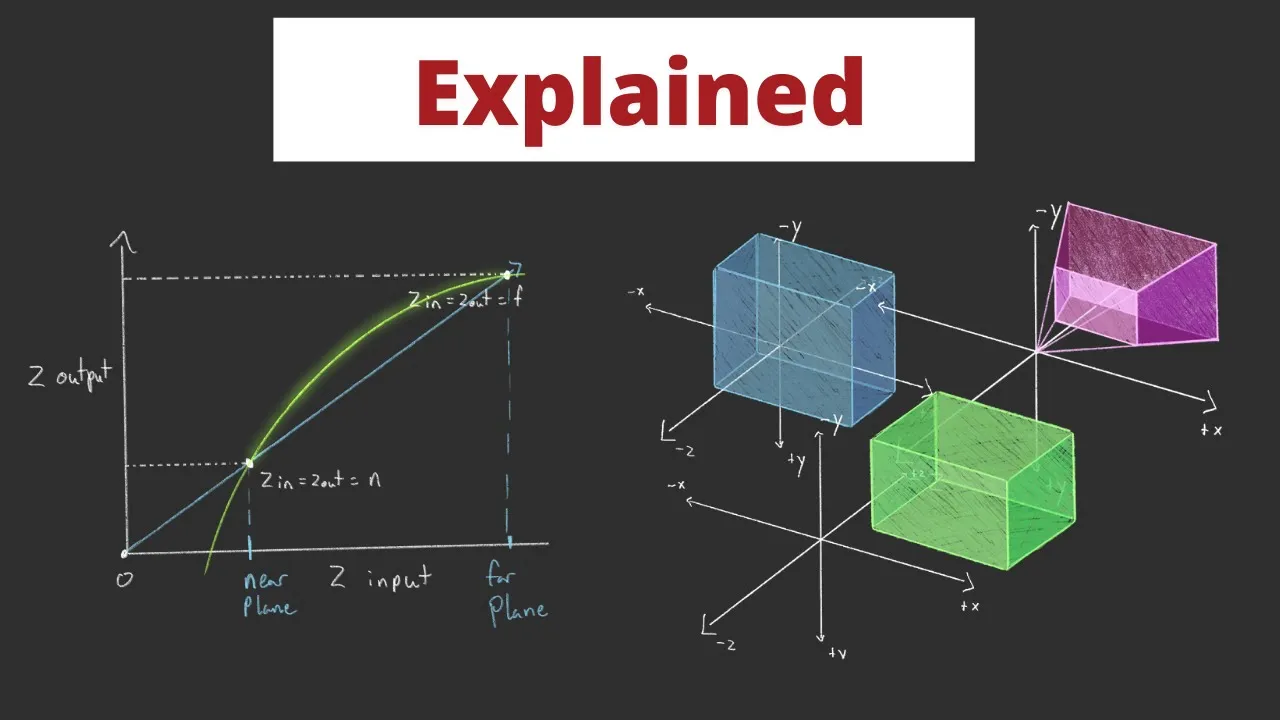
Added:Fundamentals of Projective Geometry: Understanding vanishing points, horizon lines, and how 3D space is projected onto a 2D plane.
Euclidean vs. Non-Euclidean Geometry: Distinguishing how properties like distance and angles change under projection, unlike in standard Euclidean space.
Basic Ratio of Division: Knowing how to calculate the ratio in which a point divides a line segment on a 1D real line.
Collinearity: The geometric concept of points lying on a single straight line, which is preserved under projective transformations.
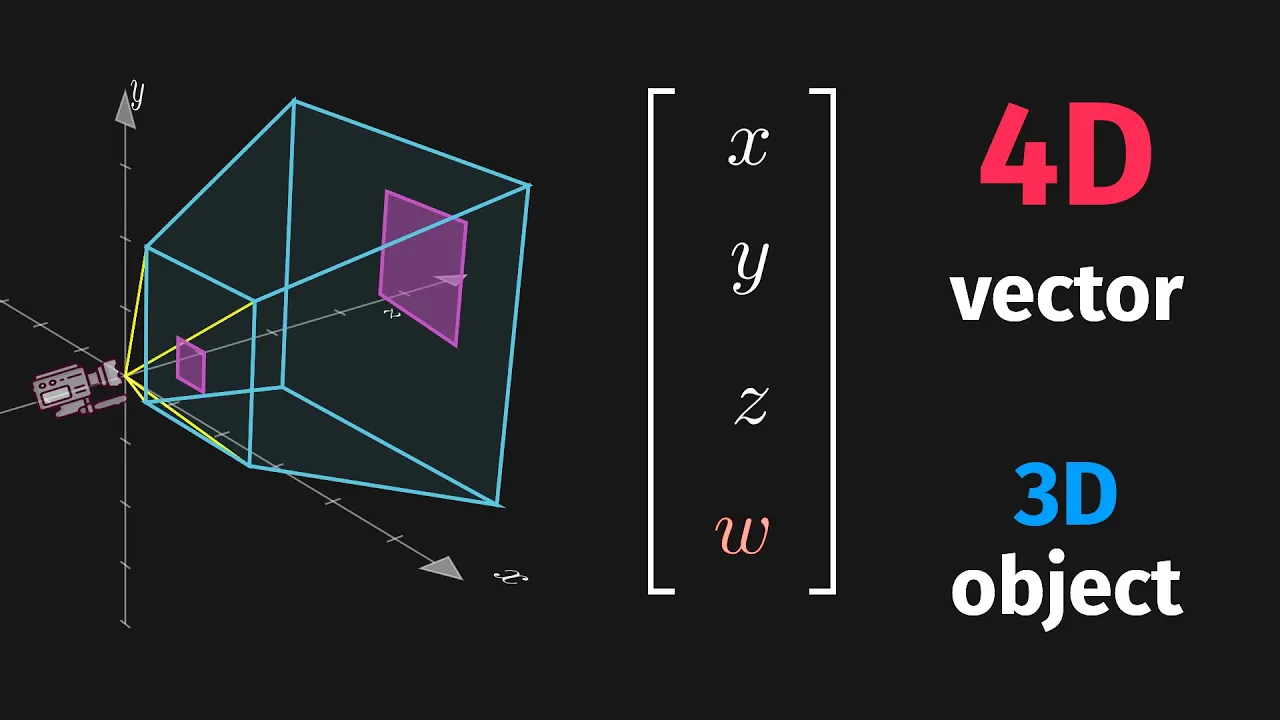
Homogeneous Coordinates: Representing points in projective space algebraically, including points at infinity, using n+1 dimensions.
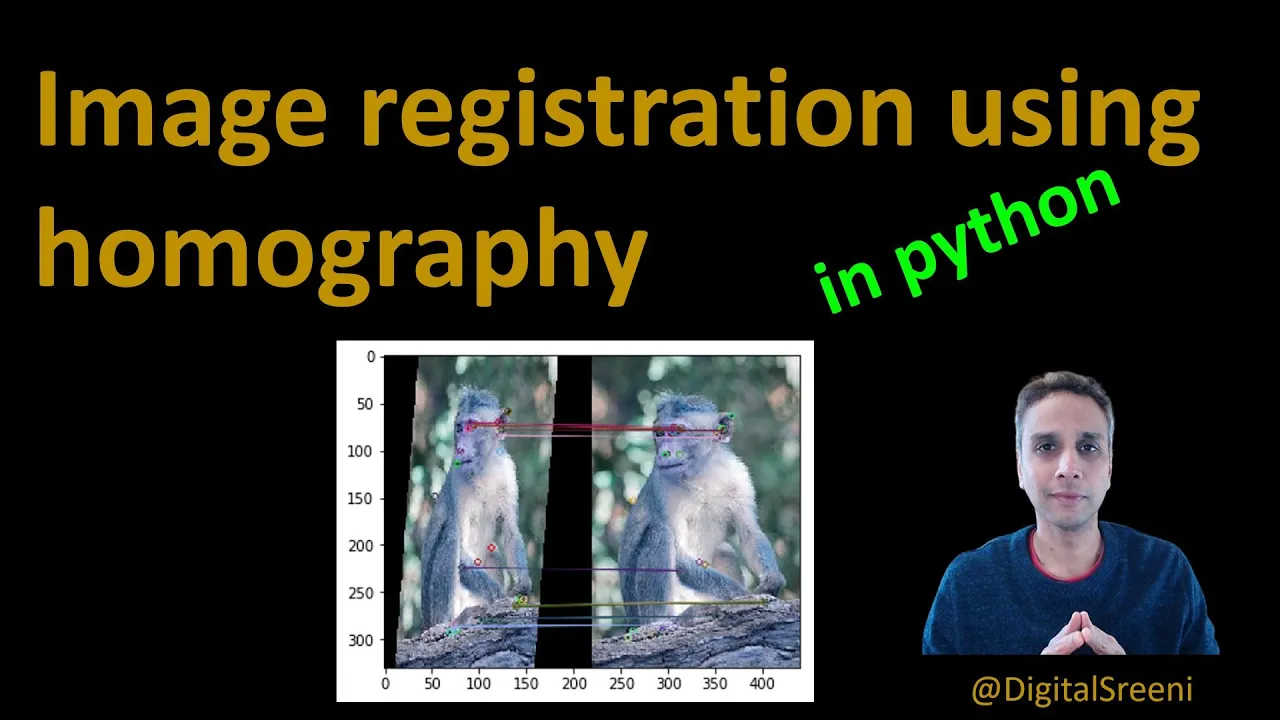
Computer Vision and Homography: Exploring how algorithms use the cross ratio and projective transformations to rectify tilted camera angles and stitch panoramas.
Photogrammetry: The practice of extracting reliable 3D measurements and physical distances from 2D photographs and video footage.
Projective Theorems: Studying advanced geometric principles such as Desargues' Theorem, Pappus's Hexagon Theorem, and the concept of duality.
313.4K views9.5Klikes16:19Original Release: 2018-07-06
I've been thinking about the World Cup a lot, Brady, and then I was reminded of this really incredible goal that just turned a little bit over 20 years old.
And it was a goal that Roberto Carlos from the Brazil national team scored on France in preparation for the World Cup 20 years ago. One of the most incredible goals in history.
It was a free-kick that didn't seem like it was very dangerous, you know, he needs to take a shot from really really far away and he had this incredible ability with free kicks.
It went like it was just going way out of bounds and then it curled at the last moment and, and went inside.
Players can usually do this with the inside of the foot, but to do it with the outside of the foot and have it curl that much, is something that I had never seen and I don't think anybody else had before.
(Brady: I do it quite a bit.) - Yeah?
We're gonna have to see on the pitch later.
I was looking at old footage and there were all these articles celebrating the goal and, and I was noticing a discrepancy. These articles didn't agree on how far he was from the goal.
So some articles talked about how he was 35 meters away, others talked about how he was 35 yards away; that's not the same thing. And then it got me thinking: how do we figure out how, you know, nowadays we watch these games and they automatically tell us how far the ball is, but, but how do we figure that out?
And I found that it's a lot harder than I thought, and so I wanted to talk to you about about how we can do this and, and looking at this still of the, of the photograph of Roberto Carlos' goal I want us to just look at this and figure out how far he was.
So, this is Roberto Carlos, then the end goal is a little bit hard to see but is right here so, so the goalkeeper Fabien Barthez is standing in front of it.
This right here is the edge of the penalty box, and then this one is is sometimes called the goal box, or the goal area.
The point is that we basically want to figure out okay, you know, here, here are these three lines, and here's the ball, and with that information how do we determine how far the ball is from the end line?
Maybe I will try to draw a picture of the, of the box. You can't do this and not put the penalty kick dot over there, although we can't use it because you see it's not in the photo, so, we're not gonna be able to use it as a point of reference. Having drawn the dot where the penalty kick is taken there's also a little arc right here that is actually a circle centred here. It's an arc of a circle centred right there.
(Brady: I never knew that there was a circle centred on the penalty spot!) - It's pretty cool, no?
And the idea is that when you take the penalty kick you're supposed to be 9,15 away from the, from where the penalty kick is taken and so the players cannot stand inside that circle, so that they're that far away from it.
Right, so here we see we see a little part of that arc, which some people call the D and well we'll see if we need it.
Roberto Carlos is out here somewhere, and we're trying to figure out exactly where he is - at least how far he is. And so the distance that we're trying to figure out is basically from here to the end line. And here there's some things that are worth pointing out: one thing that I find fascinating about soccer fields is that they're not all the same size, but the boxes are always the same size. And I hope you'll forgive me that I'm going to do it in metric system, because that's, those are the numbers that I'm used to.
So in Spanish we call the little box la cinco con cincuenta because this is 5 meters and a half. And sometimes in Spanish we call this one la dieciséis con cincuenta.
La dieciséis con cincuenta because that's how, that's how long it is; 16 metres and a half.
What we want to do is somehow figure out how to go from from this picture to this picture, and right away we see an obstacle, which is that the, the wall is in the way. And so we actually don't know how to draw this green line because the wall is blocking where - you know the reference points. And so the only thing that we're able to do is draw a diagonal line, it's as if we were gonna kick the ball and we actually need to avoid the wall and draw a diagonal that will go from where the ball is sitting to, I don't know, somewhere.
Precisely the issue is that, because this is a photograph that distorts angles, when we have a right angle here that's not a right angle in the picture. And so we actually don't really know exactly where the 90 degree- Here's one thing that that we might try to do, we might try to say, okay, since we have to draw a skew line over here, then we should probably draw it over here also.
So let me draw it over here. And I think that the first thing that I would try to do is I might say okay, well if this distance right here, 16 and and half, and then this distance right here is what I'm trying to find, let's call it x. Of course if I know x then the distance from, the from the end line will be x plus sixteen point five.
Then I think one thing that might be worth doing is seeing how these distances transfer to the red line.
So if I draw this line right here, and this line right here, it feels like they should be related.
Actually one, one thing that is true, is that sixteen point five divided by x is equal to this distance divided by this distance.
I think it's worth actually drawing a little picture here to keep that in mind, because that's going to be important. Parallel lines, like this one and this one, they're parallel.
And if we draw two lines that cross them, like this one, and this one, then if I measure this distance, let's say I call it a and this distance is b. And if I measure these two this is a-prime and this distance b-prime. And as long as these lines are parallel, so I'm going to draw this here to signify that these lines are parallel, then I'm going to get that a over b is equal to a-prime over b-prime. And so it feels like if I want to find x and this, then then I might be able to relate it over here.
And the good thing is that these distances I can try to measure in this picture. So I'm going to try to do that.
I'm going to try, say okay, well, let's mark this point right here. And I can actually measure these things, so let me go ahead and do that. This is about seven point three long, seven point three centimetres.
And this is about 4.5 centimetres. So then you might think that sixteen point five divided by x, since it's equal to this distance divided by this distance, you might think that that should be equal to four point five divided by seven point three and then you could use that equation to solve x. Except it doesn't. And, and why doesn't it make sense?
Because there's a change in perspective, because here in in this picture I'm looking at the field from on top, whereas here I'm looking at it from the front. And when I do that, if I look at it this way, it's, it's like when you when you walk in a room that has a square grid of tiles. And the ones that are closer to you look bigger than the ones that are farther than from you, even though they're the same size. And so we have the same issue here that this part over here actually looks bigger than it really is. And so what we need to figure out is how does a change of perspective change measurements? And, and this is an interesting thing because this is a very very classical problem in geometry, and was first developed when artists and geometers were trying to figure out how to draw in perspective. And, and it's a little piece of geometry that has been somewhat forgotten, actually. I think we should talk about it.
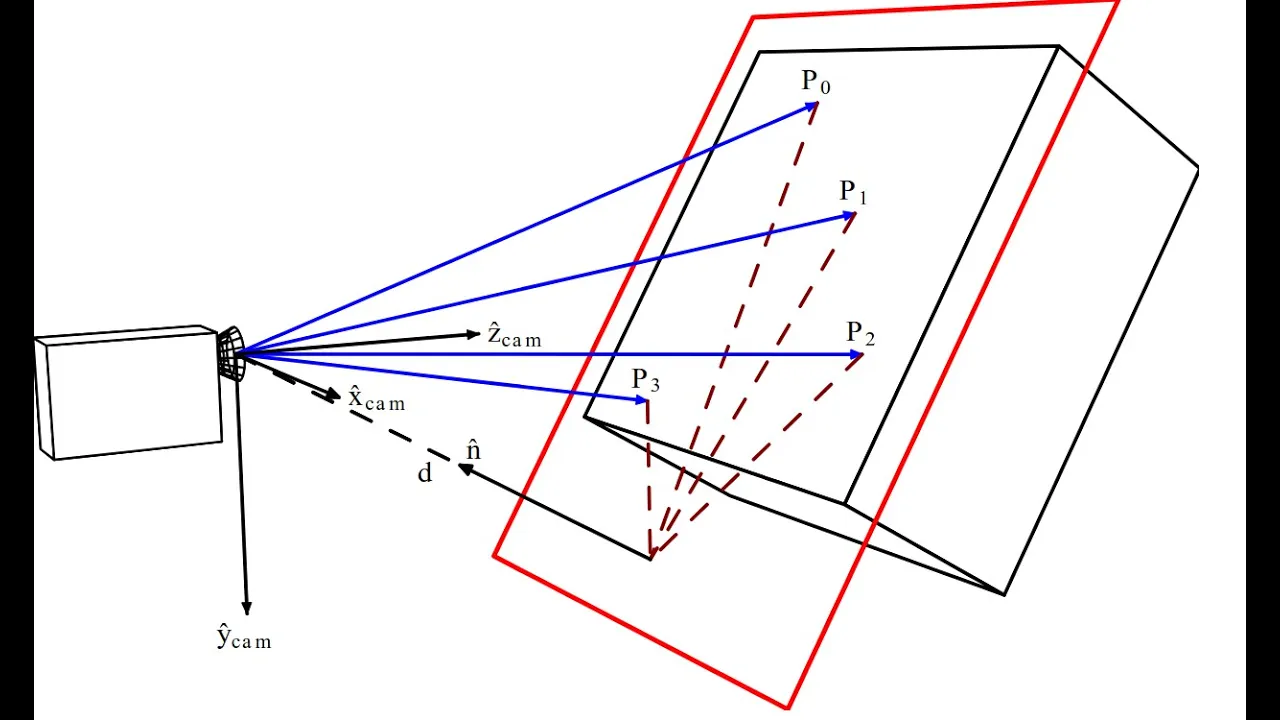
We have a green line and a red line. And then the question is, if I'm standing right here how do, how do the distances in the green line transfer to distances on the red line?
So if I try to draw a picture like the one that I drew back here, except now the lines are not parallel, they meet at a point.
Then the question is how does this distance and this distance relate to this distance and this distance? And the trouble is they don't. There's, there's no relationship between them.
No matter what two distances you choose here, you can choose that a place to put these lines so that you can get any other two distances here, there's no relation between these two numbers and these two numbers.
And what the classical geometers figured out is that you actually need an additional line. So we're going to introduce an additional line; I made it very close. What they figured out is that, now if you look at this number over here, so if I call this distance a, this distance b, and this distance c. And I call this little distance a, and this distance b, and this distance c; then the question is how are these related?
It turns out that the answer is this beautifully mysterious thing, where if you take four points like these four points, and maybe I'll call this, these points a, b, c and d.
Then there's something called the cross ratio. What you do is that you compute the distance ac, you compute the distance bd, you multiply them and then you divide by the distance bc and the distance ad. I think this is a totally weird thing to do. That's the cross ratio. Why do we do this? Because it turns out that this is the quantity that is preserved by a change of perspective.
So if I compute this quantity on my red points, I'm going to get the same answer as if I compute that quantity on my green one. You can imagine, for example, one way of thinking about this is that if I look at this picture, you might think that, you know, this is a projector and this is a wall. And so if you're trying to project the movie, and you angle the projector differently, then you're distorting the picture in the wall.
And as you know some things become bigger, some things become smaller, and the question is what doesn't change? And it turns out that the one thing that doesn't change is it's a cross ratio.
It's, it's a very strange thing.
But that's the thing that is going to allow us to compute Roberto Carlos' goal because this is just a change of perspective between the angle of the camera and, and the angle from the, from the sky. And so we can just compute the cross ratio in these two pictures and get; that it should be fixed and we'll figure out the distance. One thing you might notice; we don't have enough information now. Because to compute the cross ratio we need four points.
And here, when we were looking at these lines at the green line that we're trying to compute, we only had - we were only paying attention to where Roberto Carlos is and this point and this point. We're missing a fourth point. Okay? Now luckily the soccer field have the cinco con cincuenta box, the goal box, and so we're going to use this point right here. This sixteen point five metres splits up into 5.5 here, or six yards, and 11 here. And so now what I'm going to do is take, instead of these four green points, I can take this one, this one, this ne, and this one. And then because of this property right here, these ratios; the red ratios are the same as the green ratios.
And so one thing that I can do is just say that the, the scaling from here to here is a constant C. And that means that if this is five point five, then this distance right here is five point five times C, this one.
If this is eleven then this distance is 11 times C.
And if this is x then this is x times C.
And so we're going to be computing the cross ratio over here, which means that we should come and measure it over here in our photo of the Roberto Carlos goal.
So now I'm going to consider this point right here, so that I can have four points to compute my cross ratio.
And so now this distance over here was four point five, and so now we should figure out how much is this? And how much is this?
Now I can make a wrong guess. The wrong guess is that, you know, in the real picture this is twice this.
And so I might guess, oh, then this would be twice this, it should be three and one point five.
But we talked about how in this picture these distances are - look longer, they're closer to you, so I think when I measure this I should get that this should be bigger than two times this. There's our distortion there.
So let's take out the ruler and measure it, one point three, and so as I just discussed, this should be more than twice this. And so now we can compute the the cross ratio for these four points, and for these four points, and I should get the same answer.
So why don't we go ahead and do that. This formula tells me that I should take this distance, which is four point five, then I should take bd which is this distance, three point two plus seven point three, that's about ten point five. And divide by the small distance in the middle, which is three point two, times the big distance which is eleven point eight.
So this is the cross ratio in the photo. One point two five one, let's do maybe to three digits.
And so that's what I can measure, that's in the photo. That's the measure cross ratio.
Now, what is the real cross ratio? Let's compute it over here. So first I'm supposed to take the distance from here to here, right? Now that's 5.5C plus 11C. So that's going to be 16.5C.
Now I'm supposed to compute this distance, 11 C plus xC. So I'll factor out the C, and I'll get 11 plus x times C. And now I'm supposed to divide this by the small distance in the middle, which is 11C, and this big distance which is 16.5 C plus xC and again I'll factor out the C. Now one lovely thing that happens here is that all the C's cancel out. Like this cancels out with this.
This cancels out with this. And so we just get something in terms of x. This is the measured cross ratio, this is the real cross ratio, and then the magic here is that these two numbers are actually equal to each other.
So this is equal to this.
181.5 plus 16.5x is equal to 181.5 plus 11x times 1.251.
So that's equal to...times 1.251 equals so that's the value of x. - (Brady: All right.) - All right? - (So that's how far he is, from the box?)
So that's how far he is from the box, exactly. So x is equal to approximately 16.63, which if you look at it, it's actually pretty much the size of the box, right?
So the the box is 16.5 and he's16.6 away, so he's basically two boxes away from the goal line. And then if we add this, so that's it. That's how you do this.
(Brady: Not bad, good goal!)
It's pretty cool, no? I really thought this was a lot easier. I actually had to, I mean I'll tell you how this happened, I was teaching a gym- a class in geometry.
And it came time to do projected - to teach projective geometry. And I learned about the cross ratio in that class, that I was teaching for the first time, and I thought wow, this sounds actually really powerful. I've come to love the cross ratio, I think it's, I think it's a beautiful thing.
And I think there's this really interesting quote by Robin Hartshorne who is one of the world's foremost geometers and in his textbook when he's talking about the cross ratio he says: "I must say frankly that I cannot visualise a cross ratio geometrically. If you like it, is magic. You might say it is a triumph of algebra to invent this quantity that turns out to be so valuable and could not be imagined geometrically. Or if you were a geometer at heart, you may say that it is an invention of the devil and hate it your whole life."
So dramatic, no? I really like it and I think it tells the story of how in mathematics you don't get to choose what field you work on. I mean, you know, you think you're doing geometry all of a sudden this very algebraic quantity comes in, and we're actually relying on this pretty deep algebraic fact that, at least, I had no geometric intuition for and I think that's really beautiful.
(Brady: The funny thing is he went for a shot and not a cross!) - Yeah, that's right.
Hi everyone, as usual we'd like to really thank our Patreon supporters, whose names you're seeing on the screen at the moment.
These people get special access to our Patreon feed, plus some of them get special traits such as, well: original brown papers from the videos; original postcards written here at this desk. Other weird bits and pieces like Numberphile dice and Parker Square notepads. Plus we have a very special treat coming later this month, but more about that in the next few weeks.
[Preview]...totally true, but that's not fun.
I mean, the whole point of this is to buy stickers and trade it with other people and so on. And so I think we should go for a little bit of a more realistic scenario.
Up Next

159:46
Cartesian Coordinates for Geometry: Christmas AMO Problem Walkthrough
@vEnhance
981 views•2021-04-24

8:17
JEE Maths | Circles: Pole & Polar Explained with Equations
@TargetPublications
14.4K views•2019-02-23

14:06
Surreal Numbers: The Genesis of Conway's Number System
@numberphile
556.5K views•2016-06-27
6:00
The Mathematical Impossibility of Accurate World Maps
@Vox
23.3M views•2016-12-02
Related Study Plans & Knowledge Roadmaps
Structured learning paths in Mathematics
mathematics
Projective Geometry: Coordinates & Conics
01From Euclidean to Projective Space
02Homogeneous Coordinates
03Duality and Projective Transformations
+ 2 more learning modules
14h5 modules
Explore Roadmap
mathematics
Tensor Calculus: Vectors to Riemann Curvature
01Mathematical Foundations: Linear Algebra & Calculus
02Covectors, Dual Spaces, and Tensor Basics
03The Metric Tensor and Index Gymnastics
+ 2 more learning modules
40h5 modules
Explore Roadmap
mathematics
Gödel's Incompleteness: Logic, Proofs & Limits
01Introduction to Formal Systems & Hilbert's Dream
02Set Theory, Cardinality, and Cantor's Diagonal Argument
03Arithmetization and Gödel Numbering
+ 2 more learning modules
14h5 modules
Explore Roadmap
mathematics
Galois Theory: Fields, Groups & Solvability
01Foundations of Abstract Algebra: Groups & Fields
02Polynomials & Field Extensions
03Splitting Fields & Symmetries
+ 2 more learning modules
24h5 modules
Explore Roadmap