













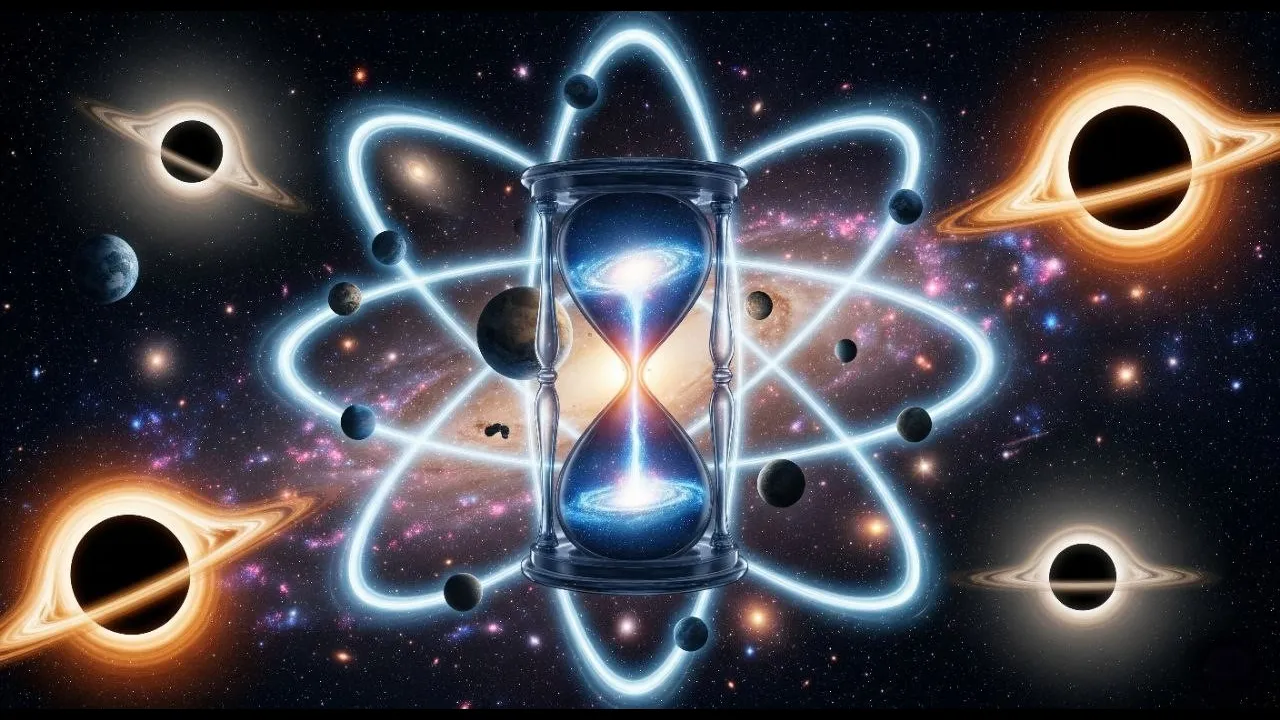







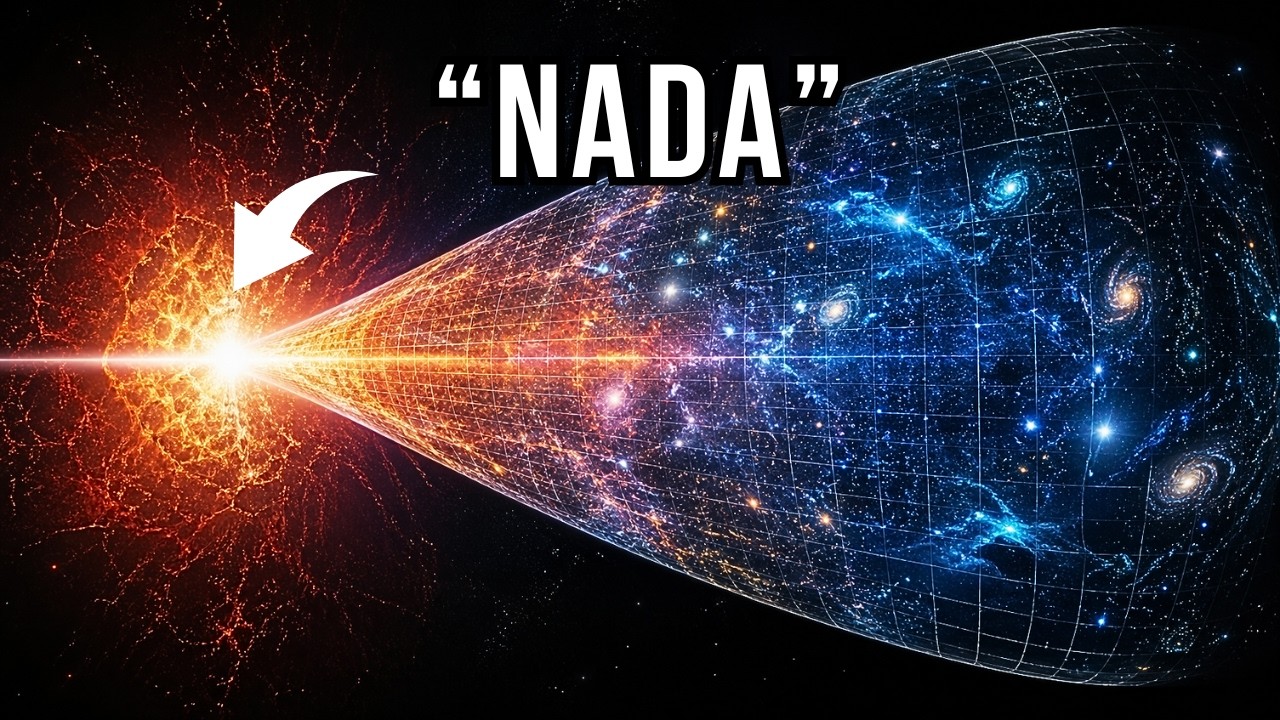


Time is not merely a human construct but an ontological dimension of reality that exists independently of our perception, as demonstrated by Einstein's relativity showing time bends due to gravity and that there is no universal present; major philosophical theories include Presentism (only the present exists), Eternalism (past, present, and future all exist as a four-dimensional block universe), Growing Block Theory (only past and present exist), A-Theory (time flows dynamically), B-Theory (time is static), Relational Theory (time is a measure of change), and the Arrow of Time (entropy gives time direction), each offering different explanations for time's nature and implications for free will and existence.
The Metaphysics of Time: Philosophical Theories Explained
Added:Basic principles of Metaphysics, specifically ontology (the study of nature, being, and what exists).
Einstein's Special Theory of Relativity, particularly the concept of spacetime and the relativity of simultaneity.
The Second Law of Thermodynamics and the concept of entropy as it relates to physical systems.
The philosophical distinction between subjective experience (phenomenology) and objective physical reality.
The 'Problem of Time' in Quantum Gravity and how modern physics attempts to reconcile general relativity with quantum mechanics.
The 'Growing Block' theory of time as an alternative metaphysical model to presentism and eternalism.
Philosophical implications of the Block Universe (eternalism) on the concepts of free will, determinism, and fatalism.
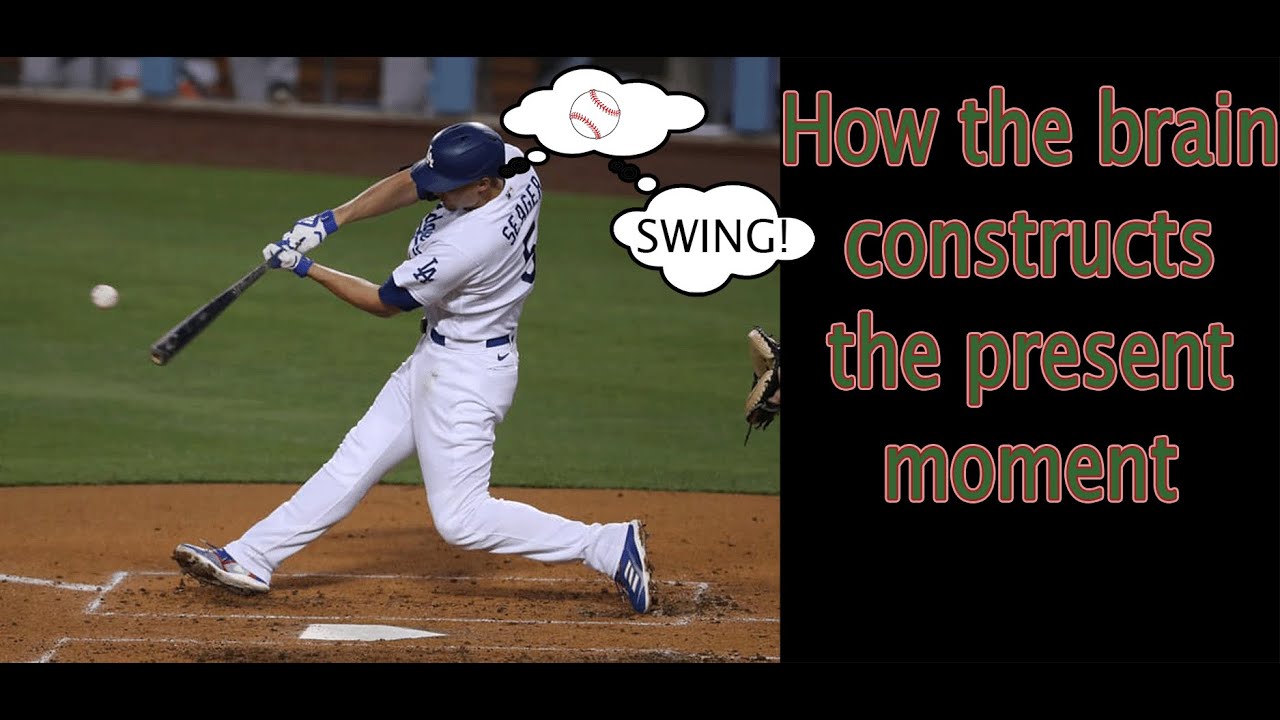
The cognitive science and psychology of temporal perception—how the human brain constructs the experience of the 'present' moment.
The Cosmological Arrow of Time and its relation to the Big Bang and the ultimate fate of the universe.
167 views5likes14:36Original Release: 2025-12-07
Hello and welcome back the metaphysics of time. Today we're discussing time and time theories. What is time? A force? A force that takes you from a moment A and B. But but this is actually a circular definition. When you say time is a moment, you're actually presuming time again. When you as if you're saying time is time that takes you from time A to time B. Is it the bent of uh spacetime?
We still say time in there and u this is rather pretty complicated. The fourth dimension a dimensional phenomena that bends due to gravity. Is it the rate of entropy? It's hard to define without being too complex. But does it really exist ontologically or we have just made it up to make our lives more organized?
Is it just a pragmatic humanmade construct or is it actually a force that exercises its effects just like gravity?
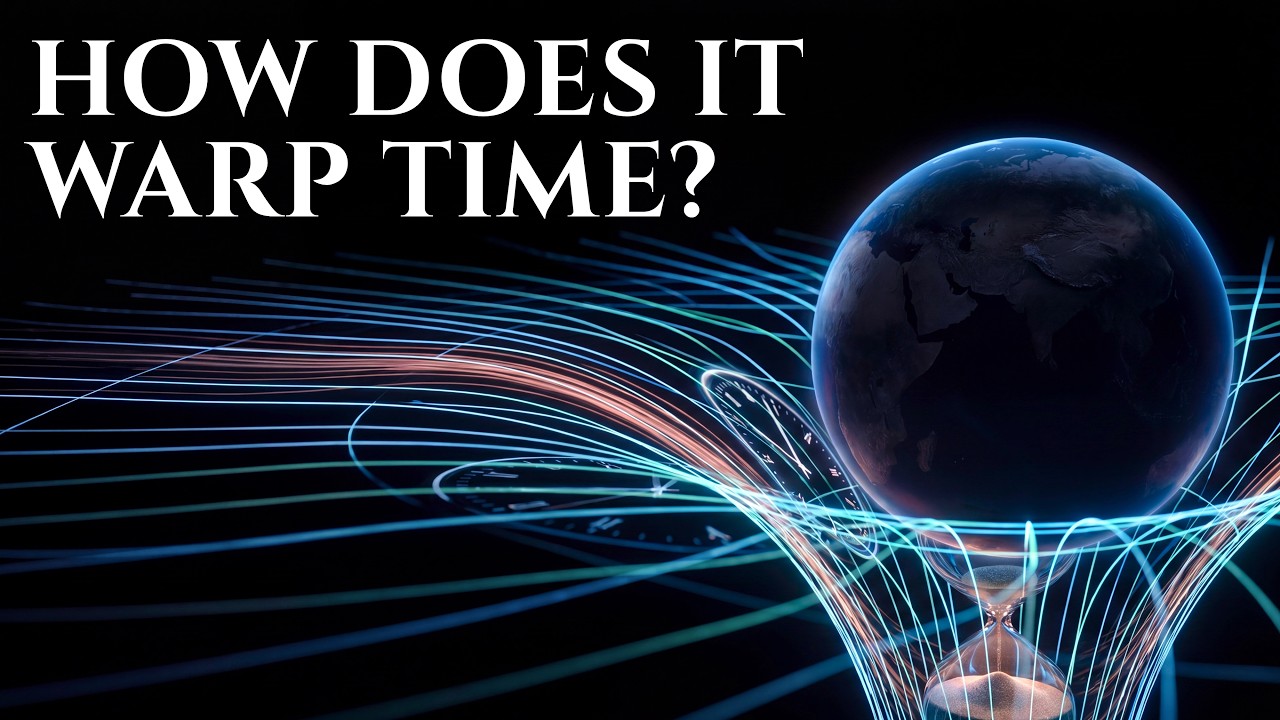
It's hard to define time without sounding very complex. Some people say it's a humanmade and time does not really exist. But we have various experiments that actually prove that time exists ontologically that it is actually a force that influences entropy and motion. The satellites that orbit the earth need to continually keep adjusting their clocks because since they are orbiting the earth they are very far away from the center of the planet. Therefore the gravity that's being executed by the planet becomes weaker and since gravity becomes weaker and in correspondence to Einstein's general relativity time gets faster. The more the gravity the slower the time. Satellites orbiting the earth do not have the same gravity as us on the ground. Their clocks keep ticking slightly faster and after days and days the change becomes very noticeable. So I think there are a lot of other experiments that prove that time exists ontologically but I think this one is enough that it demonstrate that there is actually a force that is subject to change due to gravity. But anyway, let's start right away with the first time theory. Presentism.
Presentism argues that neither the past nor the future actually exists, but only a continuing present. Reality is simply constant and it keeps updating. There is only a now. I would agree that this would be the case phenomenologically. I mean the experience is all what we have and we always in a state of experience of the present moment. I mean yesterday I was experiencing the now whatever point in time in the past I wouldn't be able I wasn't experiencing anything but the present and in the future I wouldn't be experiencing anything but the present. So in terms of the phenomenal experience, all what we have actually is the now. But if we're going to take the theory in a literal sense and saying that the past doesn't really exist, I think the fossil record would show the opposite. Carbon dating explicitly shows that the age of a certain fossil may date back to millions of years. seems that the path exists and it's definitely not contingent on our minds that it existed independently of our personal phenomena. Plus, in Einstein's special relativity and general relativity, there is actually no universal present state.
There is no universal. Now, let's have a thought experiment, a very famous one.
Let's have for example an astronaut that is in the event horizon of a massive black hole. Let's say he doesn't get spaghettified and stays alive. Since he is in the event horizon of a massive black hole, the gravity in there would be massive. The gravity would be so great in comparison to observers that are very far away. Let's say they are in a ship. Okay. Since the gravity exercised on that astronaut is huge, time bends and becomes slower relatively to his own perspective. But for the others, it's not the same time. So his now is not there now. In their perspective, time ticks faster and all they can see is an astronaut who is not moving at all. But a matter of fact, the astronaut is moving quite freely. It might be even waving to them, but they can't see it because time for them is relatively faster. But for the astronaut perspective, a minute in there could equal years in some other place with weaker gravitational pull. So there is no universal. Now in special relativity, the higher you approach, the more you approach uh the speed of light, the slower you are relatively the slower the time relatively to a stationary object.
Second theory, eternalism. This time theory I actually personally subscribe to because my idea of determinism. But since it's a whole other different subject, we'll we'll let it next episode. But anyway, eternalism argues that the present, the past, the future, they all exist ontologically. This leads to to the idea that the universe is a four-dimensional block of time and our experience inside of it is subjective and relative due to the strength of the gravitational pole of the object that we are near to. And of course, eternalism would challenge the idea of free will. If the future ontologically exist and whatever I'm doing right now in the present moment does not affect the future, do I really have free will? I'll let this whole topic to the next episode and let's stick to the theories for now.
There is another challenge that time seems to be flowing. If the past, present and future onlogically exist, why do we feel that time is actually flowing? Even though this is a subjective phenomenological experience, it is still true. But eternalism argues that this four-dimensional universe block universe of time is like a movie or a book that you have a spotlight which is by the way called the spotlight theory that since the future exists and the present exists and the past you are like this spotlight theory that the whole movie exists. Okay. And you are just in this part of the movie. This is where the spotlight is in. Just like in a book, you are in the half of a book.
You are in the middle of the book. Okay?
And you are progressing. All right? So the rest of the book onlogically exist and the rest of the movie onlogically exist, but the spotlight or your phenomenological experience didn't reach it yet. This doesn't mean that it doesn't exist. This doesn't mean that the future does not wait for you.
It is in there ontologically existing waiting for you. Just like the rest of a movie, just like the rest of a book, it is just that this you you as a spotlight still did not reach there. Number three, growing block theory of time. This idea argues that only the past and present exist because the past we have basically evidence that we have lived it and the present is what we are and what we are living right now.
The future does not exist yet. It keeps on coming. It keeps on uh sweeping into this block time and keeps on growing.
Okay? It keeps on growing because the future simply becomes the present and the block simply keeps on growing because of the past and the present and the future keeps on coming and becomes the present and becomes the past. I think this theory would imply free will being that the past is real because we uh know it. Uh the present is what we have right now but the future remains open and unknown. Number four, A theory of time versus B theory of time. If A theory of time is dynamic, B theory of time is static. A theory of time stresses the flow of time, arguing that the present is objective and it keeps on moving. And this is true phenomenologically. The experience of the here and now is all what we have as individuals. You would notice that a theory of time goes hand inhand with the theory of presentism. But actually B theory of time is static rather than dynamic like a theory. It subscribes to the idea of a block four-dimensional spaceime and the idea of eternalism. For B theory of time, time is static and relative. Time simply is always relative to a perspective later than, before, after, at the same time simultaneously.
There is no flow. We are experiencing things that are already there. We are experiencing the flow phenomenologically. Yes. But it doesn't mean that time itself is flowing. The universe being a four-dimensional spaceime, the future exists and waiting for us and we are as a subjective experience. We are simply still not there. Just like the the movie analogy I have given. Number five, relational theory of time. This idea says that time does not exist independently but it's actually a measure of change and relation between events. It says that without change time has no meaning. I personally would say if time did not exist there would be no change. I think that entropy would not be. You would leave an apple on a desk and it would never rot. But hey, even the motion or the action of me putting an apple on a desk is still a state of change. But you get the idea. So I think even motion wouldn't be credible without time. Some argue that time feels real even if nothing changes. And I would say that even your feeling is a change from a state from a psychological state to another psychological state. We can perceive you can phenomenologically perceive that there is a mental state of change. So if we already have this change, it means that time exists because if simply time wouldn't didn't exist, all things would be in a static state, not dynamic as we perceive them. Time is rather a description, not a prescription. We have empirically proved it to be the case. We have proven that time is a dimension of the universe.
It's not something that we use to pragmatically organize our working and studying lives. And this is what the absolute theory of time says that time is not contingent but rather necessary and independent and interwoven into the fabric of reality. If space is a dimension, time is also a dimension. I personally think that without time we wouldn't age. Without time I even think that we wouldn't be able to move. It seems that the dimension of time is a mediator to motion and change between a state and another state. Number seven, the arrow of time theory described by thermodynamic and the increase of entropy in the as the second law of thermodynamics that time seems to have a direction and that this direction is described by the increase of entropy.
Isolated systems definitely seem to keep increasing entropy. So this theory actually is concerned with the the direction of time and explaining it with thermodynamics but it doesn't actually explain its existence or its essence. This is the difference between defining something using its function or its essence. This is the difference between functionalism and essentialism. When I say for example that the phone is a device that has a camera, records you uh has the ability to connect you with internet and such. I'm not actually defining the phone but rather defining what it does not what it is. So this type of definitions tend to be pragmatic that we define things as what they do because at the end of the day we have created them to suit a purpose. But if for example my phone stops working I would definitely still consider it a phone but only because I have a memory that it had the function of a phone in the past. But let's say for example that I have lost this memory that it had served [snorts] me in the past or for example I just see I just encounter a phone in the ground that doesn't appear to be working but I still consider it as to be a phone only because it looks like a phone. So the shape actually makes you have this definition. But anyway let's stop right here. This would lead us to mological nihilism. Another big topic until another episode. Number eight, psychological experiential time. This leads to how conscious beings perceive time phenomenologically. But this idea says that time is actually contingent and not necessary. But we have proven that time is actually a description, not a prescription. Time is literally a force dimension that bends due to gravity. Not just because we are conscious of the change of of events or the events that would be described as being later or after or simultaneous.
Time is literal and necessary not contingent on a phenomenological experience. Anyway, I think we have reached the end of this episode. I wish I done a good job in summarizing those theories and explaining them. Please point out if I have done any mistake or anything. Thanks again for watching and see you in another
Up Next
3:35
McTaggart's Unreality of Time: The Contradictory A-Series
@CarneadesOfCyrene
12.6K views•2016-01-10

164:01
John of Damascus on Holy Images: A Theological Defense
@BannedBooks
139 views•2026-04-25

68:32
Should We Destroy the Machines? Big Tech Surveillance Critique
@TheStoriesWeTell303
167.9K views•2025-11-30
4:57
The Myth of Sisyphus: A Greek Legend of Eternal Punishment
@TEDEd
8.6M views•2018-11-13
Related Study Plans & Knowledge Roadmaps
Structured learning paths in Philosophy
philosophy
Frankfurt School: Critical Theory & Culture
01Foundations of the Frankfurt School and Critical Theory
02Horkheimer & Adorno: The Critique of Instrumental Reason
03The Culture Industry and Mass Deception
+ 2 more learning modules
12h5 modules
Explore Roadmap
philosophy
Philosophy of Language: From Frege to Austin
01The Linguistic Turn: An Introduction to Language in Philosophy
02Gottlob Frege: Sense and Reference
03Early Wittgenstein: The Picture Theory of Meaning
+ 3 more learning modules
15h6 modules
Explore Roadmap
philosophy
Feminist Epistemology: Standpoint & Injustice
01Introduction to Epistemology and Feminist Critiques
02Sandra Harding and Standpoint Theory
03Donna Haraway and Situated Knowledges
+ 2 more learning modules
12h5 modules
Explore Roadmap
philosophy
Environmental Philosophy: Ethics & Deep Ecology
01Foundations of Environmental Ethics & Anthropocentrism
02Biocentric Individualism and Animal Liberation
03Ecocentric Holism and Deep Ecology
+ 1 more learning modules
10h4 modules
Explore Roadmap