














![Glenn Almany - Larval dispersal and its influence on fisheries management and biodiversity [...]](https://i.ytimg.com/vi/OyXmn0ppdkI/maxresdefault.jpg)
![E142: What are the benefits of Marine Protected Areas? [SJK Audio Edition]](https://i.ytimg.com/vi/mTdP4plixKw/maxresdefault.jpg)



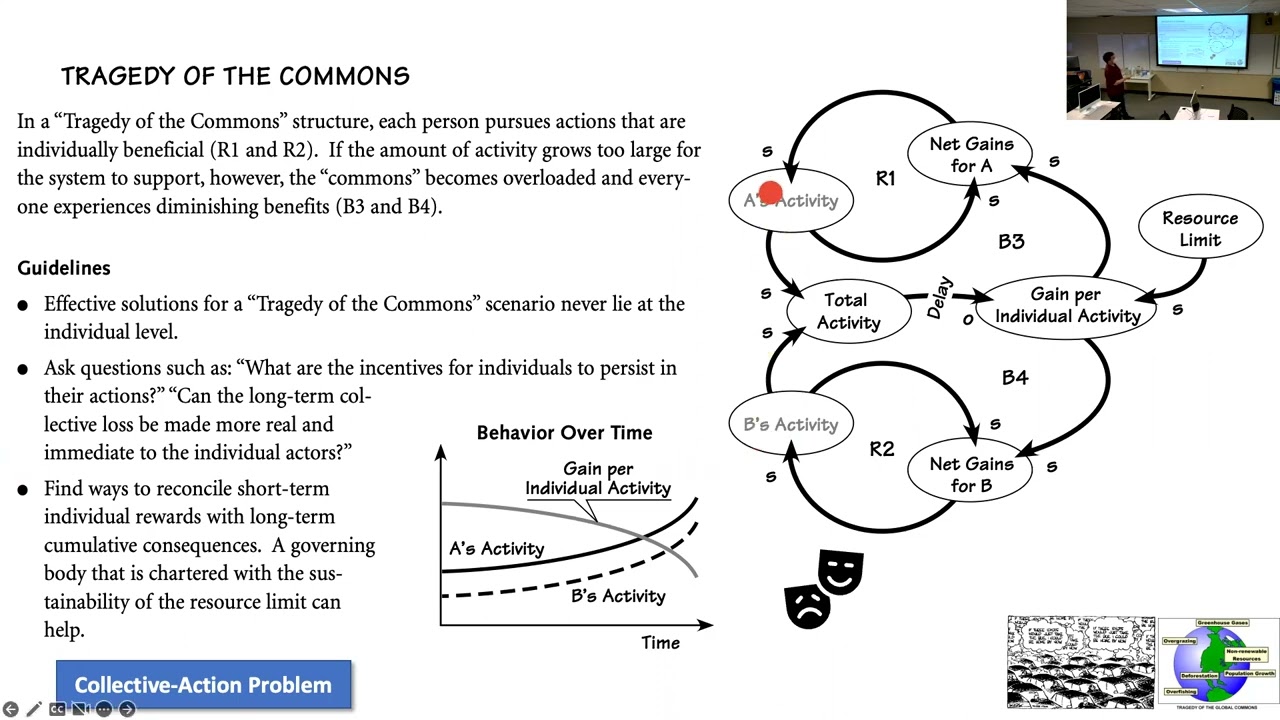
In open-access fisheries, the tragedy of the commons occurs when individual fishermen have no incentive to limit their fishing effort, leading to overharvesting and depletion of fish stocks; while the economically efficient level of effort maximizes profits (where marginal revenue equals marginal cost), the open-access equilibrium occurs where fishermen just cover their costs, resulting in zero economic rents and inefficient resource use.
Open-Access Fisheries Economics: Tragedy of the Commons
Added:Classification of goods in economics, specifically the distinction between public goods, private goods, and common-pool resources based on excludability and rivalry.
The fundamental concept of market failure, where the allocation of goods and services by a free market is not Pareto efficient.
Basic principles of externalities, particularly negative externalities where individual actions impose uncompensated costs on others.
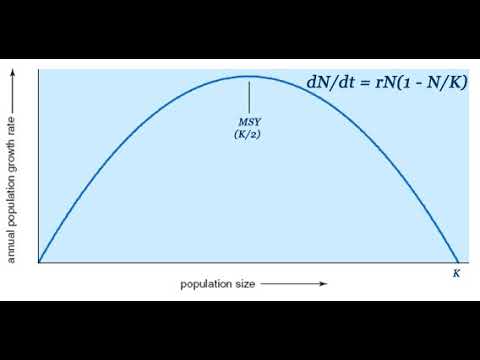
The basics of biological population growth models, such as the logistic growth curve, to understand how natural resources replenish.
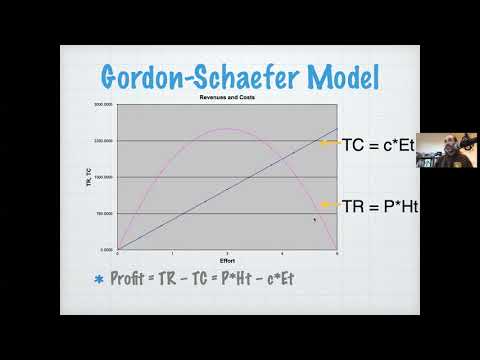
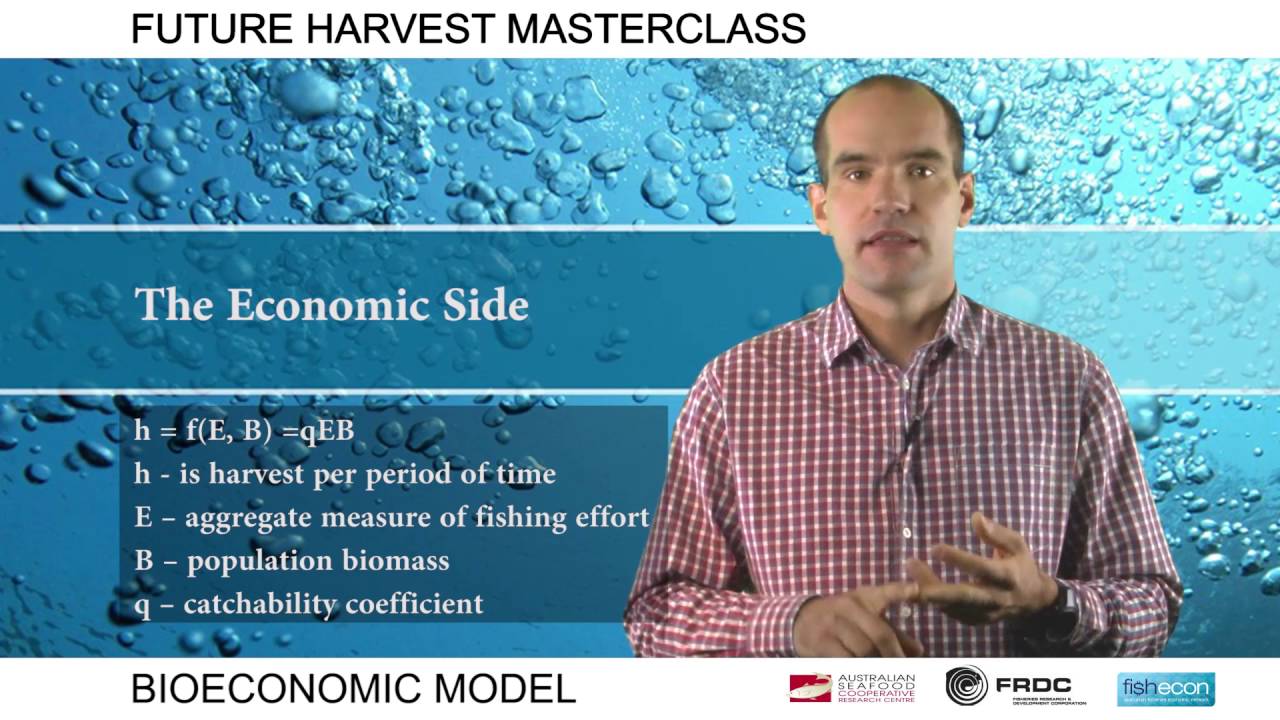
Bioeconomic modeling (such as the Gordon-Schaefer model) to calculate Maximum Economic Yield (MEY) versus Maximum Sustainable Yield (MSY).
Implementation and economic analysis of Individual Transferable Quotas (ITQs) and catch-share systems as property-rights-based solutions.
Game theory applications to transboundary and international fisheries management, exploring cooperative vs. non-cooperative behaviors among nations.
The economic and ecological evaluation of Marine Protected Areas (MPAs) and territorial use rights in fisheries (TURFs).
21.1K views229likes14:54Original Release: 2013-07-22
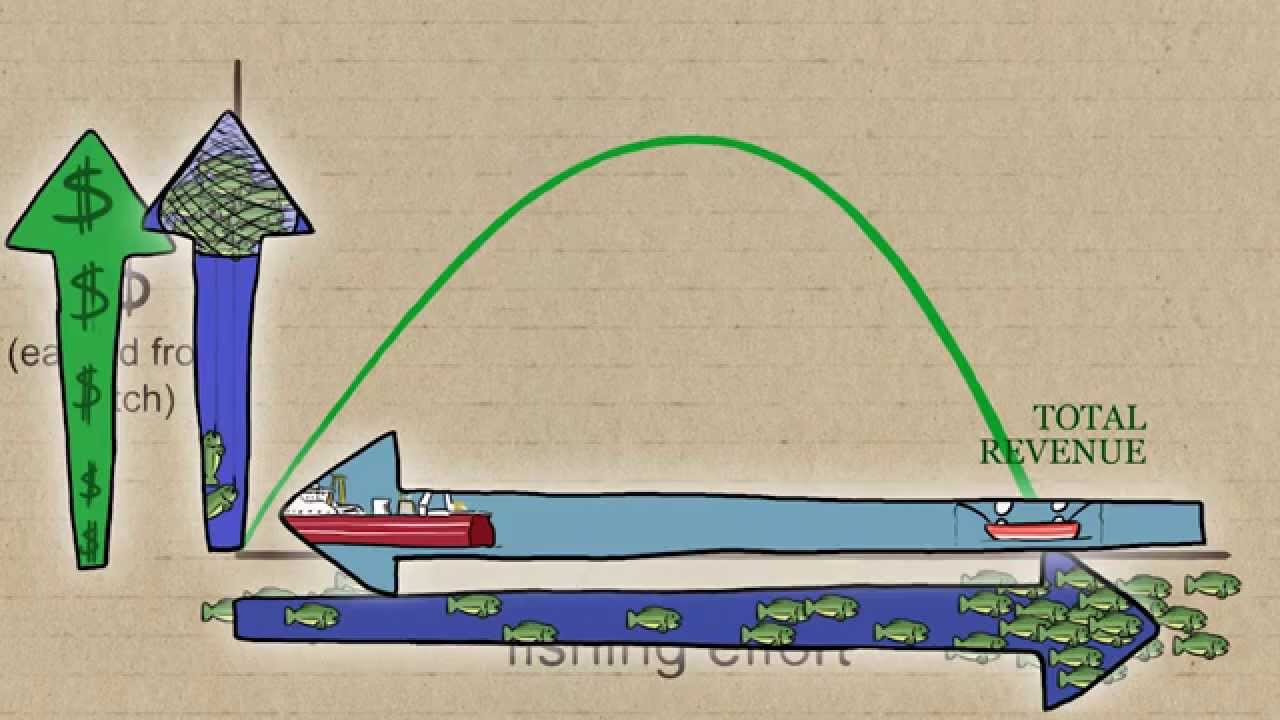
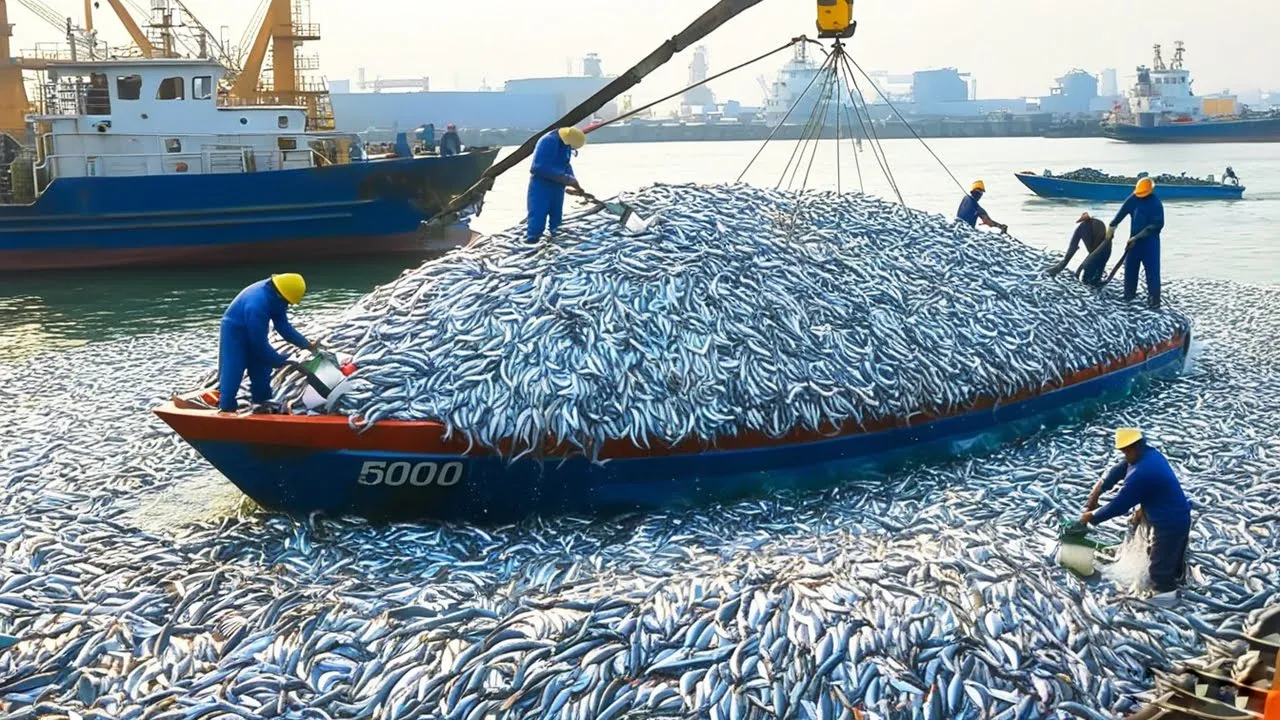
in this video we're going to talk about fisheries and what happens when you have a resource uh where access is open and anybody can get at it and how that can lead to an efficiency failure which is commonly referred to as the tragedy of the commons so the basic problem is this and as this photo indicates uh a lot of times fishermen go out there they work very hard all day long and they're not getting any Harvest uh and therefore don't get any returns and this is a a a human tragedy that uh has consequences for the well-being of many people throughout the world we're going to start with a basic biological model it's a very simple model that uh while uh while simple captures a lot of the important features of a Open Access resource so on the horizontal axis we have the fish stock that is how many fish are actually out there in the water and on the vertical axis we have growth in the fish that is um how many um how fast the fishery is growing so uh imagine that we've got some starting point here and you'll see that in in the first period the the we start with this Green Dot quantity of stock and then it grows by that much which means at the beginning of the next period we're out further along to the right here and we've got more fish we do that another period and all of a sudden by having more fish you can think of that there's there's more um parents to give birth to more babies and therefore the fish the stock actually grows bigger and the growth um in that second period is greater than the growth in the first period and that continues and but eventually there's you reach a carrying capacity a point at which there's no more room for any more fish and the the the number of fish in the lake or the of the the water body uh is maximized and that's what we call the carrying capacity of the um fishery and that's a natural equilibrium that is if the uh fishery um were left alone for um forever uh in this very simple model uh the stock would stick right there at that black dot at the natural equilibrium forever now let's go into this fishery and start doing some harvesting so let's put a uh imagine that a single boat is in the fishery and that single boat can can move the stock back a little bit that is it goes in it catches some of the fish and now all of a sudden the fishery is back at a lower level of stock in which it's able to grow and if you've got that let's say one boat out there it's able to harvest year after year after year uh that much fish it just simply takes the natural growth off leads the the the leaves the fishery at the end of the year back with the same quantity of stock as it started at the beginning of the year this is what's known as a sustainable yield for that particular level of effort now if we were to increase the number of boats you'd see that the the sustainable yield could actually grow up so we've we've added one more boat you can think of it and we've gotten we've reduced the stock to a point where now all of a sudden the natural growth rate has has increased and the boats are able to uh take off uh the two boats now are together able to take out more um fish than just the one boat was sustainably uh back here at the original point and so we can continue imagine this continuing we get more and more boats and we as each time we add more boats we push the stock back over here we move to a different point on the growth curve and so as we get pack towards this middle area the the the natural growth rate is at its highest level you're able to get a lot of fish out year after year but eventually we push the stock to such a low point that the harvests um have begun to decline and we're uh harvesting uh less and less fish even though we've added more and more effort so um this is uh gives rise to a relationship between effort and a sustainable Harvest now what we want to do in this figure is switch from a graph in which we have fish stock on the horizontal axis to a graph in which we have fish effort and this is simply easy it's pretty easy to do we just think okay let's take this um uh level of effort okay this is the our first level effort a low level eff we're going to put that up here on the left and that gives rise to uh this quantity of sustainable yield that point all right and then we can do that for another point we say a middle level of effort where we've got got um a higher level of sustainable yield and that so that gives our our second point and then we move all the way back here to the right and where we've got the highest level of effort and we're back down at a lower level of yield so we've simply taken these vertical lines we've moved them down from this point down to this point and that gives rise to our sustainable yield curve okay which is a function of effort and tells us the amount of yield that uh the fishery could get year after year after year um from that um from that quantity of of effort um so now we're going to just work with this sustainable yield curve but you'll notice that that sustainable yield curve came entirely from uh the uh the biology of the fishery and the relationship between uh fishing effort and the growth of the fishery so on the sustainable yield curve we've got a quantity of fishing effort that's increasing as we move from left to light on the horizontal axis and the sustainable Harvest on the vertical axis and when we get it to the very top that's what we call the maximum sustainable yield and uh it's a very important U point and that tends to be the target when you talk to a lot of Fisheries managers are trying to get to the point of Maximum sustainable yield but if we wanted to do economic analysis instead of biological analysis we may be more interested in sustainable benefits or um in dollars okay and but the good news is that we can move from the sustainable yield curve to the sustainable Revenue curve uh very easily by simply multiplying the sustainable yield times the price so we'll assume that the price is fixed and for every uh ton of fish you get you get a fixed number of of of uh dollars so if you move back here to the sustainable Harvest curve we multiply that by dollars and we move forward and we get a sustainable Revenue curve so now we have a relationship between fishing effort on the horizontal axis and dollars or sustainable um fishing benefits on the vertical axis that's good but as economists we know that we're interested not in total benefits but in net benefits so we're going to add the cost curve and what we've done here is we've assumed that for every unit of effort the uh the cost of producing that effort is the same so our sustainable cost or a cost curve is simply a straight line from the origin uh up to uh this point here and you'll see that it crosses at that point there and at that point there the net benefits are equal to zero the the benefits the net benefits from any level of fishing effort short of that uh point there is going to be the different the distance between the cost curve and the sustainable Revenue curve so this tells us that if we maintain this quantity of fishing effort indefinitely in every period we can get this level of profits now we call these resource rents because they are not quite the same as profits the normal operating profits but are they're profits that are made available from the fact that we have a biological resource um behind the scenes so for your purposes uh we can just assume that that's the same as profits and you'll notice that the profits would be maximized those rents are maximized at the point where the slope of the the sustainable Revenue curve is the same as the slope of the the cost curve and that's going to give us the biggest distance between the cost curve and the revenue curve or the largest rents and that's what we're going to call the economically efficient level of effort now the problem is that the economically efficient level of effort is actually not an equilibrium uh though so suppose that you're a fisherman and you're sitting back here on the shore and you look out and you see that there's the a bunch of fishermen out there and they're harvesting with the efficient level of effort and they're making profits they're making good money they're making much more money than you are just sitting on the shorelines so you say well I've got a boat I can go out there and fish too and I can make some money so there's a natural tendency for effort to increase another boat is added and that boat is making money but there's still profits to be made and there's still fishermen sitting on the shore thinking I can make money too and so they're going to continue to increase and increase and increase until you reach a point where there's no more profits to be made this is what we call the Open Access equilibrium all right the Open Access equilibrium is a point where there's no longer any incentive for the fishermen to enter in and increase the level of effort and this is what a guy named Garrett Harden in 1968 referred to as the tragedy of the common is it's a tragedy because you have this natural resource that's capable of generating substantial profits for society as a whole but because of the economic incentives that are at play we end up Le leaving leading to a situation where the costs are the same as the revenue there's no more profits fishermen are are literally uh barely just barely covering their costs all right so there's three important points on this curve that you want to be familiar with all right the economically efficient level of effort is where the rents are maximized the maximum level of the the level of effort associated with the maximum sustainable yield which would be the top of this curve and the equilibrium which is where we end up um typically in an Open Access uh fishery and that's where the the costs are equal to the revenue and the fishermen no longer make any profits one thing that's important to note on this is that all of the points on this sustainable Revenue curve are sustainable The Fishery the biological resource itself is in no danger of collapse in this simple model we simply reached the point that it's economically uh no of no value all right so now now let's think about how we might be able to solve this tragedy of the commons how many how can we get to move the fishery back to a point where fishermen are actually able to make some money well the first solution is to make it more difficult to fish and this is the common Solution by management all right where we choose we tell the fisherman well you can only fish part of the year or you have to use particular kind of gear what this does is it increases the the cost of fishing so that our our cost curve is inefficiently high it's moved up all right so we haven't created any more profits we've reduced the level of effort all right so maybe we've gotten to the maximum sustainable effort but what's been created rather than um profits is waste because of inefficiently level high levels of waste and hopefully you can see this this picture but you'll if you look at this picture this is a picture of a a halit boat uh during the 1990s when the the season was actually reduced to only two 24 to 48 hour openings per year for all the halet in the Alaskan fishery and what's impressive about this photograph is if you count the number of boats there's a whole bunch 1 2 3 4 5 6 7 8 9 10 11 12 13 14 15 boats as my count real quick of the number of boats that are out there on the horizon that are also operating not just in this area but so close that you can see them in one um frame of the the photograph all right all these boats are out there chasing fish like crazy and if you've seen the the show uh Deadliest Catch this this uh uh is the type of story that we're talking about here all right so that's not a very um efficient way to deal with the pro tragedy of the commons a second option is to tax effort this is harder to implement but the in the idea is kind of nice right so instead of saying all right fishermen you can you have to pay your costs we're going to put a tax so that every unit of effort that you put out there you have to give some money to the government as well and you'll of course see well the fishermen are now facing this new cost curve and so we now they're going to keep there's going to be incentives for them to keep entering into the fishery until we get to this new Open Access equilibrium which is but if we've done it just right which I'm allowing my theoretical model to do I've gotten back to the economically efficient level of effort the good news is that we didn't just create waste we actually created tax revenue all right that tax revenue could be used for uh building schools or building hospitals or or or doing all sorts of good Public Works things uh rather than being wasted by uh the tragedy of the commons so uh that's an improvement although certainly the fishermen don't aren't that crazy about it they weren't making any money before and they're not making any more after the fishermen are still subject to the tragedy of the commons um a couple of other options are to establish common ownership over the fishery and sort of create a way for the fishermen to limit their own effort or a system called individual transferable quotas where the the rights to use the fishery are traded amongst the fishermen these are two uh approaches that can overcome the tragedy of comons and lead to substantial uh improvements in the economic welfare of the fishermen uh so what we can do is if if the fishery as a whole is able to reduce their effort all right they can the fishermen then can capture these rents all right and they can we can either uh have a system where there's a certain uh level of of licenses available to fish out there and those are traded among the fishermen and the the rents then are captured and generated by the fishermen and and and that is a positive alchem or you have a situation where the fishermen are are operating as a management unit as a whole and they decide well we're not going to go fishing more than than a certain level and we're going to reach uh uh an efficient level on our own accord and make up our own rules either of those approaches can lead to a cial Improvement in the economic welfare of the fisherman so why is fish man management so difficult well there's a lot of reasons we got uncertainty we've got politics we've got enforcements and of course the simple models don't describe the real world but the truth is that uh the basic problem is fairly simple uh and it's an important one that um is seen not only in Fisheries but really in resources throughout the world
Up Next
12:02
Climate Change Economics: Costly Impacts and Solutions
@EconomicsExplained
121.8K views•2019-11-21

5:07
Impact of Yuan in Indo-Russian Trade Amid Sanctions
@WION
261.9K views•2022-07-01
10:33
Behavioral Economics Explained: Rationality, Nudges, and Risk
@crashcourse
1.1M views•2016-03-12

113:18
The Age of Easy Money: Fed & Inflation | Full Documentary
@frontline
21.2M views•2023-03-15
Related Study Plans & Knowledge Roadmaps
Structured learning paths in Economics
economics
Sovereign Debt: Defaults, IMF & Restructuring
01Introduction to Sovereign Debt & Government Bonds
02Debt Sustainability & Credit Ratings
03Anatomy and History of Debt Crises
+ 2 more learning modules
12h5 modules
Explore Roadmap
economics
Market Design: Matching Theory & Gale-Shapley
01Introduction to Market Design and Price-Free Markets
02Two-Sided Matching & The Gale-Shapley Algorithm
03School Choice Systems and Mechanism Design
+ 2 more learning modules
10h5 modules
Explore Roadmap
economics
Impossible Trinity: Forex, Capital & Policy
01Introduction to Monetary Policy and Central Banking
02Exchange Rates and International Capital Flows
03The Mundell-Fleming Model
+ 2 more learning modules
8h5 modules
Explore Roadmap
economics
Healthcare Economics: Market Failures & Systems
01Introduction to Healthcare Markets and Market Failure
02Asymmetric Information and Adverse Selection
03Moral Hazard and Insurance Design
+ 2 more learning modules
12h5 modules
Explore Roadmap