














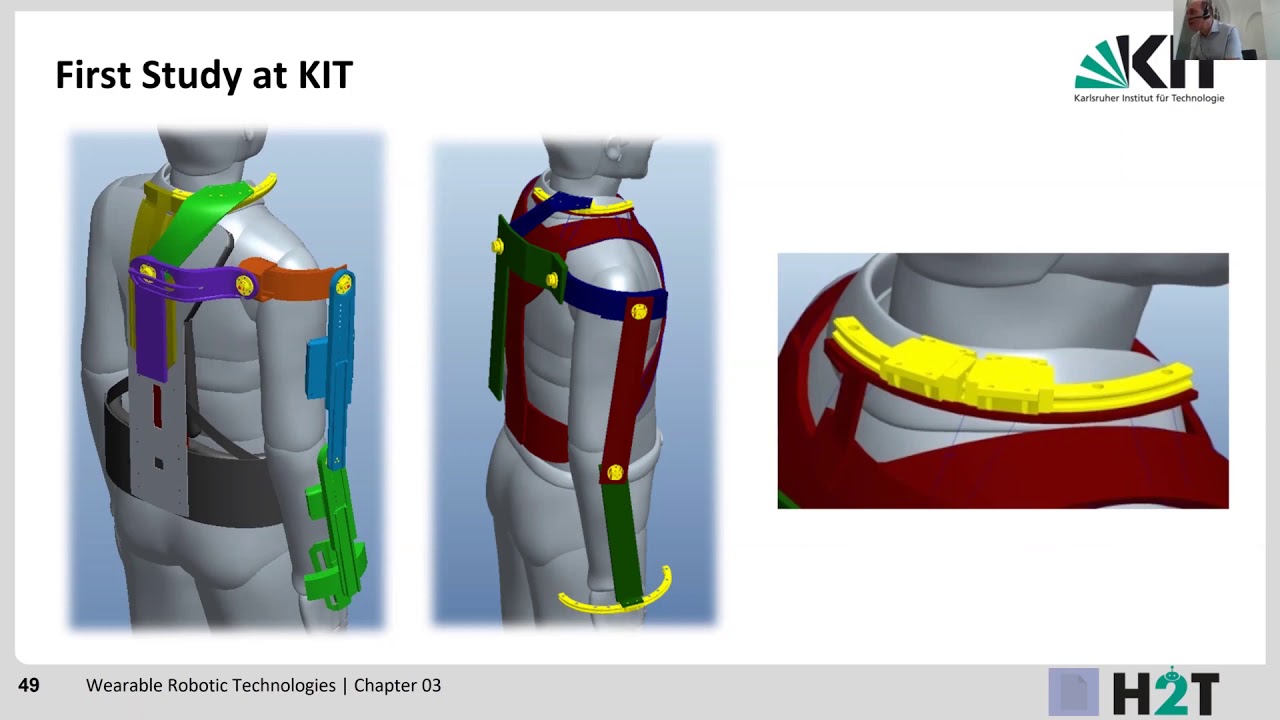
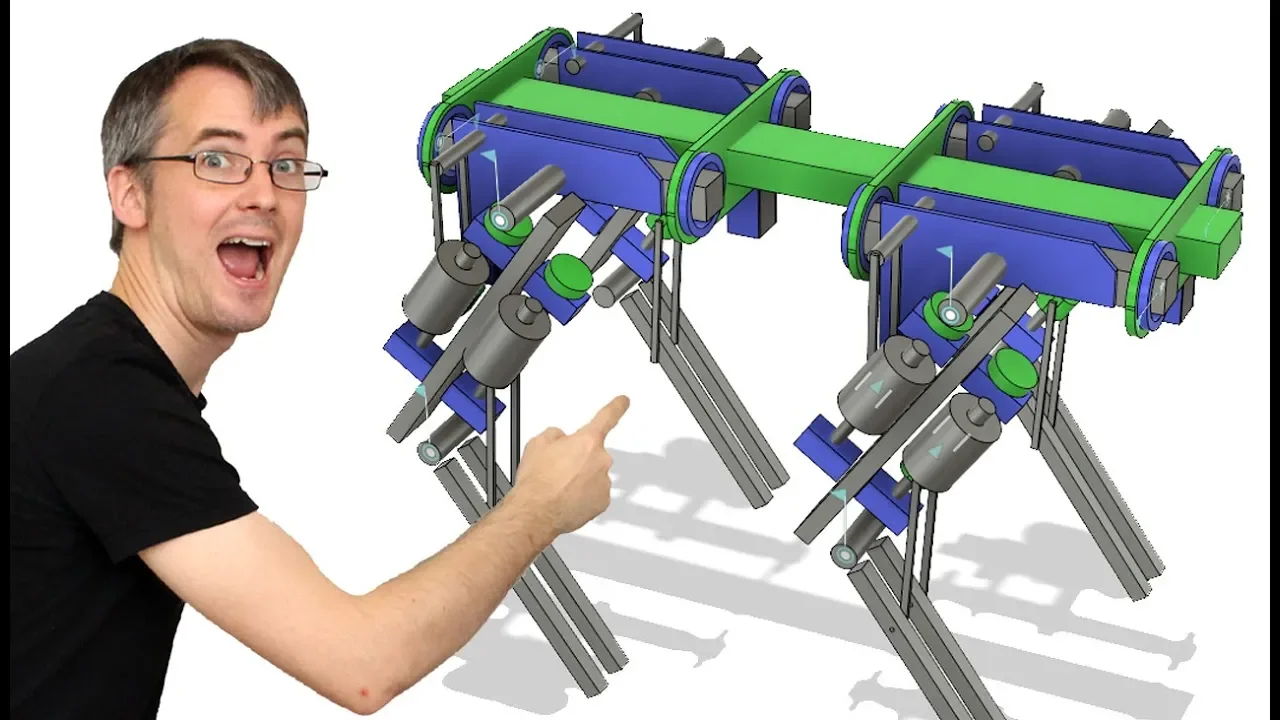




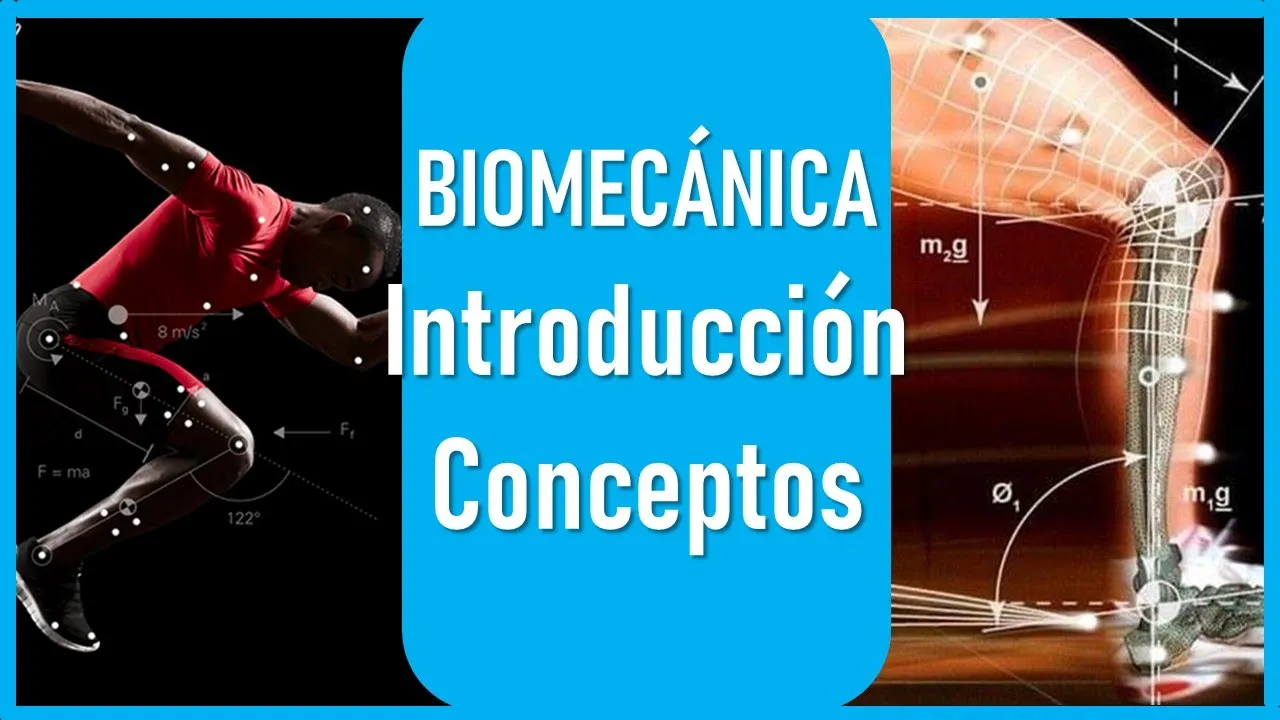





The Theory of Aligned Axis of Rotation is a fundamental design principle for exoskeletons that states the center axis of the body's joint must align with the center axis of the exoskeleton's joint to prevent the exoskeleton from shortening or lengthening during movement. This alignment ensures the exoskeleton moves naturally with the human body without creating resistance or discomfort. The theory addresses the challenge of designing exoskeletons that integrate closely with human biomechanics, as opposed to designs where the exoskeleton sits off the body and creates movement discrepancies.
Exoskeleton Prototype Design and Aligned Axis of Rotation Theory
Added:Basic Biomechanics of Human Joints: Understanding degrees of freedom, joint kinematics, and the anatomical axes of rotation in the human body.
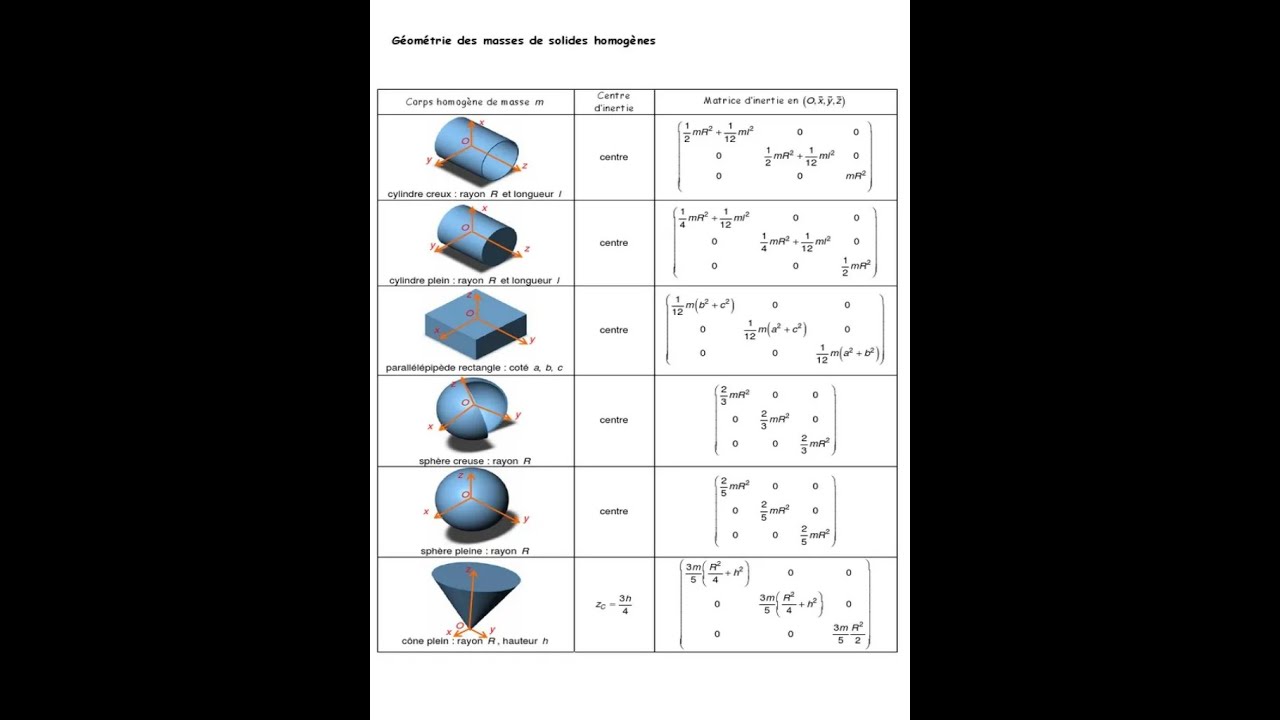
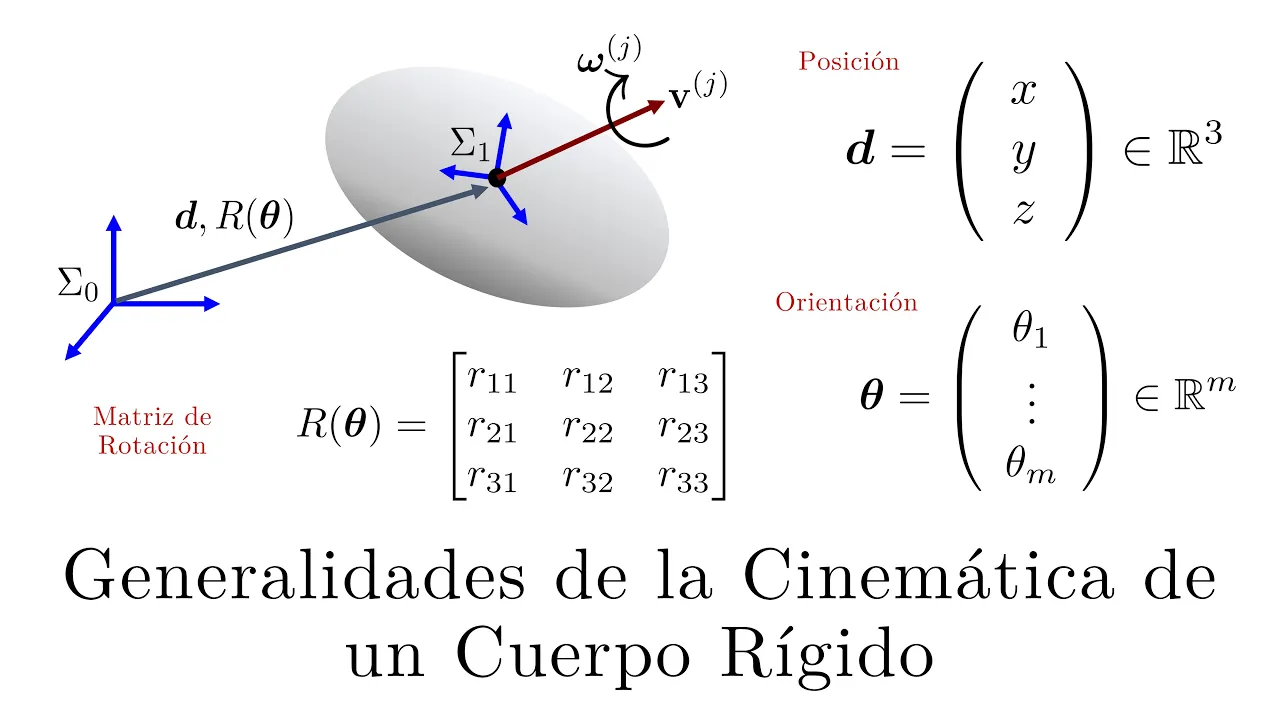
Fundamentals of Rigid Body Kinematics: Concepts of rotational motion, torque, and coordinate transformations essential for robotic link analysis.
Introduction to Wearable Robotics: Familiarity with the basic paradigms of physical human-robot interaction (pHRI), force transmission, and mechanical constraints.
Rapid Prototyping and Additive Manufacturing: Understanding how 3D-printing technologies (like FDM or SLA) are utilized to fabricate custom mechanical parts and prototypes.
Joint Misalignment Compensation Mechanisms: Studying passive degrees of freedom and compliant mechanisms that self-align to the human joint during dynamic movement.
Active Actuation and Control Strategies: Learning about sensor integration (such as IMUs and EMG) and feedback control algorithms (such as impedance control) to power the exoskeleton.
Biomechanical Evaluation and Human-in-the-Loop Testing: Researching methods to measure metabolic cost reduction, joint torque assistance, and range of motion preservation in human trials.
Safety and Ergonomic Standards for Wearable Devices: Exploring regulatory frameworks, emergency stop mechanisms, and mechanical limiters designed to prevent user injury.
17.9K views541likes32:52Original Release: 2019-03-06
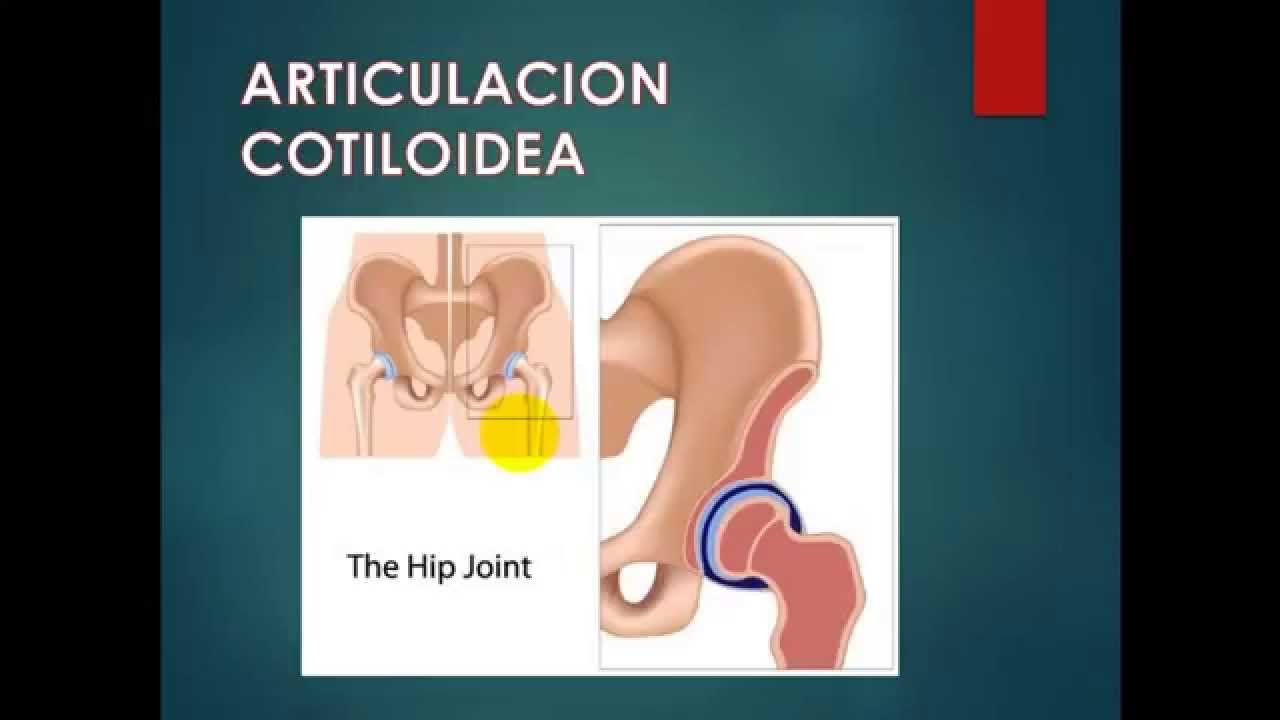
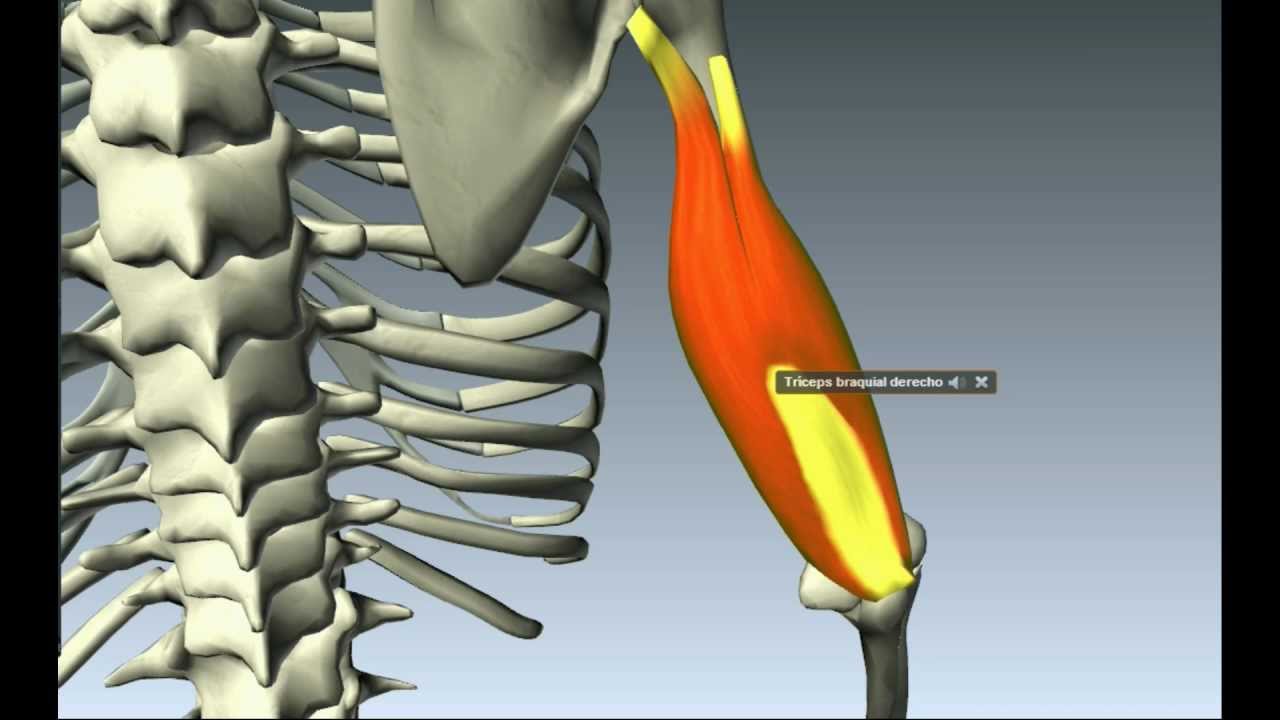
[Applause] [Music] all right welcome back everyone this is gonna be the second video on me catching you guys up on what I've already done before so that we can we can move forward and start this channel and follow everything I'm doing so I hear I have here laid out on my desk the first prototype of some of the movements of the exoskeleton how it's going to work these parts were all three day 3d printed on my flashforge creator pro which is a decent little 3d printer nothing amazing but it does pretty good prints so this is all printed in PLA s before I moved to pet G PLA is pretty good it's got pretty good rigidity I just can't get it hot so you can't leave it in a hot car or something like that because it'll warp so this right here is the left arm and actually started off with this super simple idea this would and I was gonna just make and put an actuator on there and I didn't do any calculations and this thing was way too flimsy obviously this would be made out of metal and then the theory for this was these parts would actually all be water jet cut and that would allow me to essentially do this without having access to a machine shop well a CNC mill really is what I would need to properly do this I'm not sure if that's still going to be the case with the actual exoskeleton in fact I'm actually sure it's not going to be that way but this one was designed to be all cut out of half-inch or sorry quarter-inch steel and then welded together by the way you got it so it was a really good exercise and how this works so I'm gonna put this on in a second to show you guys but I want to talk about a little bit of the theory behind this so my main theory is the idea that I call aligned axis of rotation so that is how I build my exoskeleton so there's some other companies out there building exoskeletons namely Sarcos they're an American company if you look them up you'll see some of their work on some of their exoskeletons they're got a whole lot of governmental money and our building of stuff and my opinion aren't doing a very good job just just doesn't really move it might it may have some I shouldn't say they're not doing a good job they may have some specific industry where they might be able to hit but as far as building a fully functional something that integrates very very closely with the human I think that are off their main thing they do is their exoskeleton sits off the body so as it moves so if you imagine if you drew a line from around my arm it would be X distance and then if it came this way it'd be some distance smaller than acts like 0.8 X or something like that so it leaves and shortens so the only way to keep that from happening with an exoskeleton is to get the center the center axis of your body's joint to align with the axis the center axis of the exoskeleton so if you look in here hopefully this will come up on the camera it's dark but hopefully you'll be able to see it this is where the shoulder would go this design is gonna change I'm gonna talk about where we're going with this but for now we'll talk about this this is the shoulder joint and there's actually three different movements on this one so there's a up and down there's in and out and then there's help this way abduction and adduction so this one your arm comes through here and this lines up with the up the shoulder joint this way this one lines up this way these are all off at 90 degrees to each other so when access coming through this way which is this one axis to allow abduction adduction that's this joint right here like that and then this joint right here didn't doesn't work amazingly well but this would be the last one right here for internal and external rotation of the arm so that's the shoulder same kind of thing this right here is just a normal hinge joint on your elbow so this is a very simple thing it can be off the body but still align of the axes of rotation so the theory of doing this is actually kind of difficult to align the axis of rotation because obviously the axis of rotation are through your body it's the only way to really do it is would be to go into your body and obviously that doesn't work because you're in the way so you have to get clever and do these kind of ring designs or put them off to the side in some cases like these joints and these joints in order to to align them without obviously going through the center of your body so I don't think people are gonna get surgery to put these in so yeah that's kind of how that works this is actually would be a little bit cancered the axis of rotation is through this so it's at an angle and then your your bones rotate around each other so the the axis is like this and then your body folds over like this this would be cantered I'm like I said a lot of this is gonna change I'm gonna show you guys kind of where we're going and what we're gonna build after that this the hand here is gonna be doesn't really have any joints in right now this is kind of a first stab at how this might work but the tendons are fairly similar to how it's going to work so there's gonna be this is the same way your finger works too there's two tendons coming in to each finger and so one will pull your fingers this way and then the other one will curl your fingers like this and so the idea behind this is there's gonna be some of my smaller necks and muscles in here okay there's not enough room for these these could be mounted a lot different than they are right now but the muscles will come through here and then when powered on you'll have grip this likely will be all controlled by one power unit so this will essentially just be a grip assist and then so fine motor skills will still have to be done by the wear probably it may be possible to put an actuator on each muscle then you'd have full kind of actuation over the entire hand so this is actually gonna change a lot a lot of this is gonna change a lot actually and I'll show you that but in a minute on this this case this was designed originally to be like a mock exoskeleton which I'm probably not going to do anymore but this was just gonna be have two muscles on each side well two sets of muscles on each side the bicep here was gonna come between here and here and this was had to be structured around it this is really the only way is to just set the muscle in here there's only way to get it to fit because in my simulations the force on this exoskeleton is so strong that it can literally pull metal apart because these things produce about five tons of force so encapsulating it and steel was really the only way to do it on the exoskeleton i'ma build the full version there's gonna be some composite materials because there's I can't do this everywhere in in the exoskeleton so especially on the the the shoulder is one of the hardest joints to design for and it's where I spent most of my time designing there's other things as well but the shoulder is is the hardest because there's so much motion in the shoulder and it still has to be stable so the clavicle bone the XO bone the clavicle x'j bone is gonna be one of the more complicated probably the most complicated part to design from a structural standpoint and it's gonna have to be made out of a high-strength composite but I'll explain that with a design I've done in a bit so I think I've pretty much explained everything on this so now what I'm gonna do is I'm gonna put this on for you guys and actually show you the the motion you'll see that it it sticks with your body pretty well and this was just a first stab at this I've done I'm done a new design and then I've also have a high-res 3d scan of my body now so this was all done with a ruler and stuff like that really kind of get away to measure myself and then build this for me but it ended up fitting fairly well and I went through a few iterations isn't the first one so I built stuff and took it apart build stuff and took it apart I have other parts over here and stuff so but this is kind of where this one stopped and the next one is also gonna be 3d printed that's what I'm building next but it's gonna be a full-body exoskeleton so I'll go ahead and put this on and show you guys how it moves all right so here is me wearing the exoskeleton so I'll talk about this a little bit this thing is not super structural I've gotten better at 3d printing stuff and holding it together the parts that it's gonna this is gonna pop off as I talk I'm sure of it but what kind of taught through some of it so the UM the straps at least on the back were originally designed to represent they were placed where I was gonna originally put EXO muscles when I initially thought this through so that's probably changed a little bit on some of that but that was the initial idea on that so the don't mind the structure on the body that's kind of completely different well this will be sort of similar but it's gonna split open and these ribs will be a little different as well one thing that's major really different is this clavicle here is on the front like I said it's gonna be on the back or it will be on the back which we'll talk about in a second but this right here actually collapses in right now which was the idea was to get this forward and backward motion of the shoulder girdle that ended up not working very well because what'll happen is when this is under heavy load this is gonna push down it's gonna anchor across here and then this is gonna be compressed and so if you put a really heavy load on your hand it's gonna push into your shoulder because this doesn't have anything to hold it out so this is completely a different design now this scissor design doesn't work very well so here I'll just have to show you it kind of moving so here it is the forearm that works really good the hand moves this right here on the top is gonna be completely different it's not gonna be this design I have a some axes there gonna be a here and here allow for this in this this sliding motion although very Iron Man esque does not work very well so just really the only way to figure out this stuff doesn't work just to build it and test it really can't think your way and do a lot of this stuff so here's the twisting motion you can see the arm here and then the the shoulder moves around quite well and even this which isn't a great design joint actually moves pretty well but you can see I have really a very wide range of motion on this and you can see as I lift my arm there is not really a change there shouldn't be any change at all in the the length of the exoskeleton relative to my body and that's one of the important things I was talking about on the aligned axis of rotation theory of mine so that's that's really important you can see I have quite the range of motion on this I mean I can reach kind of all over without really coming into any hang-ups with the body and then this isn't even actuated yet put an artificial neural net controlling the exoskeleton this is this motion will be even smoother because it'll be actuation on here but just you know I printed out of super low tolerance parts that are sticky and aren't really lubricated and are polished and all that you can still see that I'm getting a really high level of movement and motion out of this the the hand is gonna change entirely this is I believe is dangerous so each each tenon will have close to a thousand pounds of force on it so I think having the rings of wrap all the way around your finger is dangerous so one thing I'm change on the new design is there's going to be two tendons replacing each of these so let's into be the same tendon but they'll be dispersed the load to either side and these will be essentially u-shaped pieces like this and there'll be some strong kind of Kevlar connecting the two so there's more fabric and the metal can't clamp down around your hand as much so these are a little tight on my fingers anyway they're a little hard to get on and off works you know first passed and did not amazing but it works fairly well so so yeah there's there's the arm and as you can see the motion is is pretty cool and it works pretty well so really do have full full range of motion of the the shoulder girdle which is well the shoulder joint the girdle is actually not completely figured out on flushed out of this design yet but but there's that there's some little teaser of kind of what's to come and some of the stuff I've worked on before so now what I'm going to do is I'm going to switch over I'm going to show you a drawing a kind of thought process of where the future of the designs are going so we'll switch over there and we'll do that alright so here's the drawing I developed so I've done this before once before to a much less thought-out extent but doing something like this really just it's time-consuming and it's not necessarily building you know exoskeletons so why do I do it I do it because doing this kind of thing forces me to really think things all the way through sometimes you think you have stuff figured out you know excited thinking about those exoskeleton for years and it kind of consumes me so I'm always thinking about it really and if I oh you know I got it all figured out and then as I started to drive bike I can I'm gonna draw this and figure it all out I thought it was gonna take me like two days and it ended up taking me I was in like a full flow state sitting in here working a lot getting this done for about a week and a half almost two weeks that it took me to get this all figured out I had to go through and rethink a lot of things so there's lots and lots of drawing and racing and drawing and erasing and drawing and racing and thinking through how how this was all gonna fit and work together so on here grey represents the actual exoskeleton the black represents the exo muscles and the blue is the kind of base layer with that except for my face which is a my skin tone so let's kind of walk through some of this stuff so these right here are not ribs these right here are parts of the spines they're spot each of them is actually a spinal column so there's three here and then to here so the way these work is this is actually going to be a sort of part of a ball and socket joint so that's been essentially cut down to just two little pieces that are going to be aligned along the axis this way in here so on your back it'll be further back and then your spine more or less runs straight through the middle of your neck so right on the side of your neck and these are gonna have also ligaments that come up and hit the center of the axis of rotation and then are piped through to the other side and that allows them to go up and down without being pulled apart that probably sounds confusing and make a few guys it's okay we're gonna build this and I'm gonna I'm gonna cat it up in fusion 360 that's gonna be a videos to come pretty soon and then we'll print it and I'll actually show you guys how it works so if some of the stuff doesn't make full sense that's okay you can just wait for the other videos to come out but if you're curious on what's going on I'm gonna kind of explain through all of this and what this is so if you get bored with it feel free to turn the video off for whatever and wait for a future video where I'm actually gonna build this stuff but if not we're gonna go ahead and run through kind of everything on here so so that's how that works and that the main reason for doing the ball-and-socket kind of joint in here in here and then here and here is that it's gonna allow for really high amount of force this way so this is really gonna cup and is going to allow for huge amounts of force downward that's important because these are two of my larger size muscles and I calculated across through here there's four muscles at 30,000 pounds it's 120 thousand pounds and then two at ten so 150,000 pounds of force pulling down on this part so these have got to be really strong in a load-bearing way this way tinsel wise tensile strength being like so being pulled apart doesn't have to be as strong there's gonna be Kevlar reinforcement there's nothing the muscles aren't really being pulled apart so really it's just to hold it together and then I don't know your honor man you're fighting some bad guy I guess you don't want to ripping you in half but that's really you know it's more there just to kind of hold everything together and then the structure will be kind of this way to hold holds they handle the huge tremendous loads coming over the EXO muscles less less of a load up here I think only four of the one inch sized muscles so looking at about 40,000 pounds of force on that and see those two here and then these two here these two are the sternocleidomastoid muscles the muscles that you see on the side of your neck those allow you to they're both actuated pins that head forward if one is actuated and these are our stops held out it's going to rotate the head if this one is actuated rotate this way and this was actuated rotate the head this way this muscle back here will pitch the head back these muscles back here will pitch the head back but will also levitate the shoulder girdle via the clavicle now you'll notice the clavicle is on the back and that's just kind of how it worked out the clavicle even though you're on your body is in the front the clavicle here is on the back now I joints aren't quite exactly how they're gonna look oops I'm missing a line in there anyway these joints will be lined up and your sternoclavicular joint which is where your clavicle attaches to your sternum those axes of rotation the the way your bones work is kind of interesting they actually kind of work a lot like this does so even this looks like a weird joint design you don't see it in robotics or space really anywhere that often you do see it all the time in biology and so the way muscles were sorry joints work in the body is they kind of tend to to be like this so they're kind of like mostly ball and socket joints in a way even though they're not all necessarily classified as ball and socket joints they turn like this so the humerus in your arm works this way the the hip joint works this way but they work like this so the axis of rotation is actually not inside the joint itself it's often somewhere in the bone usually so that's true for for your hip and for your humerus and also for the clavicle so the clavicle actually is a rotation are essentially right down the center or very close it might be slightly offset from the center so this joint is going to be a joint like that that's going to be kind of it'll be made out of a series of metal so it'll be very strong but it'll be two curved pieces that essentially wrap around like this and that's going to allow you to to levitate and depress your shoulder girdle via the clavicle so up and down so essentially shrugging your shoulders this way and then this line represents this is kind of thought out but I did just this is how I look but if you're looking at from a top view you would have a similar joint to that rounding joint this way lining up with the the clavicle but instead it would be from the top and be going this way and what that does and simulates is as you would push your shoulder girdle forward so I'm trying to think of a a movement that would require to do that but essentially if you reach your shoulder girdles going forward so this has to because it's not aligned perfectly the exoskeleton isn't literally built into your body like we're talking about with the aligned axis of rotation this actually has to lengthen or as you pushed your arm forward this would appear to shorten on your body so it has to lengthen or and not put another way this as it moves forward this axis has to be aligned with from the top down with the clavicle joint so essentially what's gonna happen is as you shrug forward this is gonna slide this way which will allow your arm shoulder to come forward but we'll also put the axis of rotation so if the the body was like this and the clavicle is here this would go out like this and that would put the axis of rotation at the center of the clavicle so would go like that and then this is just a normal hinge joint here that goes right through the the joint between the arm and the shoulder girdle so your your humerus attaches to your clavicle and scapula so this allows for up and down motion of the arm so abduction and adduction and then over here there will be another joint and that will allow for I'm believe it's called horizontal and or vertical abduction adduction so essentially bringing your arm up like this there's a joint in here right there that does that and then we have a bunch of muscle attachment points right here this right here is the pectoralis minor and that will push your shoulder girdle forward so this muscle will essentially actuate that joint right there these right here are the PEC major the reason they come down the front and this is why this load is so heavy over the the ABS here is because this muscle has to be long enough because there's a huge amount of travel and a very small amount of room to put an EXO muscle so the arm can go really really far in and out but the there's not a lot of room to put an X muscle especially as you push your arm forward everything bunches up in here so they're really the only way to do it is to anchor it around I'll be a swivel here and then bring it down somewhere else so the nice thing about EXO muscle is they're flexible so at least in theory we should be able to wrap them around things and then back here there's a similar idea going on with the latissimus dorsi excellent awesomest door side there so and then you'll notice that these are on this kind of wing shaped thing here so underneath here is the bicep so there's two here and those we'll talk about there but they're going to rotate the the forearm and then there's here is the tricep which is a bigger muscle to extend so they'll rotate the forearm as well as you know flex the elbow joint and then this right these two muscles move the arm around in a lot of different ways but they're also going to internal and external rotation of the arm so essentially this motion right here is going to be actuated via the main movers of the arm as well as doing all the other motions so the idea behind a lot of this stuff is to essentially using the smallest number of muscles get the most amount of movement because it's hard to put lots of lots of actuators you know wires are gonna add up fluid reservoir fluid due to all those who's gonna add up its gonna get difficult to put a lot of muscles in one place so we want to do as much as possible with some of them and maybe I'm overstepping that a little bit maybe I've done that a little too much in some places so as we develop we're gonna see that and hopefully figure those out but that's the idea with some of this so there's also here these will depress the the the clavicle here in the shoulder girdle there so so these right here as I said will internally and externally rotate these so these are essentially anchored into a type of geared system so the gear will go up so the torque will go down but the movement ratio will go down so it'll be like a small amount of travel coming in out of here that'll spin something and then you can see this is on a gear so it'll actually be brought around via some pulley systems so same kind of material this is made out of Kevlar will come up here and pull it into here and that will allow rotation here so you're gonna get quite a few motions out of two muscles you're gonna get this must motion and then you're also going to get rotation this way in this way out of these two muscles and then moving down here the the muscles of the hand like I talked about and some of the designs in the the hand which you can take a look at this right here is gonna so these muscles all pull but it will also flex the hands so there's gonna be another muscle back here just one large one to offset that and push it back the other way so let's start going down the body now so here we have the oblique muscles and those will act to rotate the trunk and these muscles will also act to to flex and extend the trunk like this so then we move down we have these two muscles will be extending the leg now one thing is you talk about is these muscles go over to joints usually which is seems odd if you don't know a whole lot about biology and I was kind of amazed when I first learned this but most muscles especially most the large muscles and important muscles in your body go over to joints so your bicep for instance doesn't even attach at all into your humerus it goes so it bypasses this bone completely attaches up in your shoulder girdle and attaches in your forearm but it doesn't attach it all into the humerus which is very interesting but the reason for that is that it allows for more fluid motion if you're doing something like pulling your arm up like this or your tricep does the same thing too it goes from your shoulder girdle to your elbow so drawing so if you were to throw a spear or something or rock or whatever you're throwing that motion is done by one major muscle and then your minor muscles come in to kind of mod modulate that so that's this happens a lot in biology it happens a lot in the lower limbs as well I'm so like jumping is mostly done by the gastroc down here and in this case it's going to attach a lot we'll get to that in a second so that'll these will both be extenders this will be extender of the shank and this will be extender of the foot here and then this right here is a flexor and extender and also a rotator these two are rotators flexors and extenders of the hip joint so you can see here they attach down here and then this one's straight right now because it's rotated this way and that if this one were to straighten out it would rotate it in and then it'll also flex the hip back or in this case or I'm sorry extend the hip back and then this would be the flex that hip back so the hip flexor their hip extender right there and then this would be the biceps femoris down here so these come down they kind of anchor around right here is how I they drew them it might not end up being done that way but those will come down they're just offset right here they'll probably add a little bit of rotational value but these will be doing the main part of that and then they're going to come down anchor in here and then we have that same type of geared pulley system down here that will rotate the shank the lower leg one important thing to notice about biology is that when your leg is straight like this you lose the ability to rotate the shank and it's not until you bend your knee that you're able to rotate the shank so this doesn't have a mechanical system built in yet but I'm still working on designs for that but that's something to keep in mind with how biology works so essentially if you bend your knee you can twist your foot but then if you straighten your knee you can still twist your foot but all the rotation is coming from your hip it's not coming from any rotation in the knee but if you bend your knee you can rotate your knee it's just kind of interesting thing about biology and then coming down here there's two muscles of the gastroc two heads of the gastrocnemius and those will plantar plantar flex the foot and then they will also anchor in down here and they're also going to plantar flex the toes as well so this would be like these muscles will be very important for walking and jumping and this is how so these will not only actuate over the ankle but will also push the tip of the toes down a little bit so that that'll be a useful function I believe so then there's two of those as well because they also will anchor in on either side and they will allow you to pronate and supinate your foot in there so that's what those do as well so I believe that's a pretty good overview this is your deltoid right here I don't think I mentioned this muscle that allows you to abduct your arm and then they would counter the motion of the PEC and lat functioning together to bring the arm down with a lot more force obviously than this one will produce but that's also how biology tends to work see if I've missed anything in here obviously this is a lot and this might be hard to visualize I drew it obviously so I can see it all I'm sure looking at this you like maybe this guy's crazy but it'll make a lot more sense I actually start to build it and obviously this is probably gonna change a lot this is not necessarily a hard blueprint this is an idea to help me get started this was getting all the ideas outside I realized I couldn't just go and build this I would lose my mind because I had to have to be rebuilding and building and rebuilding and building if I'm going to take this and try to build something from it I need to have at least some of the I or the majority ideas at least thought out to a degree and then I'm sure I'm going to run into problems I already have as I started doing some of the catting this is going to change but this Elise gets everything down on paper in a way that I can look at it and then go off of this as a part as opposed to starting at a blank slate so so where I'm going from this so now what I'm going to do is and there's gonna be a series of videos posted on this and they'll be if you've never done much modeling or sculpting with fusion 360 they're gonna be a great series of videos to watch and see how I operate fusion 360 but social I'm gonna do is I'm gonna go through and I'm a model all this and then this is all gonna be 3d printed and put on so it'll be a functional non powered suit so the actuators are going to be made out of rubber they won't be powered but they'll be there to represent it and then I'll put it on and be able to see how it all works and figured out all the motion of this and then after that then we'll build a metal powered functioning side of this and then you're probably thinking how is this thing even measured and I'm not gonna get into it a whole lot here but essentially there'll be a deep reinforcement learning ai that'll look at a lot of pressure sensors inside the suit and also some EMG sensors inside the suit and then the goal of the artificial neural net is going to be to keep the we're in the middle of the suit so that sounded like gibberish to you guys it's okay I'm gonna do a video series on that as well and the development of that I have a computer designed and in an NVIDIA computer designed for doing artificial neural nets so there's going to be a series of videos coming on on those as well I believe that is pretty much it we didn't talk about how it's going to go on you can see right here this is gonna open up so this will open up all the way down and then the legs will actually also hinge open and the goal is to do that on the arm as well but this just is too complicated so what's gonna happen is this is probably well what I believe is gonna happen is this is gonna open up here and then though this will open up here and then all the way up the sides will open up exceed some of the hinges I drew in over here well so this will all open up and then the arms will probably fold back a little bit I mean you'll kind of reach back and slide your arm down and fit in and then the rest will kind of close on you so Ironman has to be able to pop open you know in the the first movie he had a robot put him on but I think it's probably actually better designed it more like it was later in the movies because being bolted in it may the problem is is getting the Asha waiters over so it doesn't it's not really possible just a straight bolt some one end of this because you have muscles coming all the way across kind of the body in some cases so this is the first idea of how it's going to go together there's some there's some mistakes and some of the sizing in here on the hips they stick out a little too far but but yeah so so it'll hopefully fold open in order to get it on hopefully we won't have to have a specialized machine to put it on though it may happen I might be looking at this and realize it's just not gonna work that well and may have to come up with some other solutions but this is gonna evolve but I wanted to give you guys kind of an overview of kind of where this is going and what the thoughts are on that so stay tuned we have some fusion 360 videos coming out in some design videos and I'm gonna really show you my process of how I do it I have done this so this video I've started this after having worked on this for a few years and then decided to start a youtube video so I'm just got you guys pretty much all cut up now so now you actually get to see me work and build and we're gonna kind of evolve and go through this all together so it should be quite exciting so stay tuned and we're gonna start building this soon all right until next time thank you for watching
Up Next

5:53
EMG Signal Processing & Analysis | Biosignal Filtering & FFT
@degamma8
17.1K views•2020-11-27
30:32
Ultrasonic Transducers: Resonant Frequency Measurement and Horn Design
@imajeenyus42
229.9K views•2017-02-22

54:16
Polymer Environmental Degradation: Mechanisms & Stabilization
@iit
1.8K views•2012-07-10
33:39
How a Student's Question Saved a NYC Skyscraper from Collapse
@veritasium
22.8M views•2025-04-26
Related Study Plans & Knowledge Roadmaps
Structured learning paths in Engineering
engineering
Building Acoustic Levitators: Physics & Arduino
01The Physics of Sound and Standing Waves
02Piezoelectric Transducers and H-Bridge Drivers
03Arduino Programming: Generating 40 kHz Signals
+ 2 more learning modules
14h5 modules
Explore Roadmap
engineering
Building Peltier Cloud Chambers: Particle Tracks
01Cosmic Rays & Cloud Chamber Physics
02Thermoelectric Cooling (TEC) Fundamentals
03Custom Liquid-Cooling Loop Design
+ 2 more learning modules
18h5 modules
Explore Roadmap
engineering
Yagi-Uda Antennas: Modeling, Build & VNA Test
01Introduction to RF and Antenna Fundamentals
02Yagi-Uda Antenna Design Principles
03Antenna Modeling and Simulation in 4NEC2
+ 2 more learning modules
18h5 modules
Explore Roadmap
engineering
ECG Monitor Design: Op-Amps, Filters & Noise
01Electronics & Breadboard Basics
02Op-Amps and Instrumentation Amplifiers
03Bioelectricity and ECG Fundamentals
+ 2 more learning modules
18h5 modules
Explore Roadmap