
















![The death of ideology | John Mearsheimer [Full Interview] | IAI](https://i.ytimg.com/vi_webp/ClitqYW8HVk/maxresdefault.webp)


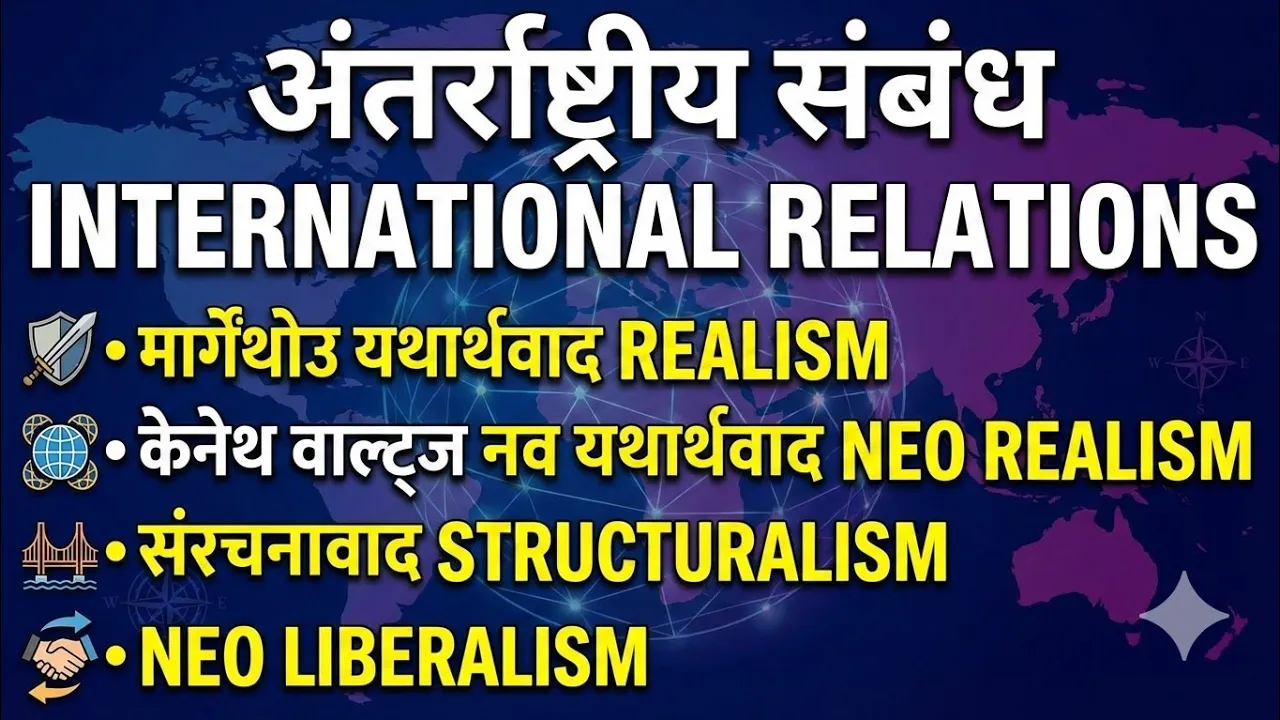
Realism in international relations theory is based on two core assumptions: human egoism (selfishness and competitiveness) and international anarchy (the absence of a higher authority above sovereign states), which together explain why global politics is characterized by power struggles and conflict. Classical realism, drawing from thinkers like Thucydides, Machiavelli, and Hobbes, emphasizes state egoism and conflict, while neorealism (structural realism) developed from the 1970s onwards focuses on how the structure of the international system, particularly anarchy, shapes state behavior through mechanisms like the security dilemma and self-help systems. Neorealists argue that bipolar systems tend toward stability while multipolar systems create instability, and they distinguish between offensive realists (who believe states seek power maximization) and defensive realists (who prioritize security).
Theories of Global Politics: Realism and Neorealism Explained
Added:hello everyone welcome back to my channel so in today's video we are going to discuss about the theories of global politics so without wasting more time let's begin so today we will focus on the realism and new reality so no one sees the world just as it is all of us look at the world through a wheel of theories presuppositions and assumption in this sense observation and interpretations are extricably bound together when we look at the world we are also engaged in in impossing meaning on it this is why theory is important it gives shape and structure to an otherwise shapeless and confusing reality the most important theory is as far as global politics is concerned have come out of the discipline of international relations which has spawned a rich and increasingly diverse range of theoretical traditions the dominant mainstream perspective within the field have been realised and liberalism each offering a different account of the balance between conflict and cooperation in world affairs so why do realist believe that global politics is characterized by an ending conflict while liberals have believed in the possibility of cooperation and enduring peace and why have realist and liberal ideas become more similar over time however from the 1980s onwards especially uh gaining impetus from the collapse of communism and the end of the cold war a series of new theoretical voices has have emerged now let's see some mainstream perspectives see the key mainstream perspectives on global politics are realism and liberalism as the discipline of international relations took shape following world war first it drew particularly heavily on liberal ideas and theories so especially about the desirability of conducting international politics within a framework of moral and legal norms from the late 1930s onwards such as liberal ideas were subject to increasing criticism by royalist theory who highlighted what they saw as divided as the inescapable realities of power politics this established international relations as a divided discipline a battleground between liberalism and realism with the latter increasingly dominating the academic study of the subject from 1945 onwards now let's see what is realism or what do you understand by realism so really sometimes called political reality claims to offer an account of world affairs that is realistic as you know we had already discussed about this in the sense that is hard headed and as really see it devoid of wishful thinking and deluded moralizing for realist global politics is first and last about power and self-interest this is why is often portrayed as a power politics model of international politics as hans morgan to put it politics is a struggle for power over man and whatever its ultimate aim may be power is its immediate goal and the modes of acquiring maintaining and demonstrating it determine the technique of political action right so the theory of power quality is based on two core assumptions as we as we know the people are essentially selfish and competitive meaning that ego is is the defining characteristic of human nature second the state system operates in a context of international anarchy in that there is no authority higher than the sovereign state so the core theme of realist theory can therefore be summed up in the equation egois plus anarchy equals power politics some have suggested that this formulation betrays a basic theoretical fault line within realism dividing it into two distinct schools of thought one of these classical realism explains power politics in terms of egoism while the other neo-realism or structural realism explains it in terms of anarchy however these alternative approaches reflect more a difference of emphasizes within realism rather than a division into rival schools as the central assumptions of realism are common to most realist theories even though they may disagree about which factors are ultimately the most important so the key themes within realism are as follows first state egoism and conflict statecraft and the national interest international anarchy and its implications polarity stability and the balance of power now we will see state egoism and conflict so in basing their theories of politics on a pessimistic but allegedly realistic model of human nature classical realists have worked within a long and established tradition of thought which can be traced back to thucydice account uh thusey die account of the palo bonation war and to sun tzu classic work on strategy the art of were written at roughly the same time in china other significant figures including machiavelli and thomas mccabelly's theory of politics was based on a darkly negative model of a changeless human nature in his view humans are insatiable arrogant crafty and shifting and above all malignant inequality violent and savage on this basis mccabley argued that political life is always characterized by inevitable strife encouraging uh political leaders to rule through the use of cunning cutely and manipulation okay now we will see state egoism and conflict so in basing their theories of politics on a pessimistic but elegantly realistic model of human nature classical realists have worked within a long and established tradition of thought which can be traced back to thucydice account uh tusi die account of the palo bonus war and to suzu classic work on strategy the art of were written at roughly the same time in china other significant figures including machiavelli and thomasov mccable's theory of politics was based on a darkly negative model of a changeless human nature in his view humans are insatiable arrogant crafty and shifting and above all malignant inequality violent and savage on this basis mccabley argued that political life is always characterized by inevitable strife encouraging uh political leaders to rule through the use of cunning crudely and manipulation hobbs thinking was also based on a pessimistic view of human nature he argued that humans are driven by non-rational appetites aversions fears hopes and desires the strongest of which is the desire for power after power as no single person or group is strong enough to establish dominance and therefore a system of orderly rule over society a condition that hobbs referred to as a state of nature an ongoing civil war developed between all members of society life in the state of nature would thus be solitary poor nasty brutish and short according to herbs the only way of escaping from the viability of such a society would be through the establishment of a sovereign and anarchy global power that is by the creation of a state now the question is how did such thinking shape the understanding of international politics in the first place as realists accept that no form of world government can ever be established it meant that politics is conducted within what is in effect and international state of nature the international arena is therefore dangerous and uncertain with order and stability always being the exception exception rather than the rule so second one is whereas mccabellian hops were primarily concerned to explain the conduct of individuals or social groups so realist international theories have been concerned above all within the behavior of states right realist view state as coherent and cohesive units and regard them as the most important actors on the world stage so realist theories of international politics it's uh are thus firmly state centric third and critically the fact that states are composed of and led by people who are inherently selfish greedy and power seeking means that state behavior cannot but exhibit the state uh the same characteristics so human going therefore determine state equals or is morgan to put it uh the social world but a projection of human nature onto the collective plane right okay another point is statecraft and the national interest see although realism is often associated with the attempt to understand international politics from an objective or scientific standpoint it also acknowledges the important role played by straight craft for example in his analysis of the 20 years crisis that came between world war 1 and world war ii e h carr criticized the leading figures at the paris peace conference of 1919 to 20 for for uh alloying wishing a prevail over thinking by neglecting the importance of power in international politics they had set the world on inevitable course to further conflict so morgan 2 similarly placed an emphasis on the art of statecraft arguing that the practical conduct of politics should nevertheless be informed by the six principles of political reality spelled out as follows first politics is governed by objective laws which have their root in human nature second the key to understanding international politics is the concept of interest defined in terms of power third the forms and nature of state power will vary in time place and context but the concept of interest remains consistent fourth universal moral principle do not guide state behavior although this does not rule out an awareness of the moral significance of political action fifth moral aspirations are specific to a particular nation there is no university a great set of moral principles sixth the political spheres is autonomous meaning that the key question in international politics is how does this policy affect the power of the nation so the key guide to statecraft in the realist tradition is a concern about the national interest okay now next topic is anarchy and its implications see from the 1970s onwards new thinking within the realist tradition started to emerge which was critical of early or traditional realist the key text in this process were kenneth was the theory of international politics for was theories about international politic could be developed on three levels of analysis the human individual the state and the international system uh in this slide the defect of classical release was that it could not explain uh behavior right at a level above the state which is a limitations of any indoor genius or inside out theory okay so uh using system theory systems theory new realism or more specifically structural reality explains the behavior of states in terms of the structure of the international system so as as such new realism is an exogenous or outside in theory one in which the behavior of actors is explained in terms of the outside the context or structure in which they operate of global politics so in shifting attention from the state to the international system it places and emphasize on the implications of anarchy so the characteristics of international life stem from the fact that state and other international actors operate within a domain which has no formal central authority but how does this shape behavior and why according to neuralist does international anarchy tend towards conflict rather than corporation so new realists argue that international anarchy necessarily tends towards tension conflict and the unavoidable possibility of war for three main reasons so in the first place as states are separate autonomous and formally equal political units they must ultimately rely on their own resources to realize their interest international anarchy therefore results in a system of self-help because states cannot count on any else to take care of them second relationships between and among states are always characterized by uncertainty and suspicion so this is best explained through the security dilemma although self-help forces state to ensure security and survival by building up a sufficient military capacity to deter other states from attacking them such actions are always liable to be interpreted as hostile or aggressive uncertainly about motives therefore forces states to treat all other states as enemies meaning uh that permanent insecurity is the inescapable consequence of living in conditions of anarchy third conflict is also encouraged by the fact that states are primarily concerned about maintaining or improving their position related to other state that is with making relatives gains so apart from anything else this discourages corporation and reduces the effectiveness of international organizations because although all states may benefit from a particular action or policy each state is actually more worried about whether other states benefit more than it does although such neural is thinking had a profound impact both within and beyond the realist tradition since the 1990s realist theories have often attempted to fuse systems analysis with the unit level approach giving rise to what has been called neoclassical realism or post neo realism okay now let's discuss about the polarity stability and the balance of power see however the fact that states are inclined to treat other states as enemies does not inevitably led to bloodshed and open violence rather neo-realist in common with classical reality believed that conflict can be contained by the balance of power a key concept for all realist theories however while classical realist treat the balance of power as a product of prudent state graph neural see it as a consequence of the structural dynamics of the international system and specifically of the distribution of power or we can say that capacities between and among states so in short the principal uh factors affecting the likely likelihood of a balance of power and therefore the prospect of war or peace are the number of great powers operating within the international system although neural is believed that there is a general bias in the international system in favor of balance rather than imbalance world order is determined by the changing fate of great powers this is reflected in an emphasis on polarity okay neutralists have generally associated bipolar system with stability and a reduced likelihood of war while multi-polar systems have been associated with instability and a greater likelihood of war so this incline neuralist to view cold war bipolarity in broadly positive terms as a long piece but to warn about the implications of rising multipolarity in the post-cold war era realist nevertheless disagree about the relationship between structural instability and the likelihood of war for so-called offensive realists as the primary motivation of states is the equation of power if the balance of power breaks down as it tends to in conditions of multi-polarity there is a very real likelihood that that war will break out defensive realist on the other hand argue that states tend to prioritize security over power in which case states will generally be reluctant to go to war regardless of the dynamics of the international system okay okay over another topic is liberalism we will discuss this topic in the next video so if you have any doubt feel free to ask any question to me and if you like this video please hit the like button and do share my video do subscribe my video for the more videos see you in the next video till then bye bye take care
Up Next
Proxy Wars Explained: How Global Powers Fight Indirectly
@johnnyharris
3M views•2025-03-27

BRICS Pay and de-dollarization: A New Financial Order Emerges? | 55 chars
@DannyHaiphongYT
164.6K views•2024-10-22
Government Surveillance Methods: 10 Ways You May Be Watched
@BeAmazed
1.6M views•2017-04-09
Explaining the Saudi-Iranian Proxy Conflict in the Middle East
@Vox
18.2M views•2017-07-17
Related Study Plans & Knowledge Roadmaps
Structured learning paths in Political Science