



![Cold War - Good Guys Bad Guys [E17/24]](https://i.ytimg.com/vi/K_rOnuvWYIw/hqdefault.jpg?sqp=-oaymwEmCOADEOgC8quKqQMa8AEB-AH-BIAC0AOKAgwIABABGGUgXShOMA8=&rs=AOn4CLA2Vo-TOkyyz6yEARrgThuU5yvahA)









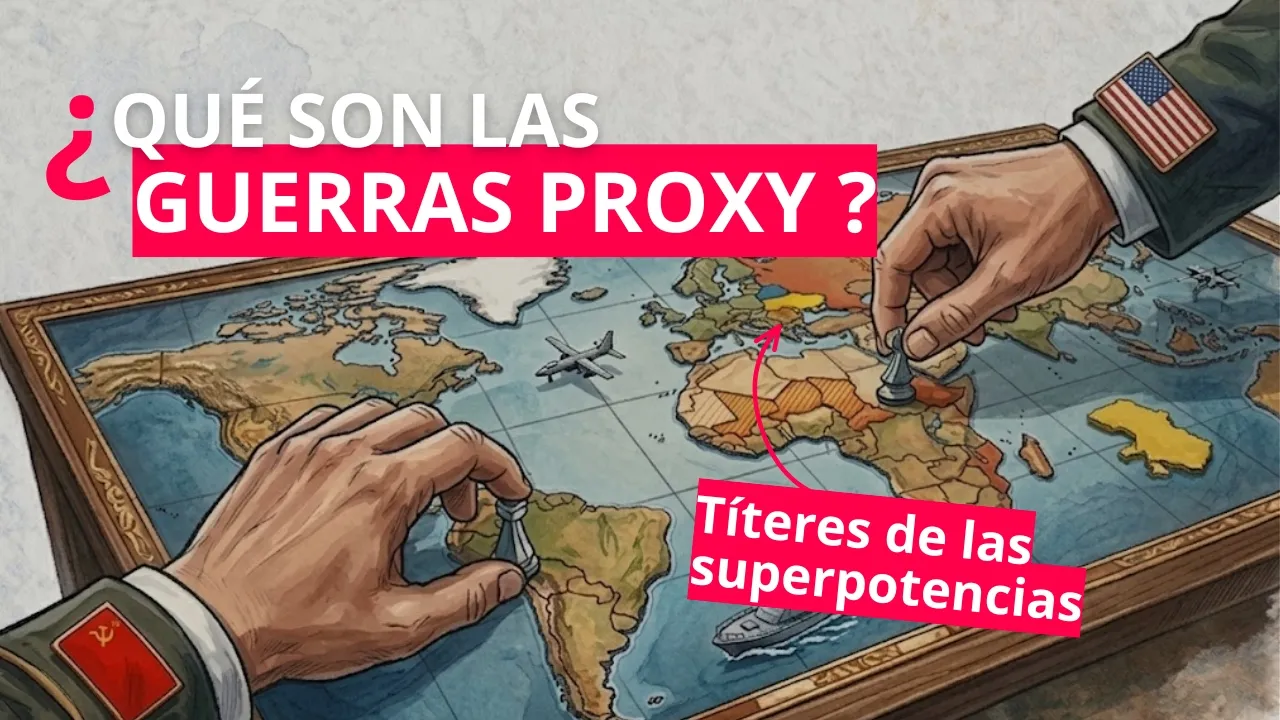





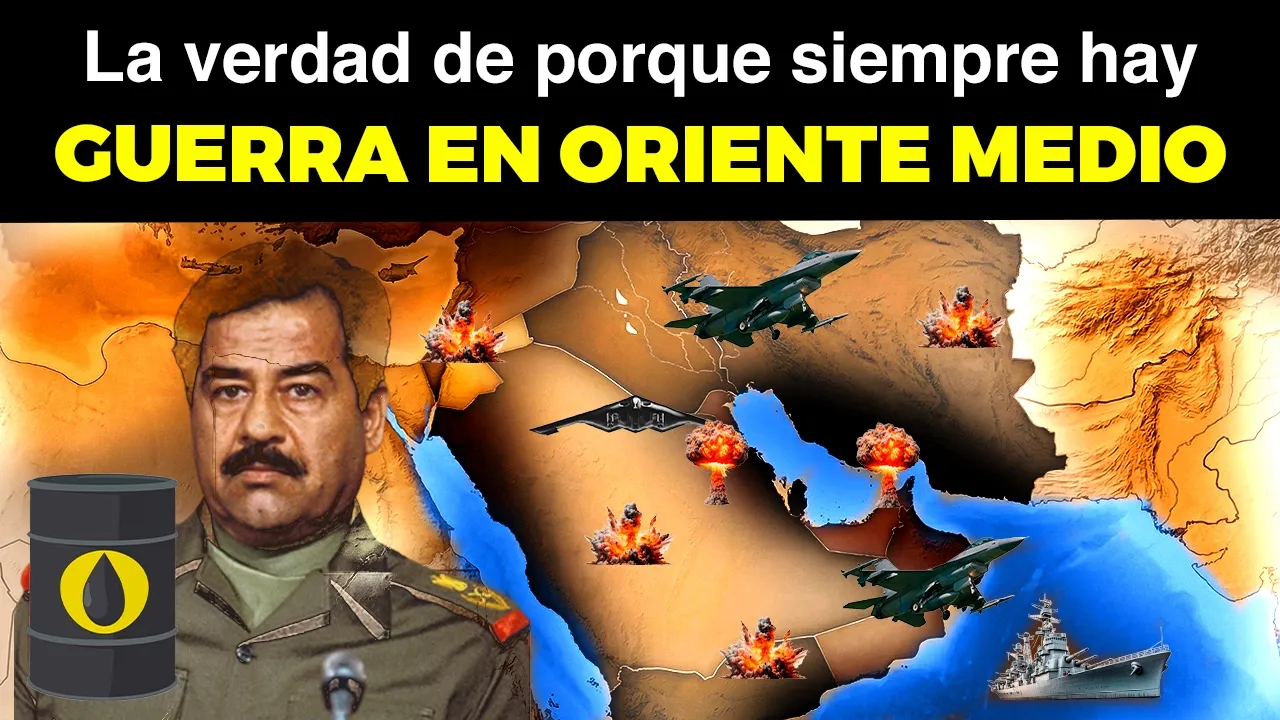


Proxy wars are conflicts where great powers fight each other indirectly by supporting opposing sides in civil wars within other countries, providing guns, money, and military trainers while maintaining deniability; these wars have become more prevalent since the Cold War due to multi-polarity (more patron states willing to sponsor conflicts) and lower costs of intervention, making them longer, deadlier, and more resistant to peace compared to direct warfare.
Proxy Wars Explained: How Global Powers Fight Indirectly
Added:The concept of 'Mutually Assured Destruction' (MAD) and how nuclear deterrence prevents direct military confrontation between global superpowers.
A basic understanding of the Cold War, specifically how the United States and the Soviet Union utilized third-party nations to wage ideological and geopolitical battles.
The definition of state sovereignty and the role of non-state actors, such as militias, rebel groups, and private military companies, in international relations.
The core tenets of Realism in international relations theory, focusing on how states pursue power, national interests, and balance of power dynamics.
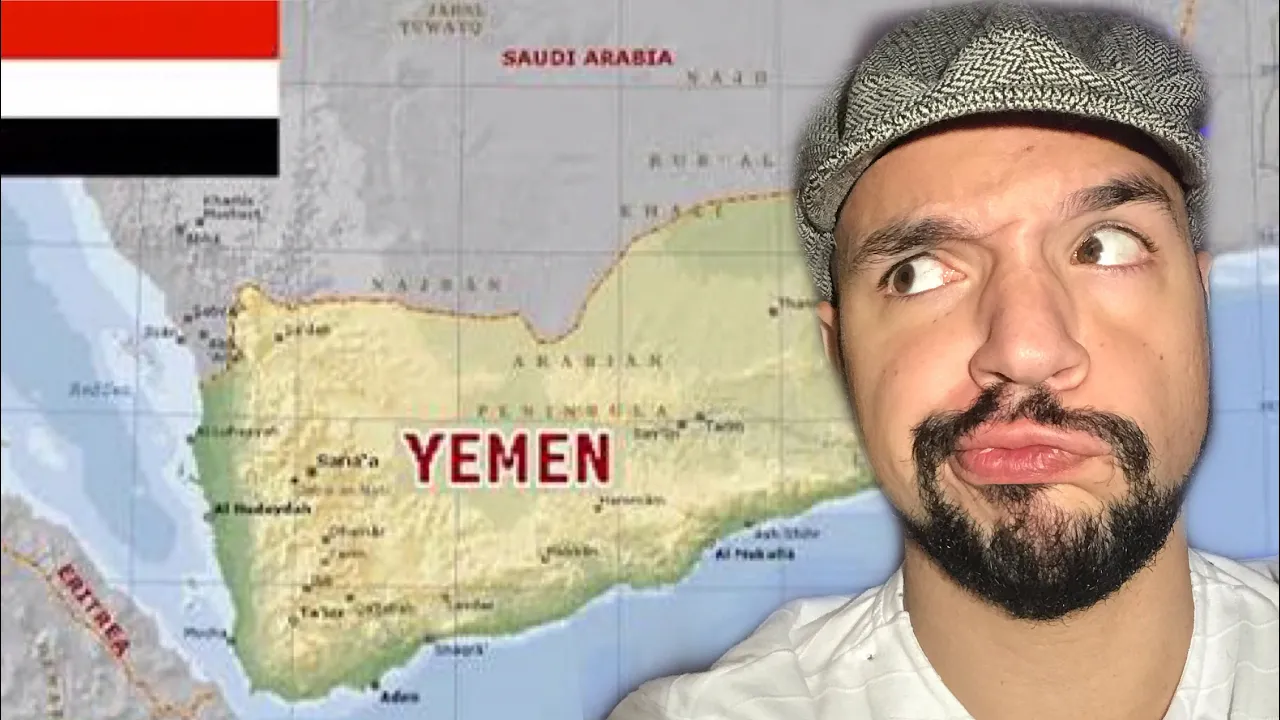
An in-depth analysis of contemporary proxy conflicts, such as the civil wars in Syria and Yemen, identifying the specific regional and global sponsors involved.
The study of hybrid warfare and cyber proxies, examining how nations use state-sponsored hackers and disinformation campaigns to destabilize adversaries indirectly.
An exploration of International Humanitarian Law and the Geneva Conventions to understand the legal challenges of holding sponsor states accountable for proxy war crimes.
The long-term socio-economic consequences of proxy conflicts on host nations, including the phenomena of failed states, refugee crises, and power vacuums.
3M views69.1Klikes29:32Original Release: 2025-03-27
The nature of war is changing and I want to show you how. Conflict in Syria over the last decade. Countries are increasingly using a new way to fight one another and it's remaking the entire globe in the process. There's a really important chart that shows this that I want to show [Music] you. This chart shows all of the interstate conflicts over time, at least since World War II. Interstate just means wars fought between two countries.
You'll notice that it's a pretty flat line. Some years there's just one or two conflicts and some years there's no conflicts at all between countries. But if you pay attention to the world, that doesn't seem right. It certainly doesn't feel like the world is mostly at peace. And that's because this graph doesn't represent all the types of war that exist. For that, you have to stack on a different kind of war like this. This is civil wars or intrastate wars. You can see that there's a lot more of those, but not as many as in the '90s. But now I want to show you what this graph looks like if we put on a different kind of war. The kind of war that we're talking about today. It looks like this. What we're looking at here is intrastate wars. So civil wars, wars within a country, but that are internationalized, meaning they have external backing. The more common name for this is proxy wars. They used to be fairly rare, but look what's happened starting 15 years ago. There were over 25 proxy wars happening at one time in 2020. Now, these usually get talked about as civil wars. The Rwanda civil war, the Syrian civil war, the civil war in Sudan, but these are not just civil wars, and that's what you can't really see by just looking at a graph. You have to go deeper, which is what I want to do today. I want to show you how these things work and why they are so dangerous. Because this is the new way that the most powerful countries in the world fight each other. Not fighting directly, but by using other conflicts as their battlefield. Proxy wars are deadlier, more resistant to peace, and they are a driving force changing geopolitics today. So, I want to explain to you what proxy wars are, how they work, why they're so deadly, and why they're on the rise.
[Music] Hey, how are you doing? Well, how are you doing? Thanks for thanks for taking the moment to chat. I've been talking to Jeremy Shapiro about proxy wars. He's got a lot of perspective on this. Worked in the US government on that and so there's some things that I can maybe allude to and I can't really talk about how I know them. So, don't ask for sources on that one, I guess. Yeah.
Yeah. Okay. So before we get into proxy wars in our world today, I want to go into an imaginary world, a fake map that we've made up.
How would you concisely define what a proxy war is? I think it is when a war is instrumentalized by outside parties to use it as a proxy for their external or larger dispute. In this madeup world, there are two dominant powers. Let's call them Johnny Land. And over here you've got Isan. Yes, I'm doing this. Let's just go with it, please. In the old days, if Johnny Land and Isistan went to war, it would look like this. They would send their armies smashing into one another.
It was really violent. Looked very much like World War I and World War II. They ended up in massive wars with each other that were quite destructive, often to their own countries, particularly if they lost, but frankly, even if they didn't lose. Well, let's remember why big powers go to war. They do this to assert dominance over their region.
Maybe they're after the same resources.
Maybe they fear each other as rivals and they see an opportunity to weaken the other. Or maybe Johnny Land forgot to sign the kids up for little league and Isan is angry and they're fighting directly.
This is how war has worked for thousands of years. That is until the greatest war of them all. World War II was a war that showed the world that we had become too dangerous, too advanced, too destructive, especially with the invention of atomic weapons.
Nuclear weapons really focus the mind.
They are so destructive and so easy to deploy once you have them that the idea that you could ever defend yourself against that is uh not one that really any country has ever entertained. In a nuclear age, it would be insanity for them to fight each other directly. So direct war between these two great powers became unthinkable and thus it basically stopped. This is a crazy thing. Like some sometimes we forget that like we live in a world where great powers don't fight each other directly.
Something that they've always done. But that doesn't mean they don't fight each other. Before we continue about countries and how they fight each other in the modern age, I need to thank today's sponsor. Sponsors are how we run our business. It's how we are able to keep the lights on here as we grow our team and try to do rigorous independent journalism. I've been traveling a lot more lately. Went to Saudi Arabia last year. was just in Finland, which is a video you'll see soon. So, I've actually been using the sponsor of today's video, which is Sy. Thank you SY for sponsoring today's video and for making it way easier for me to get an eSIM when I go to other countries. SLY is an app that you download that easily allows you to install an eSIM on your phone so that you can get access to data plans to hundreds of countries and territories.
Download the app, you choose the country you're going to, and then you just choose how much data you need from 1 GB up to a,000 GB. It's very clear pricing and with a few taps, you get access to that data plan for your travels to that country. There's no physical SIM cards.
There's no extra roaming fees. There's just a clear price for data and a very easy installation. And I got to say, the prices are a lot better than the roaming fees I had been subjecting myself to when I would travel. I'm very happy this exists. If you travel and need eims, then you should try this out. You can easily download the app. You can scan the QR code here or you can use s.com/jnyh harris. Make sure to use the link or scan the QR code so they know that this ad sort of worked. If if this is interesting for you, use the code Johnny Harris at checkout and you'll get 15% off your first ESIM data plan.
Thanks S for sponsoring today's video.
Now, let's get back to our story on how countries fight each other in the modern age. In the nature of countries, they are still extremely competitive and and still looking for ways to harm each other, to get leverage on each other to sort of win in geopolitical competition.
Great powers still see each other as a threat. They still crave dominance over their region and over the world.
Indirect ways of attacking each other, such as supporting proxies and civil wars, has become much more popular since uh nuclear weapons were invented. So, back to our fake map, what this looks like is it would probably start as a conflict popping up within a nearby country. Could be a civil war or power struggle or just some political unrest. Now these two big countries see an opportunity to fight each other indirectly by supporting one side of this war. They send guns, money, military trainers and this is a proxy war. The two sides fighting within the smaller country are the proxies or sometimes referred to as clients and the outside supporters are called patrons.
Now remember in this case they're just sending support to their side of an internal struggle, a civil war in another country. A war is instrumentalized by outside parties to use it as a proxy for their external or larger dispute. From the great power perspective, what is the advantage or benefit of choosing this tool of engagement rather than more direct versions? Depending on the situation, a great power can hope that they can really sap the strength of their rival through support to a proxy war.
Unfortunately, this is a really rational thing for big countries to do. They get deniability. They can say, "Hey, we're not really involved in this war." And they don't have to sacrifice any of their citizens and they're able to contain the violence in someone else's country. They get to fight their rival and have someone else pay the price.
that's proven to be an efficient and somewhat from a great power perspective less dangerous way of geopolitical competition than direct wars. Now, technically proxy wars can take slightly different forms like if the two big countries support two smaller countries that are fighting each other or if one big country invades another country and then the rival supports the resistance of that invasion. There's lots of different forms, but the whole idea is that these two great powers are fighting each other via a different country or different groups.
Let's be done looking at the fake map and look at the real map, the real history of what proxy wars look like in real life. This dynamic has existed for a really long time, but the modern version of it starts to really crop up in the Cold War.
116. You've got these two great powers, the two big patrons, Soviet Union and the United States, using proxy war as a way to fight each other. turning the entire globe into a battlefield. This is why it was a cold war. They never fought each other directly. They just chose local conflicts to support and fuel in an effort to win more influence over the map. Right after World War II, the superpowers focused on China's civil war, supplying opposite sides with military hardware, money, training. This paid off for Moscow when the communist side won. It was a major blow to the United States. But the support in this proxy war was nothing compared to what happened right after in Korea. Korea had become a place of 24-hour terror.
Nothing and no one was left untouched by the harsh, bitter reality of war. Moscow authorized its proxies in the north to try to take over the USbacked South, something they wanted to do. And we made a whole video about that relationship between Kiml Sunsung and Joseph Stalin.
The Soviets supported them with guns, money, fighter jets, and the US, which already had troops there, sent more, way, way, way more, like almost 2 million. The Soviets fought back by fueling the North Korean invasion. And then China, who remember was supported by the Soviet Union, sent its army to join the fight, too. Turning the Korean Peninsula into a battleground, not just between Koreans, but between these massive powers who were both trying to spread their ideology across the map.
All of this outside weaponry and manpower prolongs the fighting beyond what the two sides could sustain on their own. Compared to little North and South Korea, American, Chinese, and Soviet supplies were practically limitless. And this escalated the conflict for years. And then you see something crazy here, which is something we're going to see a lot in these proxy wars. Even when North Korea wanted to stop the fighting, Moscow wouldn't let them. They told them to keep fighting. They had so much leverage over them that they continued to fight. Joseph Stalin, the Soviet leader, even knew his side couldn't win.
But he directed them to keep fighting because he wanted to quote draw out the war to shake up the Truman regime in America and harm the military prestige of the Angloamerican troops. Sometimes that's the logic of a proxy war. Let an entire country burn just to embarrass your opponent. We actually saw a version of this way back in the Civil War when Great Britain sent guns to the Confederate rebels.
But what happened in Korea was on a whole new level. It was so much more deadly. It turned this entire peninsula into scorched earth. All so that these great powers could play out their rivalry using Korea as their battleground. Okay, so you would think that after the Korea situation, both sides would be like, "Whoa, whoa, whoa, that got really bad. Let's like rethink this." But instead, both sides enshrined proxy war in their wartime doctrine.
The policy was to give military support to any nation that was resisting Soviet political aggression, pledging military support. Now, of course, to the public, this was framed very differently than proxy war. The free peoples of the world look to us for support in maintaining their freedom. If we falter in our leadership, we may endanger the peace of the world. a tremendous number of examples of this where in essence the intervention of the great powers ended up creating or defining the sides and internationalizing the conflict or even creating the conflict. So some of these wars were of indigenous origin probably most of them but some of them were actually started from the outside as weapons against each other and others were a sort of combination of the two.
And this gets kind of crazy because what it does is it hijacks local conflicts turning them into an existential conflict between the Soviet Union and the United States when the local conflict maybe had nothing to do with that. Now that incidentally almost led to World War II and taught us that proxy wars not only exacerbate conflicts and turn them into these highly ideological things but also if one side escalates it can spiral to become really dangerous.
Okay, let's speed things up here because we now have the basis for what a proxy war is and sort of how it worked during the Cold War. I'm going to do a speed round now where I give you a few more examples so you can pick up on the patterns of how Cold War proxy wars actually worked. In the 1960s, you had the newly independent and resourcerich Congo. The US supports the rebel groups that are seeking to overthrow this Sovietbacked president. The country plunges into a civil war and the great powers each support their own side which ultimately leads to the installation of an American friendly dictator. Vietnam, like the Vietnam War that a lot of us are familiar with, was a proxy war. The Soviet Union had armed and funded one side. Then the US eventually sent millions of troops to prop up the other side, showing us the madness of proxy wars. The US would sacrifice so many of its citizens to prevent this one spot on the map from turning red. And in the end, the US backside lost. Anyway, now this wasn't the only proxy war that turned out to be fairly pointless. Look at Afghanistan in the late '7s. The Soviet Union was supporting their puppet government there and a rebellion broke out. The Soviets invaded to prop up their ally and then here comes the US.
Because they both opposed the Soviet Union, the Mujahedin took all of those weapons and money and training and funding from the United States. They were their temporary ally.
What the US recognized quite early on in the war is that the Soviets had exposed themselves. They'd created a situation in which they needed to occupy a very difficult country and in which relatively inexpensive and easy provisions of arms and training to Afghan rebels, the so-called Mujahedin could sap the strength in a very disproportionate way of the Soviet army.
And that was incredibly successful. This totally worked. and the Soviets were driven out. The Soviet Union collapsing a few months later. Okay, we're done with the Cold War cuz I want to get to modern day. I want to explain this graph, why it's going up. If you want to learn more about the Cold War, proxy dynamics, etc. We made a video about all the coups that the US sponsored during the Cold War and into modern day that goes deeper into some of these cases. But remember, the Cold War ended. This global competition between the two superpowers was over.
So, you would think that proxy wars, which is conflict fueled by two big patrons, would go down, like they would be over. But the opposite is true. Proxy wars after the Cold War skyrocket. And Jeremy helped me understand why.
I notice a shift in the kind of flavor of proxy wars and and how they look after the Cold War. How would you characterize a proxy war in the 70s between with the Soviet Union and the US feels and looks different than one happening in the Middle East or you know all around the world today? There are many more players um I guess is the issue. So instead of just these two big patron powers, we now have so many more powerful and semi-powerful countries that are sponsoring proxy wars, using them as a tool to gain influence and to damage their rivals. This means that more and more conflicts look like what Lebanon looked like in the 70s and 80s.
A civil war that had so many different factions and that had so many outside patrons sponsoring the different factions. And again, we made a whole video about the Lebanese civil war, the rise of Hezbollah. You can check that out. Now, remember back in the Korean War when Kimmel Sun wanted to negotiate a peace deal, but his patron wouldn't let him. In conflicts like this, like Lebanon, we have so many different patrons. You don't just have two big powers that can veto peace. You have like four or five. It makes it last a lot longer. It makes it very, very difficult to end them. This is in the one instance because it dramatically complicates the negotiation, but maybe even more fundamentally, it is because wars tend to end when one side or or both can't fight them anymore. And the existence of these multiple external supporters means that if one side gets sort of pushed to the very edge, there's an incentive for one or more external supporters to come in and sort of resurrect them. Resurrect them at least enough to be able to continue the war.
And this is the great tragedy of proxy wars is that they have a sort of dynamic equilibrium to them where they can be fought for decades because the external supporters can always do enough to continue the war but rarely do enough to actually end the war. Okay, so that's our first major reason why this graph is going up. We live in a multi-polar world. There's a lot more of these powers willing to be patrons. The other big reason is that proxy wars are becoming increasingly cheap. Back to the Congo, now we're in the late '9s. You have a lot of rebel groups that are fighting for influence, fighting for resources. This civil war became the battleground for neighboring nations to fight with each other, but indirectly using the Congo as their battlefield. Uganda and Rwanda sent money and weapons to rebel groups on one side and even invading to help them fight. Namibia, Angola, and Zimbabwe armed and funded the other side, each hoping to install a friendly government.
And when you're talking about small rebel militias in the Congo, you don't have to do a lot to support them.
sending small arms, a little bit of training, some logistics support that goes a long way in giving them influence or in using them to support your troops that are there as well. And in this case in particular, to add more complexity to it, supporting a certain group could mean getting access to a resourcerich piece of land, which you can then exploit and kind of pay yourself back for the support you gave to those militias. All of this leading to one of the deadliest conflicts in modern history and showing us how these new kinds of proxy wars burn slowly and for a very long time and can be very destructive. They are really hard to stop once they start. Now, let's see how this plays out in Libya in more recent years. 2011, the people rose up. They threw out their longtime dictator only to fracture and find themselves in a power vacuum and a civil war. And here come the patrons to choose which side they want to win. The Russians, the Turks, a couple of European countries for the French and the United States and Egypt all have various external roles.
These patrons have poured money, weapons, and even sending in air strikes to support their side. And they're all quite important in sustaining that civil war.
Libya is still divided between these foreign backed groups. We often think of a revolution that overthrows a dictator as like a really good thing because sometimes it leads to democracy. But because of these modern proxy war dynamics, sometimes it can go the other way. Why does dislodging a strong man maybe create fertile soil for this sort of internationalized civil war? Well, typically what happens when you dislodge a strong man is that you don't have another one to replace him. Different groups are vying for power and vying to reestablish governance or even reestablish total control. One of their instincts is to go out and find external supporters who can add a tremendous amount of capacity to their ability to fight those domestic struggles. Think about it for yourself. You're there.
You're the Johnny Harris Liberation Front and you are fighting the guy across town who has, you know, an upand cominging video podcast. you're kind of evenly matched. If you can go and get some big money from HBO, you can crush him. But at that point, HBO owns you. If he then goes out and gets some money from Netflix, you guys can be fighting these podcast wars for many decades.
Hopefully it language you can understand. I love the analogy.
which is how we got a horrific war like the Syrian civil war. Started as an uprising to overthrow the dictator. It descended into a civil war, eventually attracting powerful patrons that fueled a decade and a half of horrific bloodshed. This is one of the deadliest proxy wars of our time. Not just because over a half a million people died, because of what outside support did to fuel that. It escalated it year after year, leading the dictator to gas his own people and giving rise to violent extremists, all while being fueled by patrons that seemingly had endless supplies to keep fueling the fighting. A similarly horrific thing is happening in Sudan right now. A civil war that has been internationalized, which is making it way worse than it would have been had these patrons not gotten involved.
This is what modern proxy war looks like. It is longer. It is deadlier. And it is more resistant to peace. But there's one proxy war that doesn't really fit with the model we've talked about here.
Let's talk about Ukraine. Ukraine's kind of a weird one. How do you see Ukraine and the proxy dynamics there? How do you think about what's going on there? It is hard. I mean, it's interesting. The US Ukraine relationship is a sort of classic proxy war relationship. But on the other side of the equation is Russia which at the same time is the main combatant and feels like it's almost fighting a proxy war. So you have Ukraine who was invaded and is being supported by the West to fight. But they're fighting against Russian troops but also Russianbacked militias that are fighting to control territory in eastern Ukraine. The Russians are very convinced that they're fighting the United States and the West and Ukraine. And so I've come to think of Ukraine as a sort of half proxy war, which is why it's so dangerous because, you know, one nuclear power is already deeply engaged and already deeply believes that the outcome of the war is is of an existential importance to them. But I think the Russian attitude uh that they have to win this war, that they're deeply involved in this war, that they have sacrificed enormous amounts and that the very existence of their state and regime depends on it means that the possibilities for escalation outside of a proxy war context are very severe.
This is a an important distinction. And Ukraine highlights something that we haven't really talked about yet and is very important here, which is the perspective of the people on the ground experiencing the conflict.
Why would they accept support from an outsider knowing that it will just make this conflict more deadly? And you can see the answer on our little map here. People on this side of the battle line have been under Russian occupation.
That's massacred civilians. It's erased Ukrainian culture. It's kidnapped tens of thousands of Ukrainian children into Russia. So if you live on this side of the line, of course you would take foreign help to reclaim your country to push the invaders back. To you, this isn't a proxy war in all of its sterile language. This is a struggle for your survival, for your very existence. And that is often why local groups will take support from the outsiders because they know their enemy's going to do it too.
And they know that it's the only way that they can survive. And this is the deadly psychology of a proxy [Music] war. Okay, now we haven't talked about China. Like we've talked about the United States and Russia and all these other patrons. Where's China in all of this? Turns out China doesn't play the proxy game. Very surprisingly, this is not their style of geopolitics. As best we know, they haven't directly supported Russia in their fight with Ukraine, though of course they do continue to support in shipping them technology and all these things, but not in the traditional proxy war way. Now, there's a few likely reasons for this. Number one, Beijing likes stability, and proxy wars are like the opposite of stability.
They're also very interested in not bringing any kind of conflict into their borders. They want peace and stability in their borders. And then, and this is a really interesting one, China has this foreign policy tenant they call one of their golden rules, which is that they do not get involved or interfere in the internal affairs of other countries.
This is like a pretty big value in Chinese foreign policy. It's one of the big critiques of the United States is that the US is always sort of meddling other people's countries, trying to influence them this way or that. China's pretty strong about the idea that they will make trade deals and they'll try to influence people with like sending them stuff and giving them debt. But this kind of like meddling in a civil war on a matter of principle, China stays out of it, at least for now. And this is kind of being tested right now on Chinese southern border. There's a civil war happening in Myanmar. A rational great power would pick a side and support them, but China hasn't done this. Now, they have sent a war plane and are considering giving drones to one side of this conflict. So, this may turn into a full-blown proxy situation, but for now, it looks like China is actually sticking mostly to its principle of trying to stay out of interfering with the affairs of another country in a very direct way, trying to prolong a conflict to weaken the other side. And honestly, it's hard not to wonder what could happen if China starts to play the proxy war game like other big powers. This is a country with advanced weaponry and cyber capabilities and a global network of allies and connections. And with a world that already has so many patrons creating all of these crosscutting geometries between different forces, I'm not sure we can handle China being another one of these patrons. Like what does that do to the [Music] system? So that is why this graph exists, why proxy wars are spreading. It is a fairly disastrous trend, especially for the people caught in the middle of wars that are fueled by outsiders, paying the price for a conflict that has nothing to do with them. So, we need to pay attention to this. Proxy wars are the way the world works now. It's the way great powers fight each other. And as international tensions heat up, we need to understand how to look for proxy wars. How to look at a conflict not just as a civil war, but look at who is supporting, who are the sponsors, who are the patrons. that's going to become increasingly important. We will certainly be covering these different conflicts in different ways as they heat up. Um, thank you all for being here and I will see you in the next one. Hey, and before you go, don't forget to check out our new channel, Tunnel Vision, with my friend Kristoff, which if you like Google Earth, you're going to like that channel. Search Party is our other new channel about geopolitics and sports. If you like maps and geopolitics, you'll like that channel, too. We also have a t-shirt that has all the countries on it in case you want one of those. Link in the description. Thanks for being here everyone. I'll see you in the next one. Cool.
[Music] [Music] [Music]
Up Next
10:19
Explaining the Saudi-Iranian Proxy Conflict in the Middle East
@Vox
18.2M views•2017-07-17

24:30
BRICS Pay and de-dollarization: A New Financial Order Emerges? | 55 chars
@DannyHaiphongYT
164.6K views•2024-10-22
7:33
Government Surveillance Methods: 10 Ways You May Be Watched
@BeAmazed
1.6M views•2017-04-09
6:47
Single Transferable Vote Explained: Fair Multi-Winner Elections
@CGPGrey
7.2M views•2014-10-22
Related Study Plans & Knowledge Roadmaps
Structured learning paths in Political Science
political-science
Economic Statecraft: Sanctions & Chokepoints
01Foundations of Geoeconomics and Economic Statecraft
02The Mechanics of Weaponized Interdependence
03International Sanctions: Types, Implementation, and Efficacy
+ 2 more learning modules
12h5 modules
Explore Roadmap
political-science
Central Bank Independence: Politics & Policy
01Foundations of Central Banking and Monetary Policy
02The Time Inconsistency Problem & Inflation Bias
03The Delegation Model and Designing Independence
+ 2 more learning modules
12h5 modules
Explore Roadmap
political-science
Consociationalism: Power-Sharing & Stability
01Democratic Dilemmas in Divided Societies
02Introduction to Consociational Democracy
03The Four Pillars of Consociational Design
+ 2 more learning modules
12h5 modules
Explore Roadmap
political-science
Rebel Governance: Legitimacy, Economy & State
01Foundations of Rebel Governance and Statehood
02Establishing Political Legitimacy and the Rebel Social Contract
03Wartime Economies and Rebel Resource Management
+ 2 more learning modules
14h5 modules
Explore Roadmap