











![[국제정치학] 현실주의](https://i.ytimg.com/vi/60NcOnJJjKo/maxresdefault.jpg)

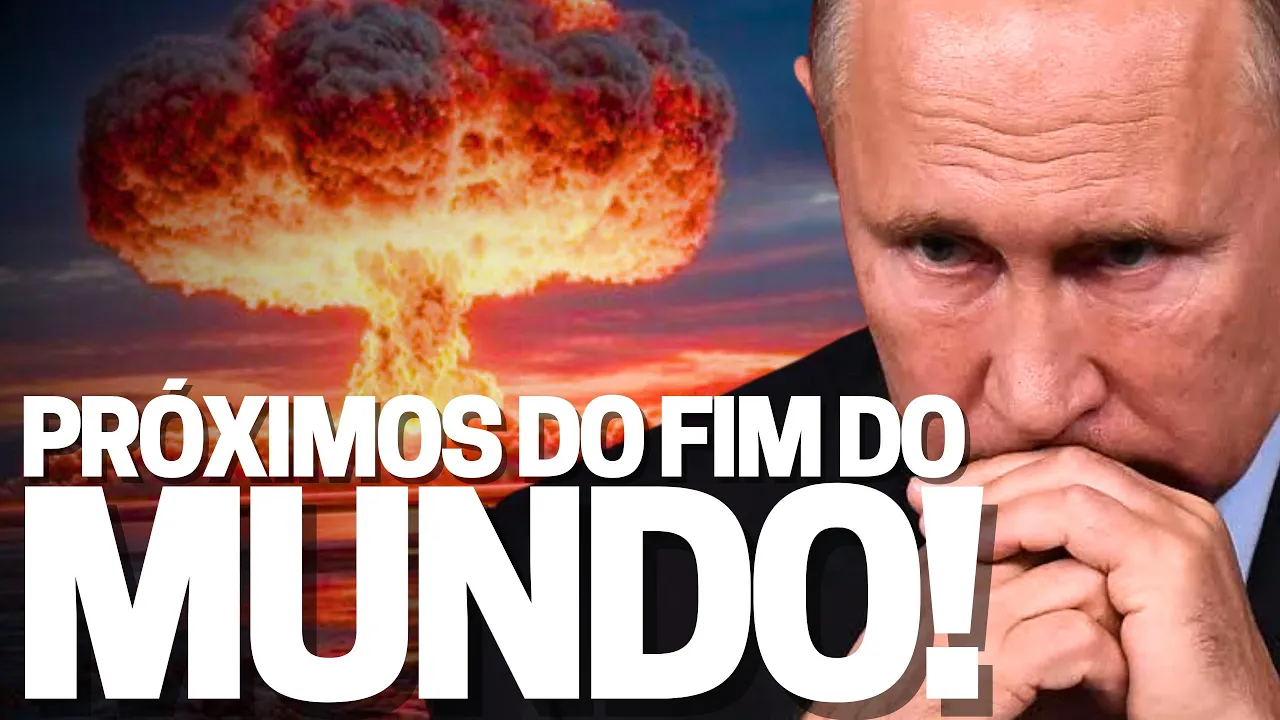
















Mutually Assured Destruction (MAD) is a nuclear deterrence strategy where two opposing powers maintain sufficient nuclear arsenals to ensure that any nuclear attack would result in the attacker's own complete annihilation, thereby preventing either side from initiating nuclear warfare; this doctrine relies on maintaining a nuclear triad (ground-based ICBMs, nuclear bombers, and submarine-launched ballistic missiles) to ensure that no matter how devastating a first strike might be, enough retaliatory capability would survive to guarantee mutual destruction, which has prevented nuclear war between major powers for nearly eight decades since the invention of the atomic bomb.
Mutually Assured Destruction: Nuclear Deterrence Theory Explained
Added:The Geopolitical Context of the Cold War: Familiarity with the ideological rivalry and strategic tensions between the United States and the Soviet Union post-WWII.
Basic Game Theory: An understanding of how rational actors make strategic decisions based on the anticipated actions of others, such as the Prisoner's Dilemma.
The Scale of Nuclear Destruction: A foundational comprehension of the unprecedented destructive power of atomic and thermonuclear weapons compared to conventional armaments.
Realism in International Relations: The theoretical framework that views the international system as anarchic, where state survival and power accumulation are the primary drivers of behavior.
Nuclear Arms Control and Disarmament Treaties: Studying how superpowers negotiated bilateral agreements (such as SALT, START, and the INF Treaty) to limit and reduce their nuclear stockpiles.
The Second Nuclear Age and Multilateral Deterrence: Analyzing how deterrence dynamics shift in a multipolar world with regional nuclear powers like China, India, Pakistan, and North Korea.
Missile Defense Systems and Strategic Instability: Investigating how advanced anti-ballistic missile (ABM) technologies threaten the balance of Mutually Assured Destruction.
Emerging Tech and Command-and-Control Risks: Examining the impact of cyber warfare, artificial intelligence, and hypersonic delivery systems on crisis decision-making and early-warning response times.
633.2K views12.2Klikes20:44Original Release: 2022-06-22
On November 2nd, 2022, Belarusian separatist forces succeed in driving President Alexander Lukashenko from Minsk.
What follows is an intense and losing war for the fate of Belarus.
Not willing to lose yet another former Soviet satellite to pro-Western forces, Russia launches its own invasion to put Lukashenko back in office.
In response, the west pumps billions in weapons and military assistance to the separatist forces, who fight the Russian military to a standstill.
Out of frustration and with increasing threats to his legitimacy, Russian president Vladimir Putin authorizes the use of a tactical nuclear weapon against separatist forces.
For the United States this is a thin red line in the sand, and they respond in kind with their own nuclear strike against Russian forces inside Belarus itself.
Russia won't take this lying down, and chooses to escalate up the nuclear ladder.
From a silo in Siberia, a single ICBM lifts off and rockets into space.
But it doesn't come down over an American city, instead it strikes a US carrier battlegroup just off shore near Japan.
The nuclear detonation is visible to Japanese citizens along the beaches a few dozen miles from the carrier battle group's current location.
Thousands of American sailors die in seconds, thousands more will die from radiation poisoning or from drowning as their battered ships sink.
The United States of America immediately responds with a nuclear strike against the Russian naval facility in Tartus, off the Syrian coast.
A blossoming fireball signals the annihilation of thousands of Russian sailors and over a dozen ships.
Vladimir Putin then takes an unimaginable escalatory step up the nuclear ladder- he calls for an attack on the US naval port of Pearl Harbor, the most important navy base the US operates.
Dozens of ships are destroyed or severely damaged, and tens of thousands die- both military personnel and civilians.
This attack has taken place on American soil, and prompts an immediate and full nuclear retaliation.
But as American missiles are lifting off from silos across the American midwest, Russian missiles likewise roar into the sky.
Submarines prowling the world's oceans on both sides of the conflict surface to firing depth and unleash their own deadly salvos of nuclear intercontinental ballistic missiles.
The world has approximately 30 minutes left to enjoy the prosperity of the 21st century before it's thrown screaming back into the 1st century AD in a global nuclear exchange that will leave even those untouched by the bombs struggling to survive.
This is MAD in action, or Mutually Assured Destruction, and it's the reason why in the almost eight decades since the invention of the atomic bomb, the world hasn't yet been subjected to total nuclear warfare.
Currently there are only nine nuclear states, and the world is working hard to keep that number from growing.
These states are China, France, India, Israel, North Korea, Pakistan, Russia, the United Kingdom, and the United States.
However, there are fears that Iran may soon join their ranks, which would kick off a new nuclear arms race in the middle east and the potential expansion of nuclear status to countries such as Jordan and Saudi Arabia.
At the height of the Cold War, the United States had a frankly absurd 31,225 nuclear weapons, while the Soviet Union at the time of its collapse in 1991 had an estimated 35,000.
A large number of these weapons were of the tactical variety, meaning weapons below 10 kilotons and primarily designed to be used against military targets.
The development of tactical nuclear weapons kicked off in the 60s with the introduction of everything from nuclear landmines to nuclear air defense missiles and even portable nuclear weapons that airborne troops could take with them behind enemy lines.
Tactical nuclear weapons were originally meant to avoid escalation up the nuclear ladder that would lead to complete destruction, but ironically their introduction led to a brand new arms race and the development of thousands of tactical weapons.
The reason for this mini-arms race was simple: if one side had more tactical nuclear weapons than the other, they would be in a position where they might feel they could 'win' an exchange.
Thus to discourage this bad thinking, numbers parity had to be achieved.
It was basically a repeat of the original atomic arms race.
Today Russia claims to have around 6,257 nuclear warheads, while the US has 5,550.
Traditional tactical weapons have been largely replaced with variable yield warheads which can be used in both tactical engagements by lowering their yield, or in city-busting all-out destruction by increasing their yield.
There are still however a number of purely tactical weapons, and a new fear thanks to the end of the intermediate missile ban is that a fresh arms race for tactical nuclear weapons is about to begin or has already started.
Today the other 8 nuclear powers are France with 290 weapons, China with 350 weapons, the United Kingdom with 180 active weapons and 45 retired weapons that can be reactivated if the need arises, Israel with 90 weapons, Pakistan with 165 weapons, India with 160 weapons, and North Korea with an estimated 20 weapons.
All in all, over 12,000 nuclear weapons are either on active status, or retired but still capable of being reactivated in case of war.
Of gravest concern though is the 900 weapons that the United States and Russia each have which they maintain on ready-alert, meaning they could be launched within 15 minutes of the order being given.
The rest of the world's nuclear stockpile is largely kept in reserve, and would need to be physically mated with their launch delivery systems before being employed, a process that could take days or even weeks.
The United Kingdom and France both maintain weapons in 'detargeted' mode on their ballistic missile submarines, and would need hours or days to make ready for use.
The US's most powerful nuke is the B83, which can be dialed up to a yield of 1.2 megatons- this is 60 times more powerful than the bomb dropped on Nagasak.
It has a blast radius of just over 20 miles, which would devastate any major city it was dropped on.
But these weapons often don't come alone- they are packed together with other bombs inside a Multiple Impact Reentry Vehicle, or MIRV warhead.
To destroy a sprawling metropolitan city like Paris, three of these warheads could be targeted at different points in the city, and there would still be more munitions to drop elsewhere from the same missile.
But thanks to Mutually Assured Destruction, MAD for short, this has yet to happen and is very unlikely to- but what is it exactly and how does it work?
MAD is a simple concept any school yard child involved in a water balloon fight understands.
You have water balloons, but so do I.
If you throw one of your balloons at me, I'll drench you by throwing all of mine.
So it's better to find a victim instead who has no water balloons to throw back at you.
Two nuclear powers are unlikely to use nuclear weapons against each other because both know that they will suffer an immediate and overwhelming response.
This leaves the only acceptable option as full-scale nuclear war- which is itself completely unacceptable to anyone but a complete psychopath.
Thus, nuclear war is averted.
But Mutually Assured Destruction doesn't work without some key capabilities.
First, both sides must have an arsenal large enough to threaten near, or complete annihilation of any potential nuclear foe.
If a country only has a limited arsenal, the MAD doctrine begins to break down because suddenly nuclear war becomes winnable.
For example, Israel with only 90 nuclear weapons could never enforce the doctrine of MAD against a country like Russia.
The great disparity in numbers, and the size of Russia, means that in the nuclear calculus, a nuclear war between Russia and Israel is extremely winnable- specially when you factor in the fact that a percentage of these weapons will be intercepted, malfunction, or destroyed before they can be employed.
Secondly, for MAD to work, both countries must have capable and credible delivery methods for their nuclear weapons.
Just after the second World War, the United States enjoyed a brief period of absolute nuclear domination over the Soviet Union due to the fact that the Soviets didn't have any bombers capable of making the long trip to the US to deliver their nuclear cargos.
The US however did, and this meant that in case of war, the Soviet Union was at the absolute mercy of the United States and its nuclear arsenal.
The advent of long-range bombers, reverse-engineered from a captured American bomber in World War 2, suddenly leveled the playing field and prompted a massive bomber arms race between the two countries.
However, with the leaps in long-range missile technology, the bomber was no longer the premier deterrent weapon, and nuclear parity was once more achieved.
The final principle that makes Mutually Assured Destruction work is maintaining a survivable deterrent force.
Many nuclear weapons kept on ready status are equipped onto long-range ICBMs, themselves inside silos across vast missile fields in both the US and Russia.
These fields however are vulnerable to nuclear attack- and in fact would be the very first target of any nuclear attack between the two nations.
Thus, the concept of the nuclear triad was born with the purpose of ensuring that nuclear deterrence was credible and survivable by adopting three means of launching or responding to a nuclear attack.
The first leg of the nuclear triad is ground-based missiles.
ICBMS changed the nuclear game forever by allowing one nation to hit any other nation on earth with a nuclear weapon no matter the location.
Even better, they were impossible to defend against, since they were fired from deep inside friendly territory and traveled to their targets in a half hour or less.
Plus, as they descend through the atmosphere radar tracking becomes difficult and actually intercepting a warhead moving at thousands of miles an hour becomes nearly impossible.
Recent advances in missile defense have made radar tracking of incoming warheads more reliable, and better computing now makes interception of a warhead with a kinetic kill vehicle possible.
This basically involves shooting another missile at an incoming missile, and has been described as shooting a bullet with a bullet.
However, missiles have now evolved to include countermeasures that make interception difficult.
This includes things such as massive clouds of chaff that are expelled from the warhead delivery vehicle during its suborbital flight.
The highly reflective chaff confuses incoming radar and makes picking out an actual warhead from the noise difficult.
However improvements in computer processing power have made chaff less effective than it once was.
Another countermeasure involves the use of dummy warheads, packaged together with live ones.
Rather than avoid interception, this tactic hopes to eat up interceptors by luring them into attacking fake warheads and allowing the real ones to slip through.
The best countermeasure however is directly attacking your enemy's detection assets, either electronically or with kinetic attacks.
By blinding your opponent, you make it impossible for them to intercept your incoming attacks.
ICBMs still remain the main tool of nuclear deterrence, but increasingly sophisticated ballistic missile defense technologies, and the vulnerability of missile fields themselves to attack means that other components are necessary to ensure survivability in case of attack.
Nations like Russia often maintain a mobile ICBM fleet mounted on trucks which can be difficult or impossible to track and target, but no ground-based deterrent is complete without the two other legs of the nuclear triad.
To supplement ground-based missiles, bomber forces make up the second leg of the nuclear triad.
This consists of weapons dropped from long-range bombers close to enemy targets.
In the past this would have been carried out in large scale attacks involving hundreds of bombers, all carrying gravity- or dumb- bombs.
To ensure redundancy, as much as a dozen bombers might be tasked with destroying the same target, with the expectation that many of them would be destroyed by enemy air defenses while en route.
If multiple aircraft succeeded in reaching a target, bomber crews had a laundry list of additional targets to hit after in order of priority- as they also carried multiple bombs.
A single B-52 bomber might service as much as half a dozen targets before being destroyed itself.
Modern air defenses have greatly reduced the effectiveness of the nuclear bomber though, but not nullified it.
Instead of dumb gravity bombs that had to be dropped over or near their target, bombers now carry long-range stand-off attack munitions, which allow them to simply approach enemy territory and fire salvos of nuclear cruise missiles from out of range of enemy air defenses.
Some very forward deployed fighters may pick off a few bombers, but the long range means that most will at least get to their launch points successfully.
These missiles however must themselves evade ever more sophisticated air defenses, since most modern air defenses are also capable of targeting incoming missiles.
To do this, they are fired in large volleys or take circuitous flight routes that avoid known air defense sites, while also flying low to the ground to avoid enemy radar.
Stealth materials aid missiles by reducing their radar signatures, which allow them to get closer to their targets before being detected and thus shortens the window for a successful interception.
The American B-2, and soon the B-21 Raider, however use the most advanced stealth technology in the world to penetrate deep into enemy air space, which allows them to carry out lethally precise strikes using conventional or nuclear weapons.
While the effectiveness of stealth will invariably wane over the coming decades due to advances in radars and computer processing, America's stealth bombers and the use of long-range stand-off attack munitions means that the bomber leg of the nuclear triad remains alive and well.
The advantage that bombers will always enjoy over ground-based ICBMS however is their ability to be mobile.
For much of the Cold War, the US maintained a fleet of nuclear-armed bombers on constant alert and on patrol routes near the Soviet border.
In a new escalation of tensions, nuclear bombers would resume these deterrence patrols which place them near enemy borders, and greatly reduces the time allowed for interception before they strike their targets.
This makes them much more survivable than ground-based ICBMs, which are extremely vulnerable to an overwhelming first strike.
The final leg of the nuclear triad is the one specifically created to avoid nuclear defeat via an overwhelming first strike, and ensure mutually assured destruction in any case.
Towards the end of World War II the Germans developed a submarine-launched version of the V-2 ballistic missile.
The missile would be placed inside a launch tube that was then towed behind the submarine, and would allow the Germans to get much closer to Britain before firing it, increasing its precision and lessening the chance of interception.
However, the war ended before it could be tested.
The concept of a submarine-launched nuclear missile was not lost on both Russian and American engineers as the Cold War dawned.
Unlike aircraft or even ground-based missiles, submarine-launched missiles would basically be impossible to defend against or neutralize, as an enemy submarine could be lurking right off your own coast at any time.
This would give its missiles a flight path of mere minutes.
It even made the concept of a winnable nuclear war possible, as a large enough fleet could launch an attack that would completely neutralize an enemy's arsenal before it even got a chance to fully mobilize its own response.
The Soviets would beat the Americans to the punch- as they often did in the field of rocketry- by launching the first submarine launched ballistic missile in 1955.
They promptly equipped a small fleet of submarines with two nuclear missiles each, creating the first nuclear-capable submarine fleet.
However, the United States launched its own ballistic missile submarine in 1959, and unlike the Soviet submarines the American boat was nuclear-powered.
This meant that it was much harder to detect as it could remain submerged indefinitely, only being limited by the food required for the crew.
It also outgunned any Soviet submarine, with 16 missiles versus the two each Soviet Zulu-class submarine had.
Eventually both the Soviet Union and the US would create a sizable nuclear ballistic missile submarine fleet, threatening each other with undetectable nuclear annihilation and thus maintaining the balance.
In essence, while submarines were stealthy assassins that could make nuclear war winnable, now both sides had a knife to the other's throat, and peace was achieved.
On a side note, the Soviets were always behind the Americans in submarine design and knew their boats were very detectable to American attack submarines and other ASW weapons, thus they opted to build a fleet of road-mobile ICBM launchers to make their land-based deterrent even more resilient.
The United States with the superior submarines never felt the need to follow suit, knowing that their submarines were far more likely to survive than Soviet submarines were.
The nuclear triad ensures nuclear deterrence by maintaining a credible and survivable nuclear force.
An enemy is thus disallowed the idea of achieving a winnable exchange by the sheer fact that the three elements of the nuclear triad are incredibly difficult if not impossible to simultaneously neutralize.
Under a fully operational nuclear triad, an enemy's surprise first strike might eliminate large amounts of the nuclear force, but enough would remain that an overwhelming counter-attack is guaranteed.
Like two gunfighters holding a pistol to each other's head, the nuclear triad ensures mutually assured destruction, and is the reason that the world has never seen a nuclear war.
But let's say that nuclear war did take place, what would that look like?
A nuclear war would indubitably begin with a first strike by one of the two combatants in a 'bolt out of the blue' attack.
Unlike conventional forces, nuclear weapons require very little time to mobilize and prepare for use, and in fact can be fully prepared for launch with little if any signs to the enemy that an attack was incoming.
American ICBMS for example are fully prepared for launch in their silos and have target coordinates dialed in.
There is no 'off switch', the entire launch system cannot be shut down except in case of complete loss of power.
Even then, backup generators allow the silo facility to operate long enough to successfully launch its weapon.
Thus a nuclear war would begin with a first strike against enemy missile fields- likely by submarine launched attacks.
Enemy subs would quietly penetrate the coastal waters of an enemy nation and get close enough that their weapon's flight time to its target is too low for a successful interception- though some point-defense anti-ballistic missile defenses could still successfully intercept during the terminal descent stage.
By the time that the first salvo of submarine-based weapons was fired though, ground-based weapons would also be lifting off from their silos.
Thus the nation caught by surprise would be facing nuclear impacts within minutes from submarine weapons, and follow-on impacts within a half hour at the most from ground-based missiles.
The initial strikes from submarine nukes would wipe out missile fields before authorization to fire could be successfully given, relayed, and carried out.
While detection would be nearly instant thanks to very robust surveillance capabilities by both Russia and the US, it would still take time to relay the news to the respective leader, who would then have to authorize the release of weapons, and exactly how many.
By the time orders were relayed to silos, they would almost certainly be destroyed.
Submarine attacks would also likely target major air bases known for nuclear operations.
Destroying nuclear stockpiles is not necessary, as all an attack would have to do is render the air facilities themselves inoperable.
Big nuclear bombers need equally large air fields to fly from, and there is no hope that a nuclear bomber could be fueled, armed, and take off before even a ground-based missile wiped out its air base.
The only way nuclear air forces remain survivable in a surprise attack is if they already have a number of bombers on alert and ready to take off.
This was exactly the case for the majority of the Cold War, with pilots and crews spending their shifts inside ready rooms and their armed bombers fueled and loaded right outside their door.
In less than ten minutes a nuclear-armed B-52 would be taxing off to bring nuclear devastation somewhere inside the Soviet Union.
With ground-based weapons largely destroyed and air fields hosting nuclear bombers rendered inoperable, an alert goes out to the third surviving leg of the nuclear triad: the ballistic missile submarine fleet.
Stationed in remote corners all over the world, finding one of these SSBNs is like hunting for a needle in a haystack, and the massive range of their weapons means that they don't need to be anywhere near their targets to strike at them.
These submarine fleets alone carry enough firepower to completely decimate even a large nation like the US or Russia, leveling every single major population center in either country.
Unknown to the Soviets, during the Cold War the US was very successful in tracking Soviet submarines thanks to a vast underwater detection system known as SOSUS.
The Soviet Union may have been ahead of the US during much of the Cold War in terms of rocketry, but the United States was the king of the ocean with both ballistic missile and attack submarines far more capable and quieter than their Soviet counterparts.
In fact, for decades Soviet submarines would often have an American tail on them from the moment they left harbor, and if nuclear war ever broke out, the bulk of the Soviet submarine fleet would have been destroyed before getting a chance to launch their weapons.
Advances in Soviet submarine technology and the discovery of SOSUS's capabilities by the Soviets eventually eroded this advantage, and once more restored parity and balance to the doctrine of mutually assured destruction that kept both nations at peace with one another.
Up Next

38:34
Strategic Stability and Missile Defense: The Golden Dome Debate
@csis
5K views•2025-11-19

24:30
BRICS Pay and de-dollarization: A New Financial Order Emerges? | 55 chars
@DannyHaiphongYT
164.6K views•2024-10-22
7:33
Government Surveillance Methods: 10 Ways You May Be Watched
@BeAmazed
1.6M views•2017-04-09
10:19
Explaining the Saudi-Iranian Proxy Conflict in the Middle East
@Vox
18.2M views•2017-07-17
Related Study Plans & Knowledge Roadmaps
Structured learning paths in Political Science
political-science
Economic Statecraft: Sanctions & Chokepoints
01Foundations of Geoeconomics and Economic Statecraft
02The Mechanics of Weaponized Interdependence
03International Sanctions: Types, Implementation, and Efficacy
+ 2 more learning modules
12h5 modules
Explore Roadmap
political-science
Central Bank Independence: Politics & Policy
01Foundations of Central Banking and Monetary Policy
02The Time Inconsistency Problem & Inflation Bias
03The Delegation Model and Designing Independence
+ 2 more learning modules
12h5 modules
Explore Roadmap
political-science
Consociationalism: Power-Sharing & Stability
01Democratic Dilemmas in Divided Societies
02Introduction to Consociational Democracy
03The Four Pillars of Consociational Design
+ 2 more learning modules
12h5 modules
Explore Roadmap
political-science
Rebel Governance: Legitimacy, Economy & State
01Foundations of Rebel Governance and Statehood
02Establishing Political Legitimacy and the Rebel Social Contract
03Wartime Economies and Rebel Resource Management
+ 2 more learning modules
14h5 modules
Explore Roadmap