








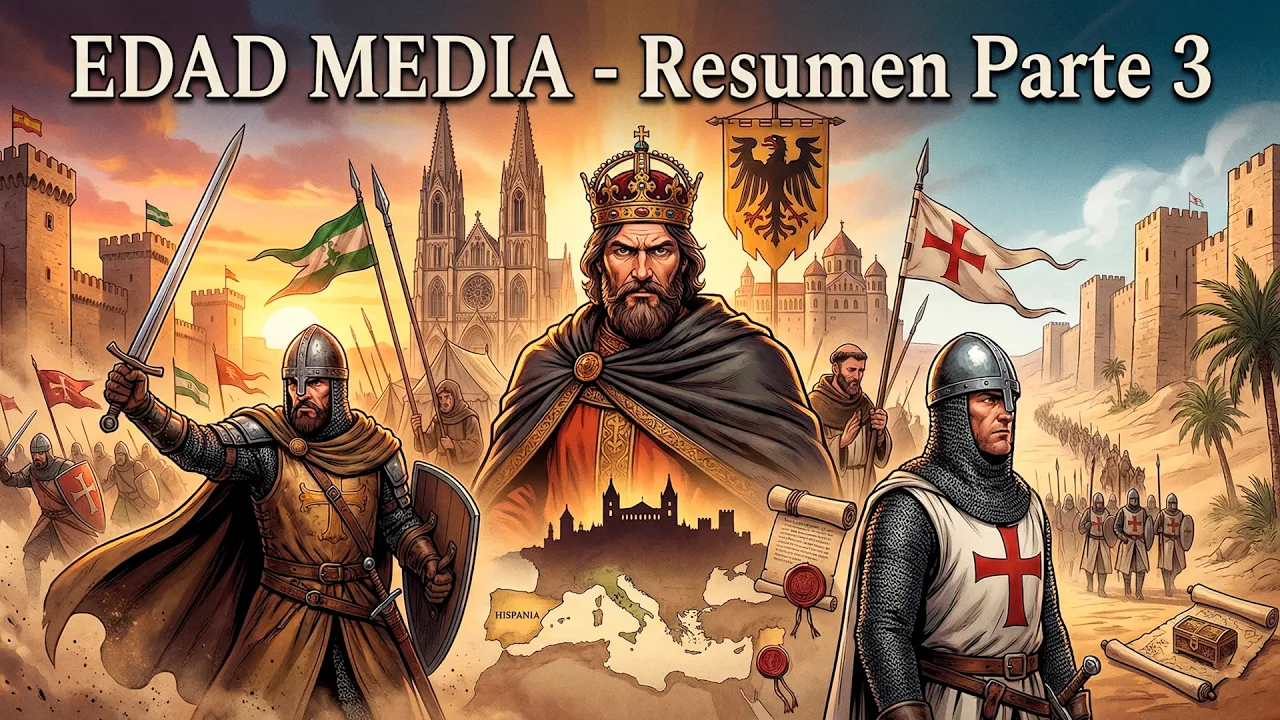




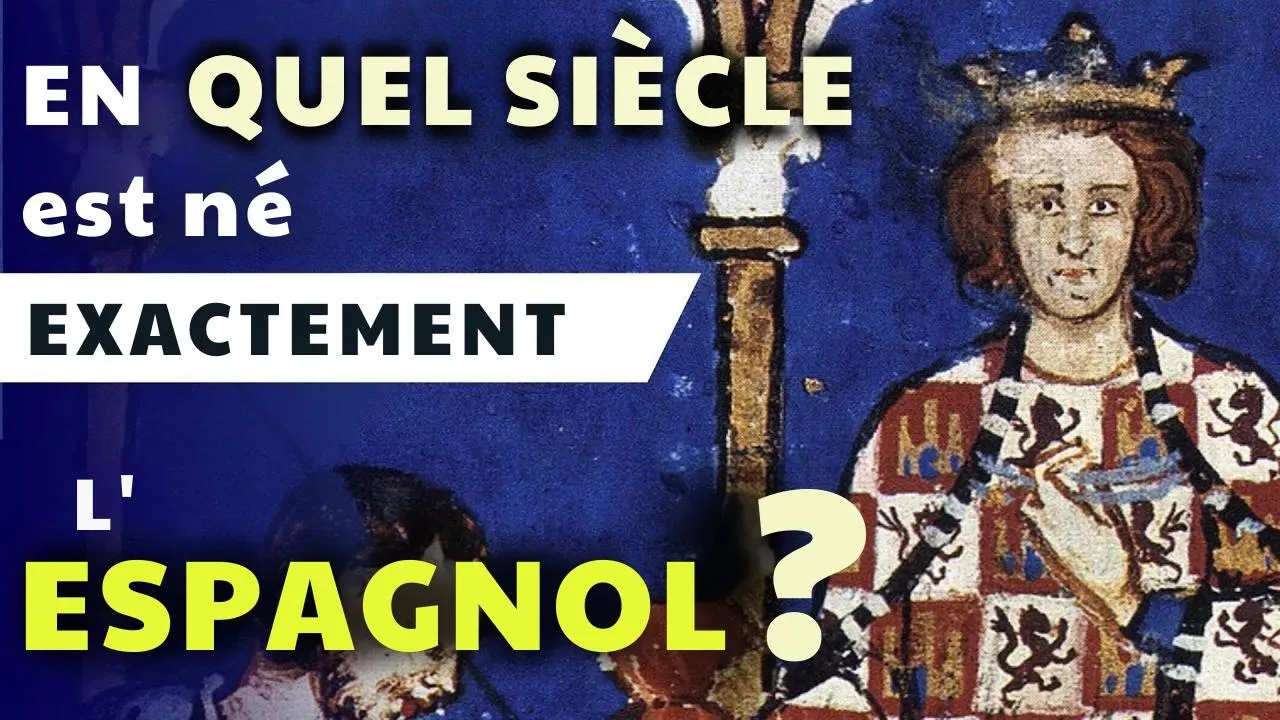




Alfonso X of Castile (r. 1252-1284), nicknamed 'el sabio' (the wise), transformed Spanish from a minor dialect into a world language by commissioning translations of Arabic scientific, legal, and astronomical texts into Castilian, thereby establishing it as the language of scholarship and law; this linguistic foundation enabled Spanish to spread globally through Spanish colonial expansion following Columbus's 1492 voyage.
Spanish Language Origin: A Historical Documentary
Added:The evolution of Vulgar Latin into regional Romance languages following the collapse of the Western Roman Empire.
The historical context of the Iberian Peninsula prior to the 13th century, specifically the co-existence of Christian kingdoms and Al-Andalus (Islamic Spain).
The sociolinguistic concept of diglossia, particularly the medieval distinction between spoken vernacular dialects and written Latin.
The political dynamics of the early Reconquista and how territorial expansion influenced the prestige of regional dialects like Castilian.
The structural and collaborative operations of the Toledo School of Translators (Escuela de Traductores de Toledo) under Alfonso X.
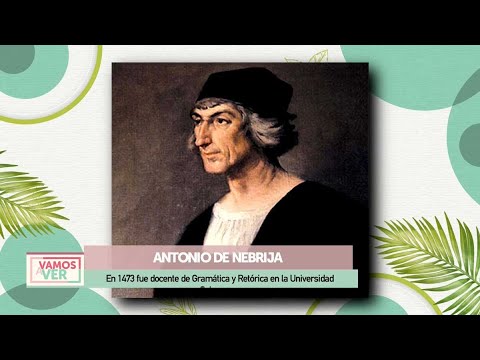
The standardization of Spanish grammar, notably marked by Antonio de Nebrija's 'Gramática de la lengua castellana' in 1492.
The global expansion of Castilian during the age of exploration and Spanish colonization, leading to modern regional dialects in the Americas.
The political use of language standardization as a core instrument for nation-state building and cultural hegemony in early modern Europe.
145K views6.4Klikes23:57Original Release: 2019-07-03
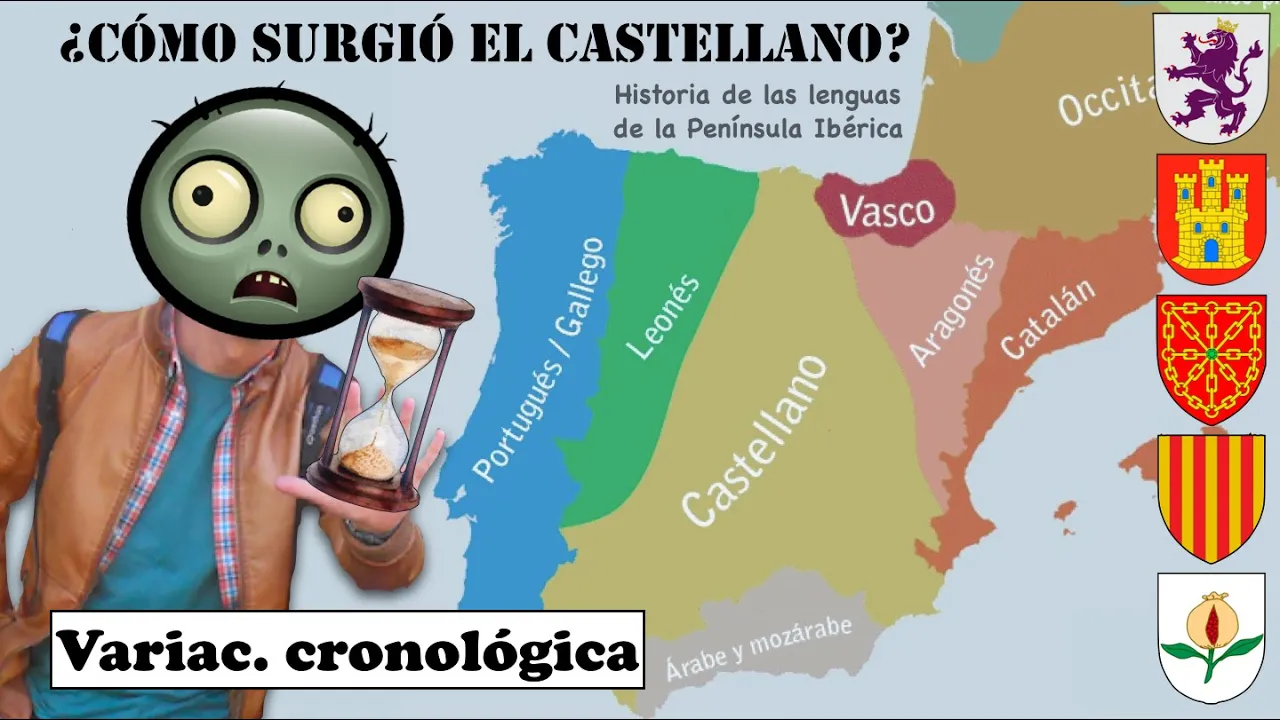
we can really only gauge the importance of an event after it happens something that may seem inconsequential at the time can turn out to have unexpected ramifications later on that's what studying history is all about looking back we can clearly see turning points although people at the time may have had no idea where things are headed and some turning points are so pivotal they change world history for centuries to come [Music] [Applause] consider the history of human languages we know there are over 7,000 of them yet only a tiny fraction are ever used by people on a global scale why is that well some languages like Chinese or Hindi have become very large through the sheer size of their populations other languages like Spanish French or English have become global languages through conquest and colonialism ever since Columbus is voyage in 1492 Spanish has been on a path to become a world language [Music] but there was a time not so long before Columbus the Castilian was just one dialect in a sparsely populated land so what was a turning point that made it one of the world's most spoken languages today let's find out Spanish began as a dialect of Latin the language of the Roman Empire which ruled the Mediterranean 2,000 years ago when the Empire collapsed Latin evolved into many different dialects becoming French Italian Portuguese Catalan Romanian and other Romance languages in the Iberian Peninsula modern-day Spain and Portugal numerous languages evolved these included Galician and leonie's in the north Catalan and Aragon ease in the east and Castilian into central kingdoms of Castile and Leon eventually Castilian became the dominant language of Spain and would be carried around the world with the expanding Spanish Empire our search for the beginning of Castilian spread Spanish --is turningpoint you might say takes us back not just to 1492 but almost a thousand years before that because on the other side of the Mediterranean a major new religion was spreading another turning point in history that would affect the growth of Spanish in the seventh century Islam emerged on the Arabian Peninsula it spread teachings about God and biblical prophets through the Arabic holy book the Quran Islam spread quickly from Arabia forming a vast United culture that spanned from India to the Iberian Peninsula with its capital in Baghdad it held some of the world's most important knowledge in the 9th and 10th centuries Islamic scholars translated books for Persian and classical Greek into Arabic advancing learning in many fields from biology to medicine to astronomy and beyond and that knowledge found its way to Spain with the spread of Muslim civilizations after 711 Iberia was mostly a Muslim land and it's great cities were all Muslim cities learning took place in Arabic which became the most prestigious and important intellectual language all around the Mediterranean Sea [Music] it's a big building that's because it's the royal palace it's one of the largest palaces in Europe and one of the most iconic buildings in the city of Madrid although it was built in the 18th century it conceals a hidden Muslim past thousand years ago on this site there stood in Islamic fortress so what happened how did we get from a land dominated by Arabic to an empire that spreads Spanish around the globe as I looked for explanations of how Muslim Iberia was transformed into the Spain of today I suspected that one important clue was the success of a Castilian language to find out I headed to the Spanish National Library the biblioteca Nacional behind me stands the largest collection of books in the Spanish language the biblioteca Nacional or national library of Madrid receives every book printed in Spain and houses over 30 million items it's thus a fitting place for statutes that honor some of the most important figures in Spanish literature like Lopez a Vega the contemporary of Shakespeare who penned thousands of classical plays or Antonio Deneb Rica who wrote the first grammar of the Castilian language or Miguel de Cervantes who penned the immortal novel Don Quixote but among these giants of Spanish writing there's one figure who lived centuries before the others a medieval king named Alfonso the tenth nicknamed el sabio the wise because of his great learning Alfonso's name and his many accomplishments are little known outside of Spanish school books to find out more about who this mysterious King was I went to visit historian Mercedes Garcia eronel I function at tenth was the first king who had his whole court and administration work and write in Castilian in a Romans language no King in Europe was going to do that still for centuries please have very important King I first saw a trance inside the National Library I was able to examine some of our father's own original works I realized that Alfonso was the bridge between Spain's Muslim past and its global present to dig deeper into Alphonsus story I would have to start in his birthplace the city of Toledo from the 8th to the 13th centuries the Iberian Peninsula was dominated by Muslim civilization which called the land al-andalus over the course of five centuries the Christians conquered this territory driving the Muslims south Toledo's in the centre of the peninsula and when it was conquered in the year 1085 Christians left much of what they found intact instead of burning the books they started reading them but in Toledo the Christians found some of the world's most important books still intact all of the classics of ancient Greece which were unknown in Latin but preserved in the Muslim world philosophy books by Plato and Aristotle and their followers pastor nominal books by ptolemy medical books by Galen and Hippocrates and many more these books were rediscovered along with commentaries by great Muslim thinkers like Avicenna and Averroes I visited the university's research center called the school of translators their scholars are studying the history of translation in the city well concept to this palo de de de toledo un concepto moderno por la historia del siglo DC Nueve y para reference el al movimiento de traducción cuban esta ciudad sena das media en esta ciudad comedian las Tres culturas a via población de tres quatro idiomas y esto favor hicieron caldo cultivo perfecto para momento a parte de que esta ciudad y eran un a grantee blow teca's me sobre todo de cordoba muchos de los libros where entrado x' el norte y yerin Latifah Toledo Yama's adelante Roberto canal in pousada Alfonso de timo pues es la coruña preto Mille active etre doctora impulse Allah al Castellanos molana' siente todo el movimiento de producción con esta ciudad Fabricio y console ido el el desarrollo el castillo no cocoa muy OMA so the year is 12 21 when Alfonzo was born in this city Toledo it was already a place famous for translation from arabic but just south of here was a land of war between Christians and Muslims over the next 30 years Alfonso's father Fernando the third would conquer most of it reducing Muslim land by 75% and when Alfonso took over in 1252 his kingdom was the largest and most powerful in the whole peninsula so what was all fun so gonna do with his newfound power you've got to understand the psychology of this young king for an end of the 3rd was a larger-than-life military hero and Alfonso wanted to live up to his father's greatness somehow so he dedicated his crowns vast new resources to reviving a tradition the Toledo was famous for translation [Music] but I also didn't want to just redo what had been done he wanted to be original so he chose to do something radical to ignore Latin and instead to translate Arabic books into his own language Castilian which had not been used for science or learning may not be as dramatic as being a military hero but his actions would change history for centuries and affect us even into the modern day [Music] Alfonzo commissioned Jewish Christian and Muslim translators and intellectuals in his court to make Castilian versions of books from the Muslim world these included literary fables religious legends medieval magic books and above all astronomy and astrology in just a few decades Alfonzo elevated Castilian to be the most influential language in the Iberian Peninsula to understand how important Alfonso's Castilian translations were I went to see some of the original manuscripts made in his own workshops I'm standing outside of el escorial the enormous palace and monastery built by philip ii in the 16th century just outside of Madrid here we can find one of the largest collections in the world of all fond shows original works I'm inside the escorial library and here we can see that Alfonso didn't just use the Castilian language to translate books out of Arabic he also commissioned astronomers in his own court to take detailed measurements of the Stars in order to expand the books of astronomy by thinkers in Baghdad in Toledo his translations in the Castilian would have an influence on science for centuries his libro than severe astronomia book of astronomical knowledge provided extensive information on how to use scientific tools like the astrolabe the compass and the water clock Alfonso's astronomical tables the table cellphone see ace built on these Arabic models and became widely known European astronomers used these tables for over 300 years nicholas copernicus who revolutionized planetary science in the 16th century had his own copy of all fonts those tables Alfonzo also had his court scholars write numerous influential books in other areas his history of Spain or historia de espana and general history general Astoria include chronicles of Spain and the wider world his seven parts or siete partida's is an exhaustive law code in the vernacular language it was so influential in the development of modern law that Alfonso's image now hangs in the US House of Representatives in Washington has one of the great lawgivers of history Alfonzo even wrote a book on games describing chess checkers and dice games like backgammon Alfonso's ambitious efforts transformed Castilian into a language of history science and law setting it on a path to become a world language [Music] although the manuscripts he compiled are kept here in El Escorial and his birthplace is Toledo to truly understand Alfonso's role as the founder of the Spanish language we have to continue our journey to the southern city of Seville Fernando's conquest of Seville in 1248 was considered his greatest military victory it was the most significant conquest since the Christian taking of Toledo and it was so meaningful to the cause of Christian expansion that Fernando would later be made a saint by the Catholic Church Seville was probably Alfonso's favorite city because it captured the beauty and style that he admired most that of the Muslims who held this city only four years before he began his reign the memory of Alfonso's father Fernando lives on in this city that's him on his horse right here in front of City Hall celebrating his military victory and as you walk around the city will discover that Seville remembers Alfonso - the official motto of the city is attributed by popular legend - Alfonso himself it says no dough which stands for no mayor they hollow or it did not abandon me these words can be found on every street in Seville which still honors him for his great accomplishments when Alfonso took over as king in 1252 the city had been one of the most important cities of Muslim al-andalus just a few years before one of the first things to happen after the conquest of the city was to rededicate the mosque as a church and the mosque of Seville was one of the largest in al-andalus or anywhere in the Mediterranean it is recorded that Alfonso threatened to punish anyone who tried to tear the mosque down both Christians who wanted to celebrate their victory and Muslims who didn't want the mosque to fall into Christian hands the mosques original courtyard and tower or minaret still stand today the minaret now serves as a bell tower and is known as la giralda or the spinning lady because of the weathervane on top of its pinnacle Alfonso modeled his kingdom on that of the Muslim civilization his father conquered right next to the cathedral he converted the existing Muslim fortress or Alcazar into a palace for his own uses today it's the oldest royal residence in Spain still used by the royal family during their state visits to the city [Music] Alfonso preserved these monuments to display his new wealth but he also continued to use Islamic style in the new structures evil this hybrid approach of using Islamic style on Christian buildings is called new day hostile which refers to the Muslims who stayed behind after Alfonzo took over its Castilian King in making these combined styles Alphonse established a pattern it would be carried on by later Castilian kings I [Music] went to speak with historian Sebastian Vettel Mendes Aguilera about Alfonso's great-great grandson Pedro the first he expanded the alcazar palace in the 14th century he explained how the entryway to Pedro's Palace bears a unique inscription praising the king in Castilian while also quoting Arabic it says there is no victor except God while at Lalibela LA the same words that appear in the Alhambra fortress built in Muslim Granada but on Pedro's palace the inscription forms an intricate puzzle repeating the words eight times forwards backwards and upside down because of Alfonso we can read the history of the Spanish language in monuments like these where Castilian and Arabic appears side-by-side remember those books Alfonso had translated it was here in Seville that his translations of astronomical knowledge and star positions started to pay off by helping early modern navigators explore the seas ever since Roman soldiers first established a colony here in 206 BC during the Second Punic Wars seville's fortune has been tied to the river that runs through it the Guadalquivir during Alfonso's reign the city was guarded by a lookout on the river known as the golden tower or totally DeLauro it was erected by the Muslims at the same time as the mosque near the tower Alfonso built shipyards called the after asanas to defend the city an advanced sea travel in nomine Sevilla controler Acosta that is whoever holds Seville controls the coast it's no accident that after Columbus's voyage to the Americas in 1492 Seville became the center of Spain's expanding maritime Empire spanning east through the Mediterranean and West to the Americas and beyond even to the Philippines it was here in the house of trade built inside the Alcazar that Magellan first planned the circumnavigation of the globe in the early 16th century that Amerigo Vespucci planned his voyage to the land that would take his name America after the conquest of the new world Seville became the center of all government and trade relating to the Americas Spanish explorers sent all documents from Spanish rule to Seville these included everything from Columbus's letters to ledgers of the governments in Mexico and Peru and they're still housed here today in the former Counting house the archive of the Indies and they didn't just bring documents they brought spices and slaves and silver lots of silver all of the wealth of the Americas extracted by forced indigenous labor passed through Seville and the city grew rich on it it produced opulent art and made towering monuments and the cities dozens of convents and monasteries are decorated with it here in Seville Christian Muslim and Jewish world combined on a path that collided often violently with the new world of the Americas the former mosque turned Church was torn down in the 15th century to make room for this towering Gothic cathedral now the largest Gothic cathedral in the world today most visitors stop at this to that of Christopher Columbus yet they don't know that the tombs of Alfonso and his father are only a few steps away in the Royal Chapel Alfonso built a tomb to honor his father Fernando and it is covered in inscriptions praising him as the Conqueror of Seville appropriately these inscriptions are written in the four languages of his kingdom Latin Hebrew Arabic and Castilian so what were we looking for turning points because of Alfonso's translations Castilian became a dominant language because of Seville's location and Spain's imperial ambitions that language spread around the world today it's spoken by hundreds of millions of people on every continent yes and yet who remembers Alfonso's name today remember I mentioned how the official motto of the city of Seville is attributed by popular legend to Alfonso himself it's everywhere we look from flags to signs to manhole covers Alfonso's words give thanks to the city because as he said no Miata Hollow it did not abandon and Alphonsus words remind us that turning points in history are evident everywhere we look we just have to remember [Music] [Applause] [Music] you
Up Next

17:50
Islamic Golden Age: Science, Philosophy, and Rationalism
@thecyberpunkdingo
430 views•2026-03-15

93:30
Zola, Baudelaire, Maupassant & the Transformation of Paris, 1852-1900
@SylviaSagona
5.6K views•2015-05-31
91:57
The Geopolitics of the Ukraine War and the Rise of Global Autocracy
@JordanHarbingerShow
468K views•2025-04-19
17:05
Understanding the Cold War: Superpower Conflicts and the Road to Détente
@OverSimplified
46.1M views•2019-01-24
Related Study Plans & Knowledge Roadmaps
Structured learning paths in History
history
Byzantine Iconoclasm: Theology, Art & Politics
01Foundations of Byzantium and Early Christian Images
02The First Iconoclasm: Leo III and the Crisis of Images
03Empress Irene, Nicaea II, and the Second Iconoclasm
+ 2 more learning modules
9h5 modules
Explore Roadmap
history
Iranian Revolution (Causes, Events & Legacy)
01The Pahlavi Dynasty and the Roots of Discontent
02The Spark of Rebellion and the Rise of Khomeini
031979: The Fall of the Shah and the Climax of the Revolution
+ 2 more learning modules
8h5 modules
Explore Roadmap
history
Mali Empire: Mansa Musa, Trade & Timbuktu
01Foundations of the Mali Empire
02The Trans-Saharan Gold and Salt Trade
03The Reign and Pilgrimage of Mansa Musa
+ 1 more learning modules
6h4 modules
Explore Roadmap
history
1947 Partition: Politics, Borders & Legacies
01Foundations of British India and the Divide
02The Political Negotiations and the Mountbatten Plan
03Drawing the Boundary: The Radcliffe Line
+ 2 more learning modules
8h5 modules
Explore Roadmap