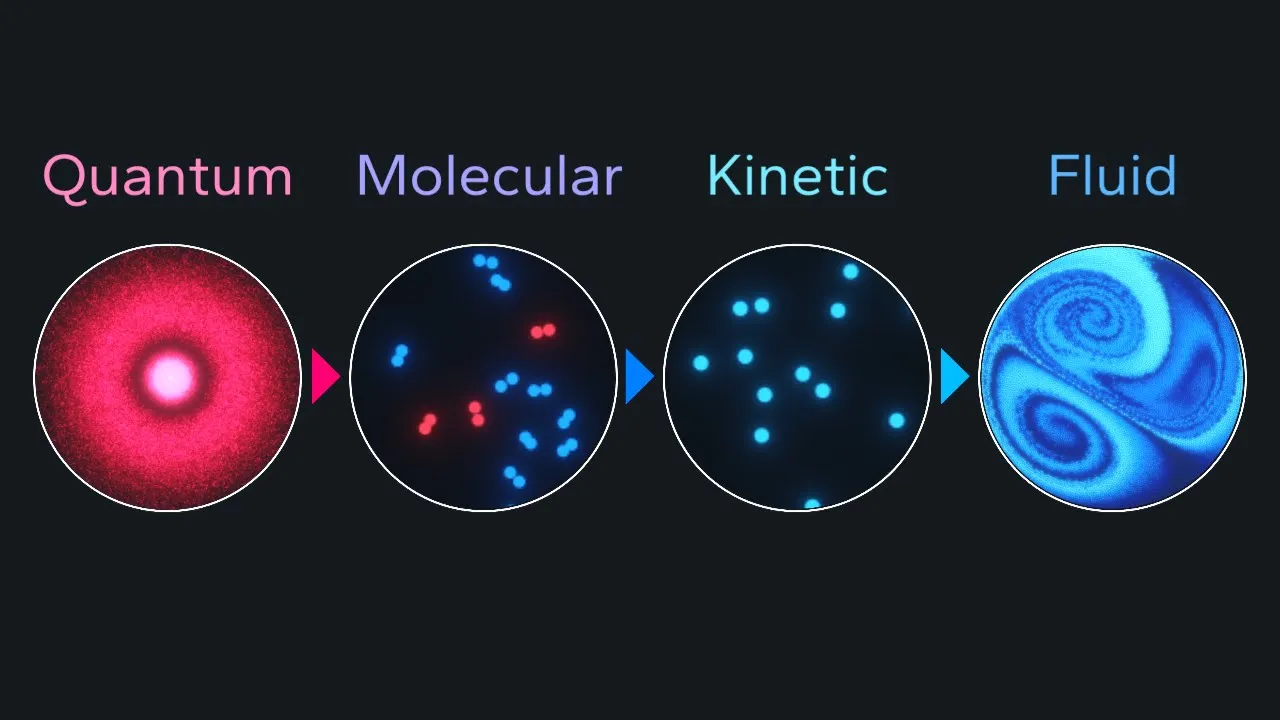


![Introduction to Density Functional Theory [Part One] Background](https://i.ytimg.com/vi_webp/Ez_Fm4iTUeo/maxresdefault.webp)




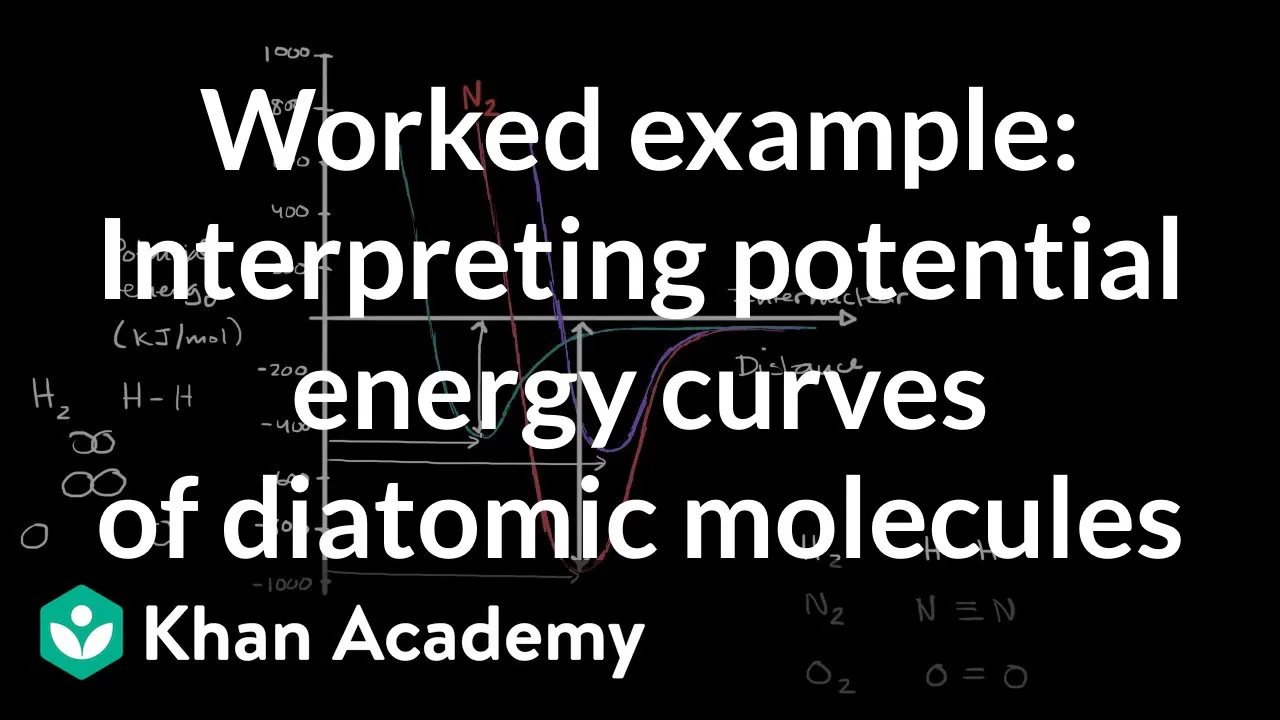



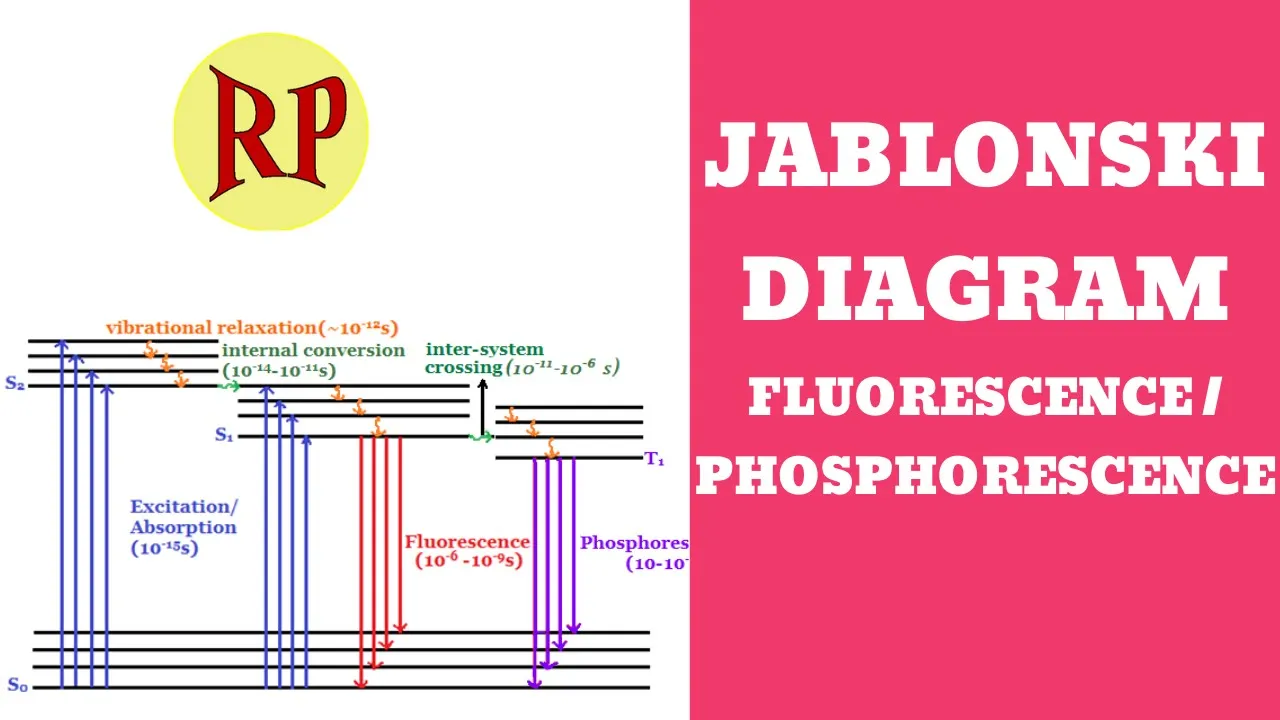


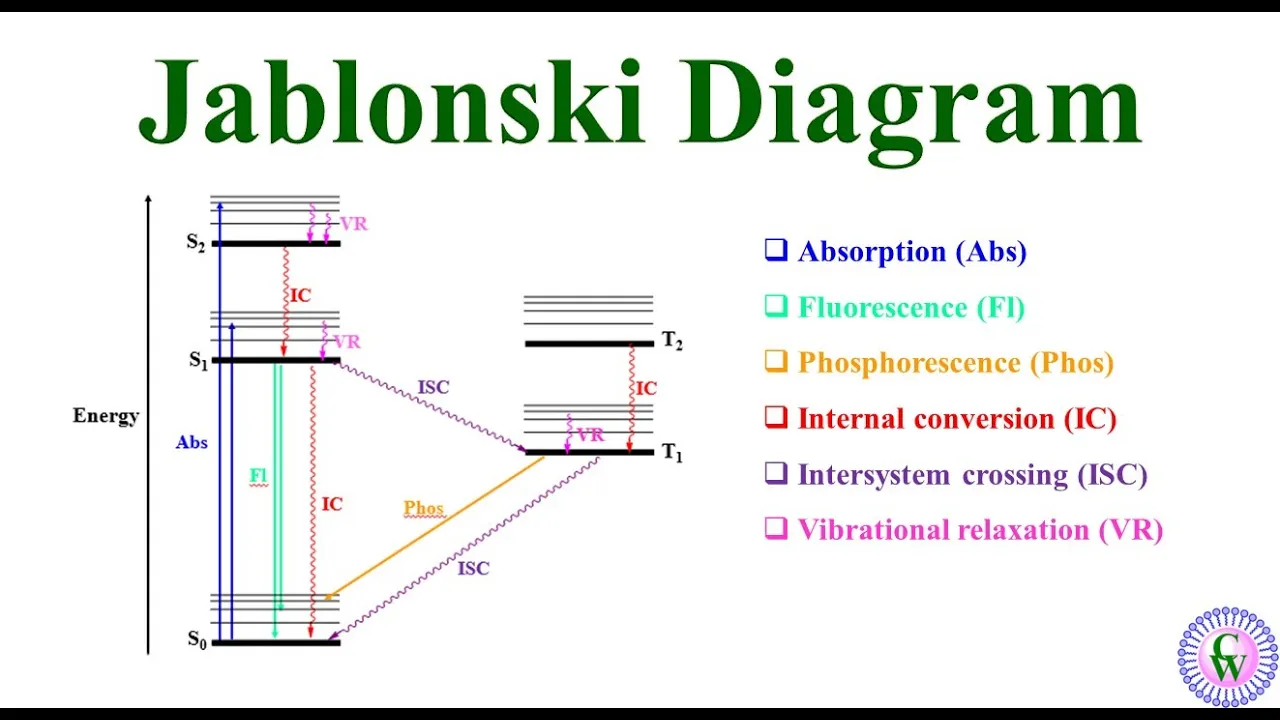






The Franck-Condon principle explains that during electronic transitions in molecules, the nuclear coordinates remain approximately constant due to the much faster electronic motion compared to nuclear motion, resulting in vertical transitions between vibrational levels; this principle is fundamental to understanding electronic spectra and molecular interactions.
Electronic Spectroscopy & the Franck-Condon Principle | Physical Chemistry
Added:The Born-Oppenheimer approximation, which justifies the separation of nuclear and electronic motion in molecules.
Fundamental concepts of quantum mechanics, specifically wavefunctions, probability densities, and the Morse potential energy curves for diatomic molecules.
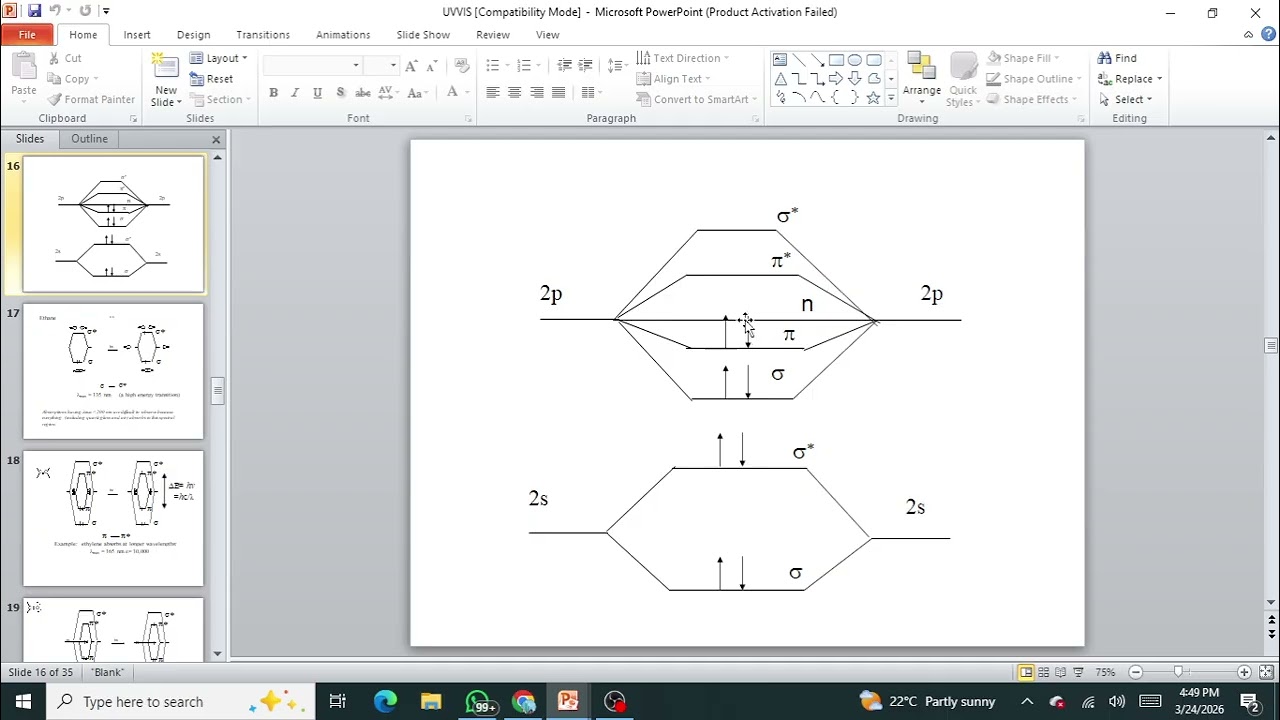
Basic molecular orbital (MO) theory, including electronic configurations, bonding/antibonding states, and UV-Vis absorption transitions.
The principles of vibrational spectroscopy, including quantum harmonic oscillators and vibrational quantum numbers.
Interpretation of Jablonski diagrams and the kinetics of radiative and non-radiative photophysical processes (fluorescence, phosphorescence, internal conversion).
Detailed study of vibronic coupling, where electronic and vibrational states mix to produce fine-structure bands in absorption and emission spectra.
The effects of solvent polarity and intermolecular interactions on electronic transitions (solvatochromism and Stokes shift).
Application of electronic spectroscopy in ultrafast dynamics and femtochemistry to observe molecular transitions in real-time.
9.3K views108likes51:57Original Release: 2019-01-09
the following content is provided under a Creative Commons license your support will help MIT OpenCourseWare continue to offer high quality educational resources for free to make a donation or view additional materials from hundreds of MIT courses visit MIT opencourseware at ocw.mit.edu today's lecture is on intermolecular interactions and it's really one of these favorite topics where you know we can I can say well this is the origin of life how do gases actually condense and we we can build a really really simple theory for how gases condense based on what we know based on second order perturbation theory based on some hand waving stuff and it really is something from nothing but it's also an example of what we do in physical chemistry where we explain one phenomenon by taking something that seems to be unrelated and building a model around it and explaining this surprising thing and and that's what's going to happen today we'll talk more about that okay now last last time we talked about wave packet dynamics and and so with wave packet dynamics there's first the pluck how do you start the system in some superposition of eigenstates and then there's the evolution of the pluck which is which is usually some kind of particle like state it's that follows Newton's laws the center of the wave packet follows the Newton's laws for the position and the momentum but if you make a wave packet in a real molecule the molecule is going to be not a harmonic oscillator and there will be an harmonic effects which causes the wave packet to deface but the center of the wave packet continues to move as if it were you know I'm in a simple potential and it candy phase and rephase and all sorts of complicated stuff and that can be very interesting now when you take the step from a diatomic molecule to a polyatomic molecule you have 3 and -6 oscillators cohabiting in the same house and they're going to interact and and so if you start a wave packet on one franck-condon brite mode because of nth harmonic interactions handled by perturbation theory between modes you start to get this wave packet leaking out into other modes and so the expectation value is going to exhibit a oscillating time dependence associated with the bright mode and some of the dark modes that are at harmonically coupled to the bright mode and it can get pretty complicated but you can understand all of it because you have perturbation theory and so you can you can say ok this time the wave packet is some amplitude of the initial wave packet is transferred to a different mode and when does that happen stationary phase it's it happens in this particular geometry and and so you can be asking ok when is this excitation transferring how strongly this is a very very complete picture and it's very much like classical mechanics because it's localized then we talked about landau-zener and the landau-zener is basically a simple idea that you also understand from real life and it has to do with how does a wave packet jump from one potential surface to another and again it's stationary phase at the at the inter nuclear distance of the curve crossing the wave packet has to decide which curve it's going to follow and it depends on the the velocity of the packet at the curve crossing and the difference in slopes of the two paths it has to choose between and all of this is very simple now I am trying to create an exam problem which is related to landau-zener and this is hard but if I succeed then you can expect to see it the last thing I talked about last lecture was the zewail pump-probe experiments and this is a beautifully graphical picture of how do you create something and then probe what's happening and again I hope that I can come up with something pictorial for the exam on visual problem okay now before I talk about intermolecular interactions I want to do a little bit of tying up loose ends you know about non-degenerate perturbation theory now there's another kind of perturbation theory called degenerate perturbation theory and this is when non degenerate perturbation Theory fails because H I J over zero it's greater than one well then you've got a problem you can't use ordinary perturbation theory you have to diagonalize you diagonalize at two pi two or you diagonalize all of the little cases where this is violated that's called degenerate perturbation theory and there's a little bit of an extra recipe for how do you put information about remote States into the part of the Hamiltonian you that's called the Van Vleck transformation and I'm not going to talk about it but basically you fix things up by diagonalizing a two by two or a three by three and then do ordinary perturbation theory and then there's variational the variational model is something we've used mostly in a minimal basic minimum basis set for talking about diatomic molecules and in the variational model we diagonalize energies by mikta by optimizing mixing coefficients now perturbation theory is implicitly an infinite basis usually the infinity doesn't matter because the interesting stuff comes in from relatively low lying levels and the infinite number of very faraway levels just modifies the energy levels a little bit and you don't have to worry about it a variational method you choose your own basis set now the choice of basis set is frequently dictated by convenience and the basis set is often not very large or not orthonormal and so there are problems with how do we deal with basis functions which are not orthonormal especially not orthogonal to each other and there's a transformation that you can do to make that work out I mean the additions the problem is basically where the secular equation is is this for the variational method and this is the overlap matrix and when the overlap matrix is not the unit matrix we have what's called the general generalized variational calculation and there are methods for handling that and I have often introduced those methods on a final exam those are just statements okay so variational is is not guaranteed to give the exact answer and it can't if you don't use an infinite basis perturbation theory implicitly uses this infinite basis and you should feel confident that you're getting close to the right answer and you you can know what sort of errors you're making okay yes that's correct okay but that's this is the the problem there is that you cannot include correlation in perturbation theory and and so there are things that are outside the the the the network of things that I've described and so correlation effects Worthy the particles have can move in some way that they know about each other that's very difficult to build in via perturbation theory but when we don't have correlation then perturbation theory makes an error and you know how big that error is okay and then we know that we we can diagonalize a matrix by some kind of unitary transformation and the columns of t dagger are the eigenvectors and the rows of t are the inverse rows of t dagger or the columns of t are the inverse and so if you want to make a wave packet where you have some initial state equals zero you want to express that as a linear combination of eigenstates and this sort of transformation provides that information if you know how to use it and you can get approximations to all of these elements of T dagger from non degenerate perturbation theory and on the second exam that was one of the things you didn't do very well on and so you can see that again all right ok so now we're going to talk about intermolecular interactions and up until now we've been talking about isolated molecules and you have a lot of insights about how isolated molecules work or at least what kind of stuff you need to be able to make predictions about isolated molecules and perturbation theory is a very important tool in building that insight in almost every problem which is not an exactly soluble problem perturbation theory gives you at least a hand waving argument for what's going on everything we did with lcao MO is really based on perturbation theory or at least the interpretations especially when you go from homonuclear to heteronuclear and when we talk about what the various orbitals look like and why they look that way okay so perturbation theory can also be used to talk about we have two particles a and B and we have the origin of coordinates and so this is the coordinate for a and this is the coordinate for B and this is the inner new inter atomic coordinate and and so we're interested in what happens as a function of this inter nuclear just an inter atomic distance and can we use perturbation theory to be able to say something about that in the as you betcha because basically we understand how these two molecules work and so we have to somehow build in some some insight into what is the interaction between these and then use perturbation theory to quantify it okay now this is a situation where we're going to say atoms a and B are our filled shell or whatever you want to call it they don't need to make another bond they're not going to bond to each other there is no covalent bond between a and B there is no charge on a and B there's no donor acceptor all of the things that we can understand by looking at individual systems they're all turned off these molecules do have energy levels and so if we could find some way to talk about the weak interaction between them well then we have the basis for perturbation theory because we have week and we have energy levels that we know for the two molecules and so if we're going to do perturbation theory it'll be second order perturbation theory because we are going to be interested in how interaction of a with B causes excited states of B to mix into B and vice-versa and so one of the things you know about perturbation theory if you're talking about the ground state of a system and you do perturbation Theory what happens what happens to the energy levels if you we have for a second-order perturbation theory I'm sorry but if we're talking about the ground state then right and so that's the key we know that if we're going to do second-order perturbation theory and we're going to be asking questions about molecules in their ground state they're going to be stabilized by interaction with other molecules it doesn't matter as long as there's no bonding interactions or very strong short-range interactions this sort of a problem is guaranteed to give stabilization of the ground state of the system and that's really a surprise because yes yes well okay and you know I'm not allowed to talk about statistic we can I can actually because we do it we now do some statistical mechanics in 560 so you know a little bit and you know that that molecules like to be in the lowest energy levels and so we have these ground state molecules in a gas and they are we we understand they're isolated properties or we could understand and then what happens here somehow there's interactions between them and now first order perturbation theory that's all you're allowed to have a sign and but you're allowed to have a sign for diagonal elements of the perturbation operator and okay so will to you with this so we want to talk about a Hamiltonian for the system which is the Hamiltonian for particle a the Hamiltonian for particle B plus some interaction term between a and B okay now the typical interaction between two particles is a dipole-dipole interaction if molecules have dipole moments then we already know something about what they want to do with each other and from electricity and magnetism we know this isn't quantum mechanics we know that we can write a general formula for the dipole-dipole interaction so that's the general formula for the dipole-dipole interaction and it's a little more complicated than you would like because there's two terms and this one is kind of a puzzling term because you're projecting a dipole on the internet on the inter-atomic axis and so we'd like to be able to simplify this and we can simplify it by simply drawing some vectors corresponding to the dipole moments and so we have the dipoles oriented like that or we have the dipoles oriented like this or like this and like that now this is a reduction you know these are the simplified terms where these guys are are irrelevant or at least the you have to worry about the projections and we know that this is an attractive interaction this is an attractive interaction this is repulsive and this is repulsive and we know also by plugging into the formulas we know that the energy for this one is minus mu a mu v over 2 PI epsilon zero R cubed and this is minus the same stuff except a 4 in the denominator so that means it's less attractive than this one minus means attractive and then we have two terms that resemble these except they're repulsive so there's four terms so there's two terms that are attractive than two terms that are repulsive and the they come in pairs one positive one negative and so you might naively say well you can't win if the particles are randomly distributed and randomly oriented there will be no stabilization even with dipoles but that's not true because the molecules try to find a an orientation which is more stable than the sum of the energies without the dipoles and so maybe we could draw a picture and try to figure out well how that would be so does anyone anybody want to tell give me guidance to a picture showing let's say four dipoles oriented and the corner of a square and what would be the stable arrangement for four dipoles oriented on the corners of a square okay right so we have two attractive interactions two more attractive interactions and then the non that there are repulsive interactions this way but we have nearest neighbors and they're stronger than the repulsive interactions and so for one layer that can win now we have another layer of four dipoles and if that layer is so so we have this another layer and and there before them and what would happen what would be the stable arrangement if if I have a dipole above this one is it going to be this way right and so the next layer all the dipoles are reversed and so you can you can conceive of an arrangement where the dipoles would adapt adopt a more stable arrangement and statistical mechanics or whatever you want to call it guides that and so we can say all right the ensemble of dipoles interacting with each other can arrange to be energetically stabilizing and so we can reduce the problem to just one one picture say this dipole or that dipole-dipole arrangement and do second-order perturbation theory and that will be an over estimate of the stabilization but it will be proportional to the stabilization and so we can get what we need for a very complicated incident of our particle problem okay another thing that I want to ask you suppose you have two particles and they come together and so they come together with some kinetic energy and they can't get rid of that kinetic energy so they come apart now if you have three particles if something drives them together by mutual attraction then one particle can take away the excess energy can end up leaving leaving the two particles bound together that's how you make liquids so the driving force for the attraction between atoms or molecules is somehow related to what we're going to we're going to derive here and that is the only way you make liquids from gases and it's really strange because we're going to be talking about energy levels and interactions between molecules and somehow coming up with with a picture that leads to universal attraction between molecules that are not charged not reactive not anything and they can they will always attract each other and that's the first step towards making liquids okay now the important thing in all of us is that the interactions are small compared to the energy levels of the individual molecules and so that's why we're doing perturbation theory okay so in perturbation theory we have NH 0 and the h0 is I gotta make sure I use consistent notation well I've already see I have inconsistent notation my notes but anyway okay so we have the Hamiltonian is the individual system Hamiltonians the sum of the two and the first order term is VAB and so whenever we can separate a system we know that the the way for the zero order wave functions our products of the eigenfunctions of H a and H B and the energy levels of zero on energy levels are the sum of the energy levels from hhb so we know that we can write H zero by a alpha B alpha oh so this guy AJ operates on M tie a and I think tweets this is a constant H B operates on Phi B and treats this as a constant and when you do that what you discover is that we get okay so these are our energy levels and these are our basis functions and we are off to the races so this is e zero and this is I for the system okay now the first thing we do in perturbation theory is we say let's look for the first order correction to the energy that's the diagonal matrix element of the H one term this so suppose we do have dipole moments on both particle a and particle B so that's the first order energy well this is just the dipole-dipole interaction and so we can take the the reduced formula we just going to regard VAB as mu a mu B over R cubed and so the energy is minus 1 over 2 pi epsilon zero R cubed I left out the two pi epsilon0 on this formula but and and so skipping a couple of steps we have mu a mu expectation value of these so if there's a dipole-dipole interaction there will be a first order correction term and keep in mind that these guys can have sides and that sign does appear in the first order correction to the energy but but that's basically these pictures we drew here we have a dipole pointing this way and dipole pointing that way that's repulsive and that that's all so there's no surprises here okay but the important thing is that the energy if we have two molecules with dipoles we get an interaction energy that we can calculate but the interesting thing is going to be when we have molecules where at least one of the molecules doesn't have a dipole then we're getting into the territory that we didn't think we understood so but we're continuing with the the problem where we do have dipoles I just might want to make sure that yeah okay so for the second order correction to the lowest energy level we have the sum over m which is two quantum numbers and M is not equal to the 0 0 state alpha is not 0 beta is not zero sum over everything except the ground state and what we what we have is an integral of I am zero star the a be I 0 d squared over then 0 0 0 standard formula for second order perturbation Theory this is the ground state this is some excited state this is negative this is squared and this is squared so this overall correction is negative now we can unpack all this and we can remove we can write the various terms in more instructive form and what we all have in the denominator will be e 0 well e a 0 minus e a alpha and plus e b 0 e 0 b- e b beta and we can rearrange that so we have e 0 a+ e 0 b- e a alpha plus e e beta so we have the ground state energy and the known excited state energies and there's the difference between these so that that part is is simple and the matrix element also simplifies to the product of the dipole moments squared okay now suppose I just want to make sure that I'm doing this in the order that appears in the notes suppose mu a is not zero mu B is equal to zero okay well then all these formulas go out the window because nominally we think well there's B doesn't have a dipole moment but suppose we have a particle B in an electric field the electric field will polarize B and if we have molecule a which has a dipole moment near B it will also polarize B and second order perturbation theory tells us how to handle that and so we get a formula the second order correction to the energy of B and we call this B comma induction and that's going to be U squared over 4pi squared epsilon zero squared are the six times some beta naught equal to zero of this squared matrix element interval sy B star beta mu B by B zero D tau V squared over e e:0 - e b beta now i just told you that the dipole moment for the permanent dipole moment for particle B is zero but this is not the permanent diet with the expectation value of the dipole moment this is an off diagonal matrix element of the dipole moment this is the transition dipole transition between V equals zero well between these the ground state of B and some excited state the beta excited state of B well we can write something like that because we know for all molecules there are transitions which are electric dipole allowed now they could be between electronically the ground state and an electronically excited state or the ground state and at vibrationally excited state so we know something about these we know the rules for when they're not zero and this is a perfectly reasonable thing because it says this is related to the transition of an observed the intensity of an observable transition and this should really start to make you a little bit appreciative of perturbation theory because we're taking something which you can observe a transition strength and using it to describe an interaction between two marnik molecules so it's a relationship between two apparently unrelated phenomena physical chemistry is full of that you build a model and the model is telling you that certain things are related and how are they related well they're related by one of our to the six they're related by the strength of the dipole on one the permanent dipole on one and some transition intensity derived quantity on the other in that need and since the dipole we we say well this is a dipole-dipole interaction and it's the MUA the dipole on a is inducing a dipole on B it's not inducing anything it's using transition dipoles but it's creating something that looks like a permanent dipole and you have a dipole-dipole interaction but the only difference is that it's one of our R to the sixth because it's an induced dipole okay so we're using transition well electric dipole transition moments there used to be two erasers so these electric dipole transition moments play to play the role of producing a dipole that can interact with the other dipole and so well do we need this well we don't really for if you had dipoles then the interaction would be 1 over R cubed but if one of the dipoles is 0 then the interaction is 1 over R to the sixth and it's one of our the six times the permanent dipole of one and the this thing from perturbation Theory which is the induced dipole of the other suppose you a equals zero and mu B equals zero will the particles interact with each other will attract each other and the answer is yes and it's going to be an induced dipole-induced dipole interaction which now since most people who talk right for general science have no clue about what quantum mechanics is they will talk about all sorts of fanciful things you get an institute is the a instantaneous fluctuation on one particle which creates an instantaneous fluctuation on the other particle and bam you've got stabilization well yeah maybe but you know this is just simple perturbation theory and and so I don't really need to actually write out everything because when you do that and you include the the for the second order perturbation expression for adequate particle a and particle B you get a term that looks just like this it has 1 over R to the sixth but it now involves transition moments on particle a and particle B nothing new you don't have to induce anything more you don't get another factor of 1 over R cubed you've already got that 1 over R to the 6 so I'm going to skip a lot of steps because their notes are really clear in there and we don't have a whole lot of time and so I'm just going to write down the result and now the the name of this term is called dispersion or London because a fellow by the name of London invented this and the energy level formula for this correction term is one over 4pi squared epsilon zero squared R to the sixth and then this sum of alpha equals one beta equals one to infinity in other words not alpha equals zero not beta equals zero and then sorry about that so we have a numerator which is the squared transition moment between the zero level of particle a and the alpha level and the zero level of B and the beta level we have the energy of the ground state and we have the energy of these excited States all of this stuff you know or at least you can parameterize it in terms of this strength of a transition and there's an explicit formula that relates the dipole moment to the energy to the intensity depending on what kind of experiment you do so I'm not going to take you through that but you know you can measure the intensity the the molar absorptivity or whatever you want that is related to this and so these are experimental e observable these are experimentally observable and usually the this infinite sum is dominated by the lowest allowed transition from the ground state and that can be an electronic transition or a vibrational transition so for a homonuclear molecule there isn't going to be an allowed vibrational transition so nitrogen and oxygen cannot talk to each other through transition dipole vibrational transition dipoles because the dipole moment is not dependent on a nucleus but they have electronic transitions and so there's this electronic as opposed to a vibrational polarizability of the two and that's what gives rise to transit traction between n2 and o2 or n2 an end to so everything is knowable and predictable and even though the perturbation sum is infinite and even though we've made a gross approximation and say well we're just interested in in this sort of an interaction or this sort of an interaction and and we know that the true interaction will be less because there will be an average over all of the random orientations but there's going to be a lowest energy picture and you can get that from statistical mechanics and so you can do the configurational average over all possible orientations of all of the interacting particles and you can calculate this so that's that's beyond the level of this course but the engine of the calculation is this formula so so molecules are polarizable they react to an external electric field and there are several ways you can describe the defined polarizability one is to say well the polarizability let's call it alpha is equal to the second derivative of the energy with respect to the electric field but the polarizability you know you also get from perturbation theory and so each of these terms or the energies associated with the interaction of a dipole with an electric field is the electric field times a dipole and so we have electric field squared we take the second derivative of that and we've got back to this so now here we here we come with intuition if I asked you to tell me the the vanderwaal's or the dispersion interaction between helium and helium and compare that to xenon the xenon would you be able to tell me so which one is stronger which one which pair of inert gases is stickier see none right why because the energy denominator for the first excited state is much lower for xenon than for helium okay what about large molecule versus small molecule do I need to provide a hint 3n minus 6 the more vibrational modes the more transitions are available for polarization and so again now we're talking about molecules which can be floppy and the floppy or the molecule they that means they they have low frequency vibrations you can polarize the daylights out of them and so large molecules are really sticky stickier than inert gasses because you have this dispersant interaction that brings them together and once they're together then they can do magic but the thing that drives the condensation or the formation of droplets or whatever is this dispersant interaction and it's universal every pair of molecules or atoms is going to attract each other and the strength is something that you can you can rate in terms of what you know about atomic and molecular properties and isn't that neat because you're saying the viscosity or whatever it is that are the property of a gas all of those things are related to the properties of the individual atoms or molecules embedded in perturbation theory this is why I think perturbation theory is so wonderful because it enables you to relate different things and even if you're not going to evaluate the magnitudes of the terms you can make comparisons which are always going to be right and kind of wonderful I mean you don't have to use the equations or you you just know that these particles will attract each other and the driving force is either a permanent or an induced dipole and the induced dipole will be strong if you have a strong transition to a low-lying state or a lot of strong transitions to a lot of low-lying States as you have in big molecules okay so I'm not positive what I'm gonna talk about on Friday it's probably gonna be photochemistry but I may panic and do something else okay let's see you
Up Next

8:43
Jablonski Diagram Explained: Photochemistry Transitions
@physicalchemistry_pchem
109 views•2023-11-16
24:04
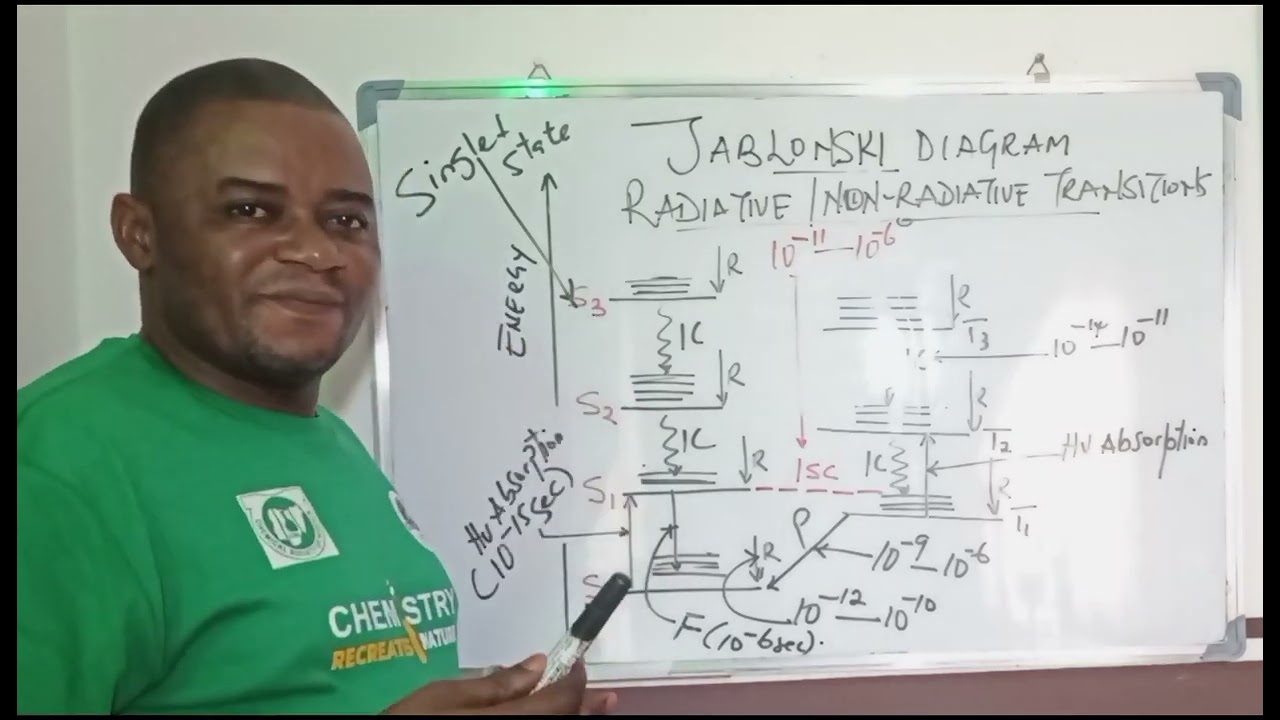
The Jablonski Diagram: Radiative and Non-Radiative Transitions | Photochemistry
@benedictugi8420
262 views•2025-07-15

43:31
Introduction to Transition Metals: Coordination Complexes & d-Orbitals
@mitocw
111.4K views•2017-08-03

17:31
Edible Water Bottles: A DIY Guide to Sodium Alginate Spherification
@ryan
10.5M views•2019-06-21
Related Study Plans & Knowledge Roadmaps
Structured learning paths in Chemistry
chemistry
Photochemistry: Excited States & Reactions
01Foundations of Light-Matter Interactions
02Molecular Orbitals and Electronic States
03Photophysical Processes and Jablonski Diagrams
+ 2 more learning modules
18h5 modules
Explore Roadmap
chemistry
Coordination Chemistry: Bonding & Properties
01Introduction to Transition Metals and Ligands
02Crystal Field Theory (CFT) and Geometry
03Magnetic Behavior and Spin States
+ 2 more learning modules
14h5 modules
Explore Roadmap
chemistry
Polymer Chemistry: Synthesis & Properties
01Introduction to Macromolecules & Monomers
02Polymerization Synthesis Mechanisms
03Polymer Characterization Techniques
+ 2 more learning modules
12h5 modules
Explore Roadmap
chemistry
Separation Science: GC, HPLC & Mass Spec
01Foundations of Separation Science
02Gas Chromatography (GC) Principles & Systems
03High-Performance Liquid Chromatography (HPLC)
+ 2 more learning modules
24h5 modules
Explore Roadmap