


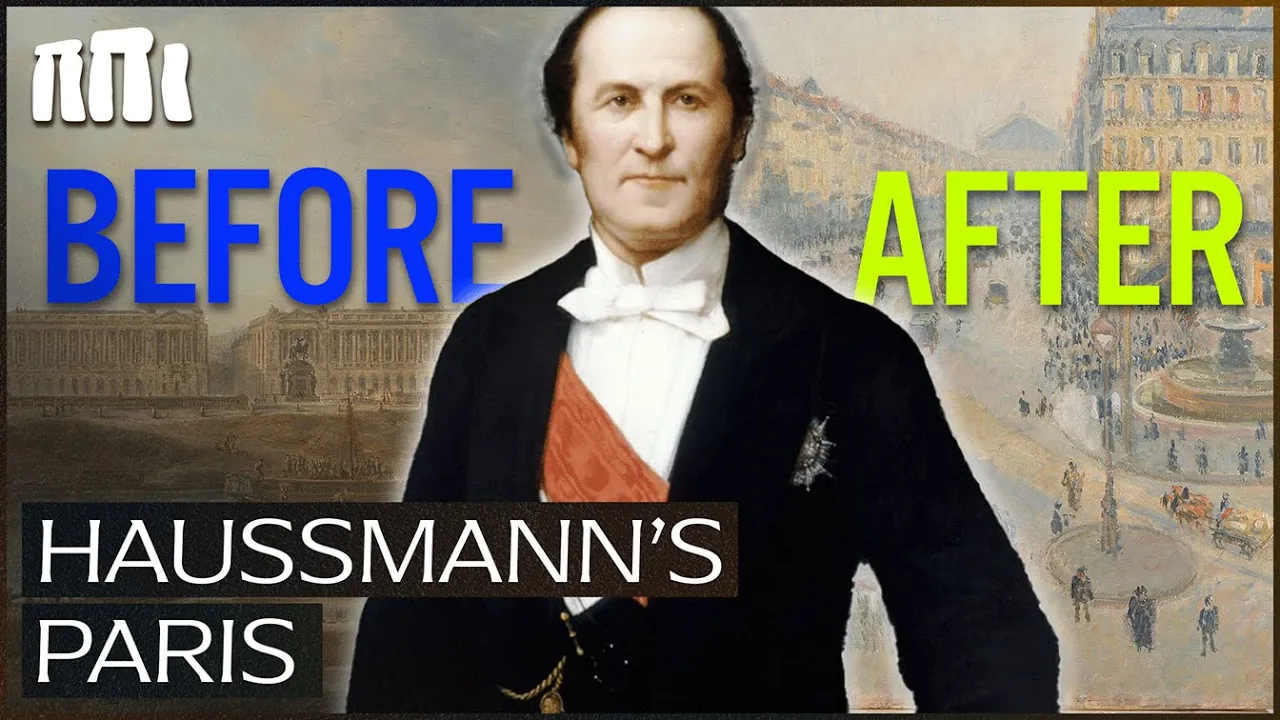




In the 19th century, Baron Haussmann was appointed by Napoleon III to modernize Paris, which had become a medieval city with narrow streets (as narrow as 2 meters), no sewage system, and frequent cholera outbreaks killing 40,000 people; over 17 years, he demolished nearly 9,000 buildings and constructed 33,000 new Haussmannian-style buildings featuring uniform six-floor designs with specific floor allocations for shops, offices, and residences, creating the wide boulevards and unified architectural style that makes modern Paris recognizable today.
Baron Haussmann's Transformation of Paris: 19th-Century Urban Renewal
Added:The geopolitical context of the Second French Empire under Emperor Napoleon III, who commissioned the reconstruction of Paris.
The physical and social characteristics of medieval European cities, including high density, lack of sanitation, and narrow, winding streets.
The impact of the Industrial Revolution on rapid urbanization and the public health crises (such as cholera outbreaks) that resulted from overcrowding.
The concept of eminent domain and state-sponsored infrastructure development, which allowed the government to expropriate private property for public works.
The socio-economic consequences of Haussmannization, specifically the gentrification of the city center and the displacement of the working-class population to the suburbs (banlieues).
The tactical and military motivations behind the wide boulevards, designed to prevent the construction of revolutionary barricades and facilitate rapid troop movements.
Comparative analysis of other major 19th-century urban renewal projects, such as Ildefons Cerdà's expansion of Barcelona (Eixample) or the Ringstraße in Vienna.
Modern urban planning challenges in Paris, including how the city preserves its Haussmannian architectural heritage while adapting to 21st-century sustainability goals (e.g., green spaces and pedestrianization).
1.4K views29likes10:04Original Release: 2021-01-31
have you ever wondered why the buildings look so uniform in paris today we are going to explain and tell you exactly what happened over a hundred years ago oniwa bonjour youtube so today we are in paris and uh we are in front of a very there is a reason why we're in front of the buildings right behind us so behind us are the buildings that date back to the 14th century but it's not about them today because today we're going to show you the magic that happened on the baron honestly in the 19th century [Music] so who is baron georgio jan houseman he was appointed a prophet descent he was appointed by napoleon the third to help paris because paris at that time was a city was a medieval city with very narrow streets dirty streets buildings that were so close to each other the widest street was five meters in width and the narrowest was two meters wide so there was no light it wasn't safe it wasn't healthy because there were lots of cases of cholera i think at that time about 40 000 people died of cholera and there was no sewage system that was good solid waste was picked up by the sewage workers and then just thrown into the sun in the span of 18 years six uprising took place and the roads were so small and narrow the government couldn't control it and that's one of the one of the reasons why they had to rebuild the area and make it wider make the streets wider yeah so they can control the people and control the uprising as well [Music] so what did varon osman do in the city his task was to revitalize the city make it look more modern in a span of 17 years he completely completely gutted the central parry all the medieval buildings most of the medieval buildings uh have been raised to the ground and avenues big boulevards and apartment blocks had been built instead of those buildings instead of those areas people were relocated compensated for their homes however many just had to move out because the center of bahri was built or redone for more prosperous and richer crowd napoleon iii who was first the president and then he proclaimed himself as an emperor of the second empire he entrusted the task of reimagining and redevelopment pari as a city because the government felt like the city was not up to the times so the idea was to build axes that go from the north to south and then from the east to west the east to western access kind of joins into ivoli which was started by napoleon the first but was never finished by him in fact napoleon used to write from his exile that had he had 20 more years and a bit more money he would be able to transform paris in such a way that you would not even recognize it if you looked at it later on now with the access with the access the north to south axis is gurivar which joins into san michel the interesting thing is that all these boulevards all these big streets wide boulevards wild streets they all had at the end they had either a monument or a monumental building or a statue or something at the end we will see sort of like a business card or like a cardboard style like a postcard of asmanian buildings and australian style which is the cartier of opera [Music] the amount of people behind me is incredible they're all queuing for the shops all queuing for the shops but what can we do um so i wanted to add one more thing just imagine how crazy this is this man goes and literally destroys thousands of buildings thousands of buildings just so they can build more avenues and streets and stuff almost two hundred thousand almost twenty thousand buildings yeah it's crazy it's crazy uh he destroyed almost 9 000 buildings but at the end he constructed 33 000 buildings so more houses were built basically yeah and also he also built nine bridges across paris but i think that at the end it paid it off yes that's why people come here to visit paris yeah party is the most visited city in the world second most visited after bangkok okay bangkok is the most visited so each year they get 40 million tourists they just come here to see paris if you look at the buildings in rwanda when we were on the run we got different types of buildings we will drop the links below so you can check the project that you can compare it to see the actual free osmanian architecture [Music] so [Music] so this is avenue de l'hopiran all the buildings here were destroyed and the new osmanian buildings were built at the end of the avenue there is the opera garnier that was built a little bit later it was finished at the end of 19th century it serves as the main point at the end of this avenue now about asman buildings they were restricted to six floors the ground floor which was called which is called red chasse is dedicated to shops commercial spaces offices the first floor is dedicated to usually the offices above and then the second floor is what they were called as noble floors because there were no elevators at the time so it was considered to be built high enough from the noise of the street but at the same time it was also not too high out so you don't get tired going up there the third and the fourth floor apartments they don't have the balconies then the fifth floor apartments they have balconies but they're a bit more simplified and right above them are apartments for the service or chandra de bone this is where domestic workers used to live nowadays they're considered to be very valuable because the elevators are installed in many of these buildings however in the summer it gets extremely hot [Music] so what happened after outman was removed from his post well first of all the second empire fell after the war with prussians basically what that meant that meant that uh napoleon iii was not in power anymore osman himself left a legacy that continues there are buildings that are a little bit different but the style remained largely the same there was a decree that was issued in 1882 i believe where they changed it up a little bit just to give a bit of freedom to people with regards to how they can design a building it was important for pahi to have a unified look the streets they appear to be walled by the building there is a strong focus on horizontal lines that's why the balconies are there and uh now it's considered to be a classic under osman border boulogne and wadawazan were added to paris and apart from that he also created mutsamo and the fourth one is parkman 3.
that's it for today we hope you liked the video we hope that you you've learned a little bit more about history of paris why it looks so unified so if you like the content and if you like our videos please like comment and share and subscribe and we'll see you next week until then
Up Next
12:04
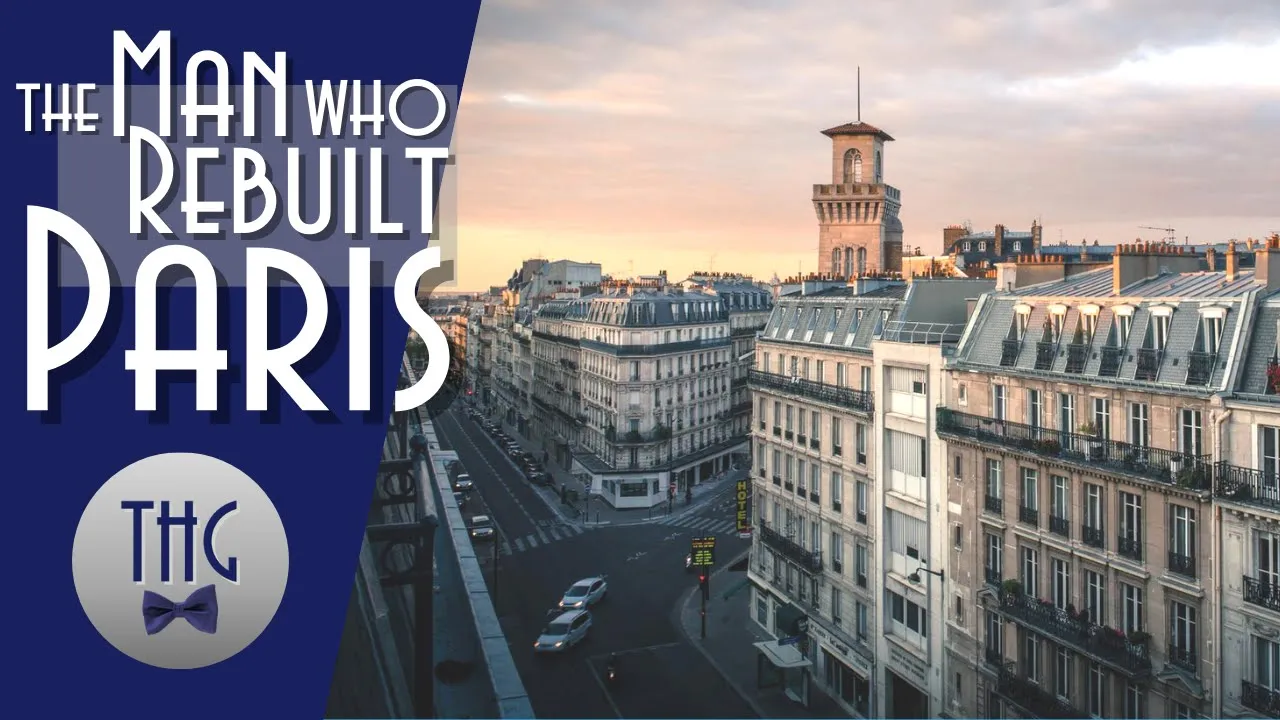
How Haussmann Transformed Paris: Urban Planning History
@TheHistoryGuyChannel
229.2K views•2019-04-10

93:30
Zola, Baudelaire, Maupassant & the Transformation of Paris, 1852-1900
@SylviaSagona
5.6K views•2015-05-31
91:57
The Geopolitics of the Ukraine War and the Rise of Global Autocracy
@JordanHarbingerShow
468K views•2025-04-19
17:05
Understanding the Cold War: Superpower Conflicts and the Road to Détente
@OverSimplified
46.1M views•2019-01-24
Related Study Plans & Knowledge Roadmaps
Structured learning paths in History
history
Byzantine Iconoclasm: Theology, Art & Politics
01Foundations of Byzantium and Early Christian Images
02The First Iconoclasm: Leo III and the Crisis of Images
03Empress Irene, Nicaea II, and the Second Iconoclasm
+ 2 more learning modules
9h5 modules
Explore Roadmap
history
Iranian Revolution (Causes, Events & Legacy)
01The Pahlavi Dynasty and the Roots of Discontent
02The Spark of Rebellion and the Rise of Khomeini
031979: The Fall of the Shah and the Climax of the Revolution
+ 2 more learning modules
8h5 modules
Explore Roadmap
history
Mali Empire: Mansa Musa, Trade & Timbuktu
01Foundations of the Mali Empire
02The Trans-Saharan Gold and Salt Trade
03The Reign and Pilgrimage of Mansa Musa
+ 1 more learning modules
6h4 modules
Explore Roadmap
history
1947 Partition: Politics, Borders & Legacies
01Foundations of British India and the Divide
02The Political Negotiations and the Mountbatten Plan
03Drawing the Boundary: The Radcliffe Line
+ 2 more learning modules
8h5 modules
Explore Roadmap