











![Historians play Civ 6 [ep 4]: the NEW SULTAN Saladin!](https://i.ytimg.com/vi/B_PkCfDdJ6c/maxresdefault.jpg)


![Михна: исламская инквизиция в Золотой век ислама / [История по Чёрному]](https://i.ytimg.com/vi/OlUuOovQFIY/maxresdefault.jpg)







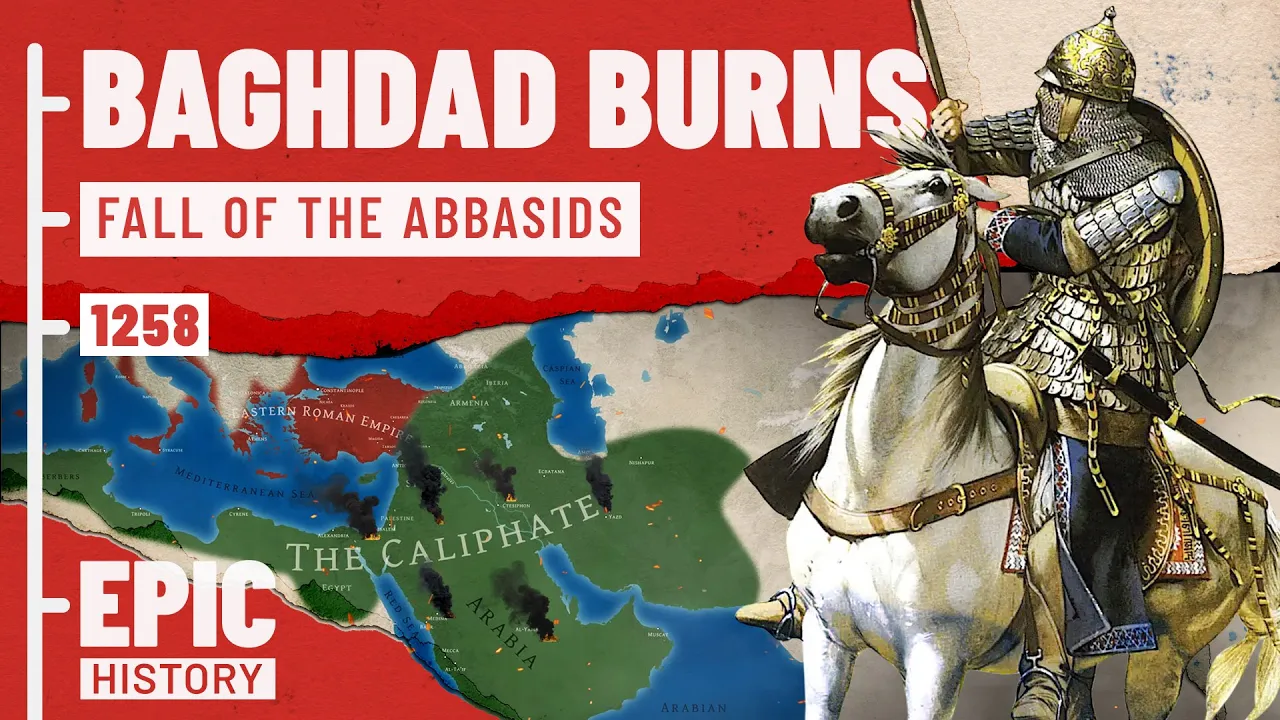




The Abbasid Caliphate (750-1258) was the largest and most influential medieval empire in Eurasia, spanning from the Atlantic to the Pacific Ocean. Founded by Abu Jafar Al-Mansur who established Baghdad in 762 as a strategically central capital, the dynasty achieved remarkable cultural and scientific achievements during the reign of Harun al-Rashid (785-809), including the establishment of the House of Wisdom that preserved and translated Greek classical texts. However, the empire faced persistent challenges including succession crises, civil wars, and increasing reliance on Turkic slave soldiers. The dynasty's decline accelerated after the devastating sack of Baghdad by Hulagu Khan's Mongol forces in 1258, which destroyed the House of Wisdom and killed an estimated 200,000-1 million people, marking the end of the Abbasid Golden Age that had lasted approximately 500 years.
The Abbasid Caliphate: Rise and Fall of an Empire (750-833)
Added:the abbasid caliphate was the largest and arguably the greatest of Eurasia's early medieval empires dwarfing the petty principalities and kingdoms of western europe not just in size and military capabilities but in its cultural and scientific achievements this is a standalone documentary covering the first hundred years of this mighty empire if you'd like to know more about the origins of this dynasty you can check out this video I made earlier on the revolution which got the abbasids into power this is a full-length hour-long documentary so please allow a moment for me to thank the sponsor for this video raid shadow Legends reminiscent of classic RPG titles from the 90s and noughties but with pristine modern graphics raid shadow legends can only really be compared with the biggest PC and console titles out at the moment and the best part is completely free to play forget everything you think you know about mobile games this one is about to change everything just look at this roadmap that they published for the future rage not only has an amazing storyline or some 3d graphics giant boss fights PvP battles and hundreds of champions to collect and customize but it's online community is growing incredibly quickly with massive plans for updates over the next 6 month period almost 10 million players worldwide have already downloaded the game in just three months and with more than 200,000 reviews from the Play Store raid has almost a perfect score there are so many levels to this game combating against other live players progressing through the deep storyline and one of the best parts is collecting characters just look at the detail on those champions so what are you waiting for click on the link in the description below and you'll gain 50,000 silver and a free epic champion to start your journey [Music] when the Abbasid caliph al must arson spiritual head of the entire Islamic world gazed out from the walls of Baghdad in the spring of 1257 luxurious bath houses overflowing bazaars and holy sites for all the Abrahamic religions arrayed before him he could have been forgiven for assuming that the earthly and eternal power of his house would last forever for he was the 37th caliph of his dynasty the spiritual successor to the Prophet Muhammad and for tens of millions of Muslims from the Atlantic to the Pacific Ocean God's representative on earth [Music] there had been hard times for his dynasty in the past dark days many assumed they would never recover from yet nevertheless against all the arts they'd always come back from the brink search was the status that the Khalifah title held now in the mid 13th century as the hooves of steppe warriors came thundering towards the great city just as they had done so many times before surely this time was no different how wrong he was unfortunately fail must arson and the entire world he represented everything was about to come crashing down plunging Islam into the darkest period it had ever yet experienced a generation earlier a terrifying flood of armored horse nomads have come spilling out of the steppes of inner Asia to enter the Islamic world on the shores of the Caspian Sea the glittering Silk Road cities of Merv Bukhara and Samarkand metropolis is populated by hundreds of thousands of people many of them themselves descended from Central Asian pastoralists were all flattened under the weight of the step riders advance for these riders were led by the greatest warlord to ever arise on the Eurasian Plains this was the horse of Genghis Khan and he led the Mongols to war [Music] but that had been in the past but 1257 genghis was long dead and many observers assumed that like similar Emperor's before him in his absence his state would quickly fall apart how wrong they were in the 12 50s Genghis is grandson Hulagu Khan had come crashing back into the Islamic world annihilating the hasha sheen of Iran and establishing his own state they're known in time as the ilkhanate and now he was coming for Baghdad [Music] in classic Mongol negotiating style Hulagu acted like the caliph should already have been his vassal chastising him for not coming to his aid during the campaign in Iran of course alma starsin responded in kind he would never cede the city founded by his ancestors to a barbarian adding that if Hulagu continued on his path muslims from the shores of the Atlantic to the oceans of Asia would rise up to save him Hulagu accepted the challenge summoning the full military might of his recently subjugated vassal states of Georgia and Armenia Chinese siege experts drafted from the far side of the world and a whole plethora of turkic tribes perhaps a hundred thousand fighting men all in all they went to war riding hard and fast towards the center of the Islamic world the Mongol war machine easily traversed over the river waves of Mesopotamia utilizing expertly designed pontoon bridges as they went just as it happened with cruise mere a generation earlier tens of thousands of desperate refugees flocked to what Baghdad filling the city to breaking point the Khalifa larmy vastly outnumbered made a brave stand who were scattered by Hulagu smen who used the very landscape of iraq against them diverting the waters of the Tigris to flood their camp and causing irreparable damage to the ancient dams of the region vital for food production in the process upon reaching the city still virtually on a post it was surrounded by a deep ditch lacking timber to make siege towers una Guzman set about hacking down the carefully cultivated forests of date paths that had fed the region for thousands of years in order for them to be turned into lethal missiles to be launched into Baghdad gunpowder a terrifying new technology from China was used to undermine the walls instantaneously bursting into apocalyptic flame upon contact with the city and it's unfortunate defenders next engineers and sappers were brought in to dig directly under the walls all this took place with barely any losses for Hulagu who simply watched the carnage waiting patiently for the walls to collapse rather than surrender the Khalifa Army made one final attempt to flee in order to fight another day they were massacred but hooligans outriders within a matter of weeks the walls came down and a massacre began showing no mercy to an enemy who had defied him Hulagu ordered the city set aflame its Muslim inhabitants anywhere between 200,000 and a million people were killed on mass in the ensuing carnage perhaps one of the most brutal sackings in human history not only were the tombs of the Abbasid caliphs desecrated but the House of Wisdom the greatest seat of learning the world had ever yet seen and a vital link between ancient Athens and the European Renaissance was burned to the ground millions of irrecoverable pages lost it was said that the rivers of the Tigris ran black with the ink spilled from destroyed manuscripts their irrecoverable pages eventually recycled into shoes as for the Caliph according to Armenian scholar Gregorovitch he was locked up for three days without food or water before being brought out to examine the heaped gold and silver of his treasury Hulagu allegedly ordered the Caliph to eat his treasures scoffing in disgust when he could not do so Almer star Sims alleged final fate was recorded in several later sources as a last solitary gesture of respect for the Caliph though perhaps he didn't quite see it the same way he along with all of his male heirs were wrapped up in carpets and trampled to death under the hooves of the Carnes horses for in Mongol society the noblest death was one with no spilling of blood handful of family members did escape the carnage of Baghdad heading to Cairo where they were set up as religious figure heads by the mamluk dynasty that held sway their themselves descended from Turkic slave soldiers though the secular power of the abbasids was now gone forever Alma star Sims descendants would continue to rule in name alone for another 260 years the fall of Baghdad oh sure den one of the lowest abs ever faced by Islam and for most historians the end of its golden age sometimes said to have lasted for an astonishing 500 years during which time the abbasids held sway over Baghdad as perennial masters to get to the heart of this story we have to go back to the very beginning to the figures who founded Abbasid greatness and to the city at the heart of it all so entwined with the fate of the dynasty who first built it we must go back 500 years to the mid eight century for those of you who want to learn more about the Mongols and what happened after the fall of Baghdad and once you finished this video head on over to history March where there is a fantastic new video on the Muslim response at the battle of ain jalut it's an epic battle where the Mamluks of Egypt no doubt spurred on by the new Abbasid guests rode out into what must have seemed like a hopeless last stand against the Mongol war machine the link to their video is in the description so I highly recommend you add that to your watchlist and subscribe to their channel for all sorts of other amazing historical content [Music] in the year 760 - a caravan arrived at the very center of modern-day Iraq a meeting point on the fertile plains between the Tigris and the Euphrates rivers cities had existed here the thousands of years as long as cities had existed their sand scorched remains could still be seen dotting the landscape and now those men the foremost leaders of the Islamic caliphate a state stretching from the Atlantic to the Hindu Kush had found a new city at the very center of it all the greatest the world had ever seen the leader of those men was known to his friends as abu jafar abdullah IBN muhammad though more recently he had adopted the khalifa title Owlman saw he wasn't the first caliph his older brother asked too far holding that title though quite rightly alman saw is generally regarded as the founder of Abbasid greatness and now after 12 years of transitory existence following his family's overthrow of the old Umayyad regime those men would found a new imperial capital situated at the very center of the elaborate system of canals and waterways that crisscross central mesopotamia like cities in Europe during the industrial revolution craftsmen and merchants from all corners of the realm and all walks of life flocked to make their fortunes in the new boom town [Music] which because of its location and its Khalifa patronage grew immensely quickly mosques palaces factories libraries hospitals even all grew up in an extremely short amount of time interestingly unlike any administrators of the former Umayyad regime one of the masterminds behind it all may not have been born a Muslim for he was khalid the bomber kid an immensely skilled civil servant descended from a hereditary family of buddhists originating in the bulk region of modern-day afghanistan today little more than ruins and rubble Valcke was one of the great cities of late classical Asia encircled by a cyclopean mud brick wall the city had once been the capital of Greek Bactria after Alexander the Great's conquests later it was ruled by the Kushans an immensely powerful Empire contemporary with Imperial Rome the nearby Bamiyan Buddhas destroyed by the Taliban in 2001 once stood as testament to this time of Buddhist rule in Afghanistan and prior to the Abbasid Revolution of the mid eight century the bomber kids had been the guardians of a shrine here for generations now recent converts to Islam like thousands of others living in the eastern portion of the Caliphate they thrown their lot in with the Abbasids just before the Revolution and moved to Baghdad afterwards to make their fortunes profiting immensely in the process [Music] Kali's aid was integral in the construction of Baghdad though his Persian heritage occasionally showed through search as according to the historian Massoud II when he saved the ancient sustain e'en capital of Tessa far from being recycled to use in construction of the new city arguing that wouldn't it be better to leave it there as a monument to Abbasid greatness [Music] Bagdad soon called the city of peace with its immense circular walls and elaborate system of canals quickly became a Middle East and Venice it would serve as inspiration for a slew of Khalifa capitals to follow most notably with fat amid Cairo in the 10th century yet the state was not always at peace like Rome during the height of the Empire the Caliphate was pretty much constantly at war the abbasids had come to power on the backs of their allied cousins who now suffered as a result in 760 - just as Baghdad was being built a direct descendant of Muhammad rose up in the holy city of Medina with the support of other Alex his brother soon rose up in Basra and together they attempted to overthrow the new regime known as Muhammad the pure soul this charismatic yet doomed Aled Prince attempted to emulate his ancestor by raising his sword along the very same dikes and moat when Muhammad had made his stand just over a century earlier [Music] course he died in the battle along with scores of other rebels from all walks of life brutal as he was al-mansour was a great builder and skilled ruler largely due to his tendency to promote by merit his Vizier rather essentially the public face of the Caliph ruled the court on his behalf whereas powerful dynasts like the Barmah kids oversaw the actual administration of rule the last twelve years of almond sauce rain between 763 and 775 was some of the most peaceful that the Muslims had experienced in generations and when al-mansour died on the Hajj to Mecca in 775 despite no clear rules for succession having been established his officials successfully stage-managed the potentially dangerous succession in 775 seeing his son al-mahdi smoothly succeed him as the new caliph al-mansur had played the role of the enforcer his son al Mahdi portrayed himself as a spiritual figurehead he seems to have taken more of a backseat than his father and the state flourished there were more allied rebellions such as that of hussain IBN ali but these were made light work off by the khalifa army in 780 after returning from an expedition against the Byzantines with the young Crown Prince Haroun Khalid the bar market died his Sonia however had already cemented his position within the regime and his influence over the young potential heir to the throne Haroon in 785 having already named - as al Mahdi died apparently in a hunting accident thus for the first time a succession crisis threatened to explode into civil war Yahya found himself imprisoned by the new caliph his fate and potentially that of the other brother Haroon looked grim though thankfully for the Empire which had still not established an effective method of succession the Caliph died soon afterwards in mysterious circumstances those paving the way for the reign of the man often seen as the greatest of all Abbasid caliphs [Music] in the midsummer of 802 an especially curious incident occurred at the Frankish Emperor Charlemagne's imperial court at Aachen according to the Frankish scholar Einhard as courtiers and regional magnates went about their business that day they were stopped in their tracks as a solitary Asian elephant came thundering interview over the horizon his name was Apple Abbas and for many of those present he must have seemed like a mythical beast from the far reaches of the earth along with his travelling companion a Frankish Jew named Isaac Abdul Abbas had traveled across desert mountain and ocean to arrive at Charlemagne's Court he was himself perhaps the most notable diplomatic nicety amongst a vast variety of goods brought for Charlemagne from the Abbasid Caliphate for both empires had a mutual enemy in the form of the brakeaway who may add emirate at Cordoba atop the back of the great beasts came an exotic array of gifts and luxuries exotic silks from faraway China expertly crafted metalwork made by Muslim artisans perfumes from deepest Arabia minerals from the four corners of the earth ivory chess man made with material from deepest Africa a colossal tent with multicolored curtains and perhaps most notably an ingeniously made water clock that marks the passing of time by automatically dropping bronze balls into a bowl each passing hour was greeted by a mechanical night that emerged from a tiny door which then shut behind him the marvel was so impressive and so far ahead of anything that Western Europe could make at the time that according to iron heart many of those present simply took it for sorcery beseeching the Emperor to have it destroyed so it could not corrupt his mind search was the technology of the Abbasid Caliphate in the early 9th century under the rule of the caliph harun al-rashid quite simply the most powerful ruler on earth at the same time another Frankish court writer not kur thus Tamara describes envoys regularly travelling back and forth between the two Imperial courts with Charlemagne sending his ally Spanish horses colorful Frisian cloaks and impressive hunting dogs impressive these may have been though in truth the item sent with a bowl Abbas far outweigh those sent by the Franks he himself spent many years at Charlemagne's menagerie before dying somewhere in northern Germany with the very slight possibility that he was utilized very briefly as a war elephant in a campaign against the Danes in the decades and centuries that followed such was the importance of the diplomatic gifts sent by the Abbasid to Charlemagne that in the view of many scholars they had a lasting influence on Carolinian art yet Western Europe isn't the only place we find gifts being sent by Haroon at the same time as abul abbas entered Europe another Abbasid alliance was brokered they Swan with Tang China on the opposite side of Eurasia [Music] like the Umayyad threat on his far western periphery Arun was of course looking out for his own concerns specifically the mountain kingdoms of Tibet which threatened his far eastern lands known as our learn in the tang sources perhaps Haroon sent a similar diplomatic mission to China in order to get them on site against this common foe [Music] these missions to the Atlantic and the Pacific Oceans a testament to the continent spanning trade network and diplomatic ties cultivated by his empire [Music] usually held up as the greatest of all Abbasid caliphs in the 1200 years since his reign Haroun al-rasheed a certain captivated the hearts and minds of muslims and non-muslims alike the world over in the 19th century he was called the golden prime and the splendor of his court made famous in Europe by the likes of William Butler Yeats and Alfred Tennyson the reason for his popularity however were the tales recorded in the Persian epic the Arabian Nights the story of the mythical Persian sassanid King of Kings Sharia who is told stories by his wife Scheherazade in order to delay him from killing her eventually changing his view on life in the process because of the stories she told and ultimately saving her life these tales including the basis for Aladdin and Sinbad some of them perhaps originating in India aren't strictly historical actually dating from the later Middle Ages yet many of them are based on stories that date back hundreds of years to the time of the early abbasids it was during that era that some of the greatest Arabic poets of all time were writing men such as Abu nowis and Apple Ottawa to name a few and poetry itself was admired like never before perhaps only rivaled by ancient Greece thus the Arabian Nights provide a fascinating glimpse into the caliphate at the very height of its power as imagined by future generations in many of the stories arun often portrayed as a symbol of firm but fair justice wanders the streets incognito at night to see how the common people lived and what their views on life were accompanied only by his Vizier Jaffar the bar market and his executioner Masroor for most Muslims this was the greatest age for Islam yet precisely because of the Arabian Nights tales the historical Harun al-rashid fairly quickly turned into a legendary figure after his death to some extent this reputation was the product of the disasters which followed his reign leading to it being looked back on as a golden age goldurn as it was haroon's rain was an age of contrasts incredibly violent by modern standards the very same Jafar he wandered the streets with eventually being executed on a whim [Music] though it was certainly a high point for culture and scientific achievement haroon's rain also saw the beginning of the political disintegration of the Islamic caliphate which had been mostly unified since Muhammad's death in 632 yet it was also a time when scientific curiosity was applauded the ancient writings of Greek scholars been translated into Arabic and thus saved from oblivion it was a time of great literacy perhaps the most literate society the world had ever seen due to the importation of paper technology from China a revolution akin to the printing press it was also a time of incredible engineering achievements exemplified by the impressive road system through Iraq to Mecca conceived by zubeida one of her UN's wives and verse when dynasties and states did eventually break away they were still hugely influenced by the culture of those early Abbasid caliphs [Music] Haroun al-rasheed had been born in the city of Rey sometime in the mid 760 s he was the son of Almaty the third Abbasid caliph and al kasha and a former slave girl from Yemen turned influential dynast she was a queen in all but name who would greatly influence events during the reigns of her husband and son Haroon began his career out on the borderlands of Anatolia dispatched there by his father to learn the art of war with his mentor Yahya the bar market his older brother al Hadi had been due to become the next caliph and haroon perhaps faced a life in the military in 785 however when al mahdi died on a hunting trip a purge began perhaps instigated by Al Hardy's manipulating vicious and Yahya was imprisoned in September 786 however al Hardy died in somewhat mysterious circumstances making the way clear for haroon to succeed him Yahya was immediately released and haroon able to take control of the state under the tutelage of his mentor Haroon began his reign by appointing very able ministers promoted not by familial connection but by ability essentially an army of civil servants who would run the Empire for him and according to most historians greatly improved the quality of life of the people due to the overwhelming military superiority of the army regular tributes were paid by numerous foreign rulers directly to the Caliph and these funds were used on architecture the arts and a luxurious life at court Baghdad continued to flourish becoming the most splendid city of its period yet Haroon wasn't content with living in the city founded by his grandfather he had greater ambitions in a tradition that would again be emulated by his successors arun began work on a new imperial capital essentially a forward military command base near the byzantine frontier construction on Raqqa at first began in 771 but under Haroon it became a priority he would spend the majority of the rest of his reign there taking his military duties extremely seriously before becoming caliph the young Prince Haroun had along with his bomber kid teachers already led campaigns against the caliphates traditional enemy the eastern Roman Empire in 780 and again in 782 the latter expedition had been a huge undertaking even reaching the Asian suburbs of Constantinople before turning back yet other enemies existed to Syria was still a hotbed for Umayyad sympathizers which may have been one of the reasons for relocating his court to nearby Raqqa Egypt saw its fair share of uprisings too as did Yemen and Arabia mostly against corrupt regional officials the ever-present threat of carriage Heights religious fanatics flared up every so often and of course revolts in Persia happened to in 794 Haroon essentially handed over state affairs to his mentor Yaya who in many ways became the public face to the secretive closed-off caliphs even before this time as shown in detail by the 10th century historian al masud II the glittering and cultivated Persian dynasty had dominated at court [Music] from around 797 however military supporters foul haroon began to worry about the immense influence enjoyed by the bar markets whereas official Abbasid policy had always been to destroy their enemies at the slight hint of rebellion the bar markets sought to come to terms with bitter foes such as the alit's to seek peaceful terms rather than pursuing the never-ending blood filled by 803 according to al masud ii having arrived unannounced to talk with the caliphs for the last time Yahya had overreached himself despite being some of her UN's best friends from childhood the bomber kids had to go in 803 apparently out of the blue Arun ordered the immediate deaths of his former mentor Yahya and his son Jafar one of his closest childhood friends and partner in the Arabian Nights stories the fall of the bomber kids a fable that would be repeated for centuries to come neatly outlines the immense and total power held by khalif's at this time in the years that followed some said they were destroyed by a lethal wind others by the weight of their own hubris the last year's of haroon's reign were spent largely at war or preparing for war at his new base of Raqqa throughout his entire reign most summers had seen annual expeditions against the Byzantines in one form or another though most weren't aimed at actual territorial expansion and tactical successes were modest the largest Abbasid military expeditions ever raised against the Byzantines were fought during arune's reign [Music] the largest of which in 806 he is said to have brought together a hundred and thirty-five thousand map many of them volunteers eager to go to holy war nevertheless these expeditions into Anatolia were largely ceremonial often called prestige campaigns by later scholars like the regular yearly pilgrimage to Mecca known as the harsh they were undertaken in order to maintain the status quo of Islamic supremacy and to keep any rebels and the Byzantines in check in truth the Caliph's had enough on their hands governing the territories they already had without having to seize new ones unrest still regularly flared up in Yemen Arabia de l'homme in the mountainous southern shores of the Caspian Sea and various other areas of Iran and the East in faraway northwestern Africa the aedra said dynasty in Morocco had began to self-govern in 788 in return for annual payments and in 800 the ad lipids in tunisia did the same nevertheless on the whole and especially for the era for most people in the caliphate this was generally a peaceful time Haroon wasn't just a military or secular ruler he was the religious head of the faith - as search one of his main ceremonial duties was to leave the Hajj a duty he took seriously undertaking it close to 10 times in his lifetime whilst out in the desert he reportedly relaxed and drank ice with his drinks ships down meticulously from the Zagros Mountains and kept cool in underground ice houses before being ingeniously shipped into the desert under straw in boxes thus Haroon enjoyed the height of luxury lost crossing the desert sands of Arabia to his people he wasn't just a sovereign but a miracle worker who could essentially defy the laws of nature when Haroon returned from his campaign against the Byzantines in 806 he was greeted by bad news a chorus ani Arab noble grandson of the last Umayyad governor of Khorasan had launched a large-scale rebellion against Abbasid rule Haroun the only member of his dynasty ever to visit coração again went to war arriving in the Far East in 808 just as the rebellion was finally quelled he died there in 809 upon his death according to the historian al-tabari Haroon left 900 million dirhams in the treasury the state was incredibly rich yet nevertheless Arun was the last caliph to go on the harsh and he was the last caliph to hold power over all of the Abbasid lands after his death it took just two years for civil war to break out in the year 803 haroon al-rashid called a great assembly to take place at the holy city of Mecca as he did whenever he could he just finished leading the Hajj and as a results princes and Lords from all corners of the realm accompanied the Caliph that day along with the potential successors to his reign like most high-ranking Muslims at the time Haroon had many wives and concubines and the more astute in the crowd may have felt a sense of unease but the sheer amount of potential candidates for all the rules of succession were by no means concrete during this time and just like most other places during the early Middle Ages the death of a ruler nearly always proved to be volatile of course when choosing a successor blood and lineage took precedence over ability and it was announced at the assembly that al-amin haroon's son from his marriage to the noblewoman zubeida would be made primary caliph after his death zubeida was descended from the caliph al-mansur thus making her a cousin of the Caliph and an especially prestigious bride however Haroon also had another son in mind a man who lacked the pure Arabic bloat of his half-brother though made up for it with his wisdom and intelligence quickly becoming one of his father's favorites in addition to his personality the young prince could also call on the Persian dynastic links of his mother well and truly winning his father's favor in the process in an unprecedented new arrangement on that day al-amin was made primary caliph in the West centering on Baghdad and al Mamoon the more capable of the two would help his brother by ruling the East based out of Persia thus when Haroon died six years later the new arrangement began al-amin with his Arab mother Arab advisors and support from Orthodox Sunni Muslims began ruling in the West al Mamoon with Persian mother Persian power base and Persian advisors and support from shia muslims ruled the east as these two young rival caliphs began their reigns each aided by a multitude of ambitious courtiers and officials it was only a matter of time before the first shots were fired [Music] after the downfall of the bar markets in 803 the way had been opened up for a multitude of dynasties and individuals some of them eunuchs to hold the reins of power according to a number of near contemporary sources one of the main catalysts for the war was the desire of Allah means Vizier Ali be it sir to gain access to the tax revenues of Khorasan and by 8:11 a colossal Khalifa army marched east to put an end to Alma moons rain and reunify the caliphate once more perhaps forty thousand warriors marched East that year led in battle by the Vizier Ali be is sir yet al Mamoon had powerful friends - most notably alfadil be al Robbie perhaps an unlikely figure al Robbie hadn't always been the Muslim presumably being born as Zoroastrian he'd only converted towards the end of her UN's reign having been patronized by the bar markets just after their fall and rising swiftly as a result being attached as a teacher to the young al Mamoon eventually becoming an integral advisor yet al Robbie and al Mamoon both had the wisdom to know that they weren't the right man to push the Khalifa army back for that they picked the best man for the job along with the most elite soldiers they could find nevertheless when General to here al-hussein marched out from the city of Rey in eight eleven accompanied by no more than five thousand soldiers for al Mamoon the situation seemed bleak on that day however out on the Persian plains near Rey Al Hussein heavily outnumbered as he was won a crushing victory Ali BSO was killed his 40,000 strong army scattered to the wind and Allah means reputation landed a devastating blow in the aftermath of the battle Alma moons position in the East was secure but he wasn't finished yet ordering together all the men he could muster a large number of them Persians probably along with various contingents of Turkic slave soldiers captured in battle in Central Asia and press-ganged into service and together they began the march to Baghdad the great city was about to face the first siege in its long history by 813 Alma moons forces surrounded the capital inadvertently laying waste to much of the surrounding countryside rival local militias serving each of the two caliphs further added to the chaos with many simply taking advantage of the carnage to enrich themselves at the expense of their neighbors yet al-amin refused to surrender even as giant catapults indiscriminately launched fiery death into the city and inside the walls not for the last time poets and writers lamented the sorry situation with protests poetry at the heart of it all hold up and his great-grandfather Citadel crippled by indecision sat the Caliph al-amin dominated by an overbearing mother and controlling advisors any reputation it once enjoyed was now largely destroyed it was a sorry situation indeed all that remains now was to give himself up but who to surrender to if he chose the right person he might live eventually the Caliph agreed to surrender to an old family friend but enroute he was betrayed by al Robbie and eventually killed by a group of Persian soldiers in truth the execution had been botched perhaps Alma moons desire for vengeance getting the better of him as tales of alla means alleged stoicism and bravery in the face of death spread far and wide he very quickly became a martyr acquiring far more popularity and death than he ever had in life it would be six years before the fighting fully ground to a halt during that time Baghdad remained a hotbed of resistance to the new regime finally by 819 after the final flight into hiding of the anti caliph ibrahim b al mahdi al Mamoon finally made his triumphal entrance into Baghdad after close to a decade of carnage the war was finally over and the recovery could begin and what a recovery it was it didn't take long for Baghdad to begin to grow again as former inhabitants returned and new residents moved in trade flourished construction and engineering boomed and science and culture reached new heights never before seen of course those in power who had served haroon al-rasheed and subsequently al-amin could not be trusted they were mostly wiped out or at least removed from positions of power yet al Mamoon did not command a large loyal army he had no equivalent to the tens of thousands of Korus our new warriors who had swept the early herb acids into power nor the zealous volunteer jihadis who had served his father he had to negotiate for military support primarily turning to the most powerful Persian dynasty of the day the terror hits it was an especially profitable arrangement for both sides and would last for another fifty years to come thus with the regime change came an influx and reinvigoration of Persian influence in the Caliphate yet Persians hadn't been the only new group to enter Baghdad in that year along with al Mamoon became Turks fierce nomads originating on the Central Asian steppe in the years that followed many unreliable military posts notably in Egypt began to be replaced with Turks personally loyal to the Khalifa family and no one else it worked extremely well to begin with but just like with the Germanic peoples in the later Roman Empire well let's just say we'll certainly be hearing more of the by the time of Alma moon's death in 833 the damage dealt by the Civil War had not only dissipated but the Caliphate entered an unprecedented era of learning and scientific achievement the population of the city grew close to 500,000 people in an age when London and Paris barely had 10,000 inhabitants to speak of it was very possibly the largest city in the world and had a trade network to match items coming in included carpets from Persia linens from Egypt pearls from the Gulf glassware from the Levant metalwork from Syria perfume from Arabia spices and gems from India furs honey and slaves from north of the Black Sea ivory gold and slaves from Africa and porcelain from China al Mamoon enjoying vast monetary reserves from his monopoly over the silk and spice roads lavished patronage on scholars for he more so than any other caliph was a genuine intellectual like a Muslim Marcus Aurelius having far-reaching interests in science and philosophy though the Bayt al-hikma the house of knowledge had been established by haroon al-rasheed and may have even been begun to a certain extent under al-mansour under al Mamoon it would become the greatest seat of learning the world had ever seen thousands of scholars amassed in Baghdad during this time traveling from the ancient cities of Greek and Roman wisdom in Egypt Syria and even further afield in Sicily and Crete as well as from the old sustain ian's empire in Persia Persian culture had always held a desire for knowledge as a paramount concern and as Islam continued to merge with old sasanian traditions this intellectual curiosity filtered in [Music] not only did al Mamoon call for scholars but he called for their texts to having anyone rewarded handsomely for any ancient books they translated into Arabic friendly rivalries began to grow up between competing scholars over who could find and translate the rarest books with ancient Greek texts being especially favored books were shipped in from the other side of the world and expeditions sent out to retrieve others in addition to thousands of old Persian texts the likes of Hippocrates Galen Archimedes Euclid Plato and Aristotle were all saved from oblivion by Alma moons genius it wasn't just Muslim scholars who were favored either men of any nationality or religion besides pagans could rise up be they Jews Christians or even Zoroastrians [Music] great exploratory expeditions were launched to by Arab geographers seeking to map out the known world in addition to the literary scientific and engineering achievements of the Caliphate mathematics effectively began during this era - the very concept of zero and the numbers we know today being imported from India and improved upon until eventually they entered Europe via Muslim Spain replacing Roman numerals thus eventually allowing for computing in 833 whilst on campaign against the Byzantines al Mamoon died the Caliphate had reached the greatest heights it ever saw Baghdad was the greatest city in the world yet the cracks were beginning to show upon his death Alma moons original choice for successor his son al-abbas a war hero was overruled instead a younger son Haroun al-rasheed was able to muscle his way into power utilizing an elite retinue of Turkic slave soldiers to do so they would prop him up for the rest of his reign though over the century to come they and others like them would cause havoc for the Empire at times reducing caliphs to prisoners in their own palaces but it wasn't just the Turks that the caliphs had to contend with to the north Byzantine border Garrison's waited for the perfect moment to strike to the East Persian dynasts bided their time to the West North African Berbers had already gained their independence and yet more would follow and even sub-saharan African slaves in the Riverlands of southern Iraq would have their part to play the next hundred years the slow decline and fall of the Abbasid Caliphate is one of the most captivating eras in all of human history what goes up must come down [Music] don't forget to subscribe to the channel and hit that Bell notification button to be notified when a new video comes out I'd just like to take this opportunity to recommend a podcast the history of Vikings it's a great show I love it the interviews leading experts and academics in the field what's not to love also while swear here you can get a great discount on a new bag at Gaston Luger head on over to their website and use the offer code history time to get mone off your order and there's also a bunch of History time t-shirts available on our new teespring store go and check them out there's links to everything in the description below you've been watching history time I'll see you on the next one
Up Next

Medieval Baghdad: Rise and Fall of the City of Peace
@KingsandGenerals
325.6K views•2024-02-22

The Great Schism of 1054: Causes and Consequences
@SacredCathedrals
113.5K views•2026-02-19

The Geopolitics of the Ukraine War and the Rise of Global Autocracy
@JordanHarbingerShow
468K views•2025-04-19

Understanding the Cold War: Superpower Conflicts and the Road to Détente
@OverSimplified
46.1M views•2019-01-24
Related Study Plans & Knowledge Roadmaps
Structured learning paths in History