

















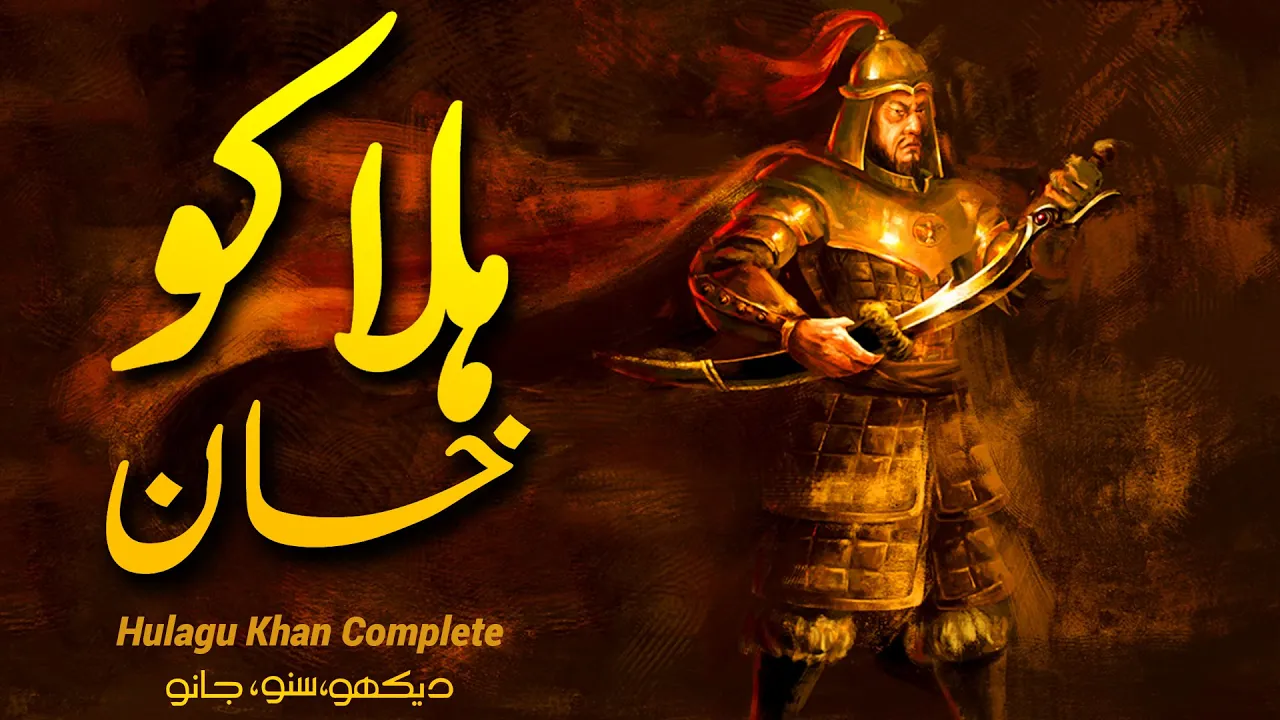








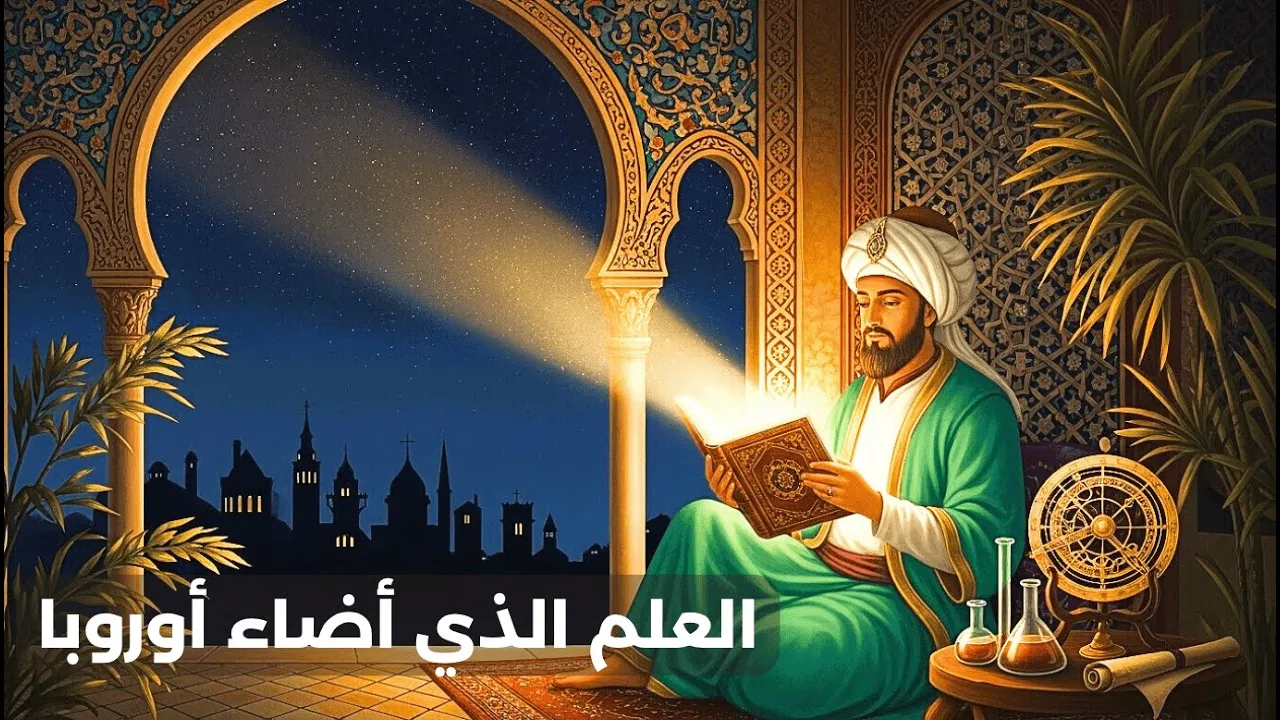

Medieval Baghdad, founded in 762 CE by Abbasid Caliph al-Mansur as a perfectly round city on the Tigris River, became the glittering crown jewel of the Islamic Golden Age, housing over a million inhabitants and serving as a center of learning through the House of Wisdom where scholars translated ancient texts from Greek, Syriac, and Sanskrit into Arabic; however, this cultural and intellectual hub was tragically destroyed in 1258 when Mongol forces under Hulegu Khan sacked the city, killing the last Abbasid caliph and his family, and burning the House of Wisdom, which had preserved countless ancient manuscripts that might otherwise have been lost to history.
Medieval Baghdad: Rise and Fall of the City of Peace
Added:The emergence of Islam and the concept of the Caliphate as both a religious and socio-political entity.
The historical transition of power from the Damascus-based Umayyad Dynasty to the Abbasid Dynasty.
The physical geography of Mesopotamia, specifically the strategic significance of the Tigris and Euphrates rivers for trade and agriculture.
The general concept of a 'Golden Age' and how imperial stability and patronage foster intellectual and cultural growth.
The specific achievements of the House of Wisdom (Bayt al-Hikma) and the preservation of Greco-Roman knowledge through the Translation Movement.
The military tactics of the Mongol Empire under Hulagu Khan and the detailed historical account of the 1258 Siege of Baghdad.
The geopolitical fragmentation of the Islamic world post-1258 and the rise of new centers of power like the Mamluk Sultanate in Cairo.
The transmission of Islamic Golden Age scientific, mathematical, and philosophical advancements to medieval and Renaissance Europe.
325.6K views10.3Klikes19:08Original Release: 2024-02-22
From Rome to Alexandria and Ctesiphon to Chang’an, each era of humanity’s pre-modern history had great cities that inspire the imagination of modern observers, and it is easy to understand why that is. In a pre-industrial world that was overwhelmingly characterized by small rural communities, cities represented the thrumming cultural hearts of not only Kingdoms and Empires, but entire continents. The romantic appeal of wanting to walk the streets of history’s great metropolises at their respective heights is natural, and today, we will do just that by taking you to perhaps the single greatest city of the Middle Ages. A city which served as the capital of an Empire that spanned across three continents, whose cultural soft power - via trade routes - extended as far north as Scandinavia and as far east as China. Welcome to our video on the history of Baghdad, the glittering crown jewel of the Islamic Golden Age. Sit back and relax as we cover what life was like within its gilded palaces and libraries, providing a general account of its history, from its cultural heights to its tragic destruction at the hands of the Mongol Empire. This video is sponsored by our kind youtube members and patrons, without whom our work would have been impossible. Patrons and Youtube members get 2 exclusive videos weekly and can currently watch the completed series on the First Punic War, Peloponnesian War, History of Prussia, Italian Unification Wars - Risorgimento, as well as dozens of other videos and the continuation of our Pacific War series. New series on the Russo-Japanese War, Albigensian Crusades, Xenophon’s Anabasis and much more are being released for our backers right now. You can join their ranks via the links in the description and pinned comment to get exclusive videos, early access to all public videos, schedule, wallpapers, access to a special discord server, where we are very active and much more. Thanks for supporting us. We couldn’t be doing it without your help!
Within a generation of the death of Islam’s founder, Muhammad, in 632, the Umayyad Caliphate took over the Arab heartland as well as much of the Middle East and North Africa, continuing the military expansion of the Islamic dominion even into Spain and France. Based in Syria and ruling from Damascus, the Umayyads reigned for almost a century over 11 million square kilometres of territory until the rival Abbasid family, claiming descent from Muhammad’s uncle and backed by military supporters from Eastern Persia, overthrew them in 750. Playing on the discontents of marginalized non-Arab Muslims in the large, multi-ethnic state, the Abbasids – though Arab themselves – recognized the need to shift their capital far away from the former Umayyad centers of power. The first Abbasid caliph, As-Saffah, had his capital at Kufa – on the banks of the Euphrates and near to his Persian base of support. However, when he died, his brother and successor, al-Mansur, decided to make an entirely new capital 170 kilometres to the north at a tiny, obscure hamlet called Baghdad. The meaning of Baghdad’s name is unclear, but it seems that it expressed “god-given” in the Persian language. Situated in the Fertile Crescent near Kufa, ancient Babylon, and the former Sassanid Empire’s capital of Ctesiphon, there was indeed something blessed about the settlement, which quickly grew, from the mid-700s, into one of the great metropolises of the Middle Ages, housing more than a million inhabitants and ushering in the Islamic Golden Age. The city of Baghdad was a product of the Abbasid Caliphate, being founded as its new capital in 762 and built from scratch on the western bank of the Tigris River by the second Abbasid ruler, al-Mansur. Convinced that it was the perfect location for a new capital, close to the Persian supporters of the new Abbasid regime, the caliph gave orders for a walled settlement to be designed by four architects and constructed to be perfectly round. The work was carried out by 100,000 labourers and skilled craftsmen with no expense being spared. al-Mansur spent the equivalent of 100 million silver dirhams to expedite its construction. About two kilometres in diameter, it had four gates located at the end of boulevards that crossed the city diagonally. These gates were named after the key locations of the Abbasid state to which they led – Kufa, Syria, Khorasan, and Basra. At the very center of the city stood the caliph’s residence – the Palace of the Golden Gate. Its construction was completed in 763, at which point the caliph’s household took up residence. Because the building was topped by a distinctive green dome, it was sometimes called “the Palace of the Green Dome.” Perhaps as a tribute to the cavalry whose barracks were connected and whose military support was crucial to the Abbasids, the almost 50-meter-high dome was topped by the statue of a horseman, lance in hand. Only one building was permitted to be adjacent to the caliph’s palace – the Great Mosque of al-Mansur. It was the first and preeminent mosque of Abbasid Baghdad, built from sun-dried bricks of the type that were readily available on the banks of the Tigris River, while its minaret and columns were supported by wood. Perhaps the first version of it, made in great haste by Caliph al-Mansur, was not overly impressive. It was torn down and rebuilt already in 807. The boundless enthusiasm that the caliph, al-Mansur, felt toward the site of Baghdad is reflected in a comment that he made at its foundation: “This is indeed the city that I am to found, where I am to live, and where my descendants will reign afterward.” These words proved to be, well, prophetic! For the next five centuries, Baghdad remained the capital of the Abbasid Dynasty’s rulers and an unrivaled center of learning in the Islamic world. Surviving through invasions, civil wars, and the rise and fall of various states in the region, it is no wonder that the Abbasids officially called Baghdad by another name – Madinat al-Salam – the “City of Peace.” As the Abbasids’ new capital rapidly expanded in its first decades, comprising a mainly Arab population but with a large component of Persians, its round walls became too restrictive and new extensions of the settlement spilled outside into the surrounding countryside, which was crisscrossed by canals running from the Tigris. Perhaps as a sign of the peace and stability of the early Islamic Golden Age, a new royal residence, the Khuld Palace, was constructed in 773 outside the city walls in the extensive verdant gardens right beside the Tigris. Just north of the palace, a permanently present pontoon bridge comprised of boats crossed the river. Located in surroundings like the legendary Garden of Eden or the Hanging Gardens of Babylon, one of the Seven Wonders of the Ancient World, it is little wonder that the Abbasids called this the Palace of Eternity. But peace was fleeting, even in the Abbasid Caliphate, and the palace was already destroyed during a siege of Baghdad in 812 as part of a power struggle for the throne between two Abbasid princes. Despite such occasional flare-ups of violence, Baghdad enjoyed remarkable peace and prosperity – conditions which led to an unprecedented golden age of prosperity, literature, and scientific advancement. This period was brought about in large part by the activities of the fifth Abbasid caliph, Harun al-Rashid, who ruled from 786 to 809. Though he lived only to the age of 43, he left a great legacy by establishing the Bayt al-Hikma – the House of Wisdom – within the walls of the round city. Also known as the Great Library of Baghdad, this was the preeminent center of learning in the period, attracting scholars from all over the world. Initially founded as a center to house the caliph’s collections of literature, it became an institution where many ancient works in Greek, Syriac, and Sanskrit were translated into Arabic and preserved. These included works on anatomy by Galen. Meanwhile, new breakthroughs by Islamic mathematicians and astronomers, such as the 9th-century al-Khwarazmi’s treatise on algebra, were made widely accessible. Already, in the early 800s, the building’s purpose was shifted from a royal archive to a public library. That meant unprecedented access to knowledge for the citizens of Baghdad, and not surprisingly, there was an explosion of scientific and literary accomplishments over the following centuries. This proliferation of literature in Baghdad was no doubt helped along by the Abbasids’ capture of Chinese prisoners during a war in 751. The captives taught them how to make paper, which facilitated the cheap and rapid production of books. In international relations, Harun al-Rashid was one of the greatest figures of his age. His armies pushed to the outskirts of Constantinople, placing the Byzantine Empire on the defensive. On the other hand, he had remarkably warm relations with Charlemagne, the ruler of most of Western Europe in the late eighth and early ninth centuries. They exchanged emissaries and gifts quite regularly, and Europeans thought remarkably well of the caliph despite their religious differences. Harun al-Rashid was also remembered very fondly among his own subjects, appearing often as a benevolent and wise ruler in the One Thousand and One Nights – an Arabic collection of fairytales compiled during the Islamic Golden Age. Being one of the great capitals of the world, Baghdad attracted visitors from far off. A German rabbi, Petachia of Ratisbon, visited Baghdad in the late twelfth century and described a city that was still flourishing. It was, according to him, ruled by the caliph whom he called the “king of Babel” – a term which evoked connections between the Abbasid city and the famed ancient city of Babylon ruled by King Nebuchadnezzar. 1100s Baghdad was exceedingly large – more than a day’s journey from one end to the other, the rabbi claimed, adding that it took more than three days to travel around its perimeter. It held a Jewish community of 1000 inhabitants, which, like the larger Islamic community, pursued literature and learning – including astronomy concerned with planetary movement. The head of the Baghdad Jewish community’s academy had 2000 disciples to whom he delivered lectures, apparently with two “interpreters” present. All this points to a degree of knowledge-sharing within even the distinct religious communities of Baghdad. Nonetheless, the increased dangers imposed by the outside world and the weakening of the Abbasid Caliphate meant that Baghdad had to build new fortifications to protect its enlarged territory. Four new gates were created in the 1100s and 1200s. As a sign of their solid construction, the gates lasted until the 20th century, when most of them were destroyed in World War I during the fighting over the city between the Ottomans and the British. In such a huge medieval metropolis, tensions could flare up between the inhabitants – not helped by Baghdad’s being on the fault line of Sunni and Shiite Islamic sects. In 1205, a major riot occurred when the inhabitants of the southern Azaj Gate neighbourhood decided to parade the corpse of a lion that they had killed through the rival district of al-Ma’muniyya. Resulting from this provocation, a public brawl broke out which even the local garrison commander could not stop. The following day, the people of the respective districts fought with swords and bows; a garrison of Turks was finally able to part the combatants. Only a few days later, again, a huge brawl broke out between two other districts because of the parading of a dead lion. Accounts of this kind remind us that not everyone in medieval Baghdad was a poet and scholar. Fires that burned down whole districts, infestations of rats, and floods from the Tigris are recorded. Yet the greatest disaster of all – one which ended the Abbasid Caliphate after five centuries of relative stability and prosperity – came in the form of the Mongol conquests. After several decades of successful resistance against Mongol advances into Iraq, the Abbasids were finally overwhelmed by the massive army under Hulegu, the brother of the fourth ruler of the Mongol Empire, Möngke Khan. In 1256, this huge army, comprised not only of Mongols, but of contingents from China, Inner Asia, and other conquered regions, arrived in the Middle East. Their primary target was Baghdad, which had just been devastated by a 50-day flood that destroyed half of its suburbs. The Abbasid Caliph, al-Mustasim, himself was also a target. After destroying the Ismaili Assassins and leveling their fortresses in northern Iran, Hulegu advanced on Baghdad in late 1257. Faced with the danger of Mongol conquest, high officials began to conspire against each other, going to the caliph to report about real or imagined conspiracies and traitors who were secretly working with the Mongols. Unrest broke out among the ordinary people, in this atmosphere, as they began to doubt the ability of the Abbasids to face the challenge posed by Hulegu’s army. For his part, Hulegu wrote an angry threat to the caliph to submit, or: “I shall not leave one person alive in your realm, and I shall put your city and country to the torch.” The caliph signed a death warrant, so to speak, for Baghdad’s entire populace when he sent the message back: “Young man… Since you’re not going to get anything from me, why do you seek it? You come with strategies, troops, and lassos, but how are you going to capture a star?” On hearing the reply, Hulegu wrote back: “You must get ready for battle, for I am coming to Baghdad with an army as numerous as ants and locusts.” The caliph ultimately put his trust in Baghdad’s centuries-long history of resisting invaders and enjoying stability and prosperity, but that era had unfortunately come to an end after half a millennium. As Hulegu was advancing on the city for the final battle, he apparently asked an astrologer to foretell what would happen. The astrologer warned of epidemics, lack of sunlight, and crop failures. Intriguingly, the invasion was happening in the immediate aftermath of the eruption of Mount Samalas – the greatest volcanic eruption of the Common Era – when such events would have been the result of the post-volcanic syndrome occurring over the entire globe. Regardless, the astrologer was executed within a couple years for his prediction, probably indicating that the misfortunes he predicted came true. In early 1258, the Mongols forced a crossing of the Tigris River. The Caliphate’s forces put up serious resistance, but the Mongols were able to drive them back by destroying the irrigation dykes, causing flooding through the entire area. Having encircled Baghdad, Hulegu set up the standard Mongol palisade to trap anyone trying to escape. He then demanded the caliph come out to surrender. The city’s inhabitants continued to fight desperately even as negotiations between the magnates on both sides were carried out. Running out of stones to fire from their catapults, the Mongols started firing local date palm trees into the city. Finally the caliph came out to surrender. Persuaded by Hulegu whose captive he now was, the caliph ordered Baghdad’s citizens to stop resisting and come out. On 13 February 1258, the Mongols commenced a general massacre of Baghdad’s citizens. A week later, the last Abbasid caliph, al-Mutasim, and all his children were executed in a nearby village. The Mongols were already rushing away from the fallen city because of the outbreak of epidemic disease. Amidst all this, observers noted that the Tigris River ran black with the ink of destroyed manuscripts taken from the House of Wisdom. In one of the valuable geography treatises composed in Persian in the 10th century – at the height of the Islamic Golden Age – the author described Baghdad simply as, “the seat of the caliphs, the most prosperous town in the world, and a place of great scholars and riches.” Indeed, historians are richer today owing to the great center of Baghdad which functioned not only to preserve, but also build on ancient literature. The traders and geographers of the Abbasid Caliphate charted out maps of the wider world, leaving us with vivid descriptions of medieval societies and settlements as they actually were. The literary and scientific works produced in Baghdad have left their stamp on world culture. Despite its destruction, the House of Wisdom’s efforts to translate writings from Asia and Europe preserved many books that would have otherwise been lost forever. The city survived its sack by the Mongols but never quite regained the luster of its golden age under the Abbasid Caliphate. In 1831, a combination of flooding from the Tigris River and outbreaks of deadly epidemics reduced the city’s population to 25,000 – a mere fragment compared to the glory days of the Abbasid caliphate. As it shrank, Western archaeologists and curiosity seekers arrived. They noted that one could still easily view the outlines of its once magnificent buildings and medieval boulevards, testifying to a time when, for millions of people over the course of centuries, Baghdad was the world’s brightest light. More videos on Islamic history are on the way. To ensure you don’t miss that, please, consider liking, subscribing, commenting, and sharing - it helps immensely. Recently we have started releasing weekly patron and YouTube member exclusive content, consider joining their ranks via the link in the description or button under the video to watch these weekly videos, learn about our schedule, get early access to our videos, access our private discord, and much more. This is the Kings and Generals channel, and we will catch you on the next one.
Up Next

10:13
Unveiling the House of Wisdom: The Islamic Golden Age's Lost Library
@OverlySarcasticProductions
409.6K views•2023-11-10

33:02
The Great Schism of 1054: Causes and Consequences
@SacredCathedrals
113.5K views•2026-02-19
19:41
The Great Schism: Catholic-Orthodox Rivalry in Medieval Christianity
@KingsandGenerals
2.6M views•2020-02-06

17:05
Understanding the Cold War: Superpower Conflicts and the Road to Détente
@OverSimplified
46.1M views•2019-01-24
Related Study Plans & Knowledge Roadmaps
Structured learning paths in History
history
Byzantine Iconoclasm: Theology, Art & Politics
01Foundations of Byzantium and Early Christian Images
02The First Iconoclasm: Leo III and the Crisis of Images
03Empress Irene, Nicaea II, and the Second Iconoclasm
+ 2 more learning modules
9h5 modules
Explore Roadmap
history
Iranian Revolution (Causes, Events & Legacy)
01The Pahlavi Dynasty and the Roots of Discontent
02The Spark of Rebellion and the Rise of Khomeini
031979: The Fall of the Shah and the Climax of the Revolution
+ 2 more learning modules
8h5 modules
Explore Roadmap
history
Mali Empire: Mansa Musa, Trade & Timbuktu
01Foundations of the Mali Empire
02The Trans-Saharan Gold and Salt Trade
03The Reign and Pilgrimage of Mansa Musa
+ 1 more learning modules
6h4 modules
Explore Roadmap
history
1947 Partition: Politics, Borders & Legacies
01Foundations of British India and the Divide
02The Political Negotiations and the Mountbatten Plan
03Drawing the Boundary: The Radcliffe Line
+ 2 more learning modules
8h5 modules
Explore Roadmap