














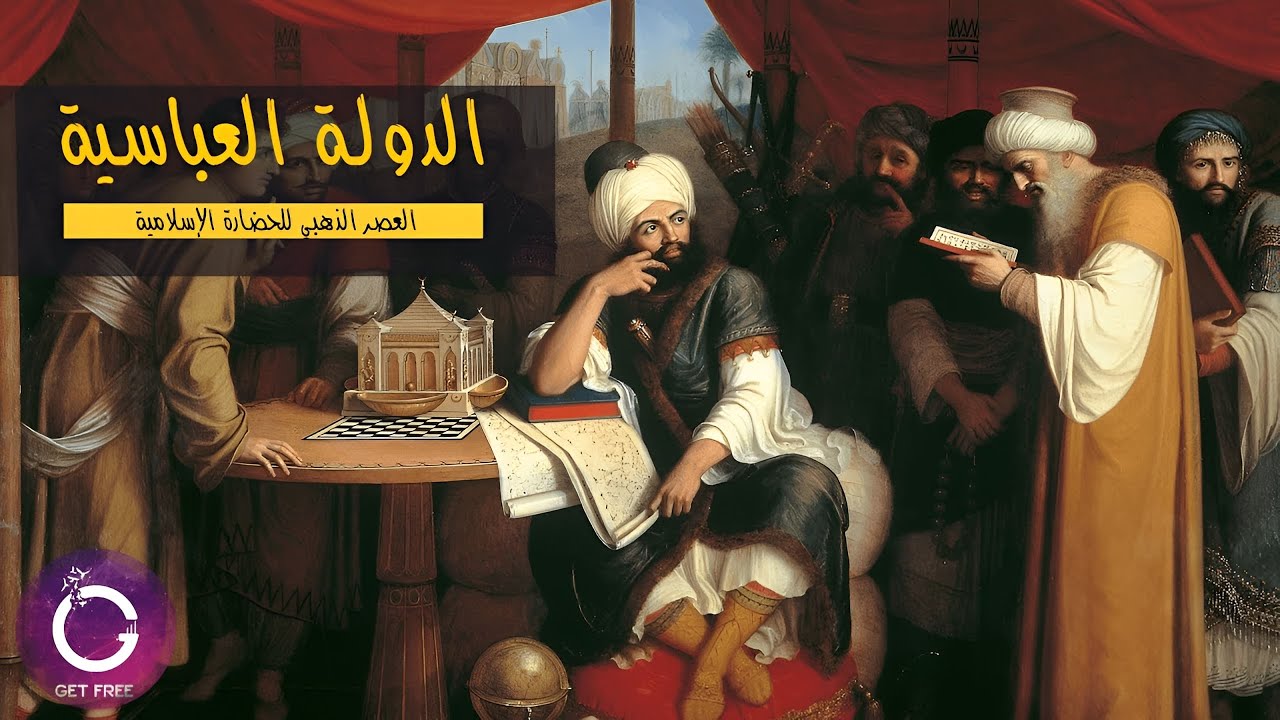






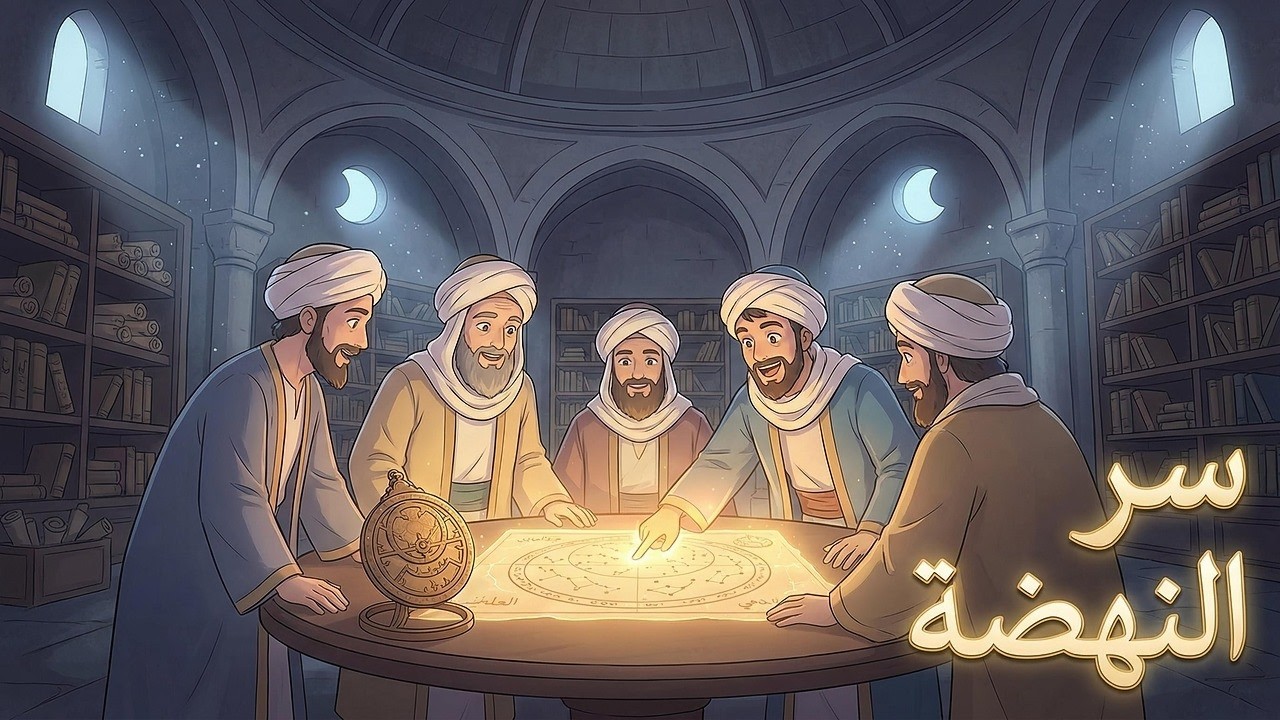

The Baghdad House of Wisdom (Bayt al-Hikmah), established during the Abbasid Caliphate around the late 8th century, was a pivotal institution that catalyzed the Islamic Golden Age by systematically translating and preserving knowledge from Greek, Persian, and Indian civilizations into Arabic, thereby making ancient wisdom accessible to scholars across the Islamic world and laying the groundwork for advancements in mathematics, medicine, astronomy, and philosophy that would influence global intellectual history.
Unveiling the House of Wisdom: The Islamic Golden Age's Lost Library
Added:The rise of the Abbasid Caliphate (750–1258 CE) and the establishment of Baghdad as a major global hub of trade and culture.
The basic concept of the Translation Movement, in which classical Greek, Persian, Sanskrit, and Syriac texts were systematically translated into Arabic.
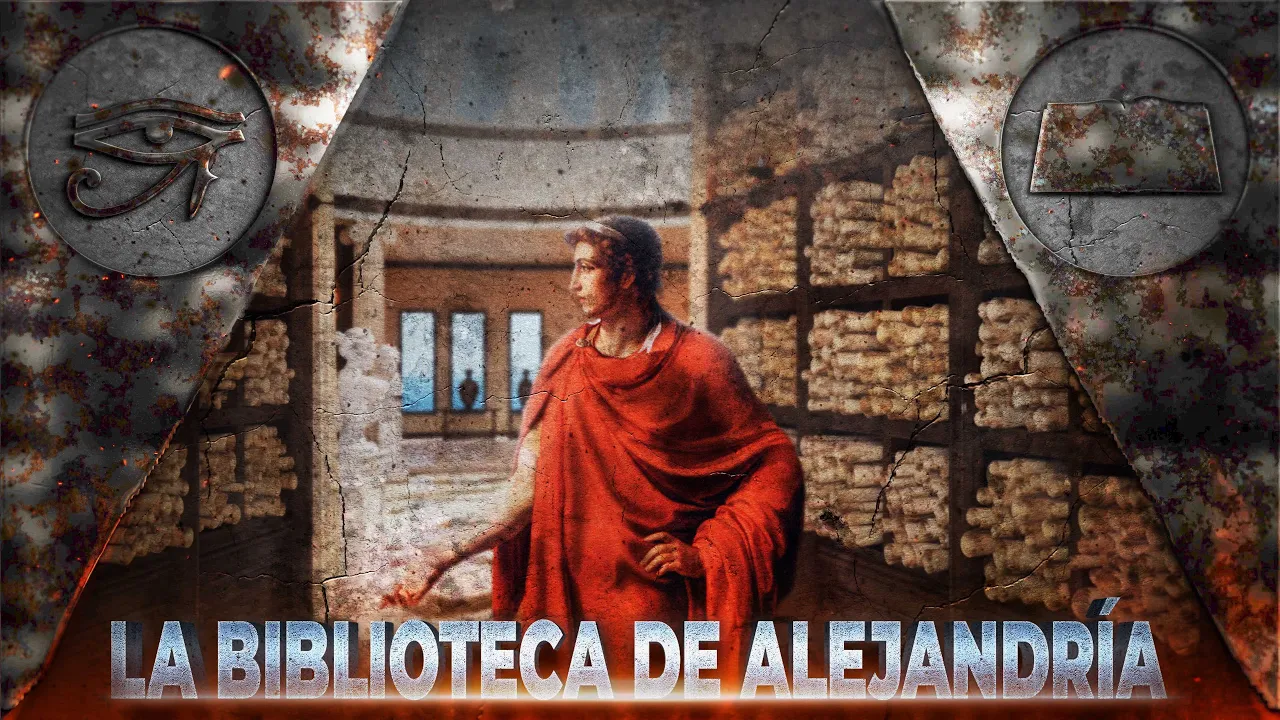
The historical significance of previous ancient centers of learning, such as the Library of Alexandria, which set the precedent for state-sponsored knowledge preservation.
The intellectual environment of the early Islamic world, where the synthesis of religious inquiry and scientific empirical observation was highly encouraged.
The transmission of Islamic scientific and philosophical texts to Western Europe through Al-Andalus (Spain) and Sicily, which helped spark the European Renaissance.
The specific breakthroughs of key scholars associated with the House of Wisdom, such as Al-Khwarizmi's development of algebra and Ibn al-Haytham's contributions to optics.
The geopolitical impact of the Mongol Siege of Baghdad in 1258 CE, including the tragic destruction of the city's grand libraries.
Historiographical debates among modern historians regarding the exact physical nature of the Bayt al-Hikmah—whether it was a single grand library, a translation bureau, or an academic academy.
409.6K views17.6Klikes10:13Original Release: 2023-11-10
There are few things History enthusiasts find more captivating than a library.
The lost libraries like Alexandria get all the affection and drama, yet hundreds of institutions remain comparatively unknown despite similarly monumental contributions to the sum of human learning.
Among those countless libraries to exist throughout history, some survive while others are indeed lost, but the single most consequential of them all has to be the Baghdad House of Wisdom.
Known in Arabic as the Bayt al Hikmah, this sanctuary of scholarship was the beating heart of the Islamic Golden Age, the focal point of science, philosophy, math, and theology for an entire civilization.
I’m gonna need a broom for all these sweeping declarations I’m making here, but the point is that the House of Wisdom was a big freaking deal.
Yet the intrigue continues, because much like our favorite Alexandrian archive, Baghdad’s great library is also lost, so we get to have some fun playing detective – Where did the House of Wisdom come from?
What inspired it?
What knowledge was kept there, and who were its greatest minds?
Then critically: what the heck happened to it, and was it even real?
Aha, a mystery!
SO: to understand the House of Wisdom and appreciate its legacy across the Islamic World, Let’s do some History!
The House of Wisdom, as we understand it, came into full form around the late 700s AD, but it was not the first library in Muslim history.
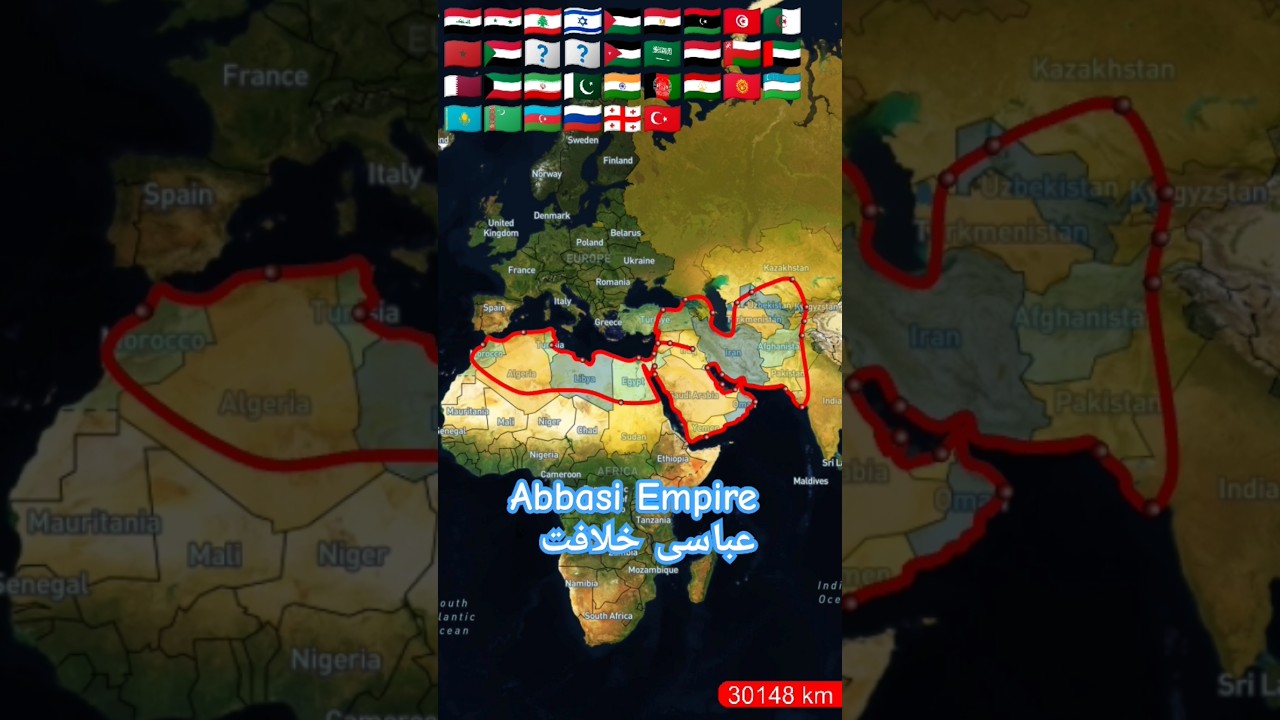
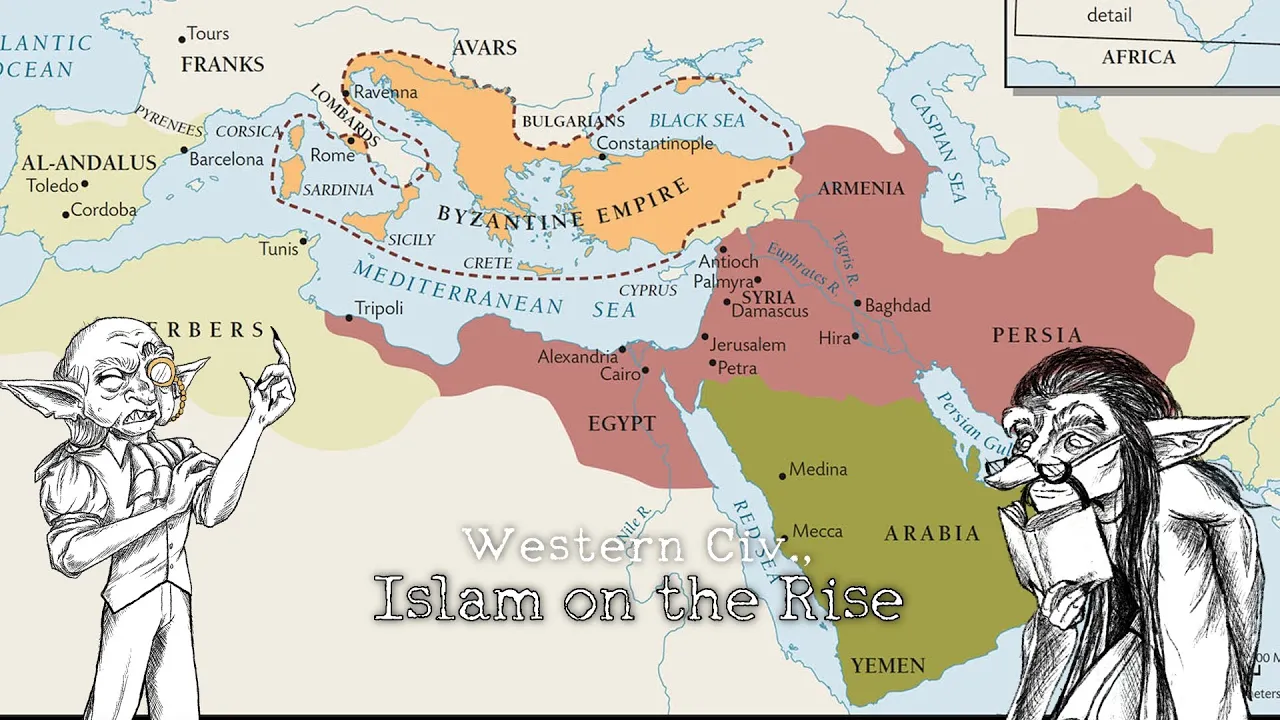
For context, after Islam swiftly spread out of Arabia in the mid 600s, the Umayyad dynasty was happily in charge of the largest empire yet known to history, with territory reaching from Visigothic Spain through Byzantine Egypt to Sassanian Persia.
As such, two of the ancient world’s most robust literary traditions fell right into the Umayyads’ lap, and the natural thing to do was follow their lead and built a library for it.
This wasn’t a standalone institution, but rather a function of the Great Mosque in the capital city of Damascus.
Much like medieval Christian monasteries were centers of scholarship, mosques were the natural venue for theological study and thus a handy place to store any books on other assorted topics.
Of course, the new Muslim ruling class spoke Arabic, while the locals spoke their native Latin, Greek, Coptic, Syriac, and Persian, so collecting all their texts required translating that into Arabic.
But when we’re dealing with the accumulated wisdom of several civilizations, that’s a lot of work to just sit down and start doing, so the Umayyads only got so far in their pursuit of knowledge.
They also only got so far in their pursuit of existing, as the Umayyad dynasty was soon toppled and replaced by the Abbasids after a revolution in the year 750 – or, counted another way, 132 years after the Hijra (A.H.) in the Islamic Calendar.
This was no mere political switcheroo, as the transition to the new Abbasid Caliphate brought with it a huge shift in culture: away from the Mediterranean-facing Umayyad world and towards the Abbasids’ eastward power base in Persia.
Their new capital of Baghdad was founded a short ways up the Tigris river from the old Sassanian capital of Ctesiphon, and the city itself was built in the Persian fashion of Round cities, rather than the Greco-Roman grids.
This all isn’t to say the Abbasid Caliphate is a Secret Bonus Persian Empire, but that the Arab aristocracy of the Abbasid dynasty saw a lot of good ideas and talented people in the wider Islamic world, and made the conscious choice to seek out Persian influences for their new and still very malleable Muslim culture.
That, of course, included Persian scholarly culture, with a tradition of grand imperial libraries and a multilingual populace.
So the Abbasids were able to go all in on translations.
The Umayyads had focused their efforts on practical texts like astronomy and medicine, but the Abbasid translation movement went for everything: literature and poetry, philosophy and theology, math, physics, astronomy and astrology, logic, alchemy, and the various fields these scholars would invent on their own, like cryptography and algebra.
Among the most famous of the Abbasid translators was Hunayn Ibn Ishaq, a Nestorian Christian scholar responsible for translating Galen’s medical texts and the complete works of Hippocrates, the mathematics of Archimedes and Euclid, as well as Plato’s Republic and most of Aristotle – a massive volume of work to undergo, but more than worth it, as the Caliphate paid Ibn Ishaq’s team the weight of every text they translated in gold.
That hefty payday wasn’t just for the fun of minting books-worth of solid gold, but because putting the world’s knowledge into the pan-imperial language of Arabic made it accessible for all scholars, who could then discuss it, comment on it, and create their own innovations on top of it.
The polymath Al-Kindi translated huge volumes of Plato, Aristotle, and Plotinus, and went on to compose hundreds of original treatises on philosophy and natural science.
Another scholar, Al-Khwarizmi, translated treatises on the Hindu Numeral system to adapt it into the Hindu-Arabic system we all use now, and also created the entire field of Algebra on the side.
These are just two examples of how Abbasid Translation Movement served as the springboard for the ensuing golden age of medieval Muslim scholarship: speed-running from “Here’s our new religion” to “Here’s our world-changing cultural achievements” in just over two centuries.
A good time to be a nerd.
Speaking of religion, I should specify that this all remained a fundamentally religious endeavor.
Scholars saw no conflict in studying ancient philosophy or science alongside Muslim or Abrahamic theology.
In the Abbasid world, theology was the study of God and his creations, so all scholarship was inherently conducted as an act of piety and worship.
GOD that’s so f****** cool.
According to legend, Caliph Al-Mamun had some doubts, but was assuaged after meeting Aristotle in a dream and hearing him say that it was all chill.
Now, “It was revealed to me in a dream” is not the way we conduct our scholarship around here, but given the outcome I’ll take it.
Just as well, because Al-Mamun became perhaps the biggest proponent of Baghdad’s intellectual advancement, sourcing texts from far and wide and even demanding yearly manuscripts from the Byzantines as terms of a peace treaty – What a baller.
But with all this wisdom flying around getting translated and commented on and invented fresh off the quill, a key question to consider in the middle of all this is where’s the House of Wisdom?
The simple answer is not all in one place, then mostly in one place, then eventually not all in one place again.
Like with the Umayyad Great Mosque, the early practice was to hold theologically significant texts in Mosques, but there were also private and semi-private libraries, booksellers who served as literary hubs in their community, as well as the Caliph’s royal library.
Sources aren’t quite solid on the dates, but they seem to indicate Baghdad’s House of Wisdom began as the personal library of either Caliph Al-Mansur or maybe more likely Caliph Harun Al-Rashid, and was later opened up to the public by Al-Mamun in the early 800s.
Persian sources note how this was reminiscent of the Sassanian Library tradition, and its early name of Khizanat al-Hikma (literally “Storehouse of Wisdom”) reflects this, but the raw scale of this scholarly culture was something only the Abbasids could accomplish.
And Baghdad’s position as the crossroads of the world meant Al-Mamun had plenty of resources to spend on other associated projects, like building an astronomical observatory later in his reign.
However, the distribution of intellectual activity across the city’s libraries, mosques, and the house of wisdom itself has led historians like Dimitri Gutas to question whether the House of Wisdom ever existed as a singular institution, or if it’s simply a catchall for the intellectual climate of Baghdad as a whole like how Athens was the smartboi powerhouse of ancient Greece without any singular smarty-pants palace.
The difficulty in determining this lies in how Baghdad received the almighty Mongol smack down of unexistification in 1258, when the city was nearly wiped off the face of the earth and every major Abbasid monument went kaplooie.
If the house of wisdom did exist, it didn’t anymore – so our guesses as to what kind of space it was, or indeed if it was any one space at all falls first on our textual sources.
Thing is, barring a truly catastrophic mis-reading of early accounts, the evolution from royal library to public library still checks out, so the lingering question is where the House of Wisdom ends and the rest of Baghdad begins.
Mention of the House of Wisdom by name drops off sharply after the death of Al-Mamun, when the following caliph Al-Mutasim moved his administration to the new city of Samarra.
Perhaps the royal library went back to a private collection after Al-Mutasim’s reign, perhaps it remained open but was less uniquely prominent against the vibrant backdrop of other libraries, mosques, and discussion venues in the city – working by written accounts alone, we’d be guessing forever.
There is, however, a second piece of the puzzle that might help us understand Baghdad, and that’s everywhere else.
See, Baghdad got turbo-squished by the Mongols, but other places didn’t; so we can look to archaeological and architectural evidence across the Islamic world to see if there are any other places like the House of Wisdom, and then try to work backwards – as it happens, there are several!
This same period saw the foundation of the world’s first formal university in the Moroccan city of Fes, whose notable students included Moses Maimonides, Ibn Khaldun, and… Pope Sylvester II?
Wild.
Created by the wealthy widow Fatima Al-Fihri in 859, The University of Al-Qarawiyyin was a combination of a mosque and a school, named after her native city in Tunisia, which was a prominent center of Islamic scholarship in North Africa.
Kairouan itself is famed for a great mosque from the early 800s; built by the local Aghlabid dynasty, it housed books on math, astronomy, and medicine in addition to Islamic theology and law.
Excitingly, it’s still around, so we can see the prayer hall, courtyard, and minaret still beautifully standing today.
Permit me a brief foray into the thumbtacks and string zone, but I see no difficulty imagining a space like this in Baghdad, deserving a name like House of Wisdom.
Looking elsewhere along the Med, the great Iberian city of Cordoba boasted a grand library founded in the 800s and expanded in the 900s, and the Fatimid capital of Cairo saw Al-Azhar University plus its very own “House of Wisdom” open at the turn of the millennium.
Perhaps the final feather in the OG House of Wisdom’s cap was associating the patronage of knowledge with imperial legitimacy, making splendid centers of learning an essential feature for any aspiring Muslim state.
The Baghdad House of Wisdom was not alone, but in many regards it is an outlier, and what I find most fascinating is how we learn more about it the farther afield we look: the books it collected, the translators who rendered them in elegant Arabic, the influence it had on the scholarly culture of the wider Islamic world, and the endless impact of its ideas in the history of theology, philosophy, and science.
Baghdad’s House of Wisdom was almost certainly a physical space, but the tantalizing mystery around its specifics reveals a deeper truth: that houses alone don’t create wisdom, people do.
Golden Age Baghdad was a good time to be a nerd indeed.
Thank you for watching.
I knew I was going to like this topic when I began researching but man I was not expecting to have this much fun getting neck deep in linguistics.
Honestly, every OSP video is a journey.
I certainly hope you enjoyed this one, and I’ll see you in the next one.
Up Next
4:41
The History of Arabic Numerals and the Legacy of al-Khawarizmi
@SciShow
2.6M views•2013-09-03

33:02
The Great Schism of 1054: Causes and Consequences
@SacredCathedrals
113.5K views•2026-02-19
12:17
Virgil: The Poet Who Forged Roman Identity in the Aeneid
@OverlySarcasticProductions
429.1K views•2022-10-14

17:05
Understanding the Cold War: Superpower Conflicts and the Road to Détente
@OverSimplified
46.1M views•2019-01-24
Related Study Plans & Knowledge Roadmaps
Structured learning paths in History
history
Byzantine Iconoclasm: Theology, Art & Politics
01Foundations of Byzantium and Early Christian Images
02The First Iconoclasm: Leo III and the Crisis of Images
03Empress Irene, Nicaea II, and the Second Iconoclasm
+ 2 more learning modules
9h5 modules
Explore Roadmap
history
Iranian Revolution (Causes, Events & Legacy)
01The Pahlavi Dynasty and the Roots of Discontent
02The Spark of Rebellion and the Rise of Khomeini
031979: The Fall of the Shah and the Climax of the Revolution
+ 2 more learning modules
8h5 modules
Explore Roadmap
history
Mali Empire: Mansa Musa, Trade & Timbuktu
01Foundations of the Mali Empire
02The Trans-Saharan Gold and Salt Trade
03The Reign and Pilgrimage of Mansa Musa
+ 1 more learning modules
6h4 modules
Explore Roadmap
history
1947 Partition: Politics, Borders & Legacies
01Foundations of British India and the Divide
02The Political Negotiations and the Mountbatten Plan
03Drawing the Boundary: The Radcliffe Line
+ 2 more learning modules
8h5 modules
Explore Roadmap