








![Silk Roads, Indian Ocean, & Trans-Saharan Routes [AP World History Review]—Unit 2 Topics 1, 3, 4](https://i.ytimg.com/vi_webp/Vi6aLWr6HZw/maxresdefault.webp)










Baghdad, founded in 762 CE by Caliph al-Mansur as a circular city strategically positioned between the Tigris and Euphrates rivers, became the world's largest city with over 1 million inhabitants during the Abbasid Caliphate under Harun al-Rashid. This cosmopolitan hub attracted scholars from diverse backgrounds who translated and preserved ancient Greek, Indian, and Persian texts at the House of Wisdom, leading to groundbreaking innovations including algebra (invented by Al-Khwarizmi), astronomical calculations, medical advancements, and early robotics described in 'The Book of Knowledge of Ingenious Mechanical Devices.' The city's intellectual achievements, which spread Arabic numerals and scientific knowledge across Europe, were tragically destroyed in 1258 when Mongol forces sacked the city, ending the Islamic Golden Age.
The History of Baghdad: Epicenter of the Medieval World
Added:This video is sponsored by CuriosityStream. Get access to Nebula, a video streaming service made by your favourite educational creators, when you sign up for CuriosityStream using the link in the description.
This is Baghdad, home to 7 million people. This sprawling urban jungle is the second largest city in the Arab world after Cairo. But between the skyscrapers and honking cars you can see remains of this city's magnificent mediaeval past. This once Round City’s walls crumbled long ago. But a thousand years ago brilliant scientists, architects, writers, and merchants of different races and religions made massive contributions to the knowledge of humanity. Back when Paris and London were home to 20,000 people over 1 Million Baghdadi's lived here among canals, libraries, and palm trees. So what is the history of Baghdad, what’s a House of Wisdom, and what does it all have to do with Mediaeval Robots trying to get people drunk.
Well, let’s find out.
It’s 632CE and the Prophet Muhammad has just died. He left behind a religion called Islam that was adopted by his people the Arabs. “Ey, do you know what I was thinking? We should conquer EVERYTHING! “ ”Oh our God I was thinking the same thing ”. And well…they did. THIS IS 11,100,000 km2 OF LAND SPANNING 3 CONTINENTS!!!. It’s been like 90 years since Muhammad died, how did they do this ancient Red Bull??
Is it just me or was that easier than you though it was going to be?
Yeah... This expansion happened under the Rashidun and then the Umayyad Caliphates. Their rulers were called Caliphs or Successors and the Umayyad Caliphate was based here in Damascus Syria. But the Umayyads had some ehhhhh internal issues. Their Caliphate excluded non-Arabs from positions of power even if they were Muslim. Millions of Christians, Jews, and non-Arab Muslims like Iranians, Egyptians, and Berbers living in the massive Empire's recently conquered lands were not huge fans of this policy.
Spotting this weakness Abu al-Abbas with huge support from Iranians, destroyed the Umayyad armies, wiped out the dynasty and founded the Abbasid Caliphate in its place in 750 CE.
The new Abbasid Caliphate needed a capital away from Arabia and Syria and closer to where their power base was: Iran.
The second Abbasid caliph al-Mansur located a strategic spot in Mesopotamia that already had a small market town called “suq Baghdad”. This town was ancient, it was even mentioned in documents from king Hammurabi's time around 1750 BCE. Geographically it was perfect. Right in the middle of trade routes between the Persian Gulf, Armenia, Egypt, Syria, China and the Byzantine Empire, plus it was between the Tigris and Euphrates rivers.
Founded in 762 CE the city went by a few names like Madinat al-Salam, city of peace. But the old market town's name, Baghdad, stuck.
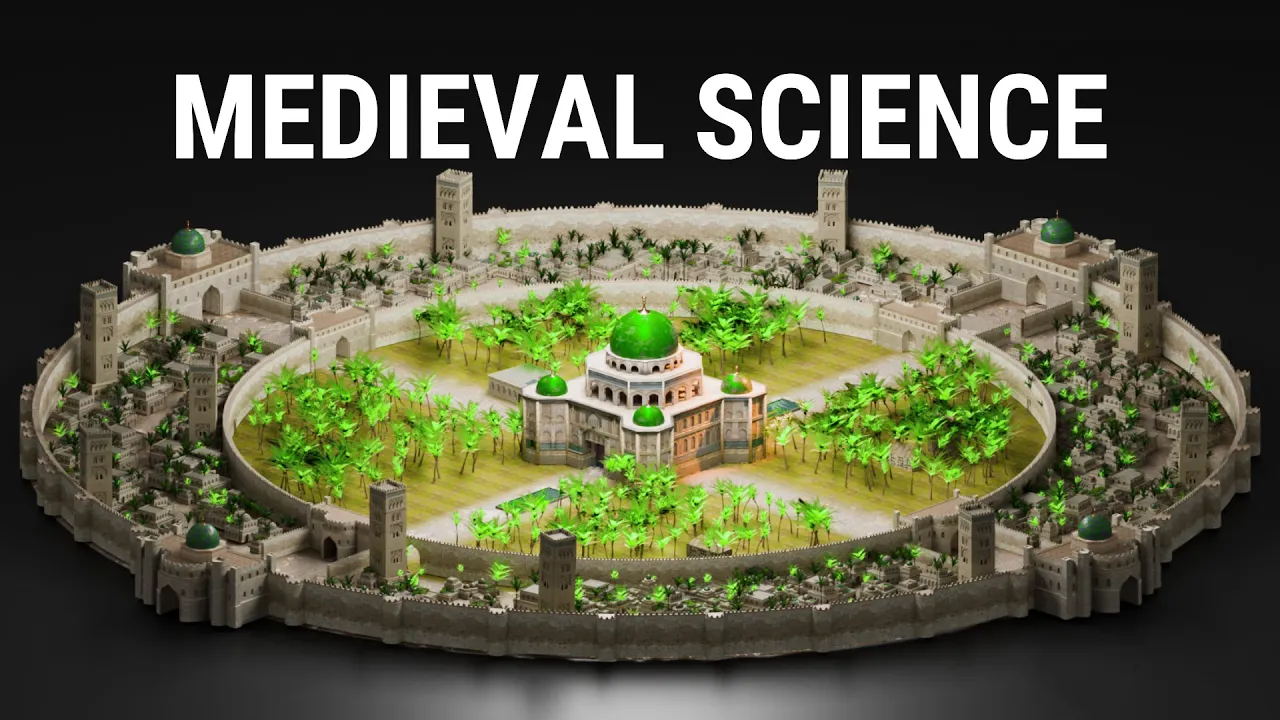
Al-Mansur had the city built in a perfect circle. Around 2.7 km in diameter protected by three concentric brick walls and a fancy moat.
The city had four massive gates from which came four roads. Each gate was named for the region it faced: Damascus, Basra, Kufa, and Khurasan. These connected Baghdad to the world but made it clear this city was the symbolic centre of a new world. Behind each gate there were arcades lined with markets acting like the arteries of the city. Between these main streets were residential neighbourhoods. At the core of the city was a huge open green space. There you could find the caliph’s Palace of the Golden Gate topped with a giant green dome with the central mosque by its side.
The city was surrounded by a network of canals, creating fertile land for agriculture.
The city had thousands of fountains and public baths open to all. People would walk near the streams, spread out on the grass and collect fruits and flowers from the stunning gardens of the city. In its large parks you could see horse racing and polo or you could visit the Zoo displaying lions, elephants, giraffes and all sorts of wild animals. On the canals dotted with palm trees you could see thousands of gondolas dancing like sunbeams on the water carrying the inhabitants of the city from one part of Baghdad to another.
According to legend the city had no mosquitoes, which was very important because 1. Mosquitoes are pure evil!
And 2. Malaria is not fun.
While a Round City looks cool it only lasted for about 70 years. His palace in the centre was supposed to protect the caliph because there were hundreds of thousands of peasants between the caliph and whoever wanted to kill him. It was like a Great Wall of Peasants! Which is a great idea until you realise that also meant once enemy troops took over the city, there was no way for him to escape. The Great Wall of peasants is sneaky that way.
The increasingly busy and chaotic markets inside the walls seemed like a security risk so the caliph al-Mansur moved them outside the city walls where suburbs were already growing rapidly. The Round City was swallowed by the thriving suburbs and soon vanished, now the whole area was Baghdad.
The bricks of the round city were used to build a growing Baghdad. It became a cosmopolitan trade hub linking the East and West. They monopolised trade across the Silk Road which made them incredibly rich. Their ships traded as far as the Baltic to Madagascar to China. Furs from Russia, African gold, Indonesian spices, Silks from China you could find it all in Baghdad. They traded so widely that this bronze cross with an Arabic inscription saying “bismillah” (“in the name of God”) was discovered in a bog in Ireland! Which is a fair bit away from Baghdad.
Between the years 900 and 1000 CE the city reached 1 million inhabitants. Making it the world's largest city, truly the metropolis of its time. Baghdad peaked under the rule of its most famous Caliph, Harun al-Rashid.
Harun was the son of the third caliph, al-Mahdi, by one of his wives, al-Khayzuran (Al-Haz-U-Ran). Who is a fascinating woman by the way.
Al-Khayzuran was a slave given to al-Mahdi by his father. At the time many concubines of nobles were well-educated. Some learned writing, poetry, music, dance, history, philosophy, and science.
Al-Mahdi fell madly in love with her. She convinced him not only to free her from slavery but also to make her his official wife. She used this to build considerable power. She sat with her husband at court which was unusual and met with his ministers behind the scenes. She discussed state business with generals and foreign diplomats. and managed the empire's administration. She made sure her sons Musa al-Hadi and Harun al-Rashid were placed ahead of the Caliph's other older sons as heirs to the empire. She used her wealth to fund canal building in Baghdad and it is said a quarter of the city was named after her. She built wells and shade giving trees along pilgrammage routes to Mecca and on one of her pilgrimages, she bought the house in which the prophet Muhammad was born and turned it into a mosque. You can go see it today but it's a library now.
Al-Mahdi died suddenly in 785CE which threw the Empire into chaos. But Khayzuran took control of the situation and secured a smooth transition of power to her older son Musa al-Hadi. She stopped a military rebellion, and had all the military officers and court officials swear allegiance to her son who wasn't even in Baghdad yet.
And HOW DOES AL-HADI REPAY HIS MOTHER!!! He gets jealous of her power, tries to push her out of political life, publicly humiliates her several times, and some sources say he tried to have his mother poisoned. After a year of ruling, at 24 years old Al-Hadi died...of poisoning. So be nice to your mother!
The new Caliph Harun Al Rashid adored his mother. Khayzuran died in November 789 and Harun helped carry her body barefoot through the mud on a rainy day as a sign of respect for the woman behind the reigns of 3 caliphs.
Harun fought off invasions and rebellions to maintain his empire that spanned from India to North Africa. He forced the Byzantines to pay him tribute and during his rule wealth poured into Baghdad.
The Abbasid military made many improvements on the battlefield. From little things like adopting the stirrups in cavalry which attached the rider to the horse. To the use of naphtha, a refined version of petroleum used in fire based warfare. They developed fire grenades called "naphtha shells" to throw at the enemy. A section of the Abbasid army were “naphtha-firemen': archers specialised in flaming arrows who very wisely wore fireproof suits that let them rush into the cities and castles they set on fire. They also had a camel based ambulance core. This line is just in here for me. They’re camels, they’re the llamas of they’re desert.
The Abbasids oversaw a global network of merchants, spies, and diplomats stretching from France to China. Harun once sent gifts to the Holy Roman Emperor, Charlemagne. Gifts including silks, spices, books, and Abul Abbas...who was an elephant. Getting the elephant to France was probably difficult but Charlemagne was absolutely fascinated by this gift. Legend says he took Abul Abbas to battlefields and on travels. When Charlemagne’s died his remains were wrapped in a silk with an elephant print! Isn't that just adorable?
Harun and Charlemagne sent each other a lot of gifts and they bonded over their shared hatred of the Byzantine Empire. Harun actually wrote a fairly sassy letter to the Byzantine Emperor that I love, "The least of the territories ruled by the least of my subjects provides a revenue larger than your whole dominion".
Harun was a great patron of the arts. Under his rule Baghdad was full of artists, scholars, and poets from 3 continents. This is how Harun ended up in one of the greatest pieces of literature of all time: Alf Laylah wa-Laylah or 1001 Nights or Arabian Nights.
The 1001 Nights is a collection of stories. The story of it's origins says that a Iranian King called Shahryar marries a woman and she cheats on him. So he murders her. He marries many more times but he has trust issues now so he kills every single one of his new brides. Therapy didn't exist yet. He then marries Scheherazade. On the first night after the marriage she tells him a story that ends in a cliffhanger that she will only finish the next day. She does this for a thousand nights and a night. The stories make Shahryar wiser, less murdery, and make him fall in love with Scheherazade. And they lived happily ever after. She was fine with all the previous wife-murder I guess.
Because Scheherazade told so many tales, it was easy for anyone to add or subtract stories to the collection. Aladdin, Sindbad the sailor and Ali Baba and the 40 Thieves are all tales from this book that were added at a later point. Some of the major protagonists in the stories are Harun Al-Rashid and his vizier Jafar, yeap the Jafar that inspired the Disney villain. The real Jafar actually came from a powerful family called the Barmakids that were originally Buddhists from Afghanistan.
Jafar convinced Harun to open the first papermaking houses in Baghdad. As the Arabs had just learned how to make paper from the Chinese. Paper was more efficient as it was cheaper and easier to make than parchment made from animal skin. And don’t even get me started on papyrus!!
Paper combined with Baghdad's many different people, cultures, and languages created an intellectual revolution. Arabic was the language of the empire, but scholars in Baghdad became experts in translation. In Baghdad people read the words of Aristotle and the Buddha to the Hindu Vedas and Zoroaster. Jews, Manichaeans, Christians, Zoroastrians, Buddhists, and Hindus met and exchanged ideas. One result of this exchange was “Arabic numerals”, the ones we use today, including the revolutionary number 0. These originated in India, were improved on by scholars in Baghdad, and then spread through the Middle-East to Europe.
Baghdad was a crossroad of knowledge filled schools & libraries. The most important of which was The House of Wisdom. We don't know much about it but this combined library, academy, and research institute welcomed scholars from around the world to translate, preserve, and debate their works. Under Harun’s son, the Caliph Al-Ma’mun the House of Wisdom became world's largest library and the most important storage site of knowledge since the Library of Alexandria. With books in Arabic, Greek, Latin, Persian, Syriac, Chinese, and Sanskrit.
Many ancient Greek texts only survived due to Arabic translations of them which made their way into Europe during the Renaissance. Greek philosophy influenced the Middle-East so heavily that the Arabic word for Philosophy is falsafa. Which is just Philosophy but said differently. Here you can see an Arabic painting of Socrates or Soqrat teaching his students.
Caliph Al Mamun paid scholars to travel abroad and bring back books. Once those books got to Baghdad, they were copied, translated, and sent to other scholars across the empire. After wars Mamun demanded books when negotiating peace treaties. He became so obsessed with collecting genius he apparently offered the Byzantine Emperor two thousand pounds of gold for a Mathematician called Leo living in Constantinople. They refused the offer. If Leo had moved to Baghdad he would have had quite the life. One scholar, the Nestorian Christian Hunayn ibn Ishaq lived in a mansion and received a massage and manicure daily. One scholar said about Baghdad: “nowhere in the world have I seen better financial arrangements to assist a scholar”.
This thirst for knowledge sparked the Islamic Golden Age. Just a quick note about this name, it's called the Islamic Golden Age but many Zoroastrians, Christians, and Jews contributed. The Golden Age included people from Central Asia to Iberia. It was so successful because the Caliphs built a multicultural empire obsessed with learning. Some scholars have suggested using the name Arabic Golden Age because the main language was Arabic but it's still being debated.
The House of Wisdom brought together different scientific traditions from around the world. And they saw the differences between Iranian, Indian and Greek texts, which meant they couldn't all be right. So these scholars didn't just copy and translate books, they tested them, commented on them, and developed new ideas. Like algebra! Invented by Al-Khwarizmi. He combined Greek and Indian mathematical ideas and made something new: mathematics without numbers, like when you calculate with x and y. This completely revolutionised science and caused me to fail maths class. It is only thanks to Khwarizmi that we can use algorithms for example. The word algorithm is just a mangled latinized version of Al-Khwarizmi's name from al-Khwarizmi to algoritmi to algorismus.
Baghdad led the world in cartography and astronomy. Scholars in Baghdad upgraded the astrolabe, a device that measures the incline of an object and can help navigate over sea and land. An experiment funded by Caliph Mamun included the astronomer Al-Farghani calculated the circumference of the Earth to be about 38,000km about 4% off the real number. Columbus used Al-Farghani's calculations for his voyage but he converted the Arabic miles incorrectly and thought the Earth was much smaller than it actually was.
Caliph Mamun funded the construction of the world's first scientific observatory in Baghdad and scholars there became experts in the stars. That’s why there are so many stars with Arabic names. Tthe Big Dipper's 7 stars all have Arabic names. Over time some star names were latinized, but most of these stars got their names more than a thousand years ago.
Alchemy, alkali, alcohol, algebra, algorithm, are all Arabic names.
They also developed distillation, a way of separating liquids through differences in their boiling points. This meant they could create strong alcohol which wasn’t totally banned in Islam yet but actually the main application of distillation was to produce scents. Rose water, for example, was used as perfume, especially beard perfume but was also added to cosmetics, foods and drinks. They also popularised hard bars of soap and had massive soap factories. *Train brakes hard* As a person that has to get on packed trains regularly I am extremely grateful for this. *Sniff* Is that rose water?
They perfected the distillation of crude oil into kerosine for lamps. A process without which we wouldn’t have gasoline, asphalts, or plastics. We have reports from the early 13th century of Muslims paving their streets with asphalt. Something not seen anywhere else until asphalt was laid in Paris in 1838.
In 805, the first general hospital opened in Baghdad. Soon there were 30 more throughout the empire. Some developments included separating wards by disease, having in-hospital pharmacies, keeping patient medical records, and psychiatric wards. This was revolutionary in a time when the mentally ill were thought to be possessed by demons in many parts of the world. These were the first modern hospitals where doctors followed a code of obligations towards their patients, regardless of their wealth, religion, or background. All doctors had to pass an examination to practise, these are the first medical diplomas! They also invented peer reviewed studies, clinical trials, and testing medicine on animals before humans!
These doctors invented hundreds of surgical instruments and new techniques. Cataracts, a condition that clouds the lens of the eye, could ruin ancient peoples lives. But we have a description from the 10th century Islamic world, of a procedure that involved sucking the cataracts out through a syringe. A procedure similar to what was used until laser surgery took over in the 20th century.
They also had these devices that boring historians call Automata. BUT I’M NO HISTORIAN, THEIR RULES DO NOT BIND ME, THESE ARE ROBOTS. MEDIAEVAL ROBOTS! Some of these automated machines are described in a book called The Book of Knowledge of Ingenious Mechanical Devices.
Some devices described are: an automatic water and soap dispenser, a giant elephant clock, a boat with a full robot band, and a programmable flute that plays itself which seems to be humanity's first programmable machine. They also describe a very elaborate way of playing spin the bottle.
This multi-storied robot was a whole party in itself, it was placed in the middle of a room. The first floor had a girl pouring wine. The second floor provided the music with four women playing instruments. The third floor was the entertainment, a male dancer, not that kind of male dancer! At the top was a horseman carrying a lance. He would spin round and round and every 20 minutes the horseman would stop. The lucky person that ended up in front of the lance would drink the litre of wine the first girl was pouring. This sounds like a fun party to me!
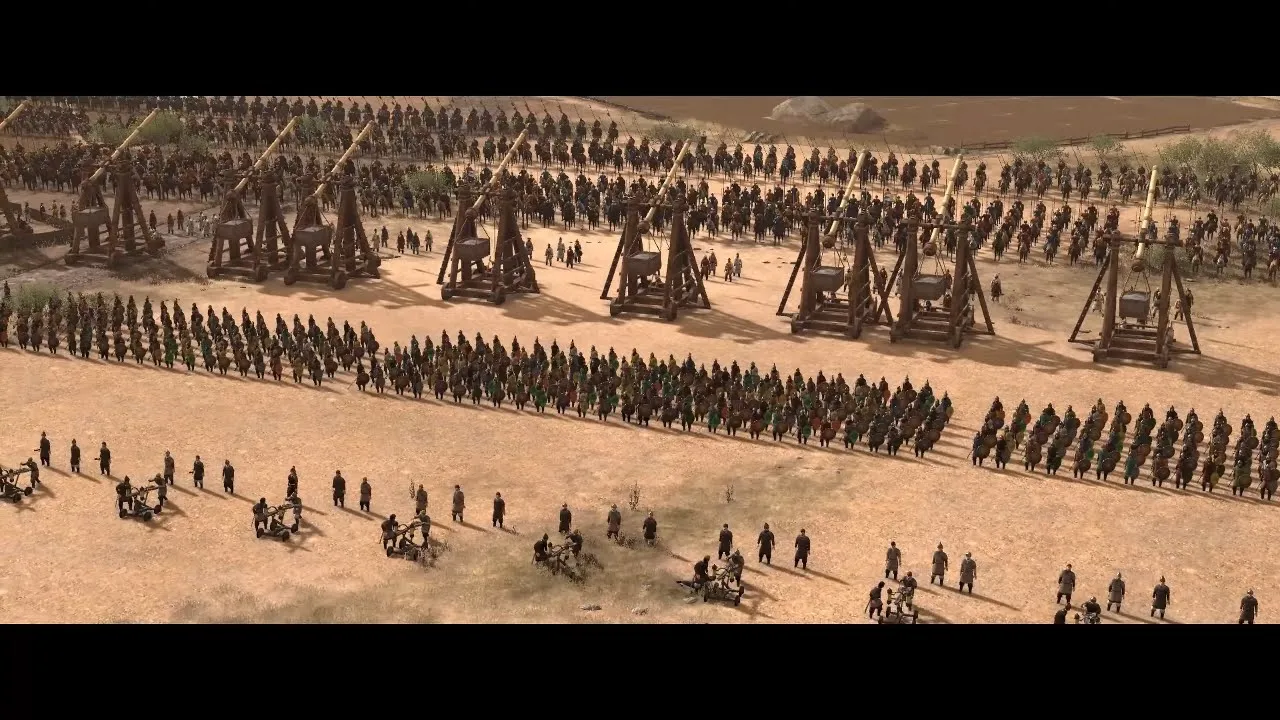
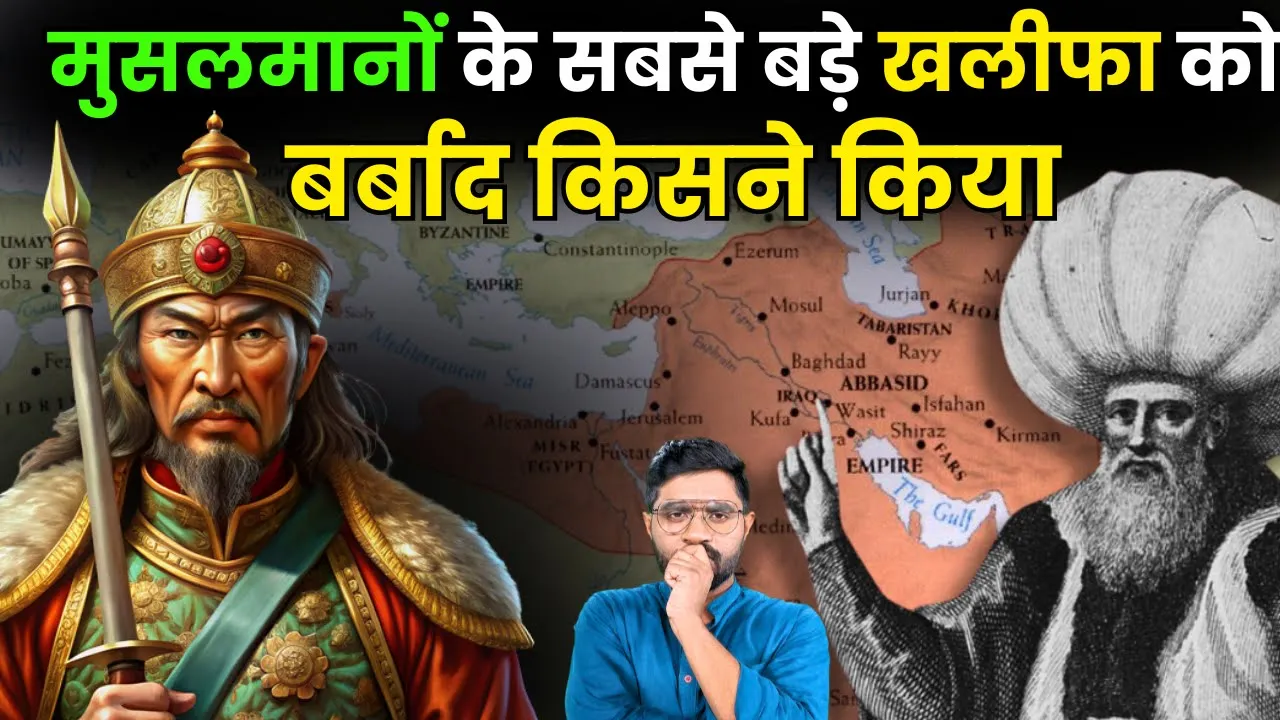
This Golden Age thrived for a couple centuries. But in 1258 CE the Mongol leader Hulego, grandson of Genghis Khan conquered the city. Burned it down, destroyed the House of Wisdom, massacred the population, and killed the Caliph. Legends say the Tigris ran red with the blood of the city's citizens and then black with the ink of it's libraries. The fall of Baghdad to the Mongols ended the Abbasid Caliphate but Baghdad as a city still attracted scholars well into the 1500 and 1600s, it never completely vanished and so the city standing today has been occupied since at least the times of Hammurabi! Today little of what they built remains. One of the few survivors is the Great Mosque of Samarra which gives us a glimpse of what they were capable of.
Baghdad and most of Iraq would go on to be conquered by the Ottomans and then colonised by the British Empire. The city was chosen to be the capital of the Republic of Iraq in 1958. Terrorism and decade-long occupation by the United States military have destroyed much of the city. But today in a recovering Baghdad you can still walk down Mutanabbi Street, a thousand year old street dedicated to booksellers and readers and take part in Baghdad’s ancient obsession with sharing knowledge.
Sharing Knowledge is so important that Cogito and a bunch of our creator friends created Nebula, a video streaming service where you can watch some of the best educational content ad free, uncensored, and earlier than on Youtube and we’ve partnered with Curiositystream. If you were a Nebula subscriber then you could have watched this video ad free days before it was on Youtube. On Nebula videos don’t have to compete to succeed in an algorithm that pushes clickbait and cheap content. Instead creators can focus on producing high-quality content.
Real Life Lore has a whole exclusive series on Nebula called Modern Conflicts, a well produced deep dive into conflicts that have shaped our world. Or you could enjoy the exclusive behind the scenes documentary on how Philosophy Tube is made. Or even take a look at Real Engineering's incredibly well made documentary series Battle of Britain. Seriously, look at this thing it looks so good! You can’t watch any of these on Youtube and they’re only possible thanks to Nebula.
There are many more Nebula Original videos and podcasts, all funded by and created for people like you. People that enjoy original, independent, and smart content.
And now we’ve teamed up with Curiositystream, the best place to find world class documentaries online. We’ve created a deal where if you follow the link in the description you'll get access not only to Curiositystream but Nebula too. For free! And it's not a trial or anything like that. As long as you're a Curiositystream member you'll get Nebula.
Curoisitystream has thousands of documentaries and I especially enjoy they’re nature ones. I recently watched one called Hidden Germany which was objectively amazing because it contained this shot of a mouse stealing his body weight in cheese.
Right now Curiositystream is offering Cogito viewers 42% their annual subscription. That's less than $12 a year for both CuriosityStream and Nebula.
So click the link below to get 42% off an annual Curiositystream subscription along with free access to Nebula or you can just go to curiositystream.com/cogito.
I hope you enjoyed this video. Let me know what you thought about it in the comments below? What would you like us to cover next?
You can find all the sources used in the description. If you are interested in supporting the channel, there are links for Patreon and my t-shirt store also in the description. My Patrons also get access to these videos early along with the extended commentary from the team.
Thanks a lot for watching and Ma’a salama!.
Up Next
The Abbasid Caliphate: Rise and Fall of an Empire (750-833)
@HistoryTime
487.7K views•2019-08-31

The Great Schism of 1054: Causes and Consequences
@SacredCathedrals
113.5K views•2026-02-19

The Geopolitics of the Ukraine War and the Rise of Global Autocracy
@JordanHarbingerShow
468K views•2025-04-19

Understanding the Cold War: Superpower Conflicts and the Road to Détente
@OverSimplified
46.1M views•2019-01-24
Related Study Plans & Knowledge Roadmaps
Structured learning paths in History