Graphic match editing creates meaningful connections between shots by matching visual elements such as color, shape, angle, and position, allowing filmmakers to symbolically link scenes and convey deeper narrative themes.
Graphic Match Editing Analysis in Lawrence of Arabia & 2001
Added:Deep Dive
Fundamentals of Film Editing: Understanding basic continuity editing, transitions (cuts, fades, dissolves), and how pacing affects narrative flow.
Basics of Film Editing | Doon Film School | Dehradun
7.2K
Film editing is the process of assembling and arranging video footage to tell a story effectively, involving three key stages: rough cut (assembling acceptable footage), fine cut (refining pacing and emotional content), and final cut (adding sound and final adjustments). Essential editing techniques include match cut (smooth transitions between scenes), jump cut (compressing time), and montage (combining different shots for meaningful narrative). Effective editing requires maintaining rhythm and pacing (varying speed for emotional vs. action scenes) and ensuring continuity to keep viewers immersed in the story without noticing cuts.
Click to watch →
The Art of Film Editing | Film Editing Pro
179.7K
Film editing combines visual language and narrative structure to craft compelling stories. The visual language includes the 180 degree rule for maintaining spatial continuity, managing dynamic camera movements, and handling multiple characters with separate eye lines. Narrative structure follows Dan Harmon's eight-stage framework: characters start in comfort zones, pursue desires, enter unfamiliar situations, adapt and achieve goals, pay heavy prices, face complications, return transformed, and ultimately change. Understanding both domains enables editors to make informed decisions about transitions, pacing, and timing, transforming raw footage into coherent cinematic experiences.
Click to watch →

Crew Cut | EP 02 | Intro to Editing | Namrata Rao X Rasika Dugal
11.6K
A film editor assembles raw footage into a coherent story using digital tools like Avid, Final Cut Pro, and Premiere Pro. The core tool is storytelling—the ability to engage audiences throughout. The workflow involves receiving rushes and audio separately, syncing them, organizing into bins, reviewing each shot for performance and coordination, and selecting the best takes. This foundational process transforms disconnected footage into a unified narrative.
Click to watch →

How Sandeep Reddy Vanga Tells A Story | Filmy Geeks
76.3K
Film editing is the final and most important aspect of filmmaking, occurring after writing. While music is heard and visuals are seen, editing is the element audiences subconsciously feel. The Rule of Six, developed by Oscar-winning editor Walter Murch, emphasizes three key elements: story (understanding the narrative arc and character progression), emotion (considering how cuts affect audience feelings), and rhythm (the organic flow including pacing, music placement, and breathing space). Effective transitions like dissolves should carry emotional weight and incorporate sound design to enhance cinematic impact.
Click to watch →

As PIORES edições do cinema | Gaveta
970.5K
Film editing encompasses rhythm of cuts, music selection, and narrative assembly, distinct from visual effects (CGI) and continuity errors. Editing quality significantly impacts viewer experience, with some films having excellent editing while others suffer from catastrophic cuts. Oscar nominations for Best Editing indicate high standards, though recognition remains subjective. Even visually spectacular musicals can have confusing editing that disrupts viewer experience. The distinction between trailer editing (focused on excitement without strict continuity) and film editing (requiring narrative coherence) is crucial for understanding editing quality.
Click to watch →
Deep Dive
The Kuleshov Effect: The cognitive concept of how viewers derive meaning from the juxtaposition of two sequential shots.
Настоящее 🔥AI КИНО с помощью ⭐️ НОВОГО метода ⚡️Ломаю шаблон «случайной генерации»‼️
41.9K
Эффект Кулишова - это принцип, доказанный советскими монтажёрами Дзигой Вертовым и Леонидом Кулишовым, который показывает, что смысл рождается между кадрами. Один и тот же кадр с нейтральным лицом актёра, смонтированный с разными кадрами (еда, гроб, красивая женщина), создаёт совершенно разные смыслы (голод, скорбь, вожделение). Смысл создаётся не самим актёром, а контекстом, который создаётся соединением кадров. Это основа языка кино.
Click to watch →
#04 SUPER BỔ NÃO
233.5K
The Kuleshov Effect is a film editing technique discovered by Soviet filmmaker Lev Kuleshov in 1910. The effect demonstrates that viewers interpret the same facial expression differently depending on the context provided by surrounding shots. In Kuleshov's experiment, the same actor's neutral expression was shown after different images: a bowl of soup (viewers interpreted it as hunger), a coffin with a baby (viewers interpreted it as grief), and a woman on a couch (viewers interpreted it as desire). This effect revealed that viewers project their own emotions onto actors based on contextual cues, meaning actors do not need to convey complex emotions through their expressions alone. The Kuleshov Effect became foundational to Soviet montage theory and influenced filmmakers like Alfred Hitchcock, who used it to create tension and emotional responses in films like Psycho and Rear Window.
Click to watch →
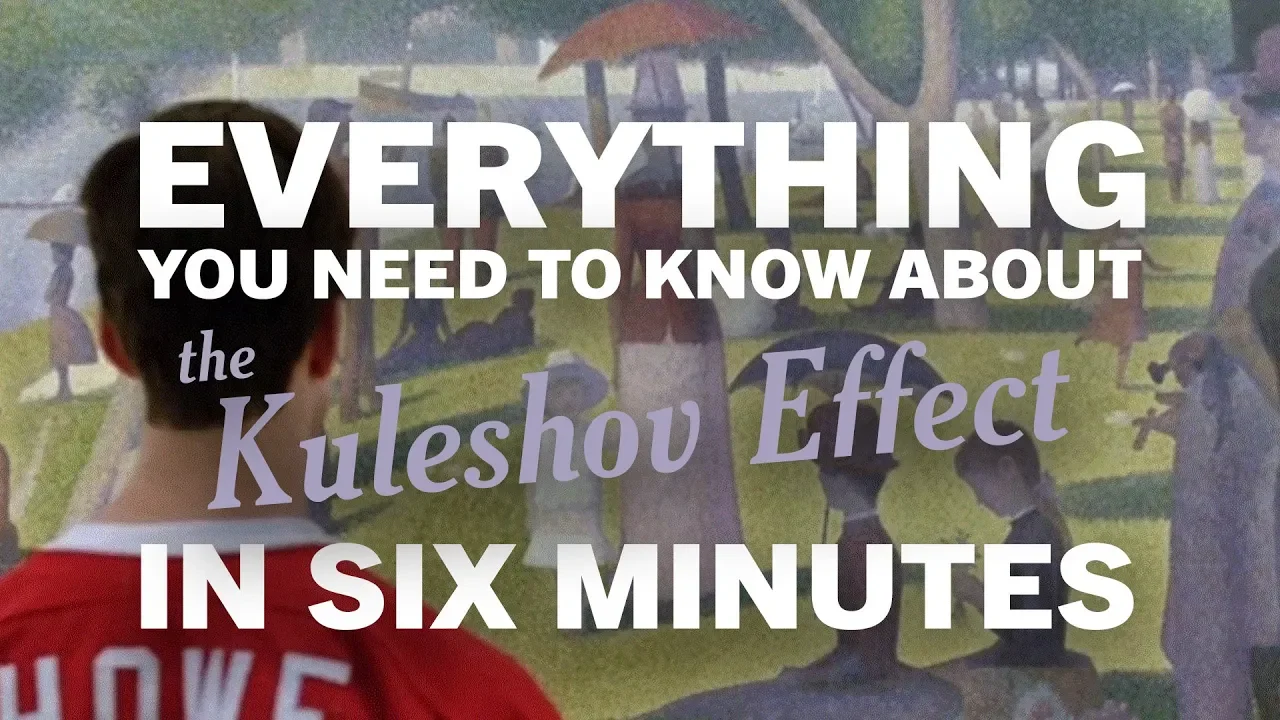
Kuleshov Effect in Film Editing: Psychology & Technique
145.6K
The Kuleshov Effect is a film editing principle discovered by Soviet filmmaker Lev Kuleshov in the early 1900s, which demonstrates that viewers derive more meaning from the interaction of two sequential shots than from a single shot in isolation; this cognitive phenomenon allows editors to manipulate audience interpretation by strategically arranging images, as shown when Hitchcock used the same neutral face shot to represent different character traits (kind man, dirty old man) depending on what followed it in the sequence.
Click to watch →

Qué es el efecto Kuleshov
168.7K
The Kuleshov Effect is a film editing technique discovered by Russian filmmaker Lev Kuleshov in the early 20th century, which demonstrates that the same close-up shot of a character can convey completely different meanings and emotions depending on what scenes are edited before and after it, fundamentally showing that meaning in cinema is created through the arrangement of shots rather than the shots themselves.
Click to watch →

🦸♂️ TUTO : Prendre de la hauteur
238.2K
The Kuleshov Effect is a cognitive bias discovered by Soviet filmmaker Lev Kuleshov in the early 1920s. The experiment demonstrated that viewers assign different meanings to the same facial expression depending on the surrounding shots. When a neutral expression was shown after a bowl of soup, viewers perceived hunger; when shown after a woman, viewers perceived desire. This effect reveals that context fundamentally shapes how we interpret visual information, and that meaning is constructed through the relationship between shots rather than existing within individual shots.
Click to watch →
Deep Dive
Visual Composition and Geometry: Key principles of cinematography, including framing, shape, and lines, which form the visual basis of a graphic match.

Bố cục ASM1
117
Visual composition relies on four core principles: (1) Contrast in size, shape, and color creates visual interest and prevents monotony; (2) Spatial depth is achieved through size contrast where larger elements appear closer and smaller elements appear farther away; (3) Color temperature contrast between warm (red, orange, yellow) and cool (blue, green) colors enhances visual appeal; (4) All visual elements can be analyzed through geometric shapes (squares, circles, triangles, rectangles) to understand their structural relationships. These principles apply universally across all visual art forms including painting, design, and photography.
Click to watch →
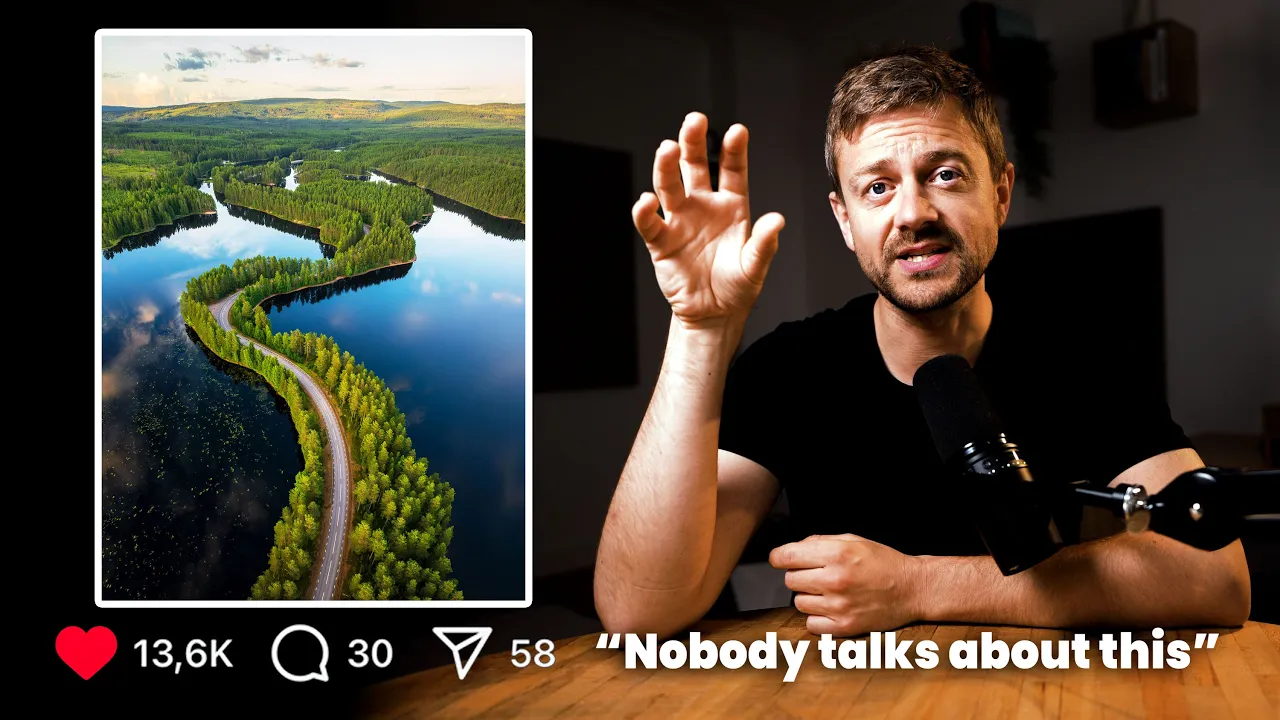
This NEW Approach to Composition Will Change Your Photos FOREVER!
19.2K
Geometry provides the underlying structure of all composition and serves as the basic tools for building a composition. A photo with stronger or simpler geometry is usually easier to absorb than one that is more chaotic. The technique involves deconstructing scenes into lines, shapes, and patterns—looking for lines that lead the eye, invisible lines connecting elements, shapes creating interesting patterns, and points of interest anchoring the composition. This approach works on both conscious and unconscious levels.
Click to watch →
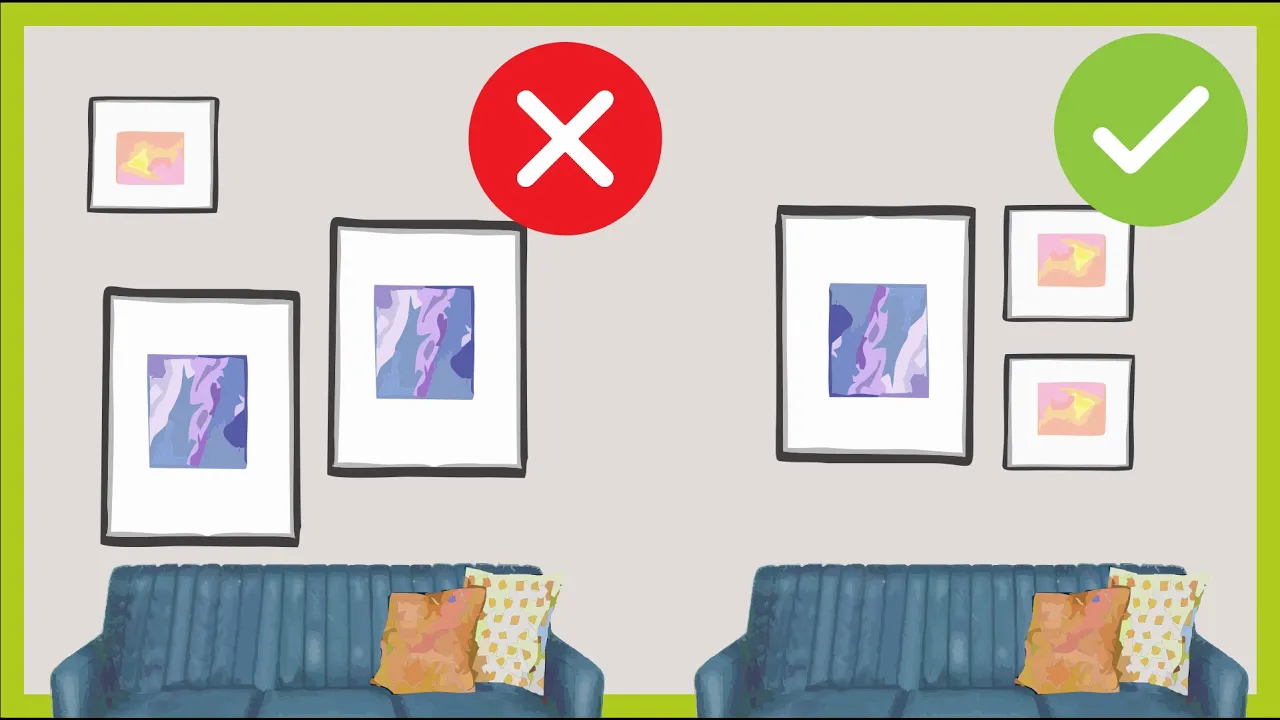
Aprendé a hacer tus propias COMPOSICIONES de CUADROS | Vero Milla ARQ
42.5K
All art compositions are based on simple geometric figures, primarily squares and rectangles. A single rectangle can be divided into multiple compositions: splitting in half creates two symmetrical equal squares; dividing into three parts creates a linear composition; creating a 3x3 matrix produces nine equal squares. Balance in compositions refers to visual equilibrium between elements, where two elements have more visual weight than one, requiring size reduction to achieve balance. Balance can be achieved using vertical or horizontal axes of symmetry. Complex compositions are created by combining different sizes and orientations while maintaining geometric control. Advanced patterns include swirl compositions (rotating around a central point) and diamond compositions (larger frames at center with smaller frames radiating outward). The rhomboid composition uses two guiding lines with larger frames at center and smaller frames extending toward extremities.
Click to watch →
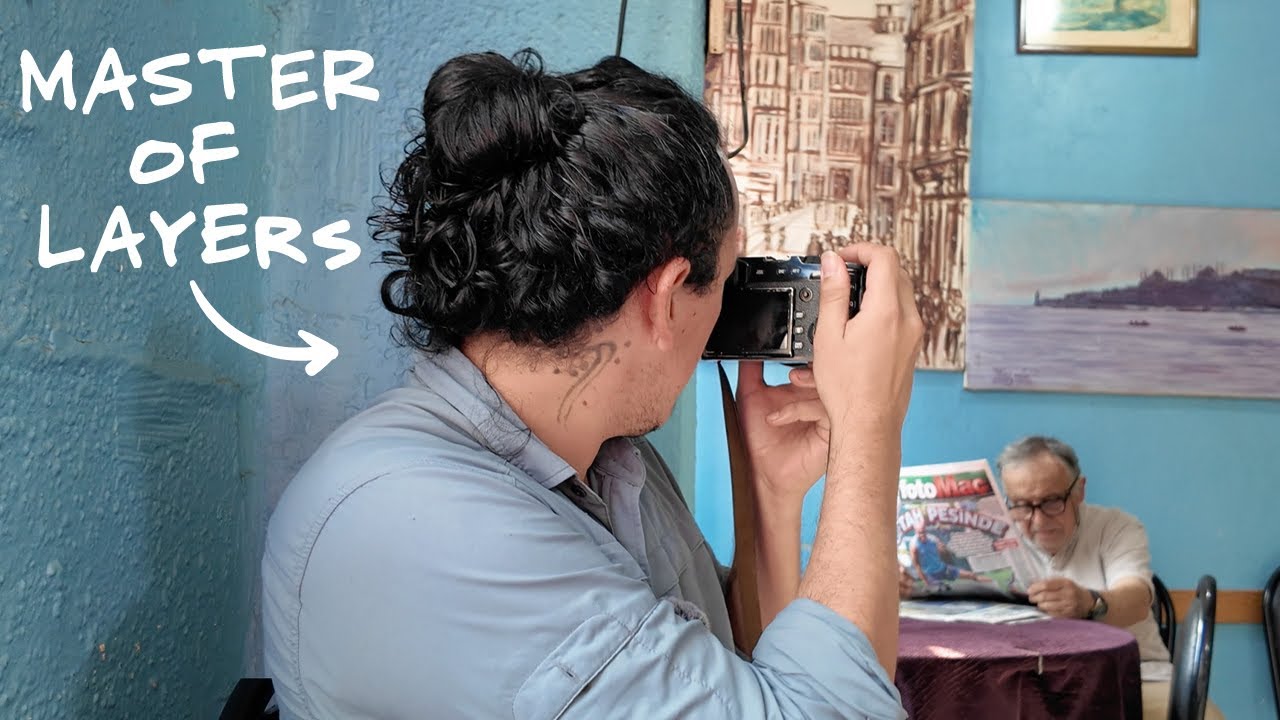
A Day of Street Photography With Eduardo Ortiz
623.5K
The figure-ground relationship is the foundation of strong composition—clear separation between subjects and backgrounds ensures viewers understand what's happening. Beyond this, geometry, patterns, and negative space contribute to visual storytelling. Watching cinema helps photographers understand how composition affects emotion; filmmakers carefully craft frames to evoke specific feelings. Good street photography tells stories through single images that convey the complexity of life, not just isolated moments.
Click to watch →
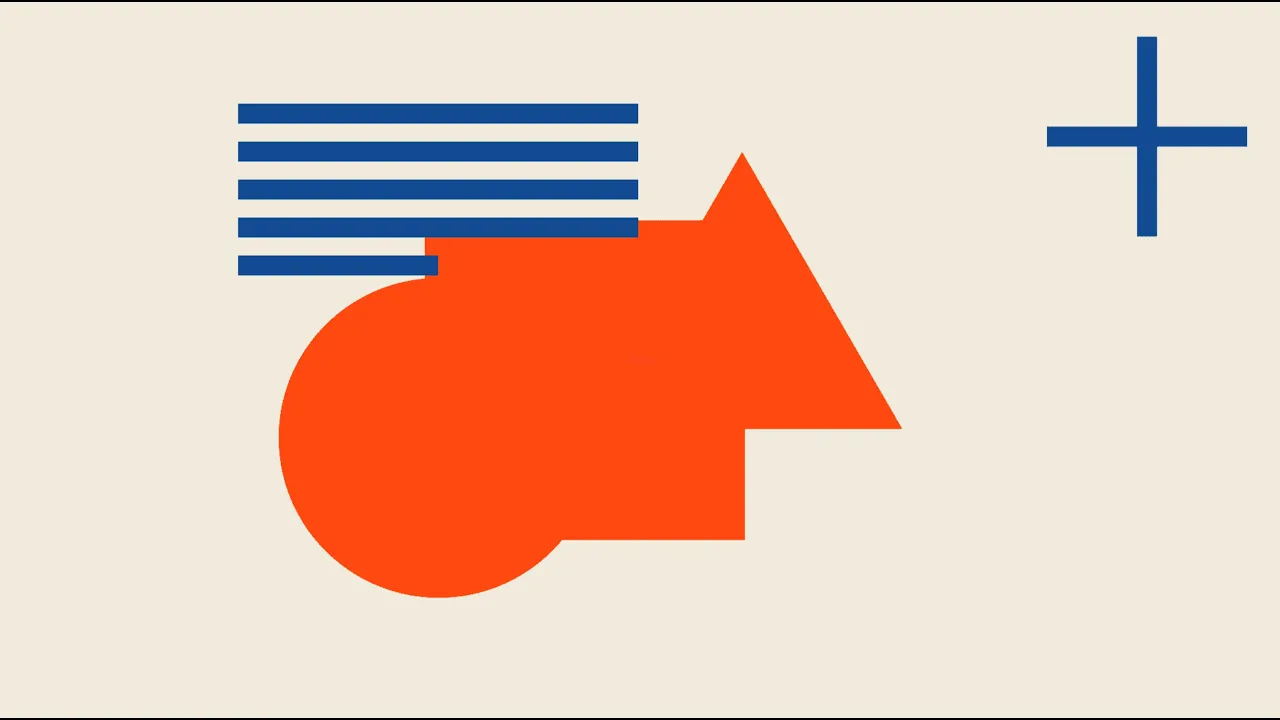
DW OM — формальная композиция
4.1K
Visual composition relies on the relationship between format (container) and objects placed within it. Objects can only be perceived in relation to other elements, making the format a crucial reference point. Proportional relationships—such as objects equaling half or quarter of the format—create order and visual harmony. The interaction between larger and smaller forms occurs through geometry and optical density (visual weight of black and white areas). Composition serves as the foundation for all design work, forming the basis for communicating messages to audiences. Understanding these fundamental relationships allows designers to create effective visual communication.
Click to watch →
Deep Dive
Cinematic Metaphor and Symbolism: How filmmakers use visual elements and objects to represent abstract thematic concepts.
Metáforas y símbolos en el cine
6.1K
Metaphors and symbols in cinema function as powerful tools for conveying meaning beyond the literal narrative, with plastic metaphors based on visual similarity, dramatic metaphors focused on action sequences, and ideological metaphors addressing broader human problems; symbols are deliberately composed elements in scenes that carry deeper significance, and their interpretation varies based on the viewer's cultural background, knowledge, and personal experiences, making cinema an experiential medium where audiences actively construct meaning from visual and narrative cues.
Click to watch →
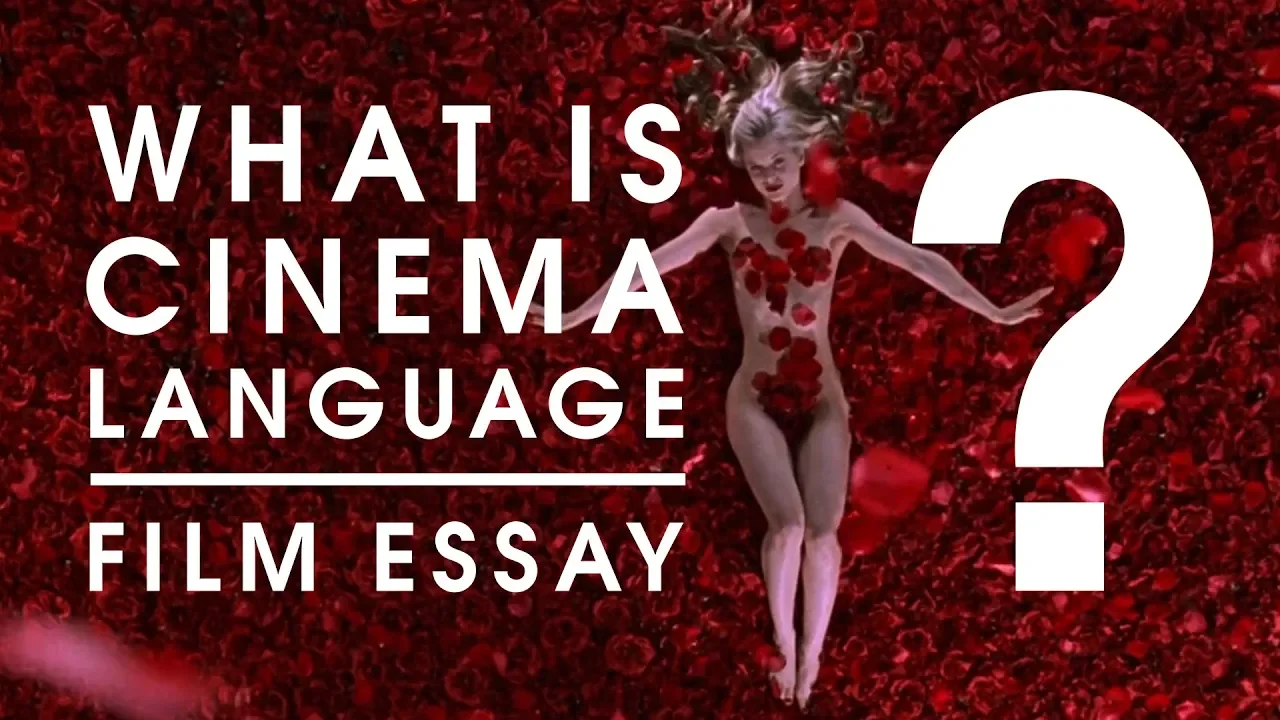
What is Cinema Language? | A Film Essay
43.1K
Framing objects within shots creates symbolic metaphors that extend meaning beyond literal representation. In Psycho, blood draining down a sink represents life leaving a character's body. In Schindler's List, empty pots symbolize all the workers Schindler couldn't save. In Up in the Air, empty chairs represent workers Natalie Keener fired. In Monsters Ball, a magnifying glass magnifies internal problems. In Roma, the opening shot of a floor being cleaned reflects a flying plane, summarizing the film's theme of wealthy people flying above while poor people clean floors below.
Click to watch →
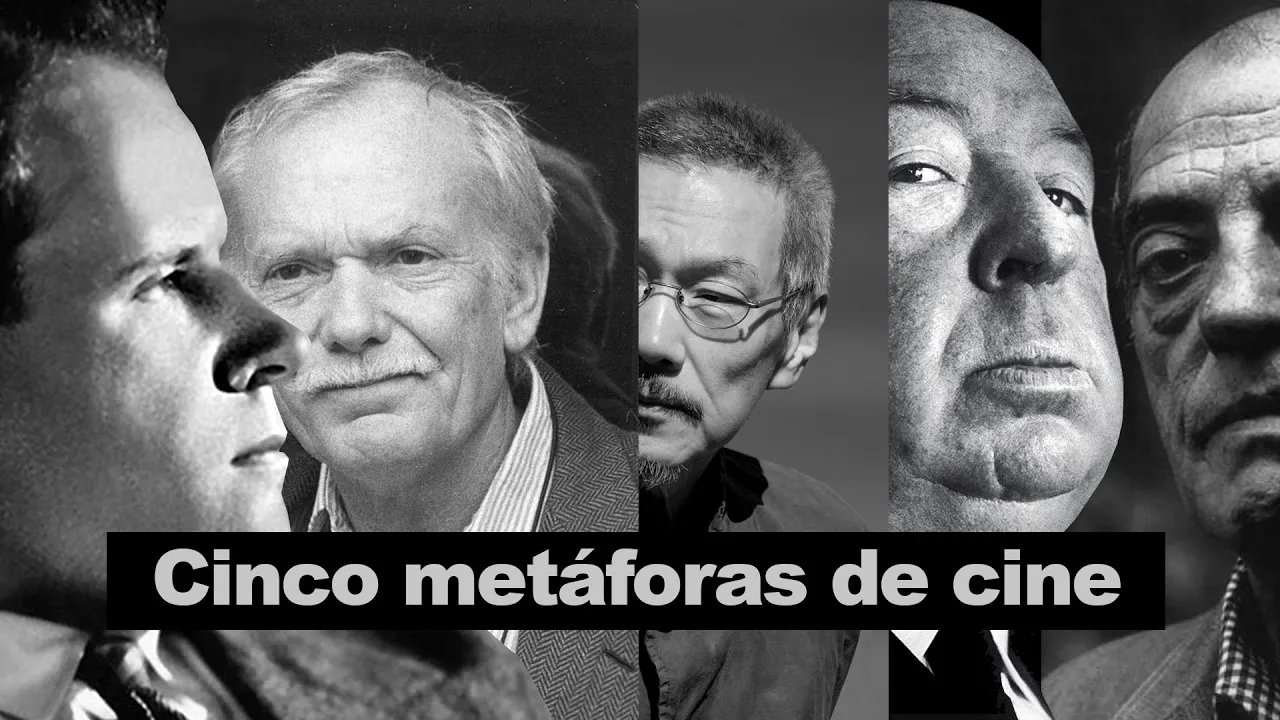
Cinco ejemplos de metáforas: Eisenstein, Peckinpah, Hong, Hitchcock, Buñuel
2.5K
This comprehensive segment explores the theory and practice of cinematic metaphor. According to Osip Brik, cinema cannot construct metaphors from objects lacking real existence within the film's world, unlike literature where abstract signs suffice. Effective cinematic metaphors require shared attributes between compared elements, as demonstrated by Eisenstein's 'Strike' where animals were placed in unified physical spaces. The segment examines how metaphors function in 'The Wild Bunch' as narrative conflict, in 'Viridiana' for character development, and in 'As If You Knew It All' through layered imagery. Metaphors serve diverse purposes: challenging viewers through image concatenations, creating multiple meaning layers, functioning as euphemisms to avoid direct topics, circumventing censorship codes, or serving as liberation tools. Films may contain nested metaphors within each other, demonstrating the complex relationship between metaphorical expression and cinematic meaning.
Click to watch →
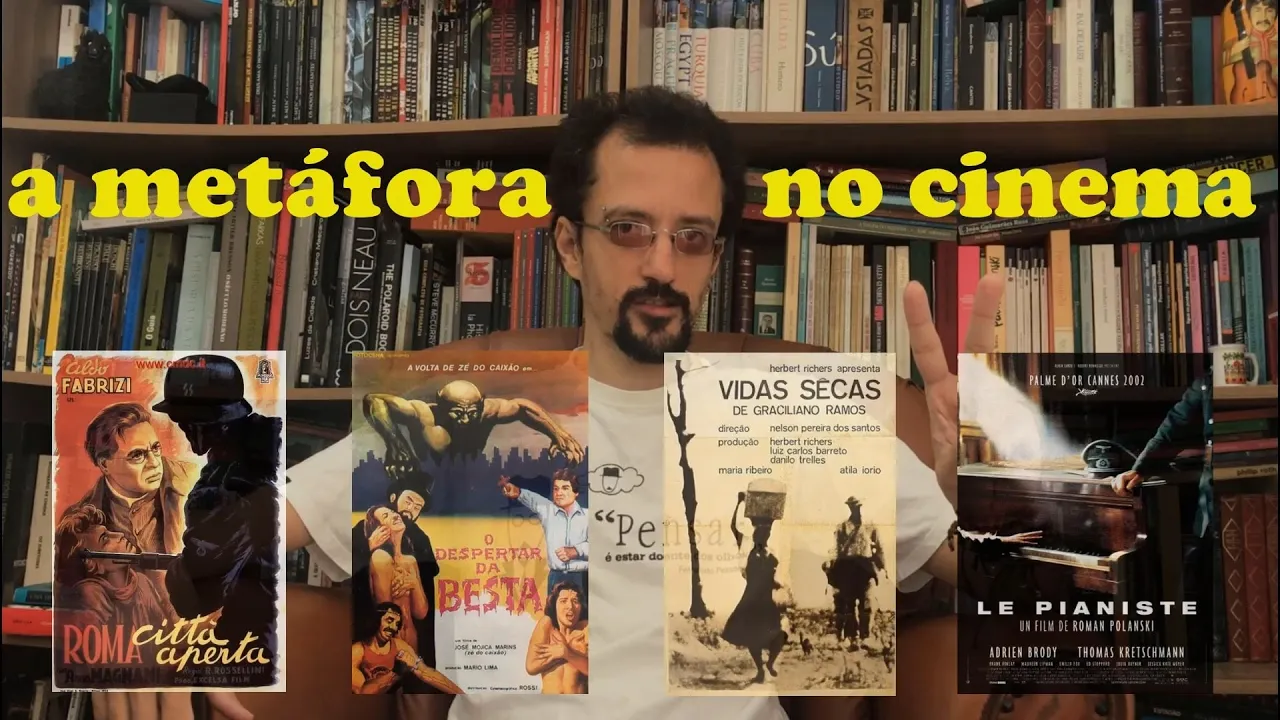
POÉTICA DO CINEMA #1: a metáfora
1.2K
In cinema, metaphor is created through the analogy between shots (montage) or within a single shot, where an object acquires symbolic meaning within the film's context. Unlike literature, cinematic metaphors rely on visual and auditory juxtapositions rather than verbal associations. Examples include the use of lambs as symbols of sacrifice in 'Rome, Open City', the cyclical sound of an ox cart wheel representing the circular narrative in 'Vidas Secas', and the contrast between piano music and bomb sounds symbolizing artistic resistance in 'The Pianist'.
Click to watch →
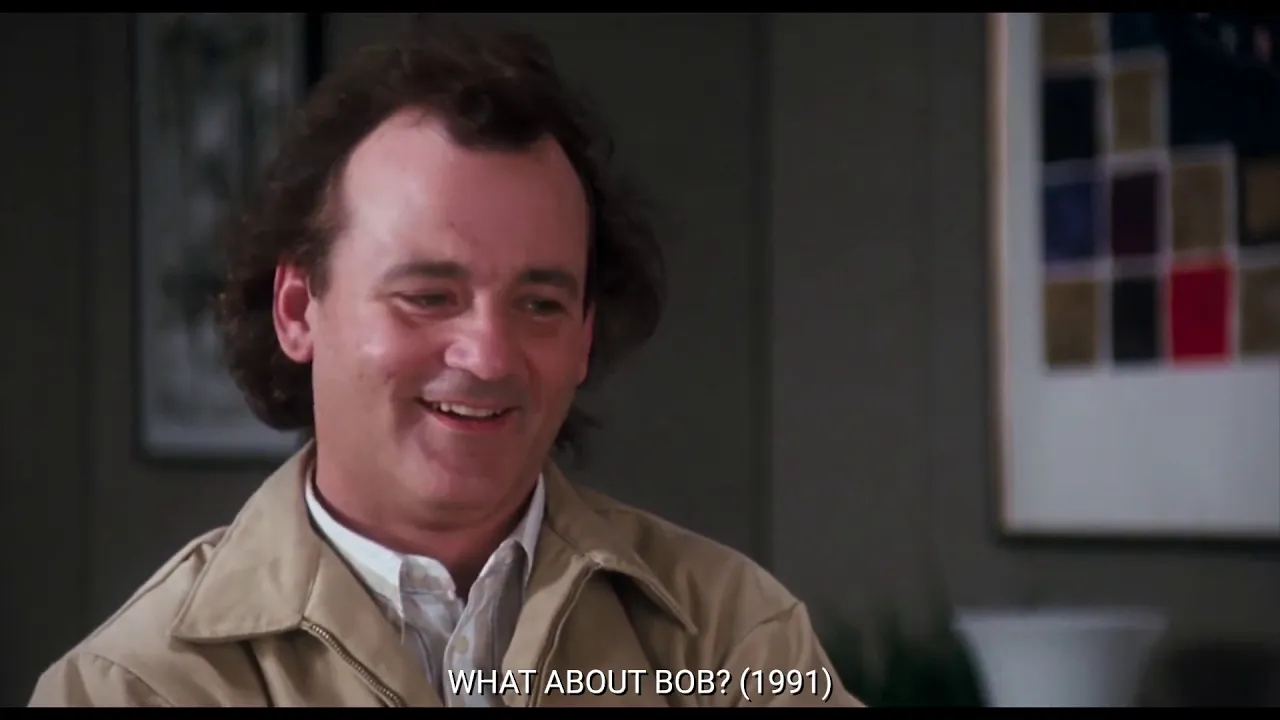
Clase 13: Narrativa cinematográfica / Metáforas visuales
2K
A visual metaphor (or analogical juxtaposition) is a filmmaking technique where objects, symbols, or visual elements represent abstract ideas, feelings, or story elements, allowing filmmakers to communicate complex themes without dialogue. For example, a fake mustache can represent a character's inability to live up to their father's legacy, a changed locker combination can symbolize the impossibility of reliving the past, and a bust of Freud can represent career aspirations. Effective films use these visual metaphors to create layered meanings that audiences can interpret and learn from.
Click to watch →
Prerequisite Knowledge
- Concept 01Fundamentals of Film Editing: Understanding basic continuity editing, transitions (cuts, fades, dissolves), and how pacing affects narrative flow.
- Concept 02The Kuleshov Effect: The cognitive concept of how viewers derive meaning from the juxtaposition of two sequential shots.
- Concept 03Visual Composition and Geometry: Key principles of cinematography, including framing, shape, and lines, which form the visual basis of a graphic match.
- Concept 04Cinematic Metaphor and Symbolism: How filmmakers use visual elements and objects to represent abstract thematic concepts.
Subsequent Learning
- Step 01Advanced Transition Techniques: Studying other complex transition styles, such as L-cuts, J-cuts, smash cuts, and intellectual montage.
- Step 02Auteur Studies (Kubrick and Lean): Exploring the broader filmographies and editing philosophies of Stanley Kubrick and David Lean.
- Step 03Semiotics of Cinema: Analyzing film through semiotic theory to understand how complex, culturally-encoded meanings are generated via editing.
- Step 04Practical NLE Application: Learning how to plan, shoot, and execute precise graphic matches in modern non-linear editing software.
Cinematic Symbols
Cinematic Symbols
0:06Playing Section
- 1
Flame and sunrise link Lawrence's new dangerous life and enjoyment.
- 2
Bone-to-weapon match shows technological progress but persistent savagery.
- 3
Candle's light and ring shape symbolize enduring hope and committed love.
The Realist and Ideological Critique of Intellectual Montage
Realist film theorists, tracing back to André Bazin, critique highly stylized graphic matches—such as those in 2001: A Space Odyssey and Lawrence of Arabia—for being overly manipulative. From this perspective, intellectual match cuts impose a forced, artificial relationship between disparate images, robbing viewers of the interpretive freedom offered by spatial and temporal continuity. Furthermore, ideological critics argue that these famous cuts construct a false sense of historical inevitability. For example, the bone-to-satellite transition in 2001 promotes a techno-deterministic narrative of human evolution, linking primitive violence directly to space colonization while erasing millennia of complex social history. Similarly, the match-to-sunrise cut in Lawrence of Arabia aestheticizes and romanticizes British imperialist intervention as a natural transition. By prioritizing visual symmetry and graphic harmony, these edits mask violent historical ruptures and ideological contradictions under the guise of cinematic destiny.
Deep Dive
Advanced Transition Techniques: Studying other complex transition styles, such as L-cuts, J-cuts, smash cuts, and intellectual montage.

5 Advanced Transitions For More Views I After Effects Tutorial
66.3K
This comprehensive section covers four advanced transition techniques in After Effects. The Noise Circle transition uses CC Radial Scale with keyframe animation and Graph Editor customization, combined with Turbulent Displace, Fractal Noise with expressions, Tint, Deep Glow, and Drop Shadow effects. The Glitch Sliding Animation combines S Blurmo Curves for sliding motion with a red line glitch using Multiply blend mode and Glitchify effect. The Vertical Slicing Transition utilizes S_Time Slice with slice direction and number adjustments. Each technique demonstrates key principles including solid layer creation, effect application, keyframe animation with Easy Ease, and Graph Editor customization for professional-quality transitions.
Click to watch →

TUTORIAL TRANSICIONES PARA TIKTOK & REELS 📱
325.6K
Advanced transitions include the hand cover technique (covering the camera lens with your hand to create a black screen transition), the shaking transition (shaking the phone to create a natural cut point), the zoom-in/zoom-out transitions (quickly zooming toward or away from the subject), and the arm cross transition (crossing your arm across the camera lens). The arm cross technique requires ensuring the arm crosses at the same height in both takes for a seamless cut. The fundamental principle across all transitions is making movements quickly enough that the human eye cannot perceive the cut. While repeated viewing at reduced speed may reveal cuts, the first viewing experience will appear seamless.
Click to watch →

How to Make SMOOTH CUTOUT reels transition in Capcut | A Complete Tutorial
56.7K
This section covers advanced transition techniques for professional video editing. Key techniques include: (1) Adding curve tools to enhance smoothness, (2) Applying quad out transitions for dynamic effects, (3) Adding motion blur effects with blur and rotation settings around 48, (4) Creating speed ramps by adding keyframes with speed changes from 10 to 0, (5) Applying blur focus effects that transition from blur to focus, (6) Copying and pasting transition settings for consistency across clips, (7) Adding overlay effects like Light Leak from the available 20+ options, (8) Applying filters to enhance visual quality, (9) Adding sound effects to selected clips (1-2 clips recommended for engagement), and (10) Saving with 60fps frame rate and high bitrate for optimal quality.
Click to watch →
Tiktok smooth transitions tutorials that are easy to do
761.2K
This section covers advanced transition methods and post-production editing: (1) Outfit Change Transition - use phone stand for stability, record outfit changes in two parts, then edit clips to align transition points; (2) Hat Transition - swipe hand across frame to change hats, use stand for smoother results. The core principle is that self-timed recording may have timing errors, so editing clips afterward by adjusting their positions creates smooth transitions. The video emphasizes that all transitions rely on the swipe principle - creating a brief moment to change appearance or scene.
Click to watch →

No One Will Teach You These Minecraft Transitions
103K
This comprehensive tutorial covers four advanced Minecraft transition techniques for professional video creation. The Foreground Sweep uses an isolated object to sweep across the screen, requiring Flashback/Replay Mod recording, camera FOV set to 30, easing key frames, and appropriate shader rendering. The Match Cut connects scenes through visual or conceptual similarities like direction, color, or texture, serving narrative purposes like showing progression or creative scene links. The Perspective Shift reveals information not visible in first-person footage by switching to cinematic camera, using camera key frames, shake effects, and transform effects. The Momentum Cut ties disconnected shots by matching movement flow, requiring key frame alignment and opacity adjustments. All techniques are finalized in Premiere with color key, track matte, and linear wipe effects.
Click to watch →
Deep Dive
Auteur Studies (Kubrick and Lean): Exploring the broader filmographies and editing philosophies of Stanley Kubrick and David Lean.
Le Cinéma est mort: Le Mur du Son et le Cinéma de David Lean
3K
David Lean was Kubrick's main rival during the 1960s, with both filmmakers creating landmark films around the same period. While Kubrick's 2001: A Space Odyssey (1968) represented a different approach, Lean's work was equally influential. Lean's famous match cut in The Bridge on the River Kwai (1957) directly influenced Kubrick's famous bone-to-satellite transition, with John Milius stating that no filmmaker 'kneels before David Lean.' Lean never considered himself an artist or auteur in the traditional sense. Instead, he saw himself as a 'translator' - a technician who worked with perfect scripts to translate them into cinema. Lean believed that every line of dialogue had to be perfectly written before filming began, and his job was to find the cinematic way to express the written word.
Click to watch →

Stanley Kubrick: A Legendary Auteur
164
Stanley Kubrick exemplifies the auteur theory by maintaining complete creative control over his films through meticulous involvement in writing, shooting, and editing, while employing distinctive visual techniques such as close-ups, moving camera cinematography, large absorbing sets, and the 18mm lens to create psychological unease and a recognizable visual style across works like The Shining, 2001: A Space Odyssey, and A Clockwork Orange.
Click to watch →

Cine 104 Class 5
1.6K
Stanley Kubrick is described as an American director and auteur who worked in many different genres and styles, making him a legendary figure in the film community. The instructor plans to spend the rest of the class examining three Kubrick films: 'Dr. Strangelove,' '2001: A Space Odyssey,' and 'A Clockwork Orange.' Kubrick's films span film noir, war movies (Full Metal Jacket, Paths of Glory), historical epics (Spartacus), and odd comedy-drama-romances (Lolita). 'Lolita' was based on Vladimir Nabokov's famous book, and Kubrick wisely made it more of a comedy and got the author to write the screenplay. The film passed censors and was released in theaters. Other films include 'The Shining' (revisionist horror), 'Eyes Wide Shut' (with Tom Cruise and Nicole Kidman), and 'Barry Lyndon' (photographically gorgeous).
Click to watch →

Why Stephen King Hates Stanley Kubrick's The Shining
93.2K
Stanley Kubrick was an exacting and demanding director who exemplified auteur theory in filmmaking. According to this approach, a film may be created by a large group of people, but the director's singular vision culminates the project. All crew members were creating exactly what Kubrick wanted, and when he didn't get what he wanted, the results were often extreme. A famous example is when Scatman Crothers broke down and cried after filming 88 takes of a single scene in The Shining, with the most famous take being in the kitchens between Scatman and Danny.
Click to watch →

Michel Ciment racconta Stanley Kubrick - Wonderland 2015
783
Stanley Kubrick was not right-wing because he opposed power (military and political), while the right identifies with power. The speaker distinguishes between the 'theory of authors' (auteur theory) and the 'politics of authors,' arguing that the latter involves deception and electoral-style arguments. Kubrick was a rare exception who achieved absolute control over his films, choosing directors of photography, actors, and subjects. Despite this control, he was not initially classified as an 'auteur' by critics, who claimed he lacked personality. His films are not immediately identifiable by style alone, requiring knowledge of his entire filmography to be recognized, similar to Shakespeare's works.
Click to watch →
Deep Dive
Semiotics of Cinema: Analyzing film through semiotic theory to understand how complex, culturally-encoded meanings are generated via editing.

Semiotics 1 - Index, Icon, symbol, codes of visual representation (CH-05)
9K
Cinema functions as a 'proto-language' where the shot is the smallest unit, combining iconic and indexical properties; meaning is conveyed through three types of codes—artistically borrowed (from painting, theater, literature, music), culturally derived (social symbols like widow's white), and uniquely cinematic (juxtaposition, camera movements, slow motion)—with meaning emerging from both denotation (literal) and connotation (figurative), working through paradigmatic (vertical word choice) and syntagmatic (horizontal context) axes.
Click to watch →

Entre Planos | Signos y Códigos en el Cine.
13K
Semiotics is the study of signs as carriers of information in any communicative process, where each sign consists of a signifier (the material form) and a signified (the cultural and mental representation). In cinema, signs combine to form codes, which create meaning through conventions and cultural contexts. For example, in film adaptations like Anna Karenina, visual elements like black and white clothing function as signifiers representing moral concepts, while psychological states are communicated through symbolic imagery such as birds of prey representing predatory instincts. This universal language requires intuition and sensitivity to understand, as signs operate beyond mere appearance to convey deeper meanings about human experience.
Click to watch →

🎥سيميولوجيا السينما ومقاربات تحليل الفيلم السينمائي ـ أ. مليسة حمرون
849
Semiotics of cinema is the scientific study of signs and symbols within films, which enables researchers to decode the hidden meanings, ideological messages, and cultural significance embedded in cinematic works through systematic analysis of visual elements, sounds, and narrative structures. This analytical approach, rooted in structuralist theory and the work of scholars like Ferdinand de Saussure, treats cinema as a language system where every element—from images to sounds to editing techniques—functions as a signifier that produces meaning. The methodology involves using tools such as shot analysis, scene breakdown, and image analysis to reveal how films communicate complex social, political, and cultural messages, particularly in cases where direct expression is constrained, such as during periods of censorship or political sensitivity.
Click to watch →
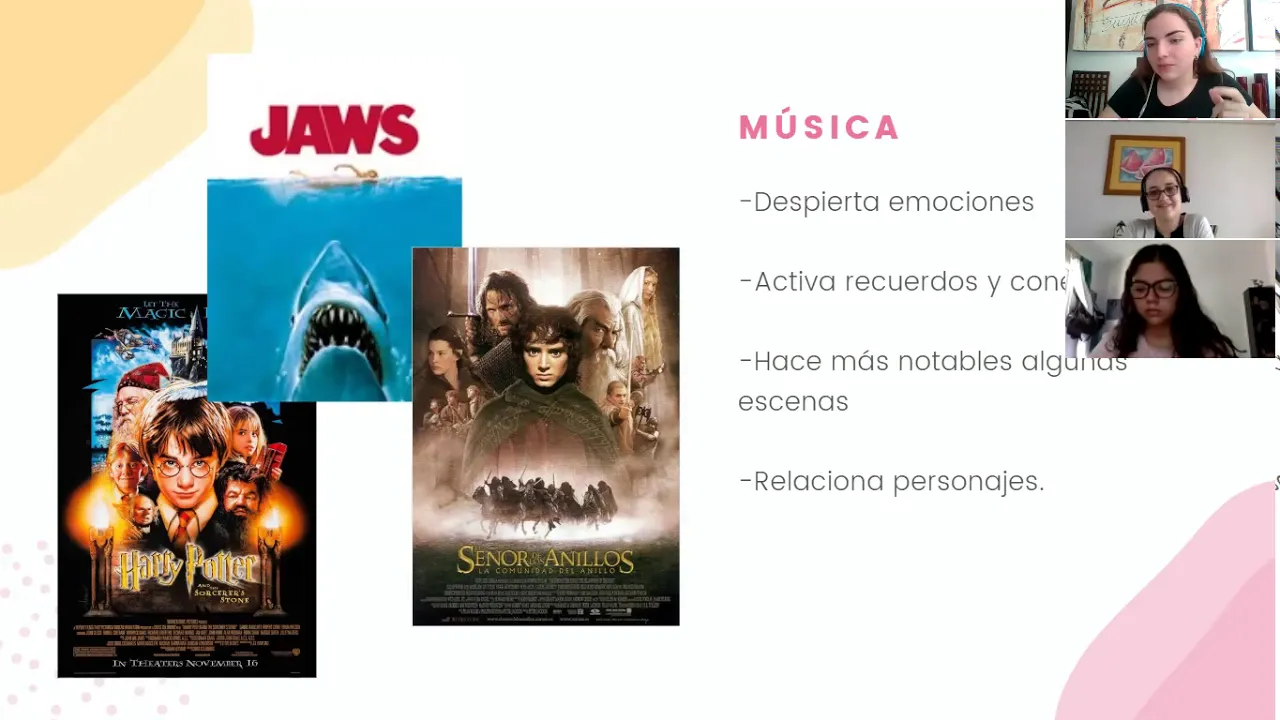
La Semiótica en la Comunicación/Cine (María Fernanda Barrios)
3.4K
Cinema functions as a complete communication medium using semiotics, where visual elements like colors (with their symbolic meanings—cool colors depress, warm colors exalt), music (creating emotional immersion and leitmotivs for characters), and physical characterization (body language, makeup, and visual paradigms) work together to convey meaning beyond literal representation, with the title serving as the sign, all elements as the object, and audience perception as the interpretant.
Click to watch →
Cinema-ul din tine
162.4K
Semiotics emerged as a science studying signs and symbols in communication, becoming the dominant academic mode of analyzing films until the early 1990s. This psycho-semiotic approach treated a film as a dream composed of symbols needing decoding to discover the central idea. Noel Carroll wrote in 1988 that this psycho-semiotics was a completely failed approach that produced more confusion than anything else, concluding that contemporary film theory was an intellectual disaster. Semiotics applied to cinema defines a film as a system of signs that express ideas, but this is completely wrong. A film is constructed from images, not from words. Words exist exclusively to communicate and represent a logical, rational effort from our brain. One cannot apply theories about how words function to images because one misses the essential irrational, pre-cognitive, aesthetic nature of images. As discussed in the video about Nietzsche and the Truth, a word is created through a process: a nerve stimulus is transformed into an image (first metaphor), then that image is imitated in a sound (second metaphor). Each time there is a complete transmutation from one domain to a completely new one. Words are doubly separated from human experience - the original experience was already translated into an image, and then that image must be translated into a sound, into speech, into a word, into a concept.
Click to watch →
Deep Dive
Practical NLE Application: Learning how to plan, shoot, and execute precise graphic matches in modern non-linear editing software.

Sansad TV Special Report: डिजिटल पहल | 05 Apri, 2023
8K
The National Legislative Application (NLE) is a modern digital platform developed as part of the Digital India program to transform all state legislatures into digital systems. The application enables paperless operations for legislative work, allowing members to access all proceedings, bills, notices, and questions through tablets. The platform supports both English and Hindi languages and is accessible through mobile apps, Android platforms, and websites hosted on cloud infrastructure. This initiative represents a comprehensive approach to digital transformation of India's legislative institutions.
Click to watch →

EEVblog #969 - Vintage $80k NLE Video Editor Teardown
113.3K
The Panasonic WJ-MX1200 represented the cutting edge of professional video editing technology in the early 1990s, costing approximately $80,000 (Australian dollars). This Non-Linear Editing (NLE) system integrated sophisticated video processing into a PC-based workstation, featuring a control panel with faders for video/audio fade control, a jog shuttle for frame-by-frame navigation, and mark in/out buttons. The system digitized all video input but output in analog format for broadcast compatibility, featuring S-video and component video inputs, balanced audio connections, and genlock capabilities for synchronized title generation. The architecture included three SCSI video channels for simultaneous capture, with motion JPEG compression for video digitization. The motherboard featured an Intel Socket 5 architecture for Pentium processors, with AMI BIOS dating to 1993, Creative Labs Vibra 16S audio chipset, and 16MB of system memory. The design prioritized EMI shielding with RF fingers and sponge material throughout the chassis, fully shielded expansion cards, and a backplane design with gold-plated connectors for reliable electrical connections.
Click to watch →
「労働現場における人間工学評価ツールによる身体負担の評価」肥田 拓哉 氏(早稲田大学)
387
NLE (NIOSH Lifting Equation) is the most widely used ergonomic assessment tool for manual material handling. It estimates lifting risk by calculating Recommended Weight Limit (RWL) based on multiple factors: lift frequency, horizontal distance, vertical distance, body twist, and asymmetry. Each factor has a multiplier between 0 and 1, multiplied together to determine RWL. Lifting Index (LI) is calculated by dividing actual load weight by RWL. LI >1 indicates increased injury risk requiring intervention. Example: lifting 18kg with horizontal distance 30-50cm, body twist 15-30°, frequency 2 lifts/minute, duration 2 hours yields LI=2.47, indicating urgent improvement needed. The method identifies which factors contribute most to high risk for targeted improvements.
Click to watch →

Ekspor dan Impor Lebih Mudah dengan SSm-QC
241
NLE (National Logistic Ecosystem) represents a strategic national initiative to restructure logistics chains. It coordinates multiple ministries to simplify and streamline trade processes. The framework includes seven pillars: Single Submission (SSM), SSM Pengangkut, SSMQC, Online Autogate, SP, SD, and Single Window. NLE simplifies four key areas: cargo flow, documentation, payment, and procedures. SSM (Single Submission) eliminates the need for businesses to visit multiple institutions. Previously, businesses had to visit both Karantina and Bea Cukai separately. Now, they can submit data through a single application, and institutions respond electronically. Ambon Port has implemented SSM for import activities, serving as a pilot location. This has facilitated the import of essential goods for Maluku and North Maluku regions, including basic commodities for Bulog. SSM is also being implemented for export activities, benefiting companies like PT Samudra.
Click to watch →
HOW TO PRODUCE FOR NLE CHOPPA ! FL Studio Tutorial
57.8K
This comprehensive tutorial covers the entire process of creating an NLE chop of beef from scratch in FL Studio. The workflow includes: (1) Setting up FL Keys with tempo between 115-140 BPM and using piano roll helpers with scales like sharp minor; (2) Creating simple melodies while envisioning how vocalists will fill space with ad-libs; (3) Layering instruments with different vibes (piano, kalimba, ocarina) to add depth; (4) Organizing MIDI clips systematically into categories; (5) Adding surrounding countermelodies for an 'Annalee vibe'; (6) Using automation for lead effects and dynamic changes; (7) Ensuring kicks and snares hit simultaneously for punchy results; (8) Following FL Keys patterns verbatim to create unique bounces; (9) Avoiding over-complication by not adding too many sounds. The key principle throughout is that arrangement is the most critical aspect of production, requiring creative decisions at every stage.
Click to watch →
Cinematic Symbols
Cinematic Symbols
0:06- 1
Flame and sunrise link Lawrence's new dangerous life and enjoyment.
- 2
Bone-to-weapon match shows technological progress but persistent savagery.
- 3
Candle's light and ring shape symbolize enduring hope and committed love.
The Realist and Ideological Critique of Intellectual Montage
Realist film theorists, tracing back to André Bazin, critique highly stylized graphic matches—such as those in 2001: A Space Odyssey and Lawrence of Arabia—for being overly manipulative. From this perspective, intellectual match cuts impose a forced, artificial relationship between disparate images, robbing viewers of the interpretive freedom offered by spatial and temporal continuity. Furthermore, ideological critics argue that these famous cuts construct a false sense of historical inevitability. For example, the bone-to-satellite transition in 2001 promotes a techno-deterministic narrative of human evolution, linking primitive violence directly to space colonization while erasing millennia of complex social history. Similarly, the match-to-sunrise cut in Lawrence of Arabia aestheticizes and romanticizes British imperialist intervention as a natural transition. By prioritizing visual symmetry and graphic harmony, these edits mask violent historical ruptures and ideological contradictions under the guise of cinematic destiny.
Fundamentals of Film Editing: Understanding basic continuity editing, transitions (cuts, fades, dissolves), and how pacing affects narrative flow.
The Kuleshov Effect: The cognitive concept of how viewers derive meaning from the juxtaposition of two sequential shots.
Visual Composition and Geometry: Key principles of cinematography, including framing, shape, and lines, which form the visual basis of a graphic match.
Cinematic Metaphor and Symbolism: How filmmakers use visual elements and objects to represent abstract thematic concepts.
Advanced Transition Techniques: Studying other complex transition styles, such as L-cuts, J-cuts, smash cuts, and intellectual montage.
Auteur Studies (Kubrick and Lean): Exploring the broader filmographies and editing philosophies of Stanley Kubrick and David Lean.
Semiotics of Cinema: Analyzing film through semiotic theory to understand how complex, culturally-encoded meanings are generated via editing.
Practical NLE Application: Learning how to plan, shoot, and execute precise graphic matches in modern non-linear editing software.
8K views16likes1:42@sisfilmmakerOriginal Release: 2013-09-26
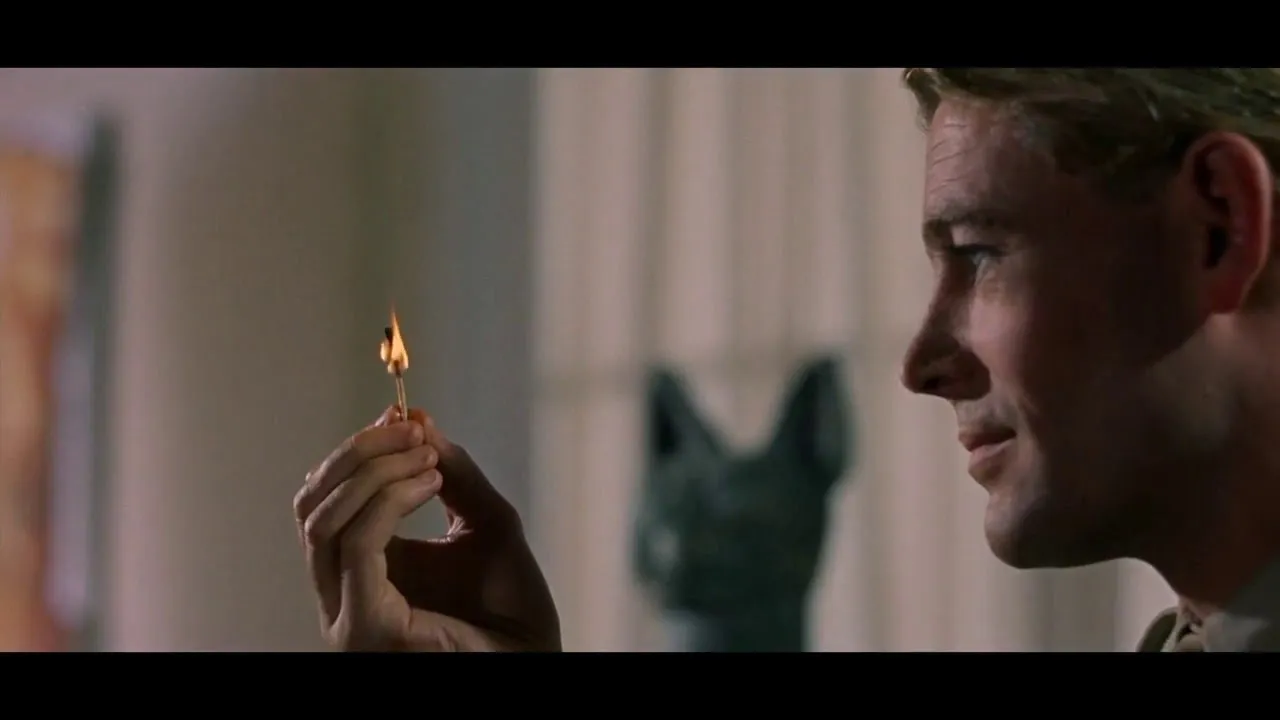
in Lawrence of Arabia because of the content of the scene where Lawrence and Dr Dryden are talking about Lawrence's challenge of finding the prince Lawrence clearly expresses that he is going to enjoy this challenge the similar color of the flame and orange Sky creates the link between the shots where we produce the meaning the match blowing out could represent his life in Britain ending and the new opportunity represented by the sunrise the match can also connote danger a waiting for Lawrence in the desert because of the idea of a flame and the way that Lawrence's Smiles at this threat it is reinforced that again he will enjoy this task in 2001 A Space Odyssey the bone being thrown up by the ape is being used as a weapon this is ju toose the similar shape of the orbital nuclear platform this canotes the progress made by man in the development of Technology however also the very threatening nature of these weapons because humans can still be as Reckless as Apes using a bone the two shots are linked by the same shape angle and position in the frame and this is what creates the association a candle symbolizes light and darkness in Romance this shot shows hope and reassuring love which is linked together by the ring that also symbolizes love because it is associated with marriage and the circular shape connotes the continuous or something because it doesn't have a beginning or end
Up Next
9:29
Film Language and Edwin S. Porter: Crash Course Film History #5
@crashcourse
412.5K views•2017-05-11

23:14
Visual Analysis Essay: How to Analyze Graphic Novels in College Writing
@nataliepleimann5941
1K views•2020-10-14
4:55
Film Blocking Techniques for Directors: Space, Shapes, Lines
@StudioBinder
1.9M views•2018-07-23

4:00
Evolution of Darth Vader: Anakin Skywalker's Animated Journey Across Star Wars Films
@TellItAnimated
13.4M views•2019-03-30
Related Study Plans & Knowledge Roadmaps
Structured learning paths in Film Analysis
film-analysis
Sensory Cinema: Foley, Haptic Sound & Texture
01Introduction to Film Sound and Foley Artistry
02Micro-Sounds, Textures, and Extreme Amplification
03Haptic Audition and Film Phenomenology
+ 1 more learning modules
12h4 modules
Explore Roadmap
film-analysis
Breaking the Fourth Wall: Mockumentary & Satire
01The Invisible Wall: Basics of Cinematic Illusion
02Looking at the Lens: Direct Address & Character Glances
03The Mockumentary: Satire, Realism, and Complicity
+ 2 more learning modules
12h5 modules
Explore Roadmap
film-analysis
Analyzing the Long Take: Cinema, Space & Ethics
01Foundations of Film Grammar: Montage vs. The Long Take
02Choreography and Mechanics of the Simulated One-Shot
03Phenomenology of Film: Real-Time Spatial Continuity
+ 1 more learning modules
14h4 modules
Explore Roadmap
film-analysis
Anachronistic Music: Period Drama & Subversion
01Foundations of Film Sound and the 'Needle Drop'
02Traditional Authenticity vs. Revisionist History
03The Rise of the Anachronistic Soundtrack
+ 2 more learning modules
12h5 modules
Explore Roadmap