

![Ogniwo Peltiera [RS Elektronika] #75](https://i.ytimg.com/vi_webp/dIDoYq1SrKo/maxresdefault.webp)

















![[예문사]공조냉동기계기사필기 기출문제 1강 2024년 1회 에너지관리, 공조냉동설계](https://i.ytimg.com/vi_webp/tfEb0iWlZvY/maxresdefault.webp)








A multi-stage Peltier cooling system can achieve temperatures below -50°C by stacking multiple TEC1-12706 modules in series, with each subsequent module connected to progressively lower voltages (12V, 5V, and 3.3V) to create a cascading cooling effect; this requires proper thermal paste application between modules and heatsinks, insulation with styrofoam, and a computer power supply providing the necessary voltage outputs.
How to Build a Stacked Peltier Cooler Reaching -50°C
Added:The Peltier Effect and Thermoelectric Cooling: Understanding how semiconductor junctions transfer heat when electrical current is applied.
Basic DC Circuit Analysis: Familiarity with voltage, current, power calculations, and the operation of a computer Power Supply Unit (PSU) including 12V rail limitations.
Principles of Thermal Dynamics and Heat Dissipation: Concepts of thermal conductivity, thermal resistance, heat sinks, and the crucial role of thermal interface materials (thermal paste).
Cascading Thermoelectric Concepts: Understanding that the hot side of the cold-stage Peltier becomes the heat load for the warm-stage Peltier, requiring efficient heat rejection.
Active Temperature Control Systems: Implementing feedback loops (such as PID controllers) and temperature sensors (thermistors, RTDs) to regulate and stabilize temperatures.
Condensation and Insulation Engineering: Studying techniques to prevent moisture condensation and frost formation on sub-zero electronics, such as conformal coating, conformal foam insulation, or vacuum sealing.
Mathematical Optimization of Multi-stage TECs: Analyzing Coefficient of Performance (COP) to correctly size and match different thermoelectric modules in a pyramid configuration instead of identical stacked modules.
Real-world Cryogenic and Precision Cooling Applications: Exploring how these systems are utilized in cooling CCD sensors for astrophotography, laser diode stabilization, or extreme computer hardware overclocking.
51.8K views476likes5:06Original Release: 2017-11-03
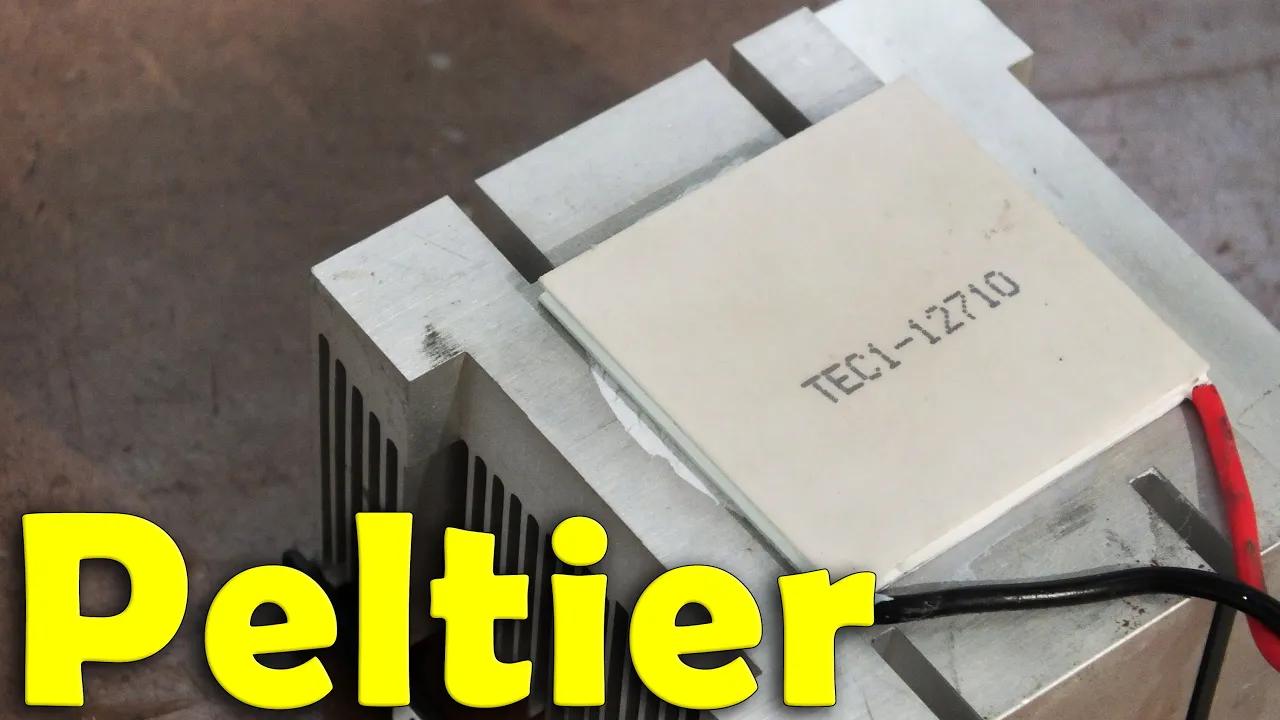
I'm gonna show you how to make this county a cooling unit which is shown on the left this is used as a computer fan computer processor fan to cool the unit down this can get down to lower than minus 50 degrees centigrade I'm using a 200 watt computer power supply on the right first of all get yourself three of these standard Peltier cooling modules these are cheap they're available online you can get them off at eBay they work off off of about 12 volts I think they draw up to 60 watts and you'll need plenty of this which is thermal heatsink paste you can buy if you can buy it on in tubes like this this is the best way to do it what you do is you put plenty of paste let me tell you about this first this is the cool side this is the hot side we put the hot side of one of the units down on the heatsink using plenty of thermal paste then you put paste on top of this this one's connected to 12 volts DC and you've put the next one which is connected to five volts DC on top of that like that more paste then put the last one which is connected to 3.3 volts DC on top of that so they're all lined up like that and this lower one is sitting on top of the heatsink and then they're kept in place with styrofoam you can see it here I cut a square in the middle of it this is styrofoam that surrounds this this one's pressed down and then I have a piece of this compressed card on top held down with these zip ties it keeps everything stable and then the wires the standard outputs on a computer supply such as this are as you can see here we've got all the right voltages you need you've got the plus twelve volts for the lowest Peltier module you've got five volts for the one in the middle and then 3.3 volts for the one that sits on the top and that way because these things are so heat generating you can get the most coldest temperature on the top one so it basically acts as a kind of a cascade and the styrofoam provides insulation and allows it to cool down to that extent so I'm going to test it right now and use a digital thermometer to measure the temperature as it cools first let's measure the temperature now with a twenty six degrees centigrade now let's turn it on just turned it off so that got below minus 50 degrees should start warming up rapidly now there it goes mister there you go you can achieve really low temperatures with these things and this just uses a simple cheap old computer fan computer process okay some styrofoam and an old computer supply that I've done out of broken PC this one now let me just tell you a bit about these wires so you wanted to divide these wires up so the black is negative yellow is 12 volts orange is 5 volts sorry or red is 5 volts and orange is 3.3 volts so the Peltier modulus you may be to just see them in there I kind of stacked in there now I'm going to try and freeze some water with it to show you how that looks when we do it as a time-lapse you so it did actually freeze most that water so a big chunk of ice in there you can see the beautiful crystalline structure of the ice there anyway yeah guys thanks for watching and beat the - 50 degree centigrade mark with a fan cooled unit
Up Next
17:51
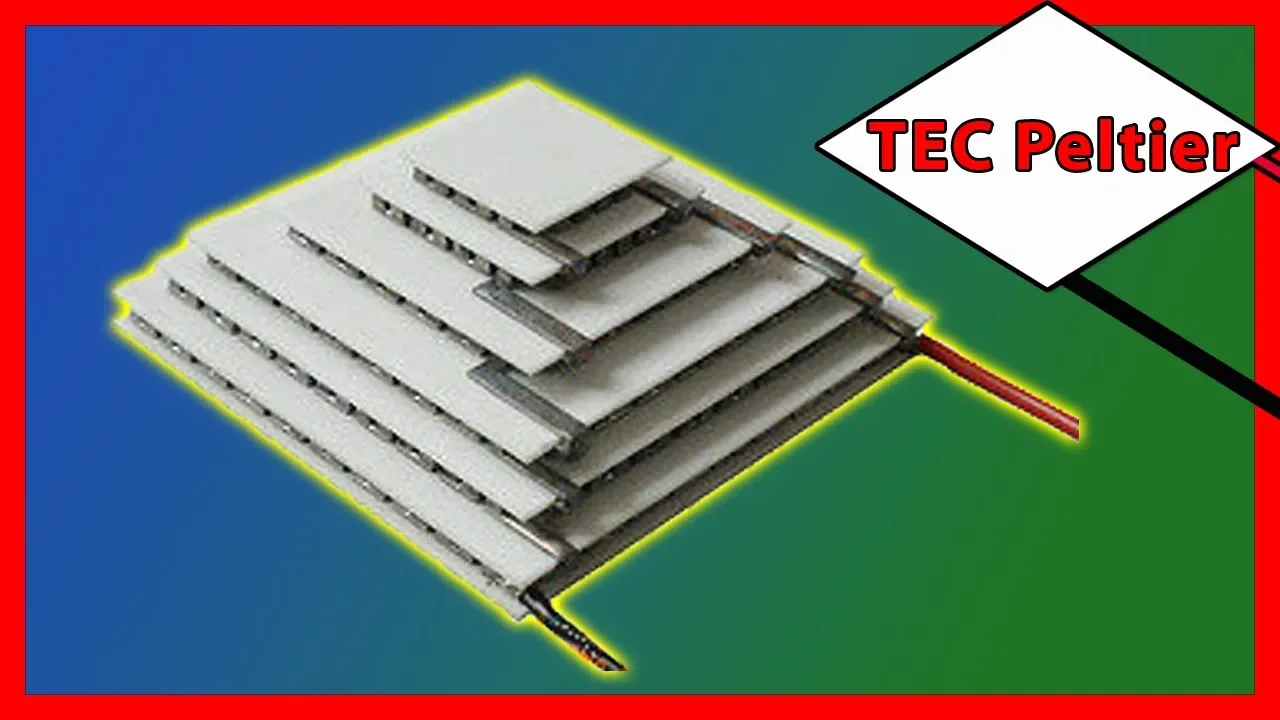
Peltier TEC Stacking vs Parallel Configurations: Thermal Analysis
@Ultrasonictwo
78.2K views•2017-01-16
30:32
Ultrasonic Transducers: Resonant Frequency Measurement and Horn Design
@imajeenyus42
229.9K views•2017-02-22
54:16
Polymer Environmental Degradation: Mechanisms & Stabilization
@iit
1.8K views•2012-07-10
33:39
How a Student's Question Saved a NYC Skyscraper from Collapse
@veritasium
22.8M views•2025-04-26
Related Study Plans & Knowledge Roadmaps
Structured learning paths in Engineering
engineering
Building Acoustic Levitators: Physics & Arduino
01The Physics of Sound and Standing Waves
02Piezoelectric Transducers and H-Bridge Drivers
03Arduino Programming: Generating 40 kHz Signals
+ 2 more learning modules
14h5 modules
Explore Roadmap
engineering
Building Peltier Cloud Chambers: Particle Tracks
01Cosmic Rays & Cloud Chamber Physics
02Thermoelectric Cooling (TEC) Fundamentals
03Custom Liquid-Cooling Loop Design
+ 2 more learning modules
18h5 modules
Explore Roadmap
engineering
Yagi-Uda Antennas: Modeling, Build & VNA Test
01Introduction to RF and Antenna Fundamentals
02Yagi-Uda Antenna Design Principles
03Antenna Modeling and Simulation in 4NEC2
+ 2 more learning modules
18h5 modules
Explore Roadmap
engineering
ECG Monitor Design: Op-Amps, Filters & Noise
01Electronics & Breadboard Basics
02Op-Amps and Instrumentation Amplifiers
03Bioelectricity and ECG Fundamentals
+ 2 more learning modules
18h5 modules
Explore Roadmap