Working wetlands are engineered ecosystems designed to remove nitrates from agricultural runoff through denitrification, a natural process where microbes convert nitrate nitrogen into harmless nitrogen gas using carbon sources from wetland plants and organic matter; these strategically placed wetlands can filter 30-70% of nitrate loads from tile drainage and surface water, serving dual purposes of water quality improvement and wildlife habitat creation.
Working Wetlands: Nitrate Removal from Agricultural Drainage
Added:Deep Dive
The Nitrogen Cycle: Understanding the different chemical forms of nitrogen (such as ammonium, nitrate, and dinitrogen gas) and their natural biological transformations.

NITROGEN CYCLE
1.9M
The nitrogen cycle is the circulation of nitrogen between the atmosphere (78% concentration) and living organisms through five key processes: nitrogen fixation (conversion of atmospheric nitrogen to ammonia by leguminous plants and bacteria like Azotobacter, Rhizobium, Nostoc, and Anabaena), nitrogen assimilation (absorption of nitrates and ammonia into organic compounds by plants and transfer to animals), ammonification (decomposition of organic nitrogen to ammonia by saprophytes like fungi and bacteria), nitrification (conversion of ammonia to nitrites by Nitrosomonas and Nitrococcus, then to nitrates by Nitrobacter), and denitrification (conversion of nitrates back to molecular nitrogen by Thiobacillus denitrificans, Pseudomonas denitrificans, and Micrococcus denitrificans); excessive nitrogen can cause acid rain formation, soil acidification, and plant damage.
Click to watch →
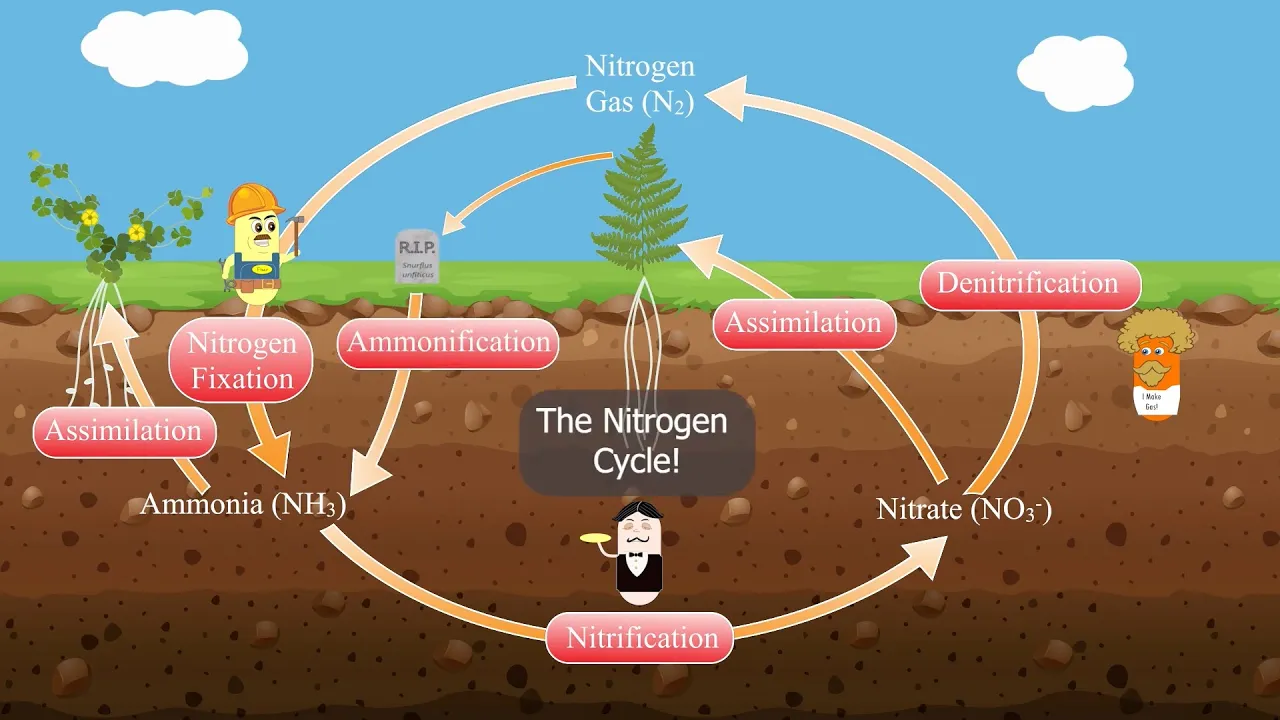
The Nitrogen Cycle!
1.2M
The nitrogen cycle is the process by which nitrogen moves through ecosystems, involving nitrogen fixation (bacteria converting atmospheric N2 to ammonia), assimilation (plants using nitrogen to build DNA and proteins), nitrification (bacteria converting ammonia to nitrates), food web transfer, ammonification (decomposers returning nitrogen to soil as ammonia), and denitrification (bacteria converting nitrates back to atmospheric N2), completing the cycle that sustains all life on Earth.
Click to watch →
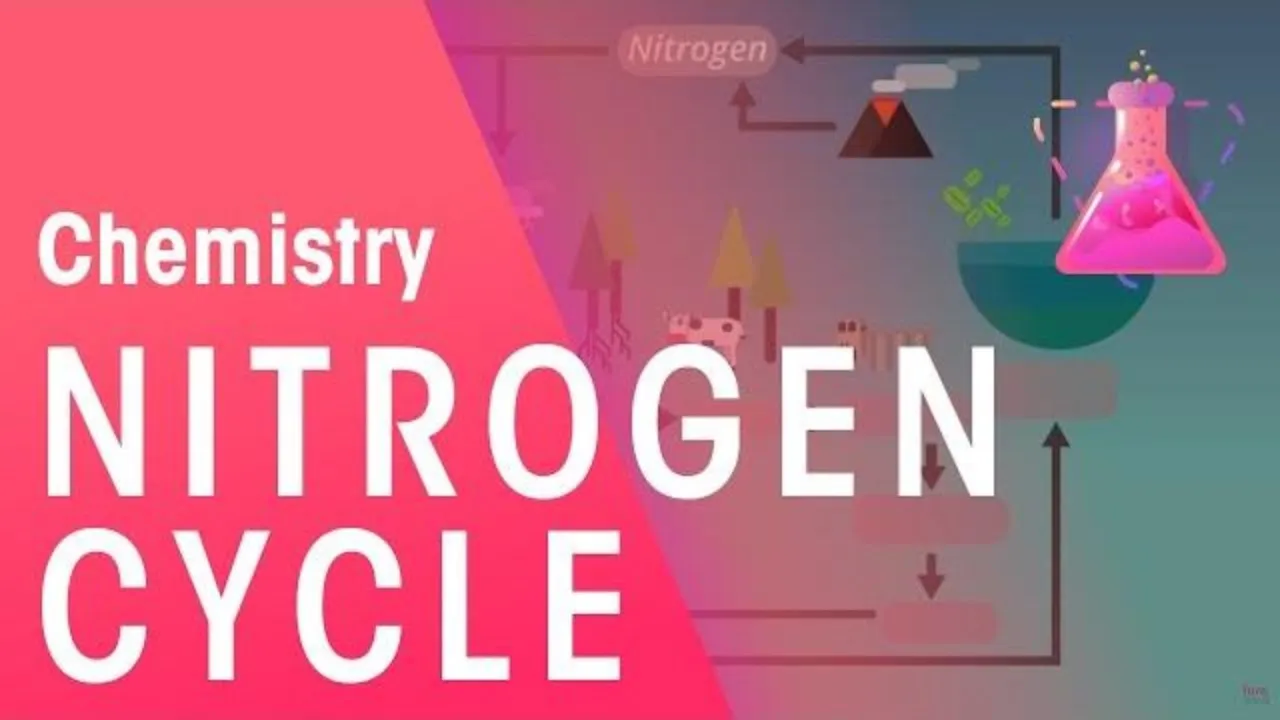
The Nitrogen Cycle | Environmental Chemistry | Chemistry | FuseSchool
478.3K
The nitrogen cycle is the continuous movement of nitrogen through the environment, where nitrogen (essential for life as it makes up 78% of air but cannot be used directly by plants or animals) is converted into usable forms through natural processes including nitrogen-fixing bacteria in soil and legume root nodules, decomposers breaking down organic matter to release ammonia that becomes nitrate, lightning causing atmospheric reactions to produce nitric acid, and blue-green algae in oceans fixing nitrogen; the Haber Process accounts for approximately 30% of nitrogen fixation through industrial fertilizer production, while burning fossil fuels adds nitrogen compounds to the atmosphere, potentially disrupting the natural balance and causing environmental issues like soil acidification and water pollution.
Click to watch →

الدرس الثالث علوم متكامله اولي ثانوي الترم التاني - العناصر البيئية و صحة الانظمة البيئية
69.1K
The nitrogen cycle describes how nitrogen moves through Earth's systems: (1) Nitrogen gas (N2) from the atmosphere is fixed by bacteria into ammonia (NH3), (2) Plants absorb ammonia to synthesize proteins, (3) Nitrification converts ammonia to nitrites (NO2) and then nitrates (NO3) by bacteria, (4) Animals obtain nitrogen by consuming plants or other animals, (5) Denitrification converts nitrates back to atmospheric nitrogen gas (N2) or nitrous oxide (N2O) by bacteria.
Click to watch →

NITROGEN CYCLE | Biology Animation
223.2K
The nitrogen cycle is a natural process that converts atmospheric nitrogen (N₂) into forms usable by living organisms through five key steps: nitrogen fixation (bacteria convert N₂ to ammonium), nitrification (bacteria convert ammonium to nitrates), assimilation (plants absorb nitrates and incorporate nitrogen into amino acids, proteins, and chlorophyll), ammonification (decomposers break down dead organisms and return nitrogen to ammonium), and denitrification (specialized bacteria convert excess soil nitrogen back to atmospheric N₂).
Click to watch →
Deep Dive
Agricultural Runoff and Eutrophication: How excess fertilizer application leads to nutrient-rich runoff, causing ecological damage like algal blooms and hypoxia in downstream water bodies.

Labiausiai užterštos upės: pasaulio šiukšlynai, sugeriantys viską
1.2K
Agricultural runoff causes severe river pollution through nutrient overload. The Mississippi River collects nitrogen and phosphorus from 31 U.S. states, creating a massive hypoxic 'dead zone' in the Gulf of Mexico. Nearly 40% of tributaries have high nitrogen levels, and one-third have high phosphorus. The Yamuna River in Delhi receives 3.598 billion liters of sewage daily, with only 23 of 37 treatment plants meeting standards. The Ganges River faces similar challenges from domestic sewage and industrial discharges. These cases show how agricultural fertilizers, urban sewage, and inadequate treatment infrastructure create eutrophication, oxygen depletion, and ecosystem collapse.
Click to watch →

Water’s Journey: The River Returns, 30-minute version
81.3K
River systems receive waters from creeks and streams carrying runoff contaminants that harm aquatic life and public health. Deep Creek is a hotspot draining potato and cabbage fields. Agriculture, urban runoff, septic systems, and sewage all deliver nutrients acting as fertilizers, triggering algae blooms. Algae block sunlight, killing underwater grasses and their dependent creatures. Decomposing algae depletes oxygen, causing mass die-offs. Best management practices (BMPs) include 19-acre wet retention ponds with 37-day residence times, where water enters wetland marshes for plant-based filtration. Slow-release fertilizers engineered to release nutrients as plants need them reduce environmental leaching.
Click to watch →

Immersion 3D : tout comprendre aux limites planétaires|TF1 INFO
68.1K
Nitrogen from agricultural fertilizers infiltrates soil and eventually reaches waterways through rainfall runoff. This process causes algal blooms that deplete oxygen levels in water bodies, creating dead zones where aquatic life cannot survive. Over 400 such dead zones exist globally due to this phenomenon called eutrophication.
Click to watch →

Complete Ecology & Environment | Marathon with Madhukar Kotawe | UPSC CSE 2022/23
116.3K
Eutrophication is the enrichment of water bodies with nutrients (nitrogen and phosphorus) from agricultural runoff and sewage. This causes excessive algae growth (algal bloom), which blocks sunlight and depletes oxygen when algae die and decompose. The result is fish kills and ecosystem collapse. Eutrophication is a major cause of water quality degradation in lakes, rivers, and coastal waters worldwide.
Click to watch →

أسئلة نهاية الوحدة الثانية ( العلوم البيئة للصف الثاني عشر )
707
Uncontrolled surface runoff from agricultural fields carries nutrients (nitrogen and phosphorus) into aquatic ecosystems. This nutrient enrichment allows phytoplankton and algae to produce more photosynthetic pigments, leading to increased photosynthesis rates and rapid reproduction. The excessive growth of algae and phytoplankton eventually covers the water surface, blocking sunlight from reaching deeper waters. This prevents other organisms from performing photosynthesis. When these organisms die, their decomposition consumes large amounts of dissolved oxygen, leading to oxygen depletion that causes fish and other aquatic organisms to suffocate and die.
Click to watch →
Deep Dive
Wetland Ecology Basics: Familiarity with the definition of wetlands, specifically hydric (saturated) soils, hydrophytic vegetation, and the distinction between aerobic and anaerobic soil zones.

Bot137 Lecture7 Wetlands
158
This comprehensive section covers the foundational principles of wetland ecology. Tension zones are transitional areas between distinct ecological regions, exhibiting high biodiversity through species from adjacent regions plus endemics. Three soil types define plant habitats: hydric (abundant water), mesic (well-draining), and xeric (dry). Wetlands possess the highest biodiversity on Earth due to extremely high primary productivity from constant water and nutrient availability in hydric soils. Four major wetland types exist: swamps (forested), marshes (grassy), bogs (acidic, peat moss-dominated), and fens (alkaline). Bogs and fens together are termed 'mires.' Water types include freshwater, saltwater, and brackish, while tidal and non-tidal classifications further differentiate wetland characteristics.
Click to watch →

Becoming A Wetlands Ecologist
217
Wetland ecology is the study of relationships between abiotic (non-living) and biotic (living) factors in an ecosystem. Scientists use ecological pyramids to organize findings: abiotic factors at the base, producers (plants and microscopic organisms) in the second level, and consumers (insects, mammals, amphibians, birds, reptiles) in upper levels. The study process involves: (1) selecting a wetland with permission, (2) creating a pyramid on poster board, (3) documenting abiotic factors like water and sunlight, (4) identifying producers through observation and microscopy, (5) recording consumers using nets, binoculars, and careful observation, (6) categorizing species into consumer groups, (7) analyzing inter-level relationships, and (8) considering how environmental changes (natural and human-caused) might affect the ecosystem. This systematic approach helps ecologists understand wetland function and protect these valuable ecosystems.
Click to watch →

Wetland Types
885
This section covers the foundational concepts of wetland science. Wetlands are defined as lands seasonally or permanently flooded with shallow water, or where the water table is near the surface. Three key characteristics define wetlands: saturated conditions from poorly drained soils, hydrophytic vegetation (water-loving plants), and hydric soils. Wetlands provide critical ecosystem services including biodiversity habitat, water purification, flood control, aquifer recharge, and support for commercial activities like boreal forest logging. The classification system divides wetlands into four site types based on water flow patterns: lacustrine (lake-associated with permanent water), riverine (river-associated with permanent water), palustrine (upland with intermittent flow from springs or seasonal rivers), and isolated (no inflow or outflow, maintained by springs or rainfall).
Click to watch →

Wetland Ecology: Hydrology, Hydric Soils & Vegetation
147
Wetlands are defined by three essential components: hydrology (water saturation within 18 inches of the soil surface for at least 7 growing days), hydric soils (dark gray, gleyed soils developed under anoxic conditions), and wetland vegetation (plants adapted to saturated conditions). Plants in wetlands have evolved specialized adaptations such as aerenchyma (air spaces in stems for oxygen transport), buttressed roots for stability in unstable mud, and carnivorous adaptations to obtain nitrogen in nitrogen-limited environments. Many wetland plants also exhibit unique reproductive strategies including viviparous germination (mangroves) and long-term seed viability (cypress seeds can remain viable for 20 years). Despite protective laws, wetlands continue to be lost globally, with Louisiana experiencing significant shoreline wetland loss due to both natural causes and human development.
Click to watch →

Shankar IAS Environment Episode-11 - Wetland ,Estuary ecosystem and Coral Reefs | Summary | UPSC CSE
16.6K
Wetland ecosystems are transitional zones where terrestrial and aquatic environments meet. They are characterized by water saturation, either permanently or seasonally, and can be natural or artificial, permanent or temporary. Wetlands contain fresh, brackish, or marine water and may have stagnant or flowing conditions. The littoral zone, where water depth is less than one meter, is the primary area for hydrophytic plant growth. Wetlands are classified by water type (freshwater, brackish, marine) and location (inland, coastal). These ecosystems support specialized vegetation adapted to saturated soil conditions and perform critical ecological functions including water filtration, flood control, and habitat provision.
Click to watch →
Deep Dive
Microbial Respiration: The concept of anaerobic respiration, specifically how certain soil bacteria use nitrate instead of oxygen as an electron acceptor.

Mars Biosignature สัญญาณของสิ่งมีชีวิตบนดาวอังคารที่ชัดเจนที่สุด!
94.4K
The discovery of vivianite and greigite on Mars provides compelling evidence for ancient microbial life. Vivianite is a mineral that forms as a byproduct of iron-reducing microorganisms, which obtain energy by using iron compounds instead of oxygen for respiration. In the absence of oxygen, these microbes convert iron(III) to iron(II), releasing energy for survival. The iron(II) then reacts with phosphate in rocks to form vivianite. Similarly, greigite forms through sulfate-reducing microorganisms that convert sulfate to sulfide, which then reacts with iron(II) to form this iron sulfide mineral. The leopard spot patterns on Martian rocks consist of greigite at the center (lighter color) surrounded by vivianite at the edges (darker color), creating the distinctive pattern. These minerals represent the 'waste products' of ancient microbial metabolism, similar to how humans exhale carbon dioxide as a byproduct of respiration.
Click to watch →

Lab 06 - Soil microbial respiration using MicroResp™
2.7K
Soil microbial respiration is measured using the MicroResp™ system, which employs a microplate reader to detect color changes in agar containing crystal violet dye; as microbes metabolize carbon sources and release CO2, the solution becomes more acidic, causing the indicator to shift from blue to pink, and the degree of color change correlates with respiration rate through a calibration curve.
Click to watch →

Micro Biology 01
139
Microorganisms have four types of respiration based on their oxygen requirements: (1) Obligate aerobes require oxygen for respiration; (2) Obligate anaerobes cannot tolerate oxygen and die in its presence; (3) Facultative anaerobes can switch between aerobic and anaerobic respiration; (4) Microaerophiles require only small amounts of oxygen. The teacher explains that these respiration types determine how microorganisms survive in different environments.
Click to watch →

Dianne Newman (CalTech) Part 2: Microbial Respiration of Arsenate
9.2K
Microorganisms can respire arsenate (As(V)) by reducing it to arsenite (As(III)), a process that liberates toxic arsenic from iron minerals in sediments and increases its mobility in groundwater, potentially contaminating drinking water supplies; Newman's lab identified the first known enzymatic pathway for this process using Shewanella species, discovering that the respiratory arsenate reductase (AraA/ArrB) is evolutionarily conserved across diverse organisms, enabling scientists to develop molecular probes to detect this activity in environmental samples.
Click to watch →

Carbono, Plantas y microbiología: ¿Cómo Regenerar?
1.7K
Microbial respiration depends on the type of microorganism involved. Microorganisms consume carbon when using it for growth (increasing microbial biomass), but part of this carbon is released as CO2 through respiration. In degraded soils with only one type of microorganism (like bacteria), there is increased population and high respiration rates, leading to significant carbon loss. In diverse, living soils, more carbon goes to microbial biomass production, and carbon remains in the soil longer, transforming into stable organic matter (humification). The necromass microbiana (dead microorganisms) is a significant source of stable soil carbon, as their cell walls contain elements like chitin and peptidoglycans that bind with minerals to form organo-mineral complexes protecting carbon from decomposition.
Click to watch →
Prerequisite Knowledge
- Concept 01The Nitrogen Cycle: Understanding the different chemical forms of nitrogen (such as ammonium, nitrate, and dinitrogen gas) and their natural biological transformations.
- Concept 02Agricultural Runoff and Eutrophication: How excess fertilizer application leads to nutrient-rich runoff, causing ecological damage like algal blooms and hypoxia in downstream water bodies.
- Concept 03Wetland Ecology Basics: Familiarity with the definition of wetlands, specifically hydric (saturated) soils, hydrophytic vegetation, and the distinction between aerobic and anaerobic soil zones.
- Concept 04Microbial Respiration: The concept of anaerobic respiration, specifically how certain soil bacteria use nitrate instead of oxygen as an electron acceptor.
Subsequent Learning
- Step 01Design and Engineering of Constructed Wetlands: Principles of sizing, hydrology, vegetation selection, and managing hydraulic retention time to optimize nitrate removal rates.
- Step 02Complementary Edge-of-Field Technologies: Exploring other agricultural Best Management Practices (BMPs) such as woodchip bioreactors, saturated buffers, and two-stage ditches.
- Step 03Water Quality Policy and Economics: Studying watershed-level nutrient management strategies, Total Maximum Daily Loads (TMDLs), and agricultural conservation incentive programs.
- Step 04Biogeochemical Modeling: Learning how to monitor, measure, and model nitrogen fate and transport within agricultural watersheds using field sensors and computational tools.
Wetland Functions
Wetland Benefits
Wetland Functions
0:02Playing Section
- 1
Wetlands filter water, prevent floods, and support biodiversity.
- 2
Targeted wetlands remove nitrate nitrogen from agricultural runoff.
The 'Pollutant Swapping' Trade-off: Nitrous Oxide Emissions
While constructed wetlands are highly effective at removing nitrate from agricultural runoff, they present a significant ecological trade-off known as 'pollutant swapping.' The primary mechanism for nitrate removal in these wetlands is denitrification, a microbial process that converts nitrate into harmless nitrogen gas. However, if environmental conditions such as temperature, oxygen levels, or carbon availability are not perfectly balanced, the denitrification process remains incomplete. This leads to the production and release of nitrous oxide, a potent greenhouse gas with a warming potential nearly 300 times greater than carbon dioxide. Consequently, solving a local water quality problem can inadvertently exacerbate global climate change. Furthermore, there are concerns regarding the long-term efficacy of these systems, as wetlands can become saturated with phosphorus over time, shifting from nutrient sinks to nutrient sources.
Deep Dive
Design and Engineering of Constructed Wetlands: Principles of sizing, hydrology, vegetation selection, and managing hydraulic retention time to optimize nitrate removal rates.

Section 8. Constructed Wetlands Design
352
Constructed wetlands for wastewater treatment require collaboration between engineers and biologists, with engineers handling technical infrastructure (groundwater depth assessment, hydraulic systems, preliminary treatment) and biologists determining substrate types, plant selection, and microbial communities; the four basic types include surface flow, horizontal subsurface flow, vertical subsurface flow, and hybrid systems, each with specific modifications to optimize treatment efficiency under different climate and landscape conditions.
Click to watch →
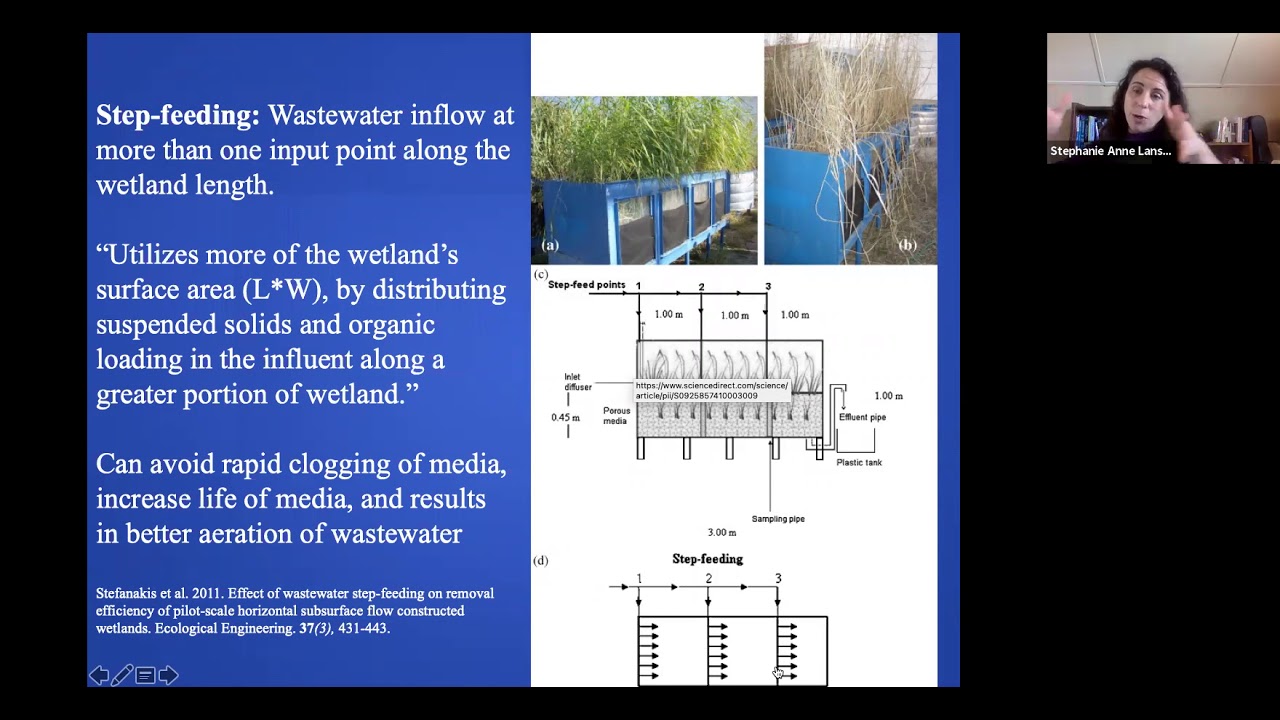
Constructed Wetland Design
18.2K
Constructed wetlands are engineered ecosystems designed to treat wastewater or provide ecological functions in areas where natural wetlands did not previously exist, with four main types: surface flow wetlands (free water surface) where water is visible and flows over vegetation, subsurface flow wetlands (rock reed systems) where water flows through gravel media beneath the surface, storm water wetlands designed for capturing and infiltrating runoff, and vertical flow systems that create both aerobic and anaerobic zones; these systems rely on emergent plants that promote microbial degradation, uptake nutrients, and create oxygenated microsites through aerenchyma tissue, with primary removal mechanisms including flocculation, sedimentation, absorption, and anaerobic reactions, though common misconceptions exist regarding their ability to remove significant amounts of nitrogen and phosphorus.
Click to watch →
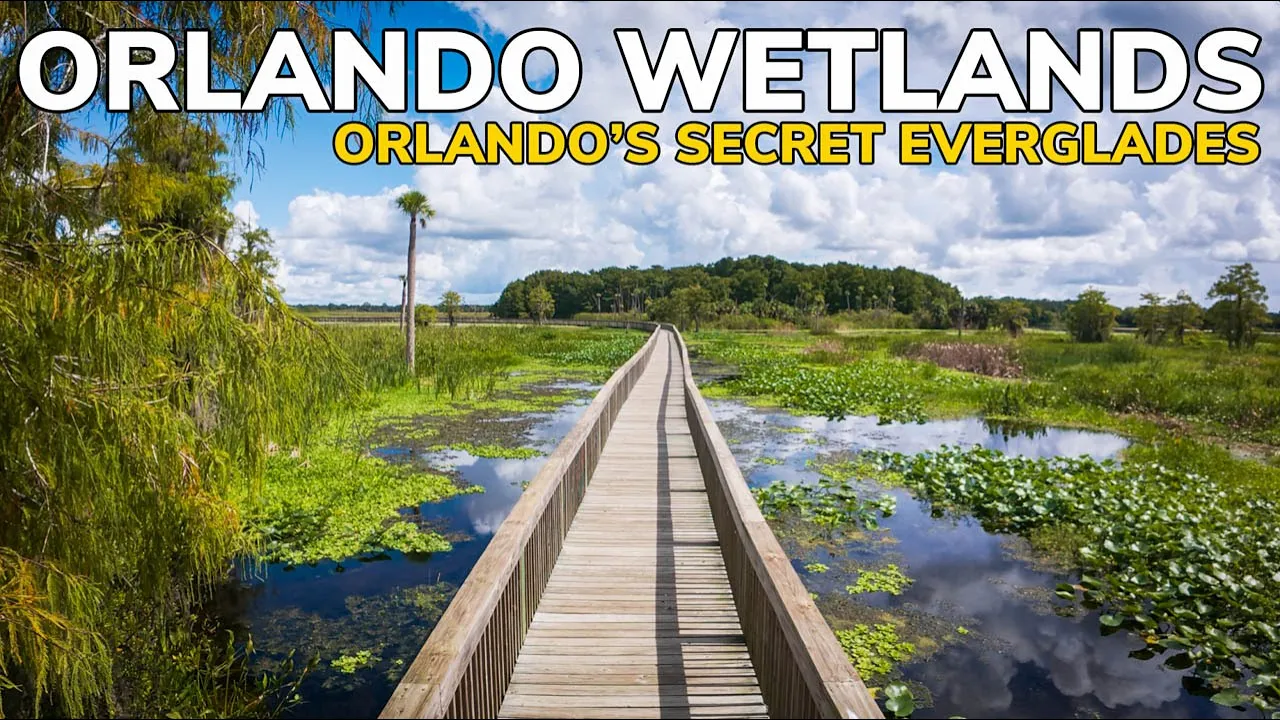
This Feels Like the Everglades… But Near Orlando!
3.2K
The Orlando Wetlands represents the world's first large-scale man-made wetlands designed for advanced treatment of reclaimed water. Engineers constructed over 18 miles of berms—raised earth strips functioning as walls—to separate and guide water flow. These berms created 18 distinct wetland cells connected by 67 water control structures that carefully manage water movement through the system. The engineering design transforms wastewater treatment into an ecological process where natural biological and physical processes filter contaminants. This approach demonstrates how constructed ecosystems can replicate natural wetland functions for environmental remediation, providing both water purification and wildlife habitat creation simultaneously.
Click to watch →
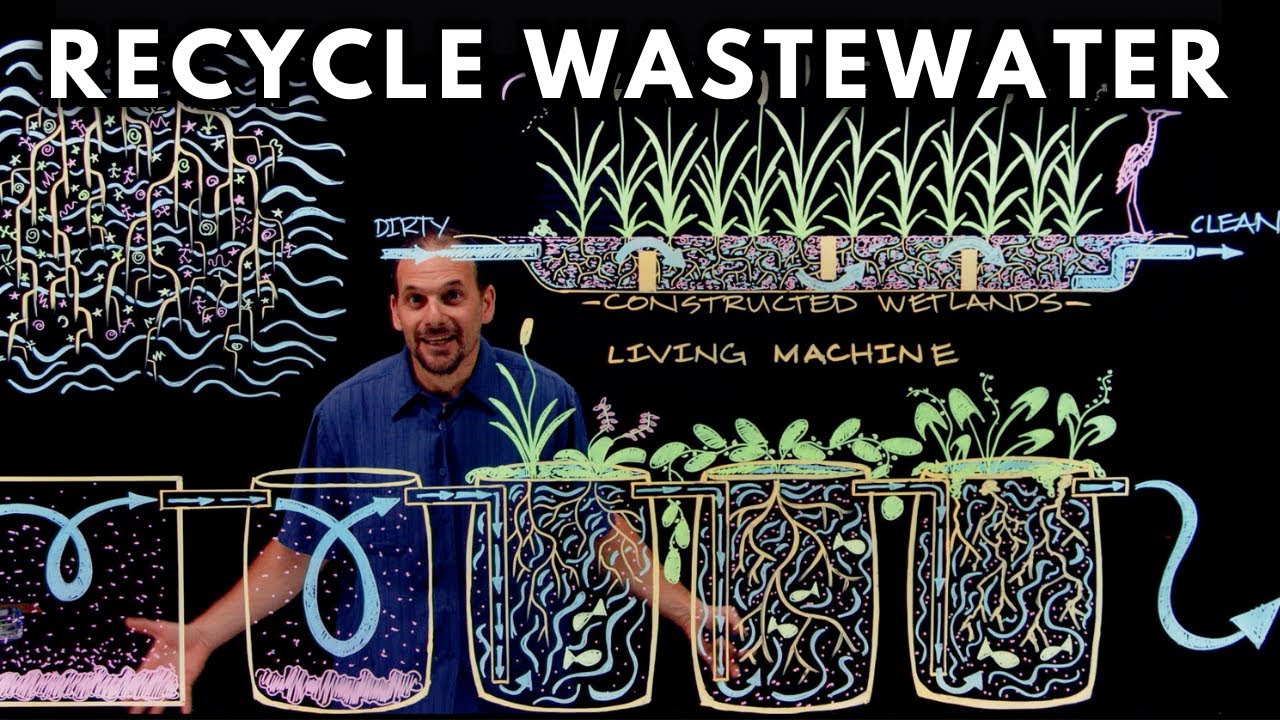
How to Recycle Waste Water Using Plants
3.6M
Constructed wetlands are engineered systems where wastewater flows into gravel-filled basins planted with wetland species. The basin is lined to prevent seepage into the ground. Water flows underneath the gravel level without exposure to air. Baffles force water to move up and down through the system, maximizing contact with plant roots. This simple system uses liners, gravel, pipes, and plants to achieve effective biological treatment.
Click to watch →

Constructed wetlands for wastewater treatment
90.6K
Constructed wetlands are eco-friendly wastewater treatment systems consisting of shallow gravel-filled tanks planted with emergent wetland plants like common reeds; as wastewater flows through the gravel and plant roots, pollutants are progressively removed through physical, chemical, and microbiological processes involving bacteria growth on the root-gravel media, making them a low-cost, low-energy alternative to conventional treatment plants for smaller populations.
Click to watch →
Deep Dive
Complementary Edge-of-Field Technologies: Exploring other agricultural Best Management Practices (BMPs) such as woodchip bioreactors, saturated buffers, and two-stage ditches.

NuReDrain Final Conference Webinar
158
This section examines constructed wetlands as edge-of-field solutions requiring at least 1% of drainage area (1,500 m² for 1.5 ha). Horizontal flow designs allow water percolation before ditch discharge. Integration with complementary technologies (woodchip filters for greenhouse effluent) maximizes treatment efficiency across varying water qualities. Field monitoring demonstrated consistent performance below regulatory thresholds (50 mg/L nitrate) throughout drainage seasons, including during severe frost events when internal circulation maintained biological activity. The approach offers decentralized, low-maintenance solutions suitable for diverse agricultural landscapes, with verification against Danish wetlands confirming model predictions for 7.8% overall nitrate removal efficiency at the catchment scale.
Click to watch →

Nudging Farmers to the Edge - The Nature Conservancy April Lunch & Learn
130
This section presents evidence-based approaches for reducing agricultural nutrient losses through edge-of-field practices. According to Iowa's Nutrient Reduction Strategy, drainage water management achieves 33% nitrogen reduction, bioreactors achieve 43%, and buffers achieve 91% phosphorus reduction within active zones. These practices uniquely balance productivist and conservationist goals by maintaining crop yields while protecting water quality. Implementation strategies focus on starting with less productive areas at field edges or in low-lying zones prone to flooding. Selecting appropriate native vegetation—such as bottle gentian, giant lilies, asters, and goldenrod—provides both aesthetic appeal and functional benefits. The complementary nature of these practices means fields that remain unproductive due to flooding become candidates for redesign as wetlands, addressing both productivity concerns and environmental goals simultaneously.
Click to watch →

Bioreactors & Saturated Buffers - Farminar
609
Bioreactor installation involves several key components working together. The distribution system uses perforated field tile running the full width of the bioreactor to ensure even water flow. Collection tiles at the top gather treated water and direct it to the downstream water control structure. The bypass tile system connects to the upstream structure and runs parallel to the bioreactor trench, activating automatically when water levels exceed treatment capacity. Wood chips must meet specific specifications: 1-2 inch size, relatively clean with minimal sawdust or dirt, and from trees low in tannins (walnut and maple are commonly used). After placing wood chips, landscape fabric prevents soil from entering while allowing airflow for nitrogen gas release, followed by a domed dirt cap to prevent settling. Bioreactors typically last 10-15 years before requiring maintenance, during which wood chips gradually break down and may flatten, potentially creating a hole in the trench. A fence should be installed around the bioreactor to prevent livestock and machinery damage. Alternative edge-of-field practices include wetlands (providing nitrate reduction, wildlife habitat, and flood water storage) and saturated buffers (cheaper at $4,000-$7,000 vs. $14,000-$18,000 for bioreactors, but requiring specific site conditions including suitable soils, topography, and proximity to streams). Saturated buffers intercept tile lines and distribute water through pipes parallel to streams, allowing microbes to remove nitrate as water flows through the soil profile. Edge-of-field practices should be part of a comprehensive nutrient management system rather than standalone solutions.
Click to watch →

Nitrogen management to mitigate nitrate leaching, Matt Helmers, Iowa State University
111
Four primary technologies treat nitrate at field edges: controlled drainage (30% reduction via water table management), subsurface bioreactors (20-40% reduction via denitrification in carbon media), saturated buffers (30-50% reduction via denitrification in riparian zones), and constructed wetlands (52% reduction via denitrification at sediment-water interfaces). Each achieves significant reductions through biological processes rather than physical filtration, with effectiveness dependent on maintaining appropriate hydrological conditions for denitrifying bacteria. Drainage water recycling captures tile drainage in ponds for supplemental irrigation, achieving dual benefits of reduced downstream nitrate delivery (thousands of pounds annually) and crop yield increases (approximately 43 bu/ac). Multi-purpose oxos combine drainage interception with habitat creation. These approaches represent emerging solutions addressing both water quality and agricultural productivity, though questions remain about long-term feasibility, salt accumulation, and herbicide residue concerns requiring further research.
Click to watch →

MLB | Top Plays Part 13 | Compilations 2022
256.3K
Athletic range refers to a fielder's ability to reach balls that are outside their normal defensive position, particularly at the edges of the field. Fielders like Peralta and Mateo demonstrate this by making sliding grabs and diving catches in the corners. This skill prevents runs and creates outs by allowing fielders to make plays that would otherwise be hits. The ability to extend range through athletic movement is a key defensive asset.
Click to watch →
Deep Dive
Water Quality Policy and Economics: Studying watershed-level nutrient management strategies, Total Maximum Daily Loads (TMDLs), and agricultural conservation incentive programs.

Water Policies for People, by David Zetland (Optional)
2.9K
Water economics requires that water managers be judged by outcomes rather than rhetoric, water should be priced at full cost to reflect scarcity and prevent overuse, and project beneficiaries should pay for infrastructure rather than taxpayers, as free water policies often benefit the wealthy while leaving the poor without access and causing environmental harm.
Click to watch →

Session 01 Introduction and importance of water
155
Economic analyses show that water quality significantly affects land values. Factors like water clarity, depth, and meandered shorelines positively affect surrounding land values, while low water clarity, oxygen depletion, and algae blooms have negative effects. Studies on Clear Lake, Iowa found people were willing to pay $40-80 million for improved water quality, while restoration costs were only $16 million, indicating high public value for water quality improvements.
Click to watch →

The Clean Water Act at 50: An Interdisciplinary Symposium (Panel 3)
159
Traditional economic tools fail to demonstrate positive returns on investment for water quality policies, creating a fundamental dilemma for policymakers committed to water protection. Studies of U.S. Clean Water Act programs and EU Water Framework Directive show many investments cannot prove positive benefit-cost ratios. This stems from water's unique characteristics affecting diverse values (recreation, health, property, culture), multiple endpoints (groundwater, surface water, wetlands), and diverse beneficiaries (tribal communities, property owners, recreationists). Economic methods like travel cost, hedonic pricing, and stated preference surveys make assumptions favoring wealthy individuals and overlooking cultural values. The Kaldor-Hicks efficiency criterion maximizes net welfare without addressing distribution, weighting rich preferences more heavily. Analysis combining 100,000+ industrial outfall data with census demographics reveals water pollution is regressive for populations below poverty and without college degrees, while progressive for non-white communities. EPA's current environmental justice analyses inadequately capture these distributional consequences, often concluding benefits will accrue to disadvantaged communities simply because statistics match national averages.
Click to watch →

W3 Seminar: Coupling natural and human models in the context of a lake ecosystem
171
Water quality policy effectiveness depends critically on initial ecosystem conditions and regional agricultural contexts. Highly eutrophic lakes show asymmetric economic impacts where improvement benefits exceed degradation costs. Regional adaptation requires accounting for diverse agricultural practices—Florida's 300+ crop types and specialty crops present modeling challenges distinct from Wisconsin's corn-soybean dominance. Additionally, water quality valuation faces fundamental challenges because stakeholders value different aspects: recreational users prioritize fish populations while others value aesthetics or specific ecosystem features. Linking surface water and drinking water quality assessments remains an important research frontier.
Click to watch →
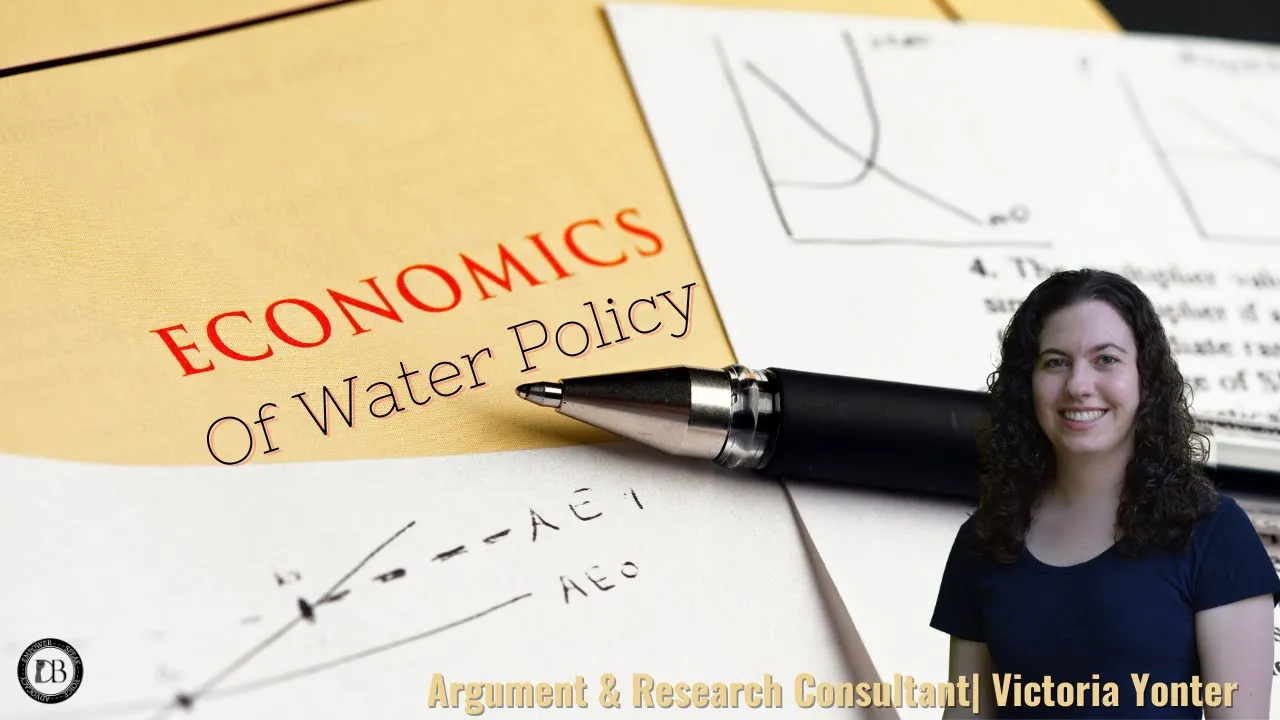
Economics Of Water Policy| Workshop Lecture| Debate Boutique
176
This section establishes the theoretical foundation for analyzing water policy through economic lenses. It covers four types of goods (private, club, common, public) classified by rivalry and excludability, explaining how water uniquely embodies all four simultaneously. The concept of externalities is introduced, distinguishing negative externalities (pollution, contamination) from positive ones (education, public goods), with graphical analysis showing how markets fail to account for social costs. This framework provides essential tools for evaluating water policy proposals and understanding why straightforward solutions often fail.
Click to watch →
Deep Dive
Biogeochemical Modeling: Learning how to monitor, measure, and model nitrogen fate and transport within agricultural watersheds using field sensors and computational tools.

Ecosystem | Part 3 | NEET 2024 | Seep Pahuja
142.1K
Biogeochemical nutrient cycles describe the movement of essential elements between living organisms and the environment. These cycles involve the atmosphere, lithosphere (soil/rocks), and hydrosphere (water). Earth is a closed system for nutrients (no significant input/output) but an open system for energy (continuous solar input). The term 'biogeochemical' combines biological, geological, and chemical aspects. These cycles are essential for life as they recycle nutrients that organisms need for growth and survival.
Click to watch →
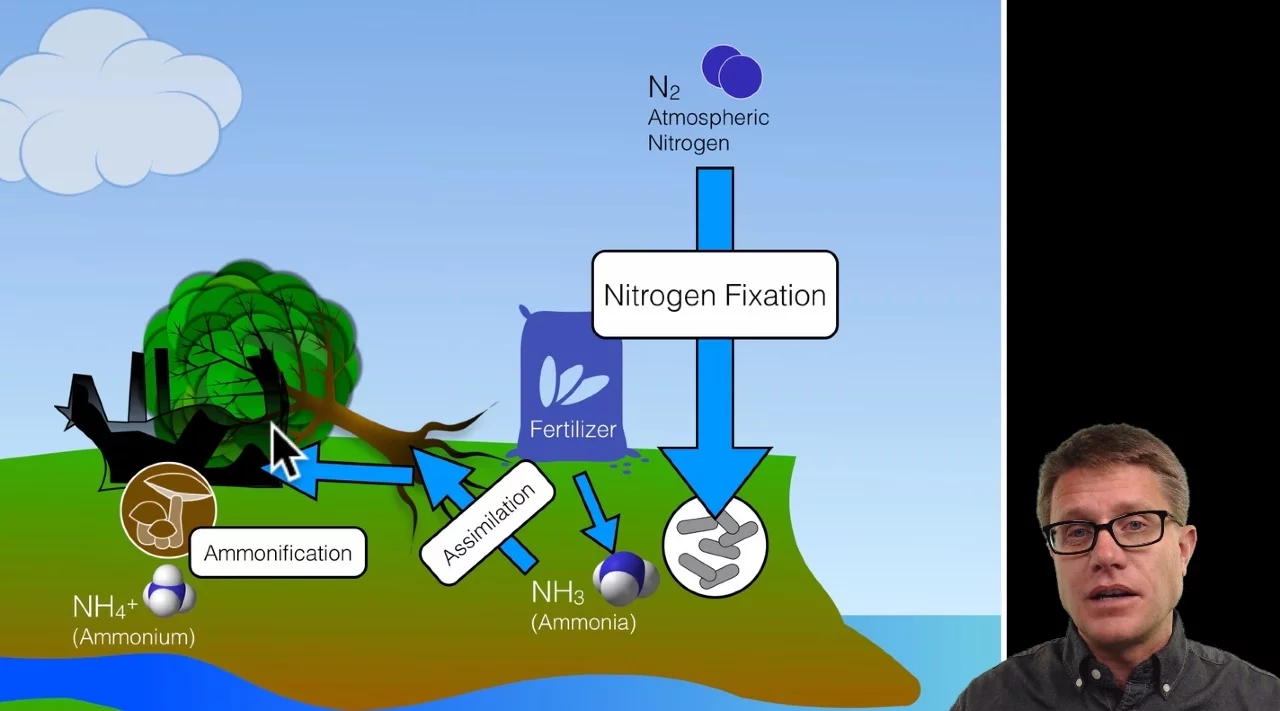
Biogeochemical Cycles
1.4M
Biogeochemical cycles are the biological, chemical, and geological processes that move essential nutrients (carbon, hydrogen, nitrogen, oxygen, phosphorus, and sulfur) between the living (biosphere) and non-living components of Earth, with matter being conserved and continuously recycled through the atmosphere, lithosphere, and hydrosphere; these cycles include the water cycle, carbon cycle, nitrogen cycle (which requires nitrogen-fixing bacteria to convert atmospheric nitrogen into usable forms), phosphorus cycle (the slowest cycle involving rock but no atmosphere), and sulfur cycle, where nitrogen and phosphorus act as limiting nutrients that can cause eutrophication when present in excess.
Click to watch →

class 9 ch 14 प्राकृतिक संसाधन || natural resources in hindi science
180.1K
Biogeochemical cycles describe the movement of chemical elements between living organisms and the environment. These cycles include the carbon cycle, nitrogen cycle, and water cycle. Elements move between biotic (living) and abiotic (non-living) components of the ecosystem.
Click to watch →

Noosfera: A Mente Planetária (com Vania Temporini) - Tribe Zen Podcast - Ep. #150
32.9K
All living things are composed of recycled matter from the Earth. The biogeochemical process involves the constant transformation of organic matter into inorganic matter and back again. This means that elements from dinosaurs and other ancient organisms are now part of our bodies. The mass of the planet remains constant, but the matter is constantly being recycled and transformed.
Click to watch →

Environment- जैव भू-रासायनिक चक्र BIOGEOCHEMICAL CYCLE
62.7K
A biogeochemical cycle is the continuous movement of chemical elements (such as minerals like calcium, potassium, sodium, phosphorus, and magnesium) through living organisms and the Earth's systems, where plants absorb minerals from soil, transfer them to herbivores, then to carnivores, and finally decomposers break down dead organisms to return minerals back to the soil, completing the cycle; this process operates most actively in equatorial regions with abundant life and is faster in warm conditions compared to cold regions.
Click to watch →
Wetland Functions
Wetland Benefits
Wetland Functions
0:02- 1
Wetlands filter water, prevent floods, and support biodiversity.
- 2
Targeted wetlands remove nitrate nitrogen from agricultural runoff.
The 'Pollutant Swapping' Trade-off: Nitrous Oxide Emissions
While constructed wetlands are highly effective at removing nitrate from agricultural runoff, they present a significant ecological trade-off known as 'pollutant swapping.' The primary mechanism for nitrate removal in these wetlands is denitrification, a microbial process that converts nitrate into harmless nitrogen gas. However, if environmental conditions such as temperature, oxygen levels, or carbon availability are not perfectly balanced, the denitrification process remains incomplete. This leads to the production and release of nitrous oxide, a potent greenhouse gas with a warming potential nearly 300 times greater than carbon dioxide. Consequently, solving a local water quality problem can inadvertently exacerbate global climate change. Furthermore, there are concerns regarding the long-term efficacy of these systems, as wetlands can become saturated with phosphorus over time, shifting from nutrient sinks to nutrient sources.
The Nitrogen Cycle: Understanding the different chemical forms of nitrogen (such as ammonium, nitrate, and dinitrogen gas) and their natural biological transformations.
Agricultural Runoff and Eutrophication: How excess fertilizer application leads to nutrient-rich runoff, causing ecological damage like algal blooms and hypoxia in downstream water bodies.
Wetland Ecology Basics: Familiarity with the definition of wetlands, specifically hydric (saturated) soils, hydrophytic vegetation, and the distinction between aerobic and anaerobic soil zones.
Microbial Respiration: The concept of anaerobic respiration, specifically how certain soil bacteria use nitrate instead of oxygen as an electron acceptor.
Design and Engineering of Constructed Wetlands: Principles of sizing, hydrology, vegetation selection, and managing hydraulic retention time to optimize nitrate removal rates.
Complementary Edge-of-Field Technologies: Exploring other agricultural Best Management Practices (BMPs) such as woodchip bioreactors, saturated buffers, and two-stage ditches.
Water Quality Policy and Economics: Studying watershed-level nutrient management strategies, Total Maximum Daily Loads (TMDLs), and agricultural conservation incentive programs.
Biogeochemical Modeling: Learning how to monitor, measure, and model nitrogen fate and transport within agricultural watersheds using field sensors and computational tools.
5.3K views20likes3:31@LeopoldCenterOriginal Release: 2014-07-23
[Music] Wetlands they're among the most biologically diverse and productive natural ecosystems in the world invaluable as water foul and wildlife habitat they also store and soak up water to help prevent FL Bloods and for centuries natural wetlands have acted like Nature's kidneys to filter water runoff more recently conservation scientists have found ways to capitalize on some of the functions of Nature's Wetlands by targeting Wetlands to locations where they can have the most impact for water quality benefits while simultaneously providing high quality habitat sometimes called working Wetlands they're designed for water quality improvement on agricultural lands these wetlands are being used by Farmers to filter nitrate nitrogen out of water that flows from underground tile and surface waters in crop Fields the ability of wetlands to remove nitrate nitrogen the common form of nitrogen in water has been well established here's how they work a nitrate removal Wetland is formed by damning up the water to create a shallow water area water-loving plants such as Cattails and bullrushes are often planted or seeded at most sites they also become established naturally after after water is added to the area these plants and their dead plant litter Supply the carbon source and the surface area needed for microbial activity in a natural process called denitrification they transform nitrate nitrogen into harmless nitrogen gas in a further water cleansing process nitrogen and phosphorus are absorbed by soils in the Wetland and taken up by the growing Wetland plants research and monitoring by Iowa State University has shown that Wetlands targeted for nitrate removal can move an average of 30 to 70% of the nitrate nitrogen load in tile drainage and runoff water these shallow Wetlands should be large enough and plac strategically to handle the water and nitrogen loads flowing into them working Wetlands as well as restored wetlands are often cost shared through programs of the US Department of agricultural Farm Service Agency and natural resources conservation service they've included the conservation Reserve program the conservation Reserve enhancement program and the wetlands Reserve program program designed to function as a natural Marsh with biodiversity benefits and a proven track record in removing nitrates from the water targeted nitrate removal wetlands are increasingly finding their place in the agricultural landscape and once they've seen them work and enjoyed all their benefits land owners want to make them a permanent part of that [Music] landscape for
Up Next

22:03
Bison Ranch Fence Repair & New Calves: Pasture Management
@CrossTimbersBison
177.3K views•2023-05-25

12:54
Triumph of Orthodoxy Icon: Byzantine Art & History Explained
@BenCallan
2.1K views•2024-08-06

9:49
FastAPI vs Flask vs Django: Choosing the Right Python Web Framework
@TechWithTim
302.5K views•2024-05-26

1:42
Game of Thrones Opening Credits: A Cinematic Analysis
@gameofthrones
46.3M views•2011-04-18
Related Study Plans & Knowledge Roadmaps
Structured learning paths in General & Interdisciplinary Studies
general-studies
Elevator Engineering: History, Physics & Cities
01From Hoists to Safety Brakes: The Dawn of Vertical Lift
02Hydraulic vs. Traction: The Engineering Physics of Elevators
03Modern Speed, Safety, and Algorithms
+ 2 more learning modules
12h5 modules
Explore Roadmap
general-studies
Rubber: Material Science, History & Geopolitics
01Origins of Natural Rubber & Mesoamerican History
02The Chemistry of Natural Rubber & Vulcanization
03The Geopolitics of the Rubber Boom & Colonization
+ 2 more learning modules
12h5 modules
Explore Roadmap
general-studies
Containerization: Evolution, Logistics & Trade
01Ancient Trade & Bulk Cargo: Amphorae to Barrels
02The Industrial Revolution & Cardboard Packaging
03The Containerization Revolution: Malcom McLean
+ 2 more learning modules
12h5 modules
Explore Roadmap
general-studies
Textile Tech: Evolution, Labor & Global Impact
01Pre-Industrial Textiles: Handloom & Cottage Industry
02Mechanization: The Spinning Jenny to the Power Loom
03The Factory System & Global Labor Transformation
+ 2 more learning modules
10h5 modules
Explore Roadmap