

















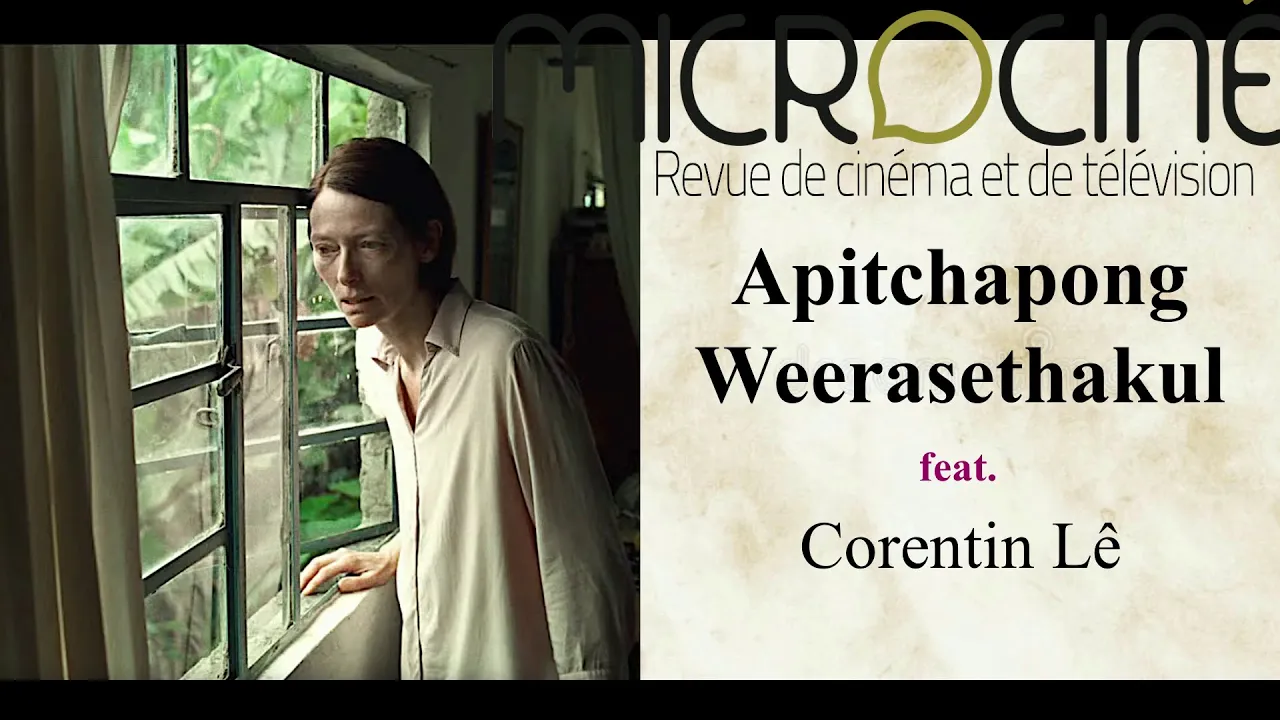


In Memoria, director Apichatpong Weerasethakul and actress Tilda Swinton explore how sound serves as the 'other' of cinema, offering a revolutionary approach to perception that refreshes our relationship to vision. The film, inspired by Weerasethakul's personal experience of exploding head syndrome and his travels through Colombia, uses sound design to create a space where actors become 'breathing props' and the audience's attention shifts from visual montage to auditory awareness. This approach emphasizes that cinema's relationship to vision can become 'tired' through traditional cutting and framing, and that sound provides a route to refreshing this relationship. The film demonstrates how embracing uncertainty, being lost, and not knowing what you're doing can create a productive creative space where every element—from birds to wind—is welcomed, allowing for a more authentic and liberating cinematic experience.
Apichatpong Weerasethakul & Tilda Swinton | Memoria Film Discussion
Added:[Music] thanks again for being here it's really great to have you back thank you um in the introduction joe you talked about this as a dream that both of you had i was wondering if you can just tell us when the dream started and also maybe tell us how that dream evolved to the film we saw tonight it started from i think 2004 in tropical malady you met in cannes when that showed you gave it a prize you were in the jury everything yes [Music] and you wanted to work together since 2004 right right and then we did you know in in other other ways yeah project short and uh curated the film festival in thailand together yeah i'm just still in the movie i'm sorry i think we i think we all are but you know um it's good to see with the people i just feel uh you say when i was doing this in thailand it's it's different to test it in the theater empty theater and with the people first time in khan it make the movie different yeah but you both watched it with the audience tonight right with this audience yes why don't i ask you what you experienced in this room then it's i don't know you feel the energy it's about being together and that's yeah that's more it's important so okay you started you know wanting to work together 17 years ago how did that idea take you to colombia because you've worked outside thailand in for your short and installation work but you've never made a feature film outside thailand so maybe you can say a little bit of how you ended up in colombia well i i'm always interested in latin american culture and also the amazon so in you know when i was making a semester of the splendor um that's 2015 you know we met 14 and 15.
um the country was basically taken over by the military and i felt really urged to make a film after that but i think i had to make a political one because it was really part of us you know but i couldn't because it's too dangerous and and i feel like okay how about this dream you know uh so in 2017 i had a chance to be in katahena film festival um that's the northern of uh colombia and they gave me a tribute you know and on the award night they um had this clip of my past film very well edited and i i feel very touched and i feel like oh this is like my funeral i feel like oh okay i'm officially old and and it feels like the end of something yeah and and since i'm in colombia and near the amazon i said okay okay this might be a new chapter you know of filmmaking practice and i i started to travel around colombia for three months with different different cities and at that time you know before that and during the travel i was accompanied by this bang in my head i found out later it's called exploding head syndrome uh nobody know why you know and it happened in the morning early morning it's like bang and and the sound like what jessica tried to explain uh so so being colombian and talking to people and started to say hmm might not integrated this into the experience of the journey yeah and then i i wrote to tuda like hey i think i found the place for our dream and i think it's it's a place that um it's very expressive in the country and and for us it's it's such a unique experience because it's there's many things that we don't know and and the idea of not knowing it is really precious you know we just embrace that yeah so because when we started talking about uh a sort of atmosphere um it was the atmosphere of being lost and being strangers we knew very early that because joe's most of joe's work had been in thailand we didn't feel there was a way of infiltrating me into thailand somehow we couldn't we couldn't find a way of catching that and so we made a quite early agreement that we would find a place where we were both aliens and and it was a bit of a search around the world but what we were also looking for was a place that that offered this sort of reverberation of trauma which is something that joe's work has always explored in thailand and something that i've always really responded to being a scot um and and i think a an early bond in terms of atmosphere when we were thinking about what kind of atmosphere we wanted to find and so colombia offered that to us aliens this sort of familiar familiar feeling of the ability to be lost there was was was very sort of welcoming how did that shape your process did it change your work process from what it usually is just the fact of being in alien surroundings both of you yes totally because when i was making film in thailand i i had my roots i had my own memories and i use those and along with my actors memories but in colombia there's no root and so i more like a sponge you know absorbing memory and i focus on hospitals actually because i'm really comfortable in that space i grew up in the hospital because my parents were doctors and um so i visit uh basically hospital and mental hospital around colombia and listen to people and um i don't know and try to to understand did some of that make its way into the film a no maybe more like emotion part you know but there are many things that all in the film are out of hospital the experiences that that i encounter you know like um like the man who would throw himself on the ground when he heard the the tire explode the bus yeah and he jumped down the ground and then he he ran away very quickly that i saw in my early days in colombia and and also yeah many things um the the the men and the families that hide in the under the bed um at night when the korea occupied a town for example and many other things yeah tilde what about you i mean as an actor and i should you know note that tilda's been in three films this festival and they could not be more different in terms of films filmmakers and roles so you're in some ways are always throwing yourself yourself into very different environments but some are more alien than others i imagine so i'm wondering what being you know joe's sort of fellow traveler on this adventure was like it's uh it's really my comfort zone of of choice i would say this this sense of being lost and not knowing what you're doing is a really um sort of happy place for me my happy place we call it um the and and i think this uh yeah because what joe does with his frame is he sets up this sort of free space this sort of playground [Music] into which when you step you're a combination of very very free but also very peaceful and that's you know that's a very very being a very idle person that's a very uh kind of fruitful place for me to be um but also talking of the fact that we were in colombia and that we were both lost that's incredibly productive i mean it really sharpens your ears being lost you you you can't you can you have no plan and even though there was a certain amount of rigorous planning in terms of what we were what particular curl accused of journey we were going to go on we had to fix certain things in terms of the energy of the shots we tried to keep ourselves very free and open and every bird every leaf of grass every gust of wind was welcome you know there was no possibility of anything ever getting ruined by anything because everything was welcome and that's really speaking as a non-actor as a you know sort of breathing prop that's a really really fruitful uh arena to to to play in because you're just moving in the we talked a lot uh joe and i about about me moving as if i'm under water and that's really what it felt like and also in terms of one sense of sound you know when you're underwater it's not that you can't hear anything in fact in a way it's like something switches and you can hear really acutely all sorts of other things um it was really like that it was like whenever i stepped into his frame i was you know all sorts of things switched off and all sorts of things switched on so it was beautiful um yes i we shot on 35 millimeter film so i i like to let it run to the whole film and that's 14 minutes you know so uh the actors have to be really present you know because and and not about memorizing the line but about uh interacting you know with the space you know at that moment and i until i agree in the beginning that we're not gonna talk about character not gonna talk about the background you know i don't know like um how long jessica was in colombia or how long her husband passed away or those information um so so this being you know just be there you know and we try to shoot chronologically and so because i didn't know what i wanted i i just said yeah let's try and then we rehearse and then when we shot it you know it's uh our dop and the governor quite making it quite open set so that's like you can walk around and very minimal lighting yeah so that the actor can be yeah and for the first take and then you know second take oh it's not right you know so so tilda and other people uh show me you know okay this speech so it's on me it's the whole thing is about the rhythm yeah it's like breathing it's like it's like building this animal you know yeah you both talked about sound and about listening and i wonder i think we need to maybe spend a little bit more time on that given the importance of sound in this film i mean you know i think people often say that sound is half of cinema but i think rarely do you really get a sense of how um i think sound is so prominent in this film and i wonder maybe joe you can talk a little bit about your work with your sound collaborators and you've worked with them for a long time and until then i want to hear you talk about that incredible scene that comes early on in the film that i think you know is in the in the studio that i think is a key in a way that sort of conditions the audience to to listen yeah it's based on this exploding head thing and i was trying to get that did you see a doctor when this happened or was that it was not that is there a doctor in the house it's not that number you feel uncomfortable i feel comfortable i i feel like it's it's not a sound by the way it's it's an idea of the sound you know it's like i don't anyone had this symptom see it is it's okay right it's not you just lie there listening in the morning you know it came in the morning and then and then to the point that you can control it you know you know that when it's coming and when it's going and and so i try to work with my sound designer to achieve this sound it's like really like in in in the film you know it's metallic it's underwater so that scene is is an accurate description like what jessica is trying to communicate right and we went through all this library sound library special effects and yeah and then of course we use other than that the life sound is very important and to heighten it to you know to to give you a sense of the this awareness of life around yeah and it remind me or it inspired also by by during the trip you know in colombia talking to people about that experience you know like uh 15 20 years ago it was it was more violent and people you know for example if you were driving a car and then there's a bang you just like don't know what is that from a gunshot or a tie explosion or fireworks a bomb you don't know you're just frozen and you just anticipate you know you anticipate and you listen you know so did you want to say but also i'm almost the other thing i was going to ask you is because as an actor on the set you know sound and image are often decoupled in terms of the actual making of the film it's an illusion that brings them together so you're actually working with imagined sounds for much of this film the the the um the final scene was uh was all imagined um quite properly i think in terms of the narrative because it really is inside our heads um but the scene in the uh in this in the with the engineer i i particularly love it because i i honestly believe there's something in that scene that's really about uh art you know that's what artists do uh we say hey there's something in my head and i don't know if i can ever explain to you what it is but i'm gonna try and we say okay i'm here for it tell me and then you try and then you go it's not quite that it sounds different in my head okay let's that whole sense of the attempt to be articulate and the failure the constant failure to be articulate i love so much and and i believe is sort of our trade um and and so and it's very precise that scene you know it's i love this moment when she says it probably sounds different in my head well yeah welcome to our world uh but the the the fact that he is so open and then produces these sort of off the peg industrial uh uh you know body hit stomach in hoodie things uh and and actually that's the route to find this unique magical mystical sound i particularly love uh but so that was practical in a way those two scenes they are kind of bookends that's very very practical and very you know stomach hit when hoodie uh you know customized but but then the last scene is really was something that we we knew we were going to that was the target the whole arrow of the film was going towards um and we knew that when we got there there was going to be no sound in the room and so we talked a lot about beforehand what that what those sounds might be and and as we were shooting there was a little bit of joey whispering um but there was it was really a sort of sort of kinetic dance between elkin who plays hanan and i as to what we might and we certainly do it yourself telepathy trying to figure out what you might be hearing and and of course when there was no wind in the trees outside that's the time to listen for the rain which you know you're not going to be able to see it was a it was an interesting piece of um sort of forensic uh mathematics but it was uh yeah that was the target we were always going for that scene and and whatever had been gathered throughout the whole of the rest of the film was going to somehow land there because to all intents and purposes this is a mystery film it starts in the first frame with this question mark what is this sound and we knew that at the very end very very end we were going to maybe provide an answer to that maybe let's talk about the answer then um the proposal let's say a proposal um so you've had spacecraft in your other work in primitive you had this yeah well it's a mixture of um memories and i feel like uh that chart you know it just came during the writing and i i felt natural uh that you know it's a combination of jessica and bernan and me and others you know because in the sound there was a mixture of her voice reminiscing about her own memory and again and also the sound from the first recorded sound of human history you know recording music i get a song you know the french one you know so we mix it there so so it's a mixture of all this memory uh with time collapse so i was thinking like um my my own idea of in infatuation with with science fiction and and this um levitation and thai gravity and and and it could be in the future it could be in the past i don't know but but it's an idea you know it is it's not a how you say i grew up with the ghost story and also with uh science fiction of ray bradbury and other other c clark asimov so all those illustrations on the cover you know so so it's a memory of the future so so that that kind of it's like a gamble for me like whether it will fit because during the the covet um we spend a lot of time working months on that chart alone you know while the film already done you know so it uh we just found out you know just put in afterwards and yeah i don't think we have a whole lot of time left but i'd like to take one audience question uh you should pick no okay tilde will pick okay yeah okay you're standing up so yes he's virtually crawling onto the stage this one a question about the search for sound and sound is maybe the other of cinema and how that relates to your search for another culture another language with this film well for me that was a concern in the beginning like whether i would understand or how properly i could transfer these feelings i i have but um but i'm always an outsider you know in in colombia and so for me just try um how you say just to connect and and to listen and and in the end i just realized that it's um it's the same you know it's not different from thailand on others you know we have the same grief you know we have the same sadness happiness you know it's universal so i try to to to do that you know just just rhythm and to to present the film uh as as the way of jessica comes to term and embrace her her past because it seemed to me that she just lost and tried to connect yeah and then ernan the first one deliver the sound to her and the second one the second earner also delivers sound to in a different way you know but the second one is allow her to to stop you know because he stopped first you know that this is the film you know just go linear right abc but then ernan decide to refu refuse to continue so he he stopped and then it allowed jessica to oh what do i do you know so i just sit there and listen you know and i think at that point uh jessica or nano anything doesn't exist you know it's it's about cinema it's about how how one tracing image collecting image and sound and cinema become a body that collect this and and then when you just accept it you know there's a lot of memories from from uh from judah you know just like when you embrace the moment or the past you know accept it and and then it is a true liberation happens i'm really struck by your suggestion that sound is the other of cinema um [Music] and i if that's true and i'm not sure that i believe that's true but let's say it is then maybe what joe's cinema is proposing is a really something quite revolutionary in our perception of what cinema is and it might be to do with our relationship to vision that there's a tiredness in a kind of montage a kind of cutting and a kind of framing that we need refreshing and the route to refreshing that is through sound i don't know i just making that up on the spot but uh thank you for your question i think [Music] i think it was brilliant a good place to end it um till back tomorrow in case anybody wants to see the film again i can understand why you might um and joe is going to participate in a talk a free talk on thursday uh he'll be in conversation with the novelist katie kitamura on thursday evening so um but thank you all for coming and thank you both of you so much [Music]
Up Next

MPU6050 Arduino GY-521 Sensor Tutorial: Wiring and Code Overview
@diyengineers
74K views•2021-05-06

Triumph of Orthodoxy Icon: Byzantine Art & History Explained
@BenCallan
2.1K views•2024-08-06

FastAPI vs Flask vs Django: Choosing the Right Python Web Framework
@TechWithTim
302.5K views•2024-05-26

Game of Thrones Opening Credits: A Cinematic Analysis
@gameofthrones
46.3M views•2011-04-18
Related Study Plans & Knowledge Roadmaps
Structured learning paths in General & Interdisciplinary Studies